HackerNews AI - 2026-06-30
1. What People Are Talking About
June 30 matched June 23's recent high at 111 AI stories and pushed Hacker News deeper into agent-operations mode: 43 Show HN launches, 32 GitHub links, and 39 explicit Claude mentions. The biggest shift was that trust complaints stopped sounding abstract. People were arguing about hidden client behavior, account-level privacy changes, transcript retention, and the wrappers they now want around agents that already touch their repos and shells.
1.1 Trust broke at the agent-client layer, not just the model layer (🡕)
The strongest cluster on June 30 was not a new model launch. It was a run of stories about whether the agent clients themselves behave transparently enough to deserve filesystem, shell, and account access. Hidden prompt marking, mobile privacy downgrades, transcript deletion, and secure-wrapper requests all pointed at the same concern: users no longer want to infer policy from surprising behavior after the fact.
kirushik posted Claude Code is steganographically marking requests (1157 points, 300 comments). The linked article says Claude Code 2.1.196 can mutate the system-prompt date string with near-invisible Unicode punctuation when ANTHROPIC_BASE_URL, timezone, and decoded domain or keyword checks hit, encoding classification data inside plain-looking text instead of sending an explicit telemetry field. The distinctive angle is not that the post proved malware. It is that a tool trusted with repo and shell access was caught hiding policy-relevant signals in the prompt itself, which made "boring" client behavior the real issue.
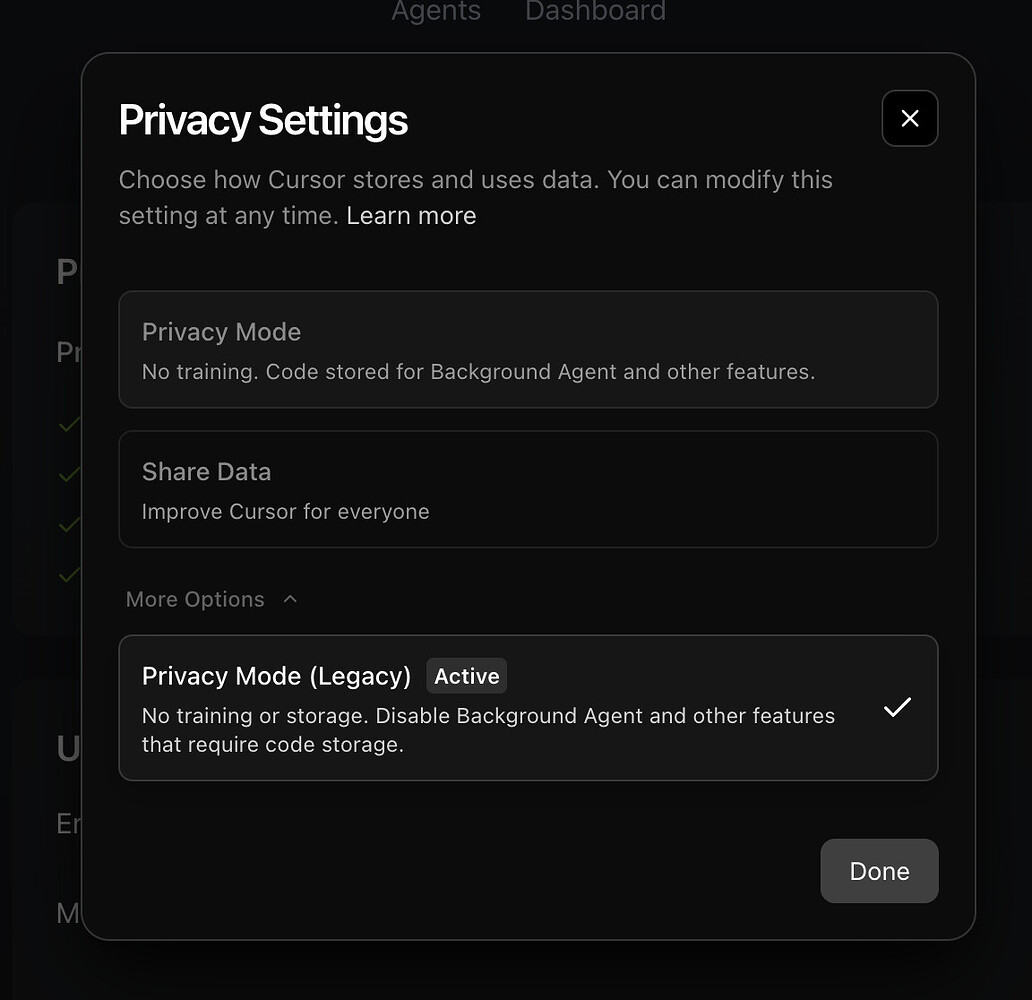
zkldi posted Tell HN: Installing Cursor on iOS irreversibly changes your privacy settings (178 points, 27 comments). The selftext says installing Cursor iOS switched the author's account from Privacy Mode (Legacy) to a current mode where code may be stored for Background Agent and other features, and support said the app could not switch it back. The complaint was not abstract privacy panic; it was that a mobile-agent onboarding flow changed an account-level storage policy and removed the old control.
ojura posted Beware, Claude Code deletes >30 day old transcripts. Anthropic won't fix it (27 points, 37 comments). The linked issue and HN replies treat old transcripts as user-owned working memory and intellectual property, not disposable cache, and commenters immediately shared backup and session-hub tools as workarounds. Together with rjzzleep's Ask HN: Secure wrapper for coding agents? (15 points, 9 comments), the retention thread showed that users are actively shopping for outside guardrails instead of trusting vendor defaults.
Discussion insight: civet_java (score 0) argued that a provider with a client on a user's machine has to be transparent about what it does, while ralferoo (score 0) described silent transcript expiry as "unconsented destruction of user-owned data." Across threads, the anger was less about any single policy than about surprise.
Comparison to prior day: June 29 already cared about evidence and memory, but June 30 turned that concern inward. The problem was no longer just whether agents remember enough. It was whether the client, account settings, and retention defaults themselves can be trusted.
1.2 Builders kept wrapping agents in shared orchestration, replay, and sandboxing layers (🡕)
If the top threads were about mistrust, the builder response was to turn agent work into inspectable infrastructure. At least six notable launches pushed the same pattern: shared workspaces, explicit review gates, replayable sessions, isolated sandboxes, and operator surfaces that survive the agent run.
johnjwang posted Show HN: 143.dev – we open-sourced our internal coding-agent infrastructure (11 points, 0 comments). The selftext and repo describe a shared workspace where Codex, Claude Code, and OpenCode run in Docker and gVisor sandboxes with GitHub, Linear, Sentry, Slack, and PagerDuty context, then output a branch or PR with transcript, checks, and live preview. The distinctive angle is that 143 is not another solo CLI. It is an internal-team operating layer made public and self-hostable.
ivrr posted Show HN: Agentic Orchestrator, a TUI for long-running coding agents (15 points, 2 comments). The repo says one feature request can flow through KB building, inquiry, research, design, phased planning, implementation, review, and publish steps with isolated worktrees and parallel critics. It is a direct attempt to make agent work look more like an engineering process than a long chat.
lougarou posted Show HN: Capacitor – shared mem for Claude Code, Cursor and other coding agents (2 points, 1 comment). The quickstart says sessions from Claude Code, Codex, Gemini CLI, Copilot CLI, Cursor, and other agent CLIs can be captured, replayed, handed off to another agent, shared with teammates, and used to explain a pull request after the fact. Lower-score launches filled in adjacent surfaces: pbjerkeseth posted Show HN: Ouijit, command terminals running coding agents (4 points, 2 comments) with Lima VM sandboxing and session-aware task hooks; Tigerless_ailab posted Show HN: Autoharness – a self-learning, maintaining skill layer for Claude Code (3 points, 0 comments) with self-updating skills and ledgers; and owenthejumper posted Show HN: TraceAIO – open-source LLM visibility tracker (6 points, 1 comment) to query answer engines through real browser sessions.
Discussion insight: The secure-wrapper Ask HN thread gave the meta-commentary for this whole cluster: users were explicitly looking for microVM, sandbox-exec, Podman, and Docker wrappers before trusting agents with real work. The build pattern was not "make the agent smarter." It was "make the surrounding system governable."
Comparison to prior day: June 29's memory launches mostly fought over what agents should remember. June 30's launches pushed harder on where agent work should run, how teams share it, and how humans step back into the loop.
1.3 Backlash hardened against low-accountability AI output (🡕)
Beyond coding tools, June 30 showed a broader refusal to accept AI output that cannot be owned, reviewed, or socially defended. The signals came from public AI politics, open-source maintainers, and everyday product failures.
pseudolus posted AI Zillionaires Are Starting to Get Scared as the Public Turns Against Them (31 points, 15 comments). The linked Futurism piece centers on Mark Cuban's argument that fights over data centers are really proxy fights over anger at AI-driven wealth concentration, and HN comments reframed AI as a transfer of wealth from workers to vendors rather than a neutral productivity story. The distinctive angle is that backlash was framed as political economy, not just abstract safety concern.
aizk posted Grok translated my coworker's tweet as sexualized (2 points, 1 comment). The selftext says a Sichuan-dialect message about meeting venture capital guests was translated into a threesome request, turning ordinary developer outreach into reputational risk. Even as a low-score item, it is unusually concrete evidence that basic language tasks can still fail in ways that make professional users distrust public-facing AI.
evo_9 posted Godot will no longer accept AI-authored code contributions (5 points, 0 comments). The linked policy post says the project will reject autonomous AI agent use, substantial AI-generated code, and AI-written human-to-human text because maintainers need contributors who can learn from feedback and take responsibility for fixes. That is not vague anti-AI sentiment. It is a governance rule written by a review-bottlenecked community.
Discussion insight: In the backlash thread, jqpabc123 (score 0) argued AI is becoming a vehicle for wealth transfer, while cyanydeez (score 0) pushed to name the tiny group of actors accumulating power rather than treating the anger as diffuse. Godot's policy makes the same accountability point in a different register: if the person submitting the work cannot really own it, reviewer motivation collapses.
Comparison to prior day: June 29's slop complaints were still mostly about review quality. June 30 pushed that energy into policy and reputation: maintainers wrote bans, professional users reported communication failures, and even pro-business AI talk got recast as wealth backlash.
2. What Frustrates People
Silent or irreversible privacy and retention defaults
The sharpest frustration on June 30 was not "AI is scary" in the abstract. It was that agent vendors keep changing or hiding behavior in places users expected to be stable. Claude Code is steganographically marking requests (1157 points, 300 comments) made invisible prompt markers feel like a trust violation because the client was encoding policy-relevant metadata inside ordinary-looking text. Tell HN: Installing Cursor on iOS irreversibly changes your privacy settings (178 points, 27 comments) showed the same frustration at the account layer: a mobile onboarding flow switched a user away from the stricter Legacy mode and support said it was hard to undo. Beware, Claude Code deletes >30 day old transcripts. Anthropic won't fix it (27 points, 37 comments) added a retention version of the same complaint: valuable working history vanished by default. People cope by avoiding certain surfaces, exporting or backing up sessions, and moving history into third-party tools. Severity: High. Worth building for: yes, directly.
Secure execution still depends on wrappers outside the base agent
Ask HN: Secure wrapper for coding agents? (15 points, 9 comments) makes the gap explicit: users still go looking for microVM, sandbox-exec, Podman, and Docker-based wrappers before they feel comfortable letting an agent touch real systems. The most credible builder responses on the same day worked around the base agent rather than replacing it. Show HN: 143.dev – we open-sourced our internal coding-agent infrastructure (11 points, 0 comments) runs agents in Docker and gVisor sandboxes, while Show HN: Ouijit, command terminals running coding agents (4 points, 2 comments) makes Lima VM sandboxing a first-class feature. The frustration is severe because the coping strategy is not "be careful." It is "add another boundary the model cannot talk its way around." Severity: High. Worth building for: yes, directly.
Public-facing AI output still creates embarrassment and review burden
Grok translated my coworker's tweet as sexualized (2 points, 1 comment) is a compact example of how a bad language-model output can instantly become a professional liability. Godot will no longer accept AI-authored code contributions (5 points, 0 comments) shows the same pain from the other side: maintainers now view low-accountability AI contributions as demoralizing review work, not as free leverage. Even AI Zillionaires Are Starting to Get Scared as the Public Turns Against Them (31 points, 15 comments) carried the same subtext in political form, with commenters framing AI as concentrated power and labor displacement rather than obviously shared upside. People cope by banning certain contribution styles, demanding disclosure, and keeping a human owner on the hook for the output. Severity: Medium-High. Worth building for: yes, but only with strong provenance and human accountability.
Agent mobility and benchmark talk still outpace explainability
Cursor now has a mobile app for guiding your coding agent on the go (17 points, 15 comments) drew immediate questions about how anyone is supposed to test, debug, or avoid always-on work expectations from a phone. Claude Sonnet 5 – benchmark results (32 points, 16 comments) triggered a parallel frustration at the model-evaluation layer: HN commenters cared as much about provider gates, missing data, and cost per solved task as about rank or speed. Users cope by treating mobile as an oversight surface, not a full development loop, and by distrusting benchmarks that do not expose refusals, verbosity, or real operating cost. Severity: Medium. Worth building for: yes, as observability and workflow tooling rather than as one more headline metric.
3. What People Wish Existed
Enforceable privacy and retention controls that survive new surfaces
Claude Code is steganographically marking requests (1157 points, 300 comments), Tell HN: Installing Cursor on iOS irreversibly changes your privacy settings (178 points, 27 comments), and Beware, Claude Code deletes >30 day old transcripts. Anthropic won't fix it (27 points, 37 comments) all imply the same missing layer: users want privacy, routing, and retention policies that are explicit, durable, and device-independent. The urgency is high because people are already changing behavior to avoid accidental policy drift. Opportunity: direct.
Shared session memory and cross-agent handoff with receipts
Show HN: Capacitor – shared mem for Claude Code, Cursor and other coding agents (2 points, 1 comment) and Show HN: 143.dev – we open-sourced our internal coding-agent infrastructure (11 points, 0 comments) point to a practical need for session history that can be replayed, queried, shared, and handed to another human or agent without re-explaining the whole job. The transcript-deletion thread raises the urgency because people already treat that history as working memory and intellectual property. Opportunity: direct.
Model-agnostic sandboxes and team control planes
Ask HN: Secure wrapper for coding agents? (15 points, 9 comments), Show HN: Agentic Orchestrator, a TUI for long-running coding agents (15 points, 2 comments), Show HN: 143.dev – we open-sourced our internal coding-agent infrastructure (11 points, 0 comments), and Show HN: Ouijit, command terminals running coding agents (4 points, 2 comments) all show the same wish in different forms: people want one place to supervise long-running agent work while keeping execution inside hard boundaries. This is a practical need with high urgency because the coping behavior already involves extra VMs, sandboxes, worktrees, and review gates. Opportunity: direct.
Local-first assistants that keep durable work context without a new vendor
Show HN: Myna – a local AI Chief of Staff that remembers your work (5 points, 0 comments) and Show HN: GSV – a personal AI computer that unifies your machines (6 points, 0 comments) point at a broader desire than "another chatbot." People want assistants that preserve context across projects, devices, and days without sending that context to yet another cloud vendor. The need is both practical and emotional: ownership, continuity, and lower coordination burden. Opportunity: competitive.
Reliable AI for outward-facing communication, not just internal drafts
Grok translated my coworker's tweet as sexualized (2 points, 1 comment) is a small thread, but it points to a practical gap with obvious downside: once AI text is going to customers, candidates, partners, or communities, people want behavior they can trust in public. The Godot policy shows the same wish from the receiving side: if there is no accountable human behind the words or code, communities increasingly do not want to deal with it. Opportunity: aspirational.
4. Tools and Methods in Use
| Tool | Category | Sentiment | Strengths | Limitations |
|---|---|---|---|---|
| Claude Code | Coding agent | (+/-) | Dominates the day's discussion, has a deep ecosystem of transcripts, skills, and companion tools, and now spans CLI plus Linux desktop surfaces | Trust was damaged by hidden prompt markers and transcript-expiry defaults, so many users now add external guardrails |
| Cursor / Cursor Mobile | Coding agent / mobile control | (+/-) | Lets users guide or start coding-agent work from a phone and pushes agent supervision beyond the laptop | Privacy-mode confusion, weak mobile testing loops, and always-on work pressure undercut the convenience |
| Agentic Orchestrator | Workflow orchestrator | (+) | Turns one prompt into KB building, research, design, planning, implementation, review, and publish steps with isolated worktrees | Adds ceremony and depends on multiple CLIs, auth states, and workflow discipline |
| 143 | Team agent cloud | (+) | Shared workspace, cloud sandboxes, PR and preview output, and context from tools teams already use | Heavier infrastructure and governance surface; cloud execution will not fit every team |
| Capacitor | Session replay / memory | (+) | Captures, replays, hands off, shares, and queries sessions across many agent CLIs | Cloud packaging and hook installation are heavier than simple local backups |
| Ouijit | Task/session manager | (+) | No telemetry, worktree management, Lima VM sandboxing, and a session-aware CLI for agent terminals | Early-stage setup overhead and extra VM workflow complexity |
| Autoharness | Skill layer | (+) | Learns, merges, and prunes Claude Code skills from real sessions while keeping per-skill ledgers | Still v0.1, Claude Code-centric, and early benchmark claims need time to prove out |
| TraceAIO | Answer-engine observability | (+/-) | Shows what real browser-based LLM products actually mention or cite, with MCP access to the results | Depends on browser automation and often proxies, and the category still feels SEO-adjacent |
| Claude Sonnet 5 | Frontier model | (+/-) | Strong intelligence, 1M-token context, and fast output in external benchmarks | Very verbose, somewhat expensive, and real-world value is muddied by provider gates and benchmark gaps |
| Myna | Local work assistant | (+) | Keeps a plain-markdown local knowledge base and turns recurring work prompts into draftable workflows without adding a new cloud vendor | Narrower than general coding agents and depends on disciplined local knowledge capture |
| GSV | Personal AI runtime | (+) | Spans laptop, server, and phone with durable agents and edge-hosted execution in the user's own Cloudflare account | Requires paid infrastructure, provider keys, and more operational overhead than most personal tools |
Overall satisfaction was highest for tools that made state, authority, or review boundaries explicit. 143 makes execution and PR review explicit. Capacitor makes session history explicit. Ouijit makes task state and sandboxing explicit. Autoharness makes skill drift explicit. TraceAIO makes answer-engine behavior explicit.
The common workaround pattern was to wrap the base agent rather than replace it. Users back up transcripts, run work in VMs or gVisor-style sandboxes, treat mobile mostly as an oversight or hotfix surface, and want cost or visibility measured outside the vendor's own interface. Migration still looks hybrid: frontier agent CLIs dominate attention, but local-first and personal systems like Myna and GSV keep appearing where ownership, continuity, and device reach matter more than a single benchmark score.
5. What People Are Building
| Project | Who built it | What it does | Problem it solves | Stack | Stage | Links |
|---|---|---|---|---|---|---|
| 143 | johnjwang | Shared team workspace for running coding agents in cloud sandboxes and turning runs into PRs and previews | Individual engineers' agent setups hide context, automations, and review state from the rest of the team | Go, Postgres, Next.js, Docker/gVisor, GitHub/Linear/Sentry/Slack/PagerDuty | Shipped | post, site, repo |
| Agentic Orchestrator | ivrr | TUI that drives feature work through research, planning, implementation, review, and publish phases | Long-running agent work needs structure, isolated worktrees, and human gates before diffs sprawl | Go CLI, git worktrees, Claude/Codex/OpenCode backends, parallel critics | Beta | post, repo |
| Capacitor | lougarou | Captures, replays, shares, and hands off coding-agent sessions across tools | Session context disappears on restarts and is hard to explain to teammates or another agent | KurrentDB, CLI hooks, dashboard, GitHub app, multi-agent session capture | Beta | post, site, quickstart |
| Ouijit | pbjerkeseth | Task and terminal manager for agent work with hooks, previews, and VM sandboxes | Parallel tasks and untrusted code are awkward in plain agent terminals | Session-aware CLI, git worktrees, lifecycle hooks, Lima VMs | Beta | post, site, repo |
| TraceAIO | owenthejumper | Self-hosted monitor that asks answer engines about a brand and records sources or competitors | Teams want visibility into what ChatGPT, Perplexity, Gemini, and similar products actually surface | Docker, browser sessions, MCP server, proxy support | Beta | post, site |
| Myna | bathlasiddharth | Local Claude Code chief-of-staff that keeps a Markdown knowledge base for meetings, projects, and people | Knowledge-work context disappears across sessions and is hard to turn into reliable drafts or prep | Claude Code plugin, 31 skills, MCP, plain Markdown vault | Beta | post, repo |
| GSV | deathbyknowledg | Personal AI computer spanning laptop, server, and phone | Most personal agents are tied to one host and stop when devices sleep | Cloudflare edge, web UI, CLI, browser extension, messaging interfaces | Beta | post, repo |
| Autoharness | Tigerless_ailab | Self-learning skill layer that distills, merges, and prunes Claude Code skills from real sessions | Skill libraries get stale and duplicative as models and prompts change | Python, Claude plugin, ledgers, background skill promotion | Alpha | post, repo |
The clearest build pattern was making agent work shareable and reviewable. 143 turns internal agent use into team infrastructure with PR and preview output. Agentic Orchestrator turns one request into a governed engineering pipeline. Capacitor turns transcripts into transferable artifacts instead of disposable logs. Ouijit does the same from the operator-workstation side with task state, hooks, and VM boundaries.
The second pattern was context persistence beyond code. Myna treats meetings, people, and project state as a local Markdown knowledge base instead of one more SaaS memory layer. GSV treats the problem as runtime continuity across devices: if the laptop sleeps, the agent should not. That matters because it shows the same continuity pressure appearing in personal productivity, not just in repo automation.
The third pattern was tooling for the agent layer itself. TraceAIO monitors what answer engines actually say in public. Autoharness tries to keep a skill library from turning into stale prompt clutter. Together they suggest builders no longer assume "use the best model" is enough; they are instrumenting, maintaining, and governing the layer around the model.
6. New and Notable
Open brain-to-text research shipped code, data, and clearer receipts
alok-g posted Meta's brain-scanning system reads sentences non-invasively, code open source (28 points, 14 comments). Meta says Brain2Qwerty v2 was trained on about 22,000 sentences from nine participants, is releasing training code plus the v1 dataset, and reaches 61% word accuracy overall with 78% for the best participant. That is notable because non-invasive brain-to-text stories often arrive as teaser claims; this one arrived with code, data, and a concrete pipeline.

Godot turned AI-review fatigue into formal contribution policy
evo_9 posted Godot will no longer accept AI-authored code contributions (5 points, 0 comments). The linked policy post says the project will reject autonomous AI agents, substantial AI-generated code, and AI-generated human-to-human text because reviewers need contributors who can learn, fix, and take responsibility. That matters because it is a concrete governance response to review overload, not just another opinion piece about slop.
Anti-AI backlash is increasingly framed as anti-concentration backlash
pseudolus posted AI Zillionaires Are Starting to Get Scared as the Public Turns Against Them (31 points, 15 comments). The article uses Mark Cuban's comments to argue that fights over data centers are turning into proxy fights over AI-era wealth concentration. That is notable because it reframes the backlash from "people dislike the technology" to "people dislike the distribution of power and gains around the technology."
Translation quality is still a live reputational risk
aizk posted Grok translated my coworker's tweet as sexualized (2 points, 1 comment). The selftext describes a normal Sichuan-dialect networking reply getting turned into a sexual proposition, which is exactly the kind of small but socially expensive failure that keeps outward-facing AI use from feeling solved. It is a minor thread by score, but it is unusually concrete.
7. Where the Opportunities Are
[+++] Agent-client governance and retention controls - The hidden Claude Code prompt markers, the Cursor mobile privacy-mode switch, and the transcript-retention thread all point to the same gap: users want explicit, enforceable policies for what an agent client sends, stores, changes, and forgets. This is strong because it drove the day's biggest stories and because users are already resorting to backups, avoidance, and third-party workarounds.
[+++] Shared session memory and sandboxed team control planes - 143, Capacitor, Agentic Orchestrator, and Ouijit all independently attack the same operating problem: agent work needs replay, handoff, review, and hard execution boundaries once it becomes a team activity. This is strong because the build pattern repeated across multiple projects on the same day.
[++] Human-accountable review and provenance layers for AI-authored work - Godot's policy, the Grok translation failure, and the broader backlash thread all suggest that people increasingly care less about whether AI can produce output and more about whether a human can stand behind it. This is moderate because the pain is obvious, but the right product shape will vary by community and workflow.
[++] Cost and benchmark observability that includes refusals - The Claude Sonnet 5 benchmark thread shows that leaderboard rank is no longer enough. People want cost per solved task, provider-gate behavior, and verbosity to be visible when choosing a model or workflow. This is moderate because the need is clear, but it competes with in-house dashboards and evaluation stacks.
[+] Local-first personal AI workspaces - Myna and GSV point to an emerging category of assistants that keep durable context under the user's control while spanning projects, days, and devices. This is promising, but the category is still early and fragmented between work management, personal OS, and agent runtime ideas.
8. Takeaways
- Trust complaints now target the client, not just the model. The day's biggest story was about hidden prompt markers inside Claude Code, and the second-strongest trust thread was about a mobile app changing privacy settings at the account layer. (source)
- The dominant builder pattern is wrapping agents in shared infrastructure. 143, Agentic Orchestrator, Capacitor, and Ouijit all add replay, review, worktree, or sandbox layers around existing agent CLIs instead of trying to replace them outright. (source)
- Session history is becoming a first-class artifact. The transcript-deletion thread treated old sessions as working memory and IP, while Capacitor turned captured sessions into something that can be replayed, shared, and handed to another agent. (source)
- Communities are getting stricter about human accountability for AI output. Godot's maintainers turned review fatigue into an explicit policy that rejects autonomous AI contributions and AI-generated human-to-human text. (source)
- Mobile and public-facing AI still add risk faster than they remove friction. Cursor Mobile raised testing and availability concerns, while Grok's translation failure showed how quickly outward-facing AI mistakes become socially expensive. (source)
- Open research still cuts through when it ships receipts. Meta's Brain2Qwerty v2 story stood out because it came with code, data, pipeline details, and measurable accuracy gains rather than just another frontier-tech teaser. (source)