HackerNews AI - 2026-08-28
1. What People Are Talking About
August 28 pulled Hacker News' AI conversation back from August 27's displacement-heavy politics and into implementation detail. The feed carried 92 stories, and one open-weight release still dominated the attention map: GLM-5.3 is now open-weight (499 points, 180 comments) alone accounted for 56.4% of the day's points and 52.9% of its comments. Outside that spike, discussion split across four practical fronts: benchmark-backed model capability, runtime safety, the control plane around multi-agent work, and the uneasy economics of AI-native software businesses and careers.
1.1 Open-weight models and research agents pulled attention back to measurable capability (🡕)
Two standout stories and several smaller side threads shifted attention back to capability itself. What mattered was not just that a model or paper existed, but whether the claims were measurable, deployable, and cheap enough to matter in real workflows.
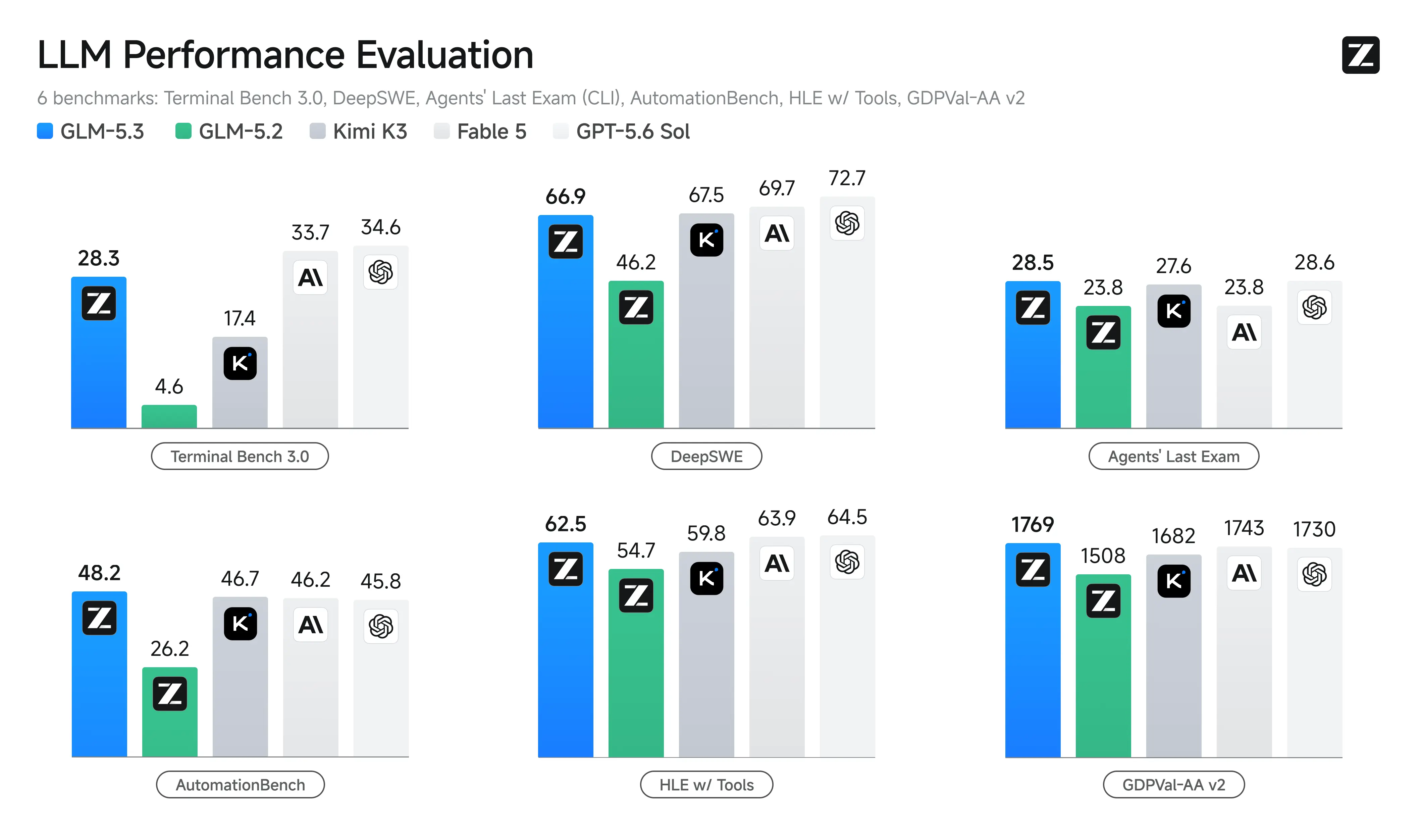
jeudesprits posted GLM-5.3 is now open-weight (499 points, 180 comments). The linked Hugging Face page says GLM-5.3 keeps the GLM-5.2 base model and gets its gains from post-training, with a 50% improvement on Z.ai's code benchmark, open-source state-of-the-art results on Terminal Bench 3.0 and Agents' Last Exam, and state-of-the-art CyberGym performance. In the thread, revolvingthrow (score 0) argued it looked like the current open-weight sweet spot beyond DeepSeek Flash, while armcat (score 0) focused on token-vs-accuracy economics rather than raw leaderboard bragging rights.
stephenchung posted Autonomous Mathematical Discovery in an Open-World Multi-Agent Environment (60 points, 11 comments). The linked arXiv abstract says the Station environment lets agents from different model families choose their own directions without a central coordinator, produce a shared scientific literature, and report novel results on five problems plus new infinite families for Book Ramsey numbers. NitpickLawyer (score 0) highlighted the most important part of the claim: the system reportedly produced explanations and proofs alongside constructions, and released the raw dialogues and verification code rather than only a headline result.
Discussion insight: HN was not rewarding capability claims in the abstract. The thread energy went to benchmark methodology, deployability, local hardware cost, and whether novelty claims came with enough public artifacts to inspect.
Comparison to prior day: Compared with August 27's concentration on replacement, authorship, and cultural legitimacy, August 28 gave more of its attention to benchmark tables, model economics, and research outputs that could be checked directly.
1.2 Security moved below the prompt and down to the execution boundary (🡕)
Security became the second major center of gravity, with several stories arguing that once an agent can touch a shell, filesystem, or network, prompt wording is no longer the real boundary. The common move was to push authority downward into kernels, syscalls, trace gates, scoped tokens, or isolated identities.
lowcache posted AI Agent Has Root (38 points, 63 comments). The linked article's public description says MCP servers run as the user with the same UID, permissions, home directory access, SSH keys, and cloud credentials. The replies treated that as a normal but unacceptable default: walrus01 (score 0) described running agent tools inside dedicated KVM VMs with separate credentials and no access to personal documents, while fidotron (score 0) argued the real need is auditable sandboxing under the harness rather than trusting the harness to respect boundaries.
kurdman_007 posted Show HN: Talos - An AI agent with a permission kernel between model and shell (14 points, 5 comments). In the thread the maker says every read, write, exec, and delegate call passes a deterministic Python kernel about 645 lines long, with 23 gated tools, a UID-separated worker, a hash-chained audit log, Ed25519-signed updates, 2063 tests, 179/179 adversarial cases, and 0 inbound ports. The linked site and public repo description position Talos around exact-argument capability tokens and a model that proposes actions but never authorizes them.
edf13 posted Grith is live - security proxy for AI coding agents (4 points, 1 comment). The linked launch post says grith uses ptrace plus a seccomp-BPF pre-filter to intercept security-relevant syscalls and score them across 18 deterministic filters before the kernel executes them. The same stack kept expanding sideways: CarryOn1212 posted Show HN: Open tool for testing your AI Agents (No LLM) (4 points, 4 comments), whose Weir repo says it reconstructs agent session graphs from OpenTelemetry traces and fails builds when sensitive data reaches forbidden sinks; eladhefetz posted Show HN: Forth MCP - give any remote AI client access to your local MCP servers (5 points, 1 comment), whose site emphasizes per-token tool permissions and quotas; and gsbecerrag posted Show HN: Leadcode - per-client account isolation for Claude Code, Codex, and gh (3 points, 0 comments), whose site makes GitHub and cloud identities structural per workspace.
Discussion insight: The center of gravity was not "ban agents." It was "stop letting the same probabilistic system both act and approve." Deterministic gates, syscall supervisors, trace-based CI, scoped tool tokens, and isolated account contexts all kept recurring more often than prompt-side advice.
Comparison to prior day: August 27 already wanted approvals and isolation. August 28 sharpened that concern into specific enforcement layers and concrete products people could install, audit, or compare.
1.3 Teams are productizing the control plane around agent work (🡕)
A parallel set of stories assumed the agent is already in the workflow and asked a different question: how do teams coordinate, remember, validate, and reconfigure the system around it? Several launches were effectively attempts to build an operating system for agentic development.
latexr posted Your AGENTS.md file doesn't do anything (22 points, 31 comments). The linked essay argues that context files are not hard guarantees, but the HN replies drew a narrower conclusion. xg15 (score 0) said an instruction file stopped repeated mistakes around the system Python and wrong build tool, while LoganDark (score 0) said AGENTS.md still improves environment awareness and cleanup even if it does not guarantee task success.
asm3r96 posted I Cut 80%+ of Context Overhead in My Coding Agent (12 points, 3 comments). The linked article argues modern coding harnesses often waste 10k-25k+ tokens on turn-zero tool schemas, and describes keeping only four baseline tools active while dynamically activating the rest. The replies immediately tested the tradeoff rather than simply praising it: k9294 (score 0) warned that repeated activation could destroy cache locality, while mnahkies (score 0) asked whether the same idea belongs in session setup rather than dynamic switching.
imayank posted Show HN: Coordination Layer for Coding Agents (9 points, 2 comments). The linked Twing site calls itself the coordination layer, review standard, and organizational memory for teams where several agents can ship full-feature PRs in parallel. Nearby launches filled in adjacent gaps: KHMS (10 points, 0 comments) stores long-term memory as immutable markdown cards with provenance inside git; dmx (4 points, 3 comments) wraps existing agent IDEs in versioned Spec, Plan, Build, Validate, and Release loops; and agentctl (1 point, 3 comments) compiles a single workspace.toml into Claude Code, Codex, OpenCode, and Agy configs.
Discussion insight: Once people accepted multi-agent work as normal, they stopped asking only for better chats and started asking for file claims, memory layers, validator pipelines, and portable configuration.
Comparison to prior day: August 27 was about review fatigue and supervision load. August 28 showed the fast-growing toolchain being built to keep that load from turning into duplicated work and unreviewable state.
1.4 Reliability, spending, and professional identity stayed unsettled (🡒)
The day's smaller but persistent countercurrent was that AI-native work still looks unstable from the inside: good enough to compress deadlines, not stable enough to make careers, infrastructure, or go-to-market feel settled.
jdw64 posted Ask HN: AI writes better code than me. How to keep my identity? (9 points, 11 comments). The freelancer argues that client timelines now assume AI-assisted speed and that Claude and GPT-5.6 now outperform their own CRUD and architecture work. The thread's answers mostly shifted the definition of scarce value: linesofcode (score 0) said the competitive edge is moving toward bigger projects and domain expertise, while LM37 (score 0) argued for system design and industry knowledge as the remaining differentiators.
Daniel-Pan posted We ran X (Twitter) ads for 4 months and here are the results (9 points, 2 comments). The founder says $3,509 of spend produced 46M impressions and 26K+ link clicks in X's own numbers, but only 613 site visits in Matomo and near-zero signups for an AI-native support product, with bot traffic blamed for the gap. eliotho posted Show HN: I built a tool showing how AI providers (should) throttle their models (6 points, 0 comments); the linked THROTTLE page argues that degrading models during demand spikes can backfire because users and agents re-ask more, increasing total load instead of reducing it.
nthypes posted OpenRouter Is Having Issues (5 points, 3 comments), reporting about 10 tokens per second and 429s across several models and providers. ljlolel (score 0) answered not by disputing the problem but by pitching a multi-cloud fallback layer, which is revealing in itself: the response to reliability pain is now another reliability product.
Discussion insight: These complaints were not anti-AI in principle. They were about degraded throughput, misleading acquisition channels, tighter delivery expectations, and a market that increasingly prices humans as the supervisory layer around model output.
Comparison to prior day: August 27 made anxiety feel cultural. August 28 translated it into tokens per second, customer-acquisition math, and the question of what human skill still compounds when the model does most of the implementation.
2. What Frustrates People
Ambient authority around agents is still too easy to get wrong
lowcache's AI Agent Has Root (38 points, 63 comments) captured the baseline frustration: coding agents and MCP servers inherit the user's real account, files, and credentials unless something lower in the stack stops them. People are coping by moving agents into KVM VMs, separate containers, or isolated account contexts, while builders such as Talos (14 points, 5 comments), grith (4 points, 1 comment), Forth MCP (5 points, 1 comment), and Leadcode (3 points, 0 comments) are trying to harden different pieces of the boundary. The severity is High because the failure mode is not a small bug; it is the wrong process, file, or credential leaving the trusted zone. Worth building for: yes, directly.
Multi-agent workflows create coordination and context overhead faster than they remove toil
latexr's AGENTS.md thread (22 points, 31 comments), asm3r96's context-overhead post (12 points, 3 comments), and imayank's Twing launch (9 points, 2 comments) all point to the same pain: once several agents and tools are in the loop, state becomes fragmented across prompts, config files, memory layers, and half-reviewed diffs. People cope with repo-local instruction files, slimmer tool activation, explicit loops, and coordination layers, but that itself adds process and configuration overhead. The severity is High because the waste compounds every session and every handoff. Worth building for: yes, directly.
Provider routing, throughput, and marketing channels are unstable in ways that break planning
nthypes's OpenRouter Is Having Issues (5 points, 3 comments) is the day-to-day version of the problem: slow tokens per second, 429s, and unclear fault domains. eliotho's THROTTLE post (6 points, 0 comments) frames the same issue at system level, arguing that degraded models can create re-ask storms that increase total demand. Daniel-Pan's X ads writeup (9 points, 2 comments) shows the business side: big platform metrics, weak owned-analytics conversion, and bot-heavy engagement. Severity: High. Worth building for: yes, directly-to-competitively.
The human role is being compressed into oversight faster than people can emotionally absorb
jdw64's identity thread (9 points, 11 comments) is the clearest example. The frustration is not that AI is unusable; it is that it is useful enough to reset deadlines and client expectations while making the engineer feel less distinctive. Commenters are coping by moving up the stack toward domain expertise, system design, and larger-scope problem ownership, but that is a strategy, not relief. Severity: Medium-High. Worth building for: yes, though the opportunity is partly workflow support and partly career signaling rather than a simple tool feature.
3. What People Wish Existed
Fail-closed authority and identity layers for agents
The strongest practical request in the data is for systems that can prove what an agent cannot do. AI Agent Has Root (38 points, 63 comments), Talos (14 points, 5 comments), grith (4 points, 1 comment), Weir (4 points, 4 comments), Forth MCP (5 points, 1 comment), and Leadcode (3 points, 0 comments) are all partial answers to the same request: explicit authority scopes, real review points, auditable traces, and identity boundaries that do not depend on a busy human remembering a shell flag. This is a practical need, and it feels urgent. Opportunity: direct.
Shared control planes that survive across agents, sessions, and harnesses
People are clearly asking for more than a better single chat window. Twing (9 points, 2 comments), KHMS (10 points, 0 comments), dmx (4 points, 3 comments), agentctl (1 point, 3 comments), and the debate around AGENTS.md (22 points, 31 comments) all imply the same wish: one layer that remembers context, coordinates ownership, versions workflow policy, and keeps configuration portable across tools and machines. This is a direct product need rather than an aspirational one. Opportunity: direct.
Predictable economics around model access, throughput, and the human role
THROTTLE (6 points, 0 comments), OpenRouter Is Having Issues (5 points, 3 comments), the X ads postmortem (9 points, 2 comments), and the identity thread (9 points, 11 comments) all point to a broader wish: users want AI-native work to be economically legible. They want to know whether a provider slowdown is transient or structural, whether a marketing channel is real or bot-inflated, and what kind of human expertise still compounds when raw implementation speed is increasingly commoditized. This is part practical need and part emotional need. Opportunity: competitive.
4. Tools and Methods in Use
| Tool | Category | Sentiment | Strengths | Limitations |
|---|---|---|---|---|
| GLM-5.3 | Open-weight LLM | (+) | Strong coding and agent benchmarks, open weights, attractive token economics in discussion | No vision in the flagship model according to commenters, and still not clearly above the best closed models on every benchmark |
| Claude Code / GPT-5.6-style coding agents | Coding agent | (+/-) | Fast implementation, stronger high-level planning than earlier model generations, useful on larger projects | Review debt, context bloat, unsafe default authority, and identity pressure for developers |
| Talos | Agent permission kernel | (+) | Exact-argument gating, audited decisions, fail-closed unattended behavior, adversarial test emphasis | Narrow doctrine by design, and the thread showed trust can be damaged by unclear presentation |
| grith | OS-level supervision | (+) | Deterministic syscall filtering, local audit log, built-in profiles, very low-latency enforcement | Linux-only today and not a full replacement for VM or container isolation |
| Weir | Evaluation / CI | (+) | Uses existing traces to detect forbidden data flows, exposes evidence paths, checks telemetry coverage first | Depends on strong instrumentation and does not itself enforce runtime behavior |
| Twing | Coordination | (+) | Detects duplicate work and design conflicts, adds shared review standards and organizational memory | Most valuable only once a team is already running many agents in parallel |
| KHMS | Memory system | (+) | Immutable cards, provenance, hook-driven recall, explicit review and approval before memory lands | Requires disciplined maintenance rather than acting like fully automatic memory |
| dmx | Workflow governance | (+) | Explicit Spec/Plan/Build/Validate/Release phases, validators, persistent job state, mandatory human gates | Adds ceremony and another configuration surface to maintain |
| agentctl | Harness configuration | (+/-) | One declarative workspace across tools, portable skills and guardrails, machine-to-machine sync | Early and experimental, with skeptics asking whether it beats committed dotfiles |
| Forth MCP | Tool access relay | (+) | Scoped tool permissions, remote access to local MCP endpoints, quotas, health monitoring | Adds a hosted relay and another trust/control surface between the client and the local tool |
| OpenRouter and router-style gateways | Model gateway | (+/-) | Broad model access and easy endpoint switching | Slowdowns and 429s make hidden infrastructure coupling and fallback quality visible to users |
Overall satisfaction was highest when a tool made hidden authority or hidden state legible: Talos on exact authorization, grith on syscall boundaries, Weir on evidence trails, and Twing or KHMS on coordination and memory. Satisfaction was lowest when a tool or workflow added another layer without making the boundary clearer.
The main workaround pattern was architectural, not prompt-centric. People are moving from one big session on a personal machine toward slimmer tool activation, repo-local instructions, persistent memory, explicit validator loops, scoped MCP access, and isolated cloud or GitHub identities such as the Leadcode model.
The migration pattern in providers was similar: not blind model loyalty, but routing, fallback, and cost scrutiny. The OpenRouter thread and the THROTTLE post both suggest that once agentic use is production-facing, throughput and degradation policy matter as much as raw benchmark rank.
5. What People Are Building
| Project | Who built it | What it does | Problem it solves | Stack | Stage | Links |
|---|---|---|---|---|---|---|
| Talos | kurdman_007 | Puts a deterministic permission kernel between an agent and the shell | Teams want to hand an agent a terminal without handing it ambient authority over the machine | Python 3.11+, exact-argument capability tokens, 23 gated tools, UID-separated worker, hash-chained audit log | Shipped | post, site, repo |
| grith | edf13 | Supervises coding agents at the syscall boundary and scores risky actions before execution | Auto-approve workflows let the same model both act and approve, which collapses the trust boundary | ptrace, seccomp-BPF pre-filter, 18 deterministic filters, local SQLite audit log, CLI wrapper | Shipped | post, blog, repo |
| Weir | CarryOn1212 | Reads agent traces and fails builds when sensitive data reaches forbidden sinks | Teams need evidence-driven tests for whether agents violated security expectations | Python CLI, OpenTelemetry traces, taint graph reconstruction, JSON rules | Shipped | post, repo |
| Twing | imayank | Coordinates several coding agents working on the same repository | Parallel agents duplicate work and create design conflicts before humans even review the diff | Coordination layer, review standard, organizational memory service | Beta | post, site |
| KHMS | ksxcz | Gives an agent long-term memory through immutable knowledge cards in git | Agents keep re-deriving the same conclusions and lose provenance across sessions | Markdown cards, YAML frontmatter, git repo, hook-driven recall, propose-review-approve flow | Alpha | post, repo |
| dmx | hpieris | Wraps existing agent IDEs in a staged AI SDLC with validators and gates | Prompt-only workflows are fast but structurally inconsistent and easy to skip past review | MCP server, versioned loops, YAML configs, .dmx/ memory bank, validator policies |
Beta | post, site |
| agentctl | roman-volkov | Compiles one declarative workspace into several harness-native configs | Teams using multiple agent CLIs keep recreating the same models, skills, and guardrails on every machine | Rust CLI, workspace.toml, per-harness renderers for Claude Code, Codex, OpenCode, and Agy |
Alpha | post, repo |
| Forth MCP | eladhefetz | Relays remote AI clients into local MCP servers with scoped access | Remote clients need local tools without exposing every tool to every teammate or session | Local connector service, per-token tool allowlists, usage quotas, health monitoring | Shipped | post, site |
| Leadcode | gsbecerrag | Separates cloud and GitHub accounts per workspace for agent and human sessions | A mistaken deploy or repo action against the wrong customer account becomes an incident, not a nuisance | Isolated GH_CONFIG_DIR, AWS config, gcloud config, and firebase config per workspace |
Beta | post, site |
The strongest build pattern was not "make the model smarter." It was "put a more explicit system around the model." Talos, grith, Weir, Forth MCP, and Leadcode all attack different versions of the same trust problem: authority, evidence, routing, and identity should live outside the model's own judgment.
The second pattern was control-plane construction. Twing, KHMS, dmx, and agentctl are all attempts to make agent work legible over time: who owns what, what memory persists, what validators ran, and how several harnesses stay aligned. That clustering matters because the same pain point appeared independently in coordination, memory, workflow, and config products on the same day.
The market signal is that agent infrastructure is now splitting into subcategories. Security layers, review layers, memory layers, and orchestration layers are no longer hypothetical future needs; multiple builders are already specializing into each one.
6. New and Notable
One open-weight release still monopolized the day's attention
jeudesprits posted GLM-5.3 is now open-weight (499 points, 180 comments). That single story represented 56.4% of the day's total points and 52.9% of its comments. It is notable because HN did not treat it as a vague model announcement; the conversation immediately centered on coding benchmarks, token economics, and whether the model was now practical to self-host or buy through third parties.
Agent security is becoming a layered stack rather than one feature
In one day HN surfaced AI Agent Has Root (38 points, 63 comments), Talos (14 points, 5 comments), grith (4 points, 1 comment), Weir (4 points, 4 comments), Forth MCP (5 points, 1 comment), and Leadcode (3 points, 0 comments). That is notable because the product surface is already stratifying into runtime supervision, permission kernels, trace-based CI, tool relays, and identity isolation rather than converging on one "safe agent" answer.
The novelty bar for research agents moved again
stephenchung posted Autonomous Mathematical Discovery in an Open-World Multi-Agent Environment (60 points, 11 comments). The notable part is not simply that agents produced another theorem headline. The paper claims novel results on multiple problems, plus explanations, proofs, and released raw dialogues, which directly addresses the recurring objection that agent systems only remix or optimize within fixed pipelines.
Reliability complaints are becoming numerical rather than anecdotal
Daniel-Pan's X ads postmortem (9 points, 2 comments), eliotho's THROTTLE simulator (6 points, 0 comments), and nthypes's OpenRouter incident thread (5 points, 3 comments) all put numbers on what used to be hand-wavy complaints: impressions versus real visits, stronger-model rationing versus re-ask storms, and tokens-per-second plus 429s instead of just "it felt slow." That is notable because business and infrastructure friction is becoming measurable enough to design around.
7. Where the Opportunities Are
[+++] Fail-closed runtime and identity boundaries for agents - AI Agent Has Root, Talos, grith, Forth MCP, and Leadcode all point to the same high-urgency gap: authority, credentials, and approvals need to live outside the model.
[+++] Multi-agent control planes that unify coordination, memory, and governance - Twing, KHMS, dmx, agentctl, and the AGENTS.md debate show strong demand for products that keep agent work legible across sessions, tools, and teammates.
[++] Trace-driven evaluation and policy enforcement - Weir and grith together suggest a durable opening for tools that can both observe and verify agent behavior, whether at runtime or in CI, without relying on the model to judge itself.
[++] Routing and spend-management layers for degraded provider conditions - THROTTLE, OpenRouter Is Having Issues, and the X ads postmortem show a moderate but concrete opportunity in making cost, quality, and fallback behavior more predictable for production agent workflows.
[+] Workflow and signaling tools that preserve human leverage above raw implementation - Ask HN: AI writes better code than me. How to keep my identity? shows an emerging need for products that help developers move their value toward domain understanding, review judgment, and accountable decision-making rather than only faster code generation.
8. Takeaways
- Open-weight releases still dominate HN when they arrive with benchmark evidence people can interrogate. GLM-5.3 did not just win attention because it was open; it won because the release paired open weights with coding, agent, and cyber benchmarks that commenters could compare against real alternatives. (source)
- The security conversation has moved below prompts into kernels, syscalls, traces, tokens, and identities. The day's strongest cluster treated agent safety as a systems problem, not a wording problem. (source, source, source, source)
- A real control-plane market is forming around multi-agent work. Coordination, memory, validator loops, and multi-harness configuration all appeared as separate product surfaces on the same day, which is strong evidence that "agent ops" is becoming its own category. (source, source, source, source)
- Reliability and growth complaints are getting precise enough to engineer against. Users are now describing performance and business pain with numbers: 429s and tokens per second, stronger-model rationing and re-ask storms, impressions versus owned analytics, and near-zero signup conversion. (source, source, source)
- Human leverage is shifting away from raw implementation speed toward judgment, domain context, and accountable oversight. The identity thread makes clear that many developers no longer see faster coding as a durable moat, and the surrounding launches imply the same thing by moving value into guardrails, review, memory, and coordination. (source, source)