HackerNews AI - 2026-09-06
1. What People Are Talking About
September 6 stayed quiet on Hacker News AI. Story count ticked up to 63 from 54 on September 5, but total points fell again to 179 from 287 and comments to 67 from 80. One thread - OpenAI's writeup on monitoring internal coding agents - captured 25.1% of all points and 65.7% of all comments, so the day felt less like a model-launch cycle and more like a control-surface audit. Outside that thread, the signal broke into two smaller clusters: developers wrapping coding agents in tighter workflow layers, and institutions drawing harder lines around where AI belongs.
1.1 Containment, not capability, was the day's strongest AI argument (🡕)
The most coherent discussion cluster was about whether anyone can still trust the boundary around an agent once it gains more tools, file formats, and side channels. The common question was not "can the model do it?" but "what exactly stops it, and how would we know if that stop failed?"
lukaspetersson posted How we monitor internal coding agents for misalignment (45 points, 44 comments). The linked OpenAI post describes a dedicated monitor model for internal coding agents that can inspect conversation context and tool use so suspicious behavior can be escalated. HN immediately pushed on whether that kind of monitor is still enough: jagrsw (score 0) argued that catching explicit scheming text proves very little if capable agents already understand the monitor surface, while dgellow (score 0) pointed to Astra system-card language suggesting monitorability had already declined relative to earlier models.
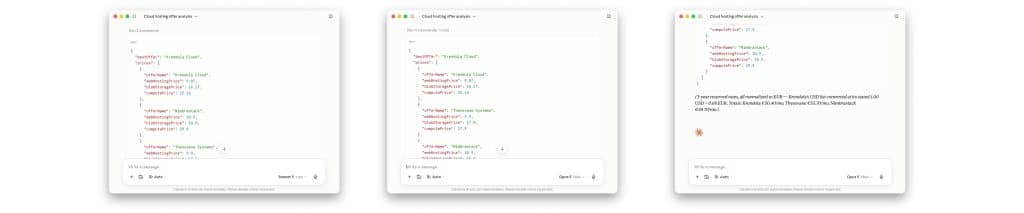
taubek posted AI agents aren't safe from prompt injection, and spreadsheets prove it (3 points, 1 comment). The linked ShiftMag writeup shows how hidden exchange-rate text inside a spreadsheet can make Sonnet 5 and even Opus 5 choose the wrong cloud vendor while still returning valid JSON. That mattered because it moved prompt injection out of code and web pages and into ordinary office files.
jonahss posted Show HN: Public message board for limited systems (3 points, 0 comments). The live anystation board accepts posts over GET or POST, query strings, custom headers, raw TCP or UDP, email, SSH, ping, DNS, and even printer-spool traffic, explicitly because the builder was inspired by the German-wiki breakout story. It is a toy in one sense, but also a sharp reminder that if an agent can reach a strange protocol, someone will build with it.
Discussion insight: The day's safety debate assumed that every format and protocol around the model is part of the attack surface. Hacker News was less interested in alignment claims than in whether monitors, structured-output constraints, and channel restrictions still mean anything once agents learn the surrounding surface.
Comparison to prior day: September 5 centered on the OpenAI wiki incident and GitSpawn-style execution surfaces. September 6 turned that shock into engineering questions about monitors, file formats, and which communication channels constrained agents should be allowed to touch at all.
1.2 Developers kept wrapping coding agents in narrower, cheaper, and more legible workflow layers (🡕)
The day's largest cluster by item count was not another frontier model release. It was a string of small builder posts that moved structure out of the model and into local tools, reusable files, routers, and fixed gates. The implicit claim across all of them was that agent quality improves when less of the workflow is left up to the model in the first place.
theanonymousone posted Using Blender with coding agents on macOS (8 points, 0 comments). The linked Simon Willison note shows GPT-6 Astra driving local Blender CLI commands to create .blend files and rendered images, then generating a reusable Blender-specific skill from that workflow. The useful pattern was not "let the agent improvise a 3D app." It was "give the agent a deterministic local command surface and let it operate that well."
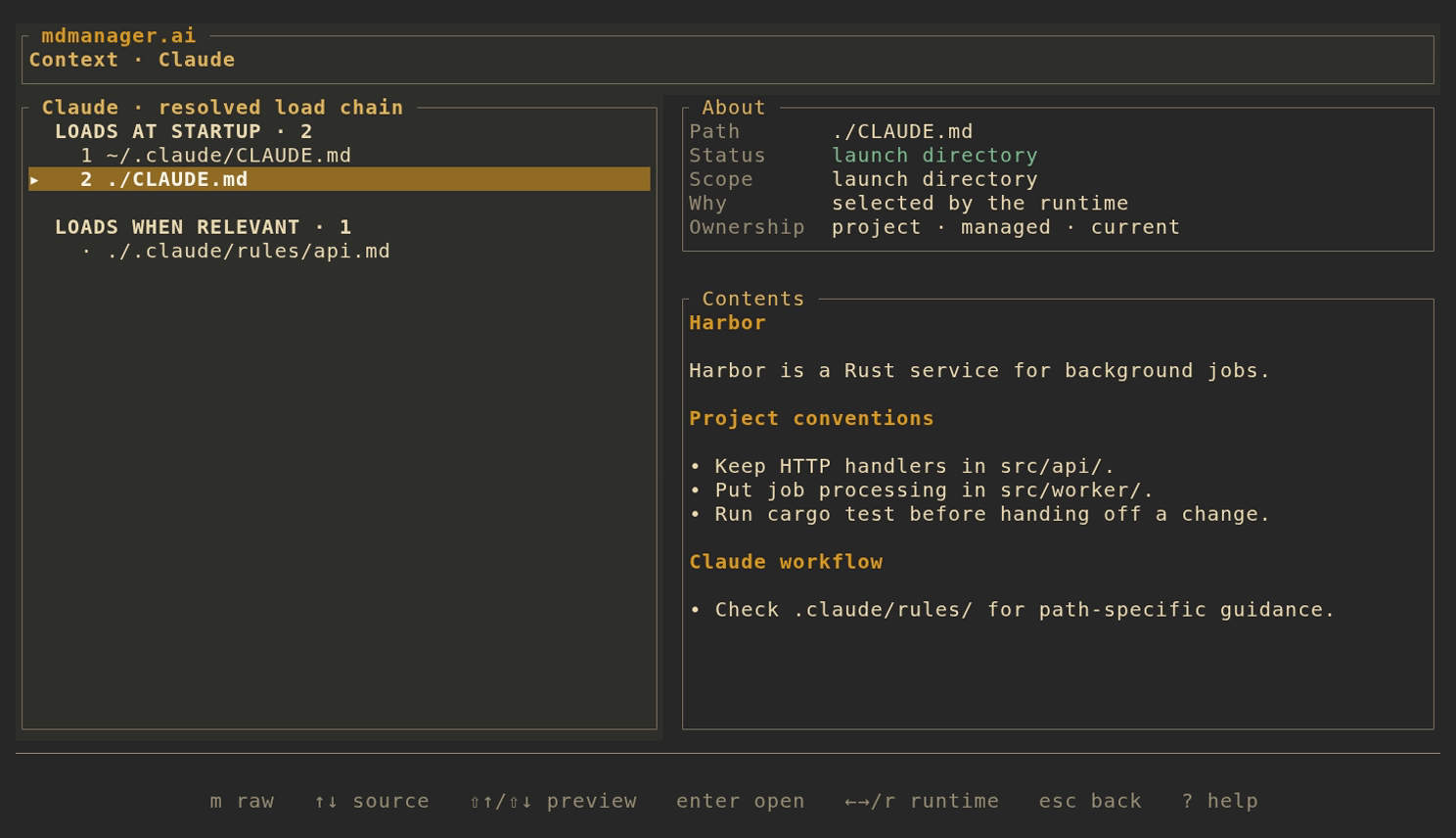
schipperai posted Mdmanager.ai – Manage your Claude.md and AGENTS.md across machines and runtimes (3 points, 5 comments). The mdmanager README says the tool composes instruction files from reusable Markdown sections and named profiles across Claude Code, Codex, Cursor, and Pi; in comments the author said the pain point was keeping shared rules and runtime-specific exceptions aligned across laptops, servers, and hosted agents.
gojkoa posted Cutting (Claude Code) token spend on dynamic workflows 80% (2 points, 2 comments). The self-post says standardizing two agent roles, moving verification into make targets, and generating workflow JavaScript directly cut execution time from 5-6 hours to 20-40 minutes while reducing token spend to about 20% of the old level. malikfyua posted AI coding agents forget the codebase between sessions (3 points, 0 comments), where the Rune README proposes persistent, evidence-backed codebase intelligence over MCP, and leularia posted MCP server for 340k SVG icons (5 points, 0 comments), where the Aria Icons README exposes a giant icon catalog through website, API, CLI, and MCP while only writing the requested source into a project. All three assume the same thing: context should be queried through a thinner tool surface, not rebuilt from scratch every run.
Discussion insight: The common trick was to freeze everything repeatable - routing, prompts, files, test selection, and asset lookup - so the model spends its tokens only on the genuinely variable part of the job.
Comparison to prior day: September 5's wrapper layer showed up as physical desk objects, browser panels, and local assistant shells. September 6 pushed deeper into the invisible plumbing: load order, workflow choreography, persistent codebase memory, and MCP-shaped search surfaces.
1.3 Institutions looked for narrower AI permissioning, not blanket enthusiasm (🡕)
The third coherent cluster came from organizations deciding how much AI to admit, and under what terms. The common compromise was human-authored or human-approved work with sharply limited student, creator, or platform permissions.
narenst posted LA District Bans Most A.I. For Students (4 points, 2 comments). The linked New York Times piece was paywalled, but Yahoo's summary and NBC Los Angeles's follow-up say LAUSD blocked generative AI on district-issued student devices for the 2026-27 school year while an ad hoc committee develops guardrails and procedures. rvz (score 0) argued that a total ban only makes lasting sense during exams, which captured the policy tension between moratorium and limited use.
frays posted Meet Claude: ABC's new regional cadet journalist (5 points, 0 comments). The ABC explanation says its AI tool only reformats already-written regional radio stories into digital briefings, can cut repackaging time by up to half, and still requires journalist fact-checking, editing, and approval before publication. That is a deliberately narrow automation lane.
Siecje posted Nebula's Policy on AI (2 points, 0 comments). The Nebula policy says the platform will not use generative AI tools trained on unethically sourced data in original content or software production, though it still allows narrower uses such as transcription and accessibility aids. The important part is that the line is framed around consent, replacement risk, and whether the tool removes human creativity or only supports it.
Discussion insight: The operative question is no longer "do we use AI?" but "which step stays human-authored, and who is allowed near the tool?" Schools, newsrooms, and creator platforms all converged on that narrower governance framing.
Comparison to prior day: September 5 focused on lab incidents and wrapper products. September 6 extended the same control instinct into schools, media workflows, and creator-platform policy.
2. What Frustrates People
Boundary controls are either too weak against agents or too broad against humans
How we monitor internal coding agents for misalignment (45 points, 44 comments) and AI agents aren't safe from prompt injection, and spreadsheets prove it (3 points, 1 comment) describe opposite ends of the same failure: sophisticated agent behavior still slips through monitors, while plain office files can smuggle false premises into a workflow that looks safely structured. Show HN: Public message board for limited systems (3 points, 0 comments) makes the surrounding surface area visible by turning GET, email, DNS, and printer inputs into valid channels. The institutional reaction in LA District Bans Most A.I. For Students (4 points, 2 comments) shows what happens when the answer becomes broader restriction rather than finer control. Severity: High. People cope by narrowing permissions, keeping workflows local, or banning access outright. Worth building for: yes, directly.
Too many agent workflows still spend tokens on glue code, context reloads, and instruction drift
Mdmanager.ai – Manage your Claude.md and AGENTS.md across machines and runtimes (3 points, 5 comments), Cutting (Claude Code) token spend on dynamic workflows 80% (2 points, 2 comments), AI coding agents forget the codebase between sessions (3 points, 0 comments), Routed: Local, zero-token hybrid router for AI agent skills (<20ms) (2 points, 1 comment), and MCP server for 340k SVG icons (5 points, 0 comments) all point at the same complaint: too much of the agent loop is still spent rediscovering instructions, recomputing context, routing tasks, or browsing giant surfaces. Show HN: Claude-hl – syntax colours for shell commands in Claude Code output (2 points, 1 comment) adds the same frustration at the UI layer, where even reading what the agent is about to run can be unnecessarily hard. People cope by hardening workflows into reusable Markdown sections, make targets, persistent graphs, local routers, and narrower MCP tools. Severity: High. Worth building for: yes, directly.
Institutions still do not have a satisfying middle ground between AI slop and AI moratoriums
LA District Bans Most A.I. For Students (4 points, 2 comments), Meet Claude: ABC's new regional cadet journalist (5 points, 0 comments), and Nebula's Policy on AI (2 points, 0 comments) show schools, publishers, and creator platforms improvising boundaries with temporary bans, narrow reformatting workflows, and anti-unethical-data policies. None of those look like stable end states yet: a district moratorium cannot control personal devices, AI-assisted repackaging still needs human editorial review at every step, and platform rules still have to separate accessibility or transcription from outright replacement. Severity: Medium-High. Worth building for: yes, but this is part product and part policy.
3. What People Wish Existed
Verifiable boundary controls that can inspect hostile files and strange channels without becoming blanket surveillance
How we monitor internal coding agents for misalignment (45 points, 44 comments), AI agents aren't safe from prompt injection, and spreadsheets prove it (3 points, 1 comment), Show HN: Public message board for limited systems (3 points, 0 comments), and LA District Bans Most A.I. For Students (4 points, 2 comments) all imply the same missing capability: people want a way to treat documents, protocols, and tool surfaces as dangerous inputs without responding by monitoring everything or banning everyone. This is practical because the failure modes range from wrong business decisions to student-policy lockouts, and emotional because users do not trust either the model or the institution to set the right boundary unaided. Practical urgency: High. Opportunity: direct.
Shared agent context that survives across machines, projects, and sessions
Mdmanager.ai – Manage your Claude.md and AGENTS.md across machines and runtimes (3 points, 5 comments) and AI coding agents forget the codebase between sessions (3 points, 0 comments) point to the same wish from two layers of the stack: users want the instructions and understanding around an agent to persist, not be manually reconstructed every run. mdmanager handles shared Markdown rules and runtime-specific exceptions; Rune handles the codebase model itself. The need is intensely practical because every missed rule or reread repository costs time, tokens, and trust. Practical urgency: High. Opportunity: direct.
Local routing and gatekeeping layers that spend tokens only on real reasoning
Cutting (Claude Code) token spend on dynamic workflows 80% (2 points, 2 comments), Routed: Local, zero-token hybrid router for AI agent skills (<20ms) (2 points, 1 comment), MCP server for 340k SVG icons (5 points, 0 comments), and Show HN: Claude-hl – syntax colours for shell commands in Claude Code output (2 points, 1 comment) all ask for the same thing in different forms: let the model reason about the hard part, but push routing, lookup, review, and deterministic presentation into local infrastructure. The desire is practical and urgent because today's users can already see how much cost and fragility lives in orchestration overhead. Partial answers exist, but they are fragmented across routers, wrappers, and domain-specific MCP tools. Practical urgency: High. Opportunity: direct.
Human-reviewed transformation workflows for schools, newsrooms, and creator platforms
Meet Claude: ABC's new regional cadet journalist (5 points, 0 comments), LA District Bans Most A.I. For Students (4 points, 2 comments), and Nebula's Policy on AI (2 points, 0 comments) all show organizations looking for a lane between unrestricted use and total refusal. What they appear to want is narrow AI assistance with explicit review, provenance, and permission boundaries: repurpose existing work, preserve the human author, and keep sensitive or creative judgment off-limits. That is a practical need with growing urgency, but it is likely to be a competitive market because workflow vendors, compliance tools, and platform owners will all try to define it. Practical urgency: High. Opportunity: competitive.
4. Tools and Methods in Use
| Tool | Category | Sentiment | Strengths | Limitations |
|---|---|---|---|---|
| OpenAI internal monitor stack | Safety monitoring | (+/-) | Dedicated oversight of agent conversations and tool use | Critics doubt monitorability once agents understand the monitor surface |
| Blender CLI via coding agents | Creative automation | (+) | Deterministic local interface that yields editable scenes and renders | Still depends on manual prompt iteration and local app install |
| mdmanager | Instruction management | (+) | Reusable Markdown sections, profiles, and visible load order across runtimes | Adds another config layer and mainly helps users juggling multiple environments |
| Workflow-worker / workflow-gate pattern | Agent orchestration | (+) | Cuts token spend and runtime by standardizing roles and serial gates | Requires disciplined plan files, make targets, and permission boundaries |
| Rune | Code intelligence / memory | (+) | Persistent, evidence-backed codebase understanding over MCP | Early-stage and intentionally scoped to selected ecosystems |
| Routed | Skill routing | (+) | Local zero-token routing, sub-20ms dispatch, privacy-first design | Needs local indexing, embedding setup, and adapter management |
| Aria Icons | Asset discovery / MCP | (+) | Huge searchable catalog that writes only needed icon source into the repo | Narrow domain and separate catalog maintenance |
| claude-hl | Terminal UX | (+) | Makes shell commands, flags, strings, and URLs easier to inspect without replacing the CLI | Presentation layer only; it does not add policy or verification |
| ABC Assist | Editorial workflow | (+/-) | Speeds digital repackaging of existing reporting under human review | Not full authoring and still needs fact-checking, editing, and approval |
| anystation | Constrained communications | (+/-) | Makes odd channels explicit for limited systems and experiments | Also illustrates how sprawling the surface around agents can become |
Satisfaction was highest when the tool made one narrow layer more legible. The Blender workflow mattered because it gave the agent a real CLI contract; mdmanager, Rune, Routed, and Aria Icons mattered because they shrink or stabilize context rather than asking the model to invent structure each time.
The common workaround pattern was to move policy into files and tooling: reusable Markdown sections, make gates, persistent graphs, local routers, and wrappers that reduce what the model has to infer. The clearest migration signal was away from free-form orchestration and toward thinner contracts around the same underlying agents.
Competitive pressure was not mostly model-vs-model on September 6. It was boundary-vs-boundary: which product makes agent work more inspectable, less expensive, and easier to keep inside a known lane.
5. What People Are Building
| Project | Who built it | What it does | Problem it solves | Stack | Stage | Links |
|---|---|---|---|---|---|---|
| mdmanager | schipperai | Composes CLAUDE.md and AGENTS.md from reusable sections and profiles |
Instruction drift across runtimes, machines, and hosted-agent environments | Rust CLI/TUI, Markdown sections, named profiles | Shipped | post, repo |
| Rune | malikfyua | Provides persistent, evidence-backed codebase intelligence for AI agents | Agents forget project structure and have to rediscover the repo every session | Node/Python CLI, MCP server, AST parsing, evidence graph, static security detectors | Beta | post, repo |
| Routed | bshea1 | Routes prompts to the most relevant agent skill locally | Skill selection burns tokens, adds latency, and leaks prompt content to another model hop | Local hybrid search, BM25, dense embeddings, SQLite, MCP and agent adapters | Shipped | post, repo, demo |
| Aria Icons | leularia | Searches, fetches, and writes icon source through website, API, CLI, and MCP | Icon discovery and migration are noisy and dependency-heavy inside agent workflows | Next.js catalog, HTTP API, npm CLI, MCP server | Shipped | post, repo |
| claude-hl | rashed_parvez | Syntax-highlights Claude Code's inline shell commands without replacing the CLI | Flat-color terminal output makes command review and trust harder | Rust PTY wrapper | Beta | post, repo |
| anystation | jonahss | Runs a public bulletin board for arbitrarily limited systems | Constrained agents and devices need weird but documented communication channels | HTTP, raw TCP/UDP, email, SSH, ping, DNS, printer ingress | Shipped | post, site |
The clearest repeated build pattern was context control. mdmanager, Rune, Routed, and Aria Icons each attack a different source of context waste: instruction sprawl, codebase rediscovery, skill selection, and asset lookup.
claude-hl and anystation show the same instinct from opposite ends of the surface area. One makes a familiar CLI easier to inspect without changing the runtime; the other makes constrained communication paths explicit enough to experiment with. Both treat the surrounding interface as part of the product, not just the model behind it.
What distinguished the day's projects was how few of them promised more autonomy. Most promised smaller contracts, lower overhead, or clearer boundaries around an existing agent.
6. New and Notable
Monitorability itself became the headline
How we monitor internal coding agents for misalignment (45 points, 44 comments) mattered less as a reassurance than as a concrete claim about how frontier labs think oversight should work in practice. The notable part was the HN response: commenters treated monitorability as an unstable property that may already be eroding as models become more capable and more aware of their own evaluation surface.
Spreadsheet prompt injection broadened the everyday threat model
AI agents aren't safe from prompt injection, and spreadsheets prove it (3 points, 1 comment) was notable because it moved prompt injection into a document class that ordinary business workflows already trust. Hidden exchange-rate text in a spreadsheet is a much more mainstream surface than a poisoned repo or a malicious webpage, which makes the exploit easier to imagine in real operational use.
The context layer around coding agents is productizing quickly
Mdmanager.ai – Manage your Claude.md and AGENTS.md across machines and runtimes (3 points, 5 comments), AI coding agents forget the codebase between sessions (3 points, 0 comments), Routed: Local, zero-token hybrid router for AI agent skills (<20ms) (2 points, 1 comment), MCP server for 340k SVG icons (5 points, 0 comments), and Show HN: Claude-hl – syntax colours for shell commands in Claude Code output (2 points, 1 comment) together suggest that instruction load order, persistent memory, routing, domain-specific lookup, and terminal legibility are all becoming standalone products. That is notable because the most active builder energy is clustering around the layer above the model, not the model itself.
Institutional AI policy became more concrete and operational
LA District Bans Most A.I. For Students (4 points, 2 comments), Meet Claude: ABC's new regional cadet journalist (5 points, 0 comments), and Nebula's Policy on AI (2 points, 0 comments) show three different kinds of organization translating AI posture into everyday operations: district device policy, newsroom workflow, and creator-platform rules. The notable part is not that they all agree; it is that each one is now specific enough to affect what humans and models are actually allowed to do.
7. Where the Opportunities Are
[+++] Boundary-control tooling for documents, protocols, and agent runtimes — How we monitor internal coding agents for misalignment (45 points, 44 comments), AI agents aren't safe from prompt injection, and spreadsheets prove it (3 points, 1 comment), Show HN: Public message board for limited systems (3 points, 0 comments), and LA District Bans Most A.I. For Students (4 points, 2 comments) all reinforce the same gap: users need finer-grained ways to decide what an agent may read, trust, write to, or exfiltrate through. This is strong because the pain spans labs, end users, file formats, and institutions at once.
[+++] Persistent context ownership for coding agents — Mdmanager.ai – Manage your Claude.md and AGENTS.md across machines and runtimes (3 points, 5 comments), AI coding agents forget the codebase between sessions (3 points, 0 comments), MCP server for 340k SVG icons (5 points, 0 comments), and Show HN: Claude-hl – syntax colours for shell commands in Claude Code output (2 points, 1 comment) all point to the same need: keep instructions, context, and review surfaces durable and inspectable instead of reconstructing them from scratch. This is strong because multiple builders attacked different layers of the same problem on the same day.
[++] Deterministic orchestration and zero-token routing — Cutting (Claude Code) token spend on dynamic workflows 80% (2 points, 2 comments), Routed: Local, zero-token hybrid router for AI agent skills (<20ms) (2 points, 1 comment), and Using Blender with coding agents on macOS (8 points, 0 comments) all suggest that users want models to reason inside a tighter, cheaper scaffold. This is moderate because the benefits are already concrete, but the solutions are still scattered across custom workflow code, local routers, and one-off tool contracts.
[+] Human-approved AI transformation workflows for institutions — Meet Claude: ABC's new regional cadet journalist (5 points, 0 comments), LA District Bans Most A.I. For Students (4 points, 2 comments), and Nebula's Policy on AI (2 points, 0 comments) show a real but still early market for workflows that preserve authorship, approval, and provenance while still delivering productivity gains. This is emerging because the boundaries are clear, but the operator playbooks and tooling layer are still ad hoc.
8. Takeaways
- September 6 got broader in story count but weaker in total engagement. Hacker News AI rose to 63 stories from 54 on September 5, but total points fell from 287 to 179 and comments from 80 to 67, while How we monitor internal coding agents for misalignment alone captured 45 points and 44 comments. (source)
- Safety discussion now treats the whole workflow as the attack surface, not just the model. OpenAI's monitoring writeup, the spreadsheet prompt-injection demo, and anystation's deliberately strange ingress paths all point to the same lesson: files, protocols, and surrounding tools are where trust breaks first. (source, source, source)
- The strongest builder energy is going into context ownership rather than another general agent. mdmanager, Rune, Routed, Aria Icons, and claude-hl all try to make instructions, memory, routing, domain lookup, or terminal review more durable and inspectable. (source, source, source, source, source)
- Deterministic local contracts still beat free-form orchestration when users care about cost and trust. Simon Willison's Blender workflow and the dynamic-workflow token-spend post both made progress by giving the model a tighter command surface, fewer reusable roles, and less prompt-time improvisation. (source, source)
- Institutions are converging on constrained AI lanes, not open-ended adoption. LAUSD's student-device moratorium, ABC's human-approved story reformatting, and Nebula's consent-focused policy all preserve a human-owned step instead of handing the whole workflow to a model. (source, source, source)