Twitter AI Agent - 2026-05-14
1. What People Are Talking About
1.1 Always-on agents arrive with explicit permission surfaces 🡕
The biggest shift was not another abstract orchestration diagram but named agents that spell out what data they can see and what actions they may take. Google’s leaked Gemini Spark onboarding, xAI’s Grok Build beta, and SAP/NVIDIA’s OpenShell runtime all framed agents as long-running operators that need permissions, browser state, and execution controls before users will trust them.
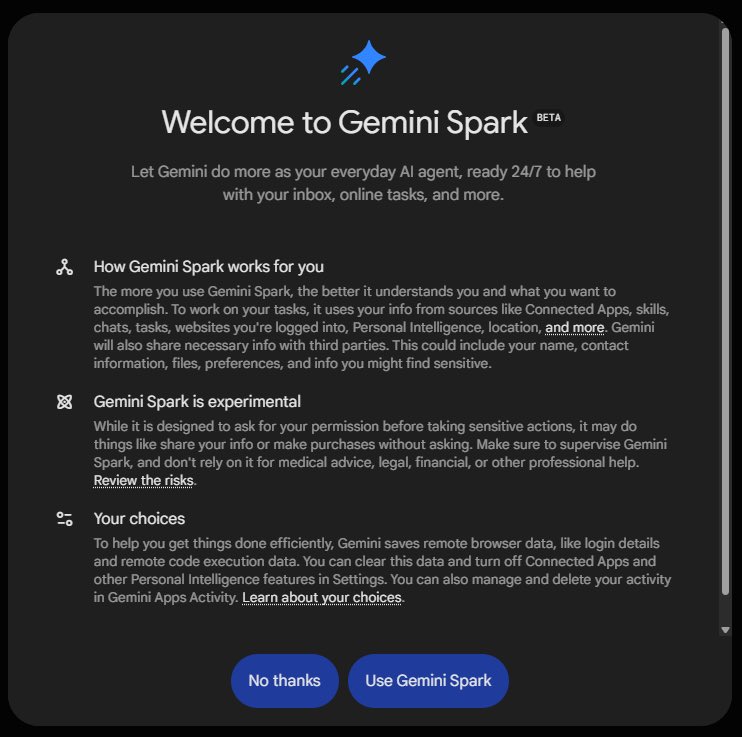
@testingcatalog reported (524 likes, 26 replies, 34,072 views) that Gemini Spark BETA is pitched as a 24/7 agent for inbox and online tasks, and included onboarding text saying it can draw from Connected Apps, skills, chats, websites the user is logged into, Personal Intelligence, and location while saving remote browser data like login details and remote code execution state. TestingCatalog’s accompanying article carries the same text and notes that Google warns Spark may share information with third parties or make purchases without asking because it is experimental.
@yunta_tsai said (362 likes, 20 replies, 18,452 views) that Grok Build is already useful for fleet-data triage, training-label improvement, patching security holes, and making suggestions across multiple environments, while quoting xAI’s early-beta description of Grok Build as an agentic CLI for coding, app building, and workflow automation. The stronger evidence was in the replies: he called it his “primary work horse,” and xAI team members replied that direct user feedback was accelerating product improvements.
@nvidia announced (468 likes, 33 replies, 39,198 views) that SAP is embedding NVIDIA OpenShell into SAP Business AI Platform to move specialized agents from development into trusted production deployment. NVIDIA’s own launch post says OpenShell adds isolated execution environments, filesystem and network policy enforcement, and containment when agent logic fails, while SAP’s companion post frames the same layer as the foundation for auditability, enterprise IAM alignment, and governable execution inside business processes.
Discussion insight: The replies were less about raw model quality than about supervision. Gemini Spark drew skepticism about rollout scope and whether Google can be trusted with background actions, while the SAP/OpenShell thread kept returning to what an agent can access, approve, or spend.
Comparison to prior day: May 13 already highlighted orchestration surfaces in Notion and Cursor. May 14 made the shift more concrete: consumer, coding, and enterprise agents were all presented as always-on systems that need explicit control layers.
1.2 Managed control planes and replayable workflows replace ad hoc sessions 🡕
A second cluster moved the conversation from “agents can coordinate” to “agents need operational surfaces.” The strongest examples were not model releases but control planes, fan-out runtimes, and reproducible workflow artifacts that make agent behavior observable and rerunnable.
@ashpreetbedi argued (19 likes, 4 replies, 2,039 views) that the next interface is a managed agent workspace with context, tools, permissions, memory, review loops, and domain-specific skills, linking to Agno. Agno’s public README describes a control plane for building and managing agent platforms with tracing, scheduling, RBAC, human approval, context providers, and multiple interfaces, which makes the tweet more than a generic workspace mockup.

@cline shared (27 likes, 2 replies, 1,108 views) a Cline SDK multi-agent example that spins up specialist agents in parallel and streams their outputs live to a browser. The public example README says the app runs three agents concurrently with Promise.all, sends each stream over SSE, and then feeds their outputs into a synthesizer agent, which is a concrete implementation pattern rather than a vague “multi-agent” slogan.
@kane_cli introduced (11 likes, 1 reply, 140 views) Test.md as a way to take a passing browser flow and rerun it later in CI or hand it to another agent without rewriting it from scratch. Kane’s public agents.md describes markdown-based tests with reusable imports, variables, replay, caching, and Playwright interoperability, which sharply narrows one of the most common browser-agent failure modes: successful demos that are hard to repeat.
Discussion insight: Replies around managed workspaces focused on integration rather than novelty. One of the first questions on the Agno thread was whether it could work with existing subscriptions, which suggests teams want a control plane that absorbs current tools instead of replacing everything.
Comparison to prior day: May 13 framed workspaces and orchestration as the product direction. May 14 added concrete primitives such as RBAC, schedulers, SSE fan-out, and replayable markdown tests.
1.3 Marketplaces move from skill discovery to paid service discovery 🡕
Skill abundance remained a major thread, but the story broadened from “find a skill” to “find a service and pay for it.” The strongest marketplace posts were about discovery layers, but the follow-on discussion showed that trust and evaluation are still lagging behind catalog size.
@cyrilXBT claimed (98 likes, 15 replies, 3,677 views) that an agent skills marketplace had launched with over one million ready-to-deploy skills and plugins. The public Skills Marketplace site currently advertises 1,319,403 GitHub-sourced SKILL.md entries, compatibility with Claude Code and Codex-style tools, and FAQ guidance telling users to inspect code before installing, which matches the tweet’s scale claim but also underscores how much responsibility is still pushed back to the user.
@circle introduced (107 likes, 9 replies, 5,344 views) Agent Marketplace as the place where funded agents can discover, evaluate, and integrate paid services. Circle’s Agent Stack launch post says the package combines Agent Wallets, Agent Marketplace, CLI, nanopayments, and skills so agents can hold USDC, discover services, and transact programmatically, while agents.circle.com frames the pitch as “payment as authentication” for paid APIs.

Discussion insight: Both marketplace threads immediately ran into the same missing layer. SkillsMP replies questioned whether a giant catalog is just a better prompt store without quality signals, while Circle replies asked for reputation, reliability, and enforceable contracts once agents start paying for services autonomously.
Comparison to prior day: May 13 centered on skill-catalog scale and first-party skills. May 14 extended that logic into marketplaces where agents are supposed to find and pay for services, not just install capabilities.
2. What Frustrates People
Permission boundaries are still too vague once agents act in the background
The clearest high-severity frustration was not “the model is weak,” but “the control surface is incomplete.” @testingcatalog reported (524 likes, 26 replies, 34,072 views) that Gemini Spark may share information with third parties or make purchases without asking, and the linked TestingCatalog write-up repeats Google’s own warning that the product is experimental and should be supervised. On the enterprise side, NVIDIA’s OpenShell post and SAP’s companion post effectively describe the same problem from the other end: once agents can touch systems of record, teams need containment, policy enforcement, IAM alignment, and audit trails. Severity: High. The workaround visible in the feed was not better prompting, but more governance.
Passing a browser flow once still does not mean teams can rerun it later
@kane_cli framed (11 likes, 1 reply, 140 views) the failure mode directly: a browser flow can pass once, but until Test.md existed, rerunning it next week, in CI, or through another agent meant rewriting it. Kane’s public agents.md answers that with markdown-based replay, imports, and caching, which makes the complaint unusually concrete. Severity: Medium, but actionable. This looks worth building for because the pain is narrow, repeated, and easy to validate.
Discovery layers are arriving faster than trust signals
The marketplace threads were enthusiastic at the headline level and skeptical in the replies. @cyrilXBT promoted (98 likes, 15 replies, 3,677 views) a skills marketplace with over one million skills, but one of the first skeptical replies called it “a fancier prompt store” without clear quality signals. The Skills Marketplace FAQ itself says users should inspect code before installing. Likewise, @circle introduced (107 likes, 9 replies, 5,344 views) Agent Marketplace, and its replies immediately asked for reputation, reliability, and enforceable contracts once agents start buying services automatically. Severity: High for production adoption. The current workaround is manual review and selective curation.
3. What People Wish Existed
Trust-scored discovery for skills and services
What people seem to want is not merely a bigger catalog, but a marketplace that tells them what is safe, current, and reliable. @cyrilXBT drove (98 likes, 15 replies, 3,677 views) attention to a marketplace with over a million skills, yet the replies quickly shifted to quality concerns, and the Skills Marketplace FAQ explicitly tells users to inspect code before installing it. The same pattern appeared under @circle’s Agent Marketplace post (107 likes, 9 replies, 5,344 views), where replies asked for reputation, reliability, and contract enforcement for paid services. Opportunity: direct and competitive. Discovery exists; trust infrastructure is still thin.
Agent payment and authentication rails that do not require human checkout loops
Circle’s own materials suggest this need is becoming practical, not hypothetical. @circle positioned (107 likes, 9 replies, 5,344 views) Agent Marketplace as the place where funded agents can discover and integrate services, the Agent Stack blog post says agents need wallets, discovery, and CLI tooling to transact programmatically, and agents.circle.com frames the pitch as “payment as authentication” for paid APIs. Opportunity: direct. There is now visible infrastructure for this, but the category still looks early enough that authentication, settlement, and service evaluation remain open design space.
Replayable, agent-native workflow artifacts
The Kane thread makes this need unusually concrete: the gap is not browser automation in general, but repeatable browser automation that another agent or CI job can reliably rerun. @kane_cli described (11 likes, 1 reply, 140 views) Test.md as the missing bridge between a successful browser session and a durable artifact, and the public agents.md fills in the mechanics with markdown steps, imports, variables, and replay. Opportunity: direct. It is a practical need more than an emotional one, and today’s evidence suggests current tooling only partially covers it.
4. Tools and Methods in Use
| Tool | Category | Sentiment | Strengths | Limitations |
|---|---|---|---|---|
| LangGraph | Agent framework | (+/-) | Stateful graphs, routing, persistence, and explicit workflow structure surfaced clearly in the interview-prep thread | Even its promoter called out steep learning curve and graph-management complexity |
| Gemini Spark | Consumer agent | (+/-) | Cross-app context, always-on task handling, remote browser state, skills-aware positioning | Experimental status; Google warns it may share information or make purchases without asking |
| NVIDIA OpenShell | Secure runtime | (+) | Isolated execution, filesystem/network policy enforcement, containment, audit hooks, IAM alignment | It is a runtime safety layer, not a full end-user product by itself |
| Grok Build | Coding agent CLI | (+) | Real-world reports of data triage, label improvement, security patching, and workflow automation | Early beta; evidence is still launch copy plus a small number of user reports |
| Agno | Agent platform/control plane | (+) | Tracing, scheduling, RBAC, human approval, context providers, multi-interface deployment | Today’s social proof centered on a demo workspace more than broad user-outcome evidence |
| Cline SDK | Agent runtime | (+) | Parallel specialist agents, SSE streaming, synthesizer pattern, extensible tool runtime | Still a builder-oriented framework that requires implementation work |
| Skills Marketplace | Skills discovery | (+/-) | Large GitHub-sourced catalog, multi-tool compatibility, search/filter surface | Quality ranking, maintenance visibility, and safe-install trust are unresolved |
| Circle Agent Stack / Agent Marketplace | Agent payments/discovery | (+) | Wallets, marketplace, CLI, programmable USDC settlement, “payment as authentication” framing | Reputation, evaluation, and contract enforcement are still weakly specified |
| Kane CLI Test.md | Agent testing/browser automation | (+) | Replayable markdown tests, imports, variables, caching, Playwright interoperability | Early and narrow; the public positioning is centered on browser flows |
Overall sentiment was pragmatic. The feed was more interested in operational fit than novelty: permission boundaries in Gemini Spark, secure runtime layers in OpenShell, control-plane surfaces in Agno, fan-out orchestration in Cline SDK, and repeatable browser artifacts in Kane. The migration pattern visible across the day was from single-agent chat toward systems that can be observed, replayed, governed, paid for, and safely constrained. The clearest competitive fault line was no longer “which model is smartest,” but “which stack is trustworthy enough to let an agent act.”
5. What People Are Building
| Project | Who built it | What it does | Problem it solves | Stack | Stage | Links |
|---|---|---|---|---|---|---|
| Grok Build | @xai | Agentic CLI for coding, app building, and workflow automation | Gives developers a terminal-native agent that can handle broader engineering tasks than autocomplete or chat | Agentic CLI, coding/build automation, terminal workflow | Beta | launch tweet · user report |
| Agno | @AgnoAgi | Agent platform and control plane with tracing, scheduling, approvals, and multiple interfaces | Teams need a governed place to run and manage agents instead of isolated sessions | Python SDK, control plane, RBAC, scheduling, human approval | Shipped | GitHub · tweet |
| Cline SDK multi-agent example | @cline | Web app that runs three specialist agents in parallel and synthesizes the results | Shows builders how to structure multi-agent fan-out with live streaming instead of bespoke orchestration | TypeScript, Agent runtime, SSE, Promise.all fan-out |
Shipped | example · tweet |
| Test.md | @kane_cli | Markdown-based test artifact for recording and replaying browser-agent workflows | Teams need to rerun a successful browser flow in CI or through another agent without rewriting it | Kane CLI, markdown, replay, imports, caching, Playwright interoperability | Shipped | agents.md · tweet |
| Circle Agent Stack / Agent Marketplace | @circle | Lets agents discover services, hold USDC, and transact programmatically | Agents need a financial layer and discovery surface for paid APIs and services | Agent Wallets, Agent Marketplace, CLI, USDC, nanopayments, skills | Shipped | blog · site · tweet |
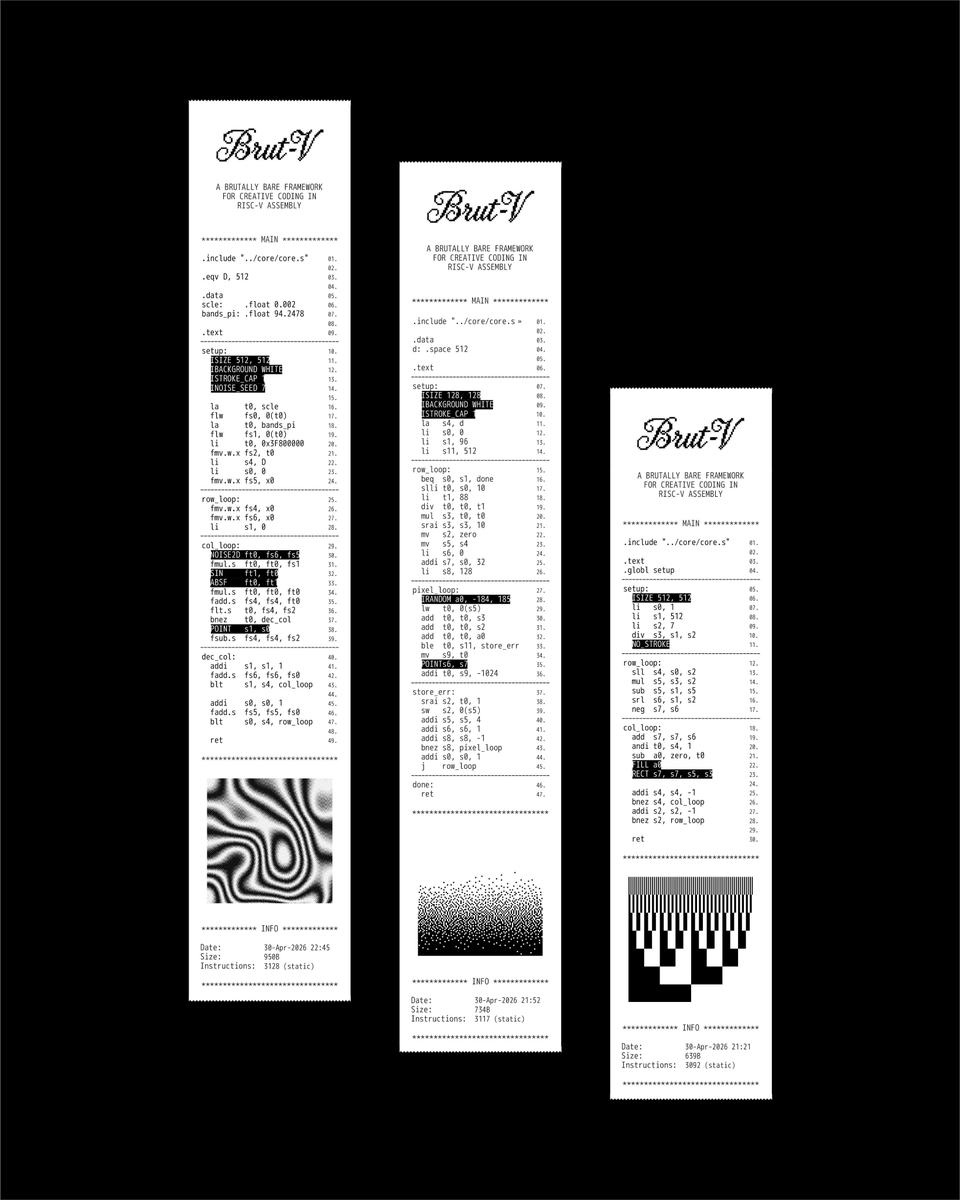
| BRUT-V | @daumerval | Browser-based creative coding environment where Hermes Agent helped build a RISC-V assembler and sketch framework | Demonstrates that agents can build developer tools and creative systems, not just assist with prompts | RISC-V assembly, JavaScript assembler, browser VM, macro framework | Shipped | GitHub · demo · tweet |
The strongest build pattern was infrastructure, not novelty wrappers. Grok Build, Agno, Cline SDK, Kane, and Circle were all trying to solve operational gaps around execution, replay, payment, or coordination rather than merely adding another chat surface.
BRUT-V stood out because it was the opposite kind of project: a public artifact showing an agent helping to produce a real creative coding toolchain. The public repo says it ships a browser editor, JavaScript assembler, minimal RISC-V VM, and example sketches, while the tweet claims Hermes Agent wrote 6,200 lines of assembly and bootstrapped the assembler to byte-perfect parity with the reference simulator.
Across the whole section, the repeated trigger was reliability. Builders were packaging agents into control planes, reproducible artifacts, payment rails, and inspectable repos because ad hoc sessions no longer look sufficient for serious use.
6. New and Notable
Gemini Spark makes Google’s background-agent ambitions legible
@testingcatalog surfaced (524 likes, 26 replies, 34,072 views) the clearest public look yet at Gemini Spark, and the linked article suggests a public beta around Google I/O. What made it notable was not just another agent name, but the explicit onboarding language around connected apps, websites you are logged into, remote browser data, and the possibility of purchases or data-sharing without confirmation.
SAP and NVIDIA turn secure execution into a first-class enterprise product layer
@nvidia introduced (468 likes, 33 replies, 39,198 views) OpenShell’s role inside SAP Business AI Platform, and the related NVIDIA and SAP posts are unusually specific about runtime hardening, policy enforcement, containment, IAM alignment, and auditability. That specificity makes this more significant than a generic enterprise partnership announcement.
7. Where the Opportunities Are
[+++] Policy and audit layers for agents that can act — Evidence appears in multiple sections. Gemini Spark’s onboarding warns about data-sharing and purchases, while SAP/NVIDIA are explicitly building containment, policy enforcement, IAM alignment, and audit trails into OpenShell. This is strong because the need shows up simultaneously in consumer and enterprise contexts.
[++] Trust-scored marketplaces for skills and services — SkillsMP shows supply, and Circle shows the next step toward paid service discovery, but both threads immediately run into reputation, maintenance, and contract-enforcement questions. This is moderate because the market is clearly forming, but the missing trust layer is still open.
[++] Replayable agent workflow artifacts — Kane’s Test.md and Cline’s multi-agent example both point toward the same gap: successful agent work needs to be captured in durable artifacts that can be rerun, inspected, and handed off. This is moderate because the pain is crisp and practical, especially for browser and orchestration workflows.
[+] Agent-native payment and authentication rails — Circle’s Agent Stack and agents.circle.com suggest the category is finally becoming real: wallets, paid API access, and machine-speed settlement are being packaged together. This is emerging because the primitives are visible, but usage patterns and evaluation standards are still early.
8. Takeaways
- Always-on agents are being shipped with explicit warnings, not just promises. Gemini Spark’s onboarding says it can use connected apps, logged-in sites, and remote browser data, and may share information or make purchases without asking because it is experimental. (source)
- Enterprise agent adoption is converging on runtime containment and auditability. SAP and NVIDIA are not pitching OpenShell as a nicer chatbot wrapper; they are pitching isolated execution, policy enforcement, and auditable control for systems that touch business processes. (source)
- Agent platforms are turning into control planes. Agno’s public platform surface and Cline’s streamed multi-agent example both show the day’s demand shifting toward schedulers, traces, approvals, and structured fan-out rather than one-off chat sessions. (source)
- Discovery is scaling faster than trust. SkillsMP can point to more than 1.3 million GitHub-sourced skills, but both its own FAQ and the replies around the tweet show that quality signals and safe-install confidence still lag far behind catalog size. (source)
- Reproducibility is becoming a first-class agent concern. Kane’s Test.md pitch only makes sense because teams are already running into the pain of workflows that pass once but cannot be replayed in CI or through another agent without reauthoring them. (source)
- Public agent-built artifacts are getting easier to inspect. BRUT-V is notable because the repo, demo, and screenshots make the claim legible: a browser-based creative coding stack, not just a vague boast that an agent helped. (source)