Twitter AI Agent - 2026-05-15
1. What People Are Talking About
1.1 Harness engineering and observability move into the mainstream 🡕
The strongest cluster was not another generic "agentic AI" pitch but a more specific push toward harnesses, architecture, observability, and repeatable long-task behavior. At least five substantive items framed agent quality as a systems-design problem: how work is delegated, how context is maintained, how failures are surfaced, and how changes are verified.
@heygurisingh argued (96 likes, 4 replies, 40,436 views, 380 bookmarks) that people getting real value from LLMs are making "structural shifts" in how they delegate work rather than optimizing prompts. His thread asks users to map what they still do manually, identify what only feels productive, and rank the highest-impact changes in trust and workflow placement, which made it a process-design argument rather than a prompt pack.
@RoundtableSpace shared (95 likes, 3 replies, 47,504 views, 74 bookmarks) Learn Harness Engineering, linking to a public course that says harnesses constrain agent behavior, preserve context across long-running tasks, stop premature success declarations, and make runtime behavior observable and debuggable for Codex- and Claude Code-style agents.

@MeenakshiYACS posted (76 likes, 22 replies, 1,007 views, 36 bookmarks) a reference architecture that breaks agent systems into orchestration, specialized agents, tools, memory, monitoring, reliability, and governance. The image made the same point visually: the community conversation is moving away from single prompts toward full-stack agent operating models.

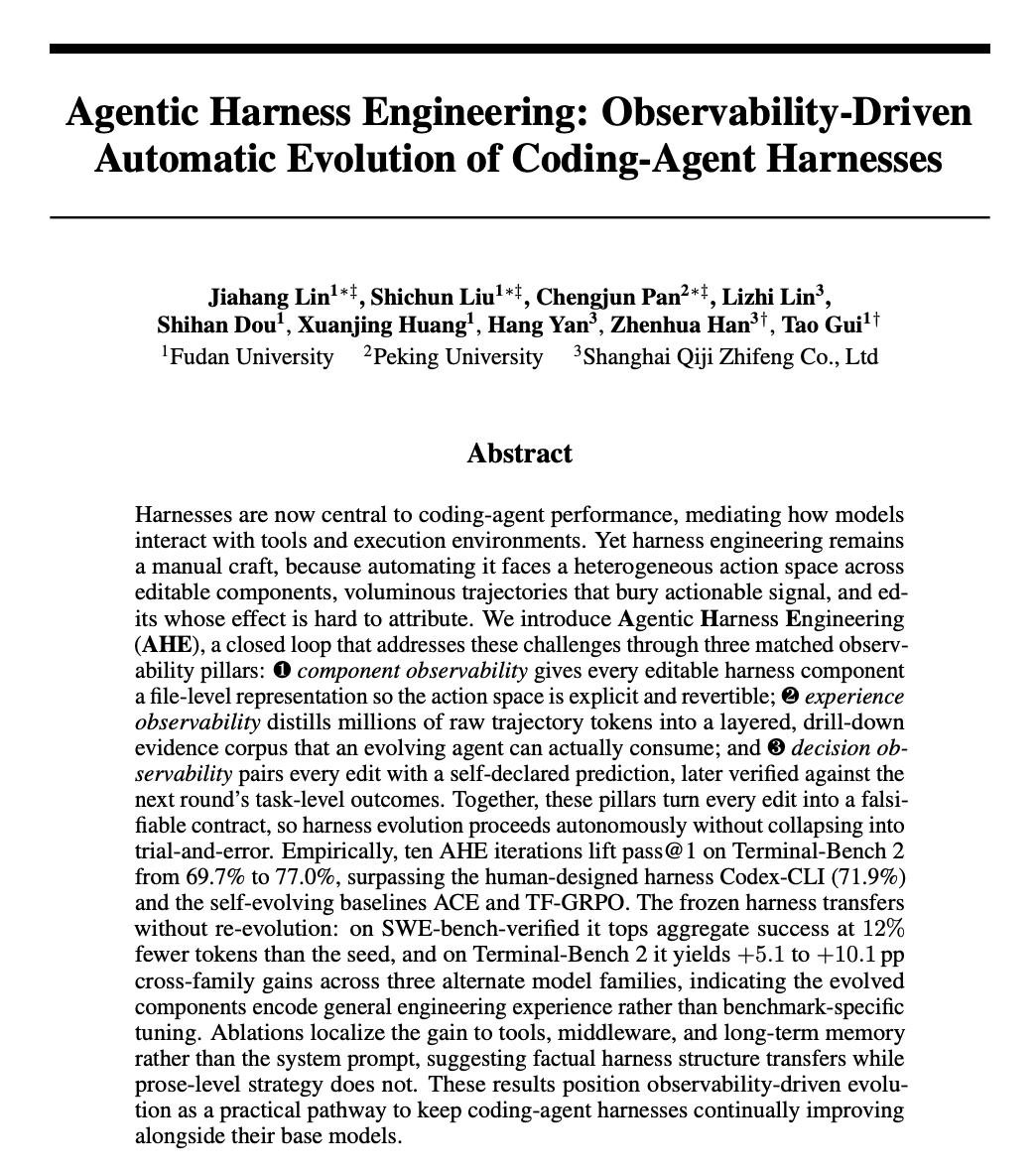
@IntuitMachine summarized (18 likes, 2 replies, 1,295 views, 30 bookmarks) the paper behind Agentic Harness Engineering, claiming ten iterations improved Terminal-Bench 2 first-pass performance from 69.7% to 77.0% and that the resulting harness transferred to SWE-bench-verified with 12% fewer tokens. The abstract screenshot is notable because it defines the bottleneck as observability across editable components, trajectories, and decisions, not raw model scale.
Discussion insight: The replies and adjacent posts showed that this is also a fatigue signal. @BenjDicken joked (495 likes, 19 replies, 15,733 views, 121 bookmarks) that 2026 engineering is now "agent → while loop subagent → nested while loop agent harness," and one reply said reading Codex, OpenCode, AI SDK, and Flue led to the same conclusion.
Comparison to prior day: On May 14, the feed emphasized control planes, replayable workflows, and permission surfaces. On May 15, the evidence moved down a level into harness design, architecture diagrams, and observability as the real levers for reliable agents.
1.2 Skills, hooks, and knowledge packs become reusable control surfaces 🡕
A second theme treated reusable skills as infrastructure, not decoration. The highest-signal posts were about packaging rules, validating them, and turning domain knowledge into something an agent can load on demand instead of re-deriving each time.
@rez0__ said (85 likes, 5 replies, 7,206 views, 69 bookmarks) that a bug-bounty hackbot is mostly an agent md file, a set of hacking skills, and a goal loop. The replies made the pattern more concrete: one person asked about context rotations breaking long runs, and Rez0 replied that goal mode should keep looping; another asked whether the skills came only from private reports, and he answered that many came from public blogs, books, and talks.
@dabit3 argued (28 likes, 5 replies, 4,765 views, 34 bookmarks) that agent hooks turn repeatable rules into deterministic behavior instead of prompt instructions that a model has to remember. That was reinforced in the replies, where one person summarized the distinction as code-enforced guarantees versus remembered hopes.
@paulgrey posted (64 likes, 2 replies, 3,201 views, 16 bookmarks) an updated xpr-network-dev-skill package with 25 ABI-verified, security-hardened docs for Claude Code, Cursor, and OpenClaw. The GitHub README says it serves both local coding assistants and server-side autonomous agents, and that its facts are verified against live mainnet ABIs, contract source, and Hyperion traces rather than inferred from model training.
@tom_doerr shared (8 likes, 1,229 views, 13 bookmarks) skill-conductor, whose README describes an architecture-first skill lifecycle with CREATE, EVAL, EDIT, REVIEW, and PACKAGE modes plus a benchmark stack combining grader, blind A/B comparison, and analyzer agents.

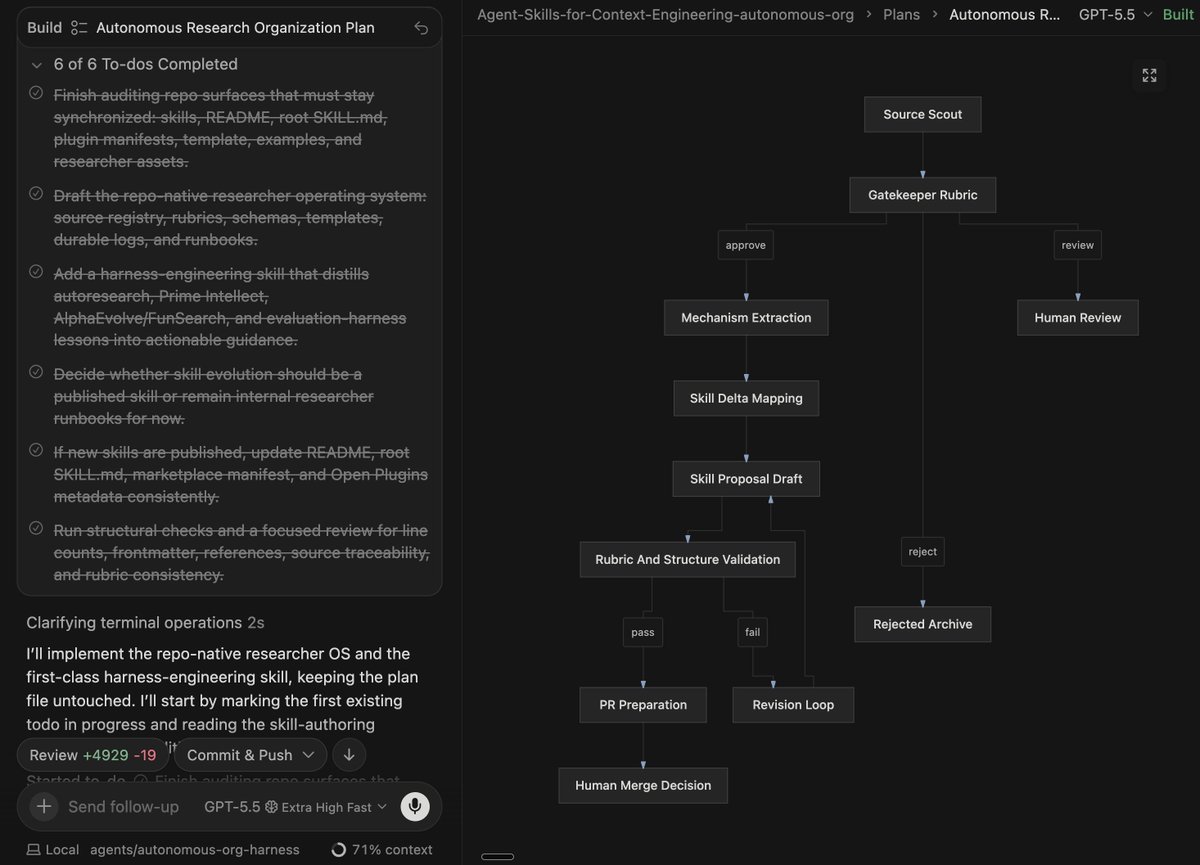
@koylanai is building (46 likes, 1 reply, 2,582 views, 50 bookmarks) an autonomous research loop for Agent Skills for Context Engineering that scouts sources, scores them with rubrics, extracts mechanisms, drafts skill updates, and prepares pull requests. The workflow image shows a gated path from source scouting to rubric checks, proposal drafts, validation, revision loops, and human merge decisions.
Discussion insight: The strongest reply pattern was about determinism and durability. Hooks and skill packs were praised when they turned fuzzy prompt habits into code-level enforcement, but the context-rotation complaint on the Rez0 thread showed that reusable skills still depend on runtimes that can survive long loops.
Comparison to prior day: May 14 highlighted skill marketplaces and catalog scale. May 15 focused more on how skills are authored, tested, versioned, and grounded in domain-specific evidence.
1.3 Agent commerce infrastructure gets operational 🡕
The third theme was agent commerce moving from concept slides to concrete onboarding flows. Instead of just saying agents will buy services, the strongest posts showed how they register, authenticate, discover endpoints, and settle usage-based payments.
@circle announced (127 likes, 9 replies, 6,516 views) Agent Marketplace as part of Circle Agent Stack. Circle’s launch post says the stack combines Agent Wallets, Agent Marketplace, CLI, nanopayments, and skills so agents can hold funds, discover services, and transact programmatically with USDC, while agents.circle.com frames the pitch as "payment as authentication."
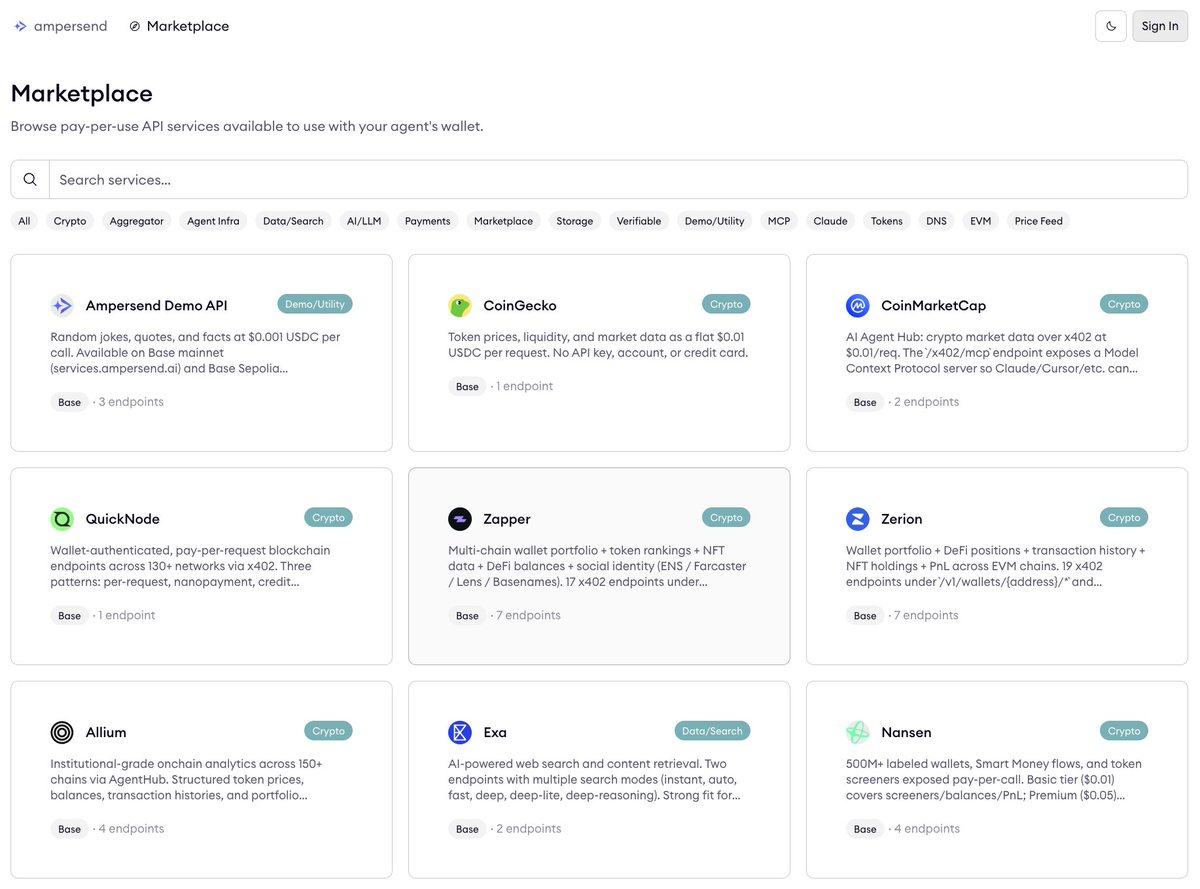
@ampersend_ai opened (26 likes, 3 replies, 4 quotes, 2,203 views) its marketplace to "every agent and every builder," saying agents can browse a public API catalog, install the SDK, receive a wallet, and pay per request in USDC with x402 settlement under the hood. The marketplace screenshot showed named providers including CoinGecko, CoinMarketCap, QuickNode, Zapper, Zerion, Allium, Exa, and Nansen, which made the claim more concrete than a generic launch thread.
@OrbisAPI posted (24 likes, 4 replies, 360 views, 3 bookmarks) an agent quickstart where a single POST returns an orb_live_ key, with 21,743+ APIs available immediately and no wallet, OAuth, or subscription required. The image mattered because it showed the exact register endpoint and the $5 USDC free-credit offer that sits on top of that onboarding flow.

@MalayAhmad summed up (21 likes, 19 replies, 177 views) the counterpoint: building an agent still means juggling wallet setup, chain selection, payment infrastructure, and LLM orchestration before business logic even starts.
Discussion insight: The replies under Circle immediately shifted to trust primitives. One response said reputation, reliability signals, identity, and evaluator roles matter as much as the marketplace itself once agents begin paying for services autonomously.
Comparison to prior day: May 14 was more about service discovery as a category. May 15 added the operational details: how an agent registers, gets funded, authenticates, and actually pays per call.
2. What Frustrates People
Manual harnesses still hide failures behind too much state
The clearest high-severity frustration was that agents still fail for structural reasons that are hard to inspect. @IntuitMachine summarized (18 likes, 2 replies, 1,295 views, 30 bookmarks) six pain points behind Agentic Harness Engineering, including tangled components, overwhelming raw trajectories, and poor attribution when edits help or hurt. The Learn Harness Engineering course makes the same diagnosis in plainer language: agents need explicit rules, context continuity, verification, and observability to stop failing on long tasks. @BenjDicken captured (495 likes, 19 replies, 15,733 views, 121 bookmarks) the community mood by turning the whole stack into a joke about nested agent harnesses. Severity: High. People are not complaining about model intelligence first; they are complaining about the scaffolding around it.
Stateless agents and broken continuity still force babysitting
Multiple posts framed persistent state as the missing primitive. @ataiiam pitched (26 likes, 4 replies, 1,988 views, 30 bookmarks) CopilotKit Threads as a fix for stateless agents, and the docs describe resumable conversations, shared state, human-in-the-loop workflows, and realtime thread sync. The same pain showed up from the other side in @RoundtableSpace’s sponsored Higgsfield post (145 likes, 15 replies, 55,439 views, 20 bookmarks), which marketed autonomous production specifically against the current need for humans to "babysit the workflow," and in the Rez0 thread where a reply complained about context rotations resetting long goal loops. Severity: High. The visible workaround is more state management, not better prompting.
Agent commerce still asks builders to assemble too many rails up front
The payment stack is moving, but the setup burden is still obvious in the posts themselves. @MalayAhmad wrote (21 likes, 19 replies, 177 views) that builders are still juggling wallet setup, chain selection, payment infrastructure, and LLM orchestration before they can even start on business logic. That complaint is exactly what @OrbisAPI and @ampersend_ai are trying to remove with one-call registration, marketplace discovery, and pay-per-request settlement, and the Circle Agent Stack launch explicitly says the alternative has been fragmented APIs, signing flows, and multichain logic. Severity: High. The workaround today is to adopt opinionated payment rails instead of stitching the pieces together manually.
Default voice and persona choices still miss local context
@Call_Me_Commy said (128 likes, 13 replies, 4,275 views, 59 bookmarks) they built a dental-clinic call receptionist because "almost every AI call Agent sounds American" and they wanted one that mirrored a Nigerian voice. In replies, the builder said the stack was Vapi, ElevenLabs, and n8n, which turns a cultural complaint into a concrete implementation path. Severity: Medium. This looks build-worthy because the dissatisfaction is specific and the workaround already exists as a reproducible stack.
3. What People Wish Existed
Self-hosted managed agents with full session control
The most explicit unmet-need statement came from @nummanali, who said (349 views, 1 bookmark) they were looking for something like Claude Managed Agents but self-hosted, with agent configs in code, team agents in Slack, background agents for recurring work, full control over sessions and memory, and support for multiple inference providers. The post names Flue as the closest framework but says they would love to see the same pattern from OpenCode. Opportunity: direct. The demand is concrete, operational, and still only partially met.
Persistent thread and handoff primitives for long-running work
@ataiiam positioned (26 likes, 4 replies, 1,988 views, 30 bookmarks) Threads as the fix for stateless agents, and the linked docs describe resumable conversations, shared state, and human-in-the-loop workflows. The Higgsfield promotion around workflow babysitting, plus the context-rotation complaint in the Rez0 thread, point to the same need from different angles: users want agents that can persist, resume, and hand off without reconstructing state from scratch. Opportunity: direct. Existing tools address parts of it, but the feed still treats continuity as a problem worth selling against.
No-login payment and authentication rails for agents
This need showed up as both frustration and launch category. @MalayAhmad described the setup burden before business logic begins, while @OrbisAPI offered a one-call registration flow with no wallet, OAuth, or subscription and @ampersend_ai offered a marketplace where the wallet and SDK installation happen on the agent side. Circle’s launch site makes the need explicit in product language: agents get stuck behind paywalls and authentication, and USDC is supposed to unlock those doors. Opportunity: direct and competitive. The category is active, but the trust and evaluation layer is still open.
Regional and role-specific voice agents
The Nigerian dental receptionist demo was also a demand signal. @Call_Me_Commy explained that they built it because most call agents sound American, not because voice automation itself was missing. Replies asking for tooling produced a concrete partial answer — Vapi, ElevenLabs, and n8n — but not a broader product category for regional defaults, business-role templates, or localized QA. Opportunity: direct but niche. The need is practical, identity-linked, and not yet generalized.
4. Tools and Methods in Use
| Tool | Category | Sentiment | Strengths | Limitations |
|---|---|---|---|---|
| Learn Harness Engineering | Course / reference | (+) | Synthesizes OpenAI and Anthropic harness guidance into concrete lectures on continuity, control, and verification | Educational material, not a runtime or product by itself |
| Agentic Harness Engineering (AHE) | Harness method | (+/-) | Strong benchmark framing around observability, falsifiable edits, and automatic harness evolution | Evidence came through a paper-summary thread rather than broad production reports |
| CopilotKit Threads | Memory / session infra | (+) | Resumable conversations, shared state, realtime sync, human-in-the-loop workflows | Solves continuity, not the full agent runtime problem |
| TradingAgents | Multi-agent framework | (+/-) | Specialized analyst, researcher, trader, and risk roles; multi-provider LLM support; research-backed performance claims | Repo labels it research-oriented and warns results vary by model, data, and period |
| XPR Network Dev Skill | Domain skill pack | (+) | ABI-verified knowledge layer for Claude Code and OpenClaw agents; grounded in live chain data | Narrowly targeted at one blockchain ecosystem |
| skill-conductor | Skill authoring / eval | (+) | Architecture-first design, CREATE/EVAL/EDIT/REVIEW/PACKAGE workflow, benchmark agents | Social proof was still small relative to the bigger frameworks in the feed |
| Circle Agent Stack / Agent Marketplace | Payments / discovery | (+/-) | Wallets, marketplace, CLI, USDC settlement, "payment as authentication" framing | Replies immediately asked for reputation, identity, and service-evaluation guarantees |
| Ampersend Marketplace | API marketplace | (+) | Prompt-native onboarding, wallet + SDK setup, exact per-call USDC pricing, x402 settlement | Depends on agents already participating in a wallet-based payment ecosystem |
| Orbis quickstart | API onboarding | (+) | One-call registration, bearer key issuance, no wallet/OAuth/subscription requirement, $5 free credit | Still introduces a provider-specific key and top-up flow |
| Vapi + ElevenLabs + n8n | Voice-agent stack | (+) | Concrete stack for a localized receptionist that answers, checks calendar availability, and books appointments | Evidence today came from one vertical demo |
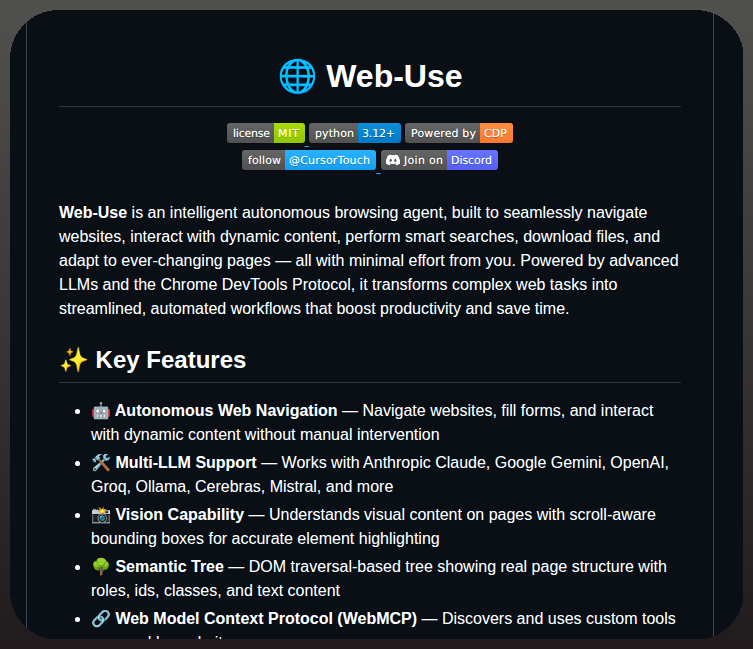
| Web-Use | Browser agent | (+) | CDP-backed semantic tree, multi-LLM support, vision, WebMCP, OAuth 2.0 + PKCE | Browser automation remains setup-heavy and failure-prone on dynamic sites |
Overall sentiment was pragmatic rather than celebratory. The strongest positive reactions were reserved for tools that made agents more durable or more operational: harness references, thread persistence, verified skill packs, one-call API onboarding, and priced marketplaces. The main migration pattern visible in the feed was away from prompt-centric framing and toward enforceable code, persistent state, domain-grounded skill modules, and payment rails that agents can use directly. Competitive pressure is building most clearly in two places: skill infrastructure, where authoring and evaluation are becoming product categories, and agent commerce, where discovery has arrived before trust and reputation have been solved.
5. What People Are Building
| Project | Who built it | What it does | Problem it solves | Stack | Stage | Links |
|---|---|---|---|---|---|---|
| TradingAgents | Tauric Research | Multi-agent trading framework with analyst, researcher, trader, and risk roles | Breaks market analysis and trading decisions into specialist agents instead of a monolithic trading prompt | Python, multi-provider LLM support, analyst/researcher/trader/risk teams | Shipped | GitHub · paper · tweet |
| Amara AI call receptionist | @Call_Me_Commy | Dental-clinic receptionist that answers calls, checks calendars, and books appointments with a Nigerian voice | Voice agents defaulting to American accents and manual front-desk intake | Vapi, ElevenLabs, n8n | Shipped | tweet |
| Autonomous research loop for Agent Skills | @koylanai | Agents scout sources, score them with rubrics, extract insights, draft skill updates, and prep PRs | Keeping skill repositories current, reviewed, and auditable | Cursor, GPT-5.5, rubrics, runbooks, PR checks | Alpha | tweet |
| XPR Network Dev Skill | @paulgrey | Domain skill pack for coding assistants and autonomous agents building on XPR Network | Agents need chain-specific docs and execution knowledge that are verified, not guessed | Markdown skill modules, live ABI verification, Hyperion traces, OpenClaw integration | Shipped | GitHub · tweet |
| skill-conductor | smixs | System for designing, testing, evaluating, and packaging agent skills | Builders need repeatable skill-authoring and benchmark workflows instead of ad hoc SKILL.md writing | Python, HTML eval viewer, grader/comparator/analyzer agents | Shipped | GitHub · tweet |
| Circle Agent Marketplace / Agent Stack | Circle | Wallet, marketplace, CLI, and USDC payment infrastructure for agents | Agents need structured service discovery and programmable settlement | Agent Wallets, CLI, USDC, nanopayments, skills | Shipped | blog · site · tweet |
| Orbis quickstart | @OrbisAPI | Registers an agent, returns a bearer key, and exposes a large API catalogue immediately | Removes login, wallet, and subscription overhead from agent API access | REST register endpoint, orb_live_ key, Base/x402 settlement | Shipped | tweet |
| Ampersend Marketplace | @ampersend_ai | Public catalog of pay-per-use APIs for agents and builders | Gives sellers distribution and gives agents discoverable services they can pay for automatically | USDC on Base, x402 settlement, wallet + SDK onboarding | Shipped | tweet |
| Web-Use | CursorTouch | Autonomous browsing agent that navigates websites, interacts with dynamic pages, and handles auth flows | Web tasks that still require brittle manual browsing or custom browser automation | Python, Chrome DevTools Protocol, vision, semantic tree, WebMCP, OAuth 2.0 + PKCE | Shipped | GitHub · tweet |
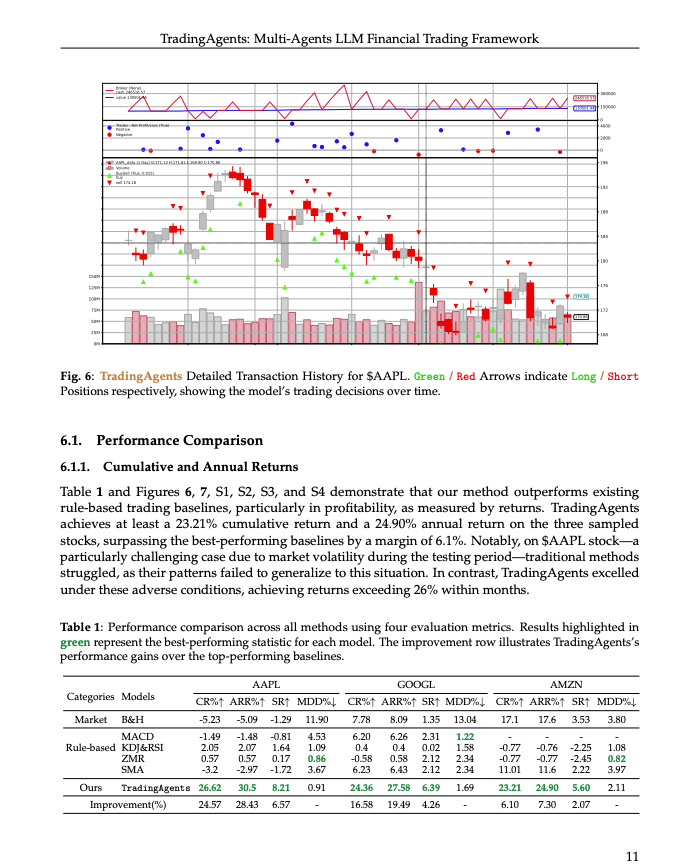
TradingAgents was one of the clearest research-to-build signals in the feed. @quantscience_ shared (159 likes, 6 replies, 15,332 views, 307 bookmarks) the framework, and the repo says it mirrors real trading firms with analyst, researcher, trader, and risk-management teams while supporting multiple model providers. The image pulled from the paper mattered because it showed both a transaction history figure and a table where TradingAgents outperformed rule-based baselines across sampled stocks.
The builder pattern underneath the table is consistent across the day: people are turning brittle prompts into reusable assets. Koylanai is building a research-and-PR loop for skills, Paul Grey is publishing a verified knowledge layer for XPR agents, and skill-conductor is trying to standardize how skills get designed, tested, and packaged before distribution.
The commerce projects are also converging on the same missing layer. Circle, Orbis, and Ampersend all reduce the friction between an agent deciding to use a service and actually paying for it, but each does so with a different control surface: wallets plus discovery, one-call bearer-key registration, or a pay-per-use marketplace.
Web-Use stood out because it treats browser automation as agent infrastructure rather than a browser macro. The repo says it uses a CDP-backed semantic tree, visual grounding, WebMCP tool discovery, file operations, and OAuth 2.0 + PKCE token reuse, which is a fuller browser-agent stack than the typical "AI can click buttons" demo.
The most distinctive vertical build came from @Call_Me_Commy, whose dental receptionist demo tied a cultural gap to a practical workflow. In replies to the post, the builder disclosed Vapi, ElevenLabs, and n8n, which showed how fast builders can now combine voice, scheduling, and automation layers into a domain-specific agent without inventing new foundation infrastructure.
6. New and Notable
Agent-first open model positioning
@hasantoxr claimed (36 likes, 2 replies, 18,780 views, 48 bookmarks) that Ant Group had open-sourced Ring-2.6-1T, describing it as a 1T-parameter reasoning model with 63B active parameters built for agent and coding workflows and usable inside Claude Code. What made it notable was the positioning: long-horizon tasks, complex reasoning, coding, and agent workflows were presented as the core use case rather than as side benefits.
Layered security stacks for agent runtimes
@garrytan described (26 likes, 1 reply, 2,505 views, 63 bookmarks) a defense-in-depth setup with Silmaril for shell-level prompt-injection and infiltration blocking, Clawvisor for credential- and network-level blocking and detection, and app-layer prompt-injection detection inside OpenClaw and Hermes Agent. That is a compact but important signal: agent security discussion is getting more layered and more specific about where defenses sit.
Browser agents are standardizing around structure plus auth
@tom_doerr shared (8 likes, 1 reply, 1,002 views, 10 bookmarks) Web-Use as an autonomous web agent. The repo says it combines a CDP-based semantic tree, visual grounding, file operations, WebMCP tool discovery, and OAuth 2.0 + PKCE with persistent token reuse, which is a stronger stack signal than a generic browser-agent claim.
7. Where the Opportunities Are
[+++] Harness observability and self-improvement tooling — This was the densest signal in the dataset. The AHE thread, Learn Harness Engineering course, MeenakshiYACS architecture diagram, Benj Dicken’s complexity joke, and the heygurisingh workflow-audit framing all point to the same gap: teams need better ways to inspect, verify, evolve, and constrain long-running agents.
[++] Managed agent memory and self-hosted continuity — The strongest unmet-need post explicitly asked for self-hosted managed agents with full control over sessions and memory, while CopilotKit Threads, Higgsfield’s babysitting pitch, and the context-rotation complaint on Rez0’s thread all showed continuity is still fragile. There is room for products that preserve state, support background execution, and expose that control without forcing teams into third-party SaaS.
[++] Agent payment, trust, and service evaluation layers — Circle, Orbis, and Ampersend all shipped pieces of the same stack, and MalayAhmad’s post showed why builders care. The next opportunity is not just another catalog; it is the trust layer the replies asked for: reputation, evaluator roles, identity, and clearer execution guarantees once agents start paying for services on their own.
[+] Localized voice-agent defaults — The Amara receptionist demo showed a concrete, under-served niche: voice agents with regional accents, local business context, and role-specific workflows. The stack already exists; the productization layer still looks early.
8. Takeaways
- Harness engineering became public-facing agent work, not just an internal optimization topic. The day’s strongest posts were about observability, continuity, architecture, and automatic harness evolution rather than prompt tips. (source)
- Reusable skills are being treated as durable agent infrastructure. Hooks, verified knowledge packs, and skill-evaluation systems were all framed as ways to replace remembered prompt rules with repeatable controls. (source)
- Agent commerce is shifting from marketplace rhetoric to executable onboarding flows. Circle, Orbis, and Ampersend all showed concrete mechanisms for registration, discovery, and per-call settlement, while builders still complained about the setup burden. (source)
- The most credible builders were solving narrow operational problems. TradingAgents, the Nigerian dental receptionist, and XPR’s verified dev skill all targeted specific workflows instead of claiming general-purpose autonomy. (source)
- Security discussion is getting more layered as agents move closer to real execution. Garry Tan’s shell-, credential-, network-, and app-layer stack was a concise signal that single-layer defenses are no longer the dominant framing. (source)