Twitter AI Agent - 2026-06-17
1. What People Are Talking About
1.1 Frontier coding models changed what people expected from agents (🡕)
The highest-engagement discussion was not about a new workflow wrapper; it was about whether stronger frontier models now let coding agents move from code completion into product judgment, design, and long-horizon execution. At least three strong items supported this theme, but the replies also made clear that access, price, and hidden safety behavior are now part of the product debate.
@bcherny said (10,649 likes, 651 replies, 897,907 views, 1,835 bookmarks) that Claude Fable 5 felt like a shift from “coding agent” to “thought and design partner,” and the thread mattered because replies immediately turned from excitement to operating concerns: one reader pushed on retention policy and pricing, while another said benign debugging work was getting flagged by safety systems.
@latkins argued (642 likes, 38 replies, 47,748 views) that invisible capability suppression is worse than an openly weaker model because users cannot tell when coding or harness work is being silently degraded. That made the strongest criticism of the day unusually specific: the problem was not merely “safety,” but unannounced behavior changes that make agent output harder to trust.
@IBuzovskyi added (69 likes, 13 replies, 9,734 views) a more builder-facing angle by saying Hermes Agent now runs on Fable 5 because the model is built for long-horizon tasks. The replies reinforced the same point as the launch threads: people care less about raw benchmark language than about whether a model can hold long-running agent state together.
Discussion insight: The conversation did not settle on “best model wins.” It settled on a more operational question: if a model is powerful enough to run the workflow, can teams afford it, get access to it, and trust its safety behavior when a coding task looks adjacent to a restricted domain?
Comparison to prior day: June 16 was mostly about Fable 5 as a capability jump. June 17 kept the excitement but shifted the center of gravity toward pricing, access, and behavior transparency.
1.2 Framework launches moved down-stack from UX to runtime primitives (🡕)
A second major theme was that framework activity got more structural. Instead of one more “agent app,” the strongest launches split the stack into framework, harness, and runtime layers, with durability, checkpoints, and recovery as the differentiators.
@vercel introduced (180 likes, 20 replies, 18,938 views, 111 bookmarks) eve as an open-source agent framework organized around agent.ts, instructions.md, tools/, skills/, subagents/, channels/, and schedules/. The public eve launch post adds the concrete production pieces the tweet only names briefly: durable execution, sandboxed compute, human approvals, subagents, evals, and channel adapters are built in rather than bolted on later.
@Cloudflare said (125 likes, 5 replies, 12,652 views, 70 bookmarks) its Agents SDK is now a runtime any framework can build on. Cloudflare’s follow-up post is the important evidence here: it explicitly separates the framework layer (Flue), harness layer (Pi / Project Think), and runtime layer (Agents SDK), and names durable execution, durable filesystem, and sandboxed code execution as platform primitives rather than framework niceties.
@Coo_Lxing shared (92 likes, 7 replies, 5,397 views, 122 bookmarks) Loom, an open-source delivery harness for coding agents. The repo description makes the point explicit: route, plan, execute, verify, repair, preview, and handoff are treated as protocol steps, with checkpointed state under .loom/, because code generation alone is not the same as software delivery.
@deepfates pointed to (118 likes, 8 replies, 9,869 views, 49 bookmarks) Cantrip, a full agent framework in Elixir. That mattered less for its engagement than for its stack signal: framework experimentation is spreading beyond the usual TypeScript/Python surface into BEAM-style concurrency, long-lived processes, and replayable “loom” state.
Discussion insight: Replies were more skeptical than celebratory. People asked whether these systems support A2A, complained about missing docs links and unclear costs, and joked about “another framework” every week, which shows appetite for stronger primitives but fatigue with overlapping abstractions.
Comparison to prior day: June 16 was heavy on framework launches. June 17 pushed deeper by separating the runtime beneath the framework and by emphasizing delivery, recovery, and state continuity.
1.3 Local-first agent surfaces became concrete across desktop, terminal, and on-device stacks (🡕)
The local-first theme strengthened again, but the notable change was that it moved from performance talk to visible product surfaces: desktop apps, self-hosted workspaces, terminal agents, and on-device Apple tooling.
@ollama showed (910 likes, 35 replies, 52,521 views, 493 bookmarks) Hermes Desktop running from Ollama with one command. The thread turned the post into a product spec: parallel subagents, self-learning Python skills, and messaging integrations were all called out in follow-up replies, which made this more than a thin launcher announcement.
@AlexJonesax argued (107 likes, 3 replies, 6,380 views, 55 bookmarks) that Apple’s WWDC direction matters because a complete agentic loop can now run on-device, with MLX maturing into a local stack and coding agents integrating into Xcode. @hasantoxr added (253 likes, 12 replies, 15,945 views, 227 bookmarks) that Apple’s Core AI Models toolkit includes export recipes and local model primitives, which grounded the broader “local AI” claim in a concrete developer tool.
@GithubProjects shared (173 likes, 9 replies, 11,736 views, 147 bookmarks) Odysseus as a self-hosted AI workspace with local-first data handling, local or API-backed models, MCP, web/files/shell access, and persistent memory. @darshal_ added (74 likes, 43 replies, 7,643 views, 19 bookmarks) a MiniMax-powered CLI coding agent that stays entirely in the terminal and exposes its workflow for hacking and customization.
Discussion insight: The strongest replies treated local execution as real, but not effortless. The open question was not whether local agents are possible; it was whether teams can make setup, versioning, and model integration smooth enough that local-first becomes default rather than expert-only.
Comparison to prior day: June 15 emphasized local speedups and indexing; June 17 showed full desktop, workspace, and on-device surfaces that make local-first look productized.
1.4 Skills became mutable, distributable, and monetizable assets (🡕)
The skill conversation also advanced. The strongest posts were no longer about writing one good instruction file; they were about skill libraries that evolve, skill packs that expose operational features, and marketplaces that pay builders for distribution.
@Sumanth_077 introduced (179 likes, 9 replies, 7,029 views, 159 bookmarks) Memento-Skills as a self-evolving framework where skills are retrieved from a local library, executed in a sandbox, blamed when they fail, and then rewritten through a Read -> Execute -> Reflect -> Write loop. The most useful reply was the pushback about skill drift, because it shows that builders now take self-editing skill systems seriously enough to ask how they fail.
@sonalshukla3377 compiled (56 likes, 22 replies, 483 views) a 12-feature Claude Code checklist spanning slash commands, compaction, subagents, MCP, permissions, hooks, skills, and checkpoints. That thread mattered because it showed which harness features practitioners now treat as baseline operational components rather than advanced extras.
@Capafyai announced (76 likes, 38 replies, 19,643 views, 55 bookmarks) that Hermes builders can publish closed-source skills and get paid per run. The shift here was economic: skills are no longer only reusable context files; they are becoming marketplace inventory.
Discussion insight: The skill market now has two tensions at once. Builders want richer, more autonomous skill systems, but replies keep circling back to control: how do you stop skill drift, how do you validate behavior, and which features are mature enough to rely on every day?
Comparison to prior day: June 16 treated skills as specialized artifacts and optimization targets. June 17 added self-rewriting loops, marketplace monetization, and more explicit harness feature checklists.
2. What Frustrates People
Model access, price, and hidden safety behavior
Severity: High. @bcherny said (10,649 likes, 651 replies, 897,907 views, 1,835 bookmarks) that Fable 5 felt like a major jump for agentic coding and product work, but the replies immediately surfaced two blockers: retention policy concerns for businesses and the possibility of much higher pricing for some users. @latkins argued (642 likes, 38 replies, 47,748 views) that invisible suppression is worse than an obvious refusal because users cannot tell when coding or harness output has been silently degraded, and a reply in the bcherny thread said ordinary debugging was being flagged as security or biology work. People are coping by treating stronger models as optional upgrades rather than default infrastructure. This looks worth building for because the pain is not just “model quality”; it is predictability, plan availability, and policy transparency around agent work.
Framework sprawl still creates integration fatigue
Severity: High. @vercel launched eve and @Cloudflare launched a substantial Agents SDK platform layer on the same day, but the replies were full of “how is this different,” “will it support A2A,” and “what does it cost?” rather than simple applause. In the Cloudflare thread, one reply called out a broken Agent Memory link and asked for realistic run-cost guidance, while another mocked the weekly cadence of new frameworks. @Coo_Lxing framed Loom as a response to exactly this gap by saying coding tools can write code but still do not solve software delivery. The current workaround is to keep layering checkpoints, delivery memory, and harness-specific conventions on top of whichever framework a team already has. This is worth building for because the same frustration appears across vendor launches and open-source harness repos.
Agents can spend and act, but operators still lack clean control surfaces
Severity: High. @milesdeutscher described (36 likes, 15 replies, 7,786 views) Hermes + Stripe as a real setup flow with approval thresholds, spending caps, and allowlists, and the Stripe Projects skill documentation confirms why the concern is justified: the skill writes to .env, provisions billable services, and may leave dormant resources behind after removal. @StockSavvyShay said (147 likes, 22 replies, 14,331 views) Rubrik and Bedrock AgentCore are adding risk visibility and rollback for destructive actions, which means “undo the damage” is already a named requirement. @Jannat188219 pushed (112 likes, 99 replies, 1,145 views) the same trust problem from a different angle by saying wallets expose transactions, not judgment. People cope today with approval gates, spending caps, encrypted vaults, and human review. This looks worth building for because the demand is explicit and the controls are still fragmented.
Local-first setups are getting better, but operational smoothness is still uneven
Severity: Medium. @ollama made (910 likes, 35 replies, 52,521 views, 493 bookmarks) local desktop agents look much simpler, but even the supportive replies framed this as “local agents are getting real,” not “local agents are solved.” @AlexJonesax celebrated (107 likes, 3 replies, 6,380 views, 55 bookmarks) Apple’s on-device loop and multi-Mac MLX path, while replies elsewhere in the local-first cluster kept raising versioning and integration friction. @darshal_ pitched (74 likes, 43 replies, 7,643 views, 19 bookmarks) a fully hackable terminal agent, which is attractive to power users but still implies more setup and tuning than a packaged SaaS experience. This looks moderately worth building for because the appetite is strong, but the problems are now more about polish and operability than about raw feasibility.
3. What People Wish Existed
Portable, validated skill and memory artifacts
The strongest practical request was for skills and memory that survive tool boundaries and improve without becoming brittle. @Sumanth_077 proposed (179 likes, 9 replies, 7,029 views, 159 bookmarks) a self-rewriting skill loop, but a reply immediately asked how to prevent skill drift after a few days of autonomous edits. @sonalshukla3377 showed (56 likes, 22 replies, 483 views) that practitioners already think in terms of reusable MCP, subagent, permission, and checkpoint features rather than one-off prompts, while @BamOnChain pitched (17 likes, 3 replies, 318 views) a framework-agnostic, local-first memory SDK for Claude Code, Codex, and Cursor. This is a practical need with active builders, but the market still lacks a widely trusted validation layer. Opportunity: direct.
Spend, ROI, and rollback visibility across agent fleets
People are now asking for operator dashboards, not just smarter agents. @wandb said (12 likes, 2 replies, 1,127 views) engineering leaders cannot answer whether they are overspending or underspending on AI coding because usage is split across Cursor, Claude Code, Codex, and other tools. @StockSavvyShay described (147 likes, 22 replies, 14,331 views) rollback, discovery, and risk visibility as missing enterprise functions, and Cloudflare’s framework launch replies asked for realistic run-cost guidance rather than more abstraction. This is a practical need and the surrounding evidence suggests real budget owners are now involved. Opportunity: direct.
Approval-scoped payment and governance control planes
The payment threads did not ask for unconstrained autonomy; they asked for safer ways to let agents provision services, buy APIs, and manage limited spend. @milesdeutscher described (36 likes, 15 replies, 7,786 views) approval thresholds, allowlists, and expiring keys as the core of Hermes + Stripe, and the public Stripe Projects skill docs confirm that these flows touch real billing and plaintext .env files. @Jannat188219 added (112 likes, 99 replies, 1,145 views) the trust-layer variant by asking for reputational signals that encode judgment instead of raw balance or activity. This is practical and urgent, but likely competitive because many teams will build adjacent slices of the same control plane. Opportunity: competitive.
Privacy-safe local workspaces that feel as easy as hosted tools
The local-first cluster implied a wish for agent setups that keep data close without requiring expert operators. @ollama argued (910 likes, 35 replies, 52,521 views, 493 bookmarks) and @GithubProjects showed (173 likes, 9 replies, 11,736 views, 147 bookmarks) that local or self-hosted agents are real alternatives, while Apple’s Core AI and on-device loop posts argued that mainstream developer platforms are moving the same way. The emotional component is clear in the language around control, privacy, and independence from cloud lock-in, but the practical need is smoother setup and maintenance. Opportunity: direct.
4. Tools and Methods in Use
| Tool | Category | Sentiment | Strengths | Limitations |
|---|---|---|---|---|
| Claude Fable 5 | Model | (+/-) | Users describe it as a step up for coding, design, and long-horizon work, with Hermes builders specifically calling out fit for long tasks | Price, access, retention policy, and overblocking concerns dominated replies |
| eve | Framework | (+) | Built-in durable execution, approvals, subagents, evals, sandboxing, and a clear file-based agent structure | Replies immediately questioned overlap with existing stacks and asked about A2A / complexity |
| Cloudflare Agents SDK | Runtime / platform | (+/-) | Exposes durable execution, durable filesystem, and sandbox primitives underneath frameworks like Flue | Framework fatigue and cost-clarity complaints show the platform story is still hard to communicate |
| Hermes Desktop on Ollama | Local runtime | (+) | Same agent runtime across desktop and Ollama launch flow; thread highlights subagents, self-learning skills, and messaging integrations | Still assumes users can manage local model/runtime setup and workflow tuning |
| Apple Core AI / MLX stack | Local inference stack | (+) | Evidence points to full on-device loops, model export tooling, and tighter IDE/device integration | Most evidence is launch-stage and reply discussion still treats deployment/versioning as unresolved |
| Claude Code feature stack | Coding harness | (+) | Practitioners now treat slash commands, compaction, subagents, MCP, permissions, hooks, skills, and checkpoints as core workflow tools | The feature list itself implies substantial harness complexity for new users |
| Stripe Projects skill for Hermes | Payments / provisioning skill | (+/-) | Provisions real services, syncs credentials, supports upgrades/rotation, and exposes explicit billing caveats | Writes to .env, creates billable resources, and requires strong approval boundaries |
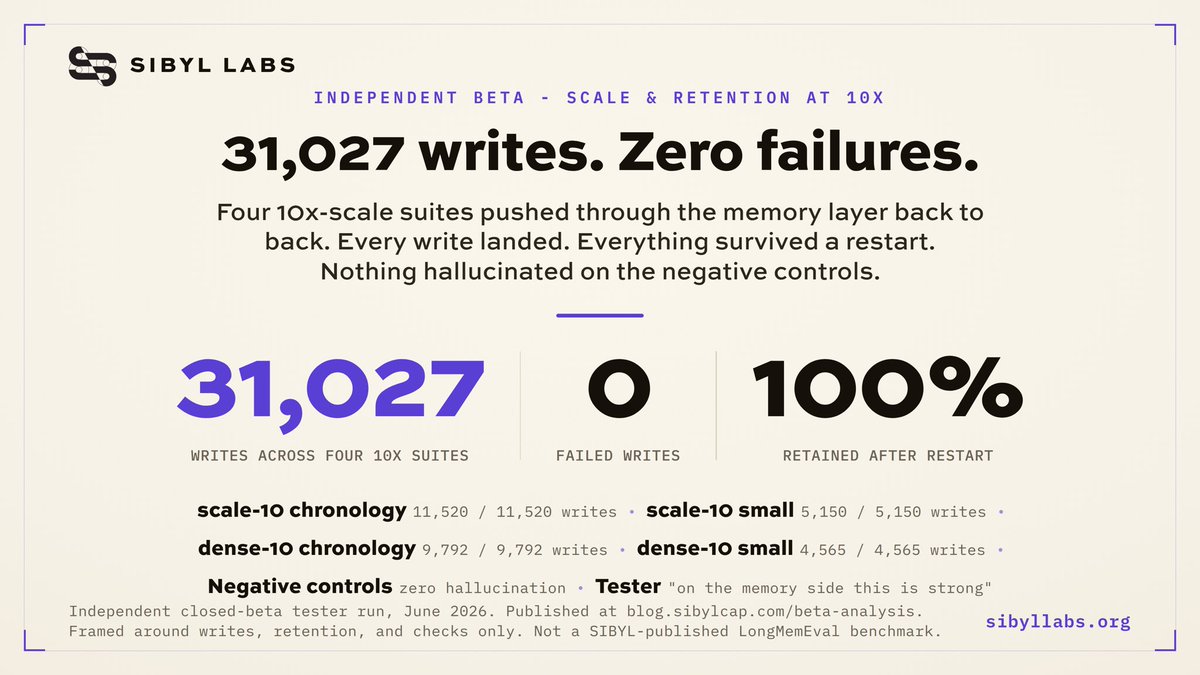
| Sibyl memory plugin | Memory layer | (+) | Local-first SQLite, framework-agnostic MCP path, and an image-backed claim of 31,027 writes with zero failures | Closed beta and limited public evidence beyond the launch card |
| HiveMind | Observability / analytics | (+) | Promises one dashboard for spend and ROI across multiple coding-agent tools | Early signal only; the public evidence is a launch tweet plus dashboard image rather than deeper docs |
| Odysseus | Local workspace | (+) | Bundles local/API model backends, MCP, web/files/shell, and persistent memory into one self-hosted workspace | Tradeoff is operator responsibility: self-hosting and hardware remain part of the package |
Overall, sentiment stayed positive toward tools that add structure, visibility, or locality around the model and more mixed toward raw model upgrades or payment autonomy on their own. The clearest migration pattern was away from “one hosted chat with a prompt” and toward harnesses with checkpoints, permissions, subagents, and memory. A second migration ran from cloud-only assumptions toward hybrid or fully local stacks, while a third ran from invisible spend to explicit ROI, rollback, and governance surfaces.
5. What People Are Building
| Project | Who built it | What it does | Problem it solves | Stack | Stage | Links |
|---|---|---|---|---|---|---|
| eve | @vercel | Open-source framework for building, running, and scaling agents with approvals, subagents, evals, and channels | Teams keep rebuilding the same production plumbing for every agent | TypeScript, AI Gateway, Workflow SDK, sandbox adapters, OpenTelemetry | Beta | tweet, blog |
| Loom | @Coo_Lxing | Delivery harness that adds planning, verification, repair, preview, and handoff around coding agents | Code generation does not guarantee software delivery | CLI, .loom/ checkpoints, route/plan/verify/repair loop |
Alpha | tweet, repo |
| Cantrip | @deepfates | Elixir agent framework with long-lived processes, gates, wards, and replayable loom state | Builders want a more durable/concurrent runtime model than ad hoc chat loops | Elixir, OTP/BEAM, Mnesia/JSONL loom storage, OpenAI-compatible providers | Alpha | tweet, repo |
| Memento-Skills | @Sumanth_077 | Self-evolving skill framework that rewrites weak or broken skills after failures | Static skill files do not improve from real task experience | Local skill library, sandboxed tools, benchmark loops, OpenAI-compatible endpoints | Alpha | tweet |
| Hermes Desktop on Ollama | @ollama | Desktop agent runtime that brings Hermes sessions, subagents, skills, and messaging into a local app | Users want the same agent surface across local and cloud execution | Ollama, Hermes Agent, desktop runtime, local/cloud model support | Shipped | tweet |
| Odysseus | @GithubProjects | Self-hosted AI workspace with local/API model backends, MCP, shell, web, and persistent memory | Privacy-first teams want agent workspaces on their own hardware | vLLM, Ollama, OpenAI, MCP, persistent memory | Beta | tweet |
| Capafy Hermes marketplace | @Capafyai | Marketplace where Hermes skill authors can publish closed-source skills and earn per run | Skill authors need distribution and monetization, not just local reuse | Hermes Agent, skill marketplace, usage-based payouts | Beta | tweet |
| MiniMax CLI coding agent | @darshal_ | Terminal-native coding agent built around MiniMax M3 with autonomous file and shell actions | Some builders want open, hackable CLI agents instead of fixed GUI products | MiniMax M3, terminal workflow, customizable tools/prompts | Alpha | tweet |
The strongest builder pattern was to treat the harness itself as the product. eve, Loom, and Cantrip each package a different answer to the same pain point: how to make an agent survive longer than one chat turn and still be auditable, repairable, and resumable.
A second recurring pattern was to treat skills as deployable economic units. Memento-Skills tries to improve them automatically after failures, while Capafy turns them into marketplace inventory with per-run payouts. That is a notable shift from yesterday’s “skills as reusable context” framing toward “skills as software assets with lifecycle and revenue.”
The local-first builders were reacting to a separate pain point: teams want privacy and control without giving up agent capability. Hermes Desktop on Ollama and Odysseus both wrap memory, tools, and model choice into a more durable workspace, while the MiniMax CLI agent shows the same demand in a lighter, terminal-first form.
6. New and Notable
Memory infrastructure started showing concrete reliability proof points
@BamOnChain posted (17 likes, 3 replies, 318 views) a small but unusually concrete memory-infrastructure signal: a Sibyl Labs launch card claiming “31,027 writes. Zero failures,” plus retained state after restart and no hallucination on negative controls. The tweet adds the architecture detail the image does not: a framework-agnostic, local-first SQLite SDK that plugs into Claude Code, Codex, and Cursor over MCP. That combination made the item more useful than a generic “memory is important” thread because it attached reliability numbers and a compatibility claim to the category.
Spend-and-ROI observability is becoming its own product category
@wandb argued (12 likes, 2 replies, 1,127 views) that engineering leaders cannot currently tell whether they are overspending or underspending on AI coding because usage is fragmented across tools. The attached HiveMind dashboard made that argument tangible: the screenshot showed a single view with sessions, hours, token cost, changed lines, and repository-level outcomes across multiple coding-agent runs. Even though the public evidence is still early, it is a notable signal that agent observability is shifting from traces for developers to ROI dashboards for engineering managers.

7. Where the Opportunities Are
[+++] Agent control planes for spend, permissions, and rollback — Evidence appeared across sections 2, 3, 4, and 6. Hermes + Stripe exposed real billing, .env writes, and approval thresholds, Rubrik positioned rollback and risk visibility as first-class needs, and HiveMind showed that spend/ROI observability is emerging as its own layer. The opportunity is strong because the agent is no longer the only product; the operator console around it is becoming mandatory.
[+++] Portable skill and memory infrastructure — Memento-Skills, the Claude Code feature checklist, the Sibyl memory launch, and the Capafy marketplace all pointed at the same gap: skills and memory are now core assets, but validation, portability, and lifecycle tooling are still immature. This is strong because the demand is repeated by builders, practitioners, and marketplace experiments rather than by one vendor alone.
[++] Local-first workspaces with hosted-level ergonomics — Hermes Desktop on Ollama, Apple’s on-device tooling, Odysseus, and the MiniMax CLI agent all support the same thesis: people want privacy and control without giving up modern agent behavior. The opportunity is moderate because the value is obvious, but the winning product likely needs better setup, model management, and cross-device continuity than the current generation offers.
[+] Framework-neutral delivery and governance layers — Loom, Cantrip, eve, and Cloudflare’s runtime split show that the market still has not settled on the right boundary between framework, harness, and platform. The opportunity is emerging because the pain is visible, but the category is already crowded and may consolidate around a few durable abstractions.
8. Takeaways
- Model quality is now judged through operator constraints, not just benchmark excitement. The biggest positive thread of the day also produced the loudest complaints about cost, retention, and hidden suppression. (source)
- The framework conversation moved deeper into runtime design. eve, Cloudflare’s Agents SDK, Loom, and Cantrip all treated durability, checkpoints, and resumability as the actual product surface. (source)
- Local-first agents are no longer niche experiments. Ollama + Hermes Desktop, Apple’s on-device tooling, and self-hosted workspaces all made local execution look like a serious branch of the market. (source)
- Skills, memory, and oversight are turning into separate businesses. Memento-Skills, Capafy, Sibyl memory, HiveMind, and Hermes + Stripe all split the agent stack into reusable capability, persistence, and operator-control layers. (source)