Twitter AI Agent - 2026-07-03
1. What People Are Talking About
1.1 Harness and loop engineering are being treated as the real source of agent performance 🡕
The strongest theme on July 3 was that agent quality was no longer being framed as a model-selection problem first. The highest-signal posts argued that file handling, tool routing, verifier design, stop conditions, and persistent memory now explain more day-to-day success than prompt wording or raw model weights alone. This theme was supported by benchmark commentary, operating diagrams, and a concrete edge-device harness example.
@akshay_pachaar argued (583 likes, 27 replies, 86,472 views, 1,056 bookmarks) that a Hugging Face harness-optimization loop took a frozen open legal agent from 0% on a hard benchmark to near Sonnet 4.6-level headline performance at roughly 7x lower cost per task without changing weights. His thread said the biggest gain came from boring wrapper logic rather than reasoning upgrades: the model did the legal analysis correctly but kept saving outputs under the wrong filename or in the wrong location, so the benchmark was scoring the harness rather than the lawyering.
@_avichawla explained (395 likes, 18 replies, 34,691 views, 525 bookmarks) the same shift as four nested layers: prompt, context, harness, and loop engineering. The replies added the operational edge that made the post useful: one said most teams still wire a naive retry loop with no success criteria, another said observability has to be built in if long runs are going to be debuggable.
@milesdeutscher said (118 likes, 17 replies, 30,316 views, 250 bookmarks) that he no longer prompts Claude Code directly and instead writes loops that prompt Fable. The attached guide turned the idea into a checklist: trigger, execution layer, verifier, stop rules, memory, and saved skills. A reply added the most grounded caveat in the thread: review bandwidth is still the one part that does not run while you sleep.

@OpenBMB shared (14 likes, 1 reply, 1,018 views, 9 bookmarks) EdgeHome Harness, a Rust wrapper around MiniCPM5-1B that keeps the model limited to candidate JSON while validation, policy, execution, and trace/eval stay deterministic. The linked EdgeHome-Harness repo says the project is tuned for 2GB to 4GB edge environments and is explicitly built around the rule that model output is not the command.

Discussion insight: The replies did not spend much time debating prompts. They kept returning to file placement, observability, separate graders, and the fact that review bandwidth still sits outside the loop.
Comparison to prior day: On 2026-07-02, loop engineering was already the dominant playbook. On July 3, the conversation sharpened into a stronger claim: benchmark results and reliable automation are measuring the harness around the model, not the model in isolation.
1.2 Persistent memory and codebase context moved from aspiration to shipping repos 🡕
A second cluster focused on giving agents long-term context without stuffing everything into a prompt window. The evidence ranged from macro strategy takes to concrete open-source repos, but the common thread was the same: state has to survive sessions, stay current, and remain usable across tools.
@levie argued (110 likes, 39 replies, 14,598 views, 106 bookmarks) that the long-run battle in AI is a battle for context: domain expertise, governed knowledge, tool access, and model routing inside an applied layer that can review and improve its own work over time. Replies complicated the claim rather than rejecting it. One said context without permissions only gives an agent “a bigger room to make a more expensive mess,” while another argued that context helps local execution but still needs an org-level ownership and trust layer around it.
@minchoi highlighted (22 likes, 4 replies, 4,959 views, 39 bookmarks) OpenWiki as an open-source agent that creates a codebase wiki, connects it to a coding agent, and keeps it updated as the repo changes. The OpenWiki repo says the TypeScript CLI can open daily documentation-refresh PRs through GitHub Actions, and the highest-signal reply added the key nuance: a stale auto-generated wiki is worse than no wiki, because the agent will trust outdated context.
@kausalayer open-sourced (28 likes, 7 replies, 354 views) KausaMemoryV3 as encrypted, self-hosted memory that persists across sessions and never sends the core storage-and-retrieval path to a cloud LLM. The linked repo says it exposes MCP tools for store/search/context, uses SQLite plus FTS5 and sqlite-vec, fuses vector, keyword, graph, and recency channels, and records a Solana devnet pointer so memory can move between devices.
@sibyl_labs_ posted (33 likes, 9 replies, 905 views) a roadmap that split the problem into three layers: Sibyl Memory in open beta, Sibyl Sovereign in closed beta around identity, purpose, and compliance, and Living Graph Networks in research. The image mattered because it added concrete claims instead of vague brand language, including 100% recall on 350 independent tester benchmarks and 95.2% on LongMemEval, though those figures were first-party claims rather than third-party verification.

Discussion insight: The useful nuance here was not whether memory matters. It was whether memory can stay current, private, and governed enough to be trusted in real workflows.
Comparison to prior day: On 2026-07-02, local memory showed up as a desirable ingredient in coding-agent playbooks. On July 3, memory and context moved one step closer to product reality through OpenWiki, KausaMemory, and roadmap-backed bets such as Sibyl.
1.3 Supervising many agents is becoming its own product layer 🡕
Another strong theme was that teams are increasingly assuming many agents will run at once, and the real product gap is the supervision layer around them. The day’s posts named the missing pieces directly: isolated workspaces, PR routing, shared skills, reusable MCP configuration, and traces that can feed back into the next run.
@DanKornas described (17 likes, 6 replies, 1,460 views, 16 bookmarks) Agent Orchestrator as an orchestration layer and agentic IDE for parallel coding agents. The tweet listed 23+ CLI agent adapters, dedicated git worktrees per session, live PR observation, and automatic routing of CI failures, review comments, and merge conflicts; the linked repo had 7,969 GitHub stars at fetch time and presents the same idea as a meta-harness around terminal agents.

@dabit3 published (45 likes, 5 replies, 2,537 views, 26 bookmarks) Cloud Stacked Diffs, an agent skill that turns large async tasks into stacked draft PRs instead of one giant branch. The repo says it works with Devin, Claude, Codex, and other Agent Skills-compatible harnesses, and the tweet said pairing it with Linear lets a team hand off a large workflow and come back to a review-ready stack.
@loridotsh pitched (10 likes, 9,420 views, 10 bookmarks) Lori as a control plane for running many coding-agent CLIs side by side without separate MCP and skill configuration for each one. The public site positions it as a local-first, vendor-neutral workspace for Claude Code, OpenCode, Antigravity, and later tools, with shared providers, skills, and session management.
@rauchg framed (252 likes, 34 replies, 33,310 views, 197 bookmarks) Vercel Eve’s new agent-run traces as a way to let agents introspect past runs and improve their own prompts and skills. The Eve repo describes a filesystem-first framework where instructions, tools, skills, channels, and schedules live in conventional folders, while the replies injected an important warning: self-improvement only helps when the system has a real success metric instead of optimizing for “finished without erroring.”
Discussion insight: The disagreement was not over whether orchestration matters. It was over scope and ownership: who defines success, who reviews the output, and how shared configuration stays portable instead of becoming another source of lock-in.
Comparison to prior day: On 2026-07-02, the software-factory conversation centered on copyable operating recipes. On July 3, it expanded into a fuller supervision stack: PR routers, stacked-diff skills, shared config layers, and trace-driven self-improvement.
1.4 Lower-friction deployment is widening the agent surface, while trust questions catch up 🡕
A fourth theme pushed beyond coding-agent internals into deployment surfaces: marketplaces, no-code voice agents, and identity layers for autonomous systems. These posts pulled attention because they made agents look easier to deploy and monetize, but the replies immediately shifted toward trust, responsibility, and gaming risk.
@okx positioned (150 likes, 37 replies, 48,510 views) OKX.AI as two linked marketplaces: one for browsing and hiring agents by capability, price, and onchain credit score, and one for posting tasks so agents can bid. The public OKX.AI site says jobs flow through trustless escrow, X Layer stablecoin settlement, and evaluator staking when disputes need resolution. Replies immediately asked who decides agent credit scores and what prevents early players from gaming them.
@MarioNawfal said (47 likes, 21 replies, 41,681 views) Grok Voice Agent Builder can deploy a no-code voice agent from the browser in under 2 minutes, with real-time conversations, sub-second latency, and 25+ languages. The most useful replies were less excited than practical: one said the hard part is no longer building the agent but designing a workflow people actually find useful, while another said the gap between “deploy a voice agent” and “deploy one people trust” is still massive.
@captainjack125 argued (71 likes, 37 replies, 4,318 views, 16 bookmarks) that smarter agents are less urgent than accountable ones once they start moving money, publishing content, or representing organizations. The thread proposed Concordium’s Agent Registry as a cross-chain identity layer, and the replies kept the point grounded: one practitioner said he never lets any of his parallel agents move money unwatched, and another reduced the requirement to custody, audit trails, and human sign-offs somewhere in the loop.
Discussion insight: The strongest pushback was about trust surfaces rather than raw capability: gaming agent reputation, competent-but-wrong voice agents, and money-moving workflows without clear human ownership.
Comparison to prior day: On 2026-07-02, agent marketplaces were already visible. On July 3, that commercialization story widened into browser-built voice agents and explicit accountability layers, which made the trust gap harder to ignore.
2. What Frustrates People
Good models still fail for boring harness reasons
High severity. @akshay_pachaar said (583 likes, 27 replies, 86,472 views, 1,056 bookmarks) the model in Hugging Face’s legal-agent experiment was doing the legal reasoning correctly but still scoring 0% because it saved outputs under the wrong filename or in the wrong folder. @_avichawla framed (395 likes, 18 replies, 34,691 views, 525 bookmarks) the same problem more generally: teams spend time on prompts and context, then wire a naive outer loop with no success criteria, and one reply said that is where prototypes quietly die. @OpenBMB showed (14 likes, 1 reply, 1,018 views, 9 bookmarks) the edge version of the same frustration by wrapping a 1B model with validation, policy, and execution gates before it can touch devices.
People are coping by adding deterministic file-handling steps, separate checker models, trace/replay systems, and fail-closed policy layers. This looks worth building for because the failure mode is not missing intelligence; it is fragile scaffolding around models that already know what to do.
Context still decays, duplicates, or gets trapped in the wrong tool
High severity. @levie argued (110 likes, 39 replies, 14,598 views, 106 bookmarks) that the battle is for context, and his replies immediately pushed on the missing pieces: permissions, trust, and cost intelligence. @loridotsh called (10 likes, 9,420 views, 10 bookmarks) separate MCP and skill configuration for every CLI “a nightmare.” Under @minchoi’s OpenWiki post (22 likes, 4 replies, 4,959 views, 39 bookmarks), the most useful reply said a stale codebase wiki is worse than none because the agent will confidently build on context that is no longer true. @kausalayer marketed (28 likes, 7 replies, 354 views) self-hosted persistent memory precisely because most agents still restart from zero.
People are coping by writing state to disk, generating repo wikis, centralizing configuration, and moving memory outside chat threads. This is worth building for because the same complaint appeared across coding agents, memory plugins, and control-plane tools instead of one isolated use case.
Human review and approval remain the throughput limit
High severity for coding and financial workflows. A reply under @milesdeutscher’s loop-engineering post (118 likes, 17 replies, 30,316 views, 250 bookmarks) said review bandwidth is still the one part that does not run while you sleep. @dabit3 built (45 likes, 5 replies, 2,537 views, 26 bookmarks) Cloud Stacked Diffs to keep cloud-agent output reviewable as stacked PRs, and @DanKornas pitched (17 likes, 6 replies, 1,460 views, 16 bookmarks) Agent Orchestrator around routing CI failures and review comments back to the owning session. Outside coding, @MarioNawfal showed (47 likes, 21 replies, 41,681 views) how easy voice-agent deployment has become, but one reply said the trust problem is still unsolved, while replies under @okx asked (150 likes, 37 replies, 48,510 views) who assigns agent credit scores and how gaming is prevented.
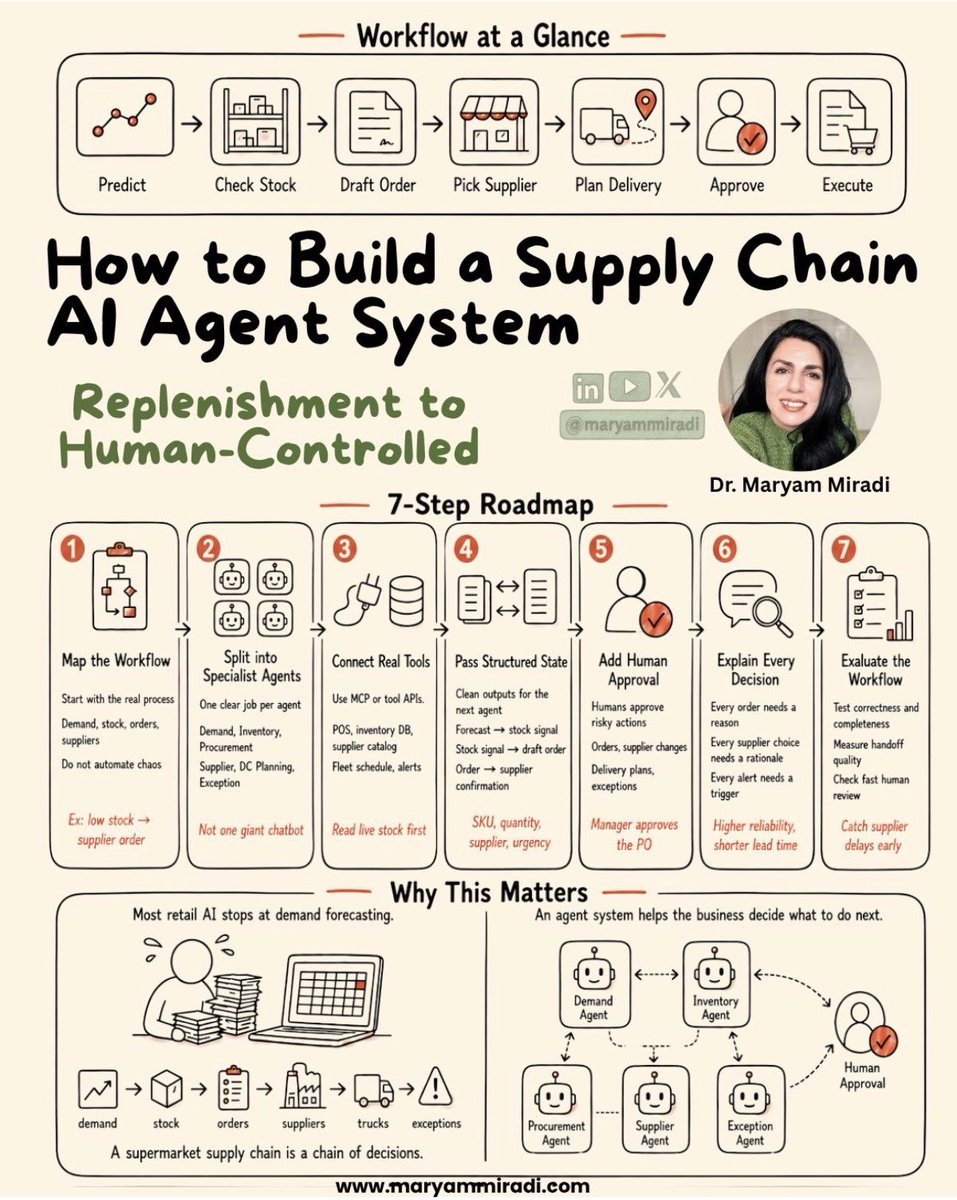
Even the lower-engagement vertical examples carried the same pattern. @MaryamMiradi mapped (1 like, 120 views) a supply-chain agent workflow that inserts human approval before orders and supplier changes, and @captainjack125 argued (71 likes, 37 replies, 4,318 views, 16 bookmarks) that money-moving agents still need explicit accountability and audit trails. The coping pattern today is smaller PRs, manual sign-off, and extra audit layers, which makes this worth building for at High severity.
3. What People Wish Existed
Memory that survives sessions without sending private state to a cloud
This was the clearest practical need in the dataset. @minchoi wanted (22 likes, 4 replies, 4,959 views, 39 bookmarks) long-term repo context without stuffing everything into CLAUDE.md, @kausalayer offered (28 likes, 7 replies, 354 views) encrypted self-hosted memory that persists across sessions, and @sibyl_labs_ framed (33 likes, 9 replies, 905 views) trusted memory as part of a larger autonomy stack. Even the smaller builder posts pushed the same direction: @0x0SojalSec pointed to (21 likes, 1,280 views, 15 bookmarks) Pro Workflow as a correction-compounding memory layer for Claude Code.
This is a direct need rather than an aspirational one. Partial answers exist now, but users are still asking for context that is live, private, and portable. Opportunity rating: [+++] direct.
One control plane for agent fleets, skills, and MCP servers
Another practical need is coordination across tools rather than inside one tool. @loridotsh said (10 likes, 9,420 views, 10 bookmarks) the current state is a mess of terminal tabs and duplicate per-CLI config. @DanKornas showed (17 likes, 6 replies, 1,460 views, 16 bookmarks) the need for a supervisor over many coding agents, while @dabit3 showed (45 likes, 5 replies, 2,537 views, 26 bookmarks) that even PR structure becomes part of the control plane once work is delegated asynchronously. @rauchg added (252 likes, 34 replies, 33,310 views, 197 bookmarks) the observability side of the same need: traces that flow back into the next run.
This is clearly practical, but it already has multiple contenders and no obvious winner. Opportunity rating: [++] competitive.
Faster review and verification loops for agent-generated work
The strongest unmet need inside coding workflows was not generation; it was trustworthy verification at speed. A reply under @milesdeutscher’s post said review bandwidth is still the one part that does not run while you sleep. @_avichawla described (395 likes, 18 replies, 34,691 views, 525 bookmarks) the checker and stop-rule layer explicitly, and @akshay_pachaar showed (583 likes, 27 replies, 86,472 views, 1,056 bookmarks) how much performance can disappear when the wrapper grades the wrong thing.
This feels urgent and direct because the workaround today is more manual review, more stacked PRs, and more secondary graders rather than a solved product pattern. Opportunity rating: [+++] direct.
Trust layers for agents that spend, speak, or act in public
The posts about marketplaces, voice agents, and supplier workflows all pointed to the same missing layer: approval and accountability around real-world actions. @captainjack125 argued (71 likes, 37 replies, 4,318 views, 16 bookmarks) for a cryptographic accountability layer, replies under @okx asked (150 likes, 37 replies, 48,510 views) how agent credit scores are governed, and replies under @MarioNawfal questioned (47 likes, 21 replies, 41,681 views) what makes a voice agent trustworthy after deployment. Even @MaryamMiradi kept (1 like, 120 views) human approval in the loop before orders and supplier changes are executed.
This is practical rather than emotional, but it carries obvious downside risk if ignored. Partial answers exist, yet the dataset still treats trust as missing infrastructure. Opportunity rating: [++] direct.
4. Tools and Methods in Use
| Tool | Category | Sentiment | Strengths | Limitations |
|---|---|---|---|---|
| Harness engineering | Method | (+) | Large gains from file placement, tool routing, validation, and policy layers without changing model weights | Needs task-specific evaluators and eventually hits true model-capability limits |
| Loop engineering | Method | (+/-) | Enables long autonomous runs with triggers, checkers, stop rules, memory, and skills | Fails quickly without explicit success criteria; human review still bottlenecks deployment |
| OpenWiki | Codebase context / documentation | (+) | Auto-maintains repo docs and can open daily refresh PRs; strong fit for coding agents | If the refresh loop breaks, stale docs can mislead the agent |
| KausaMemory v3 | Memory infrastructure | (+) | Encrypted, self-hosted, MCP-compatible memory with local retrieval and no cloud LLM in the core path | Alpha-stage; Solana pointer is still on devnet and adoption is early |
| Sibyl Memory / Sibyl Sovereign | Memory + trusted autonomy | (+/-) | Strong recall claims, open beta memory, and a trust/compliance framing | Evidence is mostly first-party roadmap and benchmark claims |
| Pro Workflow | Workflow / memory kit | (+) | Packs persistent wikis, correction memory, skills, agents, and hook scripts into one workflow package | July 3 evidence was mostly a promotional screenshot rather than deep operator feedback |
| Agent Orchestrator | Multi-agent IDE / orchestrator | (+) | Git worktrees, 23+ agent adapters, CI/review routing, and live PR awareness | Requires active supervision discipline; tweet-side evidence was lighter than repo ambition |
| Lori | Control plane | (+/-) | Shared providers, skills, MCP config, and session management across agent CLIs | Public evidence is early and centered on demos and macOS availability |
| Cloud Stacked Diffs | Agent skill / PR workflow | (+) | Keeps async agent output reviewable as stacked draft PRs and syncs state with Linear | Depends on existing PR tooling and still pushes review work onto humans |
| Eve / Agent Runs | Framework / observability | (+/-) | Filesystem-first durable-agent structure plus traces that agents can inspect | Self-improvement loops can optimize the wrong metric if success is undefined |
| OKX.AI | Agent marketplace | (+/-) | Real job posting, bidding, escrow, settlement, and evaluator roles | Reputation scoring and quality assurance are still open questions |
| Grok Voice Agent Builder | Voice agent builder | (+/-) | Very low deployment friction, browser-built, multilingual real-time conversations | Trustworthiness and workflow usefulness are still unresolved |
| EdgeHome Harness | Edge agent harness | (+) | Makes a small local model safer through policy, validation, and trace layers | Narrow prototype scope and limited public traction so far |
The satisfaction spectrum ran from strong conviction around harness, loop, and memory layers to much more cautious interest around marketplaces and voice agents. The common workaround pattern was to add structure instead of switching models: write state to disk, add a second checker, route failures back to the right session, split work into smaller PRs, and keep human approval around risky actions. The clearest migration was away from “pick the best model and prompt it better” toward “wrap the model with context, memory, policy, and supervision,” and the clearest competitive cluster formed around two surfaces: context products such as OpenWiki, KausaMemory, Sibyl, and Pro Workflow, and supervision products such as Agent Orchestrator, Lori, Cloud Stacked Diffs, and Eve.
5. What People Are Building
| Project | Who built it | What it does | Problem it solves | Stack | Stage | Links |
|---|---|---|---|---|---|---|
| Agent Orchestrator | AgentWrapper | Supervises parallel coding agents in isolated worktrees and routes CI/review feedback back to the right session | Keeps multi-agent coding work visible and recoverable instead of terminal chaos | Go daemon, Electron, React, git worktrees, 23+ agent adapters | Beta | repo · tweet |
| OpenWiki | LangChain | Generates and maintains a wiki for a codebase and keeps it refreshed as the repo changes | Gives coding agents long-term repo context without hand-written docs | TypeScript CLI, GitHub Actions, model/provider config | Shipped | repo · tweet |
| KausaMemory v3 | KausaLayer / fasqua | Adds encrypted, self-hosted memory that agents can query over MCP | Prevents agents from restarting from zero and keeps memory off a vendor cloud | Python, SQLite, FTS5, sqlite-vec, MCP, Solana devnet pointer | Alpha | repo · tweet |
| Pro Workflow | rohitg00 | Bundles correction-compounding memory, persistent wikis, skills, and hook scripts for Claude Code and other agents | Stops repeated mistakes and turns one repo into reusable operating memory | JavaScript, SkillKit, persistent SQLite store, hook scripts | Beta | repo · tweet |
| Cloud Stacked Diffs | dabit3 | Splits long async tasks into stacked draft PRs with bottom-up merge order and optional Linear sync | Avoids giant unreviewable PRs from cloud coding agents | Agent Skills standard, Devin/Claude/Codex, Linear MCP, GitHub PRs | Beta | repo · tweet |
| Lori | Lori | Vendor-neutral workspace for many coding agents with shared provider, skill, and MCP setup | Reduces terminal tab sprawl and per-CLI configuration duplication | Local-first desktop app, shared provider layer, skills marketplace, git telemetry | Alpha | site · tweet |
| EdgeHome Harness | OpenBMB community | Wraps a 1B local model in Rust validation, policy, execution, and trace layers for smart-home control | Makes small edge models safe and deterministic enough to act | Rust, MiniCPM5-1B, JSON schema validation, policy gate, trace/replay | Alpha | repo · tweet |
| Eve / Agent Runs | Vercel | Durable-agent framework plus traces that agents can use to introspect and improve later runs | Gives builders a structured agent filesystem and observability for long-lived workflows | TypeScript, filesystem-first agent folders, tools/skills/channels/schedules, Agent Runs traces | Beta | repo · tweet |
| OKX.AI | OKX | Linked agent and task marketplaces with onchain settlement and evaluator roles | Lets agents discover work, bid, and get paid with escrow and resolution | X Layer, stablecoins, onchain identity/reputation, evaluator staking | Beta | site · tweet |
| Grok Voice Agent Builder | xAI | Browser tool for deploying multilingual real-time voice agents with minimal setup | Makes voice-agent deployment accessible to non-engineers | Grok Voice, browser builder, phone-number routing, multilingual real-time calls | Beta | tweet |
Agent Orchestrator and Cloud Stacked Diffs stood out because they attack the same review problem from different sides. Agent Orchestrator keeps many agent sessions visible once they exist, while Cloud Stacked Diffs restructures long-running async output into a chain of small draft PRs before reviewers see it. Together they show that PR topology and feedback routing are becoming first-class product surfaces in coding-agent workflows.
OpenWiki, KausaMemory, and Pro Workflow pointed to three different memory strategies. OpenWiki externalizes repo knowledge into an auto-maintained wiki, KausaMemory keeps private operator memory in an encrypted local store exposed over MCP, and Pro Workflow turns corrections, skills, and hook scripts into a reusable operating layer. That clustering suggests “memory” is already splitting into documentation, personal state, and workflow policy rather than staying one feature.
EdgeHome Harness and Eve bracketed the deployment spectrum. EdgeHome proves a narrow point—that a 1B local model can still be useful when Rust owns validation, policy, and execution—while Eve packages a broader filesystem-first structure for durable agents with observability loops. OKX.AI, Lori, and Grok Voice Agent Builder sit one layer above that: one commercializes discovery and payment, one commercializes supervision across agent CLIs, and one commercializes instant deployment into voice.
6. New and Notable
Transparent multi-agent coordination got a concrete public research artifact
@SakanaAILabs shared (63 likes, 3 replies, 5,766 views, 30 bookmarks) Sheaf-ADMM, a coordination framework where local agents solve overlapping subproblems, negotiate with neighbors, and carry disagreement forward until the system reaches consensus. The linked blog post made the claim unusually concrete: 93% solve rate on multi-agent Sudoku versus 11% for a parameter-matched message-passing baseline, 86% accuracy under an MNIST canvas-size shift versus 11% for a standard CNN, and maze performance with a communication channel 8x smaller than the baseline. It mattered because the system was presented as interpretable coordination rather than hidden-state magic.
Vertical agent playbooks are getting more operational
@MaryamMiradi posted (1 like, 120 views) a supply-chain agent workflow that starts with mapping the real process, splits work into specialist agents, connects them to live data, passes structured state between steps, inserts human approval before spend, and requires every decision to be explainable. The signal was small in engagement terms, but it was unusually concrete about where multi-agent systems meet business process: demand, inventory, procurement, supplier choice, delivery planning, exception handling, and final approval.
7. Where the Opportunities Are
[+++] Verification and review loops for autonomous coding — Evidence showed the same bottleneck from different angles: Hugging Face-style harness fixes can recover huge amounts of performance, but Miles’ thread and the Cloud Stacked Diffs / Agent Orchestrator posts showed that human review and feedback routing still limit throughput once generation works. Strong opportunity because it is backed by themes, frustrations, tools, and live builder activity.
[+++] Persistent, privacy-preserving context layers — Levie’s market-level context thesis, OpenWiki’s auto-updating repo docs, KausaMemory’s encrypted self-hosted memory, and Sibyl’s trusted-memory roadmap all point to the same gap. Strong opportunity because the need is explicit, recurring, and already producing multiple competing implementations.
[++] Cross-agent control planes and shared configuration — Lori, Agent Orchestrator, Eve, and Cloud Stacked Diffs all respond to the same operating pain: too many terminals, duplicated MCP setup, missing shared state, and poor visibility across runs. Moderate opportunity because the need is clear, but the field is already getting crowded and product boundaries are still fluid.
[++] Trust, approval, and identity rails for public-facing agents — OKX.AI, Grok Voice Agent Builder, Concordium’s accountability pitch, and Maryam Miradi’s human-approval workflow all showed that deployment friction is falling faster than trust friction. Moderate opportunity because the downside risk is obvious, but the product shape is still split across marketplaces, voice, finance, and enterprise workflow.
[+] Reusable harness kits for small and local models — EdgeHome Harness suggests there is room for reusable policy, validation, and trace layers that make small local models practical in constrained environments. Emerging opportunity because the evidence is narrower today, but it connects directly to the day’s larger claim that the wrapper is becoming more important than the model.
8. Takeaways
- Harness quality dominated the day’s strongest evidence. The clearest performance story was not a new model release, but a frozen model recovering benchmark results once the wrapper fixed file handling and execution logic. (source)
- Loop engineering is becoming a concrete operating pattern rather than a slogan. The highest-signal explainers broke loops into trigger, execution, checker, stop rules, memory, and skills instead of treating autonomy as “let it run longer.” (source)
- Persistent context is moving into repos and products. OpenWiki, KausaMemory, Sibyl, and Pro Workflow all shipped different answers to the same question: how to keep useful state alive between sessions. (source)
- Supervising many agents is now its own software category. Agent Orchestrator, Lori, Cloud Stacked Diffs, and Eve all focused on visibility, routing, or shared configuration rather than model output itself. (source)
- Deployment friction is falling faster than trust friction. OKX.AI and Grok Voice lowered the cost of hiring or launching agents, while accountability and approval stayed central in the replies and trust-layer threads. (source)