Twitter AI Agent - 2026-07-11
1. What People Are Talking About
1.1 Harness engineering hardened into repo operating systems 🡕
The loudest cluster on July 11 was not a single model launch. It was a shift from prompt tips to repo-level operating systems for agents: routers, workflow docs, tests, review lanes, traces, and explicit definitions of what kinds of systems should act at all. Five items supplied distinct evidence.
@jamonholmgren argued (680 likes, 35 replies, 43,131 views, 1,574 bookmarks) that reliable agentic coding now needs an AGENTS.md router, self-healing docs, mandatory app runs, end-to-end tests, custom linters, cross-agent review, session worksheets, a task queue, performance checks, and end-of-shift full validation. The distinctive angle was that he treated all of those as one system: agents should run the app themselves, fix issues as they go, and leave enough trace state for another agent or a human to resume work midstream. Replies added two useful nuances: deterministic rules can replace some routing at hook time, and missing tools should be pushed into a need-human-feedback queue instead of being improvised.
@dr_cintas reported (621 likes, 51 replies, 55,521 views, 970 bookmarks) that his favorite workflow now keeps Claude Fable 5 on specs and review while Grok 4.5 does implementation through the Grok CLI. The public Fable Advisor README matches that architect pattern and adds an optional GPT-5.6 Sol lane for correctness-critical work. Replies asking for Terra and Codex variants showed how quickly practitioners are already tuning model lanes instead of picking one universal winner.
@RoundtableSpace pointed to (45 likes, 8 replies, 48,238 views, 21 bookmarks) the free Learn Harness Engineering course, and both the screenshot and homepage show the same structure surfacing in public teaching: AGENTS.md, initialization, verification, observability, and clean handoff. That matters because the harness conversation is turning into reusable training material instead of staying inside niche threads.
@heyitsurya mapped (39 likes, 3 replies, 199 views, 9 bookmarks) the boundary between an LLM, an agent, an agentic workflow, and a multi-agent system. The attached infographic is informative because it ties each label to autonomy, control, and best-fit tasks, making the cost of over-automation visible.

A smaller but concrete portability signal came from @ArchitectHappy_ surfacing (18 likes, 8 replies, 1,071 views, 11 bookmarks) wshobson/agents. The README says the project ships 92 plugins, 199 agents, 162 skills, and 106 commands from one Markdown source across Claude Code, Codex, Cursor, OpenCode, Gemini CLI, and Copilot.
Discussion insight: The common move was to turn judgment into files and lanes that survive the session: routes, skills, hooks, traces, specs, and handoff artifacts.
Comparison to prior day: July 10 emphasized loop types and agent-friendly repo layouts. July 11 pushed further into full operating systems for agents: routers, review lanes, task queues, and portable scaffolding across harnesses.
1.2 Graphs, memory maps, and planning architectures were pitched as cheaper than bigger models 🡕
A second cluster argued that the real bottleneck is not missing frontier intelligence. It is linear planning, repeated repo rediscovery, and token-heavy retrieval. Research, benchmarks, and code-memory tools all made the same case from different angles.
@alex_verem said (256 likes, 18 replies, 36,635 views, 433 bookmarks) that the Atomic Task Graph paper shows 7B-8B open models can compete with or beat GPT-4 on agent benchmarks when work is decomposed as a graph instead of a straight line. The claim he highlighted is specific: ATG on an 8B Llama model scored 63.65 on ALFWorld versus 41.24 for GPT-4 with ReAct, while hallucinated actions dropped from 43 percent to 12 percent.
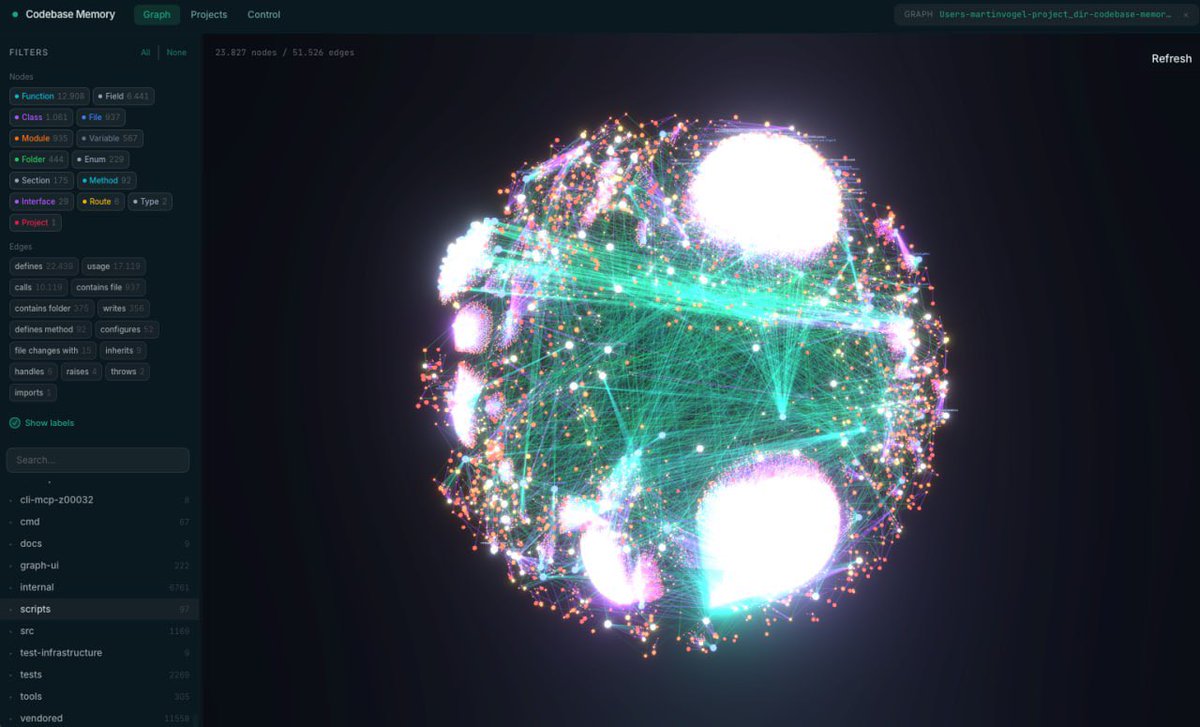
@0xSweep argued (47 likes, 41 replies, 4,603 views) that repo memory is the same problem in miniature: agents keep rereading the same files because they start every session stateless. The public codebase-memory-mcp README says it builds a local AST and hybrid-LSP knowledge graph across 158 languages, integrates with 11 coding agents, and cuts five sample structural queries from roughly 412,000 tokens to about 3,400. Replies added the right caveat: the exact ratio may be cherry-picked, but a parse-based map that survives edits is materially different from summary-memory layers that rot.
@ArtificialAnlys reported (89 likes, 8 replies, 6,564 views, 10 bookmarks) that Muse Spark 1.1 scored 69 on its Coding Agent Index in the Opencode harness, below GPT-5.5 medium in Codex at 71 and above Claude Opus 4.8 medium in Claude Code at 67, with cost per task around $1.4. The chart is informative because it shows the score-cost tradeoff directly and triggered the key warning in replies: these rankings measure model plus harness together, so near-frontier screenshots still have to be re-run on the buyer's actual workload.

@NirantK summarized (58 likes, 8 replies, 4,296 views, 37 bookmarks) the day's conclusion more bluntly: specialized harnesses are likely to beat general-purpose wrappers in production because deterministic context engineering and cost discipline matter more once the task moves out of a demo.
Discussion insight: The shared belief was that plan structure and retrieval structure now matter more than one more model point. Better decomposition, cheaper lookups, and harness-aware evals were all being treated as economic advantages.
Comparison to prior day: July 10 already pushed evals and answer contracts closer to production. July 11 added graph planning and persistent code maps as concrete alternatives to brute-force context and larger-model spend.
1.3 Agent operating rails moved from demos to deployable surfaces 🡒
The strongest builder energy was around infrastructure that lets agents release apps, query business data, hold durable state, or deploy onto financial rails. The recurring language was not personality. It was MCP endpoints, dashboards, wallet auth, rollout controls, and runtime queues.
@istdrc open-sourced (23 likes, 3 replies, 1,897 views, 14 bookmarks) Hands, and the public README plus admin guide describe a full client-app release loop: draft-first releases, staged rollouts, share pages, feedback tickets, and crash reporting. The screenshot matters because it shows Hands as an installable app inside a marketplace, not a one-off prototype.

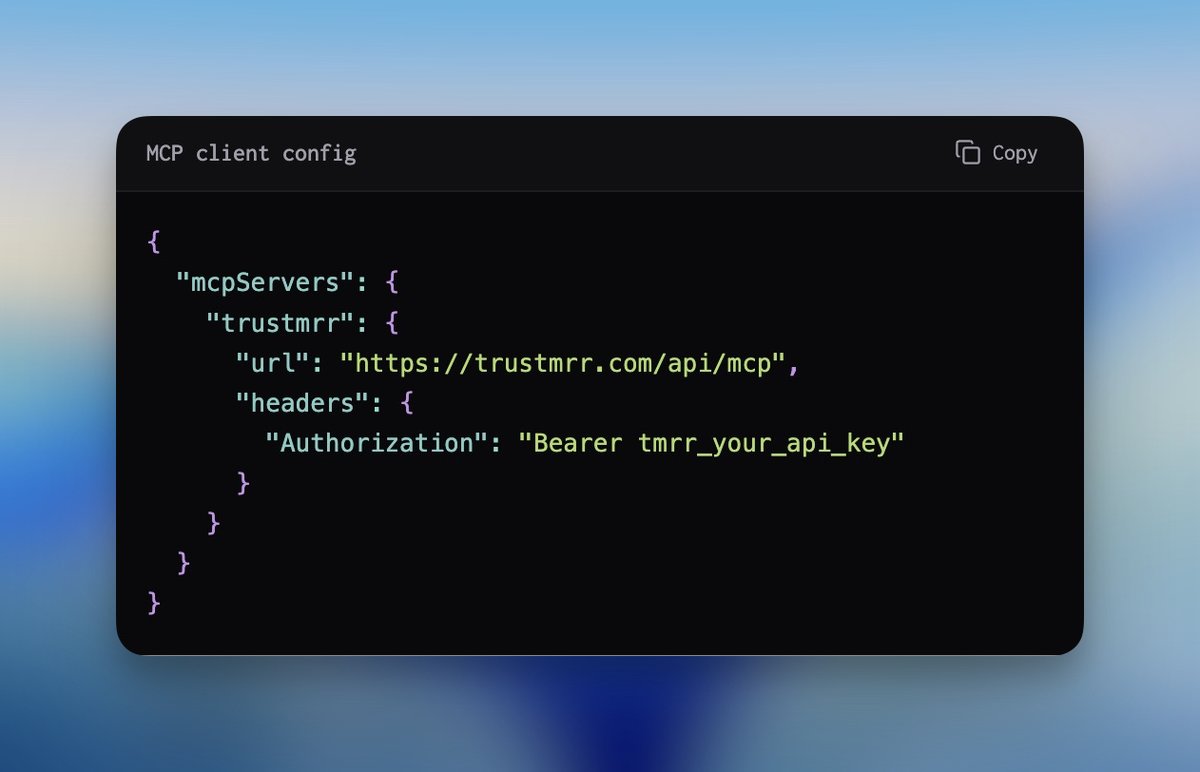
@marclou added (181 likes, 40 replies, 33,448 views, 69 bookmarks) an MCP wrapper for TrustMRR so an agent can query startup revenue, MRR, and marketing-channel data from the marketplace's API. The TrustMRR API docs say the service exposes verified startup revenue data backed by payment-provider records, and the screenshot shows an MCP client config pointed at https://trustmrr.com/api/mcp.
@NavenNetwork introduced (68 likes, 17 replies, 5,332 views) Naven Workspace as a wallet-backed place to create, configure, and deploy agents on Robinhood-powered rails, with OpenClaw handling orchestration underneath. The UI screenshot makes the pitch concrete: connect workspace, choose runtime, deploy a machine, then monitor live operations.

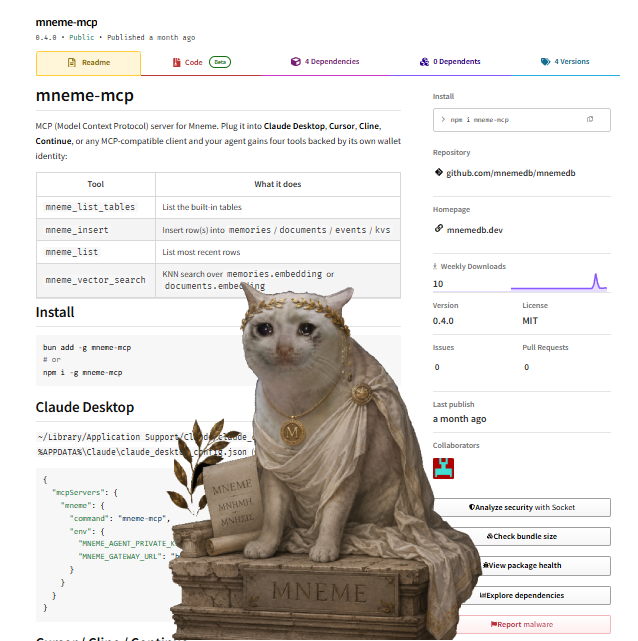
@mnemeDB announced (94 likes, 8 replies, 565 views) that mneme-mcp is live, and the public Mneme README says the product gives each agent its own Postgres schema, wallet auth, vector search, and MCP-native data access. The npm screenshot shows how it is being sold: install once, then let Claude, Cursor, or another MCP client use native database tools instead of a wrapper memory service.
Discussion insight: The common product language was not autonomy for autonomy's sake. It was rails: release, revenue data, deployment, finance, and durable state that agents can touch through structured surfaces.
Comparison to prior day: July 10 already had installable control surfaces like CoinMarketCap Agent Hub and release dashboards. July 11 narrowed that energy into more operational backplanes: business-data MCPs, wallet-backed databases, and deployment-plus-finance workspaces.
1.4 Governance, contracts, and hosted multi-agent runtimes stayed the gating layer 🡕
Even in a builder-heavy dataset, the most sober posts kept returning to the same problem: production adoption is blocked less by raw model output than by governance, accountability, and explicit control over how agent systems behave.
@michaeljburry shared (457 likes, 80 replies, 91,142 views, 172 bookmarks) a practitioner's view that large-scale agentic AI requires orchestration, context engineering, state management, multi-agent collaboration, security, and compliance layers, but that governance and culture are the harder problem. Replies immediately reinforced the accountability angle: someone still has to own the agent's decisions and failure modes.
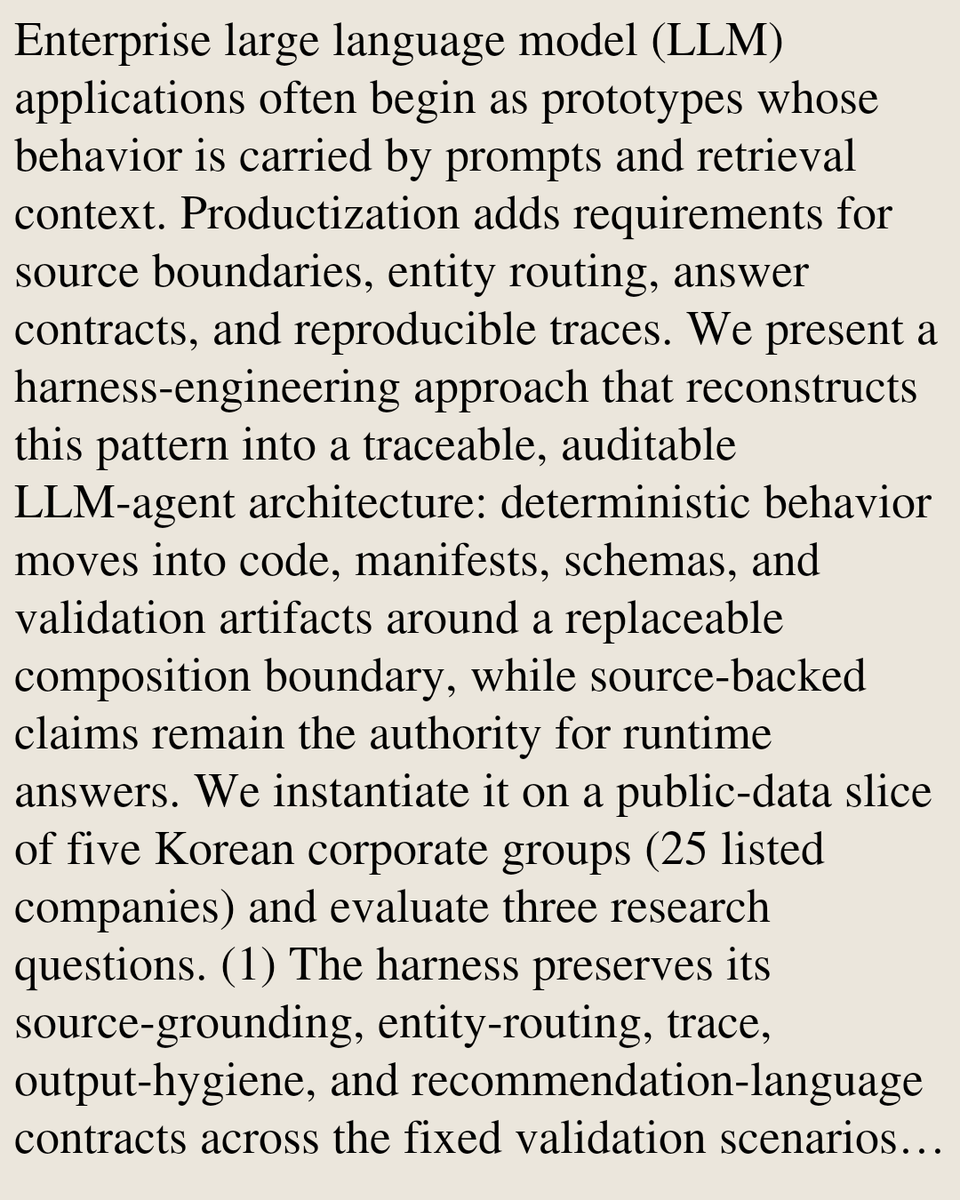
@SciFi surfaced (1 like, 119 views, 3 bookmarks) the paper From Prompts to Contracts, and both the screenshot and abstract are unusually specific about what an enterprise harness should encode: source boundaries, entity routing, answer contracts, and reproducible traces around a replaceable model boundary. That is stronger evidence than a generic governance thread because it turns the requirement into code-owned artifacts and fixed validation scenarios.
@seratch noted (9 likes, 814 views, 4 bookmarks) that OpenAI's Responses API now supports beta multi-agent runs with GPT-5.6 models, and the docs say the root agent can spawn parallel subagents, message them, interrupt them, and cap concurrency. The connection to the rest of the day is important: hosted multi-agent is arriving just as practitioners are insisting on explicit routing, traceability, and bounded roles.
Discussion insight: Across enterprise threads, research, and API docs, the desired control surface was explicit: named agents, named contracts, named traces, named owners.
Comparison to prior day: July 10's routing debate was mostly about UI defaults and model pickers. July 11's governance layer was deeper: who is allowed to act, what answers are structurally permitted, and how many subagents may run at once.
2. What Frustrates People
Stateless repo exploration still burns money and time
High severity. @0xSweep described (47 likes, 41 replies, 4,603 views) a familiar failure mode: coding agents repeatedly search the same repo because they forget the codebase between sessions, turning basic structural questions into large token bills. @jamonholmgren showed (680 likes, 35 replies, 43,131 views, 1,574 bookmarks) the manual workaround from the operator side: self-healing docs, traces, task queues, and explicit routing so the next run does not start from zero. People are coping with code maps, better docs, and more repo-side memory. This is worth building for because both practitioners and tool builders are naming the same tax: rediscovery work that creates no user value.
Reliable agent work still needs too much manual scaffolding
Medium-High severity. The most viral advice of the day was effectively a giant setup list. @jamonholmgren listed routers, hooks, linters, multi-agent review, worksheets, benchmark tests, and night-shift skills as baseline infrastructure, while @RoundtableSpace recommended (45 likes, 8 replies, 48,238 views, 21 bookmarks) a whole free course just to learn harness engineering well. Even the portability answer, wshobson/agents, exists because teams do not want to rebuild the same scaffolding for every harness. People are coping with courses, plugin marketplaces, and copied repo templates. This is worth building for because demand is obvious, but the setup still looks like bespoke repo carpentry.
Governance and accountability remain harder than raw coding output
High severity. @michaeljburry said (457 likes, 80 replies, 91,142 views, 172 bookmarks) that governance and culture are harder than the technical substrate in production agent systems, and replies focused on accountability for agent actions. The paper From Prompts to Contracts, surfaced by @SciFi here, pushes the same frustration into architecture: prompt-plus-retrieval prototypes do not survive productization without source boundaries, answer contracts, and reproducible traces. People are coping with manual reviews, explicit boundaries, and fixed validation scenarios. This is worth building for because the blocker appears in both practitioner testimony and formal research.
Benchmark screenshots and routing signals are still easy to misread
Medium severity. @ArtificialAnlys published a clean score-and-cost chart, but the most useful reply was the caution that each score bundles a model with its harness. @dr_cintas showed a hybrid Fable-plus-Grok workflow, and replies immediately asked for Terra and Codex variants, which is another sign that route selection is still manual and unsettled. People are coping by rerunning local evals and splitting architect and implementer roles across models. This is worth building for because the market still lacks workload-specific routing and evaluation layers that travel better than a leaderboard screenshot.
3. What People Wish Existed
Repo operating systems for agents
The clearest wish was not for a smarter prompt. It was for a repeatable system. @jamonholmgren described a stack of routers, docs, tests, traces, review lanes, and performance checks; @RoundtableSpace pointed people to a whole harness-engineering course; and wshobson/agents packages a cross-harness marketplace because teams clearly do not want to hand-roll the same scaffolding again. The practical need is a starter system that ships with routing, verification, handoff, and observability already wired in. Opportunity rating: [+++] direct.
Persistent code memory that survives sessions and edits
This need was explicit. @0xSweep framed repeated repo rediscovery as pure waste, while @jamonholmgren treated docs and traces as memory infrastructure precisely because session memory is unreliable. What people seem to want is a low-cost structural memory layer that stays in sync with the codebase, is visible to humans, and prevents agents from paying again for what the repo already knows. Opportunity rating: [+++] direct.
Agent backplanes for release, data, deployment, and finance
Several of the day's builders were really asking for dependable rails around action. Hands turns release operations into a surfaced workflow, TrustMRR exposes verified startup data through an API and MCP pattern, Naven Workspace frames deployment and funding as one agent workspace, and Mneme pushes durable state into Postgres schemas with wallet auth. The practical need is a class of agent-native backplanes that are easier to integrate than bespoke glue but safer than letting a model improvise over raw systems. Opportunity rating: [++] direct.
Contract-driven governance and routing policy layers
The most serious enterprise ask was for policy that survives model swaps and scales past demos. @michaeljburry made governance and accountability the bottleneck, From Prompts to Contracts turns that into explicit answer contracts and traces, and @dr_cintas plus @seratch show that routing across models and subagents is already becoming a first-class concern. The need is for policy engines that decide who should act, which model lane to use, what evidence counts as done, and how to keep the whole run auditable. Opportunity rating: [++] direct.
4. Tools and Methods in Use
| Tool | Category | Sentiment | Strengths | Limitations |
|---|---|---|---|---|
| Fable Advisor | Routing and orchestration plugin | (+) | Keeps Fable 5 on specs and review while routing implementation to Grok 4.5 or GPT-5.6 Sol; built-in cross-vendor review | Requires multiple vendor CLIs and explicit lane setup |
| Learn Harness Engineering | Course and reference | (+) | Public lectures, projects, and templates for AGENTS.md, initialization, verification, and handoff | Educational material, not a turnkey runtime |
| codebase-memory-mcp | Local code memory MCP | (+) | Local AST and hybrid-LSP graph; 158 languages; fast structural queries; large token savings on repo exploration | Strongest benefit appears on larger repos; users still need to verify claimed gains on their own workloads |
| Artificial Analysis Coding Agent Index | Benchmark suite | (+/-) | Combines task score and cost per task into one visible chart | Model and harness are bundled together, so rankings do not transfer cleanly |
| Atomic Task Graph | Planning framework | (+) | Graph decomposition, parallel branches, and branch-local repair improve agent planning without extra training | Research result, not an off-the-shelf production tool |
| OpenAI Responses Multi-agent | API and runtime | (+) | Hosted subagent spawning, messaging, waiting, and concurrency control | Still beta; adds token cost and needs bounded parallel tasks |
| Hands | Release platform | (+) | Draft-first releases, staged rollouts, share pages, feedback tickets, and crash loops | Narrowly focused on client-app release operations |
| TrustMRR API plus MCP pattern | Structured business data | (+) | Verified startup revenue data, filters for MRR and asking price, MCP-ready access path | Requires API keys and is limited to one business-data domain |
| Mneme and mneme-mcp | Agent database and memory layer | (+) | Real Postgres schemas, wallet auth, vector search, and MCP-native access | Early-stage product with crypto-specific framing |
| Naven Workspace | Deployment and finance workspace | (+/-) | Wallet-backed workspace, runtime selection, deployment flow, and live-ops framing | New surface with chain and runtime dependencies |
| Agentic Plugin Marketplace | Cross-harness scaffolding | (+) | One Markdown source ships plugins, agents, skills, and commands across major coding harnesses | Large catalog may be powerful but complex to curate and maintain |
Overall satisfaction was highest when a tool removed a specific operational tax: token burn, release friction, missing business data, or cross-harness duplication. The common workaround was to keep one high-judgment model in charge, push volume into cheaper models or deterministic infrastructure, and expose more of the system as files, MCPs, or dashboards instead of leaving it inside one chat loop.
Migration pressure therefore looked less like “switch vendor A to vendor B” and more like “stop relying on a naked completion.” The tools getting traction were the ones that added routing, memory, rollout controls, or structured APIs around the model.
5. What People Are Building
| Project | Who built it | What it does | Problem it solves | Stack | Stage | Links |
|---|---|---|---|---|---|---|
| Fable Advisor | DannyMac180 | Claude Code plugin that keeps Fable 5 on architecture and review while routing implementation to cheaper model lanes | Cuts cost and adds cross-vendor review without giving up a strong planner | Claude Code plugin; Fable 5; Grok CLI; Codex CLI | Beta | tweet, repo |
| codebase-memory-mcp | DeusData | Local code-intelligence MCP that indexes a repo into a persistent knowledge graph | Stops agents from rereading whole codebases every session | C; tree-sitter; hybrid LSP; local MCP | Shipped | tweet, repo |
| Hands | botiverse | Release platform for client apps with draft builds, rollouts, share links, feedback, and crash loops | Gives agents and teams a controlled post-build release surface | Cloudflare Workers; D1; R2; mobile and Electron SDKs | Shipped | tweet, repo, site |
| TrustMRR MCP | @marclou | MCP wrapper around TrustMRR's verified startup-data API | Lets agents query acquisition targets by revenue, MRR, and marketing channels instead of scraping | Public API; MCP; planned ChatGPT app | Beta | tweet, API docs |
| Naven Workspace | @NavenNetwork | Wallet-backed workspace for deploying and operating agents on Robinhood-powered rails | Simplifies agent deployment, funding, and live ops for autonomous commerce | Workspace UI; OpenClaw runtime; USDG funding; x402-native workflows | Beta | tweet |
| mneme-mcp | mnemedb | MCP-native Postgres memory and database layer with wallet auth and vector search | Gives agents real schemas and durable state instead of a fixed memory bucket | Postgres; pgvector; wallet auth; MCP | Beta | tweet, repo |
| Agentic Plugin Marketplace | wshobson | Cross-harness marketplace of plugins, agents, skills, and commands from one Markdown source | Avoids rebuilding the same agent scaffolding for every CLI or harness | Markdown source; adapters for Claude Code, Codex, Cursor, OpenCode, Gemini, and Copilot | Shipped | tweet, repo |
Fable Advisor and codebase-memory-mcp attack the same cost problem from different ends. One routes token-heavy implementation away from the most expensive model, while the other removes unnecessary retrieval tokens entirely by turning repo structure into a local graph.
Hands, TrustMRR MCP, Naven Workspace, and mneme-mcp all act as operating backplanes rather than end-user chat products. The repeated trigger is that builders want agents to ship, query business data, deploy, or hold durable state through structured interfaces that humans can still inspect and govern.
The cross-harness scaffolding pattern is notable too. Agentic Plugin Marketplace exists because teams want routing doctrine, specialist skills, and reusable agents to move with them across Claude Code, Codex, Cursor, Gemini, OpenCode, and Copilot instead of restarting from scratch on each surface.
6. New and Notable
Atomic Task Graph made "smarter plan, smaller model" a measurable claim
What made this notable was the specificity. @alex_verem highlighted (256 likes, 18 replies, 36,635 views, 433 bookmarks) the Atomic Task Graph paper, which claims graph decomposition and branch-local repair let 7B-8B models beat GPT-4 with ReAct on ALFWorld while cutting hallucinated actions sharply. That turns a familiar intuition about better planning into a public benchmark result.
OpenAI's Responses API made hosted multi-agent official in beta
@seratch pointed out that OpenAI has added multi-agent support to the Responses API, and the beta docs spell out root-agent spawning, subagent messaging, waiting, interruption, and concurrency limits. That is notable because many of the day's practitioner patterns were still manual; here the platform itself is starting to absorb that orchestration.
Learn Harness Engineering turned a social-media meme into a public curriculum
@RoundtableSpace shared (45 likes, 8 replies, 48,238 views, 21 bookmarks) the free Learn Harness Engineering course. The site is notable because it packages lectures, projects, and reusable templates around AGENTS.md, initialization, verification, observability, and handoff, which means the discipline is now being taught as an engineering method rather than passed around as tips.
"From Prompts to Contracts" gave enterprise harnessing a concrete architecture
@SciFi surfaced From Prompts to Contracts, and the paper is notable because it names the actual enterprise primitives: source boundaries, entity routing, answer contracts, validation artifacts, and reproducible traces. It is one of the clearest items in this dataset to move reliability out of aspiration and into inspectable structure.
7. Where the Opportunities Are
[+++] Repo operating systems for coding agents — @jamonholmgren, Learn Harness Engineering, Fable Advisor, and wshobson/agents all point to the same gap: teams want routing, verification, observability, and handoff to come pre-assembled instead of being rebuilt repo by repo. This is strong because the demand showed up as both pain and active toolmaking on the same day.
[+++] Persistent code memory and structural retrieval layers — @0xSweep made token waste explicit, while Atomic Task Graph and @jamonholmgren both reinforce the broader need for better structure around context. This is strong because it addresses a repeated, expensive workflow tax rather than a speculative feature request.
[++] Agent backplanes for release, revenue data, deployment, and durable state — Hands, TrustMRR API, Naven Workspace, and Mneme all expose the same opportunity: structured surfaces that let agents do real work without improvising over raw systems. This is moderate because the need is concrete, but each category brings trust, integration, and domain constraints.
[++] Contract-based governance and routing policy services — @michaeljburry, From Prompts to Contracts, @dr_cintas, and OpenAI's multi-agent docs all say the same thing differently: somebody has to decide which lane acts, what evidence counts, and how the run stays auditable. This is moderate because the need is obvious, but the buyer will usually be a serious team rather than a casual user.
[+] Harness-aware benchmark and evaluation products — @ArtificialAnlys supplied the chart, but its replies supplied the opportunity: teams need evals that separate model quality from harness quality and reflect their own workload rather than a generic leaderboard. This is emerging because the market clearly wants the insight, but the solution space is still taking shape.
8. Takeaways
- The center of gravity moved from prompts to repo artifacts. The day's most viral advice framed AGENTS.md routers, self-healing docs, tests, traces, and task queues as the real substrate for reliable coding agents, not optional polish. (source)
- Cost control now means changing the harness, not just changing the model. Fable Advisor splits judgment from typing, while codebase-memory-mcp attacks repeated retrieval waste by turning repo structure into a local graph. (source, repo)
- Structured planning and retrieval are now credible alternatives to brute-force scale. Atomic Task Graph sells graph decomposition and branch-local repair, and code-memory tools sell persistent structural lookup; both are trying to reduce context bloat rather than outspend it. (source)
- The builders getting traction are shipping rails, not personalities. Hands, TrustMRR MCP, Naven Workspace, and mneme-mcp all wrap release, business data, deployment, or durable state in structured interfaces that agents can use directly. (source)
- Benchmarks and enterprise papers now agree that the harness is part of the product. Leaderboards still bundle model plus scaffold, and enterprise reliability increasingly means contracts, traces, boundaries, and explicit routing rather than blind trust in the model. (source, paper)