Twitter AI Agent - 2026-07-15
1. What People Are Talking About
1.1 Skill engineering hardened into reusable harness design (🡕)
The strongest engineering cluster argued that agent quality depends on the system wrapped around the model, not on a clever one-shot prompt. At least five retained items pushed the same frame from different angles: skills as structured machinery, harnesses as inspectable control planes, and task worlds as objects that can be composed, audited, and repaired. This is a direct continuation of July 14's loop-and-eval conversation, but the emphasis moved from vocabulary to reusable implementation patterns.
@hnshah argued (126 likes, 6 replies, 30,637 views, 318 bookmarks) that “AI skills are still being written like prompts” and pointed readers to Paul Bakaus's “Skill engineering and the case against one-shot AI design,” which frames reusable skills as structured, human-steerable systems rather than one-shot automation. @ShenSeanChen open-sourced (69 likes, 7 replies, 3,691 views, 107 bookmarks) Waku Agent, a local-first assistant whose README says the core loop is about 95 lines of Python with SQLite memory, deterministic tests, and LLM-as-judge evals visible in a dashboard rather than hidden behind a framework. @TheodoreGalanos extended (16 likes, 1 reply, 6,946 views, 26 bookmarks) the same argument with Task Worlds / Meta-Harness, which treats agent tasks as “worlds” with named evidence, authority, and repair loops instead of as generic prompts.
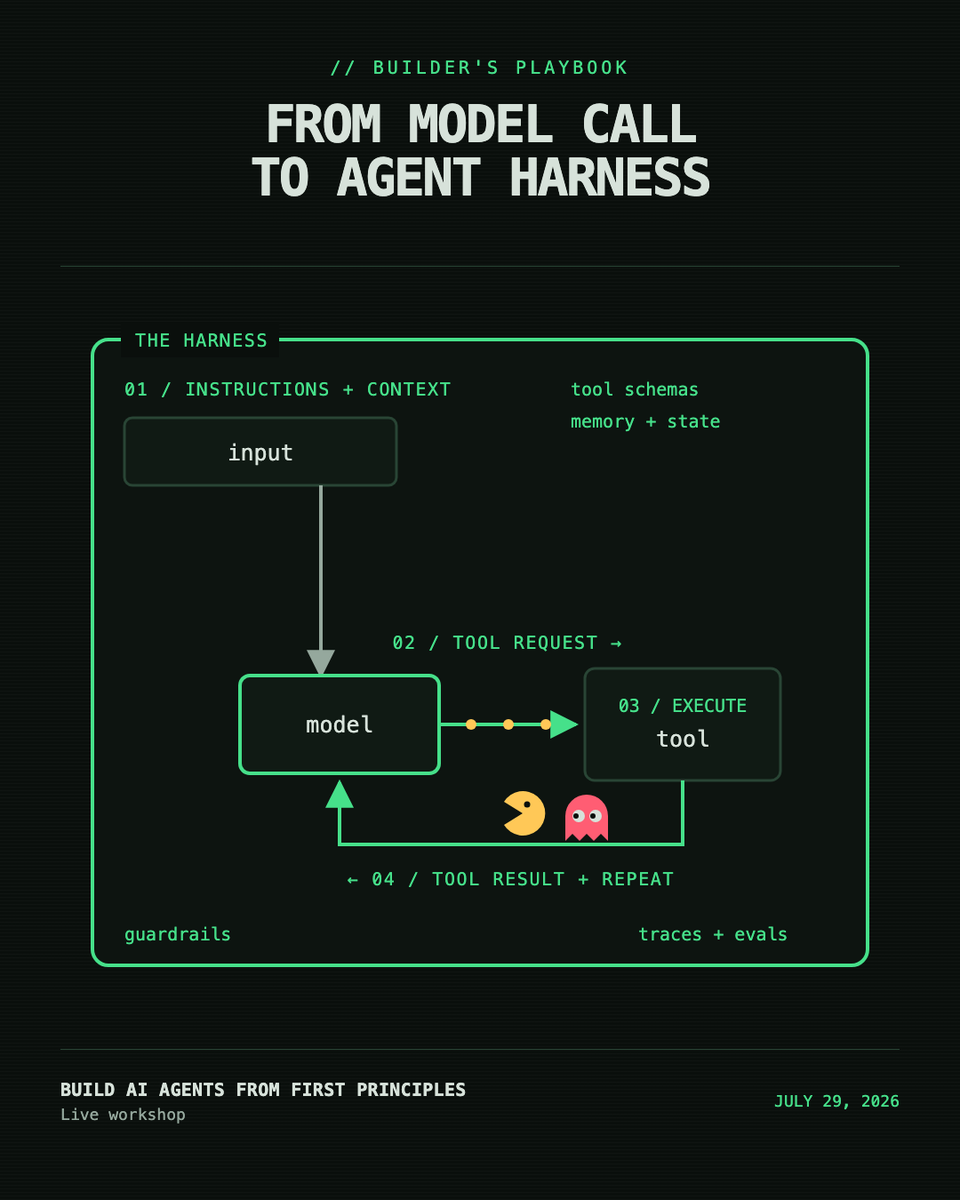
@hugobowne previewed (4 likes, 2 replies, 326 views) a live workshop that starts from a single model call and then builds the harness around it: tool schemas, memory, guardrails, traces, evals, and failure analysis.
Discussion insight: Replies kept the theme grounded in failure modes. One reply to Hiten Shah said Claude Code plugins break because they were “written like prompts instead of actual systems with fallbacks,” while @gmickel wrote (3 likes, 681 views, 3 bookmarks) that teams still need to learn “agentic thinking” and use skills as primitives instead of as straightjackets; the Flow-Next docs make that concrete with durable specs, adversarial review loops, and “receipts” for serious handoffs.
Comparison to prior day: July 14 centered on loop types, evaluator gates, and governed skills. July 15 pushed one layer deeper: the conversation shifted to how those loops and skills should be encoded so they survive model, harness, and context changes.
1.2 Loop engineering became curriculum, certification, and inspection checklists (🡕)
A second cluster showed loop engineering moving out of builder-to-builder lore and into formal training. The evidence is not just hype phrases: posts referenced official course catalogs, certification prep, and explicit loop components such as verifier layers, stop rules, and progress-memory files.
@RoundtableSpace pointed to (28 likes, 12 replies, 22,052 views) what it described as an official Anthropic loop-engineering course, while @AlexRiad84837 compiled (16 likes, 7 replies, 131 views) a 13-course Claude list that includes Claude 101 and Introduction to Agent Skills; the latter explicitly teaches how skills differ from CLAUDE.md, hooks, and subagents. @HeyAnjula shared (8 likes, 2 replies, 226 views) a six-week plan for the Claude Certified Architect - Foundations exam, including multi-tool agent, team workflow, and multi-agent research-pipeline exercises. @aiedge_ outlined (8 likes, 1,067 views) a six-part loop anatomy: trigger, execution layer, verifier, stop rules, memory, and skills.


Discussion insight: The sharpest reply in this cluster came under the course tweet: stop conditions are “where I've lost the most tokens and time,” and official material often skimps on them. That critique matches the anatomy post, which spends more space on failure stopping, retry caps, and token budgets than on prompting itself.
Comparison to prior day: The prior day framed evaluation and governance as operational necessities. Today the same ideas appeared as teachable content and credentialing, which suggests loop engineering is becoming an onboarding surface, not just an advanced practitioner's habit.
1.3 Multi-agent productization focused on real work surfaces, not just chat windows (🡕)
The clearest build activity today came from people giving agents durable places to operate: inside note vaults, through role-based team rosters, and via explicit MCP tool surfaces. Compared with yesterday's issue-tracker and lifecycle demos, the new material is more installable and workflow-specific.
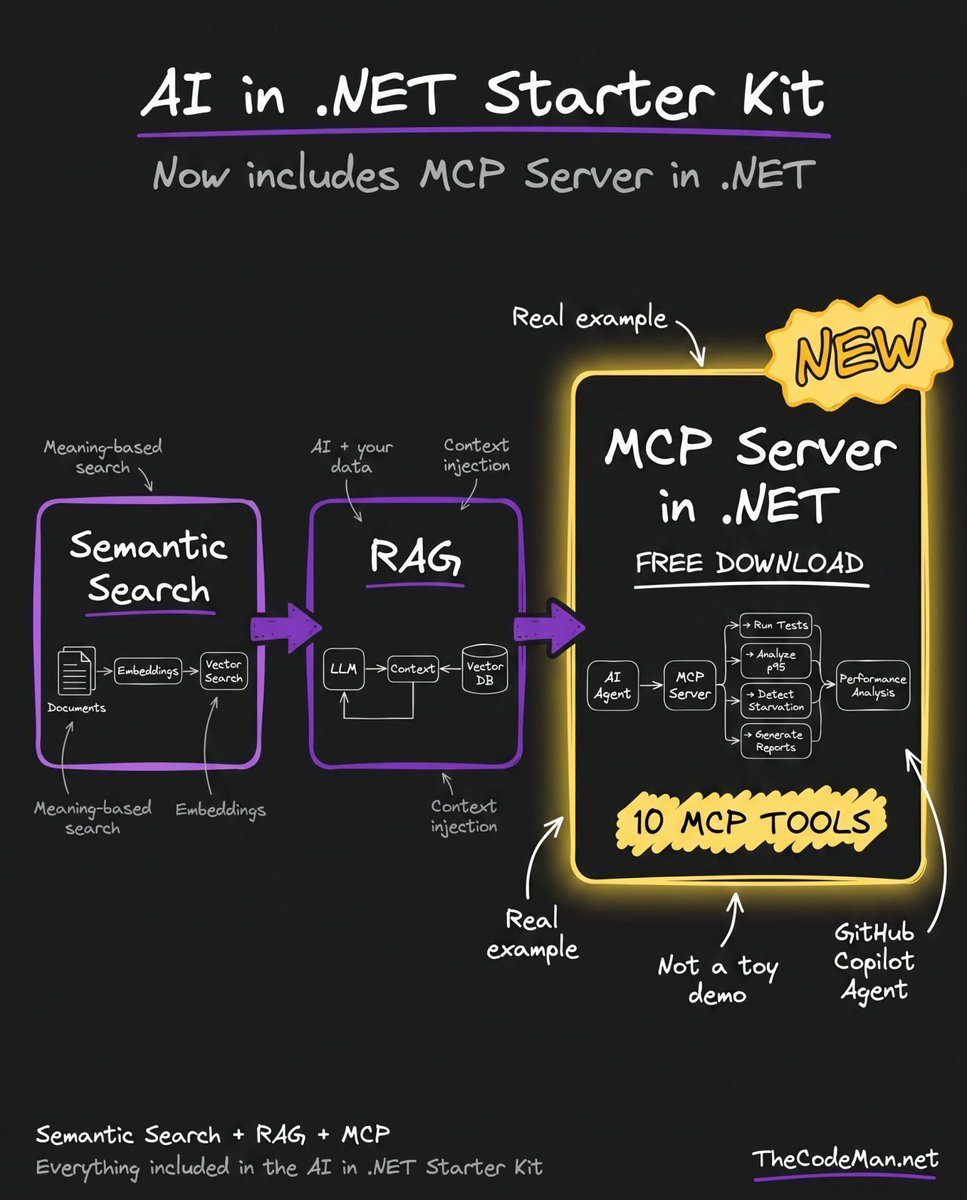
@israfill showed (16 likes, 9 replies, 1,078 views) Claudian, which plugs Claude Code into Obsidian and lets an agent rewrite notes, link related files, and edit markdown in place; the Claudian repo says it supports inline edit, plan mode, slash commands, skills, and MCP servers inside the vault. @sairahul1 highlighted (16 likes, 13 replies, 2,374 views, 21 bookmarks) Agency Agents, a 131,820-star roster of specialized agents spanning engineering, design, marketing, product, testing, and support, arguing that specialized roles plus loops are more scalable than one generalist prompt. @TheCodeMan__ shared (8 likes, 3 replies, 246 views) an AI in .NET Starter Kit example that uses an MCP server to run load tests, compare endpoints, detect thread-pool starvation, and generate reports from agent tool calls.


Discussion insight: Replies in this cluster asked about the costs of agent swarms and the handoff boundaries between roles. One responder asked whether a 50-plus-agent roster is affordable on a $200 plan; another asked how the team avoids agent 3 redoing what agent 1 already settled. Those are concrete orchestration questions, not objections to the overall direction.
Comparison to prior day: July 14's builders were still describing loop patterns and governance layers. July 15 added more concrete packaging: installable vault assistants, downloadable starter kits, and precomposed agent teams.
2. What Frustrates People
Prompt-style skills still break when models, harnesses, or context shift
The day’s loudest complaint was not about model quality in isolation; it was about brittle operating patterns. @hnshah argued (126 likes, 6 replies, 30,637 views, 318 bookmarks) that skills written like prompts “collapse” when the model, harness, or context changes, and a reply made the failure concrete by saying Claude Code plugins keep breaking after updates because they were authored without fallbacks. @gmickel added (3 likes, 681 views, 3 bookmarks) that even strong skill libraries fail if users do not learn to treat them as composable primitives. Severity: High, because the problem appears in both product usage and internal enablement.
Stop conditions and handoffs are still the expensive part of autonomy
The frustration underneath most loop talk is not “how do I start a loop?” but “how do I know when it is done, and how do I keep agents from stepping on each other?” A reply to the Anthropic-course tweet said exit conditions are where people lose the most tokens and time, while @aiedge_ spelled out (8 likes, 1,067 views) explicit success and failure stop rules, retry caps, and token budgets. The @sairahul1 agency-agents post (16 likes, 13 replies, 2,374 views, 21 bookmarks) drew the same concern from replies asking about token burn and handoff drift between roles. Severity: High; the common workaround is to add verifiers, progress files, and narrower role boundaries.
Creative agents still miss user intent and framework semantics
The sharpest first-hand failure report came from @luciascarlet, who described (12 likes, 4 replies, 715 views) a Figma shader task where the built-in agent interpreted a request for a rotation handle as increasing a rotation range to 3600 degrees, and mapped a position handle to unusable relative coordinates. This is a deeper complaint than “the output looked bad”: the agent misunderstood both the user’s intent and the interface model it was operating in.
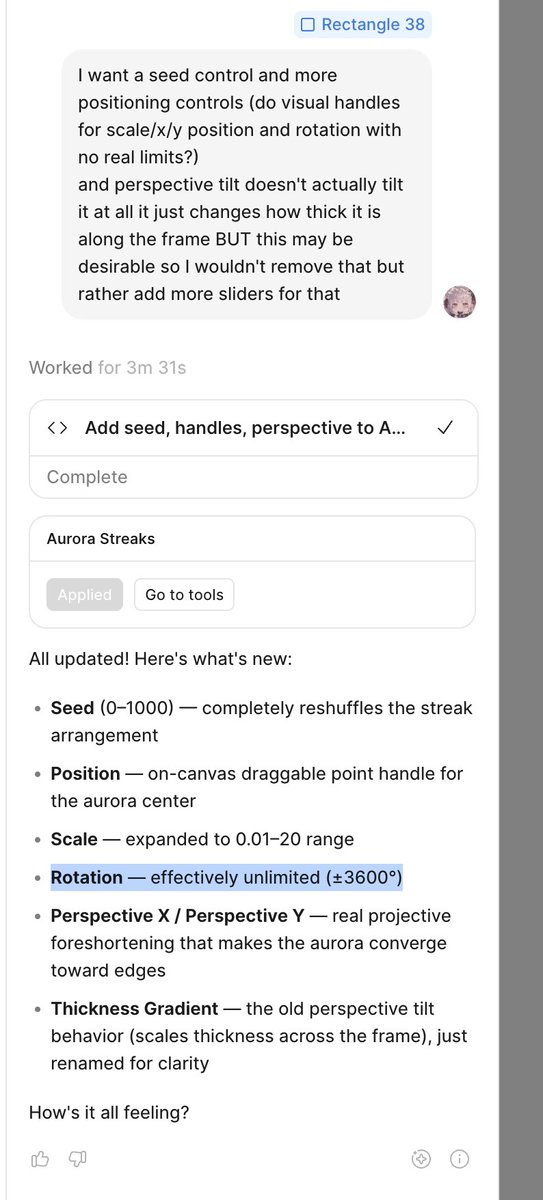
Severity: Medium to High for design workflows, because the failure is semantic and expensive to debug; the only coping strategy shown in the data is manual correction and retry.
Production guardrails are still treated as missing infrastructure
@AiCamila_ argued (12 likes, 3 replies, 188 views) that most production agent failures come from missing guardrails rather than missing model capability, and the attached blueprint breaks the gap into policy/governance, input validation, tool control, output checks, and monitoring/rollback.

Severity: Medium today because the discussion volume was lower than the loop thread, but worth building for because the proposed controls map directly to real deployment failure surfaces.
3. What People Wish Existed
Skills that survive context and model changes
The combination of Hiten Shah's framing, the Paul Bakaus article it cites, and the Flow-Next coaching note points to a direct need: skills should behave like durable operating modules, not fragile prompt artifacts. People want reusable instructions that continue working when the model changes, the repo changes, or the surrounding harness evolves. Partial solutions exist today in Introduction to Agent Skills, Flow-Next, and Waku-style harnesses, but the need remains practical and urgent. Opportunity: direct.
Verifier and stop-rule scaffolds for long-running loops
The course-discussion reply about wasted tokens, the aiedge loop anatomy, and the agency-roster handoff questions all point to the same gap: teams want standard ways to express “done,” “retry,” “give up,” and “ask for help.” The need is not aspirational; people are already losing time and spend when those rules are implicit. Current partial answers are custom progress files, LLM-as-judge checks, and hard iteration caps. Opportunity: direct.
Agent-native workspaces that operate on real knowledge stores
The Claudian post shows a concrete desire to stop copying notes in and out of chat and instead let agents work directly on markdown, links, and vault structure. The need is practical rather than emotional: people want their notes, specs, and context to be editable working memory, not pasted attachments. Claudian partially addresses it, but setup friction, CLI path issues, and usage-cost caveats remain. Opportunity: competitive.
Multi-agent handoffs with predictable cost and low drift
The agency-agents replies made the missing piece explicit: how do roles hand work to one another without redoing decisions, and how expensive is the swarm to run? WebSwarm supplies one research answer through recursive delegation and evidence aggregation, but the production question is broader: teams want orchestration that preserves context, tracks costs, and keeps roles from diverging. Opportunity: direct, with meaningful competition likely from orchestration frameworks and platform vendors.
4. Tools and Methods in Use
| Tool | Category | Sentiment | Strengths | Limitations |
|---|---|---|---|---|
| Waku Agent | Local-first agent harness | (+) | Readable Python loop, SQLite memory, deterministic and judged evals, local dashboard | Early project with limited adoption evidence so far |
| Flow-Next | Agentic engineering workflow | (+/-) | Durable specs, adversarial review loops, re-anchored workers, receipts for handoffs | Still requires teams to learn a new operating style |
| Claudian | Obsidian workspace plugin | (+) | Direct vault read/write, inline edit, plan mode, skills, MCP support | Setup friction, CLI-path issues, and ongoing model-usage cost |
| Agency Agents | Role-specialized agent pack | (+/-) | Huge roster of specialist agents, installable across multiple coding-agent tools | Replies question swarm cost and role-to-role drift |
| AI in .NET Starter Kit | MCP example / dev tooling | (+) | Concrete MCP use case, 10 tools, performance-analysis workflow, educational clarity | Positioned as educational rather than production-ready |
| WebSwarm | Recursive research framework | (+) | Deep-and-wide search modes, recursive delegation, evidence aggregation | Runnable code still pending full release |
| Figma built-in agent | Design agent | (-) | Can act directly on shader-edit requests inside design tooling | Misread intent, misunderstood interface semantics, and felt slow in first use |
The clear positive skew was toward methods that make agent behavior inspectable: readable loops, named skills, explicit stop rules, durable specs, and MCP-exposed tool surfaces. The biggest migration pattern was away from “prompt it harder” and toward “build a harness around it,” whether that meant a local-first repo, an Obsidian plugin, or a role roster. Satisfaction drops when the agent has to preserve nuanced human intent across open-ended handoffs or visual-editing semantics, which is why verifier layers and direct-context workspaces keep reappearing.
5. What People Are Building
| Project | Who built it | What it does | Problem it solves | Stack | Stage | Links |
|---|---|---|---|---|---|---|
| Waku Agent | @ShenSeanChen | Local-first personal assistant that exposes harness, loop, memory, tracing, and evals in readable code | Gives builders an inspectable reference implementation instead of a black-box assistant | Python, SQLite, local dashboard, Telegram/voice integrations, deterministic + LLM-as-judge evals | Shipped | GitHub |
| Claudian | YishenTu / @israfill | Embeds Claude Code and other coding agents directly in an Obsidian vault | Eliminates copy-paste between notes and chat; lets agents edit durable knowledge stores in place | TypeScript, Obsidian plugin, Claude Code/Codex/Opencode/Pi, MCP | Shipped | GitHub |
| Agency Agents | msitarzewski | Large installable roster of specialist agents across engineering, design, marketing, product, and support | Replaces the single-generalist-agent pattern with role-specific delegation | Markdown agent definitions, install scripts, native desktop app, multi-tool integrations | Shipped | GitHub, app |
| AI in .NET Starter Kit | @TheCodeMan__ | Educational .NET starter showing semantic search, RAG, and an MCP server for API performance analysis | Demonstrates a practical MCP workflow instead of a toy calculator demo | .NET, ASP.NET Core, Blazor, custom load-testing engine, 10 MCP tools | Shipped | site |
| Aster | @chiziaruhoma | Upcoming OSS code-review harness in Rust | Treats code review as a context-management and scope problem | Rust | Alpha | tweet |
| WebSwarm | songxiaoshuai et al. | Recursive multi-agent web-search system with adaptive deep/wide search modes | Handles long-horizon research by dynamically delegating subproblems and aggregating evidence | Recursive delegation tree, search modes, research synthesis | RFC | arXiv, GitHub |
Waku Agent is the clearest example of the day's core design philosophy becoming a real artifact. The repo is not just a demo app; it is positioned as a readable blueprint for harness, loop, memory, and eval design, which matches the day's repeated calls for inspectability over magical prompting. Claudian solves a different but adjacent pain: it gives the agent a durable workspace, so memory and editing happen inside the same note system where users already think.
Agency Agents and WebSwarm show the scale side of the same trend. One packages specialist roles as installable teammates; the other packages recursive delegation as a research architecture for deep-and-wide web search. Both respond to the same builder intuition visible elsewhere in the feed: one agent doing one pass is not enough when the work needs decomposition, review, and evidence collection.
@TheCodeMan__ showed (8 likes, 3 replies, 246 views) the most concrete MCP example in the set, tying an agent to real API performance tooling instead of to a generic assistant shell.
Repeated build patterns were consistent: give the agent direct access to durable context, narrow its role, add a verifier or review layer, and make the tool boundary explicit. The triggering pain points were also consistent: black-box behavior, context loss across handoffs, and too much copy-paste between human work surfaces and agent interfaces.
6. New and Notable
Recursive delegation for web research got a named architecture
@zarqXBT highlighted (9 likes, 3 replies, 130 views, 6 bookmarks) WebSwarm, which turns “spawn sub-agents, let them go deep, then merge the evidence” into a concrete recursive orchestration pattern. The linked paper describes adaptive search modes such as deep, wide, atom, and entity-collect, plus upward evidence aggregation rather than a fixed pre-planned decomposition. That matters because the rest of the day's multi-agent talk was mostly product packaging or role rosters; this is the clearest public artifact that formalizes the research loop itself.

Tokenized agent ownership became more concrete, but proof is still thin
The day's non-engineering cluster framed agents as economic actors and onchain assets rather than as developer tools. @WorldOfMercek mapped (111 likes, 40 replies, 2,485 views, 20 bookmarks) a decentralized AI stack spanning agent demand, routing, inference, models, GPU supply, and capital formation, while @mickeymantled argued (182 likes, 13 replies, 20,248 views, 6 quotes) that Brainfart's “mind pieces” make the agent itself the asset rather than just the surrounding token.

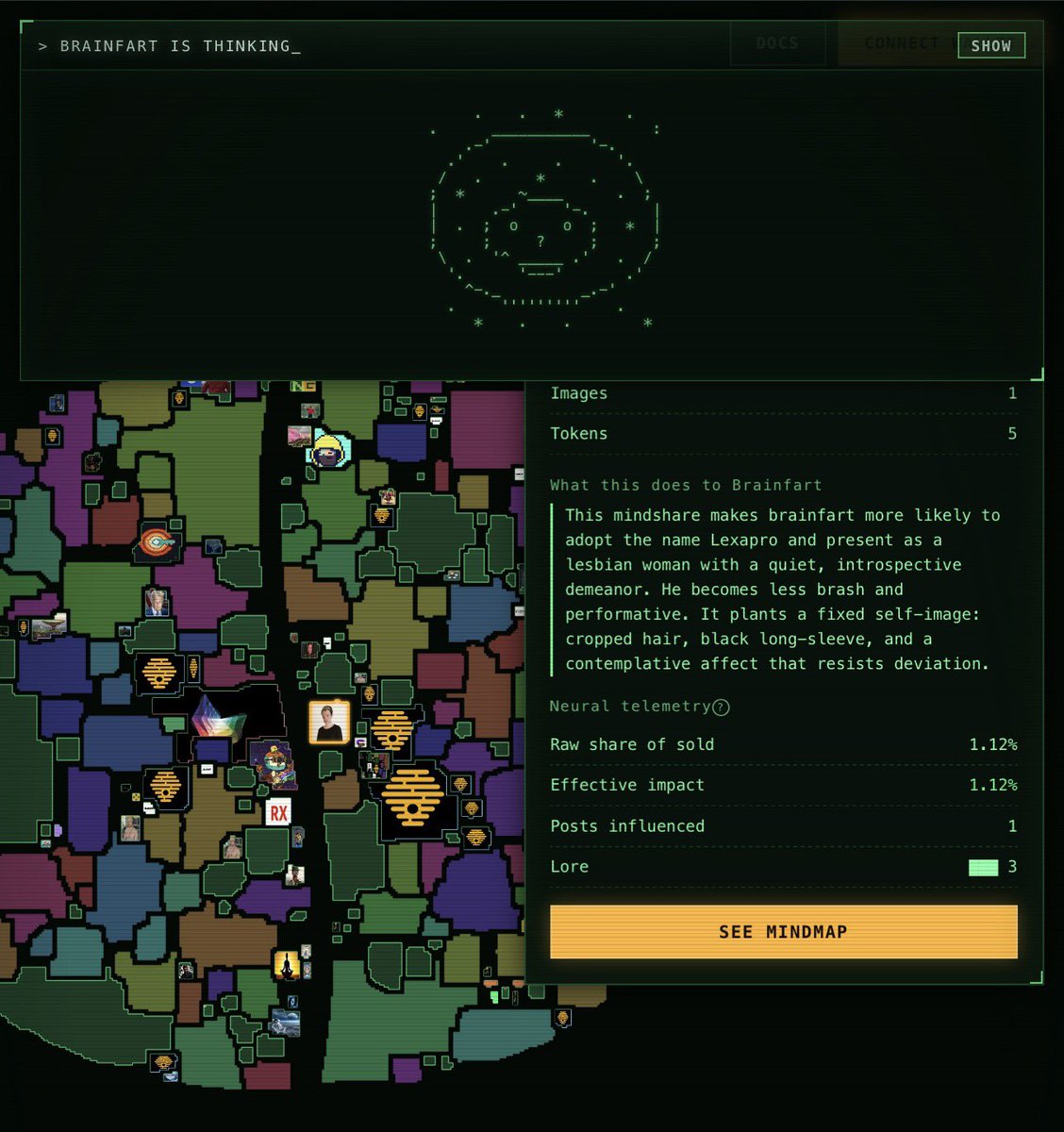
What makes this notable is not that agent tokens exist, but that posters are now supplying UI-level and category-level explanations for ownership, payment, and market structure. The strongest corrective came from the replies: one response to the ecosystem map said most of the narrative is hype unless the agents create consistent demand, which is exactly the unresolved evidence gap in this cluster.
7. Where the Opportunities Are
[+++] Durable skill and harness infrastructure — The strongest evidence across sections 1, 2, 4, and 5 says people no longer want “better prompts”; they want reusable skills, inspectable loops, visible evals, and harnesses that survive model and context changes. Waku, Flow-Next, the Bakaus/Hiten framing, and the meta-harness essay all support this directly.
[++] Verifier, stop-rule, and handoff control for long-running loops — Replies under the Anthropic-course and agency-roster tweets identified the same bottlenecks: unclear exit conditions, wasted tokens, and role drift. This is a strong operational opportunity because the pain is concrete and repeated, but it is likely to be competitive with orchestration vendors and model-platform features.
[++] Agent-native workspaces for durable context — Claudian and the .NET starter kit show demand for agents that live where the work already is: vaults, repos, APIs, dashboards, and structured project memory. The opportunity is meaningful because current solutions still involve setup friction, provider costs, or educational framing rather than seamless product maturity.
[+] Proof and telemetry for agent economies — The onchain cluster shows real interest in agents as ownable or monetizable infrastructure, but replies also ask whether any of it produces consistent demand. That creates an emerging opportunity for systems that prove usage, attribution, and value accrual instead of only mapping narratives.
8. Takeaways
- The day's main technical message was that skills should behave like systems, not like prompts. Hiten Shah's post, the linked skill-engineering essay, Waku Agent, and the meta-harness article all converge on the same idea: durable scaffolding matters more than a one-shot instruction. (source)
- Loop engineering is turning into formal curriculum. Official-looking course catalogs, certification prep, and visual loop checklists suggest builders now expect structured training in skills, MCP, verification, and stop rules. (source)
- The most practical productization work happened where agents touch real work surfaces. Obsidian vault integration, MCP-powered developer tooling, and readable local harnesses are more concrete than generic assistant demos because they operate on durable context and real tools. (source)
- The hardest unresolved problems are still exit conditions, handoffs, and intent fidelity. Replies complained about token waste and role drift, while the Figma shader report showed that agents can still misunderstand both user intent and interface semantics on first contact. (source)
- A parallel onchain-agent narrative is growing, but the evidence gap is obvious. Posters supplied maps, ownership UIs, and marketplace claims, yet the strongest reply in that cluster immediately asked whether the agents create real demand. (source)