Twitter AI Agent - 2026-08-02
1. What People Are Talking About
1.1 Loop, graph, harness, and eval work got more operational (🡕)
The strongest technical theme was a move from naming agent-system layers to specifying how they should behave in production. Compared with August 1's emphasis on context, graph, and harness vocabulary, August 2 supplied concrete control points: triggers, checkers, stop rules, world-state verification, and trajectory judging. The conversation sounded less like prompt advice and more like operators defining how an agent run should start, stop, recover, and be graded.
@milesdeutscher shared (34 likes, 23 replies, 16,963 views, 53 bookmarks) a six-part Claude Code loop made of trigger, doer, checker, stop rules, memory, and skills. The image mattered because it made loop engineering inspectable instead of mystical: the checker is a separate grading step, stop rules cap retries and budgets, and memory persists across runs. The most useful replies reinforced that the checker and stop rules are the pieces people skip before wondering why a loop drifts or runs forever.

@Vtrivedy10 argued (27 likes, 1 reply, 3,045 views, 39 bookmarks) that agent evals fall into two buckets: verify the final state of the environment, then judge the trajectory for cheating, waste, cost, and latency. The attached diagram made that distinction explicit with a before-state / after-state verifier on top and a cheaper-versus-wasteful trajectory comparison below. That was stronger than a generic "evals are hard" complaint because it named the containerized world, the verifier blind spots, and the fact that a technically correct end state can still be a bad run.

@elune0x wrote (53 likes, 9 replies, 3,418 views, 36 bookmarks) that the prompt merely proposes a move while the control stack decides whether it survives. The post split failures into loop problems (repetition, retry policy, budgets), graph problems (routing, joins, checkpoints, memory transitions), and harness problems (permissions, side effects, rollback). That taxonomy matched the more practical diagrams elsewhere in the dataset, which is why it landed as a useful frame instead of another slogan.
@Priyannkaaaa reported (583 likes, 26 replies, 20,277 views, 61 bookmarks) that DeepSeek is preparing a dedicated coding agent called DeepSeek Code on top of its Harness framework, with planning, tool use, code execution, memory, repository awareness, and long-running workflows. Even without a public repo in the thread, the tweet mattered because it showed harness language escaping discourse and turning into a product category competing with Claude Code and Codex.
Discussion insight: Replies under the loop and eval posts were unusually concrete. Instead of asking for better prompts, they focused on what gets checked, what counts as a valid end state, how to stop loops before they waste compute, and why postmortems should blame the control stack rather than the model by default.
Comparison to prior day: August 1 established the vocabulary of context, loop, graph, and harness engineering. August 2 pushed that vocabulary into operating rules, diagrams, and release plans.
1.2 Computer-use agents moved closer to secure desktops and hybrid local/cloud rigs (🡕)
The second major theme was execution environment. Builders were no longer talking only about browser agents or abstract autonomy; they were showing remote desktops, approval flows, local GPU rigs, and shareable registered compute nodes. This looked like a step beyond August 1's broad "agents beyond chat and IDEs" theme into concrete workstation and infrastructure choices.
@zentalksai claimed (65 likes, 17 replies, 2 quotes, 3,572 views) that the real problem with putting an AI agent on your computer is trust, then contrasted that with Sai's private remote desktop, approval gate, and ability to keep running with the laptop closed. The attached product image showed the exact differentiators: always-on execution, BYOD or dedicated remote desktop, full GUI capabilities, and cross-tool work without API integrations. Simular's public product page repeats the same four points, and the underlying Agent-S repo says Agent S3 was the first to surpass human performance on OSWorld at 72.60%, giving the tweet more weight than a generic promo.

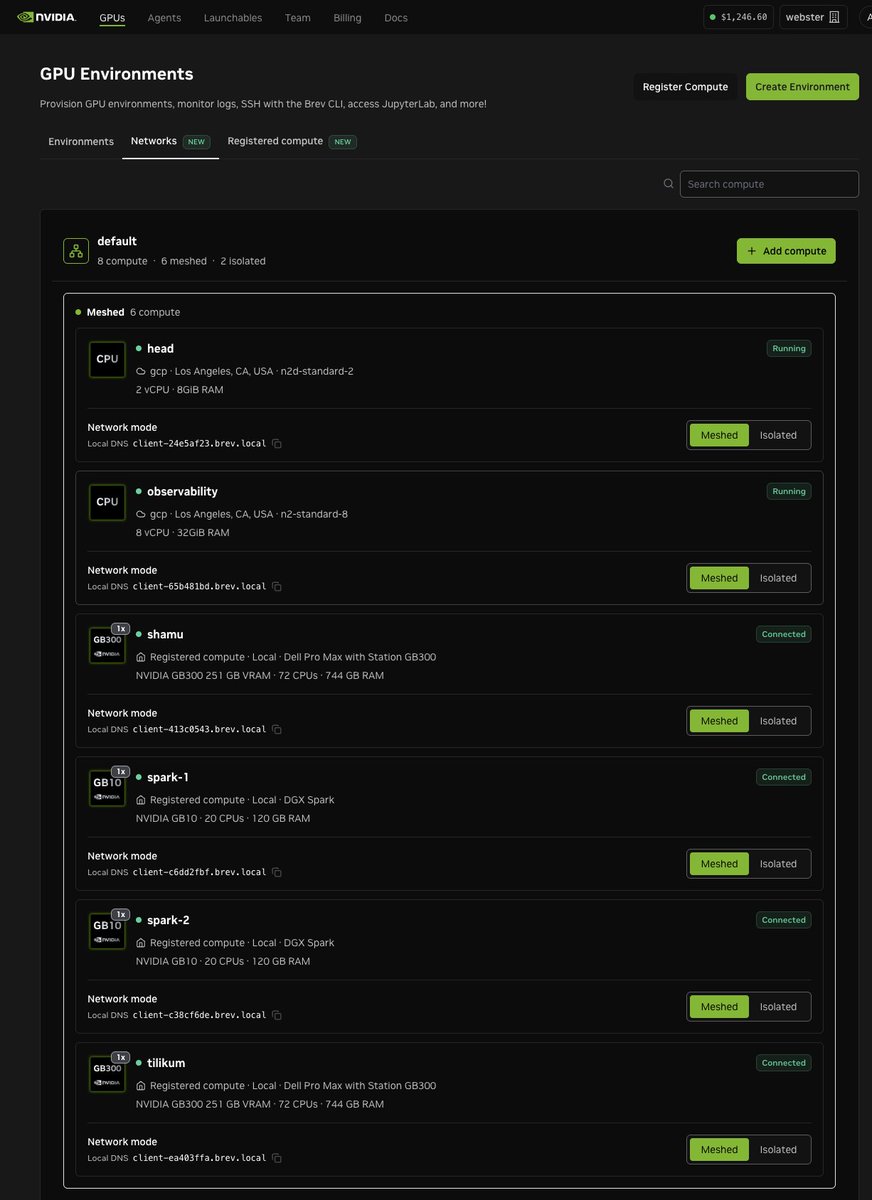
@alecqfong showed (89 likes, 16 replies, 1 quote, 6,107 views, 22 bookmarks) a local stack built from DGX Sparks for implementation and subagents, DGX Stations for planning and advising, and Brev for networking, orchestration, and an always-on cloud agent. The most informative image was not the hardware glamour shot but the Brev dashboard, which displayed local registered compute nodes sitting beside cloud head and observability nodes inside one meshed environment. NVIDIA's public DGX Station to Brev guide confirms that this registered-compute flow is meant to make local hardware remotely accessible, shareable, and visible as managed Brev capacity.
@VKazulkin flagged (6 likes, 845 views, 14 bookmarks) AWS MCP Server's new OAuth support. The linked AWS security post matters because it adds browser-based sign-in, IAM federation and Identity Center support, token introspection and revocation, dynamic client registration, and a headless OAuth path. That is not a full safety solution, but it is a concrete sign that agent tool access is being pulled into standard identity and governance controls.
Discussion insight: The pushback was not anti-agent. It was about where the work runs, how approvals queue when the user is away, whether the remote box is truly disposable, and how much glue code is required before a "local stack" becomes a real operating environment.
Comparison to prior day: August 1 widened the agent surface area to documents, media, and widgets. August 2 made the execution layer more literal: remote desktops, registered GPU boxes, and governed tool access.
1.3 Skills and role-specific methods started looking like the reusable unit of agent capability (🡕)
A third theme was that people increasingly described agents as bundles of role context plus reusable methods rather than bare models. Yesterday's report already showed portable skills and migration utilities. Today went a step further into catalogs, departmental skill libraries, and routing layers that decide which agent should handle a task.
@milesdeutscher highlighted (65 likes, 22 replies, 17,850 views, 124 bookmarks) Nous Research's Hermes Skills Hub as a catalog spanning 90,000 community skills across 200+ categories. The live Skills Hub page currently advertises that it is "Fetching 88k+ skills across every registry," and the Hermes Agent README ties that catalog to a broader system with built-in skill creation, memory, subagents, and cross-platform operation. The best reply was also the sharpest caution: 90,000 skills is mostly noise unless curation gets much better.
@coreyganim argued (41 likes, 7 replies, 2,278 views, 37 bookmarks) that an agent becomes much more valuable when it owns both a business function and a library of repeatable methods for that function. The useful part was the composition rule: business context plus reusable method plus tools plus boundaries plus verification. Replies added the caveat that mirroring the org chart too literally can miss cross-functional workflows, which is exactly the kind of ownership problem multi-agent systems tend to hide.
@startupideaspod described (118 likes, 14 replies, 12,568 views, 143 bookmarks) Buzz as a lightweight multi-agent surface where the practical win was pinning each agent to a model and letting a chief routing agent decide who gets the task. The post was more valuable because it was candid about the current limits: recurring workflows still fail, the relay adds latency, and the product remains alpha for serious software work. That combination made it a good public read on how skills, roles, and routing are being packaged together.
Discussion insight: The replies treated curation and ownership as the real bottlenecks. People were less worried about whether an agent could do something once than whether a skill library could stay organized, scoped, and verifiable across many agents.
Comparison to prior day: August 1 emphasized migration and shared memory. August 2 shifted toward catalogs, departmental method libraries, and router-style ownership.
1.4 Software-abundance optimism surfaced alongside a sharper definition of the human role (🡕)
The broadest macro thread was not doom. It was a more specific claim that agents are accelerating software output while pushing human value upward into judgment, prioritization, and product taste. That mattered because it linked the tactical posts about loops and harnesses to a larger belief that the job is changing shape rather than disappearing outright.
@dabit3 wrote (253 likes, 33 replies, 7 quotes, 16,471 views, 178 bookmarks) that software abundance is real: companies are shipping 10-20x more PRs, repeatable tasks like migrations and dependency upgrades are exactly what agents are good at, and the differentiator is increasingly judgment, curiosity, context, and taste. The replies gave the thesis more texture instead of just applauding it. One operator pointed to QA and product planning as likely next bottlenecks, while another argued that parity rises when everyone can ship 20x more code.
Discussion insight: This thread was more contested than the architecture posts, but the disagreement was about where the new bottleneck sits, not whether agents are already changing engineering work.
Comparison to prior day: August 1 was dominated by system design and enterprise control planes. August 2 still had those topics, but it also carried a stronger labor-and-craft argument about what humans are left to own.
2. What Frustrates People
Trust and isolation are still the first objection to computer-use agents
Severity: High. The clearest fear signal was not model quality; it was where the agent runs and what it can touch. @zentalksai said the problem with an agent on your own machine is that it sits next to your files, logins, and everyday desktop state, then pitched Sai's remote workspace and approval flow as the fix. The replies immediately tested that claim instead of cheering it: people asked whether approvals simply queue while the user is away and whether the remote workspace is truly disposable after each task. @VKazulkin added a more concrete governance response with AWS MCP Server OAuth, token revocation, and token introspection, which suggests the trust problem is pushing from product rhetoric into real auth plumbing. This is worth building for because the objection appears before the task even starts.
Long-running workflows still drift, repeat work, and waste tokens
Severity: High. The Buzz thread made the practical failure mode explicit: @startupideaspod said the setup was easy but recurring workflows were "not really landing great," and a reply from someone running 400+ agents said the hard part is everything after setup: drift, re-doing yesterday's work, and no memory of what failed. @milesdeutscher framed the same problem from the loop side, where a missing checker or stop rule causes the agent to assume it is done or to fail forever without escalation. The repetition complaint in @elune0x also landed here: if the run keeps going after the result stops improving, the loop failed. This is worth building for because multiple posts converged on the same diagnosis from different angles.
Agent evaluation is still harder than people want it to be
Severity: Medium. @Vtrivedy10 was unusually specific that a successful agent run has to be judged twice: by the state of the world afterwards and by the trajectory used to get there. The hard part is that valid end states can be broader than the verifier anticipated, while bad trajectories can still arrive at a superficially correct result by cheating, looping, or wasting cost. That lines up with @elune0x, where evaluators, budgets, approvals, and rollback paths live outside the model itself. The pain is real, but it looked more like a tooling and measurement gap than a total dead end.
3. What People Wish Existed
Secure, disposable workspaces for computer-use agents
Practical need. The Sai post, its replies, and the AWS OAuth release all pointed at the same gap: users want an agent that can act across desktop software, but they do not want to hand it their everyday machine or unmanaged credentials. What people appear to want is a disposable remote workspace with approvals, auditable access, and standard identity controls. Opportunity: direct.
Better checker and evaluator infrastructure for long-running work
Practical need. The loop diagram from @milesdeutscher and the eval diagram from @Vtrivedy10 both implied the same missing layer: easy ways to define success, catch looping behavior, and tolerate valid alternative end states. Buzz's recurring-workflow issues make the need feel urgent rather than academic. Opportunity: direct.
Curated skill systems with clearer ownership boundaries
Practical need. Hermes Skills Hub shows that the supply side is exploding, but the best reply in the thread was that 90,000 skills without curation is mostly noise. @coreyganim added the organizational version of the same problem: skills need function ownership, boundaries, and verification or they become improvisation. Opportunity: competitive.
Hybrid local/cloud orchestration that treats private hardware as first-class capacity
Emerging need. The local-stack post was not asking for a new model; it was showing a desire to combine local GPU boxes, cloud nodes, observability, and orchestration in one control plane. The evidence is still early, but the Brev-registered-compute pattern suggests some builders want agent infrastructure that can span home, office, and cloud without becoming a one-off systems project. Opportunity: emerging.
4. Tools and Methods in Use
| Tool | Category | Sentiment | Strengths | Limitations |
|---|---|---|---|---|
| DeepSeek Code / Harness | Coding agent | (+/-) | Promises repo awareness, memory, planning, tool use, and long-running workflows | Still only an announced closed beta in this dataset; no public artifact in the thread |
| Buzz | Multi-agent workspace | (+/-) | Model pinning, router-style chief agent, reuse of existing Claude Code skills | Alpha maturity, slow relay round-trips, weak recurring workflows |
| Hermes Skills Hub | Skills registry | (+) | Large cross-vendor catalog; pairs with a runtime that can create skills and spawn subagents | Curation quality is an open problem when the catalog gets huge |
| Sai | Computer-use workspace | (+/-) | Secure remote desktop, approvals, always-on execution, GUI work across tools without APIs | Trust depends on the remote box and disposal guarantees, not just the marketing copy |
| Brev registered compute | GPU/orchestration infrastructure | (+) | Lets local DGX-style hardware appear as managed, shareable capacity alongside cloud nodes | Requires real hardware, registration overhead, and infrastructure glue |
| AWS MCP Server OAuth | Auth/governance | (+) | Standard sign-in, IAM federation, revocation, introspection, dynamic client registration | Handles access control, not higher-level memory, approval, or workflow policy by itself |
| Claude Code loop pattern | Method | (+) | Makes long-running automation legible via trigger, checker, stop rules, memory, and skills | Still easy to misconfigure if the checker or stop conditions are weak |
| Loop/graph/harness engineering | Method | (+) | Separates time, state, and side-effect failures into debuggable layers | Can remain abstract unless paired with diagrams, evaluators, and tooling |
| Environment-state + trajectory evals | Evaluation method | (+) | Measures both the end result and how the agent got there, including cheating and cost | Expensive to run and hard to define broadly enough for valid alternative outcomes |
Overall satisfaction was highest when a tool added explicit control surfaces: approvals, routing, registered infrastructure, checkers, or revocation. The common workaround pattern was segmentation: cheap or lighter models for narrow tasks, heavier models for harder work, and a separate router or verifier to keep the system honest. The clearest migration dynamic was not provider switching for its own sake, but moving from single-agent improvisation toward skill catalogs, owned roles, and governed execution environments.
5. What People Are Building
| Project | Who built it | What it does | Problem it solves | Stack | Stage | Links |
|---|---|---|---|---|---|---|
| DeepSeek Code | DeepSeek | Dedicated coding agent for planning, tool use, code execution, memory, and repository-aware workflows | Tries to turn DeepSeek's model line into a direct coding-agent competitor instead of just a raw model | Harness framework, V4-Flash evaluation stack, repo-aware memory/workflows | Beta | tweet |
| Buzz | Jack Lipstone and team | Multi-agent workspace with model-pinned roles and a chief routing agent | Gives small teams a fast way to coordinate specialized agents without custom infrastructure | Claude Code harness, global skills, Fable/Sonnet role pinning, server relay | Alpha | tweet |
| Hermes Skills Hub | Nous Research | Large skills catalog attached to the Hermes agent runtime | Makes skills portable, searchable, and reusable across many agent setups | Hermes Agent runtime, skills registry, subagents, memory, cross-platform gateway | Shipped | docs, tweet |
| Sai | Simular | Secure computer-use agent that works in a remote workspace with approvals and full GUI access | Tries to make desktop automation usable without exposing a user's everyday machine directly | Secure remote workspace, GUI automation, approval gate, always-on execution, Agent S foundation | Beta | site, tweet |
| KrillinAI | Krillin AI team | End-to-end video translation, dubbing, and rendering pipeline that humans or agents can orchestrate | Packages a messy localization workflow into a staged CLI and skill-ready automation surface | Go, Whisper, LLM translation, TTS, staged CLI, JSON manifest, per-stage skills | Shipped | repo, tweet |
The strongest pattern was not "another chatbot." It was packaging execution environments, reusable skills, and multi-step workflows so agents can keep working after the first prompt. DeepSeek Code and Buzz address the coding-workspace side, while Hermes Skills Hub and KrillinAI treat reusable skills and stable contracts as product surfaces in their own right. Sai stood out because it wrapped computer use in a trust story: a separate workspace, approval gates, and background operation instead of direct residence on the user's laptop.

The repeated trigger for these builds was clear across the dataset: people want agents to be reusable, scoped, and persistent, but they do not want to babysit loops, rebuild skills from scratch, or expose their primary machine and credentials just to get automation.
6. New and Notable
DeepSeek made harness engineering look like a product race, not just a discourse trend
The most notable competitive signal was the DeepSeek Code preview, because it framed repo awareness, memory, planning, and long-running workflows as table stakes for a first-class coding agent rather than add-ons around a strong base model. (source)
Hermes pushed skills toward marketplace scale
Hermes Skills Hub mattered because the public page and repo position skills as a searchable, reusable layer across registries, not just a folder of personal prompts. The strongest counterpoint in the replies was also the important one: curation now matters as much as inventory. (source)
AWS brought standard OAuth governance to MCP access
AWS MCP Server OAuth support stood out because it adds normal identity plumbing - browser sign-in, federation, revocation, introspection, and headless auth - to agent tool access. That is a concrete governance step rather than a vague security aspiration. (source)
KrillinAI showed how non-coding workflows are being turned into agent-ready pipelines
KrillinAI was notable because the linked repo is not just a demo app. It exposes a staged CLI, manifest outputs, and per-stage skills for a real localization workflow spanning transcription, translation, dubbing, and rendering. (source)
7. Where the Opportunities Are
[+++] Secure computer-use workspaces — Sai, AWS MCP OAuth, and the trust-heavy replies all point to the same gap: users want desktop-capable agents, but only inside disposable workspaces with approvals, revocation, and clear credential boundaries.
[+++] Checker and evaluator infrastructure for long-running agents — The loop and eval posts converged on missing primitives for success tests, stop rules, trajectory grading, and valid-alternative outcome handling. That need also showed up in Buzz's recurring-workflow failures.
[++] Skill curation, routing, and ownership layers — Hermes Skills Hub, Corey Ganim's function-plus-method framing, and Buzz's chief routing agent all suggest that the next product layer is not more raw capability, but better organization of reusable skills and clearer assignment of who owns what.
[+] Hybrid local/cloud agent operations — The Brev-registered local stack is still early, but it points to a growing niche for agent infrastructure that can treat private GPU hardware and cloud nodes as one controllable pool.
8. Takeaways
- Agent engineering discourse kept moving away from prompts and toward control surfaces. The most useful posts named concrete levers like checkers, stop rules, environment-state verification, and trajectory grading rather than asking for better prompt wording. (source)
- Trust is becoming the gating constraint for computer-use agents. The strongest desktop-agent conversation was about remote workspaces, approval queues, and disposable sessions, not raw autonomy. (source)
- Reusable skills are being treated as infrastructure, but curation is lagging inventory. Hermes Skills Hub showed catalog scale, while replies immediately pointed out that the value now lies in selecting and organizing the right skills. (source)
- Hybrid local/cloud agent stacks are becoming concrete enough to show architecture screenshots, not just aspirations. The local DGX-plus-Brev setup was one of the clearest signs that some builders want agent capacity to span private hardware and cloud control planes. (source)
- The human role is being reframed upward, not erased outright, in this dataset. The highest-signal macro thread argued that agents eat repeatable engineering chores while judgment, prioritization, and taste become more valuable. (source)