Twitter AI Agent - 2026-08-04
1. What People Are Talking About
1.1 Agent engineering expanded from the harness to the full operating lifecycle (🡕)
The strongest production theme was that a capable loop is only one part of an agent system. Four high-signal items focused on tracing, cost attribution, approvals, recovery, CI/CD, and alert-to-fix workflows. Compared with August 3's benchmarks and failure taxonomies, August 4 pushed those ideas into control planes and lifecycle products.
@_ashleypeacock summarized (75 likes, 6 replies, 3,666 views, 24 bookmarks) Cloudflare's Agent Development Lifecycle launch: TypeScript CI/CD, local and hosted OpenTelemetry traces, session replay, and an Astro software factory that the post says reduced open issues from 200 to 30. Cloudflare's own ADLC article makes the underlying argument explicit: implementation became faster, so review, deployment, maintenance, reproducibility, permissions, and rollback became the bottlenecks.
@databricks announced (34 likes, 1 reply, 1,409 views) general availability of Unity AI Gateway, a central control plane for agents, MCP servers, skills, coding assistants, and models. The public launch adds cost attribution, hard spending caps, runtime policies, and model routing; the attached dashboard shows why the gateway is more than an API proxy, separating governed and ungoverned spend by workspace, destination, and usage type.

@nicolomagnante shipped (226 likes, 4 replies, 562 views) Superlog Responder, which listens to existing Sentry or Datadog Slack alerts, investigates with repository and service context, and replies with evidence plus a proposed pull request. @nykdotdev described (54 likes, 14 replies, 6,586 views, 19 bookmarks) the broader production envelope as nine contracts around an agent, then reduced the starting point to five artifacts: an outcome contract, bounded tools, an approval rule, checkpoint identity, and a completion receipt.
Discussion insight: Replies sharpened recovery from "did the run finish?" to whether the system can resume safely, while Cloudflare's launch material noted that an agent can return HTTP 200 and still choose the wrong tool, use stale context, or burn tokens in a retry loop.
Comparison to prior day: August 3 made harness performance measurable. August 4 connected that measurement to CI, traces, budgets, incident response, and recovery.
1.2 Multi-agent products exposed the handoff problem instead of hiding it (🡕)
Five items converged on shared workspaces, channel adapters, persistent crews, explicit delegation graphs, and deterministic supervisor workflows. The useful tension was between richer coordination surfaces and evidence that adding agents can simply duplicate work or compress away hard-won findings.
@akshay_pachaar introduced (38 likes, 7 replies, 7,710 views, 45 bookmarks) the open-source CopilotKit Channels SDK, which keeps agent logic in one place while adapting output to Slack Block Kit, Teams Adaptive Cards, and other channel-native interfaces. The repository confirms AG-UI framework support, streaming, files, tools, and approval gates. A reply supplied an important correction: open-sourcing channel plumbing expands where agents can run, but it is not itself a replacement for the agent.
@IBuzovskyi mapped (46 likes, 7 replies, 4,680 views, 64 bookmarks) Hermes, Claude Code, Codex, and Goose into one ACP-based Buzz channel for review, research-build-verify, and incident-response workflows. The post's "honest note" mattered most: humans still direct each handoff with mentions; the agents do not autonomously coordinate.
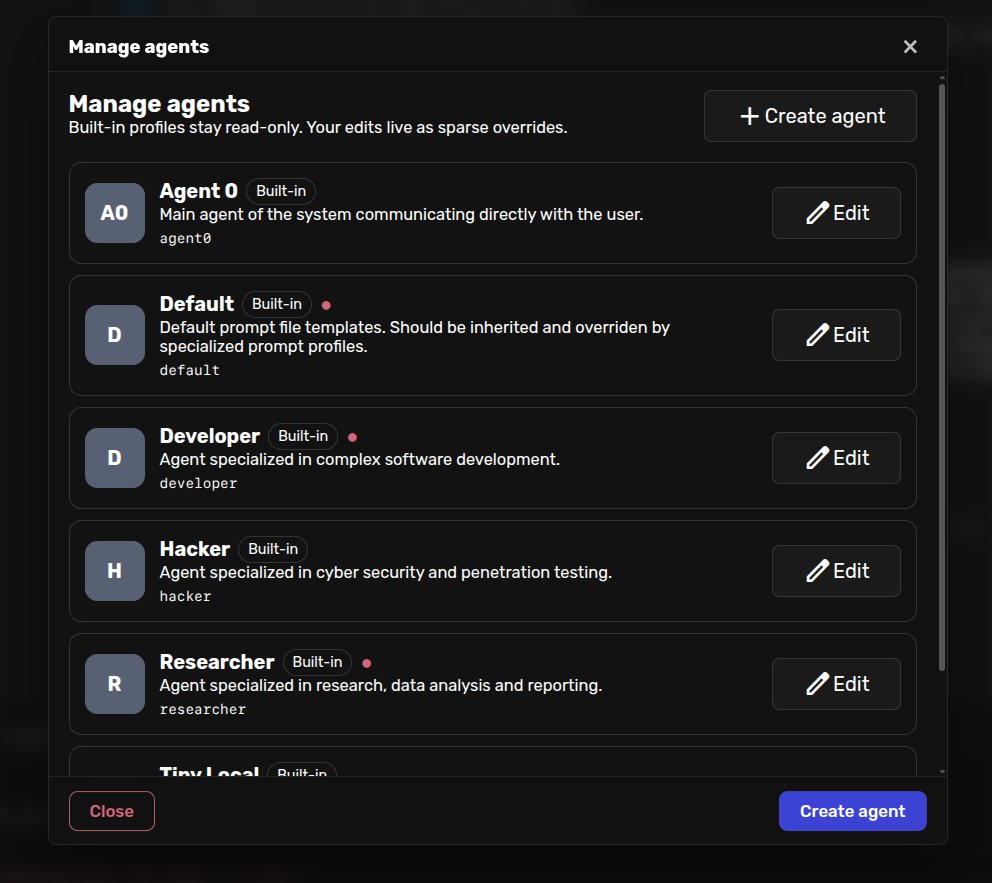
@SwamiSivasubram launched (17 likes, 1 reply, 367 views) open-source Kiro Crew, a persistent Python/TypeScript engineering workspace with scheduled work, parallel efforts, durable lessons, skills, and inspectable orchestration. @Agent0ai previewed (9 likes, 3,076 views, 4 bookmarks) a GUI for assigning each agent a model, instructions, tools, skills, and permitted delegation edges.
The counter-evidence came from @hanakoxbt, who showed (28 likes, 2 replies, 2,029 views, 30 bookmarks) how a handoff can preserve one conclusion while losing failed routes, error bodies, and negative evidence, forcing the next agent to pay for the same discoveries. @unclebobmartin reported (30 likes, 6 replies, 1,834 views, 23 bookmarks) testing his own agent squad with a static state machine, simulated delays and failures, and Monte Carlo runs; replies added that a supervisor must verify that worker output actually landed.
Discussion insight: Shared channels solve visibility and copy-paste friction, but not semantic loss. The strongest implementations retained human routing, explicit delegation edges, durable artifacts, or deterministic state transitions.
Comparison to prior day: August 3's shared shells emphasized routing and workspaces. August 4 supplied more evidence about what breaks inside the handoff and how much coordination remains human-directed.
1.3 Memory, skills, and evaluations became evidence-management systems (🡕)
Six retained items treated agent improvement as a data problem: what to preserve, how to retrieve it, how to turn experience into a skill, and how to verify a persisted result. This continued August 3's memory-governance thread, but added concrete cost, topology, and benchmark evidence.
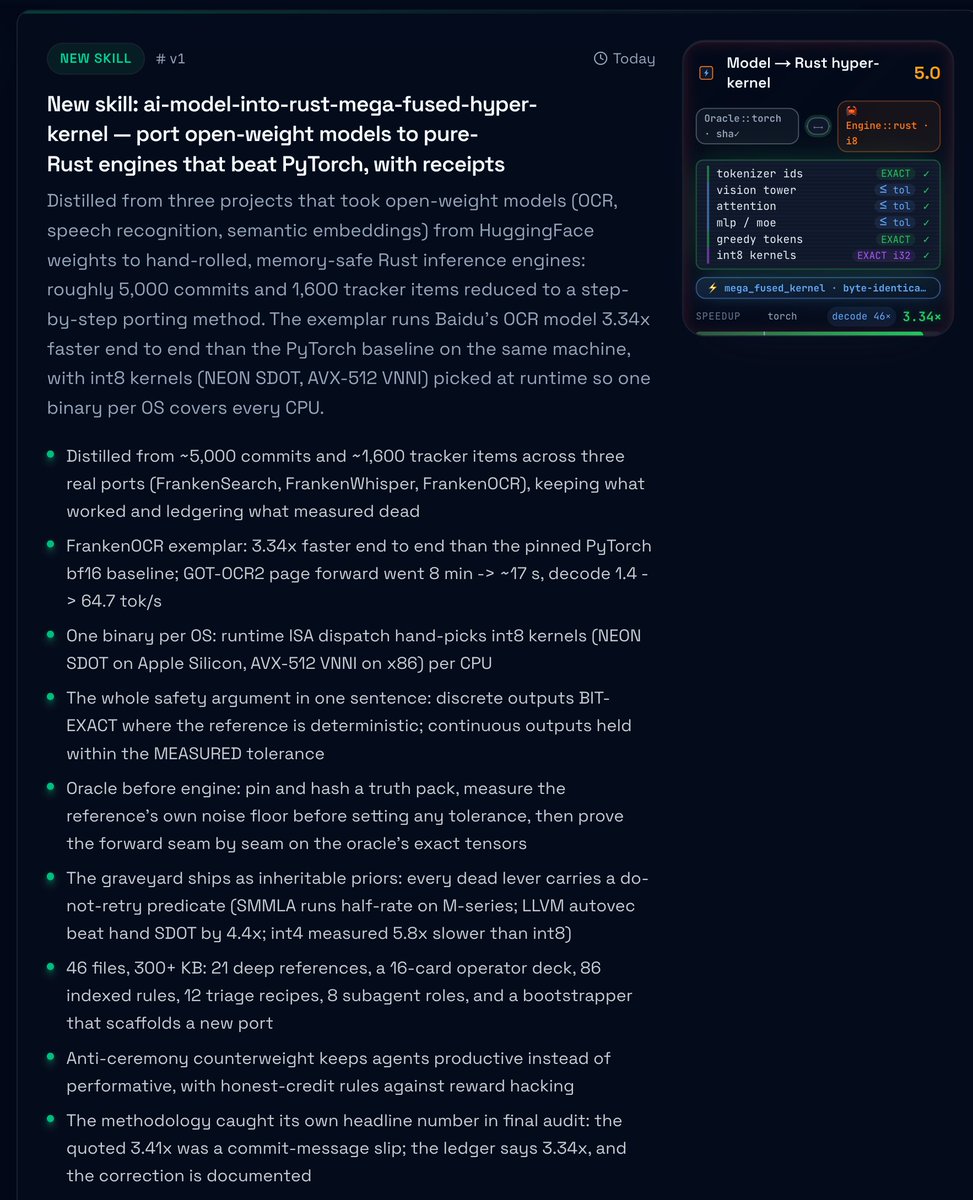
@doodlestein distilled (64 likes, 6 replies, 2,858 views, 56 bookmarks) roughly 5,000 commits and 1,600 tracker items from three model ports into a 46-file skill for converting open-weight models into specialized Rust inference engines. The informative image records the claimed 3.34x FrankenOCR speedup, bit-exact or measured-tolerance parity rules, an oracle-before-engine workflow, and a negative-evidence "graveyard"; notably, the method corrected its own earlier 3.41x headline downward.
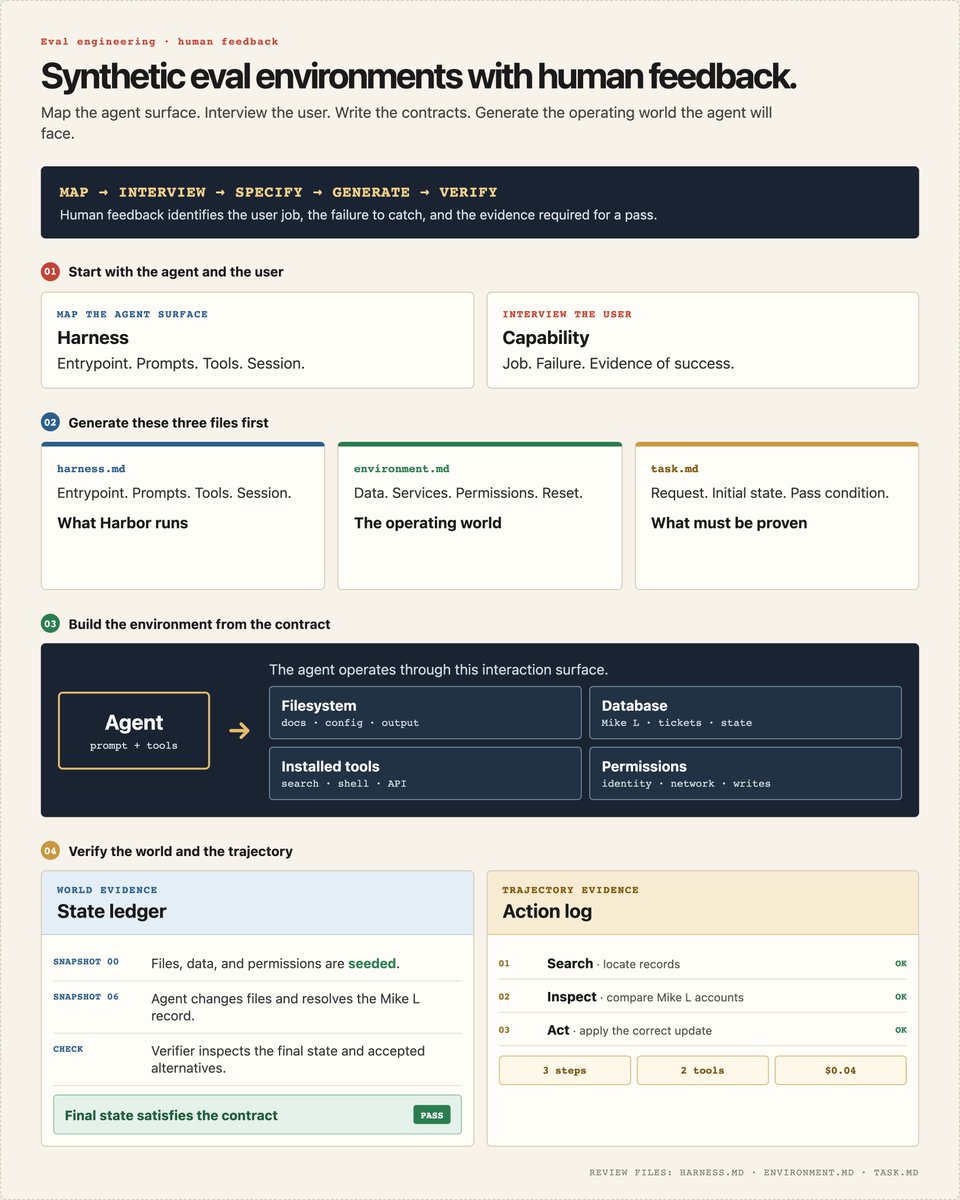
@Vtrivedy10 proposed (30 likes, 2 replies, 3,410 views, 56 bookmarks) generating synthetic evaluation environments only after a human aligns harness.md, environment.md, and task.md. The diagram makes the evidence contract concrete: seed the filesystem, services, permissions, and initial state, then verify both the final state and the action trajectory.
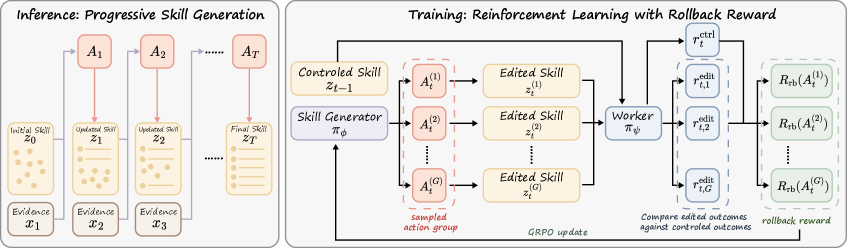
@HuggingPapers highlighted (10 likes, 2 replies, 644 views, 4 bookmarks) Skill-Alpha, whose public code progressively applies CREATE, UPDATE, MERGE, PRUNE, and NOOP edits to skills and trains those edits with rollback rewards from downstream behavior. The post reports gains of 3.3 points on CL-Bench and 6.7 points on tau2-bench.
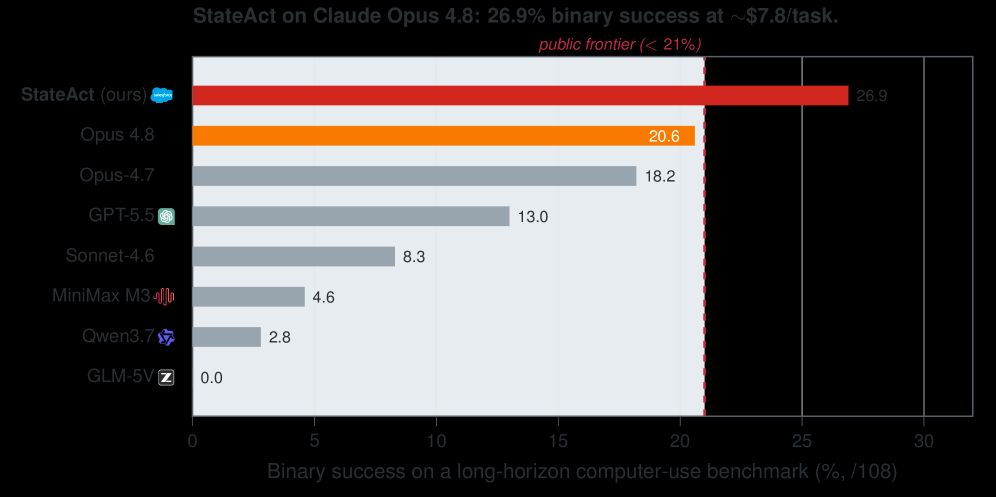
@MikeTamir pointed (1 bookmark, 145 views) to the StateAct paper, which makes persisted program state the primary interface for long-horizon computer use while retaining a GUI specialist and an independent finish gate. Its chart reports 26.9% binary success on 108 tasks at about $7.80 per task versus 20.6% for the reference Opus 4.8 harness; the paper also discloses that its verifier still passed 68 of 76 non-perfect gated tasks, mostly because it could not independently re-derive value correctness.
@EXM7777 described (144 likes, 13 replies, 14,751 views, 286 bookmarks) an Obsidian "LLM Wiki" that lets a video agent retrieve movie, advertisement, and anime references. The best reply challenged the graph itself as a filing cabinet: orphan notes, mega-hubs, depth-one spokes, and weak cross-cluster bridges make retrieval brittle. @sibyl_labs_ said (23 likes, 3 replies, 218 views) its long-running agent made reading memory the expensive part, so it kept hot state small and moved cold state to files opened only when queried.

Discussion insight: More memory was not the goal. The useful artifacts preserved provenance, rejected approaches, topology, test contracts, and independently checkable state.
Comparison to prior day: August 3 asked what should be written and when it should expire. August 4 added how memory should be tiered, linked, converted into skills, and tested against persisted outcomes.
1.4 Agent payments moved from a crypto thesis to guarded product primitives (🡕)
The day's highest-engagement agent post argued for machine-to-machine settlement, while three product examples supplied wallets, escrow, routing, and verifiable decision records. The evidence supports active experimentation, not the stronger claim that one settlement rail has already won.
@RaoulGMI argued (474 likes, 87 replies, 83,569 views, 331 bookmarks) that agents cannot use banking flows designed for people and will settle on crypto rails. Replies immediately exposed the unresolved layer: private-key security, wallet management, KYC, fees, and whether banks retain the regulated on-ramps.
The more concrete evidence came from Cloudflare. @_ashleypeacock covered (75 likes, 6 replies, 3,666 views, 24 bookmarks) Cloudflare Wallets, where account owners will fund virtual wallets for agents and apply allowances, allowlists, maximum transaction sizes, and manual overrides to x402 micropayments.
@Heterogent explained (4 likes, 3 replies, 29 views) a task router that ranks agents by reputation times uptime, Jaccard skill similarity, and a trust-tier bonus. Its new open-source API also exposes agent registration, heartbeats, USDC escrow states, webhooks, and on-chain verification.

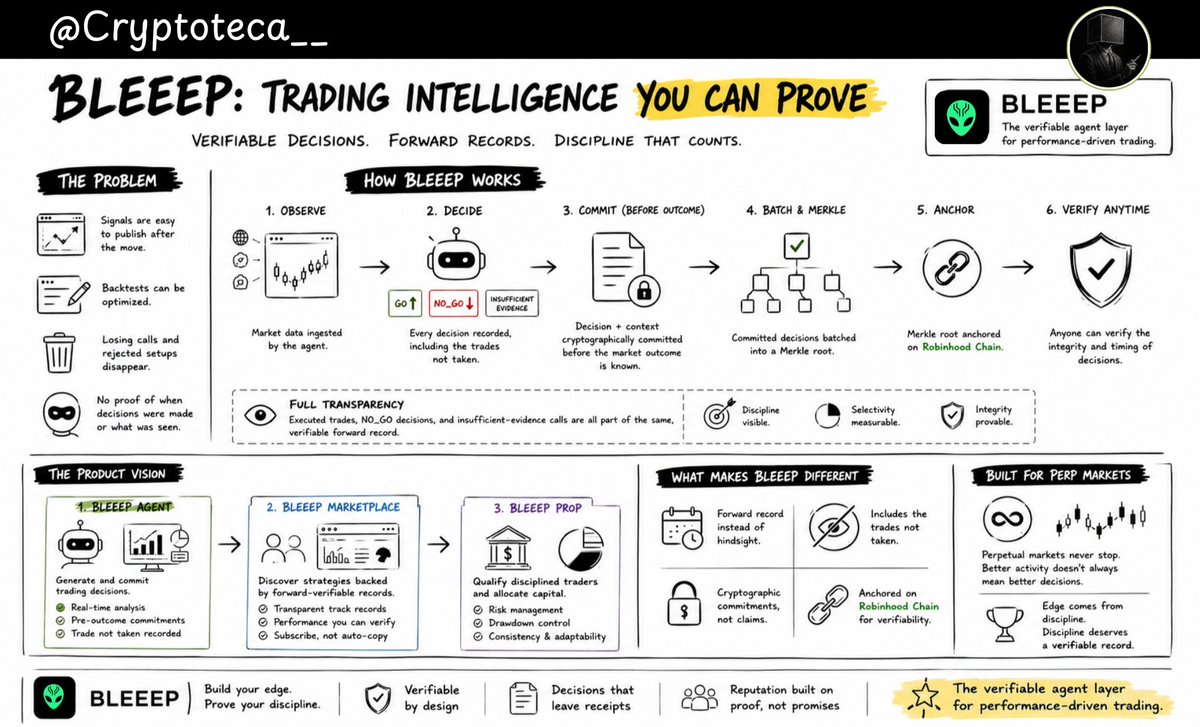
@CryptoTeca__ described (79 likes, 47 replies, 1,550 views) BLEEEP's attempt to commit trading decisions before outcomes, including NO_GO decisions, then batch them into a Merkle root for later verification. The image is informative because it distinguishes forward records from screenshots and backtests, although it demonstrates the proposed design rather than independently validated trading performance.
Discussion insight: The debate was not simply crypto versus banks. It was about stable identity, delegated authority, caps, revocation, escrow, reputation, and evidence that an action preceded its outcome.
Comparison to prior day: Payments were not a leading August 3 theme. August 4 added both a high-engagement thesis and public product primitives with explicit human controls.
2. What Frustrates People
Agents finish runs without proving that the system is healthy
Severity: High. Cloudflare's ADLC material says implementation is no longer the only bottleneck, and @_ashleypeacock cataloged (75 likes, 6 replies, 3,666 views, 24 bookmarks) the missing operational pieces: local and production traces, reproducible previews, CI, deployment controls, and maintenance. @nicolomagnante said (226 likes, 4 replies, 562 views) internal bug-fixing prototypes often fail because service authorization breaks, alerts do not trigger them, escalation logic is crude, Slack goes silent, and there is nowhere trustworthy to reproduce and QA a fix. Teams cope by wrapping agents in traces, approval rules, checkpoints, cost controls, and alert-driven investigation. This is worth building for because the failure sits between a successful model response and a safe production outcome.
Multi-agent handoffs discard expensive negative evidence
Severity: High. @hanakoxbt described (28 likes, 2 replies, 2,029 views, 30 bookmarks) one agent discovering six API facts while its successor inherited only a one-line conclusion, losing failed endpoints, error bodies, and ruled-out routes. @IBuzovskyi acknowledged (46 likes, 7 replies, 4,680 views, 64 bookmarks) that Buzz's agents require humans to direct each cross-agent step, and a reply to @unclebobmartin warned (30 likes, 6 replies, 1,834 views, 23 bookmarks) that a squad leader may trust a worker's report without checking that the change landed. The workaround is artifact-level handoff, deterministic state, and independent verification. This is worth building for because adding agents otherwise multiplies calls without preserving learning.
Long-lived memory becomes costly, stale, or topologically useless
Severity: High. @sibyl_labs_ reported (23 likes, 3 replies, 218 views) that memory reads became expensive enough to force hot/cold tiering. In the discussion under @EXM7777's LLM Wiki (144 likes, 13 replies, 14,751 views, 286 bookmarks), readers asked for exact source provenance, a history of accepted and rejected creative choices, and repair of orphan-heavy hub-and-spoke graphs. @coreyganim added (57 likes, 8 replies, 3,945 views, 79 bookmarks) a governance boundary: templates, validation, and security rules can be cloned, but company facts, customers, pricing, strategy, and credentials must not cross into another client's knowledge base. The coping pattern is selective retrieval, explicit lineage, and separation of reusable method from private state.
Agent spending still depends on identity and revocable authority
Severity: Medium. @RaoulGMI drew (474 likes, 87 replies, 83,569 views, 331 bookmarks) enormous attention to machine settlement, but replies challenged the thesis on private-key custody and KYC. Cloudflare's answer is not unconstrained autonomy: the wallet design covered by @_ashleypeacock uses (75 likes, 6 replies, 3,666 views, 24 bookmarks) account-funded virtual wallets with caps, allowlists, and manual overrides. Heterogent similarly couples payment to registry identity, uptime, reputation, and escrow rather than assuming a wallet alone creates trust. This is worth building for, but today's evidence is still early infrastructure rather than demonstrated mass adoption.
Portability and privacy remain stronger motives than a cheaper subscription alone
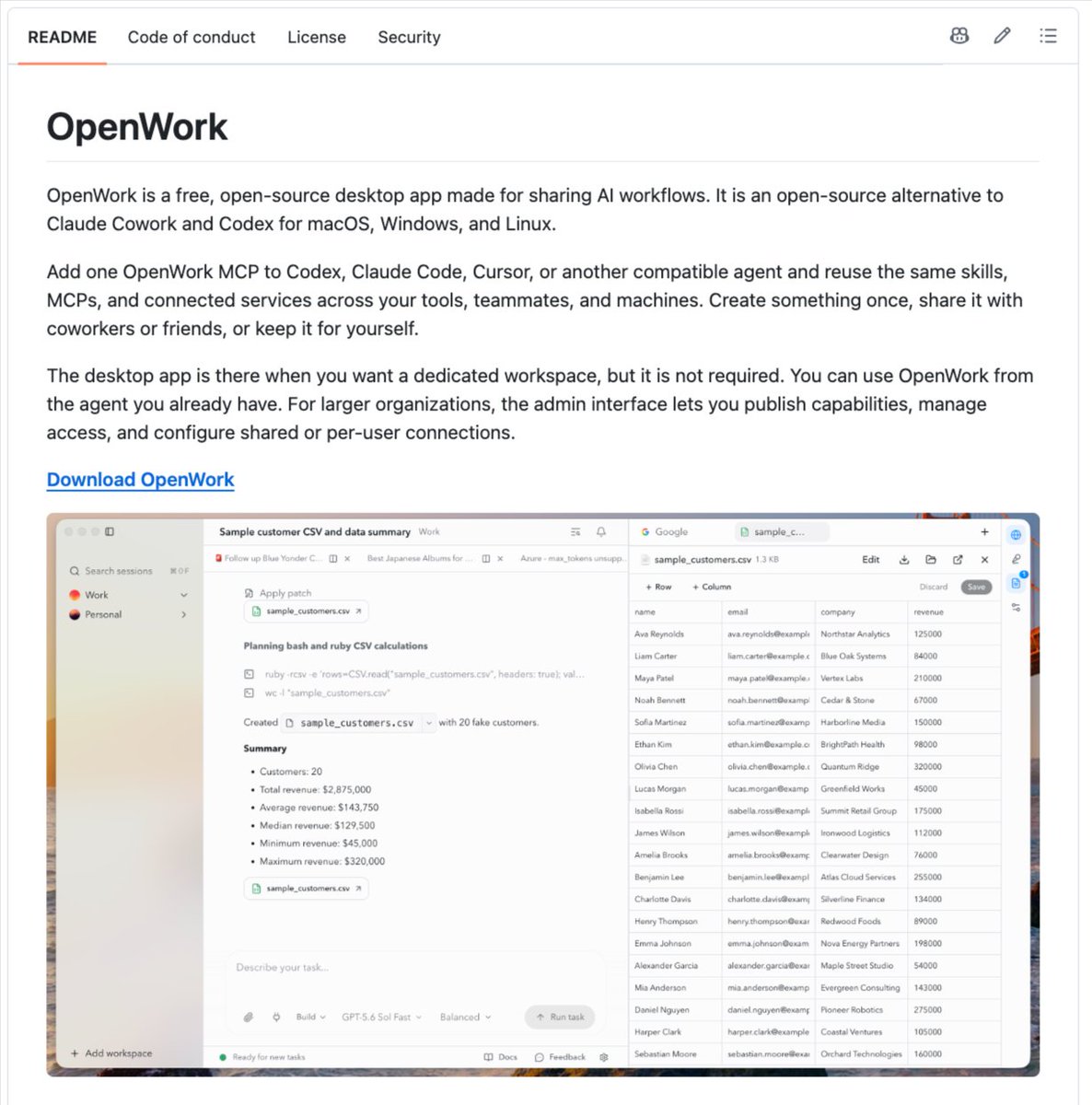
Severity: Medium. @heynavtoor positioned (27 likes, 11 replies, 2,734 views, 12 bookmarks) OpenWork as a free local alternative to paid agent workspaces, but the most useful reply said financial records would stay self-hosted regardless of license cost. The public OpenWork repository supports one MCP endpoint across several compatible agents, so users can retain skills, connections, and model choice without rebuilding the workspace for each client.
3. What People Wish Existed
Lossless handoff records for agent teams
Practical need. @hanakoxbt showed (28 likes, 2 replies, 2,029 views, 30 bookmarks) that a summary can omit the failed calls and negative evidence the next agent needs, while @IBuzovskyi said (46 likes, 7 replies, 4,680 views, 64 bookmarks) humans still coordinate Buzz's inter-agent work. The requested object is effectively a typed handoff ledger: conclusions, source artifacts, failed routes, tool responses, state changes, and verification status, compact enough to transfer without replaying the whole trace. Opportunity: direct.
One control plane for cost, traces, permissions, and recovery
Practical and urgent need. @databricks described (34 likes, 1 reply, 1,409 views) a sprawling estate of agents, MCP servers, skills, coding assistants, and models, while @nykdotdev listed (54 likes, 14 replies, 6,586 views, 19 bookmarks) approvals, checkpoints, recovery, evaluation, and governance as contracts missing around the agent. Unity AI Gateway and Cloudflare Agents partially address this, making the opportunity competitive rather than greenfield. Opportunity: competitive.
Memory that preserves provenance, taste, and negative evidence without carrying private state
Practical need. Replies to @EXM7777's knowledge-base workflow (144 likes, 13 replies, 14,751 views, 286 bookmarks) asked for the exact reference behind each shot and a "taste wiki" recording what was accepted, rejected, and why. @coreyganim drew (57 likes, 8 replies, 3,945 views, 79 bookmarks) the privacy boundary between reusable governance and client-specific facts, and Sibyl's experience adds a cost requirement: old memory should be available without staying hot. Opportunity: competitive.
Human-aligned evaluation environments generated from real failures
Practical need. @Vtrivedy10 argued (30 likes, 2 replies, 3,410 views, 56 bookmarks) that one-shot agent-generated environments are misaligned with human goals and proposed a review loop over harness, environment, and task contracts. StateAct's independent gate still accepted many value-incorrect results, showing that structural completion does not settle semantic correctness. The need is for tools that turn traces and user interviews into editable environments, tasks, oracles, and regression suites. Opportunity: competitive.
Agent-native purchasing with bounded, revocable authority
Practical need, early market. @RaoulGMI framed (474 likes, 87 replies, 83,569 views, 331 bookmarks) the demand for machine-speed settlement; the skeptical replies asked who manages keys and KYC. Cloudflare Wallets, Heterogent escrow, and BLEEEP's pre-outcome records each cover part of the answer, but no item demonstrated a complete cross-platform identity, budget, dispute, revocation, and audit layer. Opportunity: direct.
4. Tools and Methods in Use
| Tool | Category | Sentiment | Strengths | Limitations |
|---|---|---|---|---|
| Cloudflare Agents / ADLC / Wallets | Lifecycle platform | (+) | Launch coverage (75 likes, 6 replies, 3,666 views, 24 bookmarks) connected TypeScript CI, agent traces, replay, local debugging, and capped virtual wallets | Wallet spending is announced for future availability; trace payloads may contain sensitive data and require recording controls |
| Unity AI Gateway | Enterprise control plane | (+) | GA launch (34 likes, 1 reply, 1,409 views) offers cost attribution, budgets, runtime policies, and one registry for agents, MCPs, skills, assistants, and models | Smart Routing remains Beta; today's evidence came from Databricks and its launch customers |
| CopilotKit Channels SDK | Channel adapter | (+/-) | Launch post (38 likes, 7 replies, 7,710 views, 45 bookmarks) showed one AG-UI agent rendering native Slack and Teams interfaces with tools and approval gates | A reply correctly distinguished communication plumbing from the agent itself; managed channel coverage is still expanding |
| Kiro Crew | Persistent engineering workspace | (+) | Launch post (17 likes, 1 reply, 367 views) highlighted sessions that survive restarts, schedules, parallel work, durable lessons, and reusable skills | Newly open-sourced; today's thread contained little practitioner feedback |
| OpenWork | Self-hosted workflow workspace | (+) | Project post (27 likes, 11 replies, 2,734 views, 12 bookmarks) emphasized one MCP endpoint across multiple agent clients, local execution, shared skills, and service connections | Users still supply models, keys, and infrastructure; a reply said privacy mattered more than subscription price |
| Superlog Responder | Incident-response agent | (+/-) | Launch post (226 likes, 4 replies, 562 views) promises Sentry/Datadog alert triage, root-cause evidence, and a proposed PR in the existing Slack thread | Performance and acceptance claims came from the builder; no detailed independent evaluation appeared in the thread |
| Skill-Alpha | Skill-generation research | (+) | Paper summary (10 likes, 2 replies, 644 views, 4 bookmarks) reported progressive skill edits and downstream rollback rewards rather than one-shot skill writing | Early research implementation; training requires prepared benchmarks, rollout infrastructure, and evaluators |
| StateAct | Computer-use harness | (+/-) | Paper link (1 bookmark, 145 views) showed state-grounded action lifting Opus 4.8 binary success from 20.6% to 26.9% at lower reported cost | Most tasks still failed binary success; the finish gate passed 68 of 76 non-perfect gated tasks |
| Sibyl Memory | Agent memory | (+/-) | Builder post (23 likes, 3 replies, 218 views) described hot/cold tiering; the attached beta-tester chart reports lower retrieval cost on 350 questions | Public evidence was a builder post and one labeled beta-tester benchmark, not a broad independent comparison |
| Heterogent API | Agent commerce / routing | (+/-) | Router post (4 likes, 3 replies, 29 views) exposed a concrete reputation, uptime, skill-match, escrow, and verification design | Extremely early signal with little usage evidence; reputation and declared skills remain inputs that need adversarial validation |
| Qwen3.8 Max on OpenRouter | Model / inference API | (+/-) | Availability post (55 likes, 7 replies, 5,616 views, 11 bookmarks) reported a 2.4T-parameter, 95B-active model aimed at long-horizon and multimodal agent work | Replies asked about real latency and whether the full context limit was exposed; open weights were still promised for the following week |
| Model-to-Rust skill | Engineering method / skill | (+) | Builder evidence (64 likes, 6 replies, 2,858 views, 56 bookmarks) includes parity ladders, architecture-specific kernels, negative-evidence ledgers, and a corrected 3.34x example | Paid and highly specialized; evidence spans three model-port projects rather than general workloads |
Overall satisfaction was highest when tooling made state inspectable: a trace, persisted artifact, cost ledger, delegation edge, or payment record. The migration pattern ran from single-client workspaces toward portable MCP or AG-UI surfaces, from screenshots toward program state, and from unconstrained autonomy toward budgets, approvals, and independent gates. The common workaround is still composition: teams combine a model, workspace, traces, evaluators, and policy controls rather than adopting one all-inclusive framework.
5. What People Are Building
| Project | Who built it | What it does | Problem it solves | Stack | Stage | Links |
|---|---|---|---|---|---|---|
| Channels SDK | @CopilotKit | Connects AG-UI-compatible agents to chat platforms with native UI, tools, files, streaming, and approvals | Avoids rewriting agent logic for each platform's SDK, auth, and rendering model | TypeScript, AG-UI, Slack Block Kit, Teams Adaptive Cards | Shipped | repo, tweet (38 likes, 7 replies, 7,710 views, 45 bookmarks) |
| Kiro Crew | @SwamiSivasubram | Persistent engineering workspace with schedules, parallel tasks, editable lessons, skills, and multiple interfaces | Keeps development work and learning alive across sessions and unattended runs | Python, TypeScript, Kiro CLI, web/desktop, Docker, Slack/Discord connectors | Shipped | repo, site, tweet (17 likes, 1 reply, 367 views) |
| OpenWork | @heynavtoor | Local desktop workspace and MCP control plane shared across compatible agent clients | Reduces client lock-in and keeps sensitive workflows on user-controlled machines | TypeScript, Electron, MCP, OpenCode, Google Workspace/Microsoft 365 connectors | Shipped | repo, tweet (27 likes, 11 replies, 2,734 views, 12 bookmarks) |
| Superlog Responder | @nicolomagnante | Investigates Sentry/Datadog Slack alerts and replies with root cause, evidence, and a proposed PR | Replaces brittle internal alert-to-fix prototypes without requiring new telemetry | Slack, Sentry, Datadog, repository/service connectors, bug-fixing agent | Beta | site, tweet (226 likes, 4 replies, 562 views) |
| Unity AI Gateway | @databricks | Governs models, agents, MCPs, skills, assistants, costs, identities, and runtime policies | Gives enterprises one control plane for agent sprawl, spend, and sensitive-data access | Unity Catalog, gateway policies, usage tables, dashboards, smart routing | Shipped | product, tweet (34 likes, 1 reply, 1,409 views) |
| Skill-Alpha | @HuggingPapers | Learns progressive edits to reusable SKILL.md artifacts from documents or execution experience |
Replaces one-shot manual skill writing with downstream-evaluated revision | Python, verl, SGLang, GRPO, CL-Bench, SpreadsheetBench, tau2-bench | Alpha | repo, paper, tweet (10 likes, 2 replies, 644 views, 4 bookmarks) |
| StateAct | paper authors | Uses program state as the primary computer-use interface, with GUI specialists and an independent finish gate | Reduces compounding pixel-read errors and verifies persisted artifacts on long tasks | Bash, Python, file editor, GUI/browser subagents, context manager | Alpha | paper, tweet (1 bookmark, 145 views) |
| Heterogent API | @Heterogent | Registers agents, routes tasks, tracks uptime and reputation, and manages USDC escrow | Supplies identity, discovery, payment, and dispute states for an open agent marketplace | TypeScript, Node.js, PostgreSQL, Solana, USDC, Ed25519, OpenAPI | Beta | repo, app, tweet (4 likes, 3 replies, 29 views) |
| Agent Zero Agent Editor | @Agent0ai | Visual editor for per-agent models, instructions, tools, skills, and delegation permissions | Makes an agent team's role and delegation graph explicit | Agent Zero, web GUI, profile overrides | Alpha | tweet (9 likes, 3,076 views, 4 bookmarks) |
| Model-to-Rust mega-fused skill | @doodlestein | Guides agents through porting open-weight models into specialized, parity-tested Rust inference engines | Makes model-port optimization repeatable while preserving failed experiments and correctness evidence | Rust, Python, int8 NEON/VNNI kernels, parity harness, operator cards, subagents | Shipped | skill, tweet (64 likes, 6 replies, 2,858 views, 56 bookmarks) |
| BLEEEP Agent Beta | @bleeep_xyz | Commits trading and NO_GO decisions before outcomes and preserves a forward-verifiable record |
Replaces cherry-picked screenshots and backtests with timestamped decision evidence | Agent decisions, cryptographic commitments, Merkle batches, Robinhood Chain | Beta | tweet (79 likes, 47 replies, 1,550 views) |
Channels SDK, Kiro Crew, and OpenWork all separate the agent from its interaction surface, but at different layers: channel-native rendering, a persistent development gateway, and a reusable MCP workspace. Their common build trigger is portability without losing approvals, state, or user-controlled execution.
The evidence-oriented projects form a second cluster. Skill-Alpha evaluates skill edits downstream, StateAct checks persisted program state, the Rust skill preserves parity and negative experiments, and BLEEEP commits decisions before outcomes. The repeated pattern is not merely "add memory"; it is to leave an artifact another process can inspect.
Enterprise infrastructure formed a third cluster. Unity AI Gateway centralizes policy and cost, Superlog Responder turns operational alerts into investigated patches, and Heterogent joins task routing to escrow and reputation. These projects address different markets, but each assumes an agent needs a control and evidence layer around its model.
6. New and Notable
Cloudflare named the post-coding bottleneck and shipped primitives around it
@_ashleypeacock collected (75 likes, 6 replies, 3,666 views, 24 bookmarks) an unusually broad launch set: agent-aware traces, local OpenTelemetry access, TypeScript CI, a software-factory case study, and virtual wallets. The notable shift is that these are not new prompting abstractions. They target the review, deployment, maintenance, observability, and controlled-spending stages surrounding generated code.
State-grounding beat its reference harness but exposed the verifier's limit
@MikeTamir shared (1 bookmark, 145 views) StateAct, which reported 26.9% binary success with Opus 4.8 versus 20.6% for the reference harness while using program state as the main interface. Just as important, the paper disclosed that structural verification still passed 68 of 76 non-perfect gated tasks. That makes the work notable as both a harness improvement and a precise statement of what its verifier cannot yet prove.
Skills became trainable artifacts rather than static instructions
@HuggingPapers reported (10 likes, 2 replies, 644 views, 4 bookmarks) that Skill-Alpha uses reinforcement learning and rollback rewards to edit reusable skills progressively. Paired with @doodlestein's experience-distilled Rust skill (64 likes, 6 replies, 2,858 views, 56 bookmarks), the signal is that skill quality is moving toward lineage, measured outcomes, pruning, and inherited negative evidence.
Agent workspaces gained evidence of both internal and enterprise adoption
@SwamiSivasubram said (17 likes, 1 reply, 367 views) Kiro Crew grew from an Amazon side project into a tool used by tens of thousands of internal builders before being open-sourced. Separately, @pablorpalafox reported (167 likes, 50 replies, 13,015 views) that HappyRobot raised a $150 million Series C at a $1.2 billion valuation after deploying its voice-agent platform in more than 150 enterprises. These are different kinds of evidence, but both move the discussion beyond demos.
Citation behavior received a compact decision rule
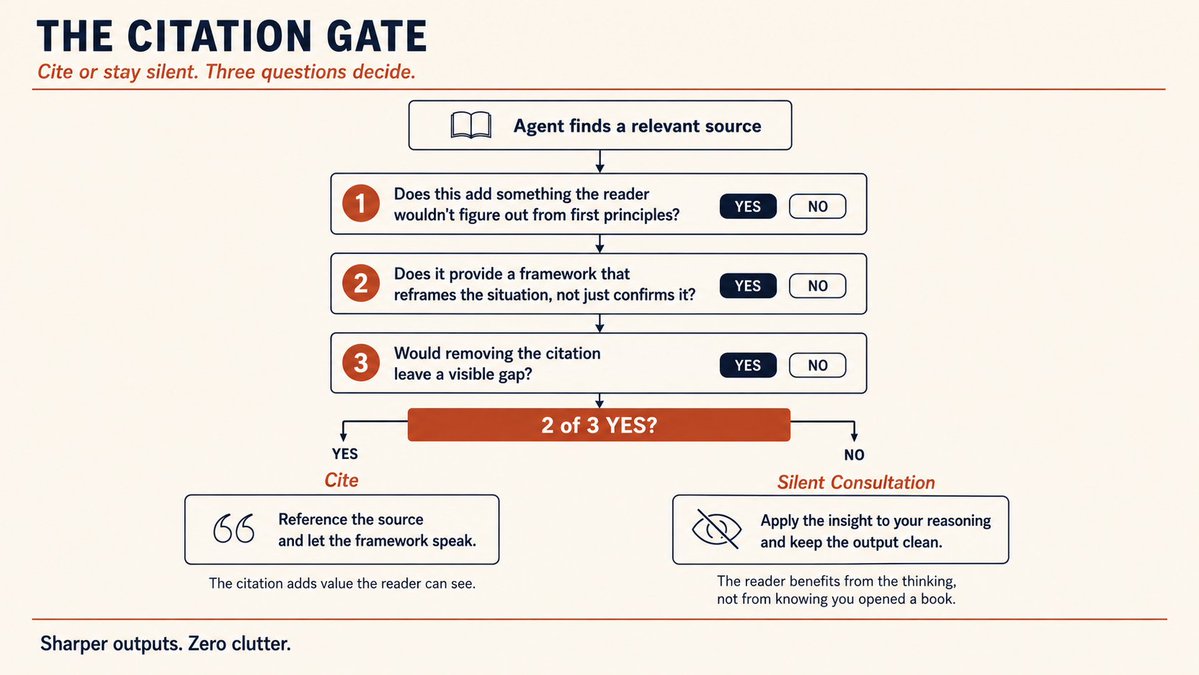
@alex_prompter proposed (16 likes, 1 reply, 3,974 views, 14 bookmarks) a three-question gate: cite only when a source adds non-obvious information, reframes the situation, or leaves a visible gap if removed, with two of three required. It is an unevaluated writing method rather than benchmark evidence, but the attached flowchart is a concrete attempt to reduce citations that merely display effort.
Qwen3.8 Max arrived with open-weight expectations and serving questions
@OpenRouter made (55 likes, 7 replies, 5,616 views, 11 bookmarks) Qwen3.8 Max available as a 2.4-trillion-parameter, 95-billion-active model aimed at long-horizon coding, research, and multimodal agent work. The replies did not accept scale as the result: they asked about usable latency and whether the advertised context was exposed, while open weights were still due the next week.
7. Where the Opportunities Are
[+++] Unified agent lifecycle control planes — Cloudflare's ADLC launch connected CI, traces, replay, deployment, and maintenance (tweet (75 likes, 6 replies, 3,666 views, 24 bookmarks)); Unity AI Gateway centralized cost and policy (tweet (34 likes, 1 reply, 1,409 views)); and Superlog Responder targeted alert-to-fix operations (tweet (226 likes, 4 replies, 562 views)). The strongest product opportunity joins observability to active controls: budgets, approval, interruption, recovery, and verified completion.
[+++] Lossless multi-agent handoff and supervisor verification — Hanako's API example showed negative evidence disappearing between agents (tweet (28 likes, 2 replies, 2,029 views, 30 bookmarks)), Buzz still required human-directed transfers (tweet (46 likes, 7 replies, 4,680 views, 64 bookmarks)), and Uncle Bob's replies warned supervisors to verify that work landed (tweet (30 likes, 6 replies, 1,834 views, 23 bookmarks)). A typed evidence ledger that preserves failures, artifacts, and state changes would address a repeated, concrete cost.
[+++] Memory lineage and evaluation-data tooling — The LLM Wiki discussion exposed orphaned notes and missing source/taste provenance (tweet (144 likes, 13 replies, 14,751 views, 286 bookmarks)), Sibyl reported retrieval cost forcing tiering (tweet (23 likes, 3 replies, 218 views)), and synthetic-environment work made human-reviewed contracts explicit (tweet (30 likes, 2 replies, 3,410 views, 56 bookmarks)). The opportunity is an evidence substrate that spans provenance, privacy boundaries, hot/cold storage, negative results, and executable evals.
[++] Bounded agent commerce infrastructure — Raoul's thesis supplied demand and disagreement (tweet (474 likes, 87 replies, 83,569 views, 331 bookmarks)), while Cloudflare Wallets, Heterogent, and BLEEEP supplied caps, identity, escrow, reputation, and pre-outcome records. The moderate rating reflects the gap between clear infrastructure needs and limited evidence of sustained transaction volume.
[+] Portable workspaces and channel adapters — Channels SDK, OpenWork, and Kiro Crew independently separated agent logic from chat platforms, desktop clients, and execution hosts. The opportunity is strongest where portability preserves identity, approvals, state, and policy rather than merely exposing another chat surface; today's public projects already make this a competitive space.
8. Takeaways
- The engineering focus moved beyond the agent loop. Cloudflare's ADLC launch and Databricks' gateway put CI, tracing, deployment, cost, policy, and recovery around agent execution. (source (75 likes, 6 replies, 3,666 views, 24 bookmarks))
- More agents do not guarantee more accumulated knowledge. Buzz still relies on human-directed handoffs, while Hanako's example showed a successor inheriting one conclusion but not the failed calls that produced it. (source (28 likes, 2 replies, 2,029 views, 30 bookmarks))
- Useful memory is selective, attributable, and testable. The LLM Wiki discussion asked for source and taste provenance, Sibyl tiered cold state out of the hot path, and Skill-Alpha evaluated progressive skill edits downstream. (source (144 likes, 13 replies, 14,751 views, 286 bookmarks))
- Independent verification remains a frontier, not a solved checkbox. StateAct improved long-horizon success by acting on program state, yet its own paper documented that the finish gate still passed many value-incorrect results. (source (1 bookmark, 145 views))
- Agent commerce is becoming a control-design problem. The highest-engagement payments thesis drew immediate key-management and KYC objections, while Cloudflare, Heterogent, and BLEEEP answered with caps, escrow, reputation, and forward records. (source (474 likes, 87 replies, 83,569 views, 331 bookmarks))
- Open workspaces are competing on persistence and portability. Channels SDK, Kiro Crew, and OpenWork let builders keep agent logic or skills while changing channels, clients, and execution locations. (source (17 likes, 1 reply, 367 views))