Twitter AI Agent - 2026-08-08
1. What People Are Talking About
1.1 Governance, routing, and spend limits moved to the center (🡕)
Compared with August 7's marketplace-design emphasis, August 8 spent more time on the operating boundaries around agent commerce: where agents run, who patches them, how they discover each other, and what payment limits should exist before they can be trusted with work or money. The strongest evidence came from threads that named concrete control surfaces rather than just celebrating autonomy.
@StockClaw argued (219 likes, 62 replies, 10,468 views) that local execution is not automatically safer than a browser-first service model. The attached card mattered because it reduced the position to four concrete claims—battle-tested browser security, centralized patching, optional clients, and the line "local is not automatically safer"—while the rest of the thread turned that into a supply-chain and blast-radius argument about dependencies, credentials, and unmanaged updates.

@BNBCHAIN called for (104 likes, 40 replies, 36,095 views) a marketplace where people can find, compare, and hire agents on BNB Smart Chain. The linked challenge brief says more than 200,000 AI agents are already registered on BSC, but discoverability is still weak enough that builders are being asked to create the marketplace itself, with the winner in line to become the officially adopted BNB Agent Studio directory.
@termix_ai backed (113 likes, 18 replies, 34,138 views) the same marketplace thesis with a sponsor track. The same BNB brief says TermiX will judge whether hiring an agent actually beats doing the task manually, via an Agent Advantage Report over real tasks, which turns "marketplace" from a branding exercise into an evaluation problem.

@Fetch_ai framed (83 likes, 8 replies, 5,659 views) multi-agent routing as a discovery layer rather than a single orchestration brain. The public uAgents README says agents register on the Almanac smart contract and join a shared network with cryptographically secured identities, which is a concrete answer to the day's repeated question about how specialists find each other without hard-coded central routers.
@WhisprRH added (44 likes, 2 replies, 152 views) the payment-controls side: private settlement, verifiable identity between agents, and hard spending caps enforced onchain. Even with thin public detail, that post mattered because it shifted the day from generic "agent economy" talk into explicit spending boundaries.
Discussion insight: The skepticism was not anti-agent; it was about usefulness and blast radius. One BNB reply joked that 200,000 agents exist and not one can file taxes yet, while the replies under StockClaw kept returning to the same point: not local versus web, but what the agent can touch and how quickly it can be stopped.
Comparison to prior day: August 7 treated marketplaces as discovery-plus-payment loops; August 8 added deployment security, decentralized routing, and spend-limit mechanics as first-class parts of the same story.
1.2 Skills and plugins started looking like an infrastructure layer (🡕)
A second cluster treated agent skills less like prompt snippets and more like a portable, measurable software layer. The day's most useful posts were about turning real work into reusable skills, packaging Skills plus MCP servers in one box, and proving that a skill helps rather than trusting it on vibes.
@beamnxw highlighted (19 likes, 10 replies, 607 views) Microsoft's open-source Skill Recorder. The public repo says it records a real task locally, reconstructs an intent plus ordered steps with GitHub Copilot, and then emits either a reusable SKILL.md procedure or a scheduled automation; the attached UI makes that tangible by showing recorded sessions on the left and the reconstructed workflow on the right.

@bibryam pointed to (4 likes, 444 views, 6 bookmarks) the new Agent Plugins format, and the underlying Google post is the real signal. It defines a fixed plugin layout with plugin.json, skills/, and mcp.json, explicitly separating portable packaging from client-specific extensions, which is a concrete attempt to stop Skills and MCP servers from being repackaged differently for every client.

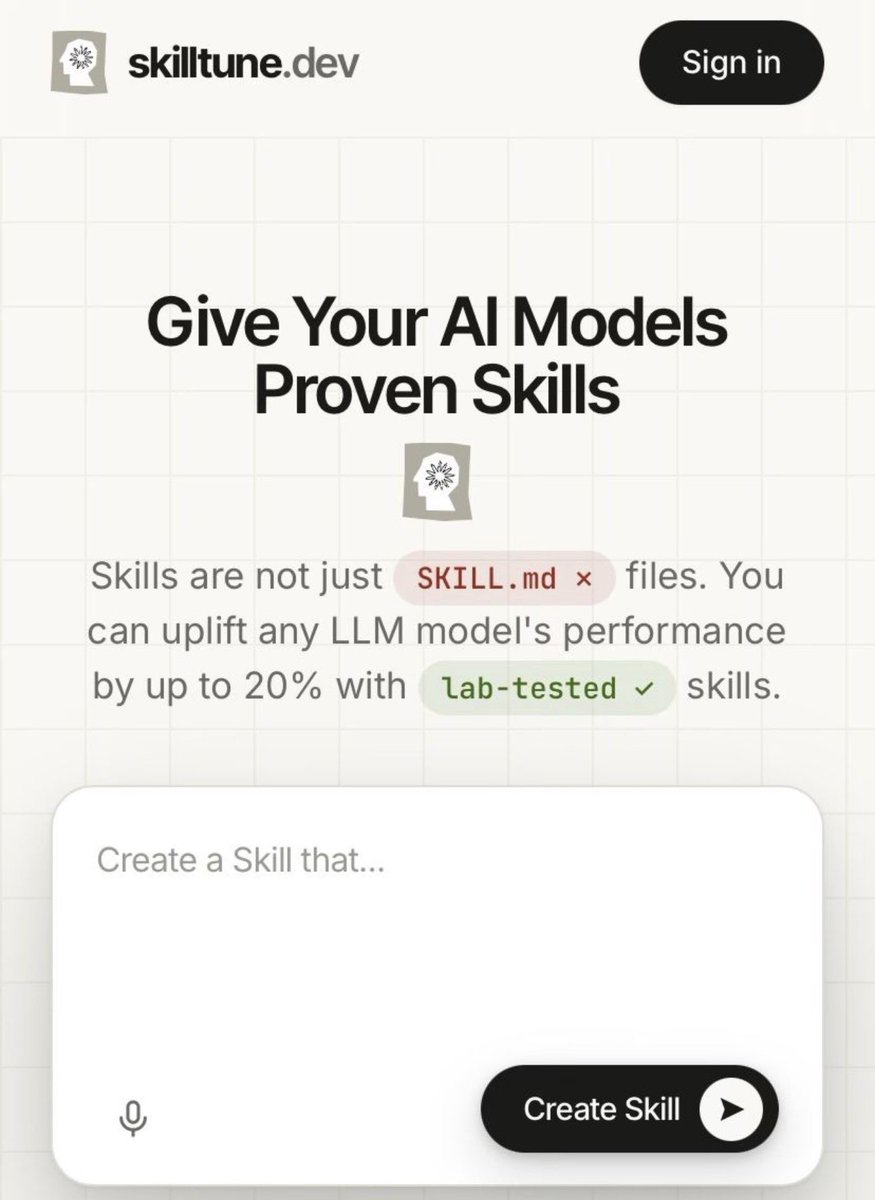
@YoussefHosni951 argued (1 like, 2 replies, 108 views) that a SKILL.md can improve an agent, do nothing, or make it worse, and that the missing layer is repeatable evaluation. The linked skilltune.dev page says the product generates custom evals from a skill description and compares the skilled model against the same base model without the skill, which is a direct answer to the day's portability-without-proof problem.
Discussion insight: The bottleneck here was not inventing more skills. It was wrapper drift and unverifiable impact: how to move a skill across clients, and how to know whether it actually helps before your team installs it everywhere.
Comparison to prior day: August 7 turned runtime vocabulary into courseware and posters; August 8 pushed the next layer down, toward portable packaging and eval-backed workflow capture.
1.3 Operator surfaces widened beyond the terminal (🡕)
The operator-console theme from August 7 continued, but the emphasis moved toward interfaces for people who do not want to live inside one shell window. The strongest posts combined local review, mobile access, and explicit session-to-session coordination.
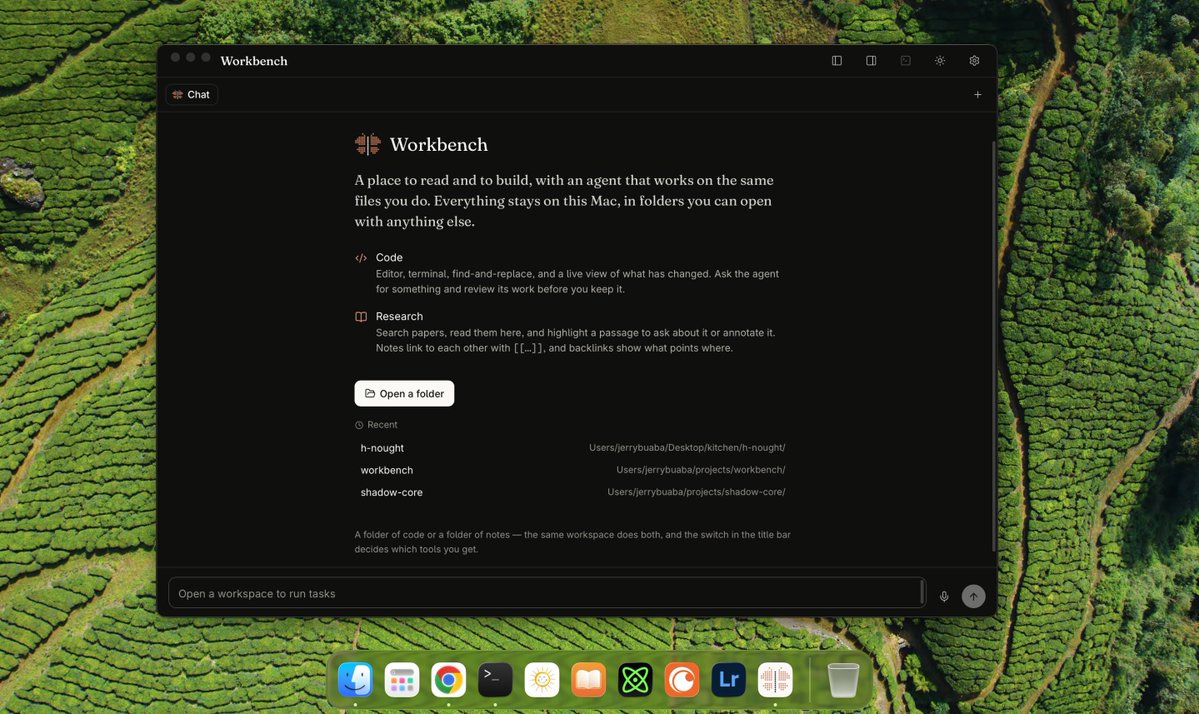
@buabaj_ showed (38 likes, 5 replies, 1,412 views, 15 bookmarks) a personal Workbench built around Prime Agent plus Codex and Claude Code models. The images are unusually specific: one shows a launcher that switches between code and research, another shows a task-review sidebar with Keep and Restore controls beside a live coding session, and a third shows PDF reading and annotation in the same workspace.


@edward40e built (11 likes, 2 replies, 739 views) PI Remote for submitting tasks to a Pi coding agent from a phone. The public Pi Daemon README says the session persists in a long-lived server process and is exposed through a mobile PWA over Tailscale Serve or a Cloudflare Tunnel with exact-email access control, which turns "remote agent" into a concrete operator workflow rather than a concept.
@elijahmuraoka_ open-sourced (16 likes, 1 reply, 2,798 views, 18 bookmarks) a tmux-based skills and CLI setup for coordinating multiple coding-agent sessions. The attached screenshot matters because it is not just a promo card; it shows a small command vocabulary for opening sessions, spawning helpers, and passing messages between agents without opening a separate terminal for every handoff.

Discussion insight: Interest centered on usability and distribution. The main replies were not about model quality; they were about whether these surfaces were packaged, open-source, and easy to adopt.
Comparison to prior day: August 7's operator-surface story was mostly subagent trees and local workbenches. August 8 added phone access, PDF-native research, and explicit agent-to-agent messaging as concrete interface demands.
1.4 Runtimes split between deeper supervision and radical simplification (🡒)
The runtime discussion did not move in one direction. One group wanted more statefulness, rollback, and supervision for long jobs; another argued that many harnesses have become too complicated and should collapse back toward bash, isolation, and explicit checks.
@akshay_pachaar used (51 likes, 1 reply, 5,991 views, 77 bookmarks) Stanford's Shepherd to argue that a message log is not enough to recover a long-running agent. The public Shepherd repo describes reversible execution traces, retained outputs, and per-repository permission grants enforced through Seatbelt or Landlock, which makes rollback and supervision a runtime primitive rather than a manual recovery trick.
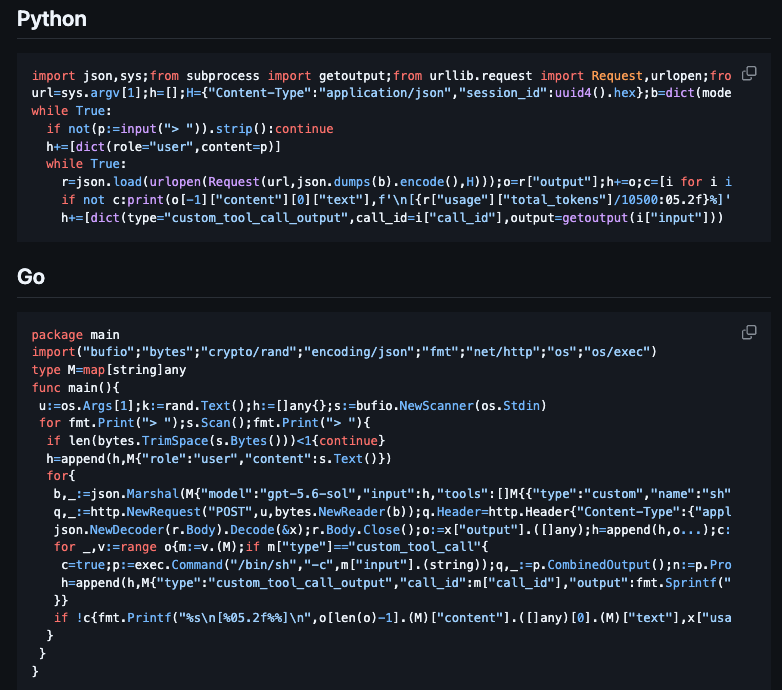
@seelffff countered (18 likes, 4 replies, 250 views, 12 bookmarks) with a 9-line Python agent and a roughly 20-line Go version that both use one shell tool and no third-party dependencies. The screenshot was the point: it turned "the loop was the agent all along" into code instead of rhetoric.
@jyangballin pushed back (32 likes, 4 replies, 3,413 views) on the idea that a stronger harness simply means more tools, saying mini-SWE-agent is strong precisely because it stays small and lets the model synthesize tools only when it truly needs them. @rvaniaaaa named (20 likes, 2 replies, 247 views, 15 bookmarks) the operational failures of graph-heavy systems instead: self-agreement, false independence, and silent node failure, with isolated workspaces and clean verifier context as the fixes.
Discussion insight: The field is splitting between two instincts: add reversibility and supervision where state really matters, or remove framework layers until the failure surface is obvious again.
Comparison to prior day: August 7 showed that harness quality can be benchmarked. August 8 asked a sharper follow-up question: when should a runtime get deeper, and when should it get simpler?
2. What Frustrates People
Local-first theater without real operational boundaries
The clearest frustration was with the idea that "local" is a security model by itself. @StockClaw argued (219 likes, 62 replies, 10,468 views) that if a client has shell, filesystem, network, or credential access, the real question is capability and blast radius, not whether it runs on your own machine. The same thread kept naming dependency drift, patch latency, and weak update discipline as the practical failure modes. The public Pi Daemon README reinforces the same risk from another angle: an authenticated mobile user can execute commands and modify files remotely without per-action confirmation, so identity and access policy become the actual safety boundary. Worth building for: High.
Graphs that only look independent
The runtime complaints were concrete. @rvaniaaaa said (20 likes, 2 replies, 247 views, 15 bookmarks) that many graph agents fail in three predictable ways: a verifier shares context with the worker and starts agreeing with it, supposedly parallel nodes share a workspace or API and overwrite each other, and dead nodes vanish into a synthesized report. @jyangballin added (32 likes, 4 replies, 3,413 views) that a "stronger" harness is not automatically one with more tools, while @seelffff used (18 likes, 4 replies, 250 views, 12 bookmarks) a 9-line loop to argue that many abstractions are hiding the real control problem rather than solving it. The workaround today is either isolated workspaces plus independent verifier context, or a deliberate retreat to much smaller harnesses. Worth building for: High.
Skills are spreading faster than proof and packaging
A second frustration was that the skill ecosystem is outrunning its quality controls. @YoussefHosni951 wrote (1 like, 2 replies, 108 views) that a SKILL.md can help, do nothing, or make things worse, and the linked SkillTune site is built around that exact complaint. @bibryam surfaced (4 likes, 444 views, 6 bookmarks) the packaging side of the same problem: every client had been inventing its own wrapper until Agent Plugins 1.0.0. The practical workaround today is manual curation, repo-by-repo installs, and ad hoc testing after the fact. Worth building for: High.
3. What People Wish Existed
Portable skills that work across clients and can be trusted
The strongest explicit wish today was not for another model, but for a clean way to move skills across clients and know they help. @bibryam pointed to (4 likes, 444 views, 6 bookmarks) Agent Plugins 1.0.0 because the old wrapper problem had become painful enough to standardize, while @YoussefHosni951 argued (1 like, 2 replies, 108 views) that skills should be benchmarked rather than trusted blindly. This is a practical need, not an aspirational one: the packaging standard and the evaluation product both exist because people are already installing skills faster than they can audit them. Opportunity: direct.
Operator surfaces for people away from the terminal
The second clear need was for interfaces that keep agents usable when the operator is on a phone, reading a paper, or reviewing changes outside a shell. @buabaj_ showed (38 likes, 5 replies, 1,412 views, 15 bookmarks) a workbench that merges code, research, and task review, while @edward40e built (11 likes, 2 replies, 739 views) PI Remote specifically for submitting tasks to a coding agent from a phone. @elijahmuraoka_ added (16 likes, 1 reply, 2,798 views, 18 bookmarks) a free tmux-based coordination layer for multi-agent sessions. The need is practical and competitive: multiple builders are attacking it from different directions, but the category is still unsettled. Opportunity: competitive.
Hireable agents with identity, routing, and spending boundaries
The marketplace and payment threads all pointed to the same missing object: an agent that can be found, evaluated, authorized, and bounded before it acts. @BNBCHAIN asked for (104 likes, 40 replies, 36,095 views) a venue to compare and hire agents, @Fetch_ai framed (83 likes, 8 replies, 5,659 views) routing as decentralized specialist discovery, and @WhisprRH described (44 likes, 2 replies, 152 views) spend-capped, identity-aware settlement. The practical ask is not only "find me an agent"; it is "let me bound what it can spend and prove who it is." Opportunity: direct.
Reversible runtimes that do not throw away long-running work
The Shepherd thread made a more technical need explicit: long jobs need rollback, branching, and supervision at the runtime layer, not only better prompts. @akshay_pachaar used (51 likes, 1 reply, 5,991 views, 77 bookmarks) a state-heavy coding example to show why restarting from step one is wasteful, and the public Shepherd repo now offers that reversible-trace model in early alpha. This is a practical need for teams running long coding, research, or multi-agent jobs, but still early enough that competition is mostly architectural rather than commercial. Opportunity: direct.
4. Tools and Methods in Use
| Tool | Category | Sentiment | Strengths | Limitations |
|---|---|---|---|---|
| Browser-first managed agent clients | Client / deployment model | (+/-) | Smaller blast radius, centralized patching, optional client layer, battle-tested browser sandboxing | Trust shifts to the service operator; "web-first" is not automatically private or safe either |
| Shepherd | Runtime / supervision | (+) | Reversible execution traces, retained outputs, per-repo permission grants, rollback and branching for long runs | Early alpha; Python 3.11+; Windows unsupported |
| uAgents / ASI:One | Agent network / routing | (+/-) | On-chain registration, decentralized discovery, cryptographically secured identities, specialist routing | Replies still asked how conflicting capabilities are resolved in practice |
| Agent Plugins 1.0.0 | Packaging standard | (+) | Fixed layout for Skills plus MCP, portable manifest, clean client extension namespace | Deliberately omits install, sandboxing, trust, and approval UX |
| Skill Recorder | Skill capture / automation | (+/-) | Turns one recorded workflow into an intent, ordered steps, SKILL.md, or automation |
Analyze sends captures and metadata to GitHub cloud; users must keep secrets out of recordings |
| Pi Daemon / PI Remote | Mobile operator surface | (+) | Persistent sessions, mobile PWA, Tailscale or Cloudflare access, push notifications | Remote control is security-sensitive because the agent can execute commands and edit files |
| Scrapling | Web acquisition / MCP | (+) | Adaptive parsing, anti-bot fetchers, concurrent crawls, proxy rotation, MCP support | Still inherits the operational complexity of scraping hostile or changing sites |
| SkillTune | Skill evaluation | (+) | Generates evals from skill descriptions and compares skill-on versus skill-off performance | Public claims are vendor-reported; community evidence is still thin |
| Minimal bash-based harnesses | Method | (+/-) | Low overhead, fewer abstractions, easy-to-see control loop, less framework bloat | Thin error handling and weak guardrails unless paired with separate verification |
Overall satisfaction was highest when the tool exposed an explicit control surface: a permission boundary, a portable manifest, a retained trace, a task-review sidebar, or a reproducible evaluation loop. Workarounds today are converging in two directions at once: either deepen the runtime with rollback, routing, and supervision, or simplify the harness until the loop is obvious and independently checkable. Migration patterns ran from client-specific skill wrappers toward shared packaging, from terminal-only control toward phone and document-native interfaces, and from generic autonomy claims toward bounded spending, access, and review.
5. What People Are Building
| Project | Who built it | What it does | Problem it solves | Stack | Stage | Links |
|---|---|---|---|---|---|---|
| Shepherd | shepherd-agents | Reversible runtime substrate for long-running agent work | Makes agent runs inspectable, branchable, and recoverable instead of restart-only | Python 3.11+, retained outputs, Seatbelt/Landlock permission enforcement | Alpha | repo; tweet (51 likes, 1 reply, 5,991 views) |
| BNB Agent Studio marketplace challenge | BNB Chain | Open challenge to build the marketplace where BSC agents can be discovered, compared, and hired | Too many registered agents exist without a useful hiring/discovery surface | BSC, ERC-8004 identities, x402-linked ecosystem rails | RFC | brief; tweet (104 likes, 40 replies, 36,095 views) |
| Workbench | @buabaj_ | Local code-and-research workspace with agent review controls | Gives non-terminal-native builders one surface for coding, reading, annotating, and reviewing changes | Prime Agent, Codex, Claude Code, local files, PDFs | Alpha | tweet (38 likes, 5 replies, 1,412 views, 15 bookmarks) |
| Skill Recorder | Microsoft | Records a human task once and turns it into a reusable skill or automation | Shrinks the gap between manual routine work and reusable agent procedures | Electron app, GitHub Copilot CLI, Whisper transcription, SKILL.md |
Beta | repo; tweet (19 likes, 10 replies, 607 views) |
| Agent Plugins 1.0.0 | Google and other core maintainers | Shared package format for Skills plus MCP servers | Stops every client from inventing a different wrapper around the same reusable components | plugin.json, skills/, mcp.json, client extension namespace |
Shipped | blog; tweet (4 likes, 444 views, 6 bookmarks) |
| PI Remote / Pi Daemon | @edward40e | Mobile-first remote control surface for the Pi coding agent | Lets operators submit and monitor coding tasks away from the desktop | Pi, PWA, Tailscale Serve, Cloudflare Tunnel, push notifications | Beta | repo; tweet (11 likes, 2 replies, 739 views) |
| Scrapling | D4Vinci | Adaptive scraping and crawling framework with MCP support | Keeps agents working against changing or defended websites | Python, adaptive parser, fetchers, spiders, proxy rotation, MCP | Shipped | repo; tweet (6 likes, 2 replies, 5,146 views) |
| WhisprRH | @WhisprRH | Payment tool for private settlement with identity and spending limits | Gives agent-to-agent payments hard boundaries instead of open-ended credentials | Onchain spend caps, verifiable identity, private settlement | Alpha | tweet (44 likes, 2 replies, 152 views) |
Shepherd, Workbench, and PI Remote show three different answers to the same operator problem. Shepherd makes the run itself reversible and permission-scoped, Workbench makes the run visible in a mixed code-and-research UI, and PI Remote makes the run reachable from a phone.
Skill Recorder and Agent Plugins split the skill problem into two layers. One captures workflows from human behavior and emits reusable procedures; the other standardizes how those skills travel with MCP servers across clients.
BNB Chain, Fetch.ai, and WhisprRH expose the emerging commerce stack around agents from three angles: discoverability, routing, and bounded payment. The common trigger is that an agent is not especially useful once it leaves the lab unless someone can find it, authorize it, and limit what it spends or touches.
6. New and Notable
Skill Recorder made "show me once" into a real agent workflow
@beamnxw surfaced (19 likes, 10 replies, 607 views) Microsoft's Skill Recorder, but the notable part is in the public repo: it records an actual task, reconstructs intent and ordered steps, and then emits either a reusable SKILL.md or a scheduled automation. That is a more concrete teaching surface than most "AI learns from your workflow" claims on X.
Agent Plugins 1.0.0 gave Skills plus MCP a portable package
The Google announcement behind @bibryam's post (4 likes, 444 views, 6 bookmarks) is notable because it is deliberately narrow. It standardizes the directory and manifest around skills and MCP servers, but leaves install, trust, and permissions to clients, which is exactly the kind of small shared layer that ecosystems usually need before they scale.
Shepherd made rollback and review part of the runtime, not an afterthought
@akshay_pachaar used (51 likes, 1 reply, 5,991 views, 77 bookmarks) Stanford's Shepherd as the day's clearest long-run systems post. The public repo makes the claim concrete with retained outputs, reversible traces, and explicit permission grants, which is materially different from another "agent framework" launch.
7. Where the Opportunities Are
[+++] Portable, measurable skill infrastructure — Skill Recorder, Agent Plugins 1.0.0, and SkillTune all point to the same gap: teams can now create skills quickly, but still lack a standard way to package them, move them across clients, and verify they improve outcomes.
[+++] Bounded agent commerce — BNB Chain's marketplace brief, Fetch.ai's routing layer, and WhisprRH's spend-capped settlement claims show that the commerce problem is not only discovery. The strong opportunity combines discoverability, identity, routing, and explicit spending limits.
[++] Mobile and non-terminal operator surfaces — Workbench, PI Remote, and the tmux coordination setup each make a different bet on how humans want to steer agents once the shell stops being the only viable interface.
[++] Reversible supervision for long-running runs — Shepherd and the graph-failure discussion from rvaniaaaa show durable demand for rollback, trace inspection, isolated workspaces, and independent verification once tasks last long enough to accumulate state.
[+] Small harnesses with explicit boundaries — The 9-line agent and the mini-SWE-agent simplicity argument suggest a quieter opening for tools that do less, but make isolation, review, and stop conditions much clearer.
8. Takeaways
- The conversation shifted from more agents to bounded agents. @StockClaw argued (219 likes, 62 replies, 10,468 views) about browser sandboxes and blast radius, while @BNBCHAIN asked (104 likes, 40 replies, 36,095 views) for a marketplace where agents can actually be hired.
- Skills are becoming infrastructure rather than prompt garnish. @beamnxw surfaced (19 likes, 10 replies, 607 views) Skill Recorder, and @bibryam pointed to (4 likes, 444 views, 6 bookmarks) Agent Plugins 1.0.0, giving the day clear signals on skill creation and packaging.
- Operator UX is breaking out of the terminal. @buabaj_ showed (38 likes, 5 replies, 1,412 views, 15 bookmarks) a mixed code-and-research workspace, while @edward40e built (11 likes, 2 replies, 739 views) a phone-first control surface for Pi.
- Runtime design is diverging into two camps. @akshay_pachaar used (51 likes, 1 reply, 5,991 views, 77 bookmarks) Shepherd to argue for reversible traces, while @seelffff countered (18 likes, 4 replies, 250 views, 12 bookmarks) with a minimal one-tool loop.
- Independent verification is still the credibility tax on agent systems. @rvaniaaaa named (20 likes, 2 replies, 247 views, 15 bookmarks) graph self-agreement and silent-node failure, while @YoussefHosni951 argued (1 like, 2 replies, 108 views) that skills need evals before they can be trusted.