Twitter AI Agent - 2026-08-11
1. What People Are Talking About
1.1 Context and harness engineering turned into a cost-control discipline (🡕)
At least six retained items treated agent quality as a systems problem around context, harnesses, memory, and verification rather than as a prompt-writing problem. The strongest posts were unusually specific about where failures originate, what to measure, and which control surfaces actually change outcomes.
@starmexxx argued (148 likes, 16 replies, 31,361 views, 403 bookmarks) that the real optimization stack is five layers deep: ask, context, harness, loop, and graph. The distinctive claim was that most teams misdiagnose higher-layer failures; in his framing, context bloat, dead tool output, missing gates, and weak exit criteria explain far more waste than model choice alone. Replies sharpened the point further: when asked which layer fails earliest, he answered that context breaks usually show up in the first three retries.
@HackingDave laid out (81 likes, 10 replies, 4,733 views, 91 bookmarks) the production version of that argument for software engineering agents: run in Docker, expose logs and infra state, test against PostgreSQL instead of SQLite, require screenshots for UI changes, turn escaped bugs into regression tests, and gate merges separately from deploys. One reply added a practitioner nuance that mattered: the harness should deploy the way customers deploy, or the model starts fitting the builder's topology instead of the user's.
@akshay_pachaar pushed (33 likes, 7 replies, 6,173 views, 48 bookmarks) the memory discussion beyond retrieval. His thread argued that query-time recall misses structural blockers, and Zep's public agent-memory docs describe the same move more concretely: ingest episodes into a context graph, cluster related claims, and generate "Observations" so the system can surface patterns before anyone thinks to ask for them. @polydao complemented (28 likes, 7 replies, 1,007 views) that with an explicit graph-memory schema for claims, edges, cost tiers, verifiers, and isolation rules, while @Vectorizeio claimed (13 likes, 3 replies, 1,095 views) that self-updating "Knowledge Pages" cut corrections by up to 65% at up to 52% lower cost.
Discussion insight: The crowd was not debating whether prompting matters. It was debating where the durable control surface should live: in context compaction, in a graph-backed memory layer, in CI and runtime policy, or in explicit verifier steps.
Comparison to prior day: August 10 already emphasized memory and harness quality, but August 11 made the conversation more operational: instead of broad advice about provenance and pruning, people posted concrete layer models, graph schemas, deployment checklists, and installable context kits.
1.2 Agent teams became something to operate, not just invoke (🡕)
A second cluster focused on the interface and workflow around multiple agents. At least five retained items treated the important question as how to observe, coordinate, and unblock agent teams over time rather than how to get one model to answer one prompt.
@Teknium launched (228 likes, 14 replies, 20,537 views, 91 bookmarks) Hermes Pixel Office in VS Code plus a Hermes Agent Plugin, framing agent work as something users should be able to watch live instead of infer from terminal logs. Replies said the appeal was not just novelty; personas, spaces, and idle behavior make it easier to understand what parallel agents are doing.
@poteto introduced (293 likes, 32 replies, 14,173 views) Grok Bot, describing bots that work on their own computers while the user is away. The strongest nuance came in replies: she said Grok Bot is already good for quick fixes, but she still uses Cursor for bigger projects that need heavier orchestration, which makes the product read more like a specialized teammate than a total IDE replacement.
@slash1sol highlighted (58 likes, 19 replies, 1,337 views, 45 bookmarks) Agent-Orchestrator as a way to split one coding task across multiple agents with isolated git worktrees and route failed checks back to the agent that caused them. DoorDash's engineering post, surfaced by @AIatDoorDash here (18 likes, 4 quotes, 2,201 views), put the same pattern into enterprise numbers: Flux automated 130,000 engineering tasks in one month, now powers 25,000+ code reviews each week, and manages 300+ playbooks with 10,000+ weekly invocations.
@pbteja1998 showed (8 likes, 2 replies, 1,249 views, 21 bookmarks) what this looks like from the operator side inside Mission Control HQ: an AI squad board, shared company memory, and a page full of connected MCP services including GitHub, PostHog, ChartMogul, SiteGPT, Slack, and DataFast.
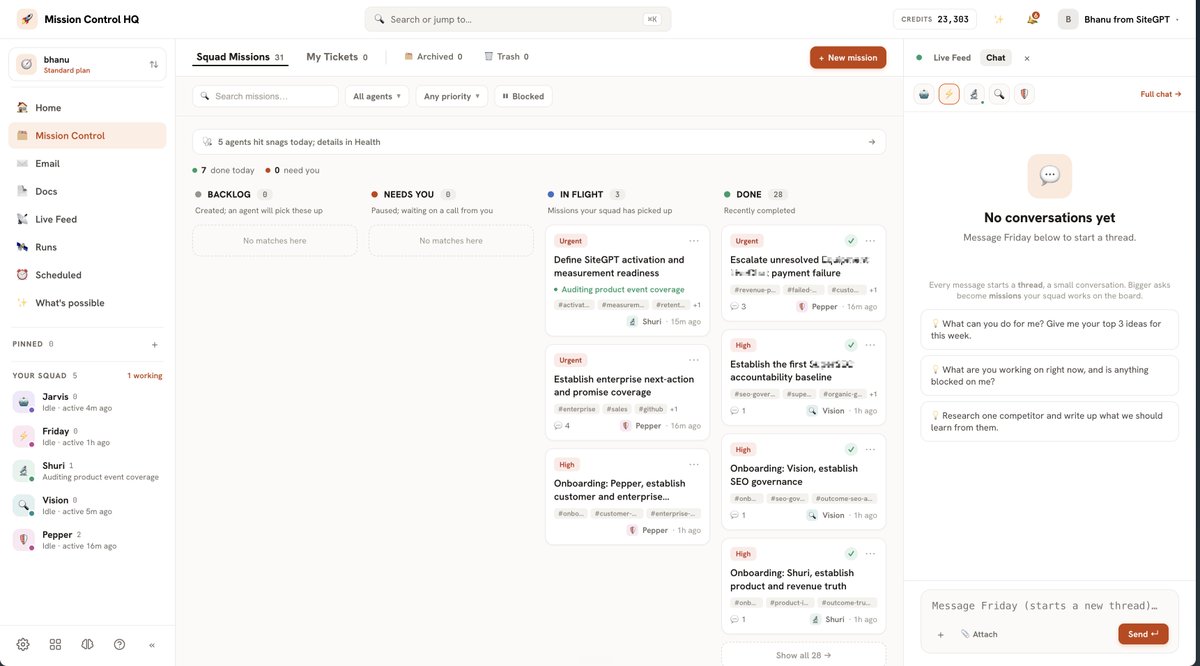


Discussion insight: The product question moved from "can agents work in parallel?" to "how do I see what they know, what they are connected to, and where they are blocked?" Grok Bot replies and Mission Control screenshots both pointed to the same answer: persistent shared context plus human-visible tickets and status.
Comparison to prior day: August 10 centered organizational redesign and harness design. August 11 pushed that one step closer to the user with IDE visualizers, squad dashboards, cloud playbooks, and explicit operator consoles.
1.3 Open and local agent infrastructure broadened into routing, topology science, and governance (🡕)
The third cluster widened the infrastructure conversation around always-on agents. At least six retained items dealt not just with which model to run, but how to route work across models, when multi-agent topologies help, and what governance layer is required once agents touch real systems.
@nvidia announced (246 likes, 36 replies, 25,164 views) Nemotron 3.5 Lightning plus NeMo Switchyard. NVIDIA's official announcement says Lightning is a 30B MoE with only 3B active parameters, built for high-volume agentic work with up to 4x faster output and 30% faster task completion, while Switchyard routes each workflow step across open, proprietary, and NVIDIA models and can cut cost to about one-third of running Opus 4.8 alone. @rasbt added (36 likes, 3 replies, 2,171 views) the model-architecture nuance people cared about for local use: Muse Glimmer's 131k context window, unusually small KV cache, and its throughput/memory profile versus Qwen 3.6 and Gemma 4.

@marfinxx surfaced (60 likes, 5 replies, 2,777 views, 58 bookmarks) the paper Towards a Science of Scaling Agent Systems, which presented the first quantitative scaling laws for agent topologies. The abstract and figure support the thread's main point: coordination has diminishing returns, topology must match task structure, and multi-agent systems can outperform single agents on decomposable work while underperforming badly on sequential planning.

@undefinedKi reported (24 likes, 16 replies, 998 views, 14 bookmarks) that Microsoft open sourced Agent Governance Toolkit. Microsoft's announcement says the MIT-licensed package set covers policy enforcement, identity, runtime rings, compliance, and SRE across Python, TypeScript, Rust, Go, and .NET with sub-millisecond checks. The pushback came from the opposite direction: @nebusecurity warned (24 likes, 4 replies, 29,521 views, 22 bookmarks) that eight open-source agent sandboxes were still easy to escape after the Hugging Face incident, which kept the day's optimism tied to a visible attack surface.

Discussion insight: The infrastructure debate no longer stopped at local weights or more sub-agents. People asked where routing lives, how much coordination overhead a topology can absorb, and what deterministic layer blocks or records unsafe actions before a model improvises.
Comparison to prior day: August 10 moved beneath the prompt into models, caches, packaging, and harnesses. August 11 added harder evidence: routing economics from NVIDIA, empirical topology results from a new paper, and concrete governance/sandbox arguments once agents cross into production systems.
2. What Frustrates People
Memory systems that only answer the question you already knew to ask
The sharpest frustration was that most agent memory still behaves like a better search box instead of a thinking system. @akshay_pachaar argued (33 likes, 7 replies, 6,173 views, 48 bookmarks) that retrieval returns the facts you queried but misses the hidden dependency that actually clears the block, while @Vectorizeio measured (13 likes, 3 replies, 1,095 views) the same problem economically by claiming that self-updating project docs reduce corrections and cost. @polydao translated (28 likes, 7 replies, 1,007 views) the complaint into graph-memory primitives, and @starmexxx located (148 likes, 16 replies, 31,361 views, 403 bookmarks) the most common breakage one layer earlier by saying context overload is where most systems actually die. People are coping with graph layers, explicit compaction, self-healing docs, and shared project memory outside the chat transcript. Worth building for: High.
Agent runtimes that still need a real safety boundary
The second recurring frustration was that "agent access" is often granted long before governance is designed. @HackingDave described (81 likes, 10 replies, 4,733 views, 91 bookmarks) how many separate gates, tests, scanners, and production-like checks are needed before a coding agent should touch real software delivery. @nebusecurity said (24 likes, 4 replies, 29,521 views, 22 bookmarks) eight open-source sandboxes were still easy to escape, and @undefinedKi surfaced (24 likes, 16 replies, 998 views) Microsoft Agent Governance Toolkit precisely because teams need deny-by-default checks, identity, audit trails, and a kill switch before a tool call happens. Current workarounds are middleware policies, container isolation, least-privilege access, and manual promotion gates. Worth building for: High.
Multi-agent swarms that create more surface area than usable output
People were also frustrated by agent parallelism that scales activity faster than clarity. @slash1sol made (58 likes, 19 replies, 1,337 views, 45 bookmarks) the case that parallel agents only work when each has its own worktree and accountability loop, and the new paper shared by @marfinxx here (60 likes, 5 replies, 2,777 views, 58 bookmarks) backed that with topology evidence showing coordination can hurt when the task is sequential. @poteto added (293 likes, 32 replies, 14,173 views) that Grok Bot still is not her answer for every large project, and DoorDash's Flux post suggests why: enterprise agent work needs playbooks, sandboxes, and routing, not just more subprocesses. Teams are coping by shrinking agent scope, assigning ownership explicitly, and surfacing tickets when humans need to unblock a run. Worth building for: High.
3. What People Wish Existed
Memory that notices patterns before a human asks for them
The clearest practical need was for memory that can derive structure, not just store and retrieve snippets. @akshay_pachaar described (33 likes, 7 replies, 6,173 views, 48 bookmarks) a graph pipeline that clusters related claims and writes observations in the background, while Zep's public memory docs make the same promise with token-efficient observations layered over facts and summaries. @polydao wanted (28 likes, 7 replies, 1,007 views) a graph-shaped memory schema, and @Vectorizeio framed (13 likes, 3 replies, 1,095 views) the benefit as self-updating docs that stop a wiki from drifting. This is a direct need: people want memory that becomes a maintained system of record, not a passive transcript. Opportunity: direct.
Control rooms for agent teams with shared context, tickets, and connectors
The second need was for a practical operator surface above the models. @Teknium showed (228 likes, 14 replies, 20,537 views) live agent visualization in VS Code, @pbteja1998 showed (8 likes, 2 replies, 1,249 views, 21 bookmarks) a shared-squad workspace with Kanban missions, memory files, and MCP integrations, and DoorDash's Flux post gives the enterprise version with playbooks and cloud execution. The need is immediate because the agent can only be useful for long-running work if users can see what it knows, what it is connected to, and when it is blocked. Opportunity: direct.
Open execution stacks that separate planning from cheap specialized work
Several items pointed at the same infrastructure wish from different angles: @nvidia released (246 likes, 36 replies, 25,164 views) a high-volume execution model plus routing layer, @rasbt focused (36 likes, 3 replies, 2,171 views) on Muse Glimmer's local-memory footprint, and @starmexxx kept (148 likes, 16 replies, 31,361 views, 403 bookmarks) returning to the cost of sending the wrong work to the wrong layer. People are asking for an open stack where a frontier model can plan, a smaller local model can execute repetitive steps, and a router can arbitrate between them without manual glue. Opportunity: competitive.
Governance that ordinary builders can adopt before an incident forces it
There was also a visible need for governance that is concrete enough for small teams, not just compliance departments. @undefinedKi shared (24 likes, 16 replies, 998 views) Microsoft's toolkit as a prebuilt control layer, while @nebusecurity reminded (24 likes, 4 replies, 29,521 views, 22 bookmarks) readers that sandboxes are still brittle. @HackingDave supplied (81 likes, 10 replies, 4,733 views, 91 bookmarks) the DIY version through explicit runtime and test rules. The need is practical and urgent, but multiple approaches are already competing. Opportunity: competitive.
4. Tools and Methods in Use
| Tool | Category | Sentiment | Strengths | Limitations |
|---|---|---|---|---|
| Zep Agent Memory / Graphiti | Memory infrastructure | (+) | Context graphs, Observations, temporal invalidation, token-efficient context assembly | Requires graph shaping and pattern logic beyond simple vector search |
| Mission Control HQ | Agent operations workspace | (+) | Shared squad memory, Kanban missions, MCP integrations, human ticket handoffs | Setup and value depend on many external connectors and careful workspace curation |
| Hermes Pixel Office | IDE / observability | (+) | Live visualization of active agents in VS Code, stronger sense of agent state and persona | Public evidence is still demo-led; no hard productivity metrics were shared |
| Agent-Orchestrator | Multi-agent coding harness | (+/-) | Parallel agents with isolated worktrees and repair loops tied back to the responsible branch | More coordination overhead, CI complexity, and review surface than a single-agent loop |
| NVIDIA Nemotron 3.5 Lightning + NeMo Switchyard | Local/open model + routing | (+) | Faster specialized execution, model routing by cost/latency/quality, local deployment options | Benchmark story is strongest on vendor-reported workloads; planning still often belongs to larger models |
| Agent Governance Toolkit | Runtime governance | (+) | Deterministic policy checks, identity, audit trails, kill switch, multi-language SDKs | Public preview, and the toolkit itself says container-level isolation is still needed underneath |
| Cerebras internal knowledge base | Enterprise search / RAG | (+) | Distills questions from threads, hybrid retrieval, fusion + rerank, cited answers at 15k+ queries/day | Bespoke internal system with multiple retrieval layers and maintenance burden |
| Context Engineering Kit | Skills / context patterns | (+/-) | Installable token-efficient plugins and context patterns across Claude Code, Cursor, OpenCode, and others | Full experience depends on client support; some installs lose per-plugin or subagent behavior |
Overall satisfaction was highest when the tool exposed an inspectable control surface: Zep's observations, Mission Control's shared files and tickets, Hermes's visible agents, Switchyard's routing logic, or AGT's explicit policy checks. The common workaround pattern was to move state out of one giant transcript and into something shaped: graphs, squad memory files, routing policies, playbooks, or retrieval pipelines. Migration pressure ran from one-model-for-everything setups toward systems of models, from raw terminal logs toward operator dashboards, and from permissive tool access toward least-privilege and auditable middleware.
5. What People Are Building
| Project | Who built it | What it does | Problem it solves | Stack | Stage | Links |
|---|---|---|---|---|---|---|
| Grok Bot | Lauren Tan | General-purpose bots that work on their own computers while the user is away | Extends agents from chat helpers into asynchronous coworkers for calendar, coding, and personal tasks | Grok Bot client, Dune agent-friendly framework, per-bot computer/workflow execution | Beta | tweet |
| Hermes Pixel Office | Teknium | Visualizes live Hermes agents inside VS Code and connects them through a Hermes Agent Plugin | Makes parallel agent work visible and easier to monitor inside the IDE | VS Code extension, Hermes Agent Plugin | Shipped | tweet |
| Agent-Orchestrator | gippp69 | Splits one coding task across multiple agents with isolated worktrees and repair loops | Prevents parallel coding agents from colliding and makes failures attributable | Multi-agent routing, git worktrees, CI feedback, review/merge routing | Alpha | overview tweet |
| Mission Control HQ | Mission Control HQ | Runs AI squads with shared memory, Kanban missions, tickets, and MCP integrations | Gives long-running agent teams a human-manageable operations surface | Shared squad files, MCP connectors, role-based agents, live feed, ticket board | Shipped | demo tweet; site |
| Flux | DoorDash | Cloud platform for unattended engineering agents and playbooks | Moves agent work beyond laptop-bound loops into secure, scalable organizational workflows | Agent sandboxes, MCP gateway, playbooks, cloud execution platform | Shipped | blog; tweet |
| Agent Governance Toolkit | Microsoft | Runtime governance layer that intercepts agent actions before execution | Adds policy, identity, audit, and emergency controls once agents touch real systems | Policy engine, Agent Mesh, runtime rings, compliance package, Python/TS/Rust/Go/.NET SDKs | Beta | announcement; tweet |
| Context Engineering Kit | NeoLabHQ | Marketplace of token-efficient context and subagent plugins for coding agents | Packages context-engineering practices into reusable installs instead of repeated manual prompt work | agentskills.io format, plugin marketplace, Subagent-Driven Development, Spec-Driven Development | Shipped | repo; tweet |
| Cerebras internal knowledge base | Andrew Feldman | Hybrid retrieval system for engineers, humans, and internal agents | Makes 10 years of scattered company context searchable and attributable | Thread distillation, multiple retrieval signals, reciprocal-rank fusion, reranking, cited synthesis | Shipped | tweet; write-up |
The strongest build pattern was not "one smarter agent" but a surrounding operating layer. Hermes Pixel Office, Mission Control HQ, Agent-Orchestrator, and Flux all add surfaces for assignment, visibility, routing, or recovery around the model instead of assuming autonomy alone is enough.
Mission Control HQ and Cerebras point to a second pattern around shared state. Mission Control keeps squad memory, company files, and integrations in one workspace that multiple agents can act from, while Cerebras distills Slack and internal systems into a searchable knowledge substrate that serves both people and agents. That is the same pain point Context Engineering Kit addresses from the developer side by packaging better context handling into reusable plugins instead of one-off prompts.
Agent Governance Toolkit stands out because it treats safety as a product layer rather than as a footnote. The post and screenshot made clear that once agents call tools, query databases, or delegate to other agents, governance is itself part of the build, not an enterprise add-on.
6. New and Notable
DoorDash made cloud-based engineering agents measurable in public
DoorDash's Flux post, surfaced by @AIatDoorDash here (18 likes, 4 quotes, 2,201 views), was notable because it moved the cloud-agent story from product language to operating metrics: 130,000 automated engineering tasks in one month, 25,000+ automated code reviews each week, 300+ playbooks, and 10,000+ weekly invocations. That is the clearest public evidence in the dataset that coding agents are already being run as durable background infrastructure instead of as occasional desktop copilots.
Cerebras showed the retrieval stack behind a mixed human-agent knowledge base
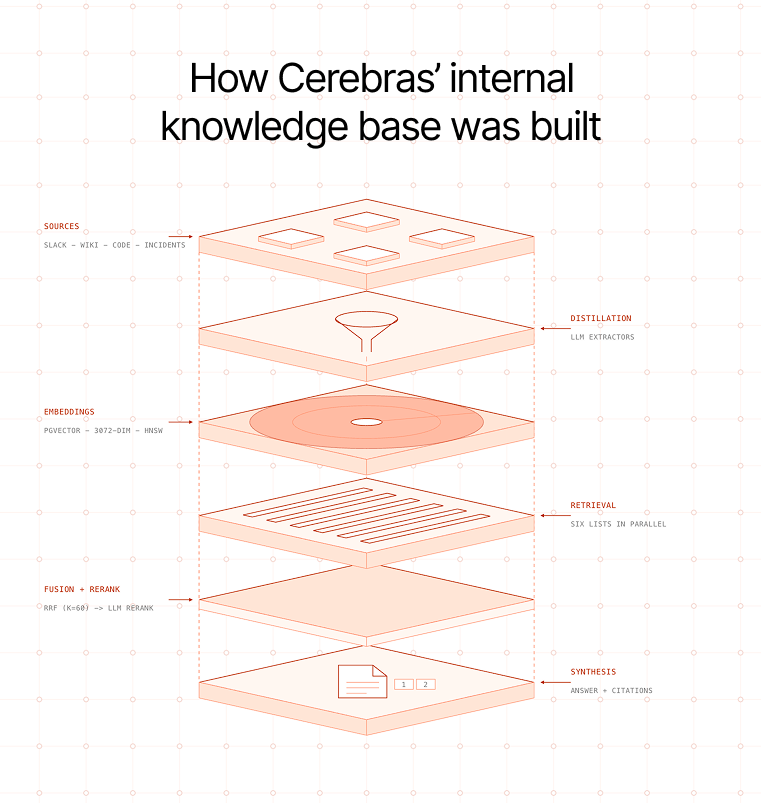
@andrewdfeldman shared (25 likes, 2 replies, 1,828 views, 12 bookmarks) an unusually concrete look at internal knowledge infrastructure: 15,000+ daily questions, thread distillation into searchable questions/resolutions, multiple retrieval signals, reciprocal-rank fusion, reranking, and cited synthesis. The attached architecture diagram mattered because it showed exactly where sources, distillation, embeddings, retrieval, fusion, and synthesis sit in the stack.
Context engineering turned into an installable open artifact
@tom_doerr pointed to (6 likes, 2,022 views, 12 bookmarks) Context Engineering Kit, and the public repository describes it as a token-efficient marketplace of plugins and patterns for Claude Code, Cursor, OpenCode, Antigravity, and others. What made it notable was the packaging move: the day's most repeated advice about context, subagents, and predictability was no longer just threads and diagrams, but something builders can actually install.

7. Where the Opportunities Are
[+++] Proactive memory that writes observations and keeps docs current — @akshay_pachaar showed (33 likes, 7 replies, 6,173 views, 48 bookmarks) why query-only retrieval misses hidden blockers, Zep's docs demonstrate observations over context graphs, @Vectorizeio claimed measurable correction and cost gains from self-updating docs, and @polydao added a concrete schema for graph memory. This is strong because the pain, the desired behavior, and multiple implementation paths all showed up on the same day.
[+++] Control rooms for long-running agent teams — @Teknium showed (228 likes, 14 replies, 20,537 views) live agent visualization, @pbteja1998 showed (8 likes, 2 replies, 1,249 views, 21 bookmarks) a shared-squad workspace, and DoorDash's Flux post, surfaced by @AIatDoorDash here (18 likes, 4 quotes, 2,201 views), added the enterprise playbook layer. The evidence spans solo-developer tools, team workspaces, and enterprise cloud execution, which makes the demand broader than one niche interface idea.
[+++] Deterministic runtime governance and sandboxing — @undefinedKi surfaced (24 likes, 16 replies, 998 views) Agent Governance Toolkit, @nebusecurity warned (24 likes, 4 replies, 29,521 views, 22 bookmarks) about sandbox escapes, and @HackingDave described (81 likes, 10 replies, 4,733 views, 91 bookmarks) the operational checklist teams still build by hand. This is strong because the failure mode is severe, the current workarounds are cumbersome, and public toolkits are only just appearing.
[++] Human-agent knowledge layers for internal operations — @andrewdfeldman shared (25 likes, 2 replies, 1,828 views, 12 bookmarks) Cerebras's internal knowledge base, while @pbteja1998 showed (8 likes, 2 replies, 1,249 views, 21 bookmarks) Mission Control HQ's shared context files. The opportunity is moderate because the architecture is clearly valuable, but today's best examples still look custom-built and integration-heavy.
[++] Open local execution stacks with routing between planning and worker models — @nvidia announced (246 likes, 36 replies, 25,164 views) Lightning plus Switchyard, and @rasbt focused (36 likes, 3 replies, 2,171 views) on Muse Glimmer's local-memory profile. Together with the recurring cost complaints in the loop/context threads, they support a stack where one model plans and another executes. The opportunity is moderate because multiple credible builders are already attacking it, but the market still lacks a default open stack.
[+] Topology advisors for multi-agent design — @marfinxx surfaced (60 likes, 5 replies, 2,777 views, 58 bookmarks) the scaling-laws paper, which suggests there is room for tools that recommend when to stay single-agent, when to centralize, and when to fan out. This is emerging rather than immediate, but the paper gives the category stronger footing than generic "agent swarm" rhetoric.
8. Takeaways
- The strongest agent conversation moved from prompts to control layers. @starmexxx argued (148 likes, 16 replies, 31,361 views, 403 bookmarks) for ask/context/harness/loop/graph layers, and the rest of the day's strongest practitioners mostly filled in those same control surfaces rather than proposing better wording.
- Agent teams are becoming an operations problem with visible interfaces. @pbteja1998 showed (8 likes, 2 replies, 1,249 views, 21 bookmarks) dashboards, shared memory, and MCP connectors in Mission Control HQ, while Flux and Hermes Pixel Office supplied the enterprise and IDE versions of the same pattern.
- Open/local agent infrastructure is getting more modular. @nvidia announced (246 likes, 36 replies, 25,164 views) Lightning + Switchyard, and @rasbt added (36 likes, 3 replies, 2,171 views) the local-memory details that make the split between planning models and cheaper worker models believable.
- Governance is turning into productized middleware rather than post hoc policy text. @undefinedKi shared (24 likes, 16 replies, 998 views) Agent Governance Toolkit, while @nebusecurity warned (24 likes, 4 replies, 29,521 views, 22 bookmarks) that sandbox escapes are still easy enough to benchmark publicly.
- The most durable memory examples were company-shaped, not chat-shaped. @andrewdfeldman shared (25 likes, 2 replies, 1,828 views, 12 bookmarks) a retrieval stack serving 15,000+ daily questions, and the Zep and Mission Control examples pointed in the same direction: shared context systems that survive sessions and synthesize structure automatically.