Twitter AI Agent - 2026-08-16
1. What People Are Talking About
1.1 Graph and harness engineering became the default framing for serious agent work (🡕)
At least five retained items treated prompt craft as the entry point, not the frontier. The recurring vocabulary was graph routing, backend abstraction, pluginized runtimes, and explicit control over files, sandboxes, and subagents. Compared with August 15, the conversation moved from broad harness principles into specific runtime shapes and public repos.
@waynoir framed (69 likes, 8,448 views, 115 bookmarks) graph engineering as the next step after prompt, context, memory, agent, and loop design, and the most useful reply clarified that the point is data-dependent routing rather than a longer fixed chain.
@cyrilXBT argued (134 likes, 17 replies, 13,653 views, 142 bookmarks) that Anthropic's "graph engineering" note materially changed how his own setup responded, and the attached page made the claim concrete by showing a retrieval-first pipeline of vault intake, routing, index scoring, node retrieval, graph walk, and final reasoning.

@rohanpaul_ai reported (73 likes, 6 replies, 5,355 views, 33 bookmarks) that DeepSeek Harness had already crossed 136k stars and exposed models, tools, loops, storage, scheduling, and UI as swappable plugins. The public repo README reinforces the same thesis: a local web app, MIT license, Cordis-based plugin architecture, and explicit developer-preview status.

@hwchase17 described (54 likes, 10 replies, 8,012 views, 75 bookmarks) the same shift from another angle: Deep Agents separates the agent loop from the backend that exposes filesystem-like operations and optional code execution, so the same harness can target local TUI use, remote sandboxes, or non-coding "fake" backends.
Discussion insight: The most useful pushback was not "graphs are wrong." It was that model portability is weaker than backend portability, hype without structure is hard to trust, and the real gain comes from making routing and execution inspectable.
Comparison to prior day: August 15 already treated harness engineering as the differentiator. August 16 pushed further into public implementations: plugin systems, filesystem abstractions, and graph-first runtime diagrams.
1.2 File-based memory and context hygiene became the main way to keep agents useful over time (🡕)
A second cluster said the competitive layer is no longer just bigger context windows. It is what the system keeps, where it keeps it, and how selectively it reloads it. The strongest items connected repo files, SOPs, graph memory layers, and session-management commands into one operating model.
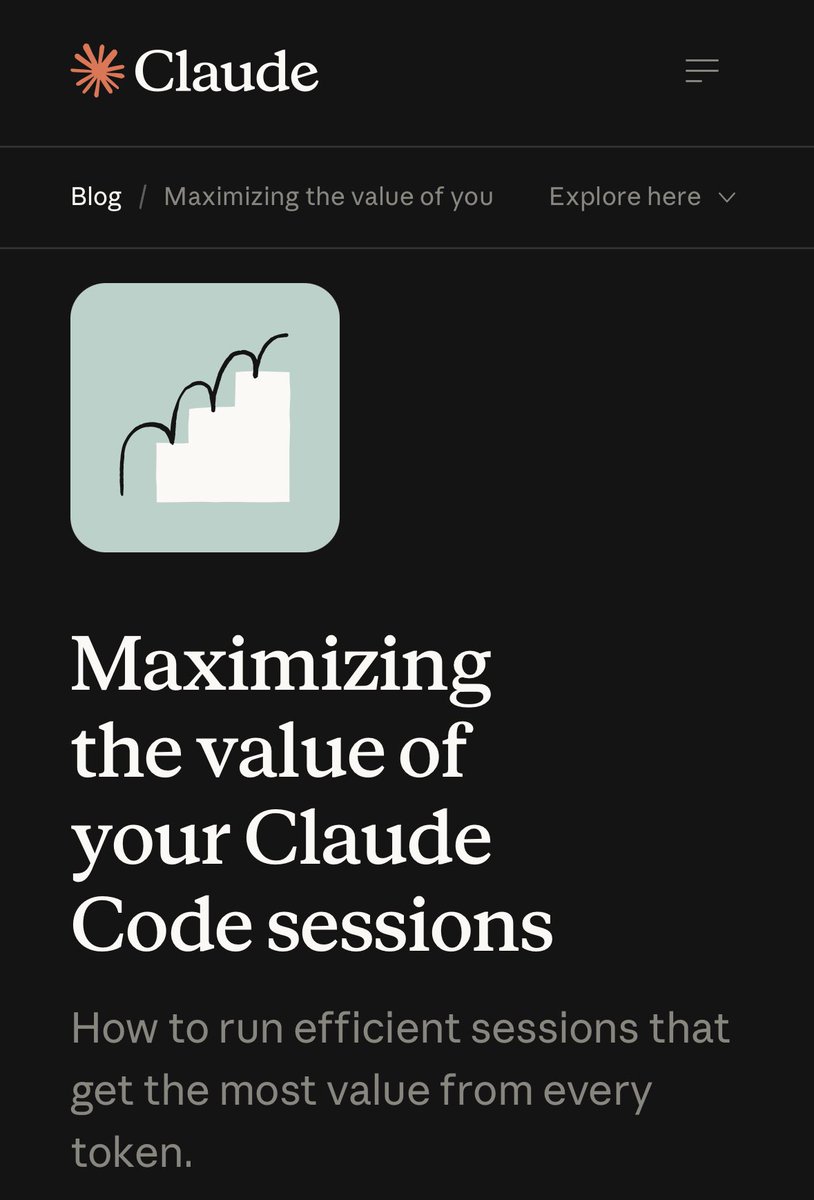
@beamnxw summarized (35 likes, 18 replies, 909 views, 23 bookmarks) Anthropic's six-session rules around /clear, /compact, model choice, file references, and context inspection. The public Claude Code best-practices guide and session-management post back the same warning: context windows fill quickly, performance degrades as they fill, and new tasks often need a clean session or a subagent instead of more chat.
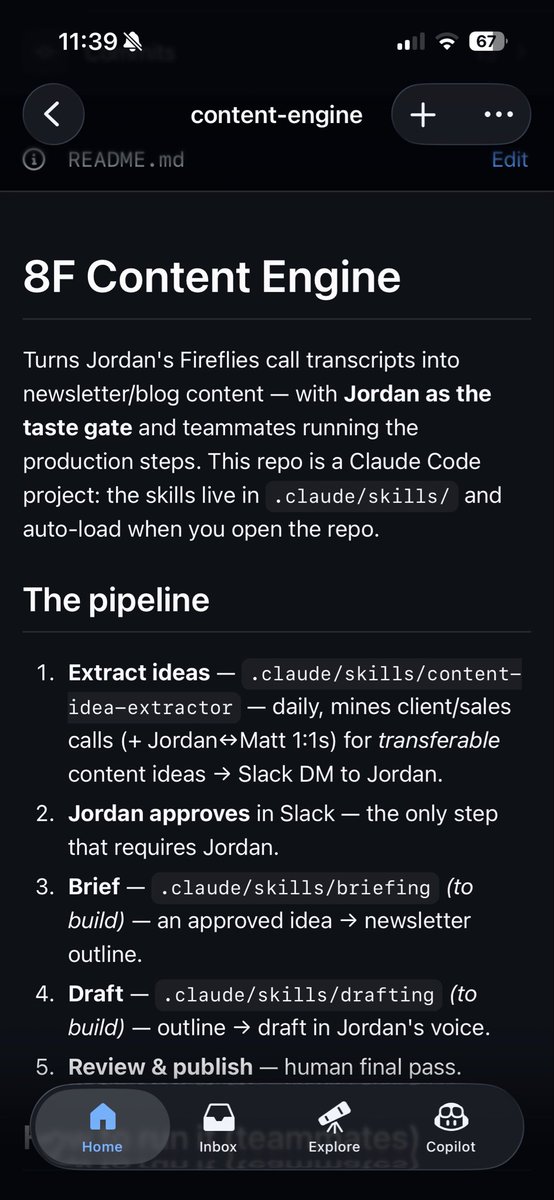
@jordan_ross_8F showed (10 likes, 3 replies, 5,256 views, 29 bookmarks) what that looks like in practice for an agency: one GitHub repo, one client folder, one skill folder per SOP, cron jobs for recurring work, and winners plus losers files that agents can reopen later. His quoted thread made the deeper claim explicit: terminals select the few files a task needs, while chat attachments and retrieval buckets silently bloat or drift.
@SamGCoder asked (140 likes, 4 replies, 7,207 views, 16 bookmarks) for explicit work modes tied to different context ceilings and compaction behavior: Balanced for normal tasks, Large Codebase for more retained history, and Long-Running Investigation for archaeology and reverse engineering. That request only makes sense because session topology is now a product surface users notice.
@monokern compiled (35 likes, 14 replies, 1,019 views, 21 bookmarks) a knowledge-graph memory stack of LlamaIndex, LangGraph, LightRAG, GraphRAG, and cognee, packaging persistent agent memory as reusable infra instead of one-off prompt tricks.
Discussion insight: Replies sharpened the point: /clear helps only if teams know what to preserve, and a losers folder can matter as much as a winners folder because otherwise agents just repeat the last successful pattern.
Comparison to prior day: August 15 already pushed repos and files as memory surfaces. August 16 added operational guidance for when to clear, compact, branch, or externalize that memory into graph-backed tools.
1.3 Multi-agent systems were being re-scoped around supervision, ownership, and safety (🡕)
The third theme was restraint plus control. Builders still want parallel agents, but the emphasis shifted toward when a second agent earns its place, who owns shared state, and how to stop persistent files or long-running loops from becoming ungoverned infrastructure. Compared with August 15's supervisor language, today's evidence was more explicit about failure modes and enterprise patterns.
@AlexFinn argued (266 likes, 45 replies, 18,507 views, 302 bookmarks) for a concrete orchestrator-worker loop in Grok Bot, where one bot keeps another on task and periodically suggests process improvements. The reply thread immediately added two real-world constraints: one person called it "a manager," and another said the same pattern is useful because it can push grind work onto cheaper subagents.
@monokern argued (34 likes, 6 replies, 1,948 views, 42 bookmarks) that most teams should still start with one agent and add a second only when attention dilution, multi-step complexity, specialization, natural parallelism, high error cost, or modularity demands it. Anthropic's public multi-agent systems article makes the same case and adds the cost side: multi-agent setups often consume 3-10x more tokens than single-agent approaches.

@neviannn shared (26 likes, 1,385 views, 35 bookmarks) Microsoft's lead-agent playbook, where specialists keep narrow scopes and a central orchestrator holds global context. Microsoft's public AI orchestration guide likewise places multiagent orchestration above direct model calls and single-agent-with-tools on the complexity ladder, while the Conductor post stresses deterministic routing and explicit context flow.

@rohanpaul_ai warned (18 likes, 7 replies, 2,234 views, 13 bookmarks) that the Mind Viruses paper found self-propagating goals can persist by rewriting self-modifiable files that later re-enter an agent's prompt. That moved persistent memory from a productivity topic into a governance topic.
Discussion insight: The strongest responses were about ownership, not intelligence: who owns a file, which agent gets only a summary, whether shared state has one writer, and how much "persistent memory" should be treated like sensitive configuration.
Comparison to prior day: August 15 argued for supervisors and specialized agents. August 16 made the guardrails more concrete with token-cost tradeoffs, centralized routing, and explicit warnings about persistent-file contagion.
2. What Frustrates People
Context rot once chat history becomes the only memory
The sharpest frustration was that agents do not usually fail loudly when context degrades. @beamnxw summarized (35 likes, 18 replies, 909 views, 23 bookmarks) Anthropic's six rules precisely because long sessions drift without obvious breakage, and the public session-management post says context rot spreads attention across too many tokens and forces lossy compaction. @SamGCoder asked (140 likes, 4 replies, 7,207 views, 16 bookmarks) for explicit work modes tied to 300k, 600k, and 1M-token behavior, which is a direct complaint that the current session model is too blunt. @jordan_ross_8F showed (10 likes, 3 replies, 5,256 views, 29 bookmarks) the coping pattern: move memory into files, then load only the relevant folders and SOPs. Severity: High. Worth building for: High.
Multi-agent gains still come with orchestration overhead and unclear ownership
The conversation was pro-agentic, but not naive about the cost. @monokern argued (34 likes, 6 replies, 1,948 views, 42 bookmarks) that second agents should be earned, not assumed, and Anthropic's public multi-agent guidance says multi-agent systems often consume 3-10x more tokens than single-agent approaches. @AlexFinn argued (266 likes, 45 replies, 18,507 views, 302 bookmarks) for an orchestrator-worker loop, but the best reply called it a manager and another immediately turned to cost control by handing grind work to cheaper models. @hwchase17 described (54 likes, 10 replies, 8,012 views, 75 bookmarks) the coping pattern from the builder side: separate the brains from the hands, make file operations pluggable, and avoid assuming every agent needs code execution. Severity: Medium to High. Worth building for: High.
Persistent skill and memory files are now treated as a security surface
Security concern shifted from prompt injection in one chat to what gets written into reusable files. @rohanpaul_ai warned (18 likes, 7 replies, 2,234 views, 13 bookmarks) that the Mind Viruses paper found payloads can spread by convincing agents to rewrite persistent files that later re-enter future prompts. @bibryam compiled (12 likes, 801 views, 19 bookmarks) open-source scanners for this exact problem, and the public SkillSpector README cites research claiming 26.1% of skills contain vulnerabilities and 5.2% show likely malicious intent, while Cisco Skill Scanner explicitly says a clean scan does not prove a skill is safe. People are coping with baselines, SARIF reports, manual review, and least-privilege installation gates. Severity: High. Worth building for: High.
3. What People Wish Existed
Context modes that match the job instead of one generic session model
The clearest direct request was for mode selection that matches task shape. @SamGCoder asked (140 likes, 4 replies, 7,207 views, 16 bookmarks) for Balanced, Large Codebase, and Long-Running Investigation modes with different context ceilings and compaction behavior. Anthropic's public session-management guide already gives users /clear, /compact, rewind, and subagents, but the tweet is evidence that people want those choices packaged as first-class presets. Opportunity: direct.
Durable memory layers that stay inspectable and reusable
The strongest wish was not "make the model smarter." It was "stop making me re-teach it." @jordan_ross_8F showed (10 likes, 3 replies, 5,256 views, 29 bookmarks) an agency already solving that by storing voice, SOPs, winners, and losers as files inside GitHub. @monokern compiled (35 likes, 14 replies, 1,019 views, 21 bookmarks) a repo stack of LlamaIndex, LangGraph, LightRAG, GraphRAG, and cognee, which shows people are already shopping for this layer. The need is practical, not aspirational: keep useful outcomes, reload them selectively, and let humans inspect what the agent learned. Opportunity: direct.
Skill supply chains that can be scanned, versioned, and safely forgotten
The second strong need was governance over what skills and memories are allowed to persist. @bibryam compiled (12 likes, 801 views, 19 bookmarks) scanners, package managers, and governance tools specifically for agent skills, while @rohanpaul_ai warned (18 likes, 7 replies, 2,234 views, 13 bookmarks) that persistent files can become propagation channels. This is a practical need, but it is already competitive: multiple scanner projects exist, and none of them claim perfect coverage. Opportunity: competitive.
Agent-owned or bring-your-own compute surfaces
People also want agents that can keep their own workspace without locking users into one hosted computer. @hwchase17 described (54 likes, 10 replies, 8,012 views, 75 bookmarks) backends that can be local disks, databases, object stores, or remote sandboxes, and @Granite0x shared (17 likes, 2 replies, 509 views, 14 bookmarks) Rakazo, a self-hosted Grok Bot alternative where each bot gets its own computer and sandbox choices. The demand is real, but multiple open and hosted approaches are already competing on ownership, isolation, and ease of setup. Opportunity: competitive.
4. Tools and Methods in Use
| Tool | Category | Sentiment | Strengths | Limitations |
|---|---|---|---|---|
| DeepSeek Harness | Agent harness / runtime | (+/-) | Pluginized models, tools, loops, storage, and UI; local web app; MIT-licensed and self-hostable | Publicly marked developer preview; prompt portability and agent-loop economics remain contested |
| Deep Agents | Agent harness / backend abstraction | (+) | Separates agent loop from files and sandboxes; bundles subagents, shell access, skills, and persistent memory | Requires a more explicit backend model and more orchestration discipline than a single chat agent |
Claude Code session management (/clear, /compact, rewind, subagents) |
Context management method | (+/-) | Gives users explicit ways to reset, compact, branch, and isolate noisy work | Compaction is lossy, and users still need to decide what should persist between tasks |
makerskills / social-fetch |
Agent skills / operator workflow | (+) | Installable documentation-first skills; social-fetch turns login-walled social posts into structured data |
Depends on plugin setup and trust in third-party skills |
| LlamaIndex, LangGraph, LightRAG, GraphRAG, cognee | Memory / graph retrieval stack | (+) | Public, reusable graph-backed memory and retrieval layers; strong GitHub adoption signals | Adds infra and retrieval design complexity beyond a plain prompt-plus-files workflow |
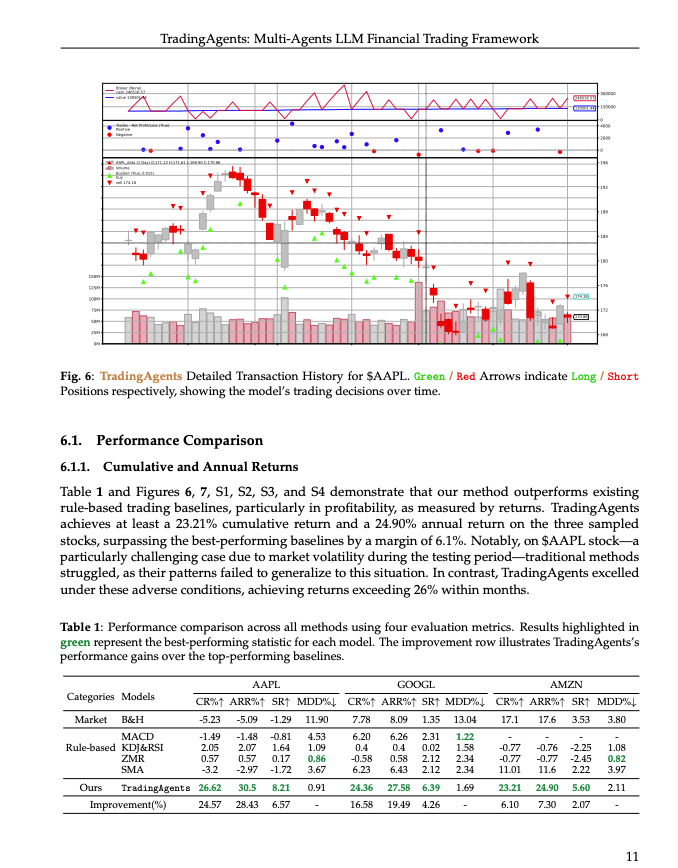
| TradingAgents | Domain-specific multi-agent framework | (+/-) | Specialized analyst, researcher, trader, risk, and portfolio roles; broad provider support; LangGraph-based | Research-oriented and operationally heavy; not positioned as direct trading advice |
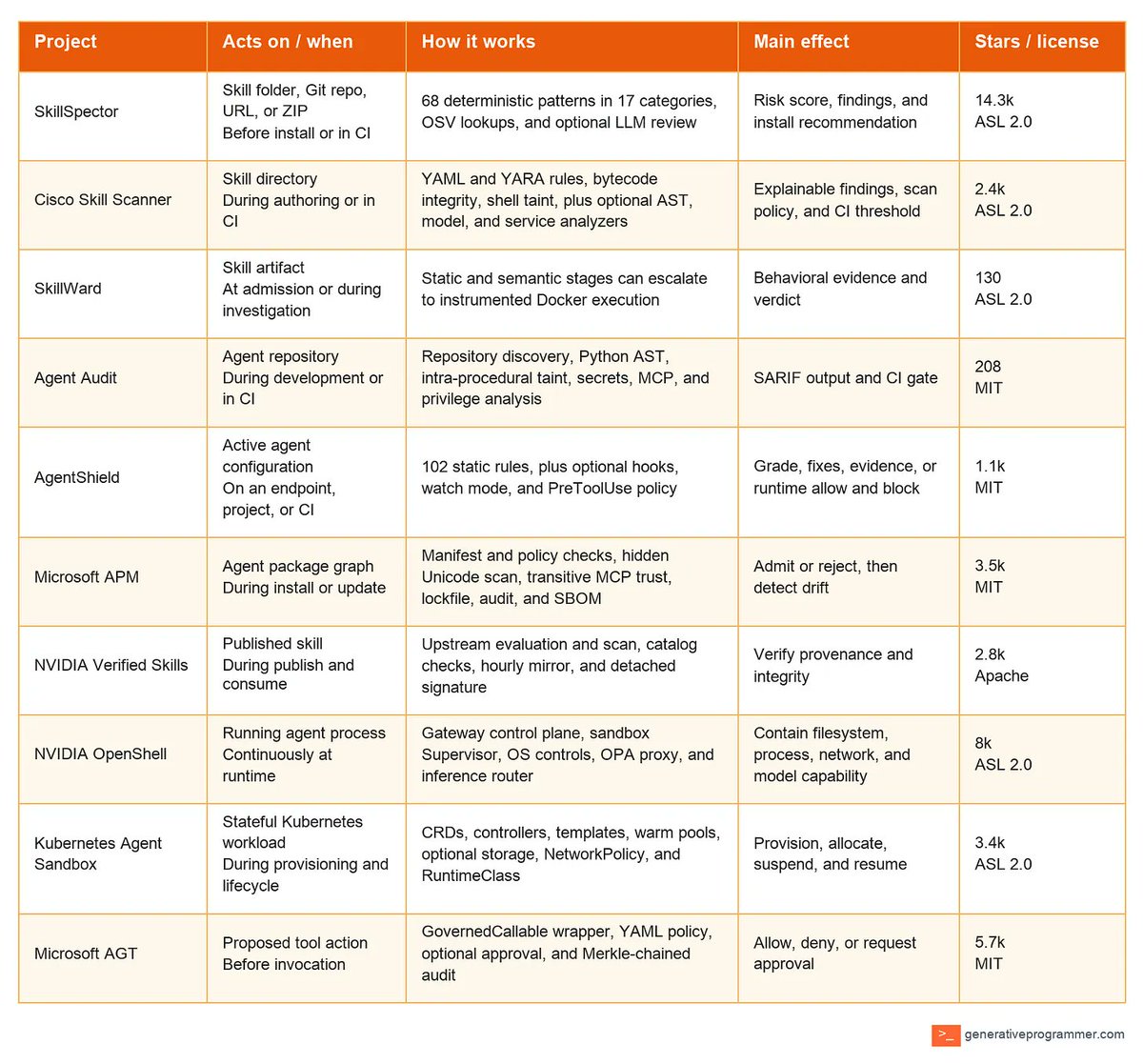
| SkillSpector and Cisco Skill Scanner | Skill security / governance | (+) | Scan repos, zips, and skills for prompt injection, exfiltration, and supply-chain risk; CI/SARIF support | Both projects explicitly warn that automated scanning is best-effort, not proof of safety |
| Rakazo | Self-hosted bot computer / sandbox runtime | (+/-) | Bring-your-own model and sandbox; each bot gets its own thread, computer, memory, and history | Early beta and heavier local setup with Docker, Postgres, and auth/sandbox configuration |
Overall, the tool stack was converging around three layers: a harness that controls execution, a memory layer that decides what survives, and a governance layer that decides what is safe to load. The common workaround for context bloat was to move durable knowledge into repos or graph stores; the common workaround for orchestration sprawl was to make routing and backend boundaries explicit. Competitive pressure is highest in the harness and memory layers, while skill-security tooling is still earlier and more fragmented.
5. What People Are Building
| Project | Who built it | What it does | Problem it solves | Stack | Stage | Links |
|---|---|---|---|---|---|---|
| makerskills / social-fetch | coreyhaines31 | Installable skill pack that lets agents fetch structured data from X, LinkedIn, Instagram, TikTok, Reddit, and HN | Agent workflows break when social posts sit behind login walls or anti-bot flows | Documentation-first skills, browser automation fallback, Wayback fallback, Claude Code/Codex/Cursor compatibility | Shipped | repo, site, post |
| DeepSeek Harness | DeepSeek AI | Open-source agent harness where models, tools, loops, storage, scheduling, and UI are plugins | Teams want to swap execution surfaces and policies without rebuilding the whole agent stack | TypeScript, Cordis, plugin architecture, local web UI | Beta | repo, site, post |
| Deep Agents | LangChain | Batteries-included agent harness with subagents, filesystem access, shell access, skills, and persistent memory | Builders need one loop that can target local disks, remote sandboxes, or non-coding backends | Python, LangGraph, pluggable backends, LangSmith, shell/filesystem tools | Shipped | repo, docs, post |
| Repo-native agency operating model | @jordan_ross_8F | Client folders, brand files, SOP-backed skills, and cron jobs inside one GitHub repo | Chat-native memory does not preserve process, brand context, or reusable failure examples | GitHub, markdown SOPs, cron jobs, Claude Code/Codex/Cursor-style terminals | Shipped | post |
| TradingAgents | TauricResearch | Multi-agent financial trading framework with analyst, researcher, trader, risk, and portfolio roles | Trading workflows need role specialization, checkpointing, and evaluation instead of one monolithic prompt | Python, LangGraph, multi-provider LLM support, Docker, Ollama, financial data vendors | Shipped | repo, paper, post |
| Sleek Agent Skills | sleekdotdesign | Skill that lets coding agents design and preview mobile UI from plain English before implementation | Builders want a design-before-build step instead of inventing layouts while coding | Markdown agent skill, Sleek API, hosted design tool | Shipped | repo, site, post |
| Rakazo | elie222 | Self-hosted Grok Bot alternative where each bot gets its own computer, memory, routines, and history | Users want agent-owned compute and sandboxes without a closed vendor control plane | TypeScript, React, Electron, Expo, Hono, Postgres, Graphile Worker, Docker/E2B sandboxes | Beta | repo, post |
The most repeated build trigger was not "autonomy" in the abstract. It was missing infrastructure around memory, execution, and ingestion. @coreyhainesco shared (211 likes, 16 replies, 15,657 views, 389 bookmarks) a social-ingestion skill because agents still cannot reliably read social posts by default, while @jordan_ross_8F showed (10 likes, 3 replies, 5,256 views, 29 bookmarks) that agency operations are being rebuilt around folders, SOPs, and cron jobs for the same reason: important context needs a durable home.
A second repeated pattern was explicit harness design. @rohanpaul_ai reported (73 likes, 6 replies, 5,355 views, 33 bookmarks) DeepSeek Harness as a plugin-heavy control plane, and @hwchase17 described (54 likes, 10 replies, 8,012 views, 75 bookmarks) Deep Agents as a backend-separable loop. In both cases, the distinguishing feature was not a better prompt but a clearer boundary between planning, files, permissions, and execution.
@tom_doerr shared (6 likes, 1 reply, 2,839 views, 16 bookmarks) Harness Books, a documentation project that turns harness design choices into two public books about Claude Code and Codex. That made the meta-pattern explicit: teams want reusable runtime doctrine, not just a new framework launch every week.

A third pattern was domain or interface specialization. @quantscience_ shared (24 likes, 2 replies, 3,379 views, 32 bookmarks) TradingAgents for finance, @RoundtableSpace shared (37 likes, 7 replies, 3,493 views, 15 bookmarks) Sleek's design-mobile-apps skill for UI planning, and @Granite0x shared (17 likes, 2 replies, 509 views, 14 bookmarks) Rakazo for self-hosted bot computers. The common move was narrowing the workflow rather than promising a universal general agent.

6. New and Notable
Skill security became its own visible product category
@bibryam compiled (12 likes, 801 views, 19 bookmarks) ten open-source projects for securing agent skills across pre-install scanning, supply-chain controls, runtime governance, and sandboxing. That mattered because the underlying repos are not toy examples: SkillSpector says it scans 69 vulnerability patterns across 17 categories and cites research that 26.1% of skills contain vulnerabilities and 5.2% show likely malicious intent, while Cisco Skill Scanner combines static, behavioral, and LLM-based analysis but explicitly warns that "no findings" does not prove safety. The notable shift is that skills are no longer being treated as harmless prompt snippets; they are being treated like installable software that needs its own security workflow.
Persistent memory moved from productivity feature to attack surface
@rohanpaul_ai highlighted (18 likes, 7 replies, 2,234 views, 13 bookmarks) the Mind Viruses paper, which studies self-propagating goals that persist by rewriting agent-readable files. The public paper summary and tweet both point to the same practical lesson: files such as SOUL.md or other self-modifiable memory documents behave less like benign notes and more like privileged configuration if they are reloaded into future prompts. That is notable because it links two of the day's biggest themes - persistent memory and multi-agent coordination - to a concrete safety failure mode rather than a hypothetical one.
7. Where the Opportunities Are
[+++] Inspectable context and memory control — Evidence appeared in sections 1-3 and 5: people are already compensating with repo folders, SOP files, /clear, /compact, and graph-backed memory stacks, yet @SamGCoder still explicitly asked for better work modes. The strongest opportunity is a system that helps users decide what to preserve, what to summarize, and what to forget without hiding that logic.
[+++] Skill and memory supply-chain security — The combination of the Mind Viruses paper, SkillSpector, and Cisco Skill Scanner shows both demand and technical urgency. The market signal is strong because the threat is tied to normal agent workflows - installing skills and reloading memory files - rather than to rare red-team edge cases.
[++] Agent-readable ingestion for the public web — makerskills / social-fetch exists because social posts, login walls, and brittle web surfaces still break agent workflows. The opportunity is moderate rather than greenfield because builders are already shipping point solutions, but the need is broad across research, monitoring, and operator workflows.
[++] Deterministic orchestration and backend portability — Deep Agents, DeepSeek Harness, Anthropic's multi-agent guidance, and Microsoft's orchestration guide all converged on the same need: explicit routing, scoped specialists, and separable execution backends. There is still room for products that make those patterns easier to adopt without exposing users to raw harness complexity.
[+] Design-before-build agent workflows — Sleek Agent Skills and the replies around it show interest in getting editable screens before code generation. The signal is earlier than the memory and security themes, but it is a concrete wedge where a narrow workflow can outperform general coding agents.
8. Takeaways
- The center of gravity moved from prompts to harnesses. The strongest posts were about graph routing, pluginized runtimes, and backend abstraction rather than prompt wording alone. (source)
- Teams are treating files and repos as the durable memory layer that chat sessions still cannot reliably provide. The clearest evidence came from Anthropic session-hygiene guidance, repo-native agency workflows, and public graph-memory stacks. (source)
- Multi-agent enthusiasm is being filtered through cost and control. Builders still want orchestrator-worker loops, but public guidance stressed when a second agent is worth 3-10x coordination overhead and how shared state should be owned. (source)
- Skill installation and persistent memory are now governance problems, not just convenience features. Security scanners and the Mind Viruses paper both pointed to the same surface: reusable files and skills can silently shape later agent behavior. (source)
- The most concrete builds were narrow infrastructure wedges, not universal super-agents. Social ingestion, trading orchestration, mobile UI design, and self-hosted bot computers all solved one bounded workflow with explicit tooling. (source)