Twitter AI Agent - 2026-09-16
1. What People Are Talking About
1.1 Harness engineering became the operating system for agent teams (🡕)
The day's biggest cluster treated agent capability as an operating-model problem, not a model-selection problem. The conversation stayed close to work design: how to stage automation, how many workers to run, which judgments stay human-owned, and what kind of harness can survive real team use instead of one impressive solo demo.
@JacquelineSYC19 reported (436 likes, 42 replies, 58,061 views, 919 bookmarks) that Artie's whole team now uses Hermes, and framed the story around what they tried first, what it cost, and why they ended up building separate Hermes setups for each team. @zachlloydtweets argued (281 likes, 24 replies, 67,359 views, 893 bookmarks) that software factories should be adopted in crawl, walk, run stages rather than jumping directly from local interactive agents to automated cloud development. @omarsar0 argued (80 likes, 47 replies, 11,560 views, 93 bookmarks) that subagents are useful mostly when they separate contexts and parallelize research or review, and that one orchestrator plus one executor still works better than deeper trees that mostly add coordination cost.
@suraj_sharma14 turned (44 likes, 12 replies, 2,132 views, 59 bookmarks) evals and reliability into a concrete build list: regression suites, trajectory grading, chaos tests, tracing, shadow traffic, error budgets, and public reliability reports. @mirku21 argued (14 likes, 11 replies, 231 views, 7 bookmarks) that the industry has crossed from prompt engineering and context engineering into harness engineering, and used SemaClaw to name the runtime layers explicitly: MCP tools, subagents, skills, and hooks.
Discussion insight: the replies around the most practical posts kept converging on the same bottleneck: generation got cheap, but review, rollback, coordination, and proof did not.
Comparison to prior day: harness-related references rose from 140 to 155 versus 2026-09-15, and the tone shifted from general theory toward team operating recipes.
1.2 Agent markets moved from directory growth to buyer-side work definition (🡕)
The marketplace conversation finally centered on the hard part of agent commerce: not registering more agents, but getting somebody to define real work, attach a budget, specify acceptance, and settle the result. That is a much narrower and more operational discussion than generic "agent economy" promotion.
@EyoAugusti73181 argued (87 likes, 78 replies, 739 views) that supply is not the scarce input when a live market shows 584 service listings, 224 open requests, and 0 open bounties; the scarce role is the client willing to turn a vague need into a scoped job that can actually enter escrow. @DrPengu6 argued (53 likes, 52 replies, 333 views, 1 bookmark) that the interesting shift at TermiX is from chatting with agents to hiring them for scoped jobs with prices and outcomes attached. @Navtq0808 reported (11 likes, 9 replies, 100 views) a client-side walkthrough that made the flow concrete: USDC payment, onchain escrow, optimistic verification, a review window, and a challenge path before funds release.
The trust layer got equally specific. @MdRahi444797 argued (80 likes, 67 replies, 358 views, 1 bookmark) that reputation only matters when it is backed by completed jobs, delivery performance, disputes, settlement history, and stronger verification modes like TEE or zkVM. @CteaAminah argued (57 likes, 38 replies, 485 views, 1 bookmark) that one reputation score is too blunt, and that buyers need trust broken down by work type, difficulty, recency, revisions, and dispute history; her quoted earlier post also pointed to buyer filters like budget, delivery time, minimum reputation, specific skills, and profile comparison. @RiceFarmerNFT argued (31 likes, 37 replies, 90 views) that the raw marketplace numbers are now large enough to force a more serious question: what happens when agents hire other agents and settle work programmatically?


Discussion insight: the strongest market thesis was not "more agents." It was "better client briefs, narrower acceptance tests, and reputation tied to the exact kind of work."
Comparison to prior day: marketplace references rose from 90 to 105 versus 2026-09-15, and the content was noticeably more concrete about escrow, challenges, and buyer scarcity.
1.3 Productization shifted toward durable handoff and monitor-first control (🡕)
The product cluster moved in two directions at once: durable handoff for mainstream users, and outside-in control surfaces for people deploying real agent workflows. Both directions reduce reliance on a single chat thread as the whole product.
@bcherny reported (729 likes, 100 replies, 101,949 views, 145 bookmarks) that Claude chat and Cowork are merging into one Claude so a quick question and a longer delegated task can live inside one continuous experience. @Vladic_ETH reported (21 likes, 8 replies, 384 views, 13 bookmarks) a much stricter product thesis from the builder side: a content studio should not just generate a file, it should keep source provenance, spend confirmation, version approvals, and scene-level rejection paths.
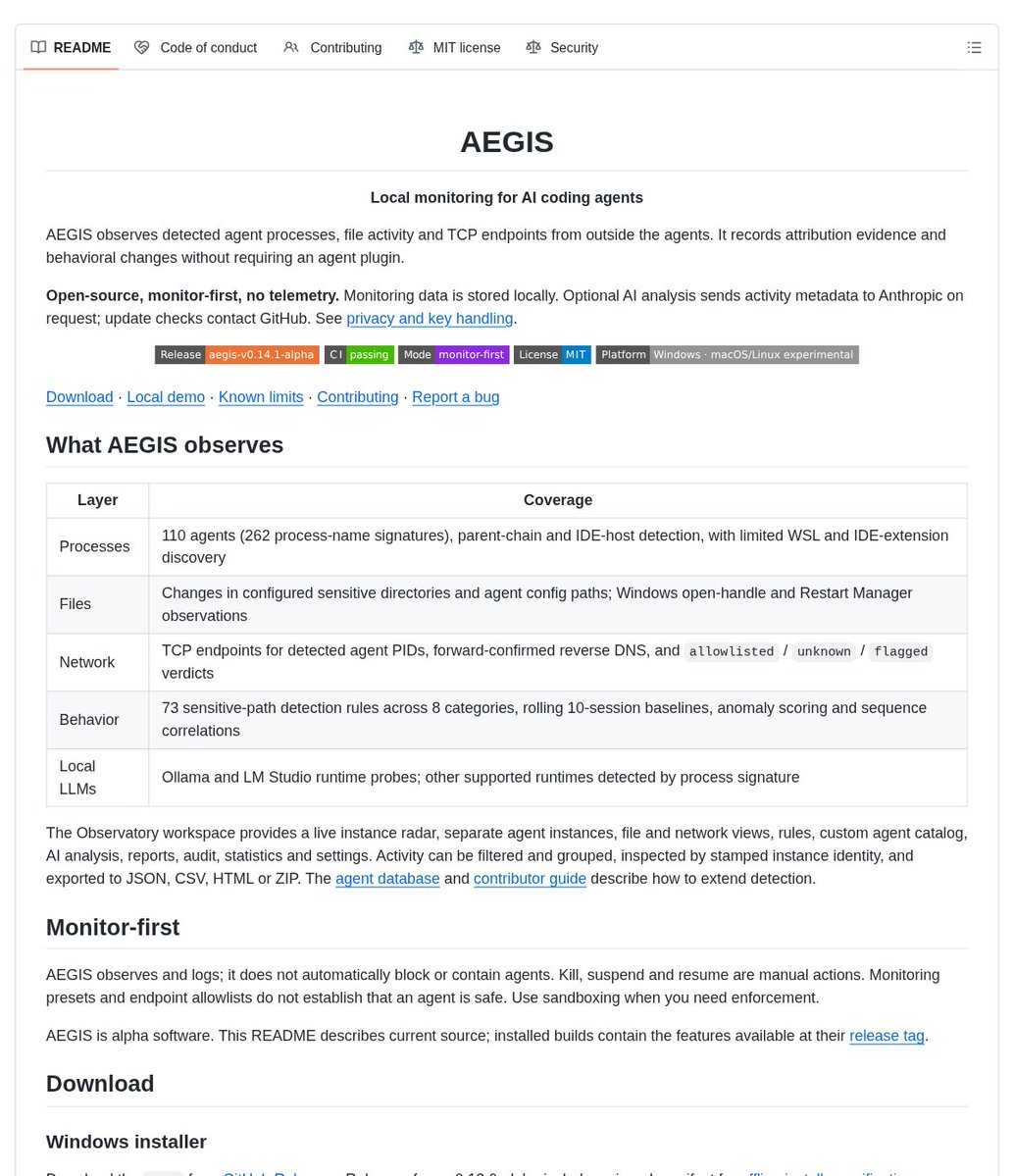
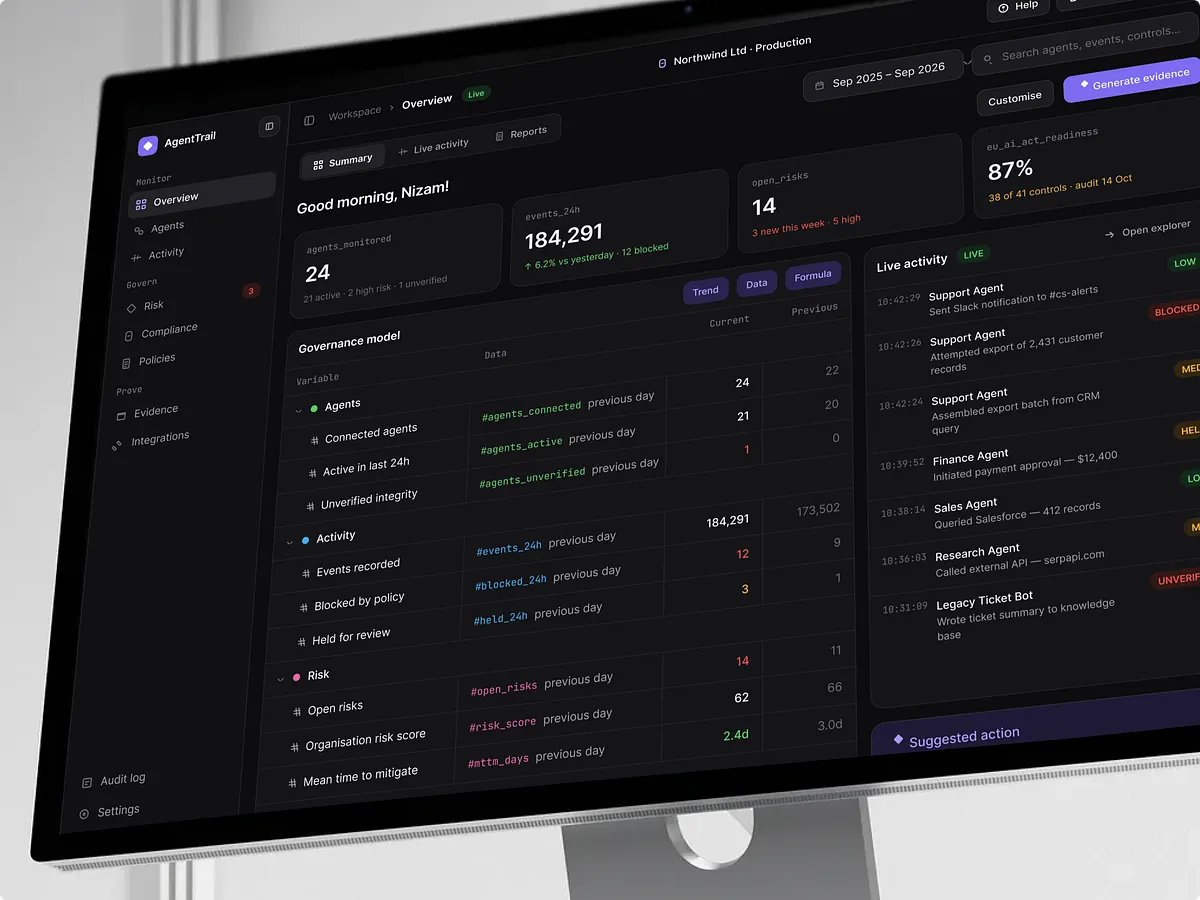
Security and observability posts pushed the same control instinct. @harleyfoote_ argued (50 likes, 3 replies, 131 views) that most security scans drown teams in CVEs while Hermes Shield instead shows what an agent actually exposes to the internet. @DanKornas argued (8 likes, 7 replies, 551 views) that AEGIS should watch agent processes, file activity, and TCP endpoints from outside the agent without requiring a plugin. @nizamdesign shared (10 likes, 4 replies, 151 views, 3 bookmarks) AgentTrail as an AI agent governance and audit platform, while @_avichawla argued (30 likes, 14 replies, 3,366 views, 34 bookmarks) that real AI debugging needs spans for embedding, retrieval, context assembly, and generation rather than final input/output alone.

Discussion insight: serious tooling kept moving control outside the agent itself: into monitors, traces, approvals, exports, and independent views that the worker cannot edit away.
Comparison to prior day: product references rose from 83 to 108 and security-related references rose from 94 to 99 versus 2026-09-15, making this the clearest growing product cluster besides marketplaces.
1.4 Replay, routing, and agent-native learning sharpened the research edge (🡕)
Research attention stayed focused on a narrower question than "make the model bigger": how do you reuse past runs, route only the context that matters, and recover from failure without trusting unconstrained retries?
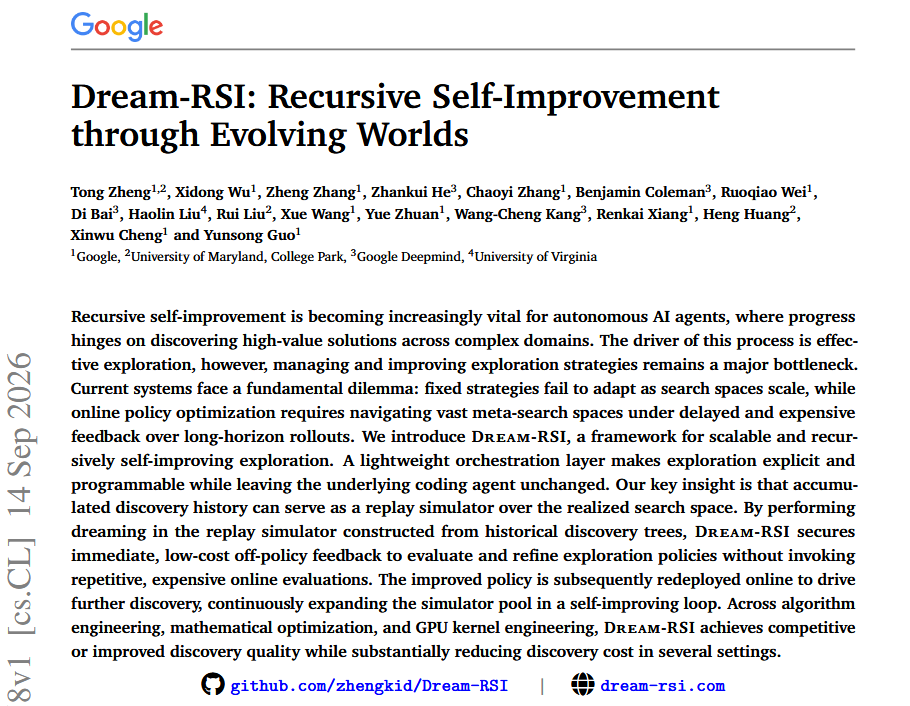
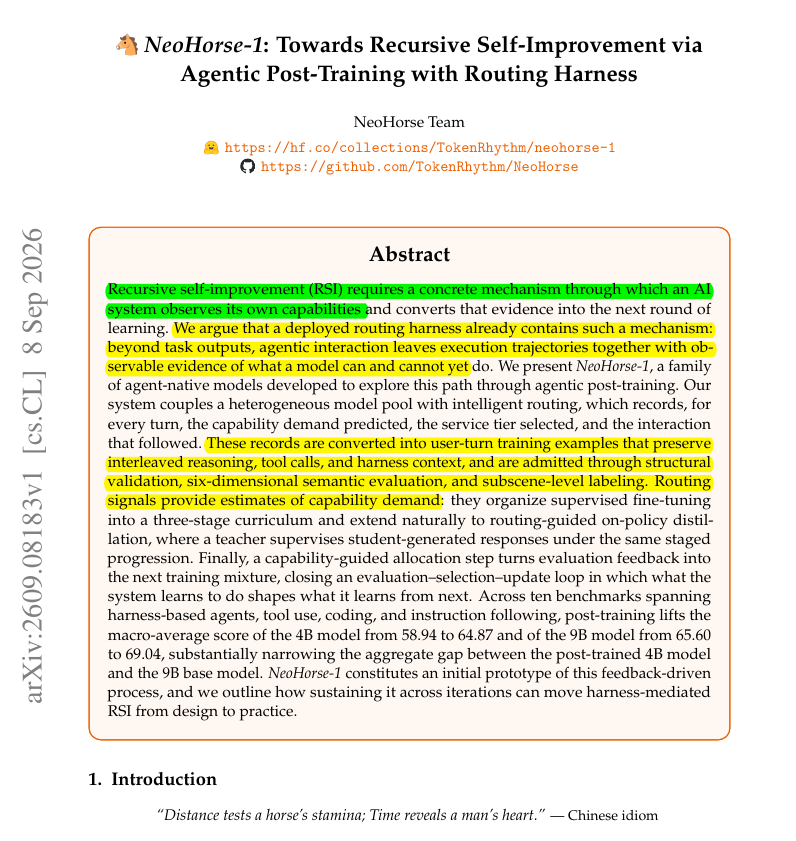
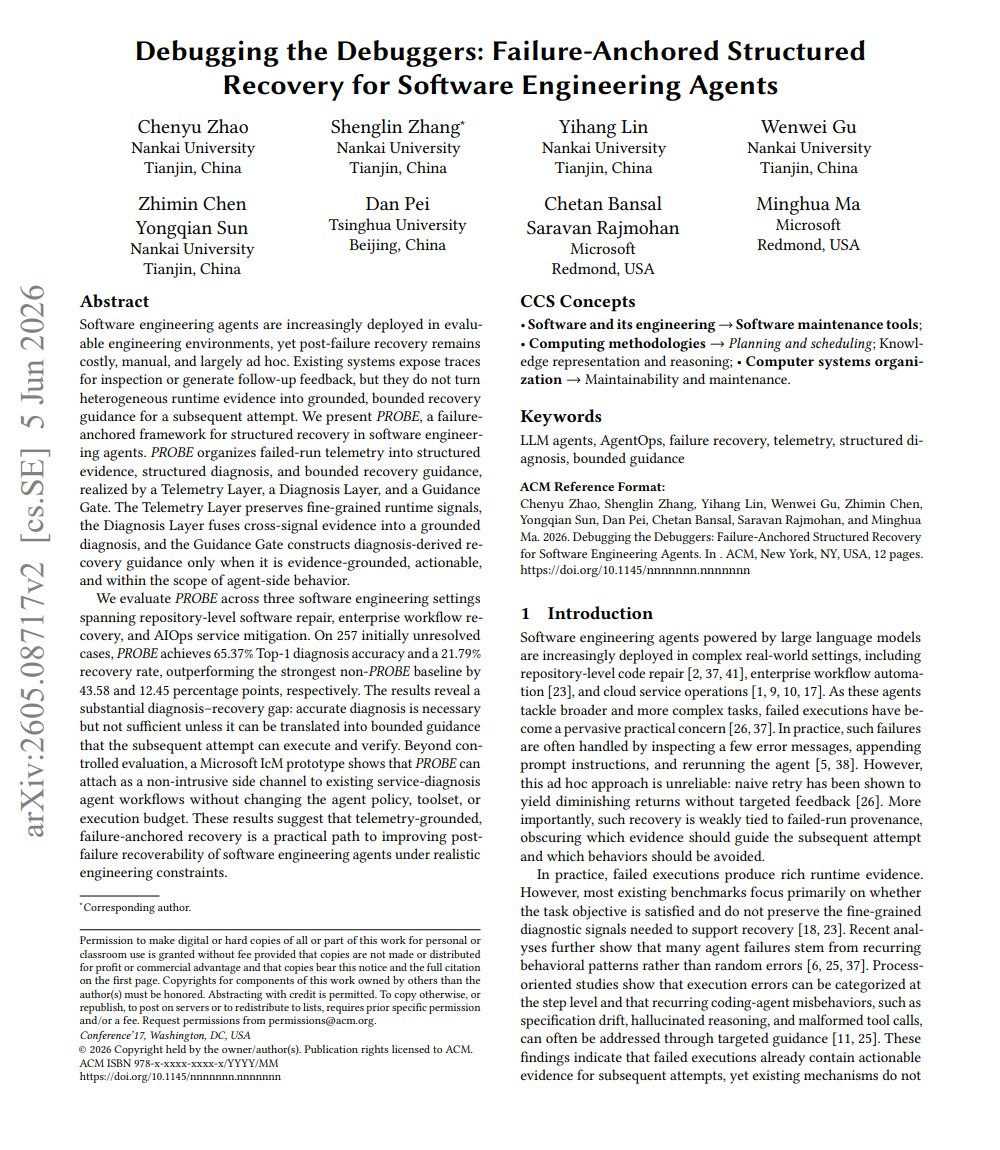
@Dr_Singularity reported (1,653 likes, 68 replies, 58,193 views, 555 bookmarks) that Dream-RSI improves an agent's exploration policy by replaying past discovery attempts in an offline simulator, and highlighted a result where it cut agent calls by up to 162x without changing model weights. @marfinxx argued (17 likes, 5 replies, 279 views, 8 bookmarks) that PROBE matters because 66.9% of autonomous coding-agent failures are process-level breakdowns, and because raw retries collapse unless recovery guidance is bounded around a concrete target, operation, verification signal, and stop condition. @rohanpaul_ai argued (13 likes, 2 replies, 3,356 views, 11 bookmarks) that NeoHorse-1 closes an early Data-RSI plus Model-RSI loop by training on structured execution trajectories rather than only question-answer pairs.
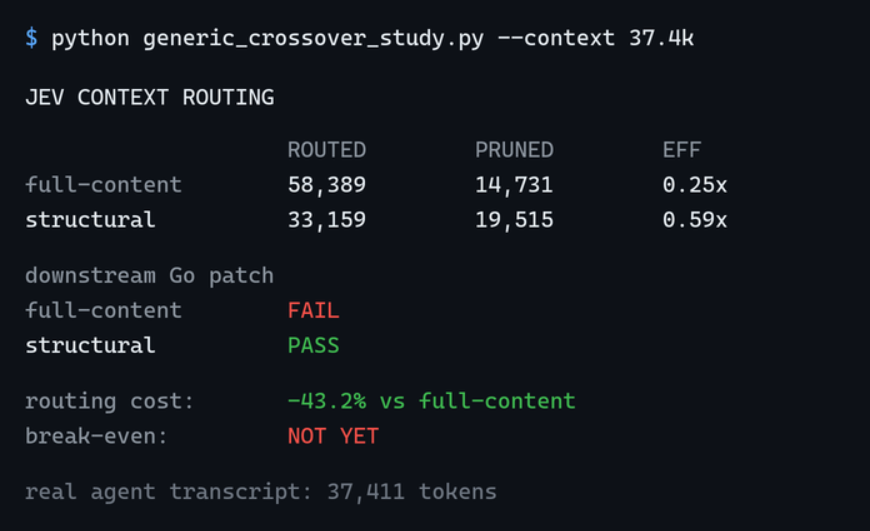
The memory and routing angle got sharper too. @leopardracer argued (6 likes, 1 reply, 81 views, 5 bookmarks) that a memory system can ace a benchmark and still fail the real workflow, and that a simple rules system nearly matched the tuned model once the interface and evaluation were fixed. @JoshARosen argued (47 likes, 5 replies, 2,814 views, 64 bookmarks) that Typesafe AI's Jev forced a rethink of software architecture, while @Ishwarinfra reported (2 likes, 2 replies, 17 views) a concrete routing experiment where a structural-evidence path produced a passing Go patch after a full-content path failed on the same transcript.
Discussion insight: the shared bet was selective reuse: replayed traces, structural evidence, filtered trajectories, and bounded recovery, not just longer undifferentiated context.
Comparison to prior day: research references held flat at 33 versus 2026-09-15, but the discussion became more concrete and more directly tied to coding-agent behavior.
2. What Frustrates People
Review capacity, not generation, still gates automation
Severity: High. The most grounded adoption posts kept circling back to the same problem: generating work is fast, but reading it, proving it, and recovering from bad runs is still expensive. @JacquelineSYC19 reported (436 likes, 42 replies, 58,061 views, 919 bookmarks) a team-wide Hermes rollout that centered cost and team-specific operating changes rather than model magic. @zachlloydtweets argued (281 likes, 24 replies, 67,359 views, 893 bookmarks) for crawl, walk, run adoption precisely because most teams do not yet know what should stay human-owned. @omarsar0 argued (80 likes, 47 replies, 11,560 views, 93 bookmarks) that multi-subagent setups mostly collapse into coordination cost once you go past a simple manager-worker pattern.
The common workaround was to shrink the moving parts: stage automation, keep worker counts low, separate authoring from monitoring, and force each loop to have a clear resume point and bounded rollback instead of hoping the next retry will be smarter.
Worth building for? Yes. This is a direct production pain point for teams trying to move from impressive demos to repeatable delivery.
Agent marketplaces still have more supply than buyer-side trust
Severity: High. The market threads were unusually explicit that listing more agents does not create an economy. @EyoAugusti73181 argued (87 likes, 78 replies, 739 views) that 584 service listings against 224 open requests and zero open bounties show a buy-side bottleneck, not a capability bottleneck. @CteaAminah argued (57 likes, 38 replies, 485 views, 1 bookmark) that a single reputation number cannot tell a buyer whether an agent is actually good at the specific job in front of them. @MdRahi444797 argued (80 likes, 67 replies, 358 views, 1 bookmark) that trust needs job histories, disputes, settlement, and stronger verification modes. @Navtq0808 reported (11 likes, 9 replies, 100 views) that even a $10 example order already needs escrow, delivery, verification, and a challenge window.
The workaround pattern was concrete: real budgets, narrow acceptance tests, task-specific reputation, and a credible unhappy path after delivery instead of profile-page vibes.
Worth building for? Yes. The demand is direct and the current implementations are still obviously incomplete.
The inside of the agent remains a security blind spot
Severity: High. Security posts did not complain about a lack of scanners; they complained about the wrong visibility model. @harleyfoote_ argued (50 likes, 3 replies, 131 views) that normal scans bury teams in CVEs while the more useful question is what the agent actually exposes to the internet. @DanKornas argued (8 likes, 7 replies, 551 views) that AEGIS should watch processes, files, and network activity from outside the agent because the agent's own logs are not a trustworthy control plane. @hackernoon highlighted (1 like, 2 replies, 277 views) that vector search is not a tenant boundary, and that pre-filtering, provenance, and tenant isolation are necessary to stop cross-tenant memory leaks. @offsectraining shared (1 like, 1 reply, 1,189 views, 1 bookmark) attack training built around manipulated embeddings and multi-agent workflow exploits.
The visible workaround was to move observation and evidence outside the worker: local-first monitors, span-level traces, tenant boundaries, and explicit exports that let humans inspect what happened after the fact.
Worth building for? Yes. This looked less like optional tooling and more like missing safety infrastructure.
Teams still overfit demos, benchmarks, and memory loops to the wrong environment
Severity: Medium to High. Several of the sharper research threads were really complaints about evaluation mismatch. @leopardracer argued (6 likes, 1 reply, 81 views, 5 bookmarks) that a memory system improved from 0/9 to 9/9 on the benchmark and then dropped to 5/12 in the real system until the data and interface were rebuilt, while a far simpler rules system still hit 23/24 utility on the corrected setup. @Dr_Singularity reported (1,653 likes, 68 replies, 58,193 views, 555 bookmarks) Dream-RSI as a way to reuse past discovery attempts cheaply, but even that framing implies that the replay world must stay faithful enough not to teach the wrong lesson. @marfinxx argued (17 likes, 5 replies, 279 views, 8 bookmarks) that diagnosis without bounded actionability keeps agents trapped in failure loops, and @rohanpaul_ai argued (13 likes, 2 replies, 3,356 views, 11 bookmarks) that the useful training signal is the structured trajectory itself, including failure and recovery.
The workaround pattern was consistent: keep a simple baseline, validate against live-like tasks, and only promote memories or training signals that survive contact with the real workflow.
Worth building for? Yes, but only if the product owns the evaluation surface as well as the memory or training loop.
3. What People Wish Existed
Verifier-first harnesses with bounded recovery and current-state proof
The clearest unmet need was not another agent shell; it was a control layer that can tell teams whether a result is still current, what failed, and what the next recovery step is allowed to touch. @zachlloydtweets argued (281 likes, 24 replies, 67,359 views, 893 bookmarks) for staged factory adoption, but the replies treated verification as the real gate between walk and run. @suraj_sharma14 turned (44 likes, 12 replies, 2,132 views, 59 bookmarks) evals into release-blocking projects rather than dashboards. @marfinxx argued (17 likes, 5 replies, 279 views, 8 bookmarks) for a recovery gate that specifies target, operation, verification signal, and stopping criteria. The Artie and subagent threads added the operational reason why: once multiple agents are involved, cheap generation only makes proof and rollback more valuable. Opportunity: Direct.
Portable, task-specific reputation and settlement rails
People were not asking for a prettier agent directory. They were asking for a way to define work, prove delivery, challenge bad results, and carry job-specific reputation forward. @EyoAugusti73181 argued (87 likes, 78 replies, 739 views) that demand creation is the scarce role in agent markets. @MdRahi444797 argued (80 likes, 67 replies, 358 views, 1 bookmark) that reputation must attach to completed work, disputes, and verifiable activity. @CteaAminah argued (57 likes, 38 replies, 485 views, 1 bookmark) that buyers need a skill map rather than a universal score, and @Navtq0808 showed (11 likes, 9 replies, 100 views) that even the smallest real transaction already needs escrow, verification, and a challenge path. Opportunity: Direct.
Outside-in observability and tenant-safe memory for deployed agents
The safety threads read like a specification for infrastructure that the agent itself should not control. @harleyfoote_ argued (50 likes, 3 replies, 131 views) for exposure-based prioritization rather than generic scan noise. @DanKornas argued (8 likes, 7 replies, 551 views) for local-first process, file, and network observation. @_avichawla argued (30 likes, 14 replies, 3,366 views, 34 bookmarks) that retrieval, context assembly, and generation need separate spans if you want to debug real systems. @hackernoon highlighted (1 like, 2 replies, 277 views) tenant isolation and provenance as memory-layer requirements, while @offsectraining shared (1 like, 1 reply, 1,189 views, 1 bookmark) concrete attack classes against modern AI pipelines. Opportunity: Direct.
Selective memory, routing, and trace reuse that decides what deserves to survive
The research cluster repeatedly asked for systems that learn from prior runs without blindly promoting everything into context or fine-tuning. @Dr_Singularity reported (1,653 likes, 68 replies, 58,193 views, 555 bookmarks) Dream-RSI as replay-based strategy improvement. @rohanpaul_ai argued (13 likes, 2 replies, 3,356 views, 11 bookmarks) for training on structured execution traces. @leopardracer argued (6 likes, 1 reply, 81 views, 5 bookmarks) that simple rules can nearly match a tuned system when the evaluation is honest, and @Ishwarinfra reported (2 likes, 2 replies, 17 views) a case where structural evidence beat full transcript stuffing. This need is real, but active builders are already attacking it from memory, routing, and model-training directions. Opportunity: Competitive.
4. Tools and Methods in Use
| Tool | Category | Sentiment | Strengths | Limitations |
|---|---|---|---|---|
| Hermes | Team agent harness | (+) | Strongest public team-adoption signal of the day; supports team-specific setups and turns agents into shared operating infrastructure | Still leaves cost, review, and rollout discipline to the team using it |
| Crawl / walk / run software factory | Adoption pattern | (+) | Gives teams a staged path from local assistance to automated cloud execution | Does not solve proof, rollback, or reviewer scarcity by itself |
| One-manager-one-worker subagents | Coordination pattern | (+/-) | Useful for research, review, and context separation without much extra machinery | Deeper trees quickly add coordination cost and quality drag |
| Claude chat + Cowork merge | Durable agent workspace | (+/-) | Makes long-running delegation and quick interaction feel like one product instead of separate modes | Rollout is gradual and the cost / limits model remains a live concern |
| Dream-RSI | Replay-based self-improvement | (+) | Improves exploration policy from past runs and can slash online search cost without weight updates | Only as good as the fidelity of the replay world and its evaluation |
| PROBE | Failure-recovery sidecar | (+) | Treats diagnosis, telemetry, and bounded recovery as a structured layer rather than raw retries | Requires extra tracing, schemas, and guidance-gate machinery |
| Opik-style span tracing | Observability | (+) | Makes retrieval, context, latency, and cost failures legible per span | Observation alone does not prevent unsafe or low-quality actions |
| TermiX / AACP | Agent commerce rails | (+/-) | Combines service listings, escrow, verification, settlement, and emerging reputation signals | Buyer demand is still thin and reputation is not yet precise enough |
| Hermes Shield | Exposure scanner | (+) | Prioritizes the attack surface the agent actually exposes instead of generic CVE volume | Prioritization is not the same as containment or policy enforcement |
| AEGIS | Local-first agent observability | (+) | Outside-in process, file, and TCP attribution with exportable evidence | Monitoring stops short of automatic containment |
| AgentTrail | Governance and audit UI | (+/-) | Turns dense governance data into something a human can scan | Evidence so far is early-stage and mostly product-teaser level |
The strongest enthusiasm went to tools that narrowed the decision surface instead of generating more text. @suraj_sharma14 framed (44 likes, 12 replies, 2,132 views, 59 bookmarks) release gates, traces, chaos tests, and error budgets as the real eval stack, while @_avichawla argued (30 likes, 14 replies, 3,366 views, 34 bookmarks) that the useful layer is the trace span where retrieval or assembly failed. @harleyfoote_ argued (50 likes, 3 replies, 131 views) for prioritization by exposure, not by vulnerability count.
Mixed sentiment clustered around subagents and markets. @omarsar0 argued (80 likes, 47 replies, 11,560 views, 93 bookmarks) that subagents remain a useful primitive, but only inside a tightly controlled coordination pattern. @EyoAugusti73181 argued (87 likes, 78 replies, 739 views) and @CteaAminah argued (57 likes, 38 replies, 485 views, 1 bookmark) that current market rails still need better demand formation and finer-grained trust signals.
Common workarounds were smaller worker topologies, acceptance-test-driven jobs, outside-in monitoring, span-level traces, challenge windows, and approval flows that treat agent output as a draft until someone or something independent verifies it.
5. What People Are Building
| Project | Who built it | What it does | Problem it solves | Stack | Stage | Links |
|---|---|---|---|---|---|---|
| Team-specific Hermes deployments at Artie | @JacquelineSYC19 on Hermes from @NousResearch | Turns a coding-agent harness into daily team infrastructure instead of one engineer's personal tool | Personal agent success does not automatically translate into an org-wide operating model | Hermes harness, team-specific setups, shared workflows | Shipped (internal) | tweet |
| TermiX / agent.family market rails | @termix_ai plus ecosystem posters | Lets agents publish services, clients post work, funds enter escrow, and jobs move through verification and settlement | Agent capabilities are hard to buy, verify, and pay for safely | Onchain identity, service listings, escrow, verification, settlement, reputation | Beta | market, tweet |
| Hermes Shield | @harleyfoote_ | Shows what an agent actually exposes to the internet | Generic security scans create too much unactionable noise | Internet-exposure scanning and prioritization | Shipped | tweet, site |
| AEGIS | @DanKornas | Local, monitor-first observability for coding agents | Builders cannot secure or debug agents they cannot independently observe | Process detection, file watches, TCP attribution, local-first storage, exports | Alpha | tweet |
| AgentTrail | @nizamdesign | Governance and audit views for agent behavior | Governance and audit are hard to review quickly once agents span multiple surfaces | Dashboard UI, governance views, audit trails | Alpha | tweet |
| Content studio pipeline | @Vladic_ETH | Builds a source-aware, approval-aware content production workflow instead of a one-click generator | Clients need provenance, approvals, cost controls, and editable scenes, not just output files | Multi-model pipeline, source tracking, cost cards, scene comments, version approvals | Alpha | tweet |
| NeoHorse-1 / OpenSquilla | @OpenSquilla via @rohanpaul_ai | Agent-native models trained on execution traces and outcomes | Most agent systems discard their best training data after each run | Qwen3.5 base, harness trajectories, Data-RSI + Model-RSI loop, API delivery | Beta | tweet |
The strongest repeated build pattern was control around the output rather than more autonomy inside it. Hermes deployments, AEGIS, AgentTrail, Hermes Shield, and Vladic's content studio all put their product value in approvals, evidence, visibility, or acceptance boundaries.
A second build pattern was treating traces and transactions as reusable assets. TermiX tries to turn deliveries and settlements into market reputation, while NeoHorse-1 turns execution trajectories into future training data instead of throwing them away after one run.

6. New and Notable
Dream-RSI made replay-based self-improvement the day's clearest research breakout
@Dr_Singularity reported (1,653 likes, 68 replies, 58,193 views, 555 bookmarks) that Dream-RSI replays past discovery attempts offline to improve the exploration policy rather than the base model weights. That mattered because it made recursive improvement sound less like sci-fi and more like a harness problem: collect history, build a simulator, search cheaply, then only spend online calls on better candidates.
The follow-on novelty was how quickly people connected that framing to other trajectory ideas. @rohanpaul_ai argued (13 likes, 2 replies, 3,356 views, 11 bookmarks) that NeoHorse-1 does something adjacent by training on tool-use traces and recovery paths, while @leopardracer argued (6 likes, 1 reply, 81 views, 5 bookmarks) that even strong benchmark gains are suspect unless they survive the real system.
Claude's merged chat-plus-delegation experience pushed durable handoff into the mainstream
@bcherny reported (729 likes, 100 replies, 101,949 views, 145 bookmarks) that Claude chat and Cowork are merging into one experience. That is notable less because "agents can do work" is new, and more because a mainstream product is now explicitly packaging quick interaction and long-running delegated work as the same surface.
@Vladic_ETH reported (21 likes, 8 replies, 384 views, 13 bookmarks) the stricter builder version of the same idea: if the handoff is real, the system needs provenance, budgets, approval steps, and clean intervention points. The user-facing merge and the builder-facing pipeline both point to the same product truth: durable handoff matters more than another chat button.
A monitor-first security stack started to crystallize
@harleyfoote_ argued (50 likes, 3 replies, 131 views) for exposure-first scanning, @DanKornas argued (8 likes, 7 replies, 551 views) for outside-in local observation, @nizamdesign shared (10 likes, 4 replies, 151 views, 3 bookmarks) a governance dashboard surface, and @_avichawla argued (30 likes, 14 replies, 3,366 views, 34 bookmarks) for span-level failure visibility.
That is notable because the posts were no longer generic "AI security" warnings. They described a stack: exposure scan, local telemetry, audit UI, retrieval/context tracing, and training for attacks against embeddings or multi-agent workflows.
Selective context got more concrete than "bigger windows"
@JoshARosen argued (47 likes, 5 replies, 2,814 views, 64 bookmarks) that Jev forces a rethink of AI architecture, and the replies under that thread kept pushing toward typed boundaries, reversible actions, and cheaper control-loop decisions. @Ishwarinfra reported (2 likes, 2 replies, 17 views) a very small but concrete example where structural evidence beat raw full-context stuffing on a coding transcript. @mirku21 argued (14 likes, 11 replies, 231 views, 7 bookmarks) the same shift at the harness level: the differentiator is no longer stuffing tools and text into the prompt, but managing clear runtime boundaries.
7. Where the Opportunities Are
[+++] Verifier-first harness control planes - The strongest pain came from the gap between agent output and ship-ready proof. @zachlloydtweets argued (281 likes, 24 replies, 67,359 views, 893 bookmarks) for staged factory adoption, @suraj_sharma14 turned (44 likes, 12 replies, 2,132 views, 59 bookmarks) evals into release gates, and @marfinxx argued (17 likes, 5 replies, 279 views, 8 bookmarks) for failure-anchored guidance gates. A product that owns current-state proof, rollback boundaries, and replayable evidence maps directly to today's complaints.
[+++] Buyer-side work definition, reputation, and settlement rails for agent markets - @EyoAugusti73181 argued (87 likes, 78 replies, 739 views) that the scarce resource is the client, not the provider. @MdRahi444797 argued (80 likes, 67 replies, 358 views, 1 bookmark) for portable proof-backed reputation, and @CteaAminah argued (57 likes, 38 replies, 485 views, 1 bookmark) for task-specific trust rather than one score. This is an unusually concrete market need.
[++] Local-first observability and agent security evidence - @harleyfoote_ argued (50 likes, 3 replies, 131 views) that exposure matters more than scan volume, @DanKornas argued (8 likes, 7 replies, 551 views) for independent observation, and @_avichawla argued (30 likes, 14 replies, 3,366 views, 34 bookmarks) that the useful debugging layer is the span. There is clear room for products that combine monitoring, provenance, export, and policy without asking the agent to self-report honestly.
[++] Selective memory, routing, and trace reuse - @Dr_Singularity reported (1,653 likes, 68 replies, 58,193 views, 555 bookmarks) replay-driven improvement, @rohanpaul_ai argued (13 likes, 2 replies, 3,356 views, 11 bookmarks) for trace-trained models, and @Ishwarinfra reported (2 likes, 2 replies, 17 views) a routing case where structure beat full context. This is promising, but more competitive because researchers and tool builders are already moving here fast.
[+] AI-native service delivery with approvals, provenance, and cost controls - @bcherny reported (729 likes, 100 replies, 101,949 views, 145 bookmarks) that durable handoff is becoming a mainstream UX, while @Vladic_ETH reported (21 likes, 8 replies, 384 views, 13 bookmarks) that real client work needs approvals, source tracking, cost cards, and version control around outputs. The opportunity is smaller than verifier or market rails, but the direction is clear.
8. Takeaways
- Harness differentiation kept moving away from prompts and toward operating discipline. Team-specific Hermes setups, staged software factories, and tightly bounded subagent topologies all treated the harness as the real product surface. (source, source, source)
- Agent markets became more credible when posters talked like clients instead of cheerleaders. The strongest signals were demand scarcity, explicit briefs, escrow, challenge windows, and task-specific reputation - not raw agent counts alone. (source, source, source)
- Security and observability moved outside the agent. The most useful products of the day were not asking the worker to explain itself; they watched exposure, files, sockets, retrieval spans, and audit evidence from independent surfaces. (source, source, source)
- The most interesting research was about selective reuse, not just bigger context. Dream-RSI, PROBE, NeoHorse-1, Jev, and the memory-benchmark critique all emphasized replay, routing, trajectories, and bounded recovery over brute-force context stuffing. (source, source, source, source)
- AI-native products increasingly sell proof, approvals, and settlement rather than a prettier chat box. Claude's unified handoff, monitor-first security tools, and approval-heavy content workflows all point in the same direction. (source, source)