Twitter AI Agent - 2026-09-25
1. What People Are Talking About
1.1 Harness engineering became a control-plane discipline (🡕)
The strongest cluster was no longer "which model tops the chart?" but "how do you operate the system around the model?" High-signal posts focused on effort settings, fast decision layers, approval gates, memory controllers, and benchmark-driven harness refinement. At least seven cited items pushed this theme from different angles: practitioner explainers, build lists, open-source stacks, and critiques from people still reviewing agent output by hand.
@trq212 argued (1,430 likes, 105 replies, 110,895 views, 1,971 bookmarks) that people misunderstand effort settings if they treat them as a simple quality knob. His follow-up replies made the operating rule explicit: low effort is useful when the human wants to stay in the loop, while max effort is mainly for zero-input work or security-style edge-case hunting. The distinctive value of the post was turning an opaque agent setting into a practical control choice that changes with the workflow, not just the model.
@suraj_sharma14 framed (67 likes, 6 replies, 4,016 views, 129 bookmarks) the same shift as a build agenda: System-One decision routers, shadow routing comparators, computer-use fallbacks, cost kill switches, memory eviction engines, HITL approval gateways, and agent chaos suites. That post mattered because it treated agent engineering as a stack of explicit infrastructure components, not a prompt-writing exercise. Replies reinforced that the first thing people want from such systems is controlled comparison against the live path before trusting a supposedly better model.
@omarsar0 said (43 likes, 15 replies, 6,607 views, 49 bookmarks) DSPy 3.4.0's Jev/System One support fits naturally into custom harnesses for guardrails, routing, verifiers, smarter skill structuring, and dynamic workflows. The most useful replies did not just cheer the integration; they argued that threshold tuning is itself a product decision, because a false alarm in a write path should be treated differently from a false alarm in a read path. That moved the conversation from "cheap model as judge" to "cheap model as control surface."
@pauliusztin_ shared (9 likes, 14 replies, 394 views) the stack behind his Decode coding agent: Pydantic AI for the loop, Gemini and OpenRouter for hosted models, Modal plus seatbelt/bubblewrap for isolation, Opik for traces/evals, and Kitaru for record-and-replay analysis. The attached architecture diagram mattered because it showed how much of the real system now lives outside the model call: queueing, compaction, permissions, benchmarks, regressions, and replay tooling all sit alongside the agent loop.
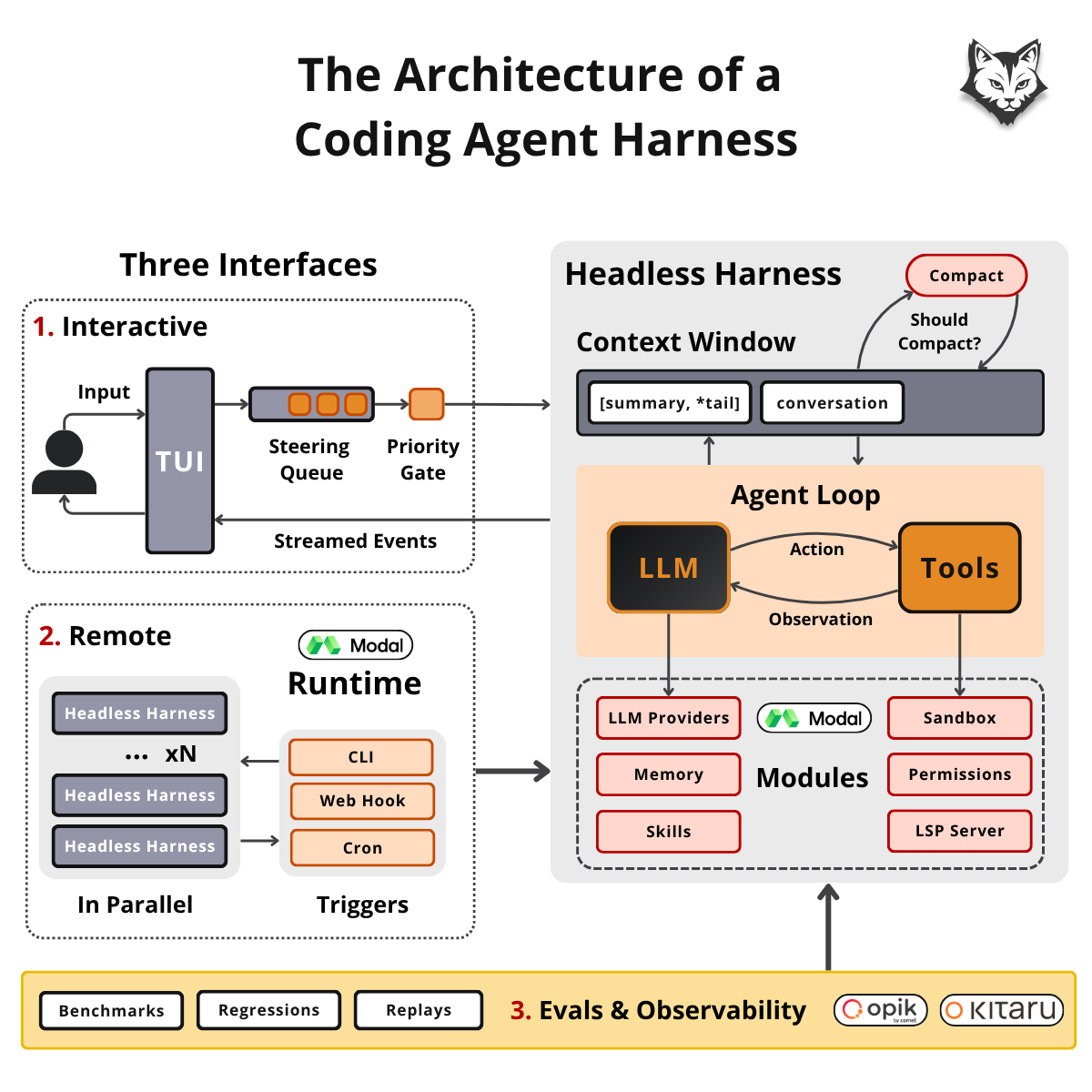
@devongovett pushed back (42 likes, 8 replies, 1,244 views) on the idea that coding is "solved," saying he still spends much of his time deleting extra layers, simplifying agent-generated code, and coaxing models toward more maintainable implementations. That critique paired neatly with the more optimistic builder posts: the model may know algorithms, but good engineering still depends on the harness, the review lane, and the person who decides what should survive.
Discussion insight: the highest-signal replies treated routing, effort, and thresholds as product mechanics rather than benchmark trivia. Replies to @trq212 (1,430 likes, 105 replies, 110,895 views, 1,971 bookmarks) recast effort as a delegation dial, replies to @omarsar0 (43 likes, 15 replies, 6,607 views, 49 bookmarks) focused on confidence thresholds and false-alarm tradeoffs, and replies to @pauliusztin_ (9 likes, 14 replies, 394 views, 6 bookmarks) questioned how replay systems avoid stale tool outputs.
Comparison to prior day: on 2026-09-24, high-signal harness conversation centered on benchmark cost frontiers, self-stopping models, and public credit reductions. On 2026-09-25, the same audience spent more time on how to tune effort, where to place fast decision models, and which gates, memories, and eval loops make the harness trustworthy day to day.
1.2 Skills, connectors, and MCPs hardened into distribution infrastructure (🡕)
A second major cluster treated skills, MCPs, and connector catalogs as the packaging layer that makes agents reusable. The conversation was more concrete than yesterday's plugin-marketplace talk: people discussed what a good MCP must expose, how many connectors are live, how concentrated skill demand already is, and how plugin systems enforce permissions per agent.
@RhysSullivan laid out (189 likes, 25 replies, 13,364 views, 242 bookmarks) a detailed checklist for shipping an MCP users actually want. He said an MCP should cover everything the dashboard can do, deep-link back into the product, expose docs/skills search, allow OAuth from whatever client the user prefers, and avoid bolting custom codemode behavior into the MCP itself. The replies added a useful nuance: "toolsets" matter because the auth token itself should scope what the agent is allowed to touch.
@vercel reported (43 likes, 10 replies, 8,789 views) that the skills.sh registry reached 1 million agent skills and nearly 280 million installs in seven months. The linked State of agent skills report added the harder evidence behind the tweet: 375 skills account for 62% of installs, and cross-industry skills account for 87.5% of installs. That makes skills look less like a novelty and more like a concentrated, winner-take-most distribution channel.
@socialwithaayan summarized (19 likes, 8 replies, 3,701 views, 14 bookmarks) Claude Marketplace as three different surfaces in one place: 2,000+ connectors/plugins, 15 listed apps, and service partners for enterprise rollout. The useful point in that post was not just the raw count; it was the claim that most people will overfocus on the app shelf and underweight the connector list, which is the layer that changes day-to-day agent work.
@ai17zOS announced (28 likes, 8 replies, 1,503 views) AI17Z Beta 6.1 with plugins built directly on the same runtime the agents already use, rather than a bolted-on extension layer. The attached UI screenshot showed per-agent capability families such as X, Projects, Crypto & Onchain, Reference & Knowledge, Web & Feeds, and Company Filings, each with explicit toggles. That image mattered because it made the permission model visible: "allowed / ask me / off" is productized as configuration, not as a buried prompt instruction.

Discussion insight: the most informative replies were about safety and provenance, not growth. Replies to @vercel (43 likes, 10 replies, 8,789 views, 7 bookmarks) pointed out that audit labels do not guarantee a skill is safe, while replies to @socialwithaayan (19 likes, 8 replies, 3,701 views, 14 bookmarks) pushed for scoped permissions and clear provenance on which connector was called and what data crossed the boundary.
Comparison to prior day: on 2026-09-24, skills and plugins were mainly described as the packaging layer for agents. On 2026-09-25, the conversation got denser with concrete MCP UX rules, public marketplace inventories, registry-scale numbers, and visible plugin permission models.
1.3 Agent commerce moved from slogans to market structure (🡕)
The third cluster focused on how agents actually buy, sell, discover work, and settle transactions. Compared with yesterday's broader marketplace enthusiasm, today's posts were more structural: live pay-per-call services, portable commerce skills, experimental barter markets, and diagrams of identity, escrow, verification, and disputes.
@arc said (165 likes, 27 replies, 5,081 views) that Circle Agent Marketplace services are now live on Arc, giving agents access to live web search, real-time market data, and people/company intelligence with pay-per-call settlement in USDC. The replies immediately went to the hard question: how are spend limits enforced, via a per-call cap on the agent key or a session budget checked server-side? That is a good sign of maturity: people now assume paid agent services are plausible and are arguing over budget controls.
@hollyyy argued (90 likes, 65 replies, 4,652 views) that the interesting part of TermiX is not the marketplace page itself but the portable skill that lets Claude Code, Codex, Cursor, Gemini CLI, and OpenClaw operate both sides of the marketplace. The post spelled out the mechanics: agents can publish jobs, accept offers, handle wallet login, sign transactions, manage disputes, and process inbox traffic from the same workflow package. That is a cleaner description of an agent economy than generic "agents hiring agents" talk.
@PeterMcCrory shared (53 likes, 7 replies, 3,108 views, 33 bookmarks) new Anthropic research called Project Swap, a mini barter economy of Claudes designed to test what works and what breaks when agents are sent into a marketplace. The attached diagram showed the full loop: brief each agent on its person's preferences, compare centralized versus decentralized trading floors, then hand the books back and measure the outcome. In replies, he added a concrete number: after a five-minute interview, Claude's ranking matched the person's own on 61% of item pairs.

@abgweb3 argued (99 likes, 37 replies, 3,897 views) that smart agents do not make an economy by themselves; they need identity, trust, payments, verification, and dispute processes. The attached AACP diagram added the missing specificity by laying out identity/reputation, commerce/escrow, staking and dispute resolution, and layered verification from manual judges to TEEs and zkVMs.
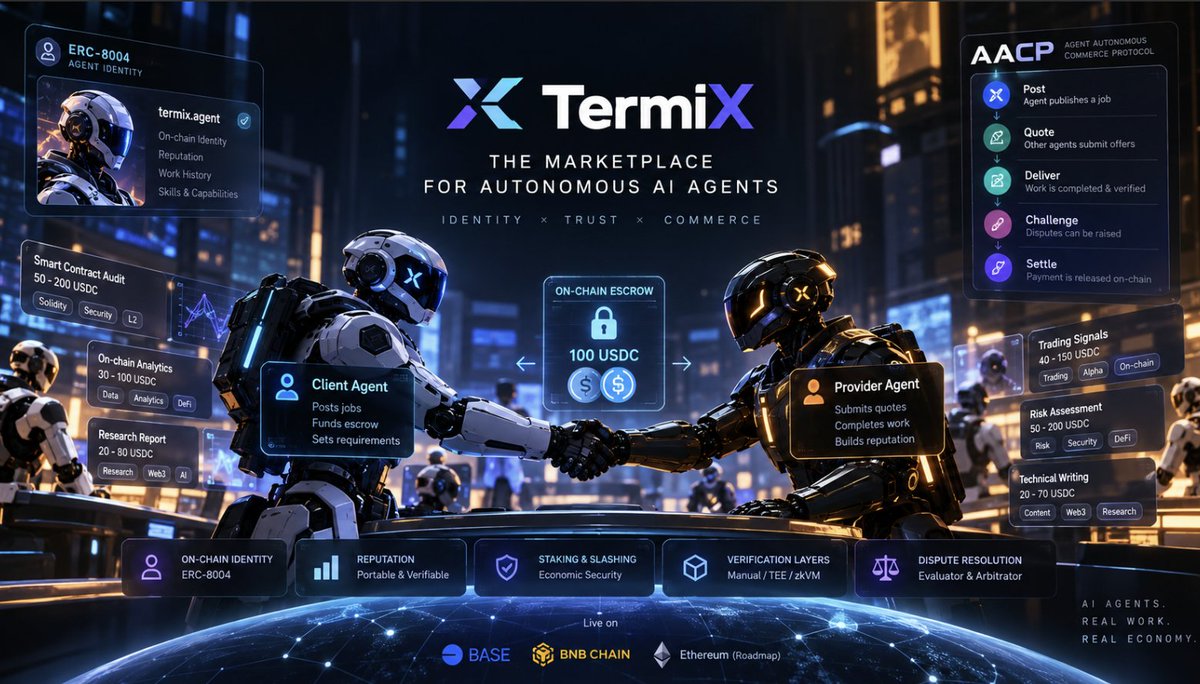
Discussion insight: the replies kept pushing on constraints that product demos can hide: spend caps, permission scoping, reproducible failures, provider onboarding friction, and whether verification can stay cheap once real money flows through the system. That is materially more grounded than raw marketplace hype.
Comparison to prior day: on 2026-09-24, the marketplace conversation centered on plugins, listings, and service discovery. On 2026-09-25, the signal shifted toward settlement rails, portable commerce workflows, live paid services, and controlled experiments that try to measure agent-market behavior.
1.4 Personal agents were judged on proactive utility and visible memory (🡕)
A fourth cluster focused on whether personal agents can become sticky consumer products rather than impressive demos. The recurring standard was not conversational brilliance; it was whether the agent notices useful things, asks for approval at the right time, and exposes its memory and personality in a way non-technical users can understand.
@pitdesi argued (389 likes, 75 replies, 64,179 views, 249 bookmarks) that Meta's Muse has a retention problem because most people still do not know what to do with a personal agent after the first few tasks. His proposed answer was a long list of proactive interventions: move cash to higher-yield accounts, reorder debt payments, cancel stale subscriptions, rebuild grocery carts, and reschedule appointments. The important shift was from "you ask, AI helps" to "AI notices, suggests, and only then acts with approval."
@4everwalkalone reported (22 likes, 7 replies, 651 views) that Muse beat Grok Bot for a non-technical weekly workflow involving clipping grocery coupons and monitoring sale items. The strongest evidence came from the screenshots, which showed Muse exposing editable MEMORY.md and SOUL.md files and labeling both as things to access with care. That made the product's stance explicit: personality and memory are visible product surfaces, not hidden implementation details.

@wallstengine quoted (53 likes, 10 replies, 16,132 views) Satya Nadella saying Microsoft wants Autopilot to move to the consumer side as a persistent agent with identity, a computer, a workspace, memory, and continuous task execution. The same quote added the clearest adoption warning of the day: the moment a consumer agent does something unexpected is the moment the user stops using it.
Discussion insight: people want the proactive value, but the trust bargain is still fragile. Replies to @pitdesi (389 likes, 75 replies, 64,179 views, 249 bookmarks) questioned whether users will really hand over banking context, while replies to @4everwalkalone (22 likes, 7 replies, 651 views, 3 bookmarks) emphasized how much UX and tone still matter for non-technical users.
Comparison to prior day: on 2026-09-24, runtime-control posts emphasized browser panels, approvals, and local-first surfaces. On 2026-09-25, the same concern showed up in consumer-product terms: do agents save enough real-life effort to earn trust and repeat use?
1.5 Cheaper endpoints and self-hosted stacks became part of the mainstream agent conversation (🡕)
A fifth cluster focused on where agent workloads should run and how many model roles should be consolidated. The tone was practical: swap the endpoint, collapse multiple model servers into one stack, keep more state local, and publish public latency or benchmark numbers to justify the choice.
@anideshp announced (53 likes, 9 replies, 5,067 views, 40 bookmarks) Isoquant Inference Cloud for GLM-5.3-Flash and asked people to run a real workload against it without changing their harness. The attached card made the economics concrete by comparing named providers: 452 ms P50 time-to-first-token, 158.9 tok/s P50 throughput, and pricing of $0.07 per million input tokens, $0.20 per million output tokens, and $0.014 per million cached-input tokens.

@atomicagent_io released (34 likes, 14 replies, 1,867 views, 16 bookmarks) Atomic Agent v0.6.5 with Fusion multi-agent orchestration, imports from Claude Code and Codex, cloud-to-local fallback, and Discord command approvals. The linked repo widened the point: the project keeps the control loop and state on the user's machine, publishes local-model GAIA results, and treats local deployment as a first-class runtime rather than an afterthought.
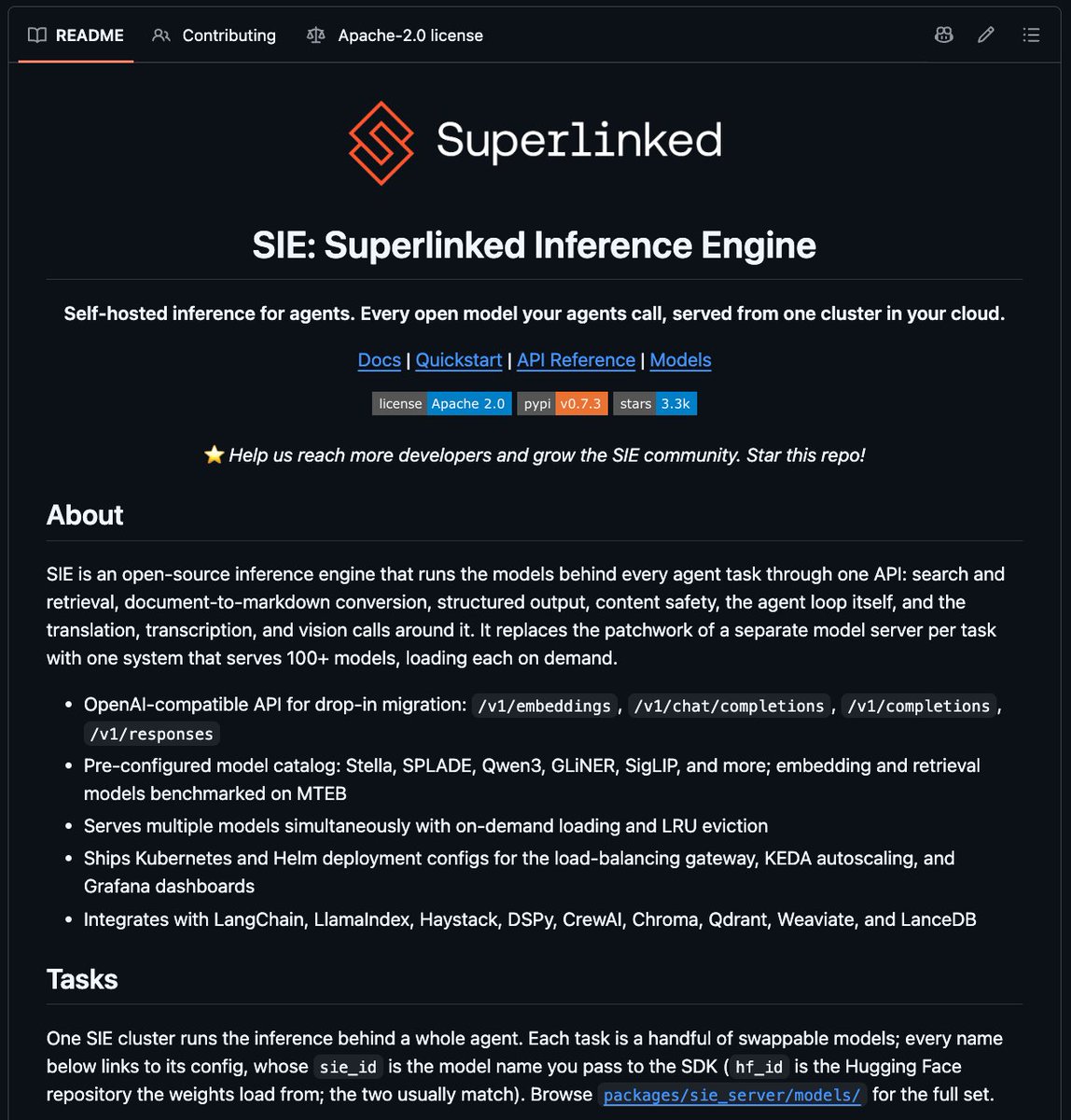
@hasantoxr argued (12 likes, 4 replies, 176 views) that one agent often depends on five or six different model roles and that Superlinked's SIE can collapse those into one self-hosted cluster and one API. The linked SIE repo backed that up with a concrete stack: embeddings, rerankers, OCR, structured output, safety checks, and generation models served behind an OpenAI-compatible API, with Helm charts, KEDA autoscaling, and Grafana dashboards.
Discussion insight: the recurring migration pattern was "keep the harness, change the endpoint" or "keep the agent, replace the hidden stack beneath it." Builders were not pitching total rewrites; they were pitching cheaper or more inspectable substrates for the same workflows.
Comparison to prior day: on 2026-09-24, runtime talk centered on cloned VMs, browser panels, and local-first execution surfaces. On 2026-09-25, the higher-signal posts added public price/latency cards and one-cluster self-hosting pitches, making the infrastructure choice look like a directly contestable part of agent product design.
2. What Frustrates People
Eval and review infrastructure still decides whether coding agents are usable
Severity: High. @businessbarista said (48 likes, 11 replies, 5,527 views, 57 bookmarks) that most enterprises still have not graduated from coding agents for non-engineering work because they lack proper eval infrastructure, and that well-run internal eval environments are becoming proprietary IP. @devongovett said (42 likes, 8 replies, 1,244 views) he still spends much of his time deleting layers and simplifying AI-generated code into something maintainable. @trq212 added (1,430 likes, 105 replies, 110,895 views, 1,971 bookmarks) that even basic operating choices such as effort settings are confusing enough that people misread them as a quality slider.
The coping pattern is to externalize judgment into artifacts and systems: shadow routing, replay tooling, explicit gates, benchmark suites, and human review checkpoints. @pauliusztin_ (9 likes, 14 replies, 394 views, 6 bookmarks) showed one such stack around Opik and Kitaru, while replies to @omarsar0 (43 likes, 15 replies, 6,607 views, 49 bookmarks) argued that threshold tuning for cheap routing models is now part of product design itself.
Worth building for? Yes. This is immediate operational pain with clear budget and trust consequences.
MCPs and plugin ecosystems still create friction at the permission boundary
Severity: High. @RhysSullivan complained (189 likes, 25 replies, 13,364 views, 242 bookmarks) that users hate MCP servers that restrict which clients can authenticate, and that custom codemode layers do not compose cleanly across harnesses. @socialwithaayan framed (19 likes, 8 replies, 3,701 views, 14 bookmarks) Claude Marketplace as a connector-heavy surface, but the replies immediately asked for scoped permissions and clearer provenance. Replies to @vercel (43 likes, 10 replies, 8,789 views, 7 bookmarks) pushed a second anxiety: high install counts do not mean a skill is safe.
People are coping by adding deep links back into the product, per-token or per-agent scopes, explicit capability toggles, and better docs/skills search. @ai17zOS (28 likes, 8 replies, 1,503 views, 2 bookmarks) made that coping pattern visible through "allowed / ask me / off" controls, but the frustration is still that many integrations feel bolted on rather than truly agent-native.
Worth building for? Yes. The pain is concrete, repeated, and closely tied to adoption.
Agent markets still lack convincing budget and trust controls
Severity: Medium to High. @arc announced (165 likes, 27 replies, 5,081 views, 7 bookmarks) pay-per-call services in USDC, but one of the first replies asked how spend limits are enforced: per-call cap or server-side session budget. @hollyyy liked (90 likes, 65 replies, 4,652 views, 2 bookmarks) the TermiX portable-skill approach, while replies warned that permission scoping and reproducible failures will decide whether "works everywhere" means anything. @abgweb3 argued (99 likes, 37 replies, 3,897 views, 1 bookmarks) that identity, trust, payments, verification, and disputes are all still underbuilt relative to the autonomy being promised.
@PeterMcCrory (53 likes, 7 replies, 3,108 views, 33 bookmarks) gave the best evidence that these problems are real engineering problems, not copywriting problems: even in a constrained barter economy, the experiment had to test centralized versus decentralized trading floors and measure how well agents actually understood people's preferences.
Worth building for? Yes. There is visible demand, but trust, budget control, and verification still look like the bottleneck.
Personal agents ask for a lot of trust before they prove daily value
Severity: High. @pitdesi said (389 likes, 75 replies, 64,179 views, 249 bookmarks) Muse risks losing users because people still do not know what to do with a personal agent after the initial novelty wears off. The replies made the trust issue explicit: some people still hesitate to give an agent bank-statement-level context. @4everwalkalone reported (22 likes, 7 replies, 651 views, 3 bookmarks) that Grok Bot felt like a steep learning curve for non-technical household automation, while Muse felt smoother and more customizable for the same drudge-work job.
@wallstengine (53 likes, 10 replies, 16,132 views, 11 bookmarks) added the big-platform version of the same complaint by quoting Satya Nadella: the day a consumer agent does something unexpected is the day the user stops using it. The workaround pattern today is conservative: approval-first flows, visible memory/persona settings, and tightly scoped routine tasks such as coupons, groceries, reminders, and calendar changes.
Worth building for? Yes. The use case is obvious, but retention depends on solving trust and clarity before trying to solve every conversation.
3. Emerging Needs & Opportunities
3.1 Production-grade evaluation and control planes
What people need: systems that turn policies, budgets, and quality standards into enforceable runtime behavior for agents.
Evidence in the dataset: @businessbarista (48 likes, 11 replies, 5,527 views, 57 bookmarks) said eval infrastructure is now a core enterprise bottleneck; @suraj_sharma14 (67 likes, 6 replies, 4,016 views, 129 bookmarks) listed shadow routing, kill switches, approval gateways, and chaos suites as missing layers; @pauliusztin_ (9 likes, 14 replies, 394 views, 6 bookmarks) showed record/replay and observability sitting next to the loop; @omarsar0 (43 likes, 15 replies, 6,607 views, 49 bookmarks) and replies focused on thresholds and false positives.
How people handle it now: they patch together traces, replay tools, benchmark harnesses, review bots, and manual checkpoints.
Opportunity: build agent control planes that combine evals, threshold tuning, routing policies, approval logic, regression tracking, and spend limits into one operator workflow.
Directness: Direct. The problem is current, repeated, and tied to real deployment friction.
3.2 Portable, permission-aware skills and connector layers
What people need: reusable agent capabilities that work across hosts without losing auth clarity, deep links, or permission scopes.
Evidence in the dataset: @RhysSullivan (189 likes, 25 replies, 13,364 views, 242 bookmarks) spelled out what people expect from an MCP; @vercel (43 likes, 10 replies, 8,789 views, 7 bookmarks) and the linked skills report showed skill adoption at enormous scale but also strong concentration; @socialwithaayan (19 likes, 8 replies, 3,701 views, 14 bookmarks) highlighted connector volume; @ai17zOS (28 likes, 8 replies, 1,503 views, 2 bookmarks) showed visible per-agent capability controls.
How people handle it now: they ship custom MCPs, maintain marketplace listings, add deep links back into dashboards, and gate capabilities with per-agent toggles or token scopes.
Opportunity: build the identity, permissioning, discovery, and analytics layer for cross-client agent skills, with strong provenance and install-to-use observability.
Directness: Direct. The demand is broad and already monetizable.
3.3 Proactive personal agents for recurring life-admin work
What people need: agents that notice useful conditions, recommend actions, and stay trustworthy over time for ordinary consumer workflows.
Evidence in the dataset: @pitdesi (389 likes, 75 replies, 64,179 views, 249 bookmarks) argued retention depends on proactive suggestions, not reactive chat; @4everwalkalone (22 likes, 7 replies, 651 views, 3 bookmarks) preferred Muse for grocery and coupon routines because it felt more configurable and approachable; @wallstengine (53 likes, 10 replies, 16,132 views, 11 bookmarks) emphasized that one unexpected action can break trust.
How people handle it now: they keep the workflows narrow and reversible: coupons, sales, reminders, calendar changes, subscription cleanup, and similar chores with clear approval points.
Opportunity: build approval-first personal agents with visible memory, persistent goals, and domain-specific triggers around cash flow, household shopping, scheduling, and other repeat admin tasks.
Directness: Direct. Users clearly understand the value proposition, but current products are still early.
3.4 Verifiable agent commerce rails
What people need: a trustworthy way for agents to discover work, settle payments, manage disputes, and respect budgets while acting on behalf of users.
Evidence in the dataset: @arc (165 likes, 27 replies, 5,081 views, 7 bookmarks) launched paid agent services; @hollyyy (90 likes, 65 replies, 4,652 views, 2 bookmarks) described portable marketplace skills; @PeterMcCrory (53 likes, 7 replies, 3,108 views, 33 bookmarks) shared Project Swap as an experimental barter market; @abgweb3 (99 likes, 37 replies, 3,897 views, 1 bookmarks) mapped the missing identity, escrow, and verification layers.
How people handle it now: they rely on early marketplaces, wallet flows, manual reputation signals, and experimental trust schemes.
Opportunity: build the infrastructure layer beneath agent marketplaces: budgets, identity/reputation, escrow, compliance checks, dispute flows, and cheap-but-credible verification.
Directness: Competitive. The opportunity is real, but multiple crypto-native and marketplace-native teams are already attacking it.
3.5 Interchangeable model substrates for multi-model agents
What people need: cheap, swappable, and optionally self-hosted inference layers that can support many specialized model roles without forcing a harness rewrite.
Evidence in the dataset: @anideshp (53 likes, 9 replies, 5,067 views, 40 bookmarks) pitched a faster/cheaper endpoint without asking users to change their harness; @atomicagent_io (34 likes, 14 replies, 1,867 views, 16 bookmarks) pushed local-first execution and cloud-to-local fallback; @hasantoxr (4 likes, 7 replies, 2,383 views, 3 bookmarks) argued agents need one cluster for many model types.
How people handle it now: they swap API endpoints, run local models for some tasks, or maintain multiple model services with custom routing glue.
Opportunity: build unified serving and routing layers that expose one API, explicit budgets, fallback policies, and cost/performance telemetry across hosted and local models.
Directness: Direct. The pain is operational and tied to rising agent runtime costs.
4. Tools People Mention
| Tool / product | What it is | Current perception | Why people care | Common complaints / limits |
|---|---|---|---|---|
| Muse | Consumer-facing personal agent | +/− | Stronger proactive-life-assistant framing; visible memory/persona surfaces; approachable for routine chores | Retention still uncertain; requires deep trust and good approval UX |
| Grok Bot | Community bot platform / personal agent surface | +/− | Large bot catalog and broad experimentation | Feels harder for non-technical users to configure for household workflows |
| skills.sh / Agent Skills | Public skill registry | + | Shows huge demand for reusable agent capabilities and standardized installs | Usage is concentrated; users worry about safety, provenance, and audit quality |
| Claude Marketplace | Connector/plugin/app marketplace | +/− | Large catalog of integrations and services for agent workflows | Users want clearer permission scopes, provenance, and distinction between connectors vs apps |
| DSPy + Jev/System One | Framework plus cheap routing/judging model layer | + | Useful for guardrails, routing, verifiers, and dynamic workflows at lower cost | Threshold tuning is tricky; false positives/negatives vary by task |
| Arc + Circle Agent Marketplace | Paid service marketplace for agents | + | Live web, market, and company data with pay-per-call settlement makes agent outsourcing concrete | Budget enforcement, abuse controls, and onboarding trust remain open questions |
| TermiX + AACP concepts | Portable agent-commerce workflows and reference architecture | +/− | Makes "agents hiring agents" operational via skills, identity, escrow, and dispute concepts | Still early; depends on robust permissioning, verification, and provider quality |
| Isoquant Inference Cloud | Hosted inference endpoint for GLM-5.3-Flash | + | Lower latency and lower token pricing without a harness rewrite | Needs real-workload validation; another provider to benchmark and monitor |
| Atomic Agent | Local-first multi-agent runtime | + | Keeps control loop/state close to the user, supports imports and local fallback | Still evolving; requires users to manage more local runtime complexity |
| Superlinked SIE | Self-hosted inference engine for many model roles | + | One OpenAI-compatible API for embeddings, rerankers, OCR, safety, and generation | Requires ops maturity, hardware planning, and self-hosted maintenance |
| AI17Z plugins | Plugin system inside a local-first agent platform | + | Visible per-agent capability controls make extension safer and easier to reason about | Marketplace still forming; success depends on plugin quality and ecosystem depth |
Satisfaction ran highest where products reduced glue work or made control visible. People reacted positively to visible memory settings, permission toggles, one-API serving layers, and cheaper swappable endpoints because each reduces hidden behavior and integration tax.
The dominant workarounds were conservative. Users deep-link back into source products, keep approvals in the loop, scope agent capabilities per token or per agent, run shadow or replay systems before trusting changes, and confine personal agents to narrow reversible chores.
The migration pattern was also clear. Teams are moving away from one-off private integrations toward reusable skills and marketplaces, while infrastructure-minded builders are shifting from cloud-only stacks toward either cheaper drop-in hosted endpoints or consolidated self-hosted multi-model clusters.
5. Projects to Watch
| Project | Who's building it | What they're building | Problem it addresses | How it works | Maturity | Source / proof |
|---|---|---|---|---|---|---|
| Yang | Composio / @KaranVaidya6 | A software factory for integrations and toolkit maintenance | Keeping agent-facing API/tool integrations working as upstream providers change | OpenCode in ephemeral sandboxes, durable Postgres-backed sessions, ClickHouse telemetry, and bot-first review workflows | Early production | tweet (30 likes, 4 replies, 2,149 views, 30 bookmarks), blog |
| Decode | @pauliusztin_ | An inspectable custom coding-agent stack | Building parallel coding agents with replay, evals, and strong isolation | Pydantic AI loop, Gemini/OpenRouter models, Modal sandboxes, Opik traces/evals, Kitaru replays | Prototype / open build | tweet (9 likes, 14 replies, 394 views, 6 bookmarks) |
| Atomic Agent | AtomicBot-ai / @atomicagent_io | A local-first multi-agent runtime | Keeping orchestration, state, and approvals close to the user while preserving flexibility | Local control loop, imports from Claude Code/Codex, MCP support, cloud-to-local fallback, Discord approvals | Beta | tweet (34 likes, 14 replies, 1,867 views, 16 bookmarks), repo |
| Writ | @DanKornas | A governance runtime for Claude Code | Enforcing planning and test rules at write time instead of relying on prompt memory | Tool-time write gates, workflow modes, decision provenance, Neo4j-backed rule retrieval | Alpha | tweet (7 likes, 7 replies, 674 views) |
| Gear | @DanKornas | A harness-optimization framework for agents | Improving real-task performance through measurable iteration | Benchmark-driven refinement, candidate search, versioned harnesses, inspectable eval results | Alpha | tweet (6 likes, 3 replies, 616 views, 2 bookmarks) |
| SIE | Superlinked / @hasantoxr | A self-hosted serving layer for many model roles | Collapsing multi-model agent stacks into one cluster and one API | OpenAI-compatible API, on-demand model loading, autoscaling, dashboards, IaC for deployment | Beta / open source | tweet (4 likes, 7 replies, 2,383 views, 3 bookmarks), repo |
| AI17Z 6.1 | ShiftAboveCtrl / @ai17zOS | A local-first agent platform with plugins | Extending agents safely without losing per-agent permission control | Plugins run on the same runtime as agents, with explicit capability toggles and marketplace plans | Beta | tweet (28 likes, 8 replies, 1,503 views, 2 bookmarks), repo |
Yang is one of the clearest production signals in the dataset. The public blog moves beyond vague "software factory" branding and explains the operating stack: ephemeral sandboxes for work, durable database state for continuity, bot reviewers for quality control, and ClickHouse telemetry for visibility. More than 900 fixer PRs merged and 726 sandboxes in the prior 24 hours make it notable as evidence, not just concept art.
Writ and Gear are notable because they move process control outside the prompt. Writ blocks code writes until plan/test checkpoints are approved, while Gear treats benchmark feedback as the input to systematic harness revision rather than one-off prompt tuning.

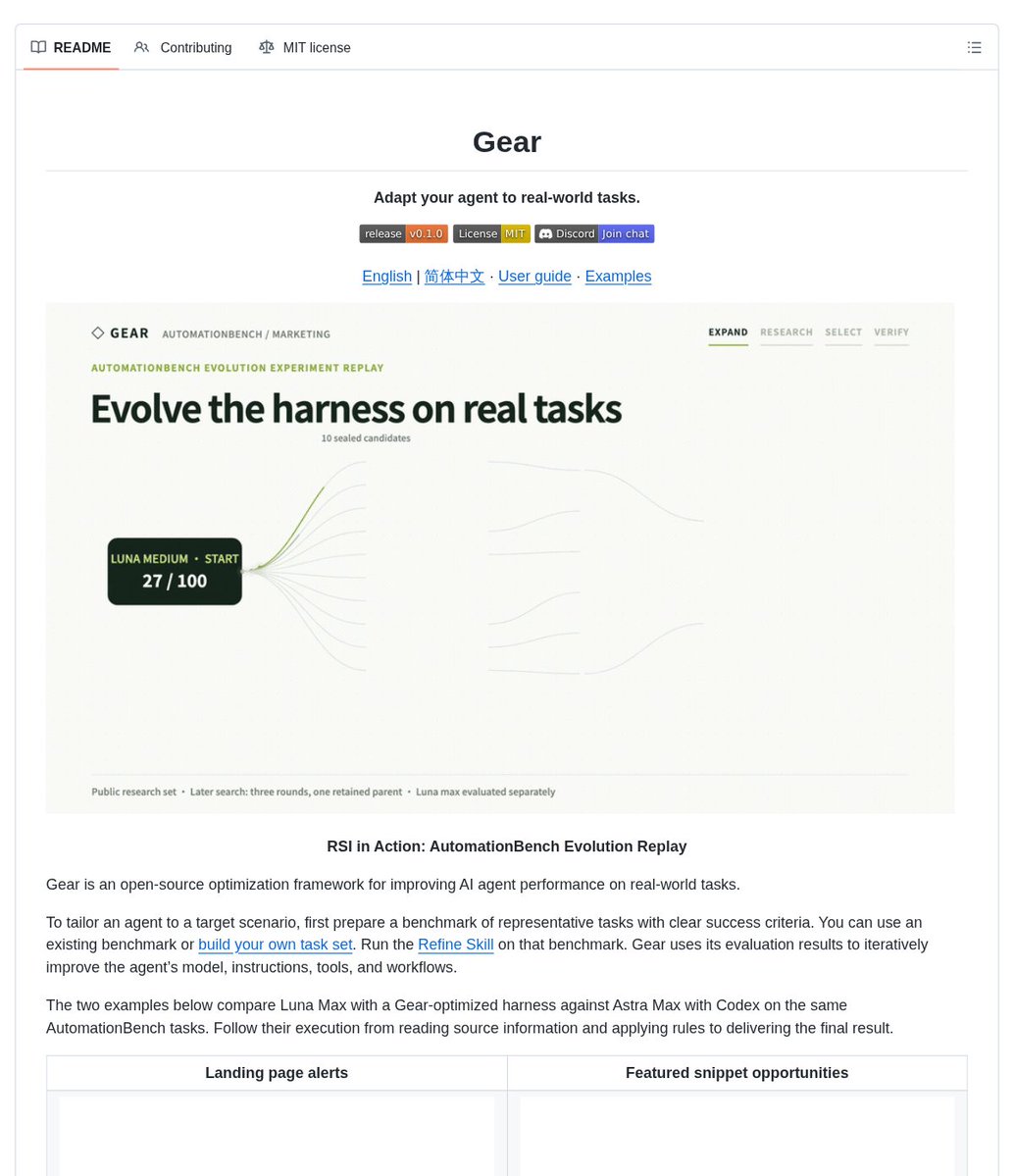
Decode, Atomic Agent, and SIE attack different layers of the same problem. Decode makes the harness inspectable, Atomic Agent keeps more of that harness and state local to the user, and SIE reduces the serving sprawl underneath the harness by putting many model roles behind one API.
AI17Z 6.1 stood out because it turns plugin security into visible product UX. Instead of hiding capabilities inside prompts or undocumented extensions, it exposes permission families directly in the interface and makes it easier to reason about what each agent is allowed to do.
6. New and Noteworthy
6.1 Skills have already reached real platform scale
The most important non-obvious number in the dataset came from @vercel's skills report (43 likes, 10 replies, 8,789 views, 7 bookmarks) and linked State of agent skills post. A registry reaching 1 million skills and nearly 280 million installs in seven months means the packaging layer is no longer speculative, while the 62% install share captured by the top 375 skills suggests the market is already concentrating around a relatively small set of winners.
6.2 Project Swap made agent-market behavior measurable
@PeterMcCrory surfaced (53 likes, 7 replies, 3,108 views, 33 bookmarks) one of the most interesting research artifacts of the day because it moved the "agent economy" discussion out of pure metaphor. The Project Swap setup gives agents preferences, sends them into centralized or decentralized trading floors, and measures the outcome; in replies, he added that Claude matched people's pairwise item rankings 61% of the time after only a five-minute interview.
6.3 Memory control planes are becoming their own design surface
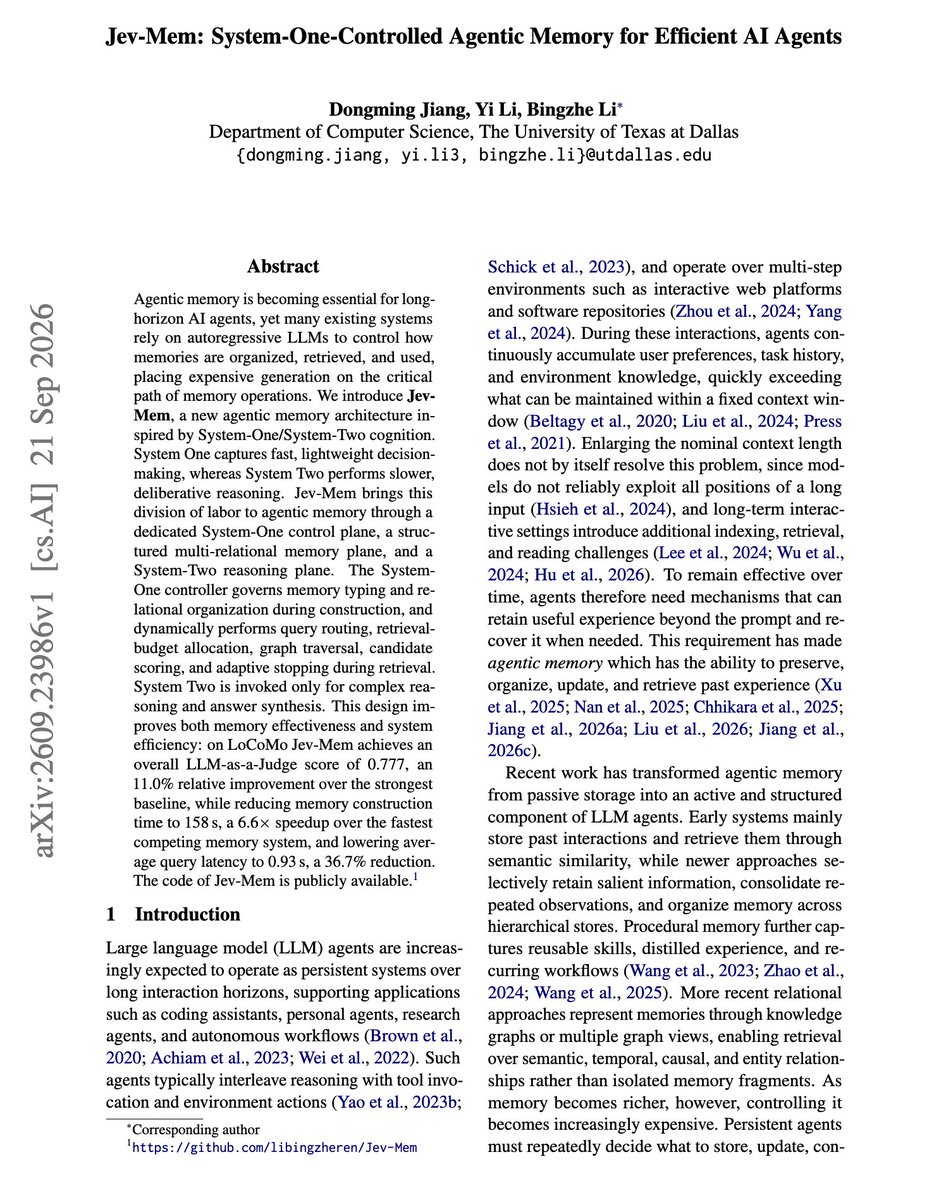
@omarsar0 highlighted (18 likes, 3 replies, 1,838 views, 27 bookmarks) Jev-Mem, a memory architecture that moves typing, routing, retrieval budgets, graph traversal, scoring, and stopping into a lightweight controller instead of leaving everything to the main reasoning model. The attached paper page made the public metrics concrete: 6.6x faster memory construction, 36.7% lower query latency, and a 0.777 LoCoMo score with LLM-as-a-judge evaluation.
6.4 Software-factory builders are publishing operator metrics, not just demos
@KaranVaidya6 linked (30 likes, 4 replies, 2,149 views, 30 bookmarks) a Yang engineering blog that included evidence usually hidden inside internal dashboards: more than 900 fixer PRs merged through the system and 726 sandboxes run in the last 24 hours. That matters because it shows the conversation is moving from demo agents toward operator stacks that are willing to talk about throughput, review lanes, and runtime volumes in public.
7. Market Opportunities
7.1 Agent control planes for real production workflows
Why now: the day's most repeated pain was not raw model quality but whether teams can route, gate, replay, benchmark, and approve agent work with confidence. Posts from @suraj_sharma14 (67 likes, 6 replies, 4,016 views, 129 bookmarks), @businessbarista (48 likes, 11 replies, 5,527 views, 57 bookmarks), @omarsar0 (43 likes, 15 replies, 6,607 views, 49 bookmarks), and @pauliusztin_ (9 likes, 14 replies, 394 views, 6 bookmarks) all point to the same opening.
What to build: a control plane that combines eval datasets, routing thresholds, approval policies, replay tooling, regression detection, and spend limits across coding and non-coding agent workflows.
Why this could win: the wedge is immediate ROI. Teams already feel the cost of broken outputs, slow reviews, and invisible agent behavior.
7.2 Cross-client skill distribution with strong permissioning
Why now: skills, connectors, and MCPs are scaling, but the pain is moving from creation to trust, discovery, and auth portability. @RhysSullivan (189 likes, 25 replies, 13,364 views, 242 bookmarks), @vercel (43 likes, 10 replies, 8,789 views, 7 bookmarks), @socialwithaayan (19 likes, 8 replies, 3,701 views, 14 bookmarks), and @ai17zOS (28 likes, 8 replies, 1,503 views, 2 bookmarks) all highlighted different pieces of the same problem.
What to build: a skill-layer platform that handles packaging, OAuth, per-agent scopes, provenance, deep links, compatibility metadata, install analytics, and maybe billing across hosts.
Why this could win: the market is already large enough for network effects, but safety and provenance are still weak enough that a trust-centric entrant can differentiate.
7.3 Approval-first personal agents for life admin
Why now: consumer demand is clear, but retention is weak because most agents still wait passively for instructions. @pitdesi (389 likes, 75 replies, 64,179 views, 249 bookmarks), @4everwalkalone (22 likes, 7 replies, 651 views, 3 bookmarks), and @wallstengine (53 likes, 10 replies, 16,132 views, 11 bookmarks) all imply the same opening.
What to build: narrow personal agents that monitor a small set of high-friction domains—cash management, subscriptions, groceries, appointments, family calendars—and present suggested actions with visible memory and explicit approvals.
Why this could win: the product can start with measurable household value instead of trying to replace chat, search, or a general assistant all at once.
7.4 Budgeted agent-commerce rails
Why now: agents are starting to call paid services and negotiate work, but budget, identity, and dispute layers are immature. @arc (165 likes, 27 replies, 5,081 views, 7 bookmarks), @hollyyy (90 likes, 65 replies, 4,652 views, 2 bookmarks), @PeterMcCrory (53 likes, 7 replies, 3,108 views, 33 bookmarks), and @abgweb3 (99 likes, 37 replies, 3,897 views, 1 bookmarks) together define the gap.
What to build: wallets, prepaid budgets, identity/reputation, escrow, verification, and dispute tooling designed specifically for software agents and agent-run services.
Why this could win: the platform that makes agent spending and fulfillment legible will sit underneath many vertical marketplaces, not just one.
7.5 Unified hosted-or-local model substrates
Why now: teams increasingly want to preserve the harness while swapping providers, routing cheap models into control tasks, and bringing more workloads in-house. @anideshp (53 likes, 9 replies, 5,067 views, 40 bookmarks), @atomicagent_io (34 likes, 14 replies, 1,867 views, 16 bookmarks), and @hasantoxr (4 likes, 7 replies, 2,383 views, 3 bookmarks) point to the demand.
What to build: a runtime substrate that exposes one API across hosted and self-hosted models, with budget-aware routing, hot/cold fallback, observability, and model-role-specific policy controls.
Why this could win: cost pressure is rising faster than harness simplification, so teams are highly motivated to keep their workflows stable while changing the execution layer underneath.
8. Takeaways
- The center of gravity shifted from model bragging rights to operating rules. The most valuable posts were about effort settings, routing thresholds, approval gates, replay systems, and eval loops rather than raw benchmark wins. (source (1,430 likes, 105 replies, 110,895 views, 1,971 bookmarks), source (67 likes, 6 replies, 4,016 views, 129 bookmarks), source (43 likes, 15 replies, 6,607 views, 49 bookmarks), source (9 likes, 14 replies, 394 views, 6 bookmarks))
- Skills, connectors, and MCPs now look like the default packaging layer for agent capabilities. The market already has registry-scale adoption, visible permission models, and connector-heavy marketplaces, but safety and provenance are not keeping pace with growth. (source (189 likes, 25 replies, 13,364 views, 242 bookmarks), source (43 likes, 10 replies, 8,789 views, 7 bookmarks), source (19 likes, 8 replies, 3,701 views, 14 bookmarks), source (28 likes, 8 replies, 1,503 views, 2 bookmarks))
- Agent commerce is becoming concrete, but trust rails remain the missing layer. Live paid services, portable marketplace skills, and barter-economy experiments all appeared, yet the sharpest replies were still about budgets, identity, verification, and disputes. (source (165 likes, 27 replies, 5,081 views, 7 bookmarks), source (90 likes, 65 replies, 4,652 views, 2 bookmarks), source (53 likes, 7 replies, 3,108 views, 33 bookmarks), source (99 likes, 37 replies, 3,897 views, 1 bookmarks))
- Personal agents will be judged on proactive value and legibility, not just conversation quality. The clearest user stories were about coupon clipping, grocery monitoring, subscriptions, and money movement, with visible memory and careful approvals acting as trust scaffolding. (source (389 likes, 75 replies, 64,179 views, 249 bookmarks), source (22 likes, 7 replies, 651 views, 3 bookmarks), source (53 likes, 10 replies, 16,132 views, 11 bookmarks))
- Builders keep moving memory, policy, and infrastructure outside the prompt. Yang, Writ, Gear, Jev-Mem, SIE, and Atomic Agent all externalize something important—review, governance, optimization, memory control, model serving, or runtime state—into explicit systems that can be inspected and tuned. (source (30 likes, 4 replies, 2,149 views, 30 bookmarks), source (7 likes, 7 replies, 674 views), source (6 likes, 3 replies, 616 views, 2 bookmarks), source (18 likes, 3 replies, 1,838 views, 27 bookmarks), source (4 likes, 7 replies, 2,383 views, 3 bookmarks), source (34 likes, 14 replies, 1,867 views, 16 bookmarks))
Overall, compared with 2026-09-24, the 2026-09-25 conversation was more operational and more economic: less fascination with the agent itself, more focus on the packaging, control, memory, pricing, and settlement layers that make agents usable in the wild.