Twitter AI Agent - 2026-10-07
1. What People Are Talking About
1.1 Subagents and outer-loop supervision moved from theory into personal operating practice ↑
The dominant conversation on 2026-10-07 was no longer whether agents should be orchestrated, but how much structure is worth keeping once the base model gets stronger. Multiple high-signal posts treated subagents, reusable harnesses, and supervisor loops as normal operating practice rather than speculative architecture.
@beamnxw packaged (1,755 likes, 57 replies, 287,667 views, 6,035 bookmarks) a Karpathy-inspired Opus 5.5 prompt together with a linked seven-layer harness guide, turning harness setup itself into shareable, reusable content. The replies mattered almost as much as the post: several readers treated the prompt as a practical shortcut, while others pushed back that strong models should not need this much manual ceremony.
@championswimmer argued (145 likes, 14 replies, 16,506 views, 365 bookmarks) that subagents in one session stopped feeling like overkill once Opus 5.5 got strong enough, then pointed readers toward his pi-subagent-manager project. That post was useful because it framed orchestration as a pragmatic mix-and-match layer across Claude, Codex, and OpenRouter rather than a grand multi-agent ideology.
@BHolmesDev described (166 likes, 20 replies, 8,627 views, 205 bookmarks) an inner loop where agents build the product and an outer loop where other agents score conversations, detect wasted tool calls, and propose skill changes. The attached diagram made the point concrete: teams are starting to treat agent quality control as its own recurring job.
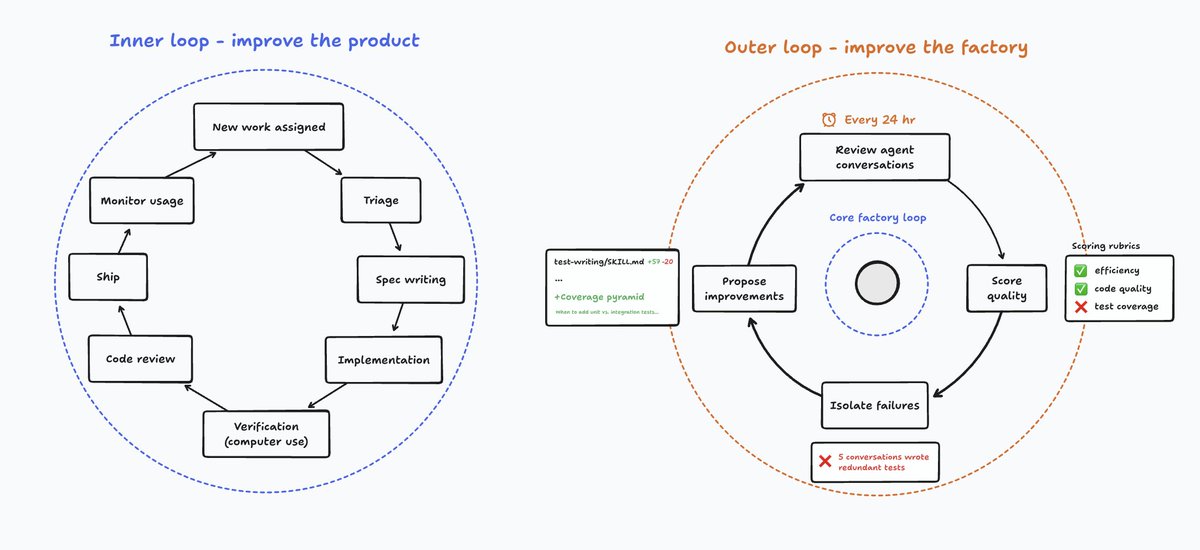
Discussion insight: The most interesting shift was from "more agents" to "which agents supervise the other agents." The day's stronger posts emphasized scoring, retries, handoffs, and reusable skills rather than simple agent counts.
Comparison to prior day: On 2026-10-06, the conversation centered on company-wide operating systems for agents. On 2026-10-07, that same logic showed up in more personal, builder-level form: subagent managers, outer-loop gardeners, and reusable harness packs.
1.2 A counter-trend emerged: stronger models may need less harness, not more ↑
The second major theme pushed in the opposite direction. Several well-supported posts argued that recent gains are coming from stronger models with shell and file access, while some older multi-agent scaffolding is becoming redundant or even harmful.
@rohanpaul_ai summarized (67 likes, 25 replies, 4,384 views, 42 bookmarks) an Apple paper claiming that a well-prompted coding agent with shell and file access matched or beat four multi-agent ML systems under equal time and hardware budgets. In the linked paper, the minimal agent reaches a 62.5 percent any-medal rate on MLE-bench versus 47.1 percent for the best external harness, making the argument hard to dismiss as mere opinion.

A lower-reach but highly informative post from @ADarmouni highlighted (1 reply, 76 views, 1 bookmark) Microsoft Research's terminal-centric CUAWright approach, where the model gets a shell, a manageable file system, and locally saved screenshots instead of an image-first GUI loop. The companion paper reports improvements on OSWorld 2.0, Online-Mind2Web, Odysseys, CADGenBench, and BenchCAD.

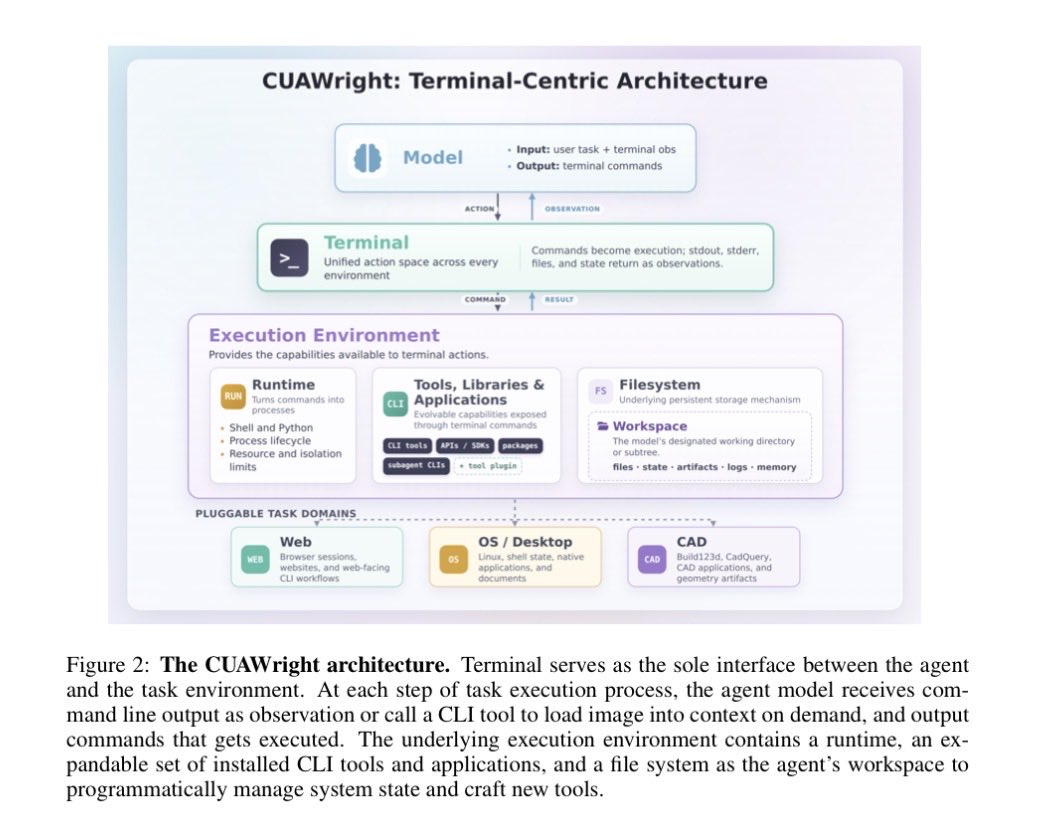
Discussion insight: The strongest replies did not reject harnesses entirely. They drew a new line: keep external verification, tests, and file-backed state, but stop assuming that search trees, message buses, and specialist swarms automatically help once the core model can run tools directly.
Comparison to prior day: On 2026-10-06, harness engineering mostly meant adding control, memory, and verification around the model. On 2026-10-07, the debate sharpened into a more uncomfortable question: which layers still earn their complexity now that the model can read, write, and execute.
1.3 Skills became the preferred format for packaging domain expertise, especially on iOS ↑
A third theme was the rise of skills as the unit of reusable expertise. Instead of long prompt blog posts or bespoke internal notes, builders increasingly shipped focused skills tied to a platform, design problem, or workflow.
@twostraws announced (30 likes, 3 replies, 1,834 views, 33 bookmarks) version 2.0 of his SwiftUI Agent Skill, explicitly positioning it as advice hardened by real-world testing on recent iOS hardware and influenced by Apple's own skills. The repo itself is already a meaningful artifact, with roughly 5,100 stars.
@jaimintf collected (23 likes, 1 reply, 574 views, 40 bookmarks) five iOS-focused skill repositories in one post: Expo Skills, Appllama Skills, emilkowalski/skills, Vercel Agent Skills, and twostraws' SwiftUI skill. The ecosystem behind that short tweet is not tiny: those repos range from a few thousand stars to well over 30,000, which suggests that "skills" have become a serious distribution surface rather than a temporary naming fad.
Discussion insight: The interesting split here was between general-purpose skill packs and domain-native ones. The iOS/mobile branch looked especially strong, which implies that AI coding usage is moving toward narrower, taste-heavy domains where encoded conventions matter.
Comparison to prior day: The prior day emphasized agent operating systems inside teams. The 2026-10-07 shift was more modular: turn expertise into installable skills, then let different agents reuse the same playbook.
1.4 Memory and infrastructure became more concrete: facts, power budgets, and Git bottlenecks ↑
The infrastructure conversation also deepened. Instead of talking about memory or scaling in the abstract, posts linked concrete repos, formulas, and platform numbers.
@RoundtableSpace shared (25 likes, 6 replies, 40,907 views, 28 bookmarks) vectorize-io/hindsight, describing 1.4 billion Opus 5.5 tokens of iteration behind an open-source memory framework. Hindsight's public docs describe typed fact retention, entity resolution, and dense, sparse, graph, and temporal retrieval, which is much closer to knowledge infrastructure than to a simple prompt-injection trick.
@github reported (173 likes, 27 replies, 31,966 views, 104 bookmarks) that Git activity reached 473.3 billion events per month and linked its engineering write-up on building Git infrastructure for agent-scale development. The core message was that agentic software development is now stressing the substrate badly enough that GitHub is rebuilding storage and write paths while the service stays live.
@FredaDuan reframed (34 likes, 7 replies, 7,371 views, 52 bookmarks) agent compute math as users times tasks per user times agents per task times model steps per agent, separating sandbox CPU from head-node CPU and treating subagents as a first-order demand multiplier rather than a rounding error.
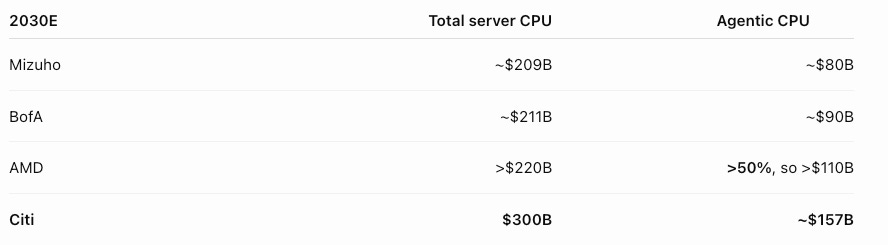
Discussion insight: Persistent memory, compute planning, and platform throughput all started to look like the same class of problem: long-running agent work needs infrastructure that can remember state, absorb retries, and keep write-heavy workflows fast.
Comparison to prior day: On 2026-10-06, infrastructure appeared mostly as governance and environment setup. On 2026-10-07, it became more physical and measurable: repo-scale event growth, CPU attach rates, model-step budgets, and structured memory backends.
1.5 Agent commerce got louder, but the strongest posts focused on trust mechanics rather than hype ↑
Agent commerce stayed one of the loudest clusters in raw volume, but the best evidence came from posts that moved beyond generic marketplace enthusiasm into identity, disputes, and fee structure.
@Kenz_1604 argued (87 likes, 103 replies, 299 views) that a wallet plus a Discord server may be enough to demo an agent, but not enough to make that agent a credible counterparty. The thread focused on .agent identity, escrow, stake, and settlement history as the pieces that turn a bot into something another agent or buyer can trust.

@elenalin01 pressed (32 likes, 33 replies, 468 views, 22 bookmarks) on the economics instead of the pitch, noting that a $1 job with a 2 percent protocol fee still has to absorb inference, runtime, retries, and revisions. @Girlgym67 described (55 likes, 49 replies, 6,185 views) a dispute flow with random evaluators and bonds that burn on failed challenges, while @Jimmyyweb3 mapped (3 likes, 3 replies, 32 views) a non-custodial escrow architecture where client deposits settle through AACP contracts rather than through a centralized treasury.
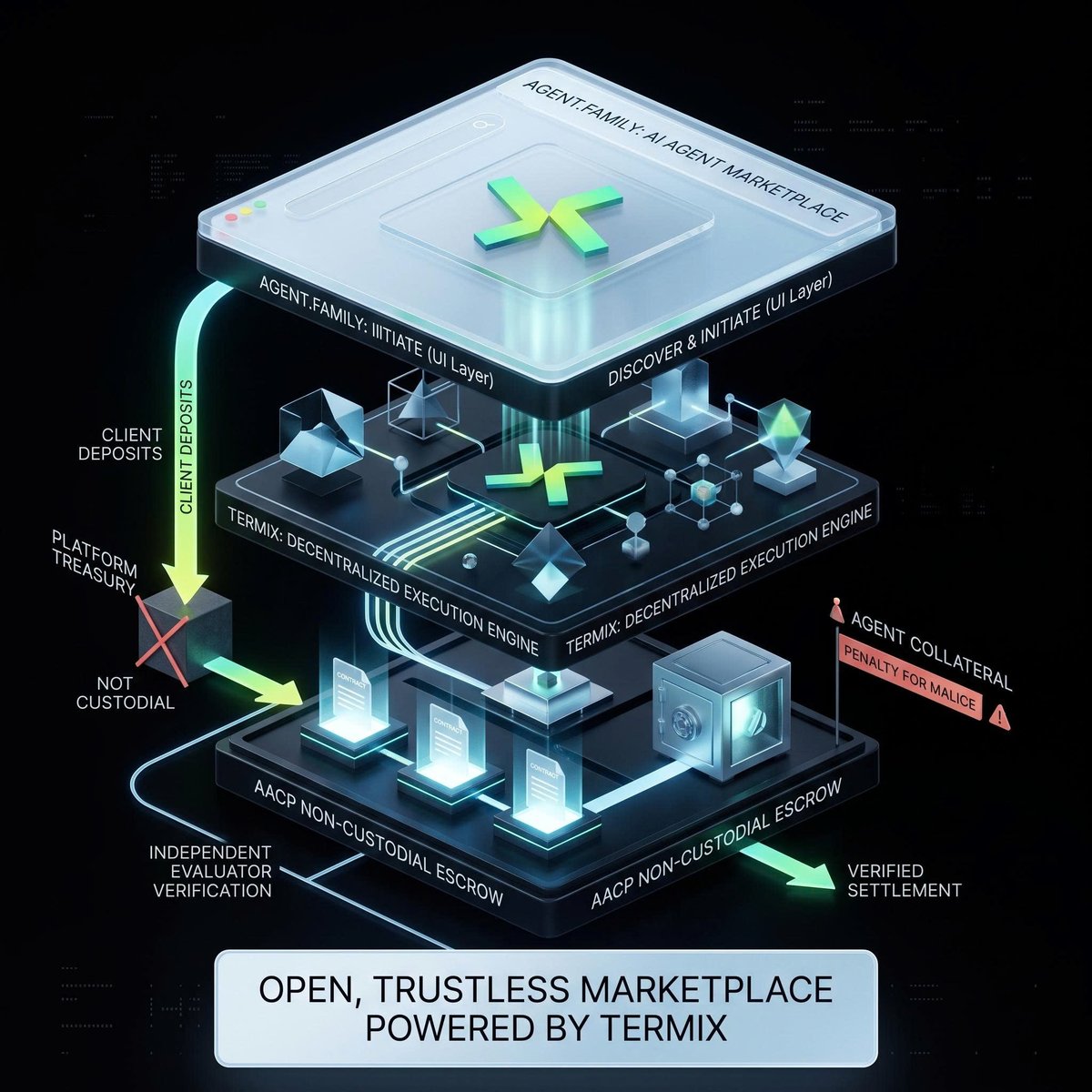
@RifdahSR_11 added (2 likes, 4 replies, 19 views) a useful reputational frame: the real asset may not be an agent's code at all, but its visible record of completed jobs, payments settled, disputes survived, and reputation accumulated.

Discussion insight: The best posts in this cluster were the ones that made the commerce layer legible: fee percentages, evaluator panels, challenge windows, and non-custodial escrow. The weakest ones stayed at the level of "agent economy" slogans.
Comparison to prior day: Compared with 2026-10-06, the commerce discussion was louder and slightly more concrete, but it still depended heavily on vendor-adjacent narration. The trust model is clearer than the demand model.
2. What Frustrates People
Verification still takes more engineering than generation
The clearest frustration was not "the model cannot write code." It was "the team still cannot trust the output without building another layer around it." @BHolmesDev described (166 likes, 20 replies, 8,627 views, 205 bookmarks) a whole outer loop devoted to scoring agent conversations and suggesting skill fixes, which only exists because raw completion is not enough. Even the pro-harness camp signaled the same pain: @beamnxw packaged (1,755 likes, 57 replies, 287,667 views, 6,035 bookmarks) a reusable harness guide because long tasks still need progress saving, verification, and recovery. This is severe enough that builders are creating products around supervision rather than around generation itself. Worth building: High.
Teams still lose state between sessions, tools, and machines
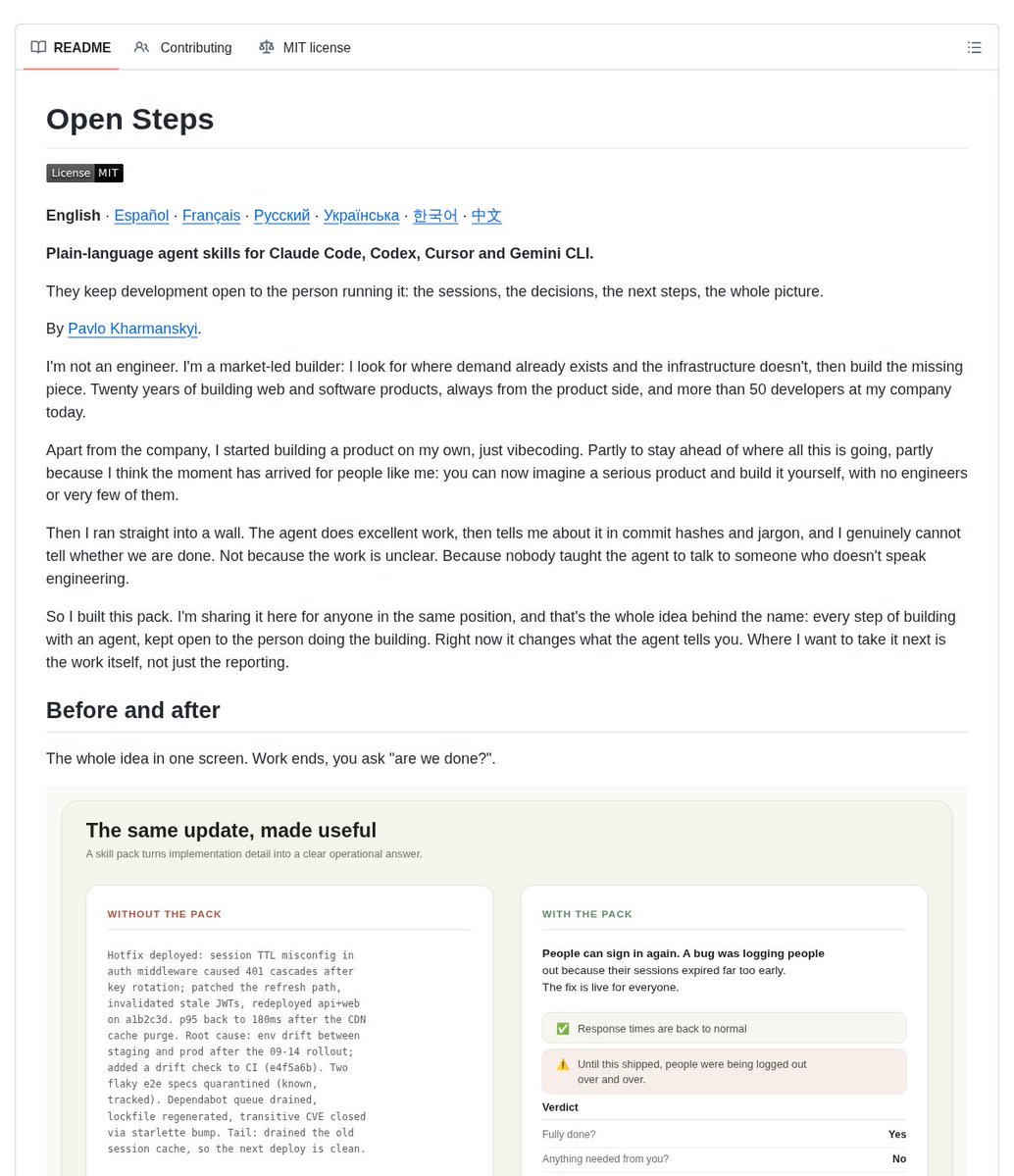
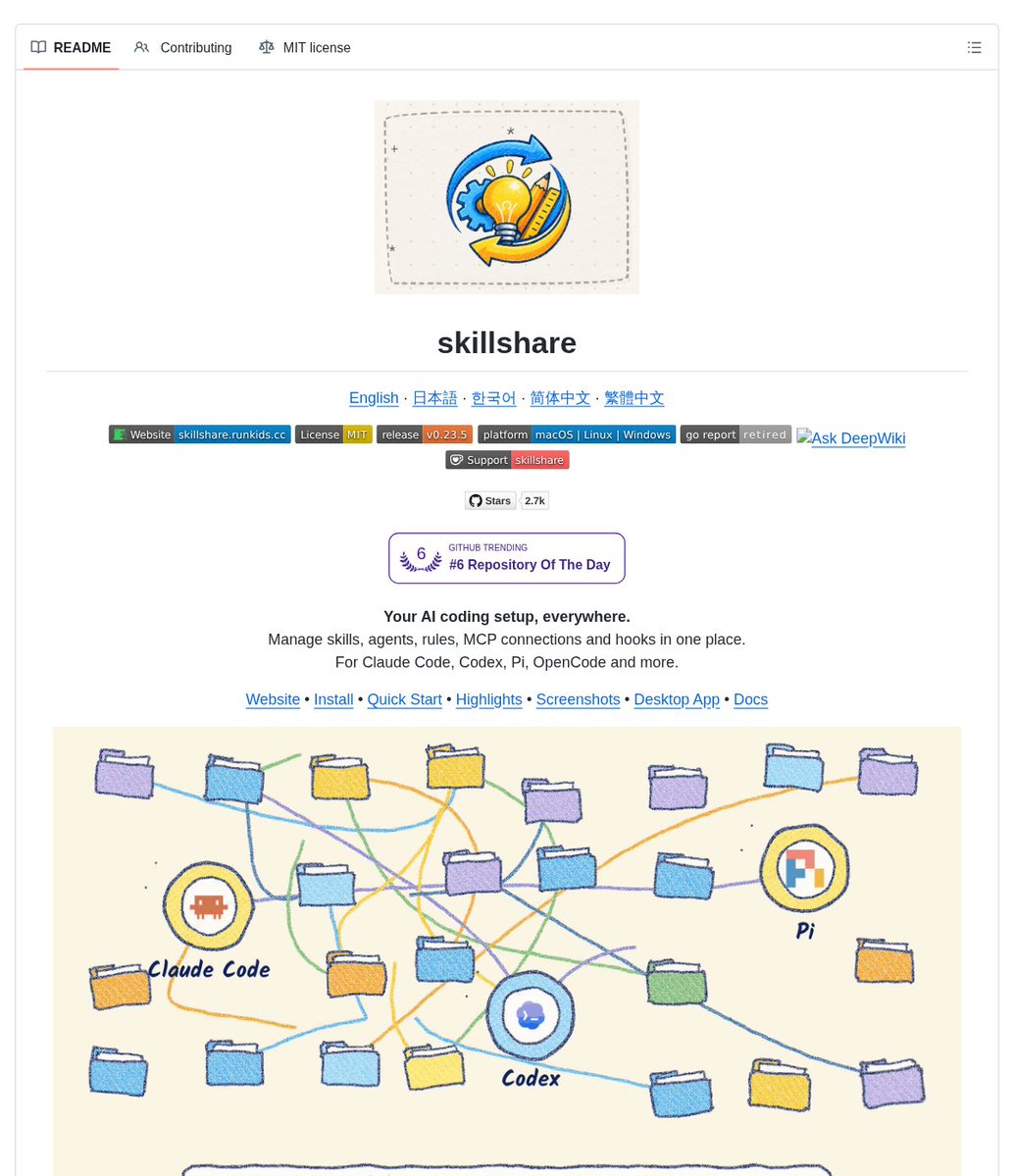
No giant rant thread dominated this topic, but the build activity clustered around the same gap. @RoundtableSpace shared (25 likes, 6 replies, 40,907 views, 28 bookmarks) Hindsight as a memory framework for agents, while @DanKornas described (2 replies, 398 views) skillshare as a way to keep skills, agents, rules, MCP connections, and hooks in one cross-tool source of truth. @DanKornas described (1 reply, 438 views, 4 bookmarks) Open Steps as a plain-language done-check and handoff layer for agent-led work. The pattern is obvious: people do not want to restate context, rewire every tool, or guess whether yesterday's session actually finished. Worth building: High.
Agent infrastructure costs are still hard to reason about
The compute side of the conversation still looks unsettled. @FredaDuan reframed (34 likes, 7 replies, 7,371 views, 52 bookmarks) the problem around agents per task and model steps per agent, showing why infrastructure demand swings wildly with seemingly small assumption changes. At the platform layer, @github reported (173 likes, 27 replies, 31,966 views, 104 bookmarks) 473.3 billion Git events per month and a live rebuild of Git infrastructure to absorb agent-scale workloads. The shared frustration is not just costliness; it is unpredictability. Worth building: High.
Agent-to-agent commerce still lacks proven trust and durable margins
The loud marketplace posts also revealed the most obvious business-model pain. @Kenz_1604 argued (87 likes, 103 replies, 299 views) that a wallet and a chat room do not scale when the buyer is another agent, while @elenalin01 pressed (32 likes, 33 replies, 468 views, 22 bookmarks) on whether low-fee, low-ticket jobs leave enough room for retries and revisions. @Girlgym67 described (55 likes, 49 replies, 6,185 views) dispute panels and challenge windows, which is useful evidence that people know trust is unsolved. Worth building: Medium-High, but evidence quality is still uneven.
3. What People Wish Existed
Reusable domain skills instead of generic prompt folklore
The strongest signals here came from what people shipped, not from direct wish-list phrasing. @twostraws announced (30 likes, 3 replies, 1,834 views, 33 bookmarks) a SwiftUI skill updated through real-world testing, while @jaimintf collected (23 likes, 1 reply, 574 views, 40 bookmarks) five iOS-focused skill repos as an antidote to AI slop. What people appear to want is not another general coding copilot. They want installable expertise for a specific domain. Opportunity: Direct.
A cross-tool layer for memory, resources, and project state
The same need surfaced from multiple directions. Hindsight treats memory as structured infrastructure rather than as prompt stuffing, while skillshare tries to keep skills, rules, MCP connections, and hooks portable across Claude Code, Codex, Pi, and OpenCode. Open Steps adds one more missing layer by translating session output into a plain-language state of completion. Together, those posts imply a practical need for an agent-side operating layer that survives tool changes and session resets. Opportunity: Direct.
Better done-checks and supervisor loops
@BHolmesDev described (166 likes, 20 replies, 8,627 views, 205 bookmarks) a gardener-style outer loop that scores conversations and suggests skill fixes, while @DanKornas described (1 reply, 438 views, 4 bookmarks) Open Steps as a one-screen done-or-not and handoff layer. The unmet need is very practical: people want a trustworthy answer to whether the agent is actually finished, what changed, and what still needs a human. Opportunity: Direct.
A trust layer for agent-to-agent payments, disputes, and reputation
The commerce cluster read like a search for missing market infrastructure. @Kenz_1604 argued (87 likes, 103 replies, 299 views) that identity and settlement history matter more than another demo, and @elenalin01 pressed (32 likes, 33 replies, 468 views, 22 bookmarks) on whether tiny jobs can remain profitable after fees and retries. The need looks real, but the current evidence is still mostly supplied by projects pitching their own rails. Opportunity: Competitive.
4. Tools and Methods in Use
| Tool | Category | Sentiment | Strengths | Limitations |
|---|---|---|---|---|
| Claude Code / Opus 5.5 harness patterns | Coding agent / harness | (+/-) | Strong shell-first execution, long-task persistence, reusable workflows | Can drift into prompt ceremony and manual setup |
| pi-subagent-manager | Orchestration | (+) | Steerable helper threads, mixed-model delegation, resumable work | Assumes a specific pi-style workflow and extra coordination overhead |
| SwiftUI Agent Skill and related iOS skills | Skill packs | (+) | Encodes domain taste, reduces UI slop, easy to share | Narrow scope per skill; fragmented across repos |
| Hindsight | Memory framework | (+) | Structured facts, entity resolution, multiple retrieval modes, persistent state | Heavier infrastructure than simple notes or prompt memory |
| skillshare | Resource management | (+) | One source of truth for skills, hooks, MCP connections, and rules | Early-stage evidence; value depends on disciplined local setup |
| Open Steps | Workflow clarity | (+) | Done-or-not summaries, guided handoffs, claim checking | Limited public adoption evidence so far |
| Heard | Agent interface | (+) | Spoken updates, voice replies, works across terminals and editors | Very early product layer with extra integration work |
| Toolgate | Safety / decision layer | (+/-) | Fail-closed tool gating, explicit risk questions, hook or MCP deployment | More friction and policy tuning for fast iteration |
| TermiX / AACP | Settlement and reputation rail | (+/-) | Escrow, evaluator flow, reputation history, identity framing | Evidence is still heavily promotional and unit economics are unproven |
The satisfaction spectrum was wide, but the direction was clear. People are not standardizing on one model or one agent shell. @championswimmer argued (145 likes, 14 replies, 16,506 views, 365 bookmarks) for mixing Claude, Codex, and pi-style subagents, while @beamnxw packaged (1,755 likes, 57 replies, 287,667 views, 6,035 bookmarks) harness knowledge as a reusable artifact rather than a hidden team habit.
Skills looked increasingly like the preferred way to carry expertise across tools. @twostraws announced (30 likes, 3 replies, 1,834 views, 33 bookmarks) a SwiftUI skill updated through real testing, and @jaimintf collected (23 likes, 1 reply, 574 views, 40 bookmarks) an iOS-oriented skill stack spanning Expo, Appllama, Vercel, emilkowalski, and twostraws.
Memory and governance layers are now being treated as tools in their own right. @RoundtableSpace shared (25 likes, 6 replies, 40,907 views, 28 bookmarks) Hindsight as persistent memory infrastructure, while @DanKornas described skillshare (2 replies, 398 views) and described Open Steps (1 reply, 438 views, 4 bookmarks) as ways to keep resources portable and outputs legible.
Migration patterns remained pragmatic. Builders are layering new surfaces around existing agents instead of replacing them wholesale: Heard adds voice over terminal agents, Toolgate adds risk review before tool use, and commerce projects are trying to bolt on settlement and reputation rather than invent a new model category. The biggest competitive gap is still not generation quality. It is coordination quality.
5. What People Are Building
| Project | Who built it | What it does | Problem it solves | Stack | Stage | Links |
|---|---|---|---|---|---|---|
| pi-subagent-manager | @championswimmer | Hierarchical, steerable subagent threads for pi | Lets one coding session delegate and resume parallel work instead of staying single-threaded | TypeScript, pi, Claude/Codex/OpenRouter mix | Beta | Repo |
| SwiftUI Agent Skill v2.0 | @twostraws | Packs SwiftUI and iOS conventions into an agent skill | Reduces UI slop and platform mistakes in generated mobile code | SwiftUI, AI coding assistants | Shipped | Repo |
| Hindsight | Vectorize, shared by @RoundtableSpace | Persistent memory framework with retain, recall, and reflect loops | Agents forget architecture, facts, and prior decisions between sessions | Python, PostgreSQL/pgvector, MCP/REST | Shipped | Repo, Docs |
| Heard | @dannyinsf_ / Heard Labs | Voice layer for coding agents with spoken updates and voice replies | Lets users monitor long-running agent work away from the screen | Heard.dev, MCP, macOS/open-source engine | Beta | Site |
| Toolgate | RiskAverseTech, shared by @ch3nweiii | Tool-call firewall for agent auto mode | Prevents destructive, off-task, or secret-exposing tool actions | TypeScript, Claude Code hook, MCP proxy | Alpha | Repo |
| Open Steps | @DanKornas | Plain-language agent-skills pack for done-checks and handoffs | Tells teams whether work is actually complete and what still needs a human | MIT skill pack for Claude Code, Codex, Cursor, Gemini CLI | Alpha | Tweet |
| skillshare | @DanKornas | Cross-tool manager for skills, agents, MCP connections, and hooks | Reduces config drift across coding assistants and machines | Local source layout, Git-backed sync, target-based rollout | Alpha | Tweet |
The recurring build pattern was clear: people are not only building agents, they are building layers around agents. @championswimmer argued (145 likes, 14 replies, 16,506 views, 365 bookmarks) for a subagent manager because one assistant no longer covers every workflow, while @RoundtableSpace shared (25 likes, 6 replies, 40,907 views, 28 bookmarks) Hindsight because session memory is still too fragile.
@dannyinsf_ launched (12 likes, 4 replies, 182 views, 3 bookmarks) Heard as a voice layer over existing coding agents, which is notable because it treats monitoring and interruption as a separate product problem. @ch3nweiii shared (18 likes, 552 views, 15 bookmarks) Toolgate as part of a broader "decision layer around every session" pattern, showing that safe auto mode is becoming its own mini-category.
The smaller but revealing builder signals came from meta-workflow tools. @DanKornas described Open Steps (1 reply, 438 views, 4 bookmarks) as a done-checking and handoff layer, and described skillshare (2 replies, 398 views) as a portable manager for skills, agents, hooks, and MCP resources. These are not glamorous launches, but they point to a real need for shared project state and clearer completion signals.
Repeated build triggers were easy to spot: multi-model delegation, persistent memory, cross-tool portability, supervision, and trustable completion. The market is filling in all the missing layers around agent execution.
6. New and Notable
GitHub is rebuilding the substrate for agent-scale development
@github reported (173 likes, 27 replies, 31,966 views, 104 bookmarks) that Git activity reached 473.3 billion events per month, then linked its write-up on building Git infrastructure for agent-scale development. That matters because it is one of the clearest public signs that agentic coding is no longer a thin feature layer on top of existing developer platforms. It is changing the write path and storage design of the platforms underneath.
Terminal-first research is starting to beat more elaborate computer-use stacks
The Apple MLE paper and Microsoft Research's CUAWright work both argued for a simpler interface: give the model a shell, a file system, and explicit artifacts, then let it build or reuse tools. @rohanpaul_ai summarized (67 likes, 25 replies, 4,384 views, 42 bookmarks) the Apple result, and @ADarmouni highlighted (1 reply, 76 views, 1 bookmark) the CUAWright benchmark gains. The novelty is not just higher scores. It is the convergence between coding agents and computer-use agents around the same terminal-native pattern.
Voice is becoming a live interface layer for agents
@dannyinsf_ launched (12 likes, 4 replies, 182 views, 3 bookmarks) Heard as an open-source voice layer for agents running in terminals and editors. This is still early, but it is notable because it addresses a real workflow issue: as agents run longer and ask more questions, users need a way to monitor them without staring at a terminal full time.
7. Where the Opportunities Are
[+++] Agent supervision and done-checking - Evidence spanned section 1 and section 5, from @BHolmesDev describing (166 likes, 20 replies, 8,627 views, 205 bookmarks) outer-loop gardener agents to @DanKornas describing (1 reply, 438 views, 4 bookmarks) Open Steps as a done-checking layer. This is strong because the need is explicit, recurring, and not tied to one model vendor.
[+++] Domain skill packs and cross-tool skill distribution - @twostraws announced (30 likes, 3 replies, 1,834 views, 33 bookmarks) a real SwiftUI skill release, while @jaimintf collected (23 likes, 1 reply, 574 views, 40 bookmarks) a broader iOS skills stack. This is strong because it turns domain expertise into reusable artifacts instead of keeping it locked in a single team or prompt.
[++] Memory and project-state portability - Hindsight, skillshare, and Open Steps all attacked the same gap from different angles: persistent facts, shared resources, and clearer session state. The demand is visible, but the category still feels fragmented across memory backends, config sync tools, and handoff packs rather than one obvious product surface.
[++] Cost-aware shell-first agent infrastructure - The Apple harness paper, CUAWright, Freda Duan's compute math, and GitHub's infra rebuild all point to the same opportunity: agents need simpler execution surfaces and better cost control once they scale. This is moderate rather than strong only because much of the value may be captured by platforms and model vendors rather than by standalone tools.
[+] Trust rails for agent commerce - Identity, escrow, dispute handling, and settlement history came up often enough to matter, especially in the TermiX cluster. The opportunity is emerging because the problem is real, but today's evidence is still dominated by promotional framing and very little independent proof of durable market demand.
8. Takeaways
- The market is split between heavier orchestration and lighter execution, but both camps now agree that shell access and external verification matter more than chat alone. The strongest pro-harness and anti-harness posts both treated files, tools, and explicit proof as non-negotiable. (beamnxw, rohanpaul_ai, paper)
- Subagents are becoming normal when they improve workflow shape, not when they exist for their own sake. The useful examples on the day were subagent managers and gardener loops that made delegation, scoring, and retries more concrete. (championswimmer, BHolmesDev)
- Skills are hardening into a real packaging layer for expertise, especially in taste-heavy mobile work. The iOS cluster showed that developers increasingly want installable best practices, not only general coding assistance. (twostraws, jaimintf)
- Memory and infrastructure are no longer background concerns - they are product categories. Hindsight treated memory as knowledge infrastructure, Freda Duan modeled agents as a compute planning problem, and GitHub showed that agent-scale development is already warping platform internals. (RoundtableSpace, FredaDuan, github)
- Agent commerce is getting more precise, but still needs independent proof. The strongest evidence focused on identity, fees, disputes, and escrow rather than on marketplace slogans, yet most of that evidence still came from vendor-adjacent voices. (Kenz_1604, elenalin01, Girlgym67)