Twitter AI Coding - 2026-05-03
1. What People Are Talking About
1.1 Codex Auto-Review and /goal: OpenAI Ships Autonomy Features 🡕
@thsottiaux announced (719 likes, 93 replies, 8 quotes, 161 bookmarks, 38,194 views) that Auto-Review mode shipped in Codex last week and is now the default within OpenAI, "reducing amount of approvals needed by ~200X." The post quotes @majatrebacz from the alignment team explaining the capability.
@WesRoth reported (6 likes, 2 bookmarks, 467 views) that OpenAI introduced an experimental /goal command in Codex CLI v0.128.0: "The AI operates in autonomous loops -- planning, coding, testing, and iterating -- until the task is completed or it reaches preset usage limits."
@PawelHuryn framed (2 likes, 6 replies, 429 views) the convergence: "OpenAI moved Codex toward declarative outcome-pursuit. Anthropic moved Opus 4.7 toward literal instruction following. They walked into the same room from opposite doors." He quoted Karpathy: "Don't tell it what to do, give it success criteria and watch it go."
@minchoi summarized (2 likes, 3 bookmarks, 52 views): "OpenAI Codex CLI just got way more agentic. With /goal, you give it one objective and it keeps working across turns until the goal is done."
@mattlam_ demonstrated (1 like, 2 bookmarks, 6,318 views): "Here Codex created two games for me while I went out for lunch" using /goal, with tips on objective formatting.
Discussion insight: In the replies to thsottiaux, @bytecrafter_1 observed that "approval rate is the actual ceiling on agent throughput once you scale past one operator. cutting it 200x just shifts the bottleneck onto whatever CI can verify in under 30 seconds." @betnbd described building a protected environment layer where agents have broad access but cannot write to core system files -- a practical safety strategy complementing Auto-Review. The /goal feature generated multiple independent threads of enthusiasm, with @AlexFinn reporting it built "an entire complex extraction shooter video game" running for over an hour.
Comparison to prior day: On May 2, the ChatGPT-Codex merger was confirmed and Codex launched a Claude Code migration tool. Today the narrative advances from platform strategy to capability shipping: Auto-Review (200x fewer approvals) and /goal (autonomous loops) represent concrete product features that increase agent autonomy. The competitive positioning shifts from poaching users to delivering features Claude Code does not yet match.
1.2 Google Antigravity Dominates Content Creation Discourse 🡒
@freeCodeCamp posted (231 likes, 5 replies, 169 bookmarks, 9,316 views) a tutorial on using Antigravity to build a water tracker app, covering "agentic prompting, persisting the data, adding reminders, and more."
@RoundtableSpace showed (171 likes, 18 replies, 149 bookmarks, 55,898 views): "GPT Image 2 + Google Antigravity = animated websites that look like this. 18 minutes to learn how to build one yourself. Web design agencies are having a rough year."
@JulianGoldieSEO published multiple Antigravity courses: a 2-hour (26 likes, 28 bookmarks, 845 views) and 4-hour (12 likes, 10 bookmarks, 420 views) "Google Antigravity FULL COURSE (Build & Automate Anything)."
@EdenKollcinaku speculated (154 likes, 9 bookmarks, 3,493 views): "GoogleDeepMind has been very silent lately. That only means one thing: Gemini 3.5 Pro this month during Google I/O."
@realpython defined (10 likes, 2 bookmarks, 964 views) Antigravity as "an agent-first IDE where AI agents operate the editor, terminal, and browser, producing verifiable Artifacts of their work."
@MystiqueMide shared (32 likes, 11 replies, 3 bookmarks, 1,526 views) progress building on GenLayer using Gemini 3.1 Pro (high) on Antigravity for frontend polish, previously testing DeepSeek v4 Pro for styling.
Discussion insight: In the freeCodeCamp replies, @nashvelora_x captured the platform's promise: "Most AI coding tools still need you to think like a developer. Antigravity flips it -- you think like a product manager, agents handle the rest." Meanwhile @amaanbuilds warned about cost: "speed without good workflow control can get expensive real quick, seen someone burn $6k just from bad looping." The high bookmark rates (149 and 169) indicate strong save-for-later intent.
Comparison to prior day: On May 2, Antigravity showed bifurcation between consumer enthusiasm (54K views) and developer abandonment (Pi dropping support). Today the consumer side strengthens further with freeCodeCamp's endorsement (9,316 views) and RealPython's formal definition, but the account lockout issue (DaewangLim, 20 days charged without access) persists unchanged. The platform is cementing itself in the tutorial/course ecosystem.
1.3 The $20/Month Decision: Codex vs Claude vs Everything Else 🡕
@ItsAlexhere0 asked (38 likes, 46 replies, 3 quotes, 1,859 views): "If you had $20/month, where would you put it? Claude. Codex. Cursor. Antigravity. GitHub Copilot. Which one is the smartest choice right now?"
@damz_efinance argued (1 like, 2 replies, 44 views): "Claude Code Pro isn't worth it right now; you only need about four prompts and then your tokens are gone, followed by a five-hour wait. Just use OpenCode Go."
@DanielSmidstrup polled (3 likes, 5 replies, 84 views): "Solo founders vibe coding, what's your main agent? - codex - claude code"
@PiyuCodes posted (5 likes, 3 replies, 149 views) essentially the same question, indicating the decision is on many minds simultaneously.
@jaesmail observed (13 likes, 2 bookmarks, 346 views): "The vibe shift from Anthropic back to OpenAI on the timeline this week has been eerie. Codex is great, I'm starting to use it much more. But it's another example of why you shouldn't place your bets on the whims of the timeline."
Discussion insight: In the ItsAlexhere0 thread (46 replies), @droidbuilds said "Codex and Claude the best rn" while @neerajjj6785 simply answered "codex." The volume of identical poll-style posts (ItsAlexhere0, PiyuCodes, DanielSmidstrup) on the same day indicates the community is actively re-evaluating tool choice in real time, likely triggered by the Codex feature releases and ongoing Claude token limit frustration.
Comparison to prior day: On May 2, the $20 decision was framed around June 1 pricing changes (15x Opus multiplier, GPT-5.2 deprecation). Today the same decision re-emerges but the framing shifts from "what's getting worse" to "what's getting better" -- Codex gains ground on features (Auto-Review, /goal) rather than competitors getting more expensive.
1.4 OpenCode and DeepSeek: The Budget Stack Solidifies 🡕
@ZypherHQ posted (79 likes, 40 replies, 8,454 views): "OpenCode CLI is good? I'll try some open-source models (GLM-5.1, Kimi 2.6 & Deepseek v4) through Venice, which, from what I've read, should guarantee complete privacy."
@jayair endorsed (23 likes, 4 bookmarks, 1,997 views) the OpenCode Go tiered model approach, quoting @FishRaposo's mental model: "keep 3 buckets for models -- light/medium/heavy. Deepseek v4 flash and Qwen 3.5 are light. Minimax 2.7, Qwen 3.6, Deepseek Pro are medium. GLM 5.1, Kimi 2.6, Mimo 2.5 Pro are heavy."
@tarat_211 declared (3 likes, 2 replies, 59 views): "im sure those people have not tried deepseek + opencode combo cz what do you mean it ran for almost 40mins non stop and cost me less than half a dollar."
@xdadevelopers published (6 likes, 1 bookmark, 991 views): "I use OpenCode over Claude Code, and it's every bit as good."
@Michaelzsguo described (2 likes, 1 bookmark, 19 views) routing DeepSeek V4 Pro through Codex after burning through Plus tokens: "Pointing Claude Code at DeepSeek's Anthropic-compatible endpoint."
@nexxeln complained (11 likes, 181 views): "man 5.5 is so expensive i feel bad using it through opencode zen" -- indicating even the budget stack has premium tiers that create cost anxiety.
Discussion insight: In the ZypherHQ thread (40 replies), @hasoni1has noted "OpenCode CLI setup will feel worse at first, but it exposes what's really happening under the hood" while @Medici114066 warned "try it on a real repo, small demos never show the actual pain." The privacy angle (Venice guaranteeing no data retention) is a new dimension beyond pure cost savings.
Comparison to prior day: On May 2, DeepSeek + OpenCode was positioned as "1% of Claude cost" by factorydoge69. Today the stack gains a third dimension: privacy via Venice routing. The jayair/FishRaposo tiered model framework provides the first structured mental model for navigating the budget stack, moving beyond ad hoc experimentation.
1.5 Codex /goal and the Autonomous Agent Loop 🡕
@thsottiaux (quoted by @PawelHuryn) stated: "/goal might be the most consequential thing we have shipped in codex. The value of good instructions has never been higher."
@mattlam_ shared (1 like, 2 bookmarks, 6,318 views) practical tips: "/goal
@novumclassicum identified (2 likes, 1 bookmark, 257 views) the current limitation: "The real unlock for us pro users is when we have a way to automate these enormous pro prompts and workflows via Codex. I currently spend half my day telling it 'continue'."
@astridwilde1 projected (94 likes, 6 replies, 14 bookmarks, 4,317 views): "pretty wild that OpenAI is still underestimated their valuation probably doubles in the next 12 months as 5.5 and Codex start causing them to put up silly growth numbers."
Discussion insight: PawelHuryn's thread distilled the philosophical split: Codex pursues declarative outcomes (tell it what done looks like), Opus 4.7 pursues imperative instruction following (tell it exactly what to do). @punkerlabrat identified the hard problem: "teaching the thing to know when it actually finished instead of declaring victory in the middle." The novumclassicum complaint about "half my day telling it continue" reveals that /goal solves a real workflow pain point.
Comparison to prior day: On May 2, the "Lord Bottleneck" story showed Codex as an autonomous loop concept. Today /goal makes it a shipped product with users reporting multi-hour autonomous sessions. The transition from prototype to practical feature is complete.
1.6 Multi-Model Debate and Adversarial Review Workflows 🡕
@DFintelligence asked (21 likes, 9 replies, 13 bookmarks, 4,252 views): "Does anyone know a technique where I can ask multiple models (Opus 4.7, Deepseek, GPT5.5...) to debate a specific coding task? For example, '/debate best way to incorporate a path finding algorithm in the UI'."
@DivyanshT91162 described (27 likes, 10 retweets, 6 bookmarks, 573 views) the Codex plugin for Claude Code with three commands: "/codex:review scans uncommitted changes, /codex:adversarial-review questions your decisions ('Why this caching?' 'Race condition?'), /codex:rescue hands stuck tasks to Codex mid-session."
@EXM7777 countered (22 likes, 6 replies, 3 bookmarks, 639 views) with a "vanillamaxxing" philosophy: "I've tried hundreds of plugins for Claude Code, Codex, OpenClaw, Hermes... I honestly can't tell if any of them moved the needle. You get better at something the more you use it."
Discussion insight: In the DFintelligence thread, @aarondfrancis suggested using built-in MCP to "spawn other agents and chat back and forth with each other" while @AIC_Hugo shared a plan-critic subagent configuration. The EXM7777 counterpoint -- "99% of people are building stupidly simple stuff, these models are MORE than capable enough" -- represents the minimalist faction that views multi-model orchestration as premature optimization.
Comparison to prior day: On May 2, the adversarial/debate pattern was not a visible theme. Today it emerges as a distinct workflow category with multiple independent implementations (Codex-in-Claude-Code plugin, MCP-based subagents, custom plan-critic configurations). This is a new signal.
1.7 Vibe Coding Quality Backlash 🡖
@AndrewPerpetua declared (84 likes, 8 replies, 4,263 views): "Stop firing all of your talented Q&A people and vibe coding your operating system. You cannot AI your way to a good product." In self-replies: "the more companies use AI for shit the more Q&A you need" and "Microsoft is at a point where they need to go back and rehire their Q&A people and give Q&A veto power."
@zraonx reported (2 likes, 2 replies, 31 views): "tried vibe-coding a fully client-side expo app on a $100 claude sub didn't even last an hour. produced unusable slop went to take over while waiting for the limit to reset."
@QuixiAI offered (12 likes, 5 replies, 4 bookmarks, 399 views) a different framing: "Being productive in the new age of vibe coding means giving up on the idea of code ever being perfect in favor of the idea of code converging towards perfect. I just created a compiler in 3 weeks that would have taken 3 years."
@NeverSinkDev shared (9 likes, 3 replies, 1 bookmark, 1,027 views) a practical middle ground: using AI to build validation tooling rather than the core product -- "30+ different tests, each with many subtests. The filter/code itself is untouched by AI."
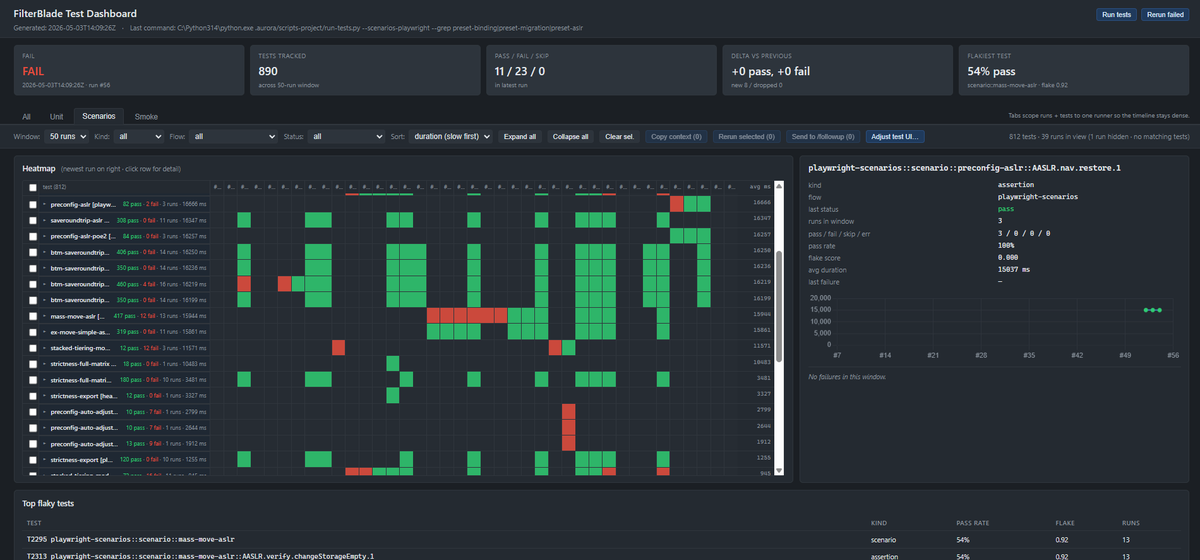
Discussion insight: The AndrewPerpetua thread (84 likes) represents the strongest anti-vibe-coding sentiment of the day, specifically targeting enterprise/OS-level software. @hispaniafer responded: "All microsoft products are full of bugs... My next computer will be prob linux." The NeverSinkDev approach -- AI for testing infrastructure, not production code -- offers a pragmatic synthesis that satisfies both camps.
Comparison to prior day: On May 2, the security angle dominated quality concerns (DataRepublican at 75K views). Today quality concerns shift from security to basic software reliability -- the argument that AI-generated code requires more human QA, not less. The vibe coding skepticism is broadening from "it's insecure" to "it produces bad software at any layer."
2. What Frustrates People
Claude Code Token Limits Remain the Primary Pain Point -- High
@damz_efinance stated: "Claude Code Pro isn't worth it right now; you only need about four prompts and then your tokens are gone, followed by a five-hour wait." @zraonx reported a $100 Claude subscription "didn't even last an hour" on a client-side expo app before producing "unusable slop." Multiple replies in the ItsAlexhere0 thread specifically cite token limits as the reason to choose Codex over Claude.
Coping strategies: Use OpenCode Go with DeepSeek v4 Pro as a cost bridge. Wait out the 5-hour cooldown. Switch to Codex for tasks that hit limits.
GitHub Copilot Model Removals Frustrate Users -- Medium
@ravikiran_dev7 posted (37 likes, 20 replies, 700 views): "I hate you GitHub Copilot! Now they even removed codex 5.3." The reply thread reveals confusion about which models remain available, with @Umesh__digital asking "do they still support gpt-4o?"
Coping strategies: Migrate to standalone Codex. Use OpenCode with direct API access.
OpenCode Reliability Issues on Complex Tasks -- Medium
@peach2k2 reported (7 likes, 2 replies, 217 views): "literally every piece of software i'm using is regressing to shit i lost like half an hour trying to get opencode to WRITE A FILE and it'd just silently fail." @nixxin noted: "Kimi is working on opencode now? It kept timing out last night. Deepseek pro worked."
Coping strategies: Switch models mid-session. Fall back to DeepSeek Pro when Kimi times out. Accept that the budget stack requires more manual intervention.
Google Antigravity Account Issues Persist -- Medium
@DaewangLim reported (3 replies, 50 views): "I haven't been able to use my account properly for 20 days, yet my monthly subscription fee is still being charged. Google One support told me to contact Google Cloud for AntiGravity issues." No resolution reported.
Coping strategies: None apparent -- the support runaround between Google One and Google Cloud continues with no fix.
3. What People Wish Existed
Multi-Model Debate as a First-Class Feature
@DFintelligence explicitly requested (21 likes, 13 bookmarks, 4,252 views) a "/debate" command where multiple models discuss a coding decision and produce a pros/cons summary. Current workarounds include MCP subagents (per @aarondfrancis) and custom plan-critic configurations (per @AIC_Hugo), but no tool offers this as a built-in command.
Urgency: Medium. Opportunity: Direct -- the 13 bookmarks and 9 replies indicate actionable demand.
Affordable Unlimited Agent Sessions
The ItsAlexhere0 thread (46 replies), PiyuCodes thread (3 replies), and DanielSmidstrup poll collectively reveal that no $20 tool delivers unlimited agent sessions with frontier-quality models. Users want to run /goal for hours without hitting limits. Claude's 5-hour cooldown and Codex's token caps both block this.
Urgency: High. Opportunity: Whoever removes the "continue" bottleneck (@novumclassicum: "I currently spend half my day telling it continue") wins the power user segment.
Wearable Agent Interface
@HarshithLucky3 proposed (24 likes, 8 bookmarks, 1,164 views): "What if we can control Antigravity directly from glasses -- tracking background tasks while walking, debugging failed tests on the go, approving code execution from a tiny HUD, looking at a whiteboard and saying build this."
Urgency: Low (hardware dependency). Opportunity: Speculative -- requires Google Glasses integration.
Private AI Coding with Zero Data Retention
@ZypherHQ's post (79 likes, 40 replies, 8,454 views) specifically sought models through Venice for "complete privacy." The 40 replies indicate strong community interest in coding with sensitive codebases without data being retained by providers.
Urgency: Medium. Opportunity: Direct -- Venice and local models partially address this but setup complexity remains high.
4. Tools and Methods in Use
| Tool | Category | Sentiment | Strengths | Limitations |
|---|---|---|---|---|
| OpenAI Codex | Agent platform | (+) | Auto-Review 200x fewer approvals (thsottiaux, 719 likes); /goal autonomous loops; /hatch gamification; image gen skill | Token limits on Plus tier (Michaelzsguo); novumclassicum "half my day telling it continue" |
| Claude Code | Terminal agent | (+/-) | Opus 4.7 reasoning quality praised (anthrupad, intangiblecoins); e-commerce full execution layer (insomnia_vip) | Token limits at $20 and $100 tiers (damz_efinance, zraonx); 5-hour cooldown |
| Google Antigravity | IDE agent | (+) | freeCodeCamp endorsement (231 likes); RoundtableSpace animated websites (55K views); agentic prompting workflow | Account lockouts (DaewangLim, 20 days); cost control risk ($6k looping per amaanbuilds) |
| OpenCode | Terminal agent | (+) | Privacy via Venice (ZypherHQ, 79 likes); DeepSeek combo "40 mins non-stop for half a dollar" (tarat_211); xdadevelopers "every bit as good" as Claude Code | Silent file write failures (peach2k2); Kimi timeout issues (nixxin) |
| GitHub Copilot | IDE agent | (-) | Still supports GPT-4o (ravikiran_dev7 thread) | Codex 5.3 removed; model deprecation confusion; yesterday's 15x Opus multiplier still in effect |
| DeepSeek v4 Pro | Model | (+) | Tiered mental model light/medium/heavy (jayair/FishRaposo); Anthropic-compatible endpoint (Michaelzsguo) | Not benchmarked for complex production tasks; requires OpenCode/Codex routing |
| Hermes | Agent harness | (+) | Image gen via Codex integration (deifosv); uses existing OpenAI subscriptions (per yesterday's Teknium confirmation) | Less documented than Claude Code or OpenCode |
| Cursor | IDE agent | (+/-) | Recommended for local work by Just_marhk | Not mentioned in competition threads; losing mindshare to Codex |
| Replit Agent | Builder platform | (+) | 12-year-old idea resurrected as MVP in one day (amasad quoting bekircagricelik) | Not in the $20 decision threads |
The day's tool landscape centers on Codex gaining features (Auto-Review, /goal, image gen, pets) while Claude Code maintains quality reputation but loses users to token limits. The budget tier (OpenCode + DeepSeek) gains legitimacy through XDA Developers coverage and community validation. Antigravity dominates educational content volume but is not present in the technical competition discussions.
5. What People Are Building
| Project | Who built it | What it does | Problem it solves | Stack | Stage | Links |
|---|---|---|---|---|---|---|
| ForgeCAD + Codex workflow | @JFlitt | Parameterized CAD models for 3D printing with zero CAD skills | CAD expertise barrier for physical product design | OpenAI Codex, ForgeCAD | Shipped | Post |
| holaOS mech bus | @0xwhrrari | Autonomous Polymarket trading with 5 sub-mechs running Opus 4.7 falsification ring | Manual prediction market trading; single-model failure modes | Opus 4.7, Claude Code, Python, MIT license (2.8K stars) | Shipped (444 trades, 81% WR) | Post |
| E-commerce operating system | @insomnia_vip | Research niches, create products, listings, mockups, SEO & pricing across Amazon, Etsy, Gumroad, Shopify, Redbubble | Hiring specialists for each e-commerce platform | Claude Code | In use | Post |
| KiCad PCB assistant | @ericdfoley | Part search, BOM, footprint import for JLCPCB | PCB design workflow fragmentation | Claude Code, KiCad | In use | Post |
| SimCity browser clone | @HappyMonkeyAI | Web-based city builder using three.js and GGEZ framework | Game dev barrier for browser games | Antigravity agent mode, three.js, GGEZ | In progress | Post |
| Skincare SaaS | @ravikiran_dev7 | SaaS product (details not shared) | Building SaaS as non-traditional dev | GitHub Copilot | In progress | Post |
| GenlLayer app | @MystiqueMide | App using AI consensus based on equivalence principle | Decentralized decision-making | Antigravity, Gemini 3.1 Pro, DeepSeek v4 Pro, GenlLayer | In progress | Post |
| Codex hire-me site | @noahbkuhn | Public repo documenting process of using Codex to get hired at OpenAI | Job application differentiation | Codex | Shipped | Post |
| Compiler (3-week build) | @QuixiAI | Full compiler built in 3 weeks instead of estimated 3 years | Speed of compiler development for solo developer | Vibe coding (unspecified agent) | Shipped | Post |
6. New and Notable
Codex Auto-Review Ships as Default Inside OpenAI
@thsottiaux announced (719 likes, 38,194 views) that Auto-Review mode is now the default within OpenAI, reducing human approvals by 200x. This is the highest-engagement post of the day and signals that OpenAI is dogfooding aggressive agent autonomy internally before releasing to all users. The alignment team's blog at alignment.openai.com/auto-review details the safety framework.
Codex /goal Enables Multi-Hour Autonomous Sessions
Multiple independent reports (mattlam_, AlexFinn, WesRoth) confirm that /goal in Codex CLI v0.128.0 allows the agent to run for over an hour autonomously -- "planning, coding, testing, and iterating" without human intervention. This is the first shipped implementation of truly unsupervised long-running coding sessions from a major provider.
OpenAI Model Release Cycle Compressing to Monthly
@0x_Vivek documented (16 likes, 11 retweets, 133 views) the accelerating cadence: GPT-5 (Aug 2025) to GPT-5.5 (Apr 2026) with intervals shrinking from 97 days to 28-49 days. Projected GPT-5.6 launch: early June 2026. This compression means model choice decisions become obsolete faster than developers can evaluate them.
Codex Tamagotchi Pets as Agent Status Interface
@JulianGoldieSEO described (2 likes, 1 bookmark, 330 views): "OpenAI just turned Codex into a desktop Tamagotchi. The pet shows when your AI agent is running, idle, or done." Multiple posts (BaseBario, zzjrdd) show users hatching custom pets. OpenAI is running a contest for favorites, indicating this is a retention/engagement feature as much as UX.
Privacy-First Coding via Venice Routing
@ZypherHQ's exploration (79 likes, 8,454 views) of running open-source models through Venice for "complete privacy" introduces a new dimension to the tool selection discussion. Previously the choice was quality vs cost; now privacy is a third axis.
7. Where the Opportunities Are
[+++] Autonomous Agent Session Management -- The combination of /goal shipping (thsottiaux, 719 likes, 38,194 views), Auto-Review reducing approvals 200x, and novumclassicum's complaint about "half my day telling it continue" (257 views) collectively identify the gap: agents can now run for hours, but there is no tooling to monitor, checkpoint, resume, or cost-track long autonomous sessions. A dashboard that shows agent progress, estimated token spend, and allows intervention without breaking the loop would serve every /goal user.
[+++] Multi-Model Adversarial Review as a Service -- DFintelligence's /debate request (21 likes, 13 bookmarks, 4,252 views), DivyanshT91162's Codex-in-Claude-Code plugin (27 likes, 10 retweets), and PawelHuryn's framing of Codex (declarative) vs Claude (imperative) as complementary approaches all point to demand for structured multi-model code review. A tool that routes code through multiple models for adversarial critique before merge would capture the quality-conscious segment frustrated by single-model blind spots.
[++] Privacy-Preserving AI Coding Infrastructure -- ZypherHQ's privacy-first exploration (79 likes, 40 replies, 8,454 views) via Venice plus the broader trend of companies restricting code to cloud providers indicates a market for enterprise-grade private AI coding. A turnkey solution combining Venice/local models with OpenCode, pre-configured for zero data retention, would serve regulated industries (finance, healthcare, defense).
[++] Cost-Aware Model Routing for Budget Developers -- The jayair/FishRaposo tiered model framework (23 likes, 1,997 views), tarat_211's "40 mins for half a dollar" report, and the budget stack gaining mainstream coverage (xdadevelopers) show the cost-optimization segment growing. An automated router that selects light/medium/heavy models based on task complexity would eliminate the manual model-switching that currently requires expertise.
[+] AI-Assisted QA Tooling for AI-Generated Code -- AndrewPerpetua's viral criticism (84 likes, 4,263 views) that "the more companies use AI the more Q&A you need" combined with NeverSinkDev's practical approach of using AI to build validation tooling (9 likes, 1,027 views) identifies the gap: no AI coding tool includes automated quality gates. A testing agent that runs comprehensive validation suites after each agentic coding session would address the reliability concern without requiring manual QA hiring.
[+] Wearable/Mobile Agent Control Interface -- HarshithLucky3's concept (24 likes, 8 bookmarks, 1,164 views) of controlling Antigravity from glasses and the mattlam_ report of /goal running while at lunch both point to demand for monitoring and approving agent actions from mobile/wearable interfaces rather than being tethered to a desktop.
8. Takeaways
-
Codex ships the two most consequential autonomy features of the week. Auto-Review (@thsottiaux, 719 likes, 38,194 views) reduces human approvals 200x; /goal enables multi-hour autonomous loops. Together they represent the largest single-day capability jump in agent autonomy from any provider, and the 719 likes make it the day's dominant signal by a factor of 3.
-
The $20/month tool decision reaches community-wide saturation. Three independent polls/threads (@ItsAlexhere0, 46 replies; @PiyuCodes; @DanielSmidstrup) plus the jaesmail "vibe shift back to OpenAI" observation collectively show the community actively re-evaluating tool choice. Codex gains momentum on features while Claude retains quality reputation but loses on limits.
-
The budget stack (OpenCode + DeepSeek) gains mainstream legitimacy. XDA Developers coverage, the jayair/FishRaposo tiered model framework, and tarat_211's "40 mins for half a dollar" report move the budget stack from Twitter-niche to general developer awareness. Privacy via Venice routing adds a new competitive dimension.
-
Multi-model adversarial workflows emerge as a distinct category. DFintelligence's /debate request (13 bookmarks), DivyanshT91162's Codex-in-Claude-Code plugin (10 retweets), and the vanillamaxxing counter-argument (EXM7777, 22 likes) collectively establish that "make models fight" is becoming a recognized workflow pattern, not just an experiment.
-
Quality backlash broadens from security to general software reliability. AndrewPerpetua's anti-vibe-coding rant (84 likes, 4,263 views) targeting Microsoft's QA failures, combined with zraonx's "$100 Claude sub produced unusable slop," extends yesterday's security-focused criticism into a broader argument that AI-generated code requires more human oversight, not less. NeverSinkDev's testing-tooling approach offers the practical synthesis.
-
Antigravity cements itself as the tutorial/course platform. freeCodeCamp (231 likes, 169 bookmarks), RealPython's formal definition, JulianGoldieSEO's 4 course posts, and RoundtableSpace's animated websites (55K views) collectively position Antigravity as the dominant platform for educational AI coding content. However, it remains absent from the competitive tool-choice discussions, suggesting market bifurcation between learning and production use cases.