Twitter AI Coding - 2026-05-04
1. What People Are Talking About
1.1 GitHub Copilot Pricing Crisis: $221 for 15 Messages 🡕
@theo posted (814 likes, 57 replies, 3 quotes, 103 bookmarks, 68,932 views) a screenshot showing "15 messages - $221 of tokens - 1.6% of my $40 plan used," concluding: "It's obvious that GitHub couldn't keep this model for billing on Copilot." The post quotes his own earlier discovery of spending $30 of inference on a single 60M-token message.

@merill reflected (56 likes, 5 replies, 11 bookmarks, 10,743 views): "It's fun to see people discovering Microsoft's amazing deal with GitHub Copilot that many of us have been enjoying for the last year plus... Sad to see it come to an end next month when Microsoft switches to counting token usage vs counting requests."
@KarenPayneMVP advised (18 likes, 5 replies, 1 quote, 1,609 views): "Rather than getting in a tizzy about the cost of GitHub Copilot, consider writing code as you would before AI and use less costly models for most work." In the replies, @iAmBipinPaul laid out a $40/month split: OpenCode Go $10, GitHub Copilot $10 for in-IDE completion, ChatGPT Plus $20 for complex tasks.
@Doctorthe113 noted (4 likes, 1 bookmark, 1,172 views) a tactical insight: "I tried deepseek on both copilot and opencode. Copilot consistently hit the cache but opencode missed it despite using far less tokens. Opencode ended up costing more."
Discussion insight: In the theo thread, @sanchitcodes offered the measured take: "idk what people are so mad about with this change. it was always pretty obvious this wouldn't continue and they gave a month's notice." @flowVSgravity took the opposite extreme in the merill thread: "It's a scam move and likely was planned all along. They aim at enterprises, try to make their code unmaintainable by humans... costs will reach up to half a million USD per developer a year." The disagreement reveals a fundamental split between those who see flat-rate AI coding as a temporarily subsidized on-ramp and those who view it as bait-and-switch.
Comparison to prior day: On May 3, the pricing narrative was about Codex's new features (Auto-Review, /goal) making it the better value proposition. Today the narrative flips to raw economics: a single user's $221 session exposes the unsustainability of flat-rate billing for frontier models, validating GitHub's transition to usage-based pricing. The conversation shifts from "which tool is better" to "how much should AI coding cost."
1.2 Codex Downloads Overtake Claude Code; Ecosystem Competition Intensifies 🡕
@tickerplus shared (5 likes, 4 quotes, 1 bookmark, 376 views) TickerTrends data showing "Codex has overtaken Claude Code in downloads. TickerTrends shows the crossover on April 30, followed by accelerating share gains and a clear deceleration in Claude Code. Latest weekly: Codex: 46.0M, Claude Code: 491K."

@BusinessInsider reported (7 likes, 1 reply, 1 bookmark, 3,998 views): "Amazon expands its use of external AI coding tools, rolling out Claude Code and Codex company-wide. The move strengthens its partnerships with Anthropic and OpenAI."
@willisdeving compared (3 likes, 2 replies, 145 views) from direct experience: "So far, a week into testing Codex on top of Claude Max, I'm noticing I don't hit 5-hour session limits. Output is similar (both are fairly competent as long as I drill down on ideas). With OpenAI, I find myself researching more."
@filippkowalski observed (3 likes, 1 reply, 658 views): "OpenAI really cooked with this feature considering downgrading Claude and upping Codex plans."
@LacertaXG1 noted (8 likes, 1,406 views): "openai is really flexing all the compute they bought with these codex usage limits.. on the other hand, I still haven't fully intuited 4.7 opus's particular strengths... gpt 5.5 in codex is a great high IQ all rounder so far."
Comparison to prior day: On May 3, the Codex-vs-Claude battle was about feature shipping (/goal, Auto-Review). Today it moves to market share data: Codex's NPM downloads spiked 1,397% week-over-week while Claude Code dropped 38%. Amazon rolling out both tools company-wide suggests enterprises are hedging rather than picking a winner. The download crossover is a concrete market signal reinforcing the momentum shift.
1.3 Google Antigravity Courses Flood the Timeline 🡒
@JulianGoldieSEO published four separate Antigravity course posts in a single day: a 4-hour course (10 likes, 7 bookmarks, 436 views), two 2-hour courses (9 likes, 3 bookmarks, 383 views), and a 4-hour variant (1 like, 1 bookmark, 283 views).
@boredabdel promoted (8 likes, 7 bookmarks, 426 views): "Build a Video Game with Google Antigravity and Firebase! In this course, you will learn to build software with Google Antigravity... you'll build a video game, Voyager, by prompting agents in Antigravity to work in parallel."
@realpython defined (11 likes, 4 bookmarks, 1,059 views) Antigravity as "an agent-first IDE where AI agents operate the editor, terminal, and browser, producing verifiable Artifacts of their work."
@EdenKollcinaku predicted (167 likes, 2 replies, 12 bookmarks, 4,128 views): "GoogleDeepMind has been very silent lately. That only means one thing: Gemini 3.5 Pro this month during Google I/O."
Comparison to prior day: On May 3, Antigravity dominated tutorial content volume with freeCodeCamp (231 likes) and RoundtableSpace (55K views). Today the pattern repeats with JulianGoldieSEO's four-post saturation, but the tool remains absent from competitive tool-choice discussions. Antigravity is cementing as the learning platform while Codex and Claude Code own the production conversation.
1.4 Claude Code Infrastructure: CLAUDE.md as Project Memory 🡕
@Dharmikpawar31 described (4 likes, 1 reply, 2 bookmarks, 20 views) the Claude Code project template: "The entire setup revolves around one file: CLAUDE.md. Every time Claude makes a mistake you add a rule. Every time you repeat yourself you add a workflow. Every time something breaks you add a guardrail. Claude literally trains itself on your project."
@zodchiii posted (9 likes, 2 bookmarks, 154 views) a practical walkthrough: "there's a folder called .claude/skills/ -- write that prompt once as a markdown file -- it becomes /review instead of 47 words -- you've been typing the same prompts for months -- save 10 commands that replace all of them."
@coder_surya documented (5 likes, 2 bookmarks, 14 views) a five-layer architecture: "CLAUDE.md sets rules, Skills provide expertise, Hooks enforce quality, Subagents delegate work, Plugins distribute to the team."
@AnandButani posted (11 likes, 8 retweets, 11 bookmarks, 80 views) a thread on prompt specificity: "'Make it better' is the most wasted prompt in vibe coding. Three words that tell Claude nothing and cost you an hour. The fix: 'Keep everything, but improve [X].'"
Discussion insight: The 22 mentions of "Claude Code" and 7 mentions of "CLAUDE.md" in today's dataset (per the review set phrase analysis) show that while Codex dominates on downloads and pricing discussion, Claude Code retains deep engagement on engineering practices. Users are investing in Claude Code's infrastructure layer (skills, hooks, subagents) rather than just using it as a chat tool.
Comparison to prior day: On May 3, the EXM7777 "vanillamaxxing" counter-argument (22 likes) pushed back on plugin overload. Today the discourse shifts toward structured project memory (CLAUDE.md, skills folders) as the middle ground -- not plugins, but permanent project configuration that survives between sessions.
1.5 Vibe Coding Reality Check: Building vs Selling 🡒
@WSJ published (10 likes, 7 replies, 5 bookmarks, 23,980 views): "People are vibe-coding their own apps. @nicnguyen explains the highs and lows of building the dashboard of her dreams." In the replies, @mohbii wrote the defining observation: "vibe coding is genuinely revolutionary for simple projects but the ceiling comes fast because AI can build version one of anything but maintaining evolving and debugging what it built requires exactly the skills that vibe coding was supposed to replace."
@GrammarHippy stated (10 likes, 4 replies, 383 views): "Everybody is now vibe coding stuff but the people who know how to sell that stuff? Not many of those exist. Claude can't market your vibe coded app. Now's the time to study marketing."
@zuess05 satirized (7 likes, 2 bookmarks, 352 views) the pattern: "Day 1: Vibe-code an entire app. Day 2: Buy the domain. Day 3: Sit down to start marketing. Day 4: See a competitor, panic, and go back to Claude to build something else. We are just watching thousands of developers violently avoid doing sales."
@aryanlabde captured (8 likes, 7 replies, 2 bookmarks, 118 views) the solo builder dilemma: "Hardest part of solo vibe coding: you're the dev, the marketer, the designer and none of them are doing a great job."
@ZPostFacto offered (12 likes, 2 replies, 2 bookmarks, 522 views) the positive counterpoint: "As coding/debugging sidekick it's amazing. A real killer app for this tech. It spotted a race bug by analyzing a failed test log. No-scope headshot from across the battlefield -- insane productivity increase." In a self-reply: "Great as 'secretary' to triage PRs and issues."
Comparison to prior day: On May 3, the quality backlash focused on enterprise code reliability (AndrewPerpetua, 84 likes on "stop vibe coding your operating system"). Today the criticism softens into a more nuanced observation: building is now easy, but marketing, maintenance, and distribution remain unsolved. The conversation matures from "vibe coding is bad" to "vibe coding solves the wrong bottleneck."
1.6 OpenAI Codex Feature Expansion: Pets, Plugins, Symphony 🡕
@WesRoth reported (36 likes, 8 replies, 1 quote, 3 bookmarks, 2,001 views) on Codex Pets: "Developers can now use the /pet command to hatch and display small, animated pixel-art companions directly on their macOS desktop." In the replies, @aiseomastery quipped: "They really said developers need a Tamagotchi and honestly they were right."
@WesRoth also covered (25 likes, 2 replies, 10 bookmarks, 3,403 views) the "switch to Codex" migration feature: "The tool enables the direct import of settings, plugins, custom agents, and specific project configurations to minimize setup downtime."
@MervinPraison announced (5 likes, 1 reply, 7 bookmarks, 388 views): "OpenAI introduced Symphony -- An open-source orchestrator for Codex agents that connects task trackers + coding workflows. Agents execute. Humans review."
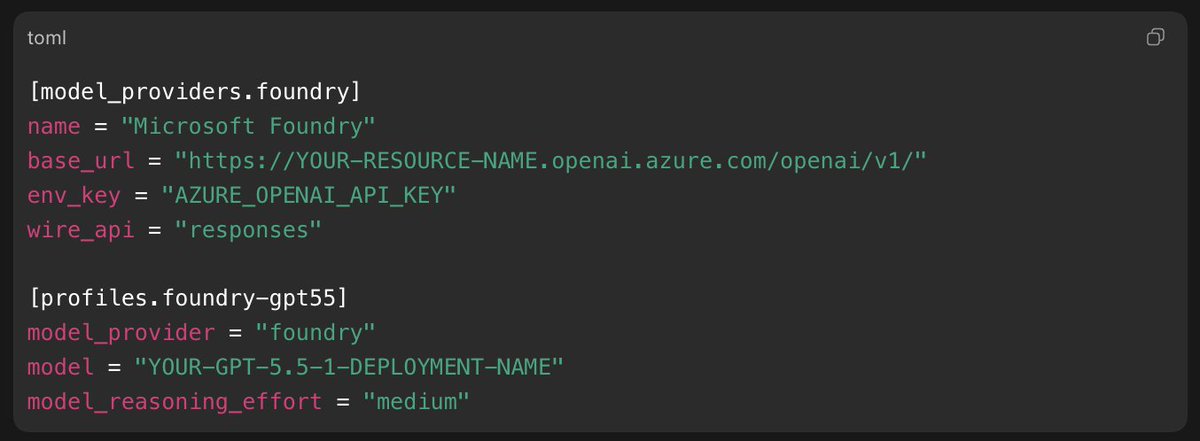
@BradGroux shared (7 likes, 2 bookmarks, 505 views) a config.toml setup for running ChatGPT 5.5 or Codex 5.3 via Microsoft Foundry in the Codex app: "I've been building an Unreal Engine game for 10-straight hours with /goal."
@_simonsmith built (4 likes, 2 bookmarks, 461 views) a Video Overview Generator skill for Codex using GPT Image 2 and text-to-speech, requesting: "OpenAI: Why not make speech generation a native tool in ChatGPT and Codex, like image generation?"
Comparison to prior day: On May 3, Codex shipped Auto-Review and /goal as autonomy features. Today the ecosystem expands laterally: migration tools to convert Claude Code setups, Symphony for task tracker integration, Foundry config for enterprise Azure models, and community-built skills for multimedia generation. OpenAI is building a platform, not just a coding agent.
1.7 The Multi-Tool Stack Emerges as Standard Practice 🡕
@LottoLabs listed (21 likes, 8 replies, 3 bookmarks, 784 views) their active stack: "Hermes + 27b 2x3090, Opencode + k2.6 + 5.5, Gemini 3.1 Pro, Perplexity Pro."
@WiFiMoneyGuy shared (1 like, 2 bookmarks, 85 views): "My current stack for AI agents: Claude Code for design, OpenCode via OMO with Codex for heavy coding, Hermes + ViralBuilder for marketing."
@TechCyberCoder recommended (2 likes, 2 replies, 1 bookmark, 47 views) a budget combo: "codex $20 + minimax $20 (practically unlimited) + deepseek $5 (pay as you go, 10mil tokens) + $10 opencode (access to most open-source models like Kimi)."
@mdlahfir described (1 bookmark, 89 views) a task-segmented workflow: "Brainstorm/Plan using Opus 4.7 (Max), Implement using Kimi-k2.6/Deepseek v4 pro via opencode, Review using GPT-5.5 (XHigh), Test in parallel."
@GeoffreyHuntley argued (2 likes, 1 bookmark, 21 views): "engineers at companies should indeed build their own CODING harness for personal development reasons but indeed should consume from whatever and wherever they get tokens fastest and cheapest."
Discussion insight: The pattern is clear: no single tool wins. Power users run 3-5 tools simultaneously, routing tasks by cost sensitivity, model quality, and rate limits. The emerging standard is a frontier model for planning/review (Opus 4.7 or GPT-5.5), a budget model for implementation (DeepSeek, Kimi, Qwen via OpenCode), and a dedicated agent for orchestration (Codex or Claude Code).
Comparison to prior day: On May 3, the multi-tool theme was implicit in the $20/month decision threads. Today it becomes explicit with multiple users publishing their complete stacks. The conversation moves from "which tool" to "which combination of tools."
2. What Frustrates People
GitHub Copilot Token Economics Shock -- High
@theo demonstrated (814 likes, 68,932 views) that 15 messages consumed $221 in tokens -- 1.6% of a $40 plan. @merill confirmed this as a known dynamic: "Sad to see it come to an end next month when Microsoft switches to counting token usage vs counting requests." @Vishal_anton16 reported (1,039 views): "Even copilot removed frontier models from github student pack. They gonna lose the consumer end badly."
Coping strategies: Switch to budget models for routine tasks (KarenPayneMVP). Split budget across multiple tools (iAmBipinPaul's $40 three-way split). Leverage Copilot's superior caching (Doctorthe113).
Claude Code Session Limits Still Frustrating Power Users -- Medium
@willisdeving compared: testing Codex on top of Claude Max, "I don't hit 5-hour session limits" -- implying Claude's limits were a persistent issue. @haiyami9x reported (2 likes, 771 views) that "Hermes feels just as bloated as OpenClaw, and the AI seems to lose lots of IQ points compared to the exact same AI model in Codex (context bloat issue maybe?)." @bnistordev shared (3 likes, 3 replies, 44 views) being banned from Anthropic Pro "2 days after the subscription" for "persistent suspicious patterns" while just writing a D&D adventure.
Coping strategies: Use Codex for long sessions. Route through OpenCode for budget tasks. Accept the 5-hour cooldown rhythm.
Vibe Coding Distribution Gap -- Medium
@GrammarHippy identified that "Claude can't market your vibe coded app." @zuess05 described developers "violently avoiding doing sales." @AlexIsBuilding warned (10 likes, 3 bookmarks, 265 views): "Everyone is vibe coding wrong. They're building an app that costs them $200+ in subscriptions and API credits. Only to get no users."
Coping strategies: None offered -- this frustration is framed as a skills gap, not a tooling problem.
3. What People Wish Existed
Codex Mobile App for Agent Management
@nickcammarata requested (14 likes, 4 replies, 672 views): "openai so im gonna need that codex iphone app for the seven minutes a day im not managing my agents on my laptop." @HarshithLucky3 envisioned (29 likes, 8 bookmarks, 1,462 views) controlling Antigravity from glasses: "tracking background tasks while walking, debugging failed tests on the go, approving code execution from a tiny HUD."
Urgency: Medium. With /goal enabling multi-hour autonomous sessions, the need for mobile monitoring grows proportionally.
Native Speech Generation in Codex
@_simonsmith requested (13 likes, 765 views): "What do you think about adding a speech generation tool in ChatGPT and Codex so, like image generation, we can generate speech output?" He demonstrated (4 likes, 2 bookmarks) a workaround using the OpenAI API, but noted this requires API key setup that a native tool would eliminate.
Urgency: Low. Niche use case but points to Codex evolving beyond code into multimedia production.
Unified Multi-Agent CLI
@RobertTLange built (5 likes, 2 bookmarks, 212 views) headless-cli: "A single light-weight unified interface for headless coding agent execution, including Codex, CC, Pi, OpenCode, Gemini CLI and Cursor Agents." It supports local, dockerized, and modal cloud execution with session resuming and tmux wrapping.
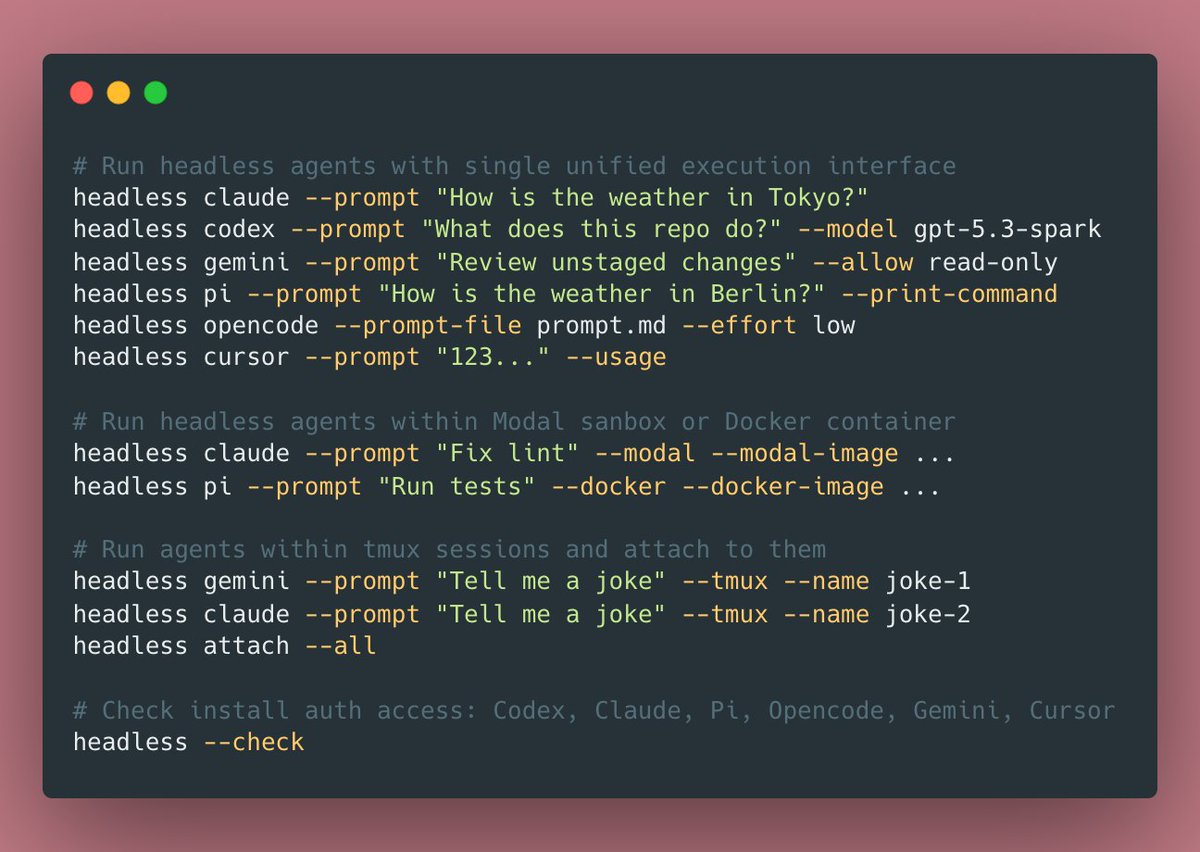
Urgency: High. The multi-tool stack (Section 1.7) creates demand for a single orchestration layer. headless-cli is the first open-source attempt.
4. Tools and Methods in Use
| Tool | Category | Sentiment | Strengths | Limitations |
|---|---|---|---|---|
| OpenAI Codex | Agent platform | (+) | Migration tool for Claude Code setups (WesRoth); Symphony orchestrator (MervinPraison); Foundry/Azure integration (BradGroux); pets gamification; NPM downloads 1,397% WoW | Token costs exposed at scale (theo $221/15 messages) |
| Claude Code | Terminal agent | (+/-) | Deep infrastructure layer: CLAUDE.md, skills, hooks (Dharmikpawar31, zodchiii, coder_surya); 22 mentions in dataset; race bug detection praised (ZPostFacto) | 5-hour session limits (willisdeving); account bans (bnistordev); download share declining 38% WoW |
| Google Antigravity | IDE agent | (+) | Tutorial ecosystem dominance (JulianGoldieSEO 4 posts, boredabdel Firebase course, realpython definition); Gemini 3.5 Pro anticipated for I/O (EdenKollcinaku, 167 likes) | Absent from production tool-choice discussions; DaytonDavis "probably better than Google Antigravity though haha" |
| GitHub Copilot | IDE completion | (-) | Superior caching vs OpenCode (Doctorthe113); Auto mode removes model choice friction (JamesMontemagno, 16 likes) | $221/15 messages economics (theo); frontier model removals; student pack downgrades (Vishal_anton16) |
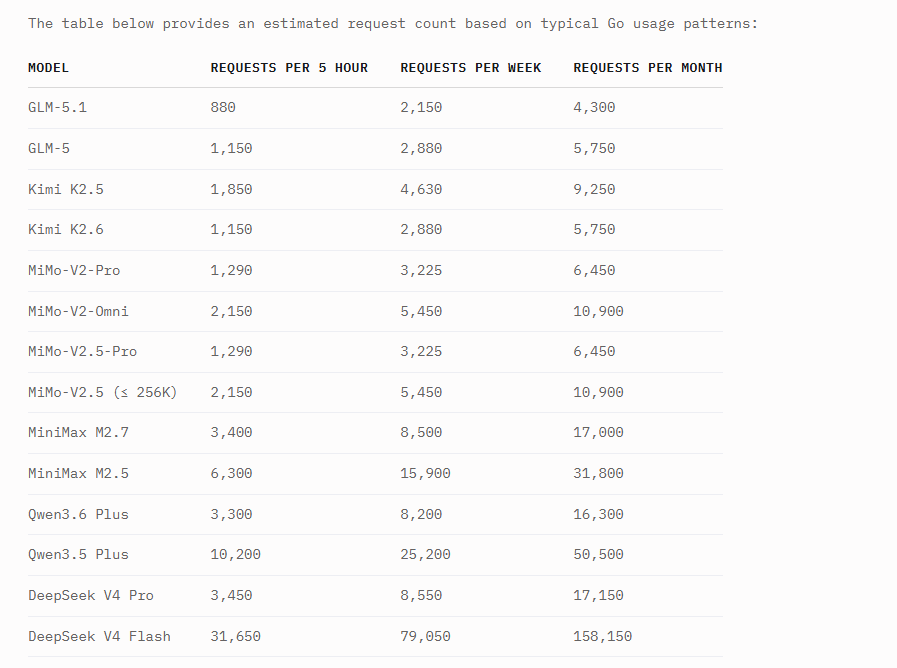
| OpenCode | Terminal agent | (+) | $10/month budget tier; OpenCode Go request limits visualized (bianco_____); DeepSeek/Kimi/Qwen routing | Ollama has bad rate limits for agentic use (thesherlocker); context bloat reducing model IQ (haiyami9x) |
| Hermes | Agent harness | (+/-) | Uses existing OpenAI subscriptions; marketing via ViralBuilder integration (WiFiMoneyGuy) | "Feels as bloated as OpenClaw" (haiyami9x); less documented |
| DeepSeek v4 Pro | Model | (+) | Budget implementation model; Anthropic-compatible endpoint; $5 pay-as-you-go tier (TechCyberCoder) | Not benchmarked for complex production tasks |
| GPT-5.5 | Model | (+) | "great high IQ all rounder" in Codex (LacertaXG1); available via Foundry for enterprise (BradGroux) | Expensive through OpenCode (nexxeln, May 3 carryover) |
5. What People Are Building
| Project | Who built it | What it does | Problem it solves | Stack | Stage | Links |
|---|---|---|---|---|---|---|
| Open Design | @alifcoder | Open-source clone of Claude Design with 19 skills and 71 design systems (Linear, Stripe, Vercel, Airbnb, Tesla, Apple) | Paid design tool dependency; vendor lock-in | Apache 2.0, works with Claude Code, Codex, Cursor, Gemini CLI, OpenCode, Qwen | Shipped | Post |
| headless-cli | @RobertTLange | Unified interface for headless agent execution across Codex, Claude Code, Pi, OpenCode, Gemini CLI, Cursor | Multi-tool switching overhead; no unified orchestration | TypeScript, Docker, Modal, tmux | Shipped | Post |
| Video Overview Generator | @_simonsmith | Codex skill that generates video overviews using GPT Image 2 and TTS | NotebookLM-style output without leaving Codex | Codex skills, OpenAI API, GPT Image 2, TTS | Shipped | Post |
| Symphony | @MervinPraison (OpenAI) | Open-source orchestrator connecting Codex agents to task trackers and coding workflows | Scaling autonomous engineering; human review bottleneck | Open-source, Codex agents | Announced | Post |
| Unreal Engine game via /goal | @BradGroux | Game built over 10 continuous hours using Codex /goal with Foundry-hosted models | Long autonomous coding sessions; Azure model access in Codex | Codex, /goal, Unreal Engine, Microsoft Foundry, GPT-5.5 | In progress | Post |
| GenlLayer frontend | @MystiqueMide | AI consensus app using equivalence principle, frontend polished with Gemini 3.1 Pro | Decentralized decision-making UI | Antigravity, Gemini 3.1 Pro (high), GenlLayer | In progress | Post |
| AutoTechSpot | @SeHozaifa | Auto-tech review site built and deployed for $0 using vibe coding | Zero-budget web publishing | Vibe coding, Vercel | Shipped | Post |
| OmniRoute | @Maximus_W3 | Open-source AI aggregator for routing between OpenCode, Cursor, and Codex with automatic key rotation | Provider switching overhead; rate limit management | Open-source | Announced | Post |
| mex | @daksh_jaitly (via @Debo_dxr) | Persistent memory system for AI coding agents using Markdown scaffold; CLI drift detection | AI agents forgetting context between sessions; CLAUDE.md token waste | TypeScript, MIT, 700+ GitHub stars | Shipped | Post |

6. New and Notable
Codex NPM Downloads Cross Over Claude Code
@tickerplus reported that Codex overtook Claude Code in weekly NPM downloads on April 30, with the week ending May 3 showing Codex at 86.1M (+1,397% WoW) versus Claude Code at 7.2M (-38% WoW). This is the first concrete market share data showing a momentum reversal in the agent coding tool space. Whether the spike is organic adoption or CI/CD automation inflating numbers remains to be seen.
OpenAI Symphony: Open-Source Agent Orchestration
@MervinPraison introduced Symphony as an open-source orchestrator for Codex agents that connects task trackers to coding workflows. "Agents execute. Humans review." This formalizes the pattern that /goal started: agents run autonomously, humans approve results. Symphony adds the project management integration layer.
Amazon Rolls Out Claude Code and Codex Company-Wide
@BusinessInsider reported (3,998 views) Amazon expanding its use of external AI coding tools. This is significant because Amazon owns a competing tool (Amazon Q Developer) and invested $4B in Anthropic -- yet still deploys both Claude Code and Codex internally, suggesting no single tool satisfies enterprise needs.
Open-Source Agent Trace Collection Initiative
@0xSero called (10 likes, 474 views) for developers to contribute their Claude Code and Codex session data to train better open-source models: "Models better than Opus. We need as many people as possible to contribute their agent traces." This represents an attempt to create open training data from real agent-coding workflows.
Copilot CLI Running Offline with Local Models
@elbruno demonstrated (1 like, 2 bookmarks, 204 views): "Time to run GitHub Copilot CLI offline with local models + GPU... Real run, real token burn (~2M), nice lessons learned. The CPU-only version was the reality check. GPU really changes everything."
7. Where the Opportunities Are
[+++] Usage-Based Cost Visibility and Optimization for AI Coding -- theo's $221/15 messages post (814 likes, 68,932 views) is the day's dominant signal. As GitHub Copilot transitions to token-based billing, no tool provides real-time cost tracking, per-task cost attribution, or automatic model downgrading when spend exceeds thresholds. The iAmBipinPaul multi-tool budget split and mdlahfir task-segmented workflow are manual approximations of what should be automated. A cost-aware routing layer that automatically selects models by task complexity and remaining budget would serve every developer facing the post-flat-rate world.
[+++] Unified Multi-Agent Orchestration Layer -- headless-cli (RobertTLange), OmniRoute (Maximus_W3), and the multi-tool stacks described by LottoLabs, WiFiMoneyGuy, and TechCyberCoder all point to the same gap: developers run 3-5 coding agents but manage them independently. A production-grade orchestration layer that routes tasks across Codex, Claude Code, OpenCode, and Gemini CLI based on cost, rate limits, and model strengths would consolidate the fragmented workflow. Symphony partially addresses this for Codex alone.
[++] Persistent Agent Memory Beyond CLAUDE.md -- mex (700+ GitHub stars) addresses context drift between sessions. Dharmikpawar31's Claude Code template and zodchiii's skills folder walkthrough show growing investment in project-level agent memory. The gap: these solutions are Claude Code-specific. A cross-platform agent memory system that works with any coding agent (Codex, Claude Code, Cursor, OpenCode) would serve the multi-tool stack users.
[++] Marketing and Distribution Tools for Vibe-Coded Products -- GrammarHippy (10 likes), zuess05 (7 likes), AlexIsBuilding (10 likes) all identify the same gap: AI made building easy but did nothing for distribution. A tool that takes a shipped vibe-coded app and generates landing pages, social copy, Product Hunt launches, and SEO-optimized content would complete the solo builder workflow.
[+] Open-Source Agent Trace Dataset -- 0xSero's call (10 likes, 474 views) for contributing Claude Code and Codex session data to train better models identifies a supply-side gap: there is no large-scale open dataset of real agent-coding sessions. A curated, anonymized dataset of agent traces could accelerate open-source model quality for coding tasks.
8. Takeaways
-
Copilot token economics expose the end of flat-rate AI coding. theo's $221-for-15-messages screenshot (814 likes, 68,932 views) is the day's most viral post by a factor of 5, demonstrating that frontier model usage at scale is incompatible with flat monthly pricing. GitHub's transition to token-based billing is not punitive -- it is arithmetic. (source)
-
Codex overtakes Claude Code in NPM downloads as momentum shifts. TickerTrends data shows Codex at 86.1M weekly downloads (+1,397%) versus Claude Code at 7.2M (-38%), with the crossover on April 30. Combined with Amazon deploying both tools company-wide and Codex's expanding feature set (Symphony, migration tools, Foundry integration), OpenAI is winning the platform race while Anthropic retains the engineering-practices audience. (source)
-
Multi-tool stacks become standard practice, not an edge case. Multiple users (LottoLabs, WiFiMoneyGuy, TechCyberCoder, mdlahfir) independently published 3-5 tool stacks with task-specific routing. The emerging pattern: frontier model for planning, budget model for implementation, dedicated agent for orchestration. headless-cli is the first open-source attempt at unifying this. (source)
-
Claude Code retains deep engineering engagement despite losing download share. With 22 mentions of "Claude Code" and 7 of "CLAUDE.md" in today's dataset, plus detailed infrastructure posts (Dharmikpawar31's five-layer architecture, zodchiii's skills walkthrough, AnandButani's prompting thread), Claude Code users are investing in project-level configuration that creates switching costs. Downloads may measure adoption breadth; CLAUDE.md mentions measure adoption depth. (source)
-
The vibe coding conversation matures from "is it good" to "what comes after v1." WSJ coverage (23,980 views), GrammarHippy's marketing gap observation, and zuess05's "violently avoiding sales" satire collectively shift the discourse from technical capability to business viability. The ceiling is no longer code quality -- it is distribution. (source)
-
Antigravity floods the tutorial pipeline but remains absent from production discourse. JulianGoldieSEO published four course posts in one day, boredabdel promoted a Firebase game-building course, and EdenKollcinaku's Gemini 3.5 Pro prediction drew 167 likes. Yet Antigravity appears in zero tool-comparison threads and zero stack descriptions. The platform is winning educators but not practitioners. (source)