Twitter AI Coding - 2026-05-05
1. What People Are Talking About
1.1 GitHub Copilot Pricing Fallout Continues; Brand Damage Narrative Emerges 🡕
@theo posted (1,096 likes, 68 replies, 4 quotes, 150 bookmarks, 102,373 views) a follow-up screenshot showing "15 messages - $221 of tokens - 1.6% of my $40 plan used," concluding: "It's obvious that GitHub couldn't keep this model for billing on Copilot." The post quotes his own earlier discovery of spending $30 of inference on a single 60M-token message. In the replies, @bytecrafter_1 explained: "one agent loop chews through what used to be 100 autocompletes worth of inference, the flat 1500-message cap was never going to survive once agentic flows shipped."

@GergelyOrosz declared (97 likes, 9 replies, 13 bookmarks, 9,389 views): "Copilot is a case study of how to wreck a brand with AI slop. GitHub Copilot was a good product and remained one. Every other Copilot was rushed, poor quality, and turned the Copilot brand into something most people hate." The post quotes Xbox CEO Asha Sharma announcing they are "winding down Copilot on mobile" and stopping console development. In replies, @diullei agreed: "github copilot solved a real problem. most copilots after that felt like a feature looking for a use case."
@iBhanuDahiya reported (7 likes, 4 replies, 185 views): "The '$19 a month for unlimited AI' era ended this week. GitHub Copilot rolled out usage based billing. Sonnet went from 1x to 9x, Opus from 3x to 27x. A long agent session that used to count as one premium request now costs up to 27x more."
@MSiekmoeller predicted (16 likes, 10 replies, 503 views): "The number of vibe coders will halve by the end of the year: GitHub Copilot usage-based pricing incoming June 1, 2026. Others have already raised. The rest will follow."
Discussion insight: The GergelyOrosz thread reveals a split between those who see GitHub Copilot as a fundamentally sound product damaged by Microsoft's brand extension strategy, and those (like @noah_vandal) who question whether "even GH copilot is questionable as to whether it was done correctly." The pricing thread surfaces a distinct perspective from @JulieLovesTech: "that's not a pricing problem. that's a business model problem. GitHub priced Copilot for coding assistance. not for people running full research workflows through it."
Comparison to prior day: On May 4, theo's pricing screenshot was the top story centered on raw economics ($221 for 15 messages). Today the conversation evolves: GergelyOrosz escalates from pricing to brand damage, MSiekmoeller projects industry-wide consequences, and Xbox's Copilot shutdown adds a concrete data point. The narrative shifts from "how much does it cost" to "the Copilot brand is damaged beyond repair."
1.2 OpenAI 10x Codex Credits Create Community Loyalty Surge 🡕
@DeryaTR_ celebrated (63 likes, 6 replies, 1 quote, 2 bookmarks, 2,606 views): "OpenAI just 10x'd Codex limits for a month for everyone who applied to the OpenAI party! What an incredibly nice gesture!" quoting Sam Altman's promise to "do something nice for everyone who applied for the GPT-5.5 party."
@RileyRalmuto confirmed (22 likes, 6 replies, 2 bookmarks, 1,231 views): "hey nerds if you applied but didnt get an invite to the OpenAI shindig, check your email. 10x codex credits for a month!"
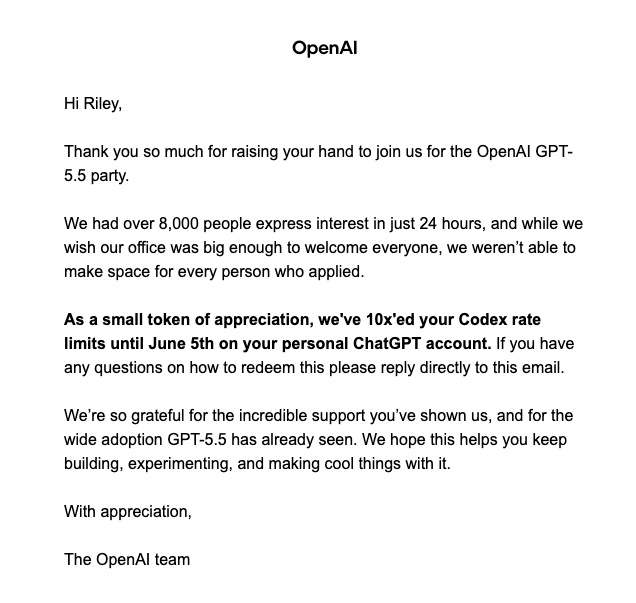
@tonysimons_ reacted (12 likes, 4 replies, 1 quote, 1,007 views): "HOLY SHIT! 10x Codex for the next month?! THANK YOU @sama @thsottiaux @OpenAI"
@argofowl offered (39 likes, 9 replies, 1,060 views) the comic counterpoint: "i'm devastated that i didn't apply for the openai event party now i'm sitting here like a loser without 10x usage. is it even worth it anymore? does anything even matter?"
@morganlinton leveraged (7 likes, 4 replies, 359 views) the credits immediately: "I'm building an entire operating system since OpenAI 10x'ed my credits, just checking in on Codex between meetings. Kernel built."
Discussion insight: @PaulGugAI saw through the goodwill: "Very clever! Huge consolation for those that couldn't attend. Their PR team wasn't born yesterday, clearly!" Meanwhile @Parental_OnX flagged the exclusion problem: "It IS a really cool gesture, but also feels kind of bad as someone who would GLADLY have applied if I was capable of going, but instead chose to opt out of applying so someone else could attend instead."
Comparison to prior day: On May 4, the Codex narrative focused on feature expansion (Symphony, /goal, Pets). Today OpenAI shifts to community-building strategy, using compute credits as a loyalty tool. The 10x credit drop is a distribution play: get heavy users deeply embedded in Codex workflows during the month, creating switching costs before the credits expire.
1.3 Codex vs Claude Code: The Compute War Intensifies 🡕
@VraserX argued (36 likes, 12 replies, 2 bookmarks, 2,046 views): "Dario Amodei must be crying in his sleep watching OpenAI 10x Codex limits after GPT-5.5. Anthropic didn't fumble because Claude is bad. They fumbled because compute is the game now." In replies, @hAirJordan01 pushed back: "they lapped OAI in ARR and growth rate. You are not a serious person." VraserX countered: "codex has now more downloads than Claude Code and OpenAI can serve way more users."
@Legendaryy validated (12 likes, 5 replies, 744 views): "i'm on the $200 codex plan and i can't hit the limits. the $20 plan would cover most devs comfortably. claude code was the honeymoon, openai is buying the developer back and the math is working."
@aiedge_ summarized (7 likes, 9 replies, 1 quote, 626 views) Anthropic's predicament: "Anthropic only has 2 moves to stay in the race right now: 1. Release Mythos 2. Raise usage limits. The OpenAI/Codex team has been cooking."
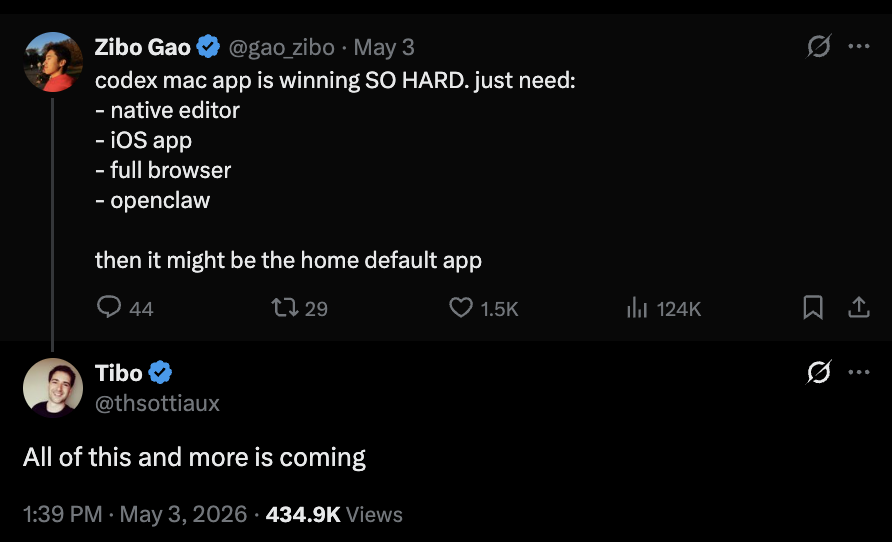
@WesRoth reported (25 likes, 6 replies, 3 bookmarks, 833 views): "The OpenAI Codex Mac app is already dominating the developer space. Head of Codex just confirmed that a native editor, an iOS app, full browser capabilities, and OpenClaw integration are all officially inbound." In replies, @dahulilang offered the nuanced take: "Claude Code is better in raw capability but Codex is better in ecosystem."
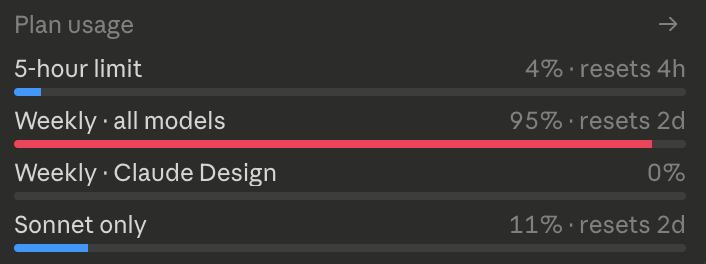
@Layton_Gott shared (8 likes, 7 replies, 1 quote, 4 bookmarks, 89 views) a workaround: "Claude Code limits are brutal... although you can save 50-75% of tokens if you do this." In replies, @jeromeq2004 diagnosed the structural issue: "limits are how anthropic ships profit margin. sonnet was generous to onboard you, opus is the fence."
@vadymsyliava compared (2 likes, 1 reply, 1 bookmark, 49 views) directly: "Claude Code @AnthropicAI $200 Max Plan VS Codex @OpenAI $100 Plan. The difference is obvious."
Discussion insight: The debate reveals two camps: those who evaluate on raw model quality (Claude wins on capability) versus those who evaluate on usable compute per dollar (Codex wins on limits). The @dahulilang framing -- "better in raw capability vs better in ecosystem" -- may be the most accurate synthesis.
Comparison to prior day: On May 4, the Codex-vs-Claude narrative focused on NPM download data (Codex overtaking Claude Code on April 30). Today it moves from market share metrics to economic fundamentals: OpenAI's compute advantage means they can offer 10x credits as marketing while Anthropic cannot match. The argument shifts from "who has more users" to "who can afford to subsidize usage longer."
1.4 Google Antigravity: Tutorial Saturation vs Production Skepticism 🡒
@JulianGoldieSEO published three Antigravity course posts: a 4-hour course (59 likes, 15 retweets, 60 bookmarks, 2,580 views), a 2-hour course (18 likes, 5 retweets, 12 bookmarks, 528 views), and another 2-hour course (14 likes, 5 retweets, 6 bookmarks, 421 views).
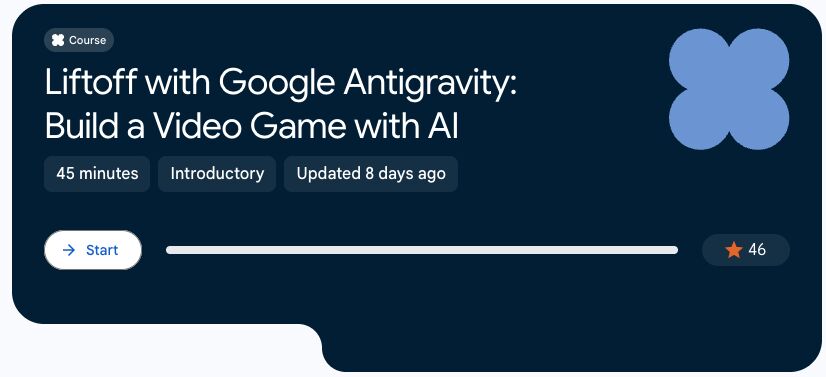
@boredabdel promoted (15 likes, 2 retweets, 10 bookmarks, 618 views): "Build a Video Game with Google Antigravity and Firebase! The hands-on course will first guide you to install and get started with Antigravity, you'll use Firebase to enable services for the apps you build. Finally, you'll build a video game, Voyager, by prompting agents in Antigravity to work in parallel."
@thefox shipped (492 likes, 45 retweets, 36 replies, 10 quotes, 226 bookmarks, 59,581 views) an actual production feature: "Just shipped AI-powered key moments in Google Finance so you can understand major price swings in stock charts and jump to key moments in corporate earnings calls. Small team built these features from the ground up (and fast) using @Antigravity."
@MetacriticCap critiqued (50 likes, 5 replies, 2 quotes, 4 bookmarks, 8,504 views): "Gemini is SOTA in the sense that everyone thinks that using it within Cursor, Antigravity, or Opencode would be great. However, no one actually uses Gemini with these tools." In replies, @PmQuant pushed back: "You're uninformed. It's still the best multimodal model. Gemini is behind in coding for sure, but still SOTA in many things."
@igboonaija3 complained (5 likes, 1 retweet, 1 quote, 3 bookmarks, 825 views): "LLMs are still very dumb. I paid for Antigravity, but this guy is still less capable than a junior developer. Google really needs to fix Gemini."
Discussion insight: thefox's Google Finance feature (492 likes, 59K views) is the second-highest-engagement post in the entire dataset, yet it stands alone as the only production Antigravity use case. The gap between the massive tutorial pipeline (JulianGoldieSEO, boredabdel) and actual production usage signals that Antigravity is still in the "learning tool" phase rather than the "shipping tool" phase.
Comparison to prior day: On May 4, Antigravity dominated tutorial volume with JulianGoldieSEO's four-post saturation while remaining "absent from production tool-choice discussions." Today thefox's Google Finance ship breaks that pattern -- a concrete production use case from inside Google -- but the broader community still treats Antigravity as a learning platform. MetacriticCap's "no one actually uses Gemini" take adds a model-quality angle that wasn't present yesterday.
1.5 AI Tool Choice Paralysis and the Multi-Tool Reality 🡒
@isha_singh06 asked (42 likes, 40 replies, 1 bookmark, 887 views): "Everyone which one should I choose? - Claude - Codex - Cursor - Antigravity - GitHub Copilot." The 40-reply thread became a real-time tool poll with no consensus.
@ghumare64 argued (1 like, 2 bookmarks, 24 views): "The 'Cursor vs Claude Code vs Codex vs Copilot' debate is the wrong debate. Developers are not choosing one AI coding tool. They are building a stack. JetBrains' 2026 survey says 90% of developers now regularly use at least 2 AI coding tools."
@old_sound offered (2 likes, 2 replies, 1 bookmark, 284 views) a cynical perspective: "After 3 months using GitHub Copilot, Codex, and Claude Code my take is that the best AI is the one you are not using. Spent 200+ bucks on codex to optimize some inference kernels. Nothing, after 2 days in /goal mode. Results vary wildly."
@verycracked switched (7 likes, 3 replies, 60 views): "@aaronmahlke has converted me. @opencode is now my daily, running inside of Ghostty."
@PopCatalin requested (13 likes, 3 replies, 3 quotes, 451 views): "@elonmusk Please work with @github and @Microsoft to make Grok 4.3 available in Github Copilot CLI." Users want maximum model diversity inside their preferred harness.
Comparison to prior day: On May 4, multi-tool stacks were published by power users (LottoLabs, WiFiMoneyGuy, TechCyberCoder). Today the conversation moves upstream to beginners: isha_singh06's "which one should I choose" (40 replies, no consensus) shows the complexity has reached mainstream developers. The JetBrains survey data from ghumare64 validates multi-tool as standard practice, not power-user behavior.
1.6 Vibe Coding: From Hype to Revenue Reality 🡖
@jsaunders_ summarized (9 likes, 9 retweets, 2 bookmarks, 398 views) Naval Ravikant's new podcast: "He revealed: Why pure software is now 'uninvestable,' why Apple is making 'the biggest mistake' of the decade, and the workflow that turns 9 engineers into 1 person."
@sierracatalina declared (12 likes, 3 replies, 246 views): "vibe coding is dead. I rotcode from bed now."
@zuess05 satirized (4 likes, 6 replies, 117 views): "Prompting Claude with 'Is my SaaS idea good?' Getting a 4-paragraph essay back about your 'massive TAM' and 'disruptive potential.' Vibe-coding the entire product in 48 hours. And then staring at a $0 dashboard wondering what went wrong."
@wenyanhh advised (2 likes, 1 bookmark, 22 views): "founders should stop vibe coding. vibe coding is the easiest thing to do right now. although it feels like progress, it is not. instead: rewrite your landing page until it actually converts, show up at an IRL event."
@MLStreetTalk pushed back (4 likes, 1 reply, 1 bookmark, 67 views) harder: "I call bullshit. As someone who has been vibe coding non-stop since 2023 on serious projects I can tell you for a fact that it at best creates more work and more gainful employment for SEs."
@orangie announced (44 likes, 18 replies, 3 bookmarks, 5,404 views): "First $500 winner chosen. I am hosting another $500 vibe coding competition inside the same discord." The vibe coding competition model continues to draw engagement from the crypto-adjacent community.

Comparison to prior day: On May 4, the vibe coding discourse was about the "distribution gap" -- building is easy, marketing is hard. Today the skepticism deepens: MLStreetTalk calls it outright counterproductive, sierracatalina declares it dead, and wenyanhh frames it as avoidance behavior. Meanwhile orangie's competition shows vibe coding still thrives as community entertainment. The gap between "vibe coding as serious engineering practice" and "vibe coding as community sport" widens.
1.7 OpenCode and Terminal Agent Ecosystem Growth 🡕
@kmdrfx showcased (118 likes, 9 retweets, 6 replies, 1 quote, 28 bookmarks, 9,685 views): "Exploring a which-key like plugin for OpenCode while working on integrating the new OpenTUI keymap as sole key/cmd handling engine. OpenTUI keymap is extremely extensible by plugins and will enable a proper vim plugin with motions."
@bentlegen noted (21 likes, 1 reply, 3 bookmarks, 671 views) a milestone: "Feels like a major milestone having local devtools founders like @jayair (@opencode) and @Sirupsen (@turbopuffer) on the stage at Homecoming" at Toronto Tech Week.
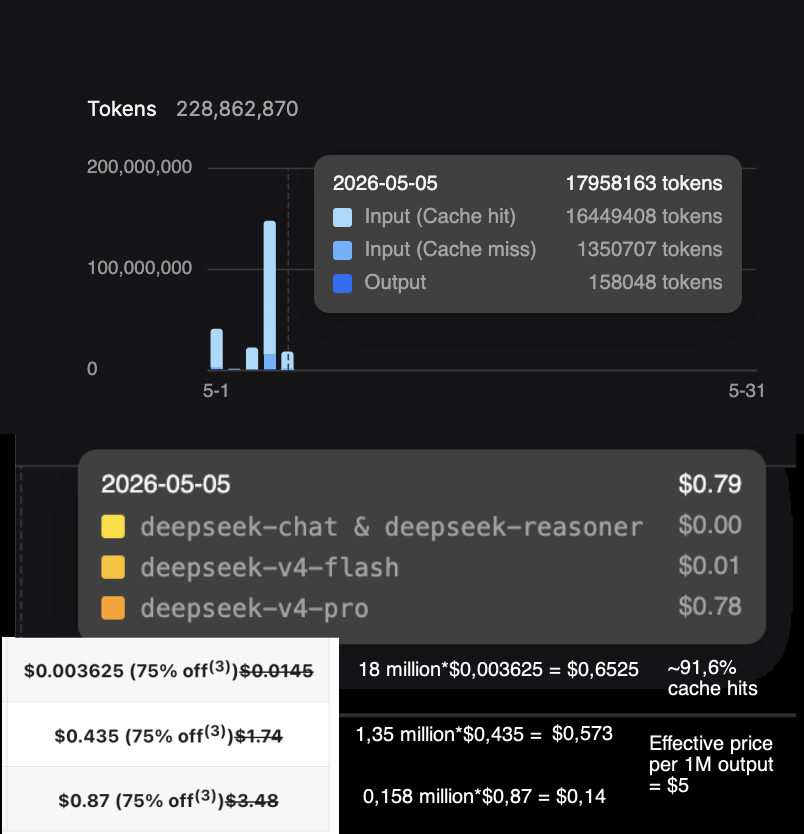
@teortaxesTex explained (20 likes, 2 replies, 2 bookmarks, 1,973 views) cost optimization: "it's very important to build agents that maximize cache hits. That's the main axis of cost reduction with V4. Here, with OpenCode, I've had 91.6% cache hit. If it were the typical 96%, the cost would've been 30% lower."
@OpenCodeLog announced (4 likes, 1 bookmark, 154 views) v1.14.38: "Desktop trusts system CAs; UI CSP now allows external connections; Node/Nix packaging refreshed; Zed artifacts updated."
@prathamkode recommended (3 likes, 2 replies, 43 views) the budget path: "If you wanna start vibecoding and don't have big budgets start with opencode go."
Discussion insight: kmdrfx's which-key plugin post (118 likes, 9,685 views) is the fifth-highest engagement in the dataset, suggesting strong demand for vim-style keyboard-driven workflows in terminal agents. The comment from @Beethoven779 -- "I am switching from cli to their desktop app. Even a simple up/down arrow keys does not work" -- highlights that CLI UX is still a barrier for some users despite enthusiast interest.
Comparison to prior day: On May 4, OpenCode appeared primarily as a budget routing tool ($10/month tier). Today it gains ecosystem legitimacy through kmdrfx's high-engagement plugin work, Toronto Tech Week stage presence, and teortaxesTex's sophisticated cost analysis. OpenCode is transitioning from "cheap alternative" to "serious platform."
2. What Frustrates People
Copilot Token Economics and Brand Erosion -- High
@theo demonstrated (1,096 likes, 102,373 views) that 15 messages consumed $221 in tokens. @GergelyOrosz escalated (97 likes, 9,389 views) the criticism to brand level: "turned the Copilot brand into something most people hate." @JamesFredley reported (1 like, 2 replies, 19 views): "I just disabled GitHub Copilot in @opencode. 19 of 300 monthly requests used. Overage enabled. Still failing mid-task."
@dan_note flagged (3 likes, 1 bookmark, 278 views) a separate issue: "How the hell do I disable @github Copilot reviews for my org? I don't want it. It pollutes PRs with sloppy comments and distracts contributors."
Coping strategies: Switch to OpenCode for budget tasks (prathamkode). Disable Copilot entirely (JamesFredley). Split budget across tools.
Claude Code Rate Limits as Profit Mechanism -- Medium
@Layton_Gott shared token-saving techniques but @jeromeq2004 diagnosed the root cause: "limits are how anthropic ships profit margin. sonnet was generous to onboard you, opus is the fence. the trick savings are nice but its arms race vs the throttle, not a fix." @vadymsyliava showed the $200 Claude Max plan delivering less usable compute than the $100 Codex plan.
Coping strategies: Token reduction workflows (Layton_Gott claims 50-75% savings). Switch to Codex for volume tasks. Accept rate-limit rhythm.
Gemini Model Quality Lagging in Coding Tasks -- Medium
@igboonaija3 stated (5 likes, 3 bookmarks, 825 views): "I paid for Antigravity, but this guy is still less capable than a junior developer. Google really needs to fix Gemini." @MetacriticCap observed (50 likes, 8,504 views): "no one actually uses Gemini with these tools."
Coping strategies: Use Gemini for multimodal tasks only. Pair Antigravity with Claude or Codex models when possible.
FOMO and Exclusionary Access Patterns -- Low
@argofowl lamented (39 likes, 1,060 views): "i'm devastated that i didn't apply for the openai event party now i'm sitting here like a loser without 10x usage." @Parental_OnX raised the fairness issue: those who deliberately opted out of applying to leave room for others received nothing.
3. What People Wish Existed
Codex Native Editor and Mobile App
@WesRoth reported (25 likes, 833 views) that the Codex team confirmed "a native editor, an iOS app, full browser capabilities, and OpenClaw integration are all officially inbound." @gonlenidefi highlighted demand: "native editor is the part that actually matters to me. ios app might make my coffee shop coding addiction worse."
Urgency: High. Confirmed inbound but not yet shipped. Users already building 10-hour sessions via /goal need mobile monitoring.
Grok in GitHub Copilot CLI
@PopCatalin requested (13 likes, 3 quotes, 451 views): "@elonmusk Please work with @github and @Microsoft to make Grok 4.3 available in Github Copilot CLI (not windows copilot for anyone confusing them)." Users want model diversity inside their preferred harness without switching tools.
Urgency: Medium. Reflects the broader desire for model-agnostic coding harnesses.
Warmer AI Personality in Coding Models
@Youssofal_ requested (9 likes, 6 replies, 1 bookmark, 1,016 views): "@OpenAI Warmer? If it is anything like Codex there is no warmth to be found here. You should make a seperate line of models with a decreased focus on intelligence and more emphasis on personality." In replies, @idontev63124802 countered: "Do you want to code or to be glazed about your code like a retard?"
Urgency: Low. Niche preference, but signals that pure capability optimization ignores developer experience.
Automated Code Review Without AI Slop
@code promoted (39 likes, 4 replies, 17 bookmarks, 4,653 views) turning team best practices into automated Copilot workflows. But @dan_note complained: "It pollutes PRs with sloppy comments and distracts contributors." The gap: automated code review that matches team quality standards rather than generating generic suggestions.
Urgency: High. The demand exists (VS Code newsletter, 17 bookmarks) but current implementation frustrates users.
4. Tools and Methods in Use
| Tool | Category | Sentiment | Strengths | Limitations |
|---|---|---|---|---|
| OpenAI Codex | Agent platform | (+) | 10x credit promotion; $20 plan covers most devs (Legendaryy); native editor/iOS inbound (WesRoth); /goal enables OS-building sessions (morganlinton) | "no warmth" (Youssofal_); $200 spent with no results on inference kernels (old_sound) |
| Claude Code | Terminal agent | (+/-) | 18 mentions in dataset; token-saving tricks (Layton_Gott 50-75%); 5 project tutorials (RelentlessNik); "better in raw capability" (dahulilang) | Limits are "how anthropic ships profit margin" (jeromeq2004); $200 Max delivers less than $100 Codex (vadymsyliava) |
| Google Antigravity | IDE agent | (+/-) | Production ship at Google Finance (thefox, 492 likes); Firebase game course (boredabdel); tutorial saturation (JulianGoldieSEO 3 posts) | "Less capable than a junior developer" (igboonaija3); "no one actually uses Gemini" in coding tools (MetacriticCap) |
| GitHub Copilot | IDE completion | (-) | Star Wars crawl demo (github, 124 likes); automated code review workflows (code, 17 bookmarks); Semantic Indexing for all workspaces (kkaminsk) | $221/15 messages (theo); brand "wrecked" by non-GitHub Copilots (GergelyOrosz); PR review pollution (dan_note) |
| OpenCode | Terminal agent | (+) | which-key plugin (kmdrfx, 118 likes); 91.6% cache hit (teortaxesTex); v1.14.38 shipped; Toronto Tech Week stage | Desktop app users struggle with basic navigation (Beethoven779) |
| Hermes Agent | Agent harness | (+) | Setup in 20 min vs 24 hrs with Copilot (Afkd3vil); self-improvement loops (Legendaryy); marketing via ViralBuilder | Less documented than competitors |
Summary: The tool landscape crystallizes into tiers: Codex leads on compute generosity and ecosystem expansion, Claude Code retains depth of engineering practice, OpenCode grows as the extensible terminal agent, and Antigravity dominates tutorials while struggling in production adoption. GitHub Copilot faces a brand crisis distinct from its technical capabilities.
5. What People Are Building
| Project | Who built it | What it does | Problem it solves | Stack | Stage | Links |
|---|---|---|---|---|---|---|
| AI-powered key moments in Google Finance | @thefox | Explains price swings in stock charts; jumps to key moments in earnings calls | Investor comprehension of market events | Antigravity, Google Finance | Shipped | Post |
| OpenTUI which-key plugin for OpenCode | @kmdrfx | Vim-style key discovery and extensible keymap engine for terminal coding agents | CLI discoverability; keyboard-driven workflow | OpenCode, OpenTUI | In progress | Post |
| Codex-in-Claude-Code plugin | @Oluwaphilemon1 | /codex:review, /codex:adversarial-review, /codex:rescue commands inside Claude Code | Cross-tool review without context switching | Claude Code, Codex plugin system | Announced | Post |
| Full OS via Codex /goal | @morganlinton | Building an entire operating system using Codex between meetings with 10x credits | Long autonomous coding without babysitting | Codex, /goal | In progress | Post |
| OpenAI Codex Pet NFT | @0rdlibrary | First Codex Pet minted as Metaplex Core Asset on Solana | Bridging AI coding culture with web3 collectibles | Codex Pets, Metaplex, Solana | Shipped | Post |
| Claude Code multi-agent for Shopify | @browomo (reporting) | 13 agents in Claude Code serving 200 dropshippers at $800/month each | Solo operator scaling e-commerce services | Claude Code, Shopify | Running | Post |
| Geology RAG solution | @_vmlops (reporting) | 60-year-old professor querying mineral documents with AI | Domain experts accessing their own knowledge base | Claude, Git | Shipped | Post |
| Agent Action Gate | @mnbowerresearch | Open-source pre-execution gate for AI agent actions with approval workflow | Agents need human approval before write operations | Open-source, v0.5.0 | Shipped | Post |
| Codex Ambassador Events Paris | @borvibe | Organizing Codex community events in Paris with Mollie Payments | Developer community building around Codex | Codex, community | Organizing | Post |
6. New and Notable
Google Finance Ships Antigravity-Built Features to Production
@thefox announced (492 likes, 226 bookmarks, 59,581 views) AI-powered key moments in Google Finance, built "from the ground up (and fast) using @Antigravity." This is the first high-visibility production feature explicitly attributed to Antigravity's agent-first workflow, breaking the pattern of Antigravity appearing only in tutorials. The 226 bookmarks suggest strong interest from builders watching to see if Antigravity delivers in production contexts.
OpenClaw Founder Shifts Focus to Codex
@SHL0MS translated (21 likes, 1,762 views) steipete's announcement: "i speak fluent pr slop, allow me to translate: he's gradually stepping down from OpenClaw to work on Codex and OpenAI is building a team around it through a 'foundation.'" This signals OpenAI consolidating independent tool creators into its ecosystem -- a talent acquisition strategy that mirrors Microsoft's historical playbook.
Codex Copilot CLI as Automated Code Reviewer
@ThePracticalDev highlighted (9 likes, 3 bookmarks, 1,262 views) a developer experience report: "GitHub Copilot tackled an Electron refactor, fixed a long-standing OpenBSD bug, wrote shell tab-completion, and pushed 100% test coverage without being asked. This dev was skeptical, then very, very impressed." The "100% test coverage without being asked" claim suggests agentic coding tools are beginning to exceed basic task completion.
Semantic Indexing Expands Beyond GitHub/ADO Repos
@kkaminsk noted (1 like, 2 replies, 27 views): "Previously restricted to GitHub/ADO repos -- now available for local and non-GitHub repos too. Enterprise with on-prem git infra? Copilot now understands your codebase regardless." This removes a meaningful adoption barrier for enterprises using GitLab, Bitbucket, or self-hosted Git.
Security Breach Involving OAuth Tokens and WebMCP
@DrGhattasMD reported (1 like, 3 replies, 1 bookmark, 116 views) a breach involving "unauthorized access via compromised OAuth/Opal tokens, WebMCP backdoor on port 18789, verifier.ts lobotomization, exfiltration of a 62MB journal.md dump." This is an early signal of AI coding infrastructure being targeted as an attack surface.
7. Where the Opportunities Are
[+++] Cost-Aware Model Routing for Post-Flat-Rate Era -- theo's $221 post (1,096 likes, 102K views) remains the dominant signal on day two. MSiekmoeller predicts "the number of vibe coders will halve by the end of the year" as usage-based pricing spreads. vadymsyliava's side-by-side comparison and Legendaryy's "the math is working" observation confirm developers are doing manual cost calculations. A tool that automatically routes tasks to the cheapest adequate model -- teortaxesTex's cache-hit optimization (91.6% reducing costs 30%) shows the technical path -- would serve every developer facing token bills.
[+++] Cross-Tool Agent Orchestration with Review Gates -- Oluwaphilemon1's Codex-in-Claude-Code plugin, mnbowerresearch's Agent Action Gate, and the isha_singh06 thread (40 replies, no consensus on which single tool to use) all point to the same gap: developers need tools that work together rather than compete. A production-grade orchestration layer with built-in human approval gates would consolidate the 3-5 tool stacks into manageable workflows.
[++] Vim/Keyboard-First Terminal Agent UX -- kmdrfx's which-key plugin (118 likes, 9,685 views, 5th highest in dataset) and Beethoven779's complaint about basic arrow key navigation show strong demand for keyboard-driven agent interaction. The gap between "terminal agent" promise and actual keyboard UX creates opportunity for plugins and alternative interfaces.
[++] Vibe-Coded Product Distribution Pipeline -- zuess05's "$0 dashboard" satire, wenyanhh's "founders should stop vibe coding," and Naval Ravikant's "pure software is uninvestable" all point to the same gap from a new angle: if building is commoditized, the value shifts entirely to distribution. A tool that takes a shipped product and generates marketing assets, landing pages, and launch sequences would complete the solo builder workflow.
[+] AI Coding Security and Audit Infrastructure -- DrGhattasMD's breach report (OAuth tokens, WebMCP backdoor, journal.md exfiltration) and mnbowerresearch's Agent Action Gate both signal growing awareness that agentic coding creates new attack surfaces. Audit tooling for agent sessions -- what was accessed, what was written, what was exfiltrated -- is an emerging need as agents gain write access to production systems.
8. Takeaways
-
OpenAI's 10x credit drop is a compute-as-marketing play that Anthropic cannot match. Multiple posts (DeryaTR_ 63 likes, RileyRalmuto 22 likes, tonysimons_ 12 likes) confirm credits landed. VraserX frames it bluntly: "compute is the game now." The 10x promotion locks users into Codex workflows for a month, creating switching costs before expiration. (source)
-
The Copilot brand damage extends beyond pricing to corporate strategy. GergelyOrosz (97 likes, 9,389 views) connects Xbox's Copilot shutdown to a broader pattern of "AI slop" brand dilution. GitHub Copilot remains technically sound but is being dragged down by association with failed non-coding Copilot products. (source)
-
Antigravity gets its first production validation from inside Google. thefox's Google Finance ship (492 likes, 59,581 views) is the dataset's second-highest engagement post and breaks Antigravity's tutorial-only pattern. Yet MetacriticCap (50 likes) and igboonaija3 show the broader community remains skeptical of Gemini's coding capability. (source)
-
Claude Code's competitive moat is engineering depth, not compute generosity. While Codex wins on limits ($20 covers most devs per Legendaryy), Claude Code retains 18 mentions in the dataset with posts on token optimization (Layton_Gott), multi-agent Shopify setups (browomo), and project tutorials (RelentlessNik). The dahulilang synthesis holds: "better in raw capability vs better in ecosystem." (source)
-
Terminal agent UX is the new battleground. kmdrfx's which-key plugin (118 likes) for OpenCode signals that the CLI coding agent market is maturing past raw capability into interface design. Users want vim motions, keyboard discoverability, and extensible keymaps -- the same UX investment that made Neovim dominant among power users. (source)
-
The vibe coding backlash matures into "distribution is the real problem." Naval Ravikant declaring pure software "uninvestable," MLStreetTalk calling vibe coding counterproductive, and zuess05's "$0 dashboard" satire all converge on the same insight: AI eliminated the build bottleneck but created a distribution vacuum that no current tool fills. (source)