Twitter AI Coding - 2026-05-08
1. What People Are Talking About
1.1 GitHub Copilot Becomes More Governed, More Expensive, and More Operationally Rigid 🡕
GitHub Copilot dominated the day’s concrete product and pricing discussion. The common thread was not model quality alone but governance: heavy users are hearing about major repricing, GitHub is officially removing GPT-4.1 on June 1, and Copilot CLI is gaining organization-level plugin distribution. Together, the posts suggest Copilot is moving away from loose fixed-price experimentation and toward centrally managed, policy-driven usage.
@SouthernValue95 warned (96 likes, 4 replies, 43 bookmarks, 20,966 views) that Microsoft had been “heavily heavily subsidizing” the $30/month GitHub Copilot plan and that one large customer expected a 10x cost increase in June at current usage. In replies, SouthernValue95 said Anthropic faces the same problem: agent-era workloads are burning far more tokens than autocomplete-era pricing assumed.
@GHchangelog confirmed (69 likes, 5 replies, 4 quotes, 12 bookmarks, 9,036 views) an official model change: GPT-4.1 will be deprecated across Copilot experiences on June 1 and enterprise admins may need to enable alternative models. Replies immediately turned that into an operational complaint rather than a roadmap note: one user said the suggested replacement was 7.5x pricier, while another warned that forced model swaps could break CI unless versions are pinned and retested.
@_Evan_Boyle shared (43 likes, 2 replies, 15 bookmarks, 5,583 views) that Copilot CLI now supports enterprise-managed plugins, with configuration stored in .github-private and auto-installed for organization users.

@visualc added a smaller but concrete workflow upgrade: Copilot build-performance analysis on Windows can now target a single MSBuild project or CMake target instead of an entire solution, matching Microsoft’s blog explanation that the change came from large-codebase and game-studio feedback.
Discussion insight: The replies tie cost, governance, and quality together. The deprecation thread worries about model access and CI breakage; @YoavCodes separately complained that Copilot code review is “terrible” and hard to disable, which means the platform is simultaneously becoming more central to workflows and more scrutinized when it misfires.
Comparison to prior day: On May 7, the pricing story was still mostly a single large-customer anecdote. On May 8, official GitHub notices and enterprise-plugin rollout made the shift more concrete: Copilot is not just getting more expensive for some teams, it is becoming a more tightly governed enterprise platform.
1.2 Multi-Agent Workflows Shift from Novelty to Workflow Infrastructure 🡕
The feed spent more time on how to connect agents than on choosing one winner. The strongest posts treated multi-agent work as a practical workflow: one agent writes, another reviews, a hotkey moves context across tools, and skills compose into repeatable build steps.
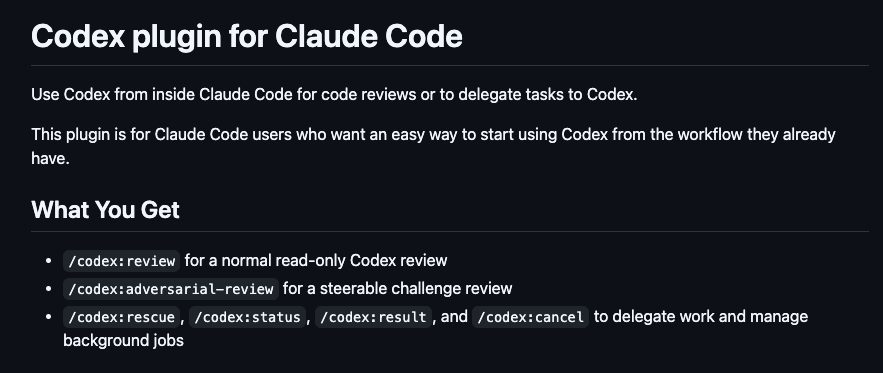
@EXM7777 summarized a new pattern in one line: “Claude writes, Codex reviews adversarially.” The post says OpenAI shipped a Claude Code plugin that exposes commands like /codex:review, /codex:adversarial-review, and background-job controls, turning cross-model review into a first-class workflow instead of a manual copy-paste habit.
@thesquashSH released a one-key iTerm handoff tool for moving sessions between Claude Code, Codex, Gemini, and OpenCode. The linked repository says same-agent forks work natively and cross-agent transfers use casr, while a reply from @Timur_Yessenov points out the hard part: preserving current working directory, permissions, memory assumptions, and unresolved diffs.

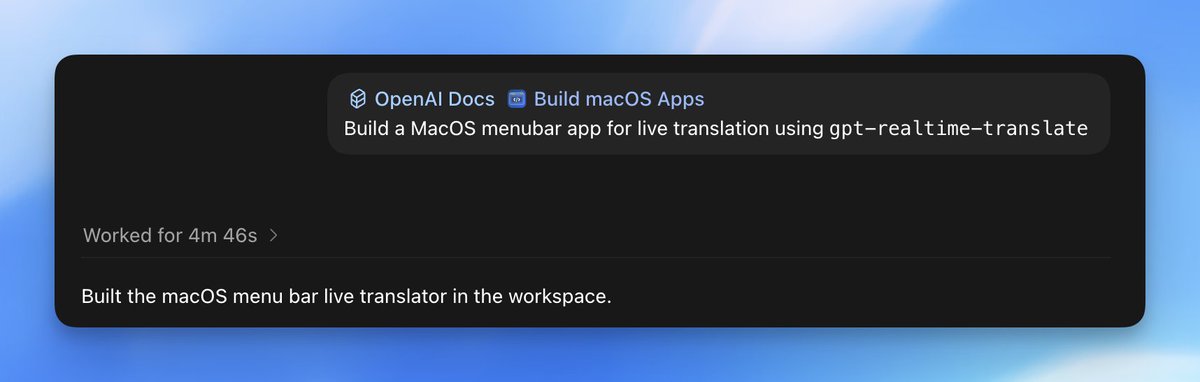
@gabrielchua showed that composing an OpenAI Docs skill/MCP with a macOS-app build skill was enough to get Codex to produce a working menubar live translator in under five minutes. The point was less the specific app than the workflow: skills are becoming reusable building blocks, not one-off prompts.
Discussion insight: Replies around EXM7777’s post are unusually specific: users say two-agent loops work because the second model actually argues with the first, but they immediately ask who arbitrates merges when both agents touch the same file. The community seems convinced that multi-agent review is useful; it is still building the control plane around it.
Comparison to prior day: On May 7, Codex’s expansion story was about new surfaces like Chrome, iOS, and remote monitoring. On May 8, the emphasis moved one layer down: the new work is in interoperability, handoff, review, and reusable skill composition between agents that already exist.
1.3 OpenCode Shows Both Its Strength and Its Dependencies 🡕
OpenCode produced the highest-scoring tweet in the dataset, but it was a status update rather than a launch. That mattered because it showed both why users trust the tool and where the stack is still fragile: OpenCode can ship useful workflow improvements quickly, but its users still feel upstream model-provider outages immediately.
@opencode reported (268 likes, 16 replies, 8 quotes, 10 bookmarks, 9,808 views) that OpenCode Go was having issues with DeepSeek models because of an upstream provider outage. The linked DeepSeek status page later showed the May 8 incident was identified, fixed, and marked resolved the same day, and replies from users confirmed the breakage was immediately visible in their workflows.
@jlongster shipped a Git workflow improvement the same day: OpenCode now shows existing worktrees instead of forcing users to create them through OpenCode itself. Replies asked for jj workspace support and one user used the post to compare OpenCode favorably against Claude Code’s branch/worktree behavior, which suggests Git ergonomics are one of its clearest differentiation points.
Discussion insight: The outage post and the worktree post complement each other. One shows OpenCode behaving like a serious product with transparent incident reporting; the other shows the community rewarding it for small but practical improvements in day-to-day developer flow.
Comparison to prior day: May 6 and May 7 were heavier on OpenCode momentum and comparison chatter. May 8 added sharper operational evidence: users saw a real dependency failure, then saw fast product iteration around Git workflows on the same day.
1.4 Bring-Your-Own-Model Paths Move from Hobbyist Talk to Real Workarounds 🡕
Several independent posts converged on the same tactic: if vendor pricing, geography, or policy gets in the way, route around it. The notable shift was how concrete these workarounds were: Azure-hosted Claude deployments, Ollama inside Copilot Chat, local-model hardware sizing, and a browser-control clone built because the official feature was region-gated.
@pamelafox showed (14 likes, 1 reply, 11 bookmarks, 903 views) that Claude Code can run against Claude models deployed in Microsoft Foundry. The linked docs specify Azure resource setup, API-key or Entra ID auth, and model pinning through environment variables, while her terminal screenshot shows the workflow actually running.

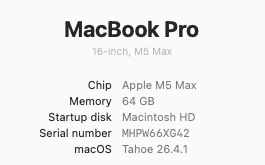
The same author, @pamelafox, asked (28 likes, 5 replies, 6 bookmarks, 1,980 views) how far local SLMs could go on an M5 Max MacBook Pro with 64 GB RAM, citing qwen3.6:27B as a candidate.
@_vmlops described a VS Code extension that runs DeepSeek, Llama, and Qwen locally through Ollama inside GitHub Copilot Chat, with tool use, MCP, and vision support and no cloud keys. @alessandro_a0 went further: because Codex browser control did not ship in the EU, he rebuilt the capability inside Agent Zero using Gemma 4 31B via Venice, and said a CLI release would follow.
Discussion insight: The triggers are practical, not ideological: price sensitivity, privacy and control, Azure compatibility, and regional feature gaps. The conversation around local or alternate deployment paths looks much less like self-hosting identity signaling and much more like an operations workaround.
Comparison to prior day: Earlier this week, the loudest posts were about hosted-agent roadmap leaks and product launches. On May 8, the stronger signal was deployability: people were showing specific ways to keep working when pricing, compliance, or geography made the default path less attractive.
1.5 Antigravity Conversation Turns into Courses and Prompt Playbooks While Fragmentation Complaints Persist 🡖
Google Antigravity stayed in the conversation, but mostly through education and workflow recipes rather than fresh product evidence. That made the contrast sharper: users are clearly interested in learning Antigravity, yet some still feel Google’s surrounding AI-coding product lineup is too fragmented to navigate cleanly.
@hey_andersonnn posted a five-prompt workflow for combining Claude and Antigravity on mobile-app builds, covering idea validation, UX architecture, full-stack code generation, and debugging. @JulianGoldieSEO pushed another four-hour Antigravity course, adding to the sense that the current growth surface is tutorials and prompt packs.
@1littlecoder supplied the counterweight: “Jules is an IDE but no it’s for Agents! Google AI Studio is good to deploy Apps but it’s not the same as Antigravity ... Gemini CLI is there lurking but it’s an IDE!” The post is less a technical bug report than a product-positioning complaint about too many overlapping surfaces.
Discussion insight: The prompt thread is telling because it turns missing product defaults into user-maintained workflow scaffolding. Instead of saying Antigravity already knows how to manage app planning end to end, the author manually defines the steps with reusable prompts.
Comparison to prior day: On May 6 and May 7, Antigravity’s top signal was roadmap leakage around screen recording and custom agents. On May 8, that hype cooled into courses, prompt recipes, and the continuing fragmentation complaint.
2. What Frustrates People
Cost volatility and model churn -- High
Pricing friction showed up across multiple tools, not just one vendor. @SouthernValue95 reported (96 likes, 43 bookmarks, 20,966 views) that a large GitHub Copilot customer expected a 10x jump in June at current usage, while @GHchangelog announced GPT-4.1 deprecation across Copilot experiences on June 1. In the replies, users immediately translated that into operational pain: a pricier replacement, uncertain access to alternatives, and CI breakage if teams do not pin and retest workflows before the swap.
The same cost sensitivity appears in tool switching. @mjovanovictech said Cursor charged him $100 after he thought he was done using it, which pushed him back into a serious GitHub Copilot evaluation. The frustration is not just “AI tools are expensive”; it is that billing is hard to predict exactly when agents are used for bigger, longer tasks.
Coping strategies today: compare multiple tools instead of staying loyal to one, pin models before forced migrations, and look for cheaper fallbacks such as local models or smaller tiers. Worth building for: High. Teams clearly need better cost estimation, routing, and policy simulation before they commit to an agent workflow.
Vendor and region dependencies interrupt otherwise-good workflows -- Medium
The highest-scoring tweet in the dataset was an outage notice. @opencode told users that DeepSeek model failures were caused by an upstream provider incident; replies show users immediately recognized the symptoms in their own sessions, and the linked status page later marked the problem resolved. The frustration here is not with OpenCode’s interface but with the fragility of the model stack underneath it.
A different version of the same problem appeared in @alessandro_a0’s post: Codex browser control had not shipped in the EU, so he rebuilt the capability in Agent Zero on Gemma 4 31B via Venice. @1littlecoder framed the Google variant as product sprawl instead of an outage, but the practical effect is similar: developers keep parallel tools around because they cannot trust one path to stay available, clear, or region-safe.
Coping strategies today: wait on status pages, keep secondary tools ready, and adopt local or Azure-hosted alternatives when vendor defaults are blocked. Worth building for: Medium to High. Routing and fallback infrastructure is becoming part of the core product, not a nice-to-have.
Naive automation still creates noise and hallucinations -- Medium
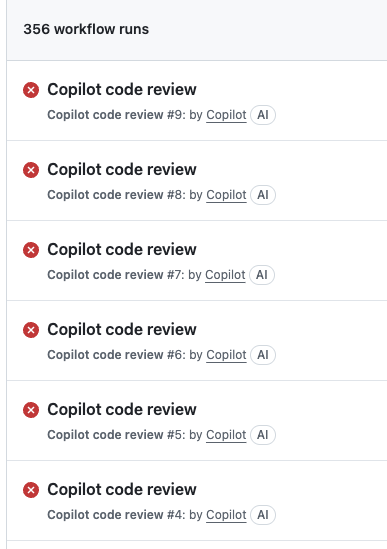
@YoavCodes complained that GitHub Copilot code review was flooding his repository with low-quality suggestions and repeated runs he could not easily disable without turning off PR contributions entirely.
@JamesOR made the same complaint at a higher level: dumping a legacy Express app into a single LLM prompt leads to hallucinations and wasted context windows. @DeepLearningAI distilled the lesson into a rule: write specs first, because agents will otherwise confidently build the wrong thing.
Coping strategies today: disable noisy review automation, break risky work into planned stages, and add specs or verification phases before letting an agent execute. Worth building for: High. The feed shows demand for quality-control layers around agents, not just more agent autonomy.
3. What People Wish Existed
Cross-agent handoff that preserves state
The strongest unmet need was not “another agent,” but a reliable way to move work between existing agents without losing context. @thesquashSH built a keyboard-driven session handoff tool for Claude Code, Codex, Gemini, and OpenCode, which is evidence that the gap is real. The most useful reply came from @Timur_Yessenov: the hard part is not the shortcut, it is preserving working directory, permissions, memory assumptions, and unresolved diffs. @EXM7777 adds the adjacent gap from another angle: once two agents are active, who arbitrates conflicts when they touch the same file?
This is a practical need, not a novelty request. Partial solutions exist today via the iTerm handoff tool and the Codex plugin for Claude Code, but neither solves state transfer, merge arbitration, and review history in one flow. Opportunity: Direct. Urgency: High.
Smaller and cheaper model options inside familiar workflows
The pricing discussion and local-model experimentation point to the same wish: people want cheaper or smaller models without leaving the tools they already use. @Presidentlin explicitly asked for GPT-5.5-mini after spending most of the day on GPT-5.4-mini. @pamelafox asked how far local SLMs could go on a 64 GB M5 Max machine, while @_vmlops highlighted a Copilot Chat path that runs local models through Ollama. All of that sits on top of SouthernValue95’s warning that heavy Copilot usage may be repriced sharply.
The need is practical and urgent: lower-cost modes for routine work, with seamless escalation to premium models only when necessary. Local models, Ollama, and Azure-hosted Claude are partial answers, but none of today’s posts showed a clean default workflow that chooses the cheap path automatically. Opportunity: Direct. Urgency: High.
Post-build distribution support for AI-built products
@iishaparekh captured the most concise business-side gap in the dataset: AI made coding easier and vibe coding made shipping faster, but distribution, attention, storytelling, growth, network, and getting real users are “still hard.” The emotional tone is not wonder, it is constraint: building is no longer the main bottleneck, so founders are now staring directly at go-to-market work they cannot automate as easily.
This is a practical need with partial answers in accelerators, communities, and agencies, but the AI-native version still looks underbuilt. Shiphouse is one attempt, but the broader gap remains: the tools that help people build faster are outrunning the tools that help them find users. Opportunity: Competitive. Urgency: Medium.
Specification and verification scaffolding for agent work
The dataset also points to a wish for stronger guardrails before execution starts. @DeepLearningAI argued that agents confidently build the wrong thing unless teams write specs first. @JamesOR answered with a concrete migration pattern built around audit tasks and a verification plan instead of one-shot prompting.
This need is practical more than emotional: people do not just want “better agents,” they want a reliable way to constrain and verify agent work on risky tasks like legacy migrations. Courses and hand-built verification plans exist, but there is still room for a product that turns specs, checks, and staged execution into a default workflow. Opportunity: Direct. Urgency: Medium to High.
4. Tools and Methods in Use
| Tool | Category | Sentiment | Strengths | Limitations |
|---|---|---|---|---|
| GitHub Copilot | IDE assistant | (+/-) | Plan and agent modes; project-specific build analysis for Windows; used in Unity MCP and metrics-hub workflows | June repricing anxiety; GPT-4.1 deprecation; code review spam |
| GitHub Copilot CLI | Terminal agent | (+) | Enterprise-managed plugins via .github-private; organization-wide rollout path |
Admin control questions remain; broader Copilot policy churn affects adoption confidence |
| OpenAI Codex | Coding agent | (+) | Can review Claude Code through a plugin; inspires fast browser-control clones; skill composition can produce native utilities | Browser control absent in the EU; multi-agent merge arbitration is still unresolved |
| Claude Code | Terminal/desktop agent | (+) | Works with Microsoft Foundry; strong enough to be used as a primary interface in cross-agent loops; benefits from skill/MCP composition | Users still add Codex review and session-handoff tools around it rather than relying on a single-agent flow |
| OpenCode | Terminal agent | (+/-) | Fast Git worktree iteration; transparent status communication during incidents | DeepSeek upstream outages can break model access |
| Google Antigravity | IDE agent | (+/-) | Strong tutorial and prompt-playbook ecosystem; used as the planner layer in migration concepts | Product fragmentation across Jules, AI Studio, Antigravity, and Gemini CLI; less shipped proof today than earlier in the week |
| Ollama / local models | Local runtime | (+) | No API keys or cloud dependence; can run inside Copilot Chat; offers privacy and cost control | Hardware sizing and model selection remain uncertain |
| Microsoft Foundry | Model hosting / governance | (+) | Lets Azure users run Claude with RBAC, Entra ID, and pinned deployments | Requires Azure resource setup and environment-variable configuration |
Summary: The day’s methods show developers mixing layers rather than committing to one vendor. @mjovanovictech re-ran the Copilot evaluation after a Cursor billing surprise, @pamelafox tested Claude Code against Microsoft Foundry deployments, and @_vmlops pushed local models into Copilot Chat. The recurring workarounds are adversarial second-model review, local or Azure fallback when policy or region blocks features, and Git-native ergonomics as a differentiator for OpenCode. Competitive dynamics are increasingly about operational fit—cost, governance, deployability, and interoperability—not just raw model quality.
5. What People Are Building
| Project | Who built it | What it does | Problem it solves | Stack | Stage | Links |
|---|---|---|---|---|---|---|
| Codex plugin for Claude Code | OpenAI (via @EXM7777) | Lets Claude Code call Codex for reviews, adversarial checks, and delegated jobs | Single-agent blind spots during code review and task execution | Claude Code plugin commands, Codex | Shipped | post |
| Copilot CLI enterprise-managed plugins | GitHub / Copilot CLI team | Lets organizations distribute plugin and agent configuration centrally | Rolling out custom agent capabilities consistently across a team is hard | GitHub Copilot CLI, .github-private, enterprise policies |
Beta | post |
| Multi-agent migration orchestrator | @JamesOR | Uses a modernization hub and verification plan to guide Express-to-Next.js migration | Single-prompt migrations hallucinate and skip business-logic checks | Google Antigravity, Agent Skills, verification tasks | RFC | post |
| Agent Zero browser-control clone | @alessandro_a0 | Recreates Codex-style browser control in a CLI-native Agent Zero workflow | Official browser control was unavailable in the EU | Agent Zero, Gemma 4 31B, Venice | Alpha | post |
| Metrics hub | Nency (via @MicrosoftLearn) | Builds a searchable hub covering 205+ metrics across docs, tools, and teams | Review prep takes hours when metrics live in many places | GitHub Copilot, VS Code | Shipped | post |
| macOS menubar live translator | @gabrielchua | Combines two skills so Codex produces a native live-translation utility | Turning reusable documentation and app-building skills into working desktop tools quickly | Codex, OpenAI Docs skill/MCP, Build macOS Apps | Demo | post |
The migration orchestrator is the clearest verification-first builder pattern in the dataset. Instead of trusting one long prompt, @JamesOR splits the work into a modernization hub with audit phases for data models, API contracts, business logic, and UI archaeology before the actual migration work begins.
The macOS menubar translator is the clearest skill-composition example. @gabrielchua is effectively showing that if the right building blocks exist, Codex can turn them into a native utility with very little glue code from the user.
Across the table, two repeated build patterns stand out. First, interoperability and distribution have become product surfaces: the Codex plugin turns second-model review into a named command, while enterprise-managed plugins let organizations distribute agent capabilities centrally. Second, feature lockouts create immediate clones: alessandro_a0 rebuilt browser control in six hours because the official version was unavailable in the EU, which implies that gated agent features will be copied quickly whenever local or regional alternatives are viable.
6. New and Notable
Project-specific build analysis lands in Copilot for Windows
@visualc flagged a new Copilot workflow for Windows developers: build-performance analysis can now target a single MSBuild project or CMake target instead of an entire solution. Microsoft’s accompanying blog says the feature came directly from large-codebase and game-studio feedback, which makes it notable as a concrete workflow response rather than a model announcement.
Heuristic learning becomes a live design frame for coding agents
@teortaxesTex argued, while quoting @Trinkle23897, that coding agents make “heuristic learning” economically viable again. The screenshot is the interesting part: it says agent capability can accumulate through regression tests, fixed-seed replays, golden traces, failure videos, version diffs, and explicitly written failed directions, turning memory into something readable and refactorable instead of hidden in weights.
Claude Code gets a clearer Azure-enterprise path through Microsoft Foundry
@pamelafox surfaced a workflow that matters for enterprise compatibility more than hype: Claude Code can run against Claude deployments hosted in Microsoft Foundry. The docs cover Azure auth, RBAC, deployment naming, and model pinning, which makes this a practical path for teams that want Claude inside existing Azure governance rather than as a separate stack.
Copilot plus Unity MCP keeps game-development automation moving
@unitygames amplified the first “Quest to Compile” episode on using GitHub Copilot with Unity MCP, and the quoted @dotnet post is specific about the value: let the tools handle repetitive work so developers can focus on design, gameplay, and the parts only humans can do. It is notable because it shows MCP-based workflow automation reaching a concrete vertical instead of staying a general-purpose developer talking point.
7. Where the Opportunities Are
[+++] Cross-agent review and staged orchestration — @EXM7777, @JamesOR, and @alessandro_a0 all point at the same missing layer: moving work between agents or stages while preserving context and adding structured review or verification in between. The need is explicit in replies about merge arbitration, gated features, and legacy-risk control, which makes this stronger than a generic “multi-agent” trend.
[+++] Spend-aware routing and lower-cost model tiers — SouthernValue95’s June repricing warning, GitHub’s GPT-4.1 deprecation notice, Presidentlin’s direct request for GPT-5.5-mini, and Pamela Fox’s local-model experimentation all describe the same gap: teams need a default workflow that sends routine work to cheaper models and escalates only when necessary. This is strong because it combines pain, unmet demand, and visible workaround behavior in one day’s dataset.
[++] Verification-first agent execution — JamesOR’s modernization hub, DeepLearningAI’s spec-first warning, and YoavCodes’s review-spam complaint all suggest that autonomy without guardrails creates extra work. Tools that turn specs, checks, staged execution, and rollback into the default path for risky agent tasks would solve a real quality problem.
[++] Region-safe and policy-friendly deployment adapters — alessandro_a0 rebuilt browser control because the official Codex version was not available in the EU, while Pamela Fox and _vmlops surfaced Azure-hosted and local-model alternatives. The opportunity is not just self-hosting; it is giving teams a compliant path that keeps the same workflow intact when geography, policy, or vendor defaults get in the way.
[+] Post-build distribution support for AI-built products — iishaparekh’s point that distribution, attention, storytelling, and first users are still hard is an emerging but clear opportunity. Building keeps getting easier; the next wedge is helping AI-built products get traction after they ship.
8. Takeaways
- GitHub Copilot’s shift from generous default to managed platform became concrete today. A June repricing warning for heavy users landed alongside an official June 1 GPT-4.1 deprecation notice and enterprise-managed plugin rollout, which means cost, model policy, and org governance are now one story instead of separate ones. (pricing, deprecation)
- Cross-agent review is moving from hacker trick to standard workflow. The Codex plugin for Claude Code turns adversarial second-model review into a named command, and the replies show people already treating “one agent writes, one agent reviews” as normal practice. (source)
- Verification-first scaffolding is becoming part of the coding stack. JamesOR’s migration flow and DeepLearningAI’s spec-first warning both say the same thing: faster agents make wrong-work risk more visible, so plans, audit steps, and staged review are becoming core tooling rather than optional process. (migration, spec-first)
- Bring-your-own-model paths are becoming practical escape hatches. Between Claude on Microsoft Foundry, local models inside Copilot Chat, and M5 Max local-model experimentation, the dataset shows developers actively building fallback paths for cost, compliance, and control. (source)
- OpenCode’s differentiation is workflow polish, but provider uptime still matters. The same day users saw a DeepSeek-driven outage, they also saw a useful worktree improvement ship, which captures both the appeal and the fragility of the current terminal-agent stack. (source)
- AI removed build friction faster than it removed verification and go-to-market friction. DeepLearningAI’s “write specs first” warning and iishaparekh’s “distribution is still hard” post point to the same reality: once agents make shipping easier, the next bottlenecks are quality control and getting users. (verification, distribution)