Twitter AI Coding - 2026-05-09
1. What People Are Talking About
1.1 Subscription arbitrage becomes normal practice 🡕
The strongest theme was not loyalty to one agent, but active mixing of subscriptions, mini models, and open-weight fallbacks. The highest-signal posts describe AI coding spend as fluid: people are juggling Gemini, Claude Code, OpenAI, Copilot, Antigravity, and OpenCode based on credits, price, and what still works inside a subsidized plan.
@fnthawar shared his current stack: Gemini at $20/month as daily driver, Claude Code at $200/month for writing code and building apps, and OpenAI at $20/month as the main LLM behind his OpenClaw work. Replies immediately turned that into a routing pattern instead of a brand endorsement: one user said Antigravity and Codex are what he reaches for when Claude credits run out, while another said OpenAI at $200 had become the "all in one" option.
@xoofx reported that after rolling GitHub Copilot out to his whole engineering org, usage followed a classic long-tail curve and token consumption now needs a budget review within three weeks. @krzyzanowskim added a sharper strategic angle: he posted a screenshot of a Verge excerpt saying OpenAI's memo stresses the need to build a moat around AI products because users can switch to whichever model is best on a given day.
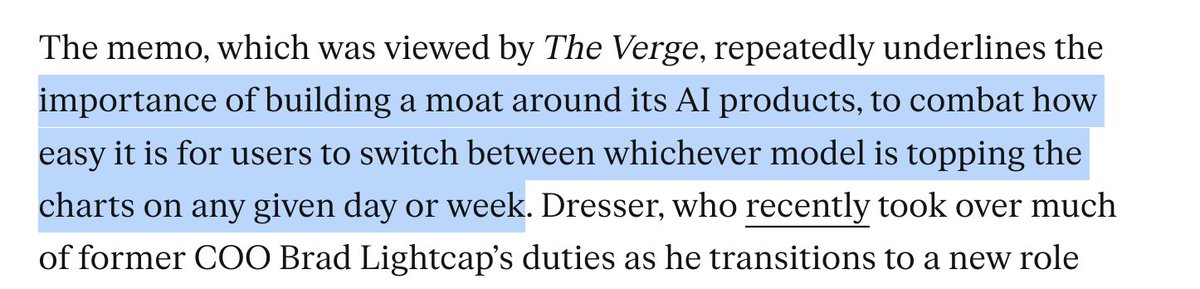
@FracSlap argued that many users think Claude Code costs $200/month when their actual usage would price out closer to $5,000-$15,000 at API rates, and a reply said their own token tracker showed something like 20x-30x the flat fee. The same pressure surfaced as direct product demand when @Presidentlin asked OpenAI for a GPT-5.5-mini tier after spending most of the day productively on GPT-5.4-mini.
Discussion insight: The replies show people already behaving as if routing is the default. Users talk about switching tools when credits run out, keeping subsidized personal plans around for OSS, and preferring whichever provider still lets them use the subscription inside a third-party harness.
Comparison to prior day: On May 8, cost anxiety was still framed mostly around Copilot repricing and model deprecation. On May 9, the same anxiety broadened into market behavior: users are assuming subsidies may end, switching is easy, and mini-tier requests are a rational response rather than an edge case.
1.2 OpenCode is turning into a harness ecosystem 🡕
OpenCode discussion moved from "is it good?" to "what can I attach to it?" The notable posts were about keybinding discovery, remote-session input hacks, curated plugin lists, and whether OpenCode works best as a harness for other models rather than as a standalone identity.
@kmdrfx previewed an upcoming built-in which-key plugin for OpenCode that reveals active keybinds on demand, which is a small feature but a strong signal that workflow discoverability is now part of the product surface. @ryanvogel showed a clipboard-image-to-SSH-to-tmux-to-OpenCode workaround he built because pasted images do not survive a tmuxed remote session cleanly; replies discussed alternate shared-VM-directory and upload workflows, which makes the post read like operator tooling rather than feature marketing.
@tom_doerr shared the public Awesome Opencode repository, whose README describes itself as a curated list of plugins, themes, agents, projects, and resources for OpenCode. That is a different maturity signal from a demo tweet: the ecosystem now has a catalog layer.
The adoption debate is still live. @theCTO quote-tweeted dax's claim that he had a major shift in how much he uses OpenCode and said he had not met a single person who uses it. Replies pushed back immediately: one user said they use it constantly for complex tasks, another said heavier workloads have moved to Pi, and another said they use OpenCode to run open-weight models inside CAR. Separate evidence from @roshan_k_ said his team's cloud coding agents are built on top of OpenCode as an open-source harness.
Discussion insight: The disagreement is not really about whether OpenCode works. It is about visibility. Skeptics still treat it as niche, while builders increasingly treat it as infrastructure they can extend, route through, and package.
Comparison to prior day: May 8 showed OpenCode under provider stress and shipping Git ergonomics. May 9 added ecosystem evidence: discoverability plugins, curated catalogs, and remote workflow hacks are what make the tool sticky.
1.3 Claude Code is being packaged as a personal operating system 🡕
Claude Code posts were less about one clever prompt and more about system design. High-signal threads described CLAUDE.md files, memory layers, hooks, subagents, and routines as reusable components that turn one coding agent into a managed environment.
@cyrilXBT posted a long workflow thread arguing that the real leverage in Claude Code is not hidden prompts but the surrounding operating discipline: a checked-in CLAUDE.md file, a plan-first instruction that asks Claude to investigate before writing code, and multiple concurrent Claude sessions exchanging state through markdown files. @RoundtableSpace amplified dr_cintas's five-folder structure for Claude Code - CLAUDE.md, skills, hooks, subagents, and plugins - as a way to make one setup behave like a full dev team.
@DrevZiga claimed that DKG v10 now supplies shared multi-agent memory across Hermes, OpenClaw, Claude, Cursor, Codex, Copilot Chat, Windsurf, and Cline. @petergyang added a concrete picture by teasing moritzkremb's "Claude Code Personal OS," whose diagram shows instruction files, context files, memory files, MCPs, APIs, and repeatable local and remote routines in one layout.
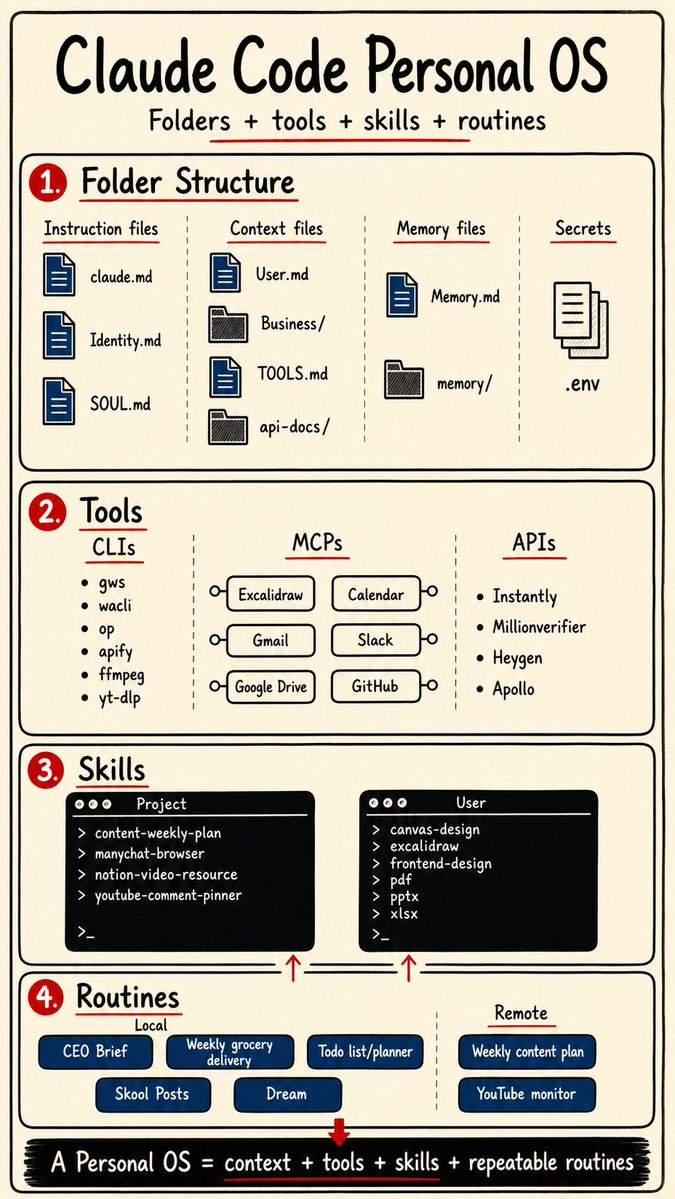
Discussion insight: Replies to the modular-dev-team thread split along trust lines. One user asked who actually sets goals for the "dev team inside the LLM," while another dismissed the whole idea as fancy prompt engineering. Even so, the posts themselves show the center of gravity moving toward memory and workflow design, not raw prompting.
Comparison to prior day: On May 8, the multi-agent story was mostly about handoff between tools. On May 9, the stronger signal is how people structure persistent state and delegation inside a Claude-centered system.
1.4 Browser agents and vertical automations push beyond code generation 🡕
Several posts treated AI coding tools as browser operators and workflow engines rather than coders. The same day produced a Codex Chrome extension demo for UI smoke tests, a prompt-driven follower-grid generator, and an oil-and-gas reporting flow that turns an API call into a branded PDF.
@Layton_Gott said OpenAI's Codex Chrome extension can click through web apps like a real user, test UI, gather context across open tabs, use DevTools in the background, and work inside signed-in sessions such as Salesforce and Gmail. The first screenshot is more specific than the tweet text: it shows a browser-only PR smoke test flow with approval and queue-only send states, not just a marketing tile.
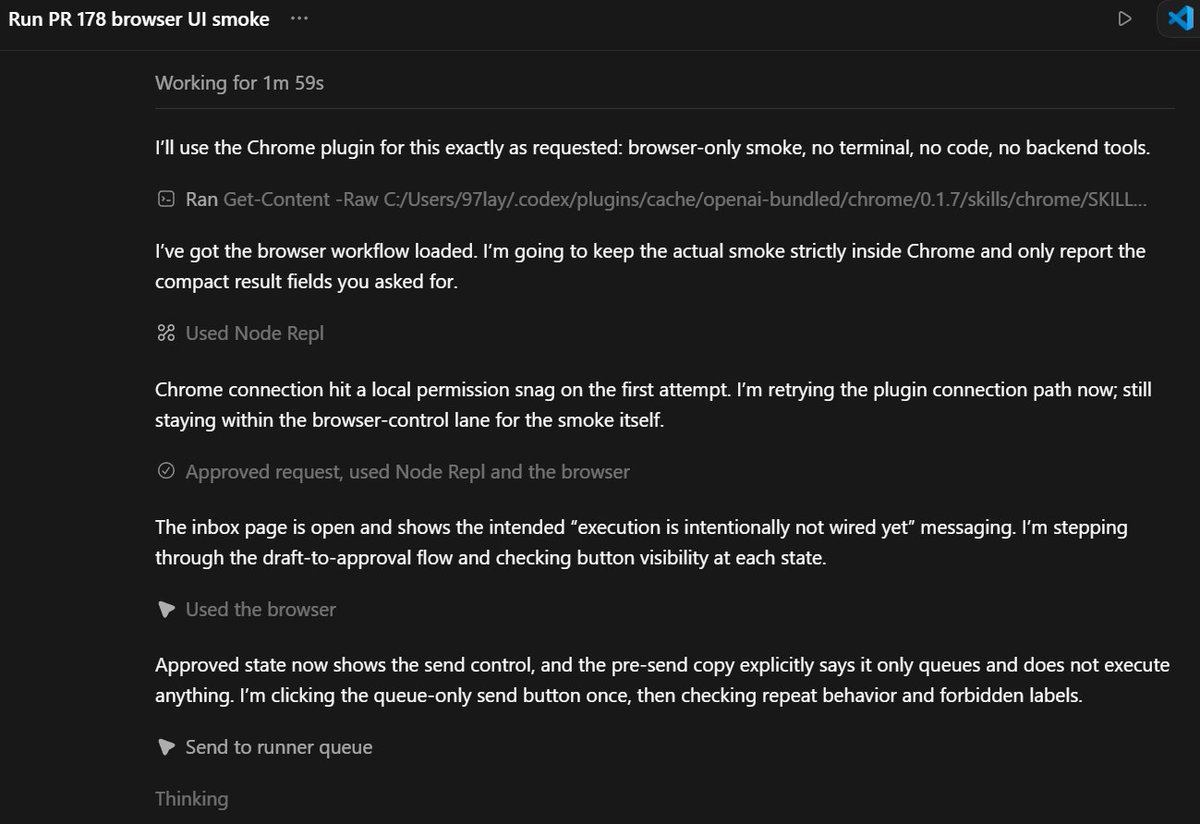
@pawnie_ described a Claude Code workflow that fetches follower data once from twitterapi.io, caches both the raw JSON and downloaded images, filters accounts by size and activity, and then exports a square PNG grid. @kyle_e_walker described a parallel pattern in oil and gas: Claude Code plus the Wells Intelligence API and a Quarto template now turns a well number into a report on production, offset wells, permitting activity, and satellite maps.
@mark_k made the scope change explicit by asking Codex users for the strangest non-coding tasks they had delegated, citing file organization, log analysis, docs, and project planning as normal examples. That is where the discussion is heading: less "can it code" and more "what else can it safely operate?"
Discussion insight: Utility and risk rose together. Layton praised small UX details like the extension closing finished tabs, while @RussellQuantum countered that a browser agent acting inside LinkedIn, Gmail, and Salesforce sessions is no longer "just a coding tool."
Comparison to prior day: On May 8, browser-control chatter focused on unofficial clones and regional workarounds. On May 9, the conversation shifted to concrete workflows, signed-session access, and whether these agents can be trusted in real production surfaces.
2. What Frustrates People
Spend opacity and subsidy dependence -- High
Cost frustration showed up as both personal confusion and team-level budget fear. @fnthawar described a three-subscription stack split across Gemini, Claude Code, and OpenAI, while @xoofx said his organization's Copilot rollout went from "absurdly cheap" to a looming budget review in three weeks. @FracSlap pushed the same pain harder by claiming many Claude Code users are effectively consuming $5,000-$15,000 of tokens under a $200 flat plan, and @krzyzanowskim framed the downstream effect as industry lock-in pressure because switching providers is still too easy.
The frustration is severe because nobody in these posts is complaining about model quality alone. They are complaining that price, subsidy, and usage ceilings are becoming part of day-to-day workflow design. Current coping behavior is to rotate across multiple subscriptions, preserve access to subsidized plans, and keep open-weight or mini-model options ready. Worth building for: High.
Real workflows still break on edits, tools, and remote I/O -- High
The day had multiple concrete reports that the agent layer still falls apart on implementation details. @BniWael said every major AI coding tool still relies on str_replace-style file edits and cited Morph data claiming 35% of edits fail, with 2.3 retries per success and more than 70% failure when format-on-save fires. @csharpfritz asked for Ollama-hosted models that work well with GitHub Copilot after finding that some reject tool interactions entirely and others emit XML-looking tool calls before stalling.
@ryanvogel surfaced the same class of pain in a different place: he had to build a custom clipboard-image path because OpenCode could not naturally accept pasted image data through an SSH session running inside tmux. The workarounds today are custom harnesses, retry loops, and manual review. Worth building for: High.
Browser automation widens the trust surface -- Medium
The Codex browser-control posts made it clear that usefulness and risk now travel together. @Layton_Gott celebrated a Codex Chrome extension that can operate inside signed-in sessions and run UI smoke tests, while @RussellQuantum responded that an agent working through LinkedIn, Gmail, and Salesforce sessions is no longer just a coding tool but a privileged operator. @jasonlk made the same point from the buyer side: for non-developers, platforms like Replit or Lovable may be safer than Claude Code plus a hand-rolled stack for auth, database, and deployment.
The frustration here is less about whether browser agents can work and more about whether ordinary users can safely scope them. Current coping behavior is to keep sensitive work on managed platforms, constrain where browser agents run, and treat signed-session automation as a privileged workflow. Worth building for: Medium to High.
3. What People Wish Existed
Spend-aware small models and automatic routing
The clearest explicit product request was cheaper default capacity without giving up familiar workflows. @Presidentlin directly asked OpenAI for GPT-5.5-mini after getting strong results from GPT-5.4-mini, while @fnthawar and his replies showed how people are already hand-routing work between Gemini, Claude Code, OpenAI, Antigravity, and Codex depending on credits and price. @FracSlap pushed the same demand from the cost side by saying users will gladly take an open-weight model that is only "90% as good" when the token economics are radically better.
This is a practical, urgent need. Partial answers exist in tools like 9router, which promises multi-provider routing and auto-fallback, but today's evidence still shows users doing the routing themselves. Opportunity: Direct. Urgency: High.
Shared memory and control planes across agents
Multiple independent posts asked for work to compound across sessions and tools instead of evaporating. @DrevZiga said DKG v10 can now act as shared memory across Claude, Codex, Copilot Chat, OpenClaw, and others. @RoundtableSpace framed the surrounding need as a structured system of memory, skills, hooks, subagents, and plugins, while @petergyang showed a personal OS built around exactly those kinds of files and routines.
The need is practical rather than aspirational: people want context to survive, stay inspectable, and be reusable across agents. Partial answers exist in DKG v10, agentmemory, and personal file-based systems, but none of today's evidence showed a clean default that solves memory, governance, and review in one place. Opportunity: Direct. Urgency: High.
Safer turnkey scaffolding for non-developers
The browser-control and app-builder posts point to the same missing layer: many users want the leverage of agentic building without taking on raw infrastructure risk. @jasonlk argued that Replit or Lovable can be safer than Claude Code plus a custom auth and database stack for non-developers, because trusted platforms reduce the chance of leaking data or misconfiguring security. @Layton_Gott showed the upside of direct browser operation, but that same thread also made clear how much power these tools now hold inside signed-in sessions.
This is both a practical and emotional need: users want speed without feeling that they have accidentally built an unsafe system. Managed builders partially address it today, but the gap remains for workflows that need more power than a no-code builder and less risk than a raw agent stack. Opportunity: Competitive. Urgency: Medium.
Better open-weight and hosted-model compatibility inside familiar tools
The open-weight path is attractive only if the surrounding harness still works. @csharpfritz explicitly asked for Ollama-hosted models that behave correctly inside GitHub Copilot after repeated failures on tool interaction. @roshan_k_ said his team's cloud coding agents are built on top of OpenCode as an open-source harness, and the 9router pitch is built on the same idea: keep the tool surface and swap the provider.
That makes the unmet need concrete: users want cheaper or self-hosted models, but they do not want to lose tools, schemas, memory, or IDE compatibility along the way. Opportunity: Direct. Urgency: Medium to High.
4. Tools and Methods in Use
| Tool | Category | Sentiment | Strengths | Limitations |
|---|---|---|---|---|
| Claude Code | Terminal agent | (+/-) | Plan-first scripting, reusable CLAUDE.md/context files, easy to turn into a personal workflow system | High effective spend, still needs human understanding and review |
| OpenCode | Terminal harness | (+) | Plugin ecosystem, good fit for open-weight models, improving workflow ergonomics, useful remote-session base | Adoption is uneven; some remote tasks still need custom hacks; model choice is still debated |
| OpenAI Codex | Coding and browser agent | (+/-) | Strong GPT-based coding, browser control, useful for non-coding tasks and planning | Signed-session browser access raises trust concerns; UI results can disappoint |
| GitHub Copilot | IDE and enterprise assistant | (+/-) | Easy org rollout, familiar surface, appears in Unity and .NET workflows | Token budgets are rising; hosted model and tool-calling compatibility can be rough |
| Google Antigravity | Planning and IDE agent | (+/-) | Strong prompt-playbook usage for app planning and workflow scaffolding | Today's signal is mostly tutorials and courses, not fresh shipped product evidence |
| 9router | AI gateway | (+) | Connects major coding tools to 40+ providers, promises auto-fallback and token savings | Adds another routing layer and still depends on external model quality |
| agentmemory / DKG v10 | Memory layer | (+) | Makes context persistent or shared across multiple agents and MCP clients | Governance, review, and goal-setting are still unresolved |
| Hermes Agent | Self-hosted agent | (+) | Broad tools-and-skills surface, memory-centric pitch, fast installation story | Evidence today is benchmark and install hype more than broad practitioner proof |
| Replit / Lovable | Managed app builder | (+) | Safer defaults for auth, database, and deployment for non-developers | Less flexible than a custom harness stack |
Below the table, the clearest pattern is that people are choosing stacks, not winners. @fnthawar split daily chat, heavy coding, and OpenAI app work across three subscriptions; @theCTO and @roshan_k_ showed the disagreement over whether OpenCode is a niche tool or a real harness layer; @jasonlk argued that the right move for some non-developers is to retreat from raw agent stacks back into managed builders.
The common workarounds are routing requests across providers, preserving subsidized plans for the tasks where they matter, and adding memory or control-plane layers so work compounds across sessions. That is why tools such as agentmemory, DKG v10, 9router, and Mercury's provider bridge all feel timely: they are solving coordination and operating-cost problems, not just model access.
5. What People Are Building
| Project | Who built it | What it does | Problem it solves | Stack | Stage | Links |
|---|---|---|---|---|---|---|
| 9router | decolua | Routes major AI coding tools to 40+ providers with auto-fallback and token saving | Subscription limits and high token cost | JavaScript, AI router, multi-provider routing | Shipped | repo, tweet |
| agentmemory | rohitg00 | Persistent memory server for coding agents | Re-explaining context across sessions and tools | TypeScript, iii engine, hooks, MCP, REST | Shipped | repo, tweet |
| DKG v10 multi-agent memory | @origin_trail | Shared graph memory layer for Claude, Codex, Copilot Chat, OpenClaw, and others | Agent context loss and non-compounding work | DKG v10, shared graph, provenance | Beta | post, quoted tweet |
| Claude Code Personal OS | @moritzkremb | Packages emails, content, groceries, and routines into a personal workflow system | Repetitive personal and admin work spread across too many tools | Claude Code, CLI tools, MCPs, APIs, memory files | Shipped | post |
| Follower-grid generator | @pawnie_ | Fetches follower avatars, caches data, filters accounts, and exports a PNG grid | One-off audience analysis and visual asset creation | Claude Code, Python, twitterapi.io, local cache | Shipped | post |
| Mercury v1.1.7 provider bridge | @mercury__agent | Lets Mercury use Copilot and Codex plans as providers | One workflow across multiple paid ecosystems without API keys | Mercury, GitHub Copilot, Codex | Alpha | post |
| Wells report generator | @kyle_e_walker | Turns a well ID into a branded production and permitting report with maps | Manual industry reporting and templating work | Claude Code, Wells Intelligence API, Quarto | Shipped | post |
| Hermes Agent | @agentskills_ai | Self-improving agent with a broad tools-and-skills surface | Demand for memory-rich alternatives to mainstream coding agents | Hermes Agent, Ollama, Kimi K2.5 cloud, toolsets, skills | Beta | post |
The clearest builder pattern is the control plane above the model. 9router, agentmemory, DKG v10, and Mercury all sit above the base agents and try to solve routing, persistence, or subscription reuse. That is notable because the builders are not behaving as though one frontier model will win everything. They are building the glue that lets users swap models, preserve context, and keep one workflow intact.
A second pattern is vertical automation rather than generic chat. @pawnie_ turned a natural-language request into a cached API workflow and image output, while @kyle_e_walker did the same for deterministic industry reporting. In both cases the agent is valuable because it authors and operates a workflow around APIs, templates, and local state, not because it improvises everything from scratch.
The personal-OS posts show how far users are willing to package their own operations into agent-native files, tools, and routines. @petergyang says moritzkremb's setup handles emails, content, and even grocery buying, and the diagram in his post makes clear that the real product is the system around Claude Code rather than Claude Code alone.
Hermes Agent shows the same packaging instinct from the product side. @agentskills_ai pitched it as an eight-minute install that had already passed OpenClaw and Claude Code on the OpenRouter leaderboard, and the screenshot matters because it exposes the operating surface: 31 tools, 79 skills, and categories spanning coding, GitHub, productivity, research, and media.
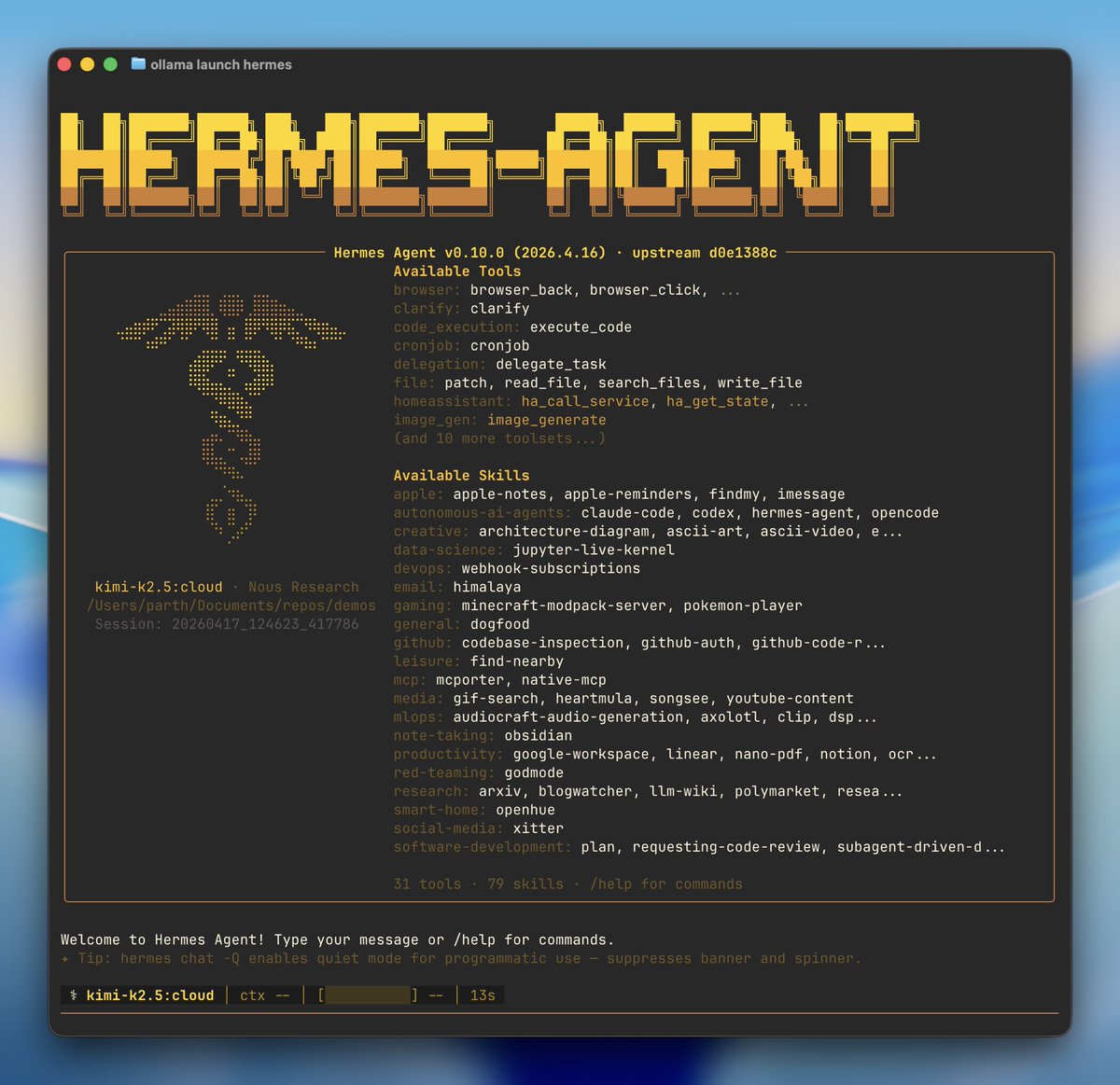
Even curation is turning into a project category. @tom_doerr linked the public Awesome Opencode repository, which catalogs plugins, themes, agents, projects, and resources around OpenCode. That suggests ecosystem indexing is becoming part of how these tools grow.
6. New and Notable
Claude Code gets a workable Azure route through Microsoft Foundry
@pamelafox surfaced a configuration that matters more for deployment than hype: Claude Code can run against Claude models deployed in Microsoft Foundry. The official documentation is specific about the operational details - API key or Entra ID authentication, Azure resource naming or full base URL configuration, and explicit model pinning through environment variables - which makes this a real compatibility path for Azure-governed teams rather than a vague integration claim.

Browser-only smoke testing is no longer just a demo concept
@Layton_Gott showed Codex Chrome running a PR browser smoke test while staying in a browser-only lane, with queue-only sending and approval states visible in the screenshot. What makes it notable is not that a browser agent exists, but that it is already being framed as part of a real QA workflow rather than a toy tab-controller.
Vibe coding communities are moving offline
@nixxin said attendees at a Delhi workshop left having set up a website, an interactive site, and an app, and immediately announced a next session for June 5. @SuperteamUSA posted a packed Miami "Vibe Coding Club" event the same day. The notable signal is not technical depth; it is that AI coding is becoming a repeatable local community format instead of staying trapped in timeline threads and tutorials.
Public reverse-engineering and audit repositories are becoming part of the conversation
@tom_doerr linked the public learn-coding-agent repository, whose README says it compiles public references and community discussion into reports on Claude Code architecture, telemetry, codenames, remote control, and future roadmap. The notable signal here is not that every claim is proven by the tweet, but that agent internals themselves are now important enough to spawn public study repositories.
7. Where the Opportunities Are
[+++] Spend-aware routing and subscription arbitrage -- Evidence from @fnthawar, @xoofx, @krzyzanowskim, @FracSlap, and @Presidentlin all points in one direction: people want a default layer that knows when to spend for frontier quality, when to drop to a mini tier, and when to fall back to open-weight or cheaper providers.
[+++] Shared memory and agent control planes -- DKG v10, agentmemory, dr_cintas's Claude Code structure, the Claude Code Personal OS, and Mercury's provider bridge all describe the same missing layer: context that compounds across sessions and agents while staying inspectable and reusable.
[++] Safe browser and signed-session automation -- @Layton_Gott shows that browser agents are already useful for smoke tests and real UI work, while @RussellQuantum and @jasonlk show the trust boundary is still unclear. Products with explicit permission scopes, audit logs, and easy rollback look timely.
[++] Compatibility layers for open-weight and hosted models inside familiar tools -- @csharpfritz, @roshan_k_, and 9router all point to the same opportunity: keep the IDE and harness people know, but make cheaper or self-hosted models behave correctly inside it.
[+] Deterministic reporting and workflow templates for verticals -- @pawnie_ and @kyle_e_walker show a repeated pattern where the agent plans and scripts, while APIs, templates, and cached data do the actual work. Vertical reporting, research, and ops templates look early but real.
8. Takeaways
- AI coding users are optimizing for cost routing, not brand loyalty. The most cited workflows split work across multiple subscriptions and mini tiers, and the replies treat switching as normal operations rather than a special case. (fnthawar, Presidentlin)
- OpenCode's momentum is coming from harness ergonomics and ecosystem curation. Which-key discovery, remote-session workarounds, public plugin catalogs, and builder replies matter more today than abstract model comparisons. (kmdrfx, ryanvogel, tom_doerr)
- Claude Code is increasingly differentiated by the operating system around it. The strongest posts were about memory files, hooks, skills, subagents, and routines, not about raw generation quality. (cyrilXBT, RoundtableSpace, petergyang)
- Browser agents are crossing into privileged UI work, which raises both utility and trust questions. Today's Codex Chrome examples looked useful enough for smoke tests, but the signed-session surface immediately triggered security concern. (Layton_Gott, RussellQuantum)
- The most substantive builder activity sits above the base models. Routers, memory layers, provider bridges, and vertical templates were stronger signals than any new raw-model launch. (seelffff, DrevZiga, mercury__agent)
- AI coding is turning into a real-world community practice, not just a timeline meme. Workshops and club meetups now appear as repeatable formats where people leave with working apps and shared norms. (nixxin, SuperteamUSA)