Twitter AI Coding - 2026-05-10
1. What People Are Talking About
1.1 Codex is expanding into ChatGPT mobile and Chrome 🡕
The clearest directional signal was not a new model release but a new set of surfaces. Multiple posts circulated the same Codex mobile UI, another post showed Codex as a first-class item inside the ChatGPT app, and a separate thread linked the public Chrome Web Store page for Codex. Compared with May 9, the conversation moved from general browser-control interest to concrete mobile and browser UI evidence.
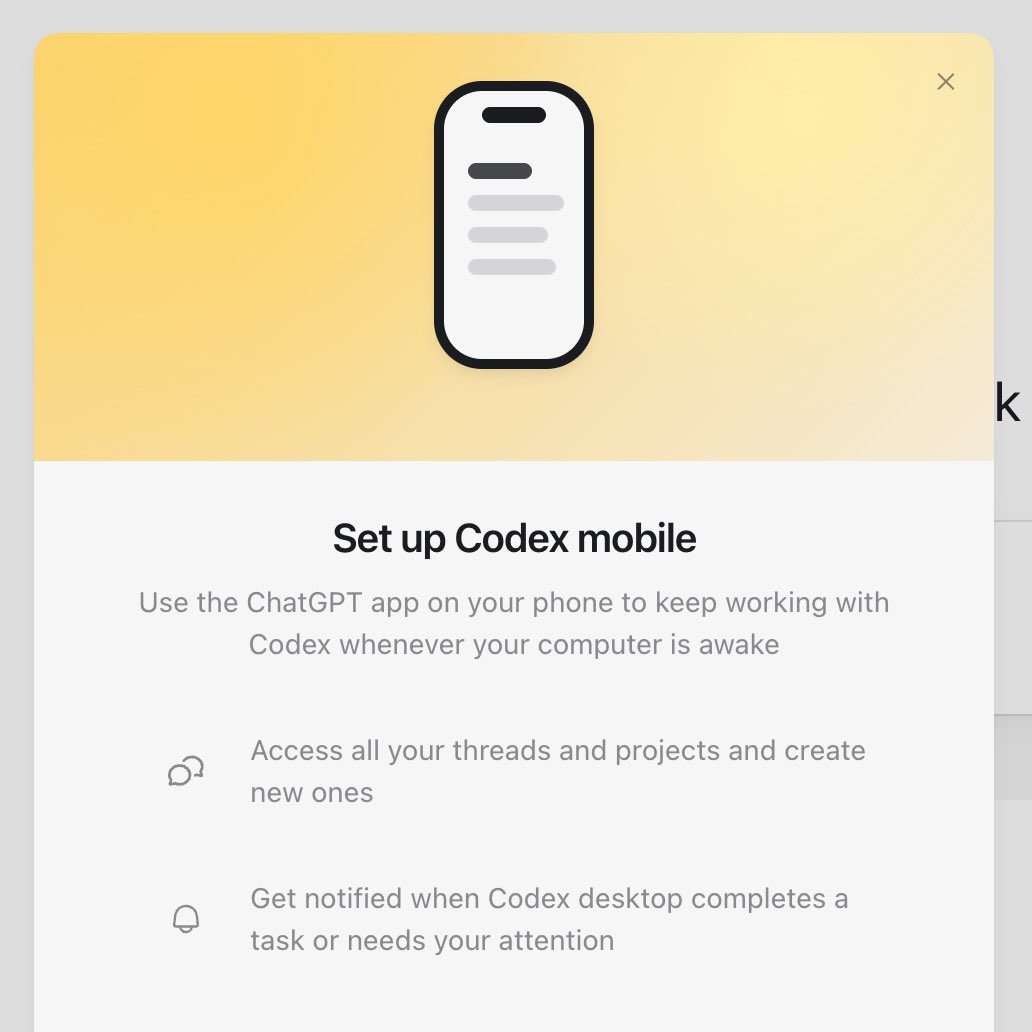
@testingcatalog argued that OpenAI is heading toward deeper Codex and ChatGPT integration, and his second image is the strongest artifact in the thread: a "Set up Codex mobile" modal that promises phone access to threads and projects plus completion notifications when the desktop task is done. The post matters because it turns vague speculation into a specific workflow surface.
@ziwenxu_ posted a ChatGPT app screenshot where Codex sits alongside Projects and Images in the navigation. That makes the mobile story more concrete than a teaser image alone, while the thread also adds useful uncertainty: @JustinGorya replied that this might still be the existing Codex cloud flow rather than a fresh launch, and ziwenxu said he was seeing it on a Pro plan and thought it might depend on the GitHub repo.

@TimHaldorsson linked the official Codex Chrome extension listing, whose public description says Codex can work inside signed-in sites, dashboards, forms, and multi-tab testing flows while asking before sensitive actions, history access, and file transfers. @bonsaixbt supplied the user-side thesis for why this matters: if the phone can monitor, notify, and approve while the computer keeps working, the agent is no longer tied to a laptop session.
Discussion insight: The bullish replies mostly assume cross-device control is inevitable. @gao035 asked whether this means coding from a phone while the desktop does the heavy lifting, while the strongest skeptical reply in the ziwenxu thread says the surface may be older cloud functionality rather than a brand-new release.
Comparison to prior day: May 9 already had Codex browser-control chatter, but May 10 added public mobile UI screenshots and a documented Chrome surface.
1.2 Terminal agents are being packaged as skills, MCP stacks, and beginner workflows 🡕
Claude Code and Copilot CLI discussion centered on the surrounding operating layer rather than raw generation quality. The most useful posts were ecosystem maps, packaged browser add-ons, and explicit design patterns for how agent-facing CLIs should diagnose and recover from failure.
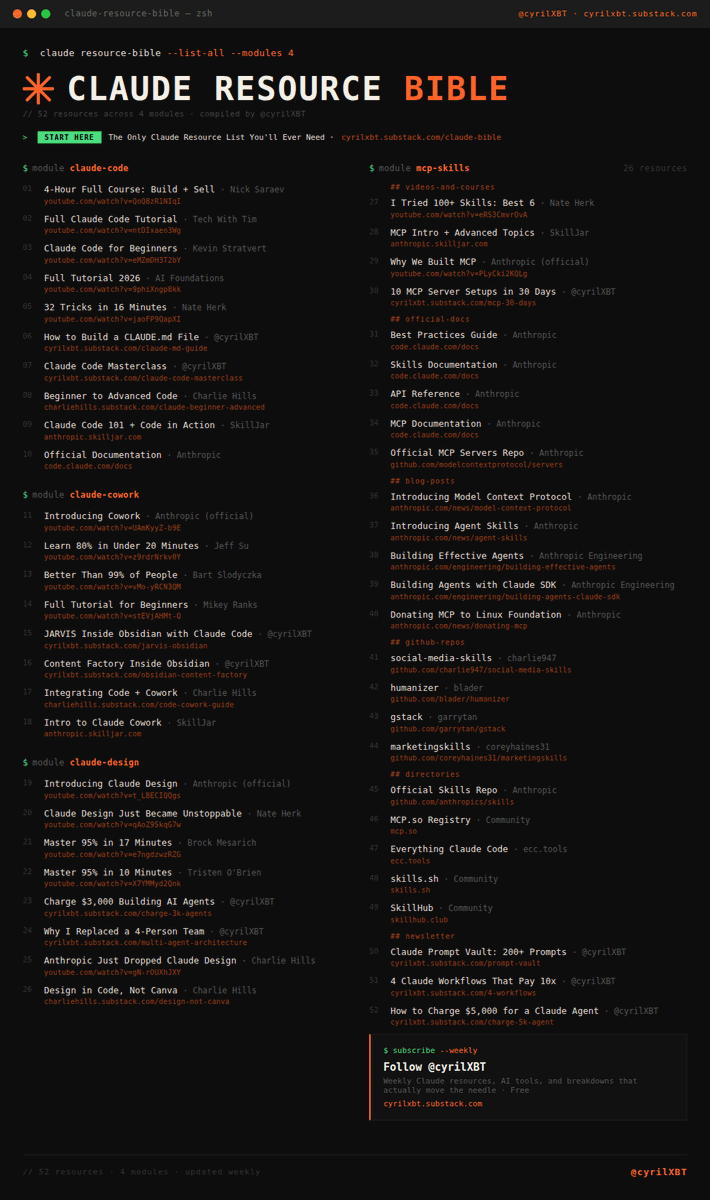
@cyrilXBT posted a "Claude Resource Bible" image that catalogs 52 resources across Claude Code, Claude Cowork, Claude Design, and MCP skills. The image matters because it treats the product as a stack of docs, skills, multiplexers, and frameworks instead of one standalone coding assistant.
@doodlestein argued that AI-facing CLI tools need a real doctor mode, and his quoted thread defines that pattern very narrowly: structured diagnostics, safe automated repair, backups before mutation, and byte-for-byte undo. That is a more specific signal than generic prompt advice because it describes a concrete recovery contract for agent workflows.
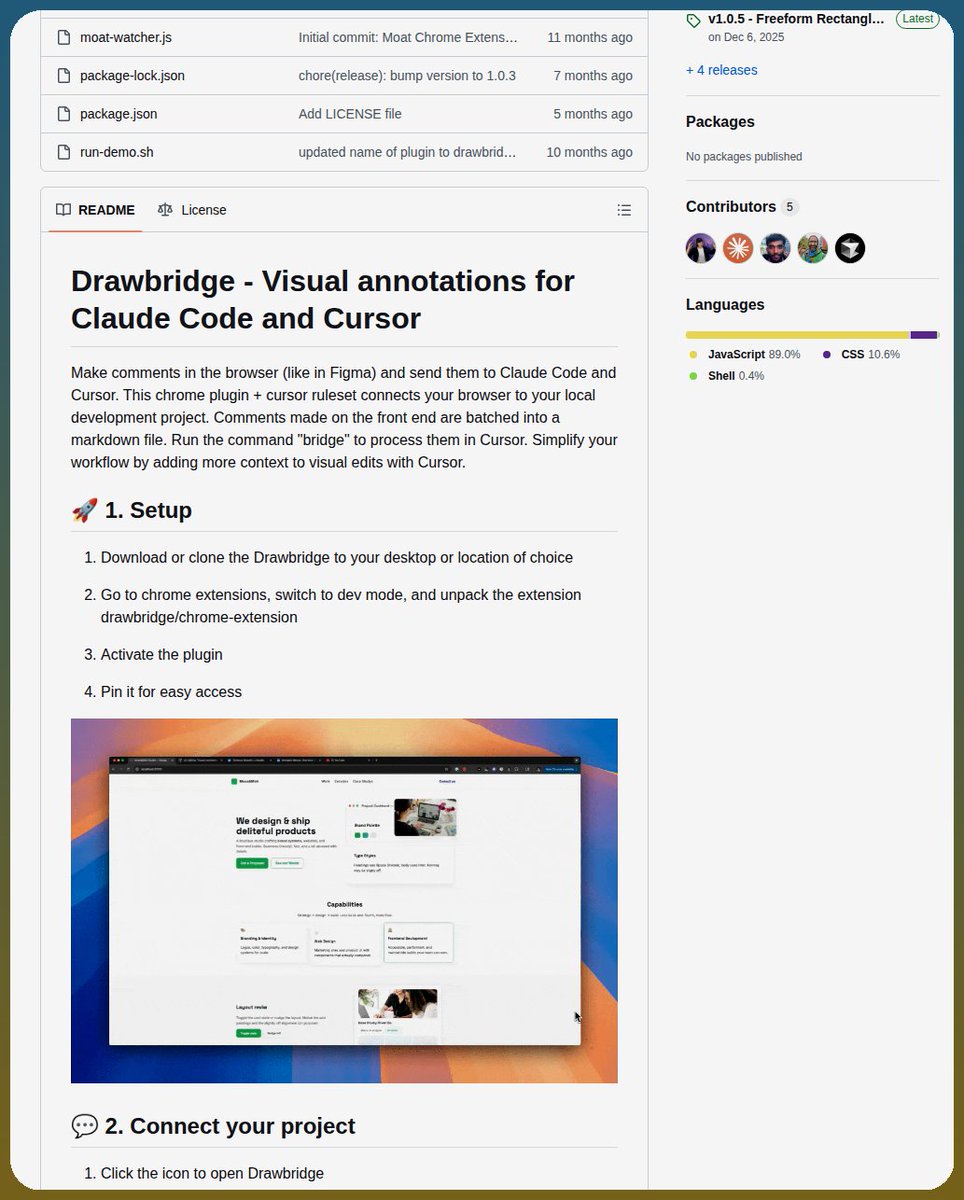
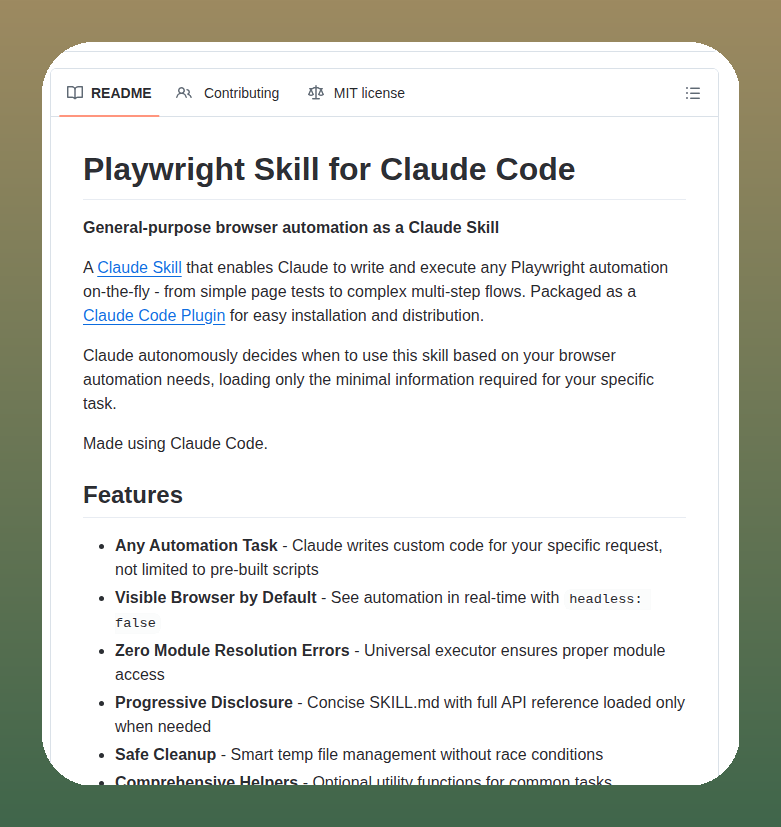
@tom_doerr shared the Playwright Skill for Claude Code, whose README says it writes and executes custom Playwright automation on the fly with a visible browser by default. He also shared Drawbridge, whose README describes a Chrome extension that turns browser comments and rectangle annotations into Claude Code or Cursor tasks. In parallel, @github promoted a Copilot CLI beginner series that teaches installation, login, folder permissions, prompting, and /delegate to the cloud agent.
@Axel_bitblaze69 described a five-MCP "full automation stack" built from Perplexity, Playwright, Firecrawl, Glif, and Chrome MCPs. The most revealing response was not hype but governance: @JamesClawn replied that search, scraping, browser control, and media generation need separate permissions because one MCP allowlist is too blunt.
Discussion insight: The pushback was about operator safety, not whether these tools work. Between doctor mode, browser skills, and permission scope, the conversation has moved from prompting tricks to system hygiene.
Comparison to prior day: May 9 focused on Claude Code as a personal OS with memory and routines. May 10 shifted toward the distribution layer: packaged skills, curated MCP stacks, and official beginner onboarding.
1.3 Users are routing around limits with wrappers, local engines, and rapid subscription switches 🡒
The market behavior remained multi-homed. People were still comparing Claude, Codex, Copilot, and Cursor, but the more interesting posts came from wrappers, local runtimes, and direct subscription changes that treat model vendors as interchangeable components.
@0xSero said KittyLitter means he no longer needs to carry a laptop: the app supports Codex, Claude Code, OpenCode, Pi, and soon Droid, and the screenshot shows a phone driving an agent session connected to a home machine. @mercury__agent announced that Mercury v1.1.7 now connects GitHub Copilot and OpenAI Codex inside one workflow, while @davideciffa said Lucebox now runs Codex, Hermes, and OpenClaw locally on Qwen3.6-27B with OpenAI-compatible tool calls. Those are orchestration moves, not allegiance moves.
@ashen_one wrote that he downgraded his $200/month Claude Code subscription and bought the $200 Codex plan because one /goal localized his iOS app into 23 languages in about two hours. The follow-up matters as much as the boast: when @shipwithjay asked about QA risk, ashen_one said the initial result looked fine but Arabic still needs fuller testing.

On the cost side, @TheGeorgePu framed Copilot, Cursor, and Claude as a new recurring tax, @MrPunyapal posted a GitHub Copilot rate-limit screen with a 2 hour 32 minute wait, @vatsal_sanghvi said he was about to hit Codex's weekly limit on the $200 plan, and @alishohadaee argued that usage-based billing is pushing people toward local AI independence. @drop_grl added a competitive twist by saying Codex can import settings, chat sessions, skills, and plugins from other agents.
Discussion insight: Even the lighter-weight threads show fragmentation rather than consensus. @zavxai asked which AI coding tool people use daily, and replies split across Claude, Cursor, Copilot, Gemini, and no-AI answers, while one reply said the list was already outdated because it omitted Codex.
Comparison to prior day: May 9 already showed subscription arbitrage. May 10 made the same behavior more operational through mobile wrappers, settings import, local runtimes, and hard limit screenshots.
2. What Frustrates People
Hard caps and recurring AI rent -- High
Cost frustration showed up as both a budget complaint and a workflow interruption. @TheGeorgePu called Copilot, Cursor, and Claude a new recurring tax, @MrPunyapal showed a GitHub Copilot limit screen with a 2 hour 32 minute wait, and @vatsal_sanghvi said he was about to hit Codex's weekly limit even on the $200 tier. @alishohadaee interpreted Copilot's usage-based billing as proof that subsidized tokens were never the steady state.
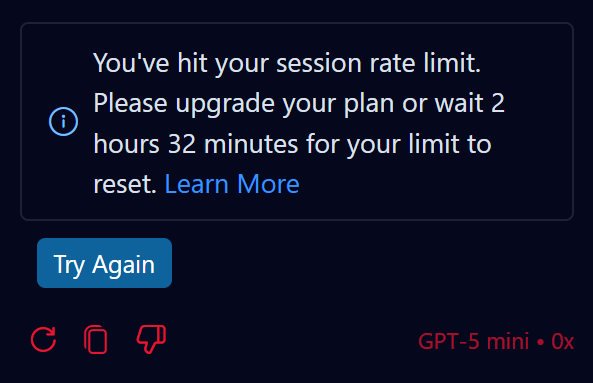
The severity is High because users are not just saying the tools are expensive; they are saying the caps now shape tool choice and work planning. The current coping behavior is to keep multiple subscriptions alive, switch vendors when one feels less constrained, or look for local alternatives. Worth building for: High.
CLI and extension stacks still need better self-diagnosis and permissions -- High
@doodlestein made the complaint explicit: agent-facing CLIs need a doctor mode that can diagnose broken state, repair it safely, and undo changes if the repair goes wrong. @Axel_bitblaze69 then showed the other half of the problem by bundling search, scraping, browser control, and media generation into one MCP stack, which prompted @JamesClawn to say one allowlist is too blunt for that much power.
The workaround today is to add more tooling on top of the base agents. Playwright Skill gives Claude custom browser automation, and Drawbridge supplies a separate browser-to-task bridge because that visual context is still not native. The frustration is severe because every extra plugin or MCP solves one problem while also creating new setup and permission failure modes. Worth building for: High.
Device and context portability are still awkward -- Medium
The strongest mobile and migration posts are really complaints about discontinuity. @testingcatalog and @bonsaixbt both treat phone-based Codex control as an obvious missing layer, @0xSero celebrates KittyLitter because it means no more laptop, GPT app, or Discord, and @drop_grl says Codex now imports settings, chats, skills, and plugins from other agents.
The frustration is Medium to High because the workflow pieces already exist, but they do not yet feel continuous across phone, browser, terminal, and vendor boundaries. Current coping behavior is to rely on wrappers, unofficial migration paths, or multiple overlapping surfaces for the same agent work. Worth building for: Medium to High.
3. What People Wish Existed
A real doctor mode for agent-facing CLIs
@doodlestein is explicit that current CLI tools should expose a doctor mode that knows the common failure states, backs up before mutation, repairs safely, and supports undo. This is a practical need rather than an aspirational one: the more people attach MCPs, browser plugins, and local state to their agent stack, the more valuable a single trusted recovery surface becomes. Partial answers exist in custom skills and better chat surfaces, but today's evidence still points to ad hoc workarounds rather than a built-in standard. Opportunity: Direct.
Phone-first control over long-running coding tasks
The leaked or surfaced Codex mobile artifacts are compelling because they describe a very specific wish. @testingcatalog shows a modal promising phone access to threads and projects plus completion notifications, @bonsaixbt spells out monitoring and approval from a pocket device, and @0xSero is already using KittyLitter to avoid carrying a laptop. This is a practical need with partial answers, but the public evidence still looks fragmented across limited rollouts, screenshots, and third-party wrappers. Opportunity: Direct.
Fallbacks that survive premium limits
People are not asking for abstract savings; they want workflows that do not stop when a plan cap is hit. @MrPunyapal says GitHub Copilot locks him out after a session cap, @vatsal_sanghvi says even the $200 Codex tier can hit a weekly ceiling, and @alishohadaee reads usage-based billing as a push toward local compute. The need is practical and urgent: users want graceful fallback to cheaper, local, or free options without losing the agent workflow they already know. Opportunity: Direct.
Migration-friendly, multi-provider agent setups
The most revealing portability signal was not a benchmark but a migration feature. @drop_grl says Codex can import settings, chat sessions, skills, and plugins from other agents, while @mercury__agent and @davideciffa show wrappers that already sit above individual providers. This is a practical need because users are clearly switching, multi-homing, and comparing tools in public. Partial answers exist, but the default workflow is still too vendor-specific. Opportunity: Competitive.
4. Tools and Methods in Use
| Tool | Category | Sentiment | Strengths | Limitations |
|---|---|---|---|---|
| OpenAI Codex / ChatGPT mobile | Coding agent and mobile surface | (+/-) | Strong autonomous runs, visible phone entry point for threads/projects, concrete app-localization win | Mobile rollout is unclear, some evidence points to older cloud flows, and heavy users still report weekly limits |
| Codex Chrome extension | Browser agent | (+/-) | Works inside signed-in sites, tab groups, dashboards, forms, and testing flows; asks before sensitive actions | Chrome-only and broad browser/data access increases the trust surface |
| Claude Code | Terminal agent | (+) | Rich ecosystem of skills, MCPs, resource maps, and browser add-ons | Users are actively comparing it against Codex and asking for better diagnostics and recovery |
| GitHub Copilot CLI | Terminal agent | (+/-) | Beginner-friendly onboarding, repo-aware chat, /delegate, and terminal-native workflow |
Session limits can interrupt work and push users toward other agents |
| Playwright Skill for Claude Code | Claude skill | (+) | On-demand Playwright automation, visible browser by default, packaged as a plugin | Requires separate setup and browser dependencies |
| Drawbridge | Browser-to-code bridge | (+) | Turns visual browser comments into structured Claude Code or Cursor tasks with processing modes | Requires Chrome extension access, local file permissions, and a separate workflow layer |
| KittyLitter | Mobile wrapper | (+) | One phone surface for Codex, Claude Code, OpenCode, Pi, and local models | Remote-connection details are still thin in public discussion |
| Mercury Agent | Orchestrator | (+) | One workflow that can connect Copilot and Codex ecosystems | Evidence today is mostly a release post rather than deeper user reports |
| Lucebox | Local inference engine | (+) | Local runtime for Codex, Hermes, and OpenClaw with OpenAI-compatible tool calls | Public evidence is limited to a single release-style demo claim |
| MCP stack (Perplexity, Playwright, Firecrawl, Chrome, Glif) | Extension layer | (+/-) | Adds live search, scraping, browser control, page inspection, and media generation | Permission boundaries and overlapping scopes remain unresolved |
Below the table, the main pattern is composition. People are combining a primary agent with a mobile wrapper, an orchestration layer, a browser skill, or an MCP bundle instead of betting on one surface alone. @0xSero, @mercury__agent, and @davideciffa all describe different ways to keep the workflow while swapping the provider underneath.
The common workarounds are equally clear: switch subscriptions when one plan feels less constrained, add browser tooling for tasks the base agent cannot see, and move toward local or OpenAI-compatible runtimes when usage caps start to bite. Competitive pressure is now coming from surface area as much as model quality: Codex gains momentum from mobile, browser, and migration features, Claude Code stays strong through its skills and MCP ecosystem, and Copilot CLI is broadening access through beginner education while still taking complaints on limits.
5. What People Are Building
| Project | Who built it | What it does | Problem it solves | Stack | Stage | Links |
|---|---|---|---|---|---|---|
| KittyLitter | @0xSero | Mobile app for Codex, Claude Code, OpenCode, Pi, and local-model agents | Lets people keep agent workflows on a phone instead of carrying a laptop | Mobile app, remote home-machine access, multi-agent wrapper | Beta | post |
| Playwright Skill for Claude Code | lackeyjb | Claude skill and plugin that writes and runs custom Playwright automation | Gives Claude reusable browser testing and automation on demand | JavaScript, Node.js, Playwright, Claude skill/plugin | Shipped | repo, post |
| Drawbridge | breschio | Chrome extension that turns browser annotations into Claude Code or Cursor tasks | Adds visual context and dependency-aware task processing for UI edits | JavaScript, Chrome extension, Markdown/JSON task bridge | Shipped | repo, post |
| Mercury Agent v1.1.7 | @mercury__agent | Connects Copilot and Codex inside Mercury | Keeps one workflow across multiple paid ecosystems | Mercury, GitHub Copilot, OpenAI Codex | Shipped | post |
| Lucebox | @davideciffa | Local speculative inference engine that runs Codex, Hermes, and OpenClaw on Qwen3.6-27B | Brings multi-agent tool-calling workflows onto a local runtime | Qwen3.6-27B, speculative inference, OpenAI-compatible tool calls | Alpha | post |
The clearest builder pattern was infrastructure above the base model. KittyLitter, Mercury, and Lucebox all separate the user workflow from any single provider: one moves the surface to a phone, one unifies multiple paid ecosystems, and one pushes the whole execution layer local. That matters because the surrounding posts on limits and switching show why this glue is valuable.

A second pattern was browser-to-code feedback loops. The Playwright Skill for Claude Code README says Claude can write and execute custom Playwright automation on demand, while Drawbridge turns comments and freeform browser rectangles into structured tasks for Claude Code or Cursor. Together they show the same move: attach richer front-end context to the agent instead of asking it to infer everything from text.
The ashen_one localization thread is also useful as a builder pattern even though it is not a new standalone product. The point is not the app itself; it is that a single /goal was used to push a real iOS backlog item across 23 languages, with the remaining discussion immediately shifting to QA and layout breakage rather than whether the agent could do the work at all. That is a different maturity signal from toy demos.
6. New and Notable
Migration UX is becoming a competitive feature
@drop_grl said OpenAI is now pitching Codex as able to import settings, chat sessions, skills, and plugins from other agents. That matters because it treats switching itself as part of the product. The same day, @mercury__agent shipped a release that connects Copilot and Codex in one workflow, which points in the same direction: vendors and orchestrators are now competing on how little reconfiguration a user needs.
Doctor mode is turning into an agent-native product requirement
@doodlestein did not ask for a vague troubleshooting command. He described a doctor mode that can detect failure states, back up first, repair safely, and undo mutations, which is exactly the kind of contract an autonomous coding agent can rely on. In a feed full of MCP bundles, browser plugins, and cross-device surfaces, that requirement looks timely rather than theoretical.
7. Where the Opportunities Are
[+++] Cross-device coding control with safe approval loops -- The repeated Codex mobile screenshots, the Chrome extension listing, and KittyLitter's mobile wrapper all point to the same gap: people want long-running coding tasks to keep moving while they are away from the laptop, but they still need notifications, approvals, and scoped control. Evidence from @testingcatalog, @ziwenxu_, @bonsaixbt, @TimHaldorsson, and @0xSero makes this the strongest near-term opportunity.
[+++] Limit-aware orchestration and local fallback -- Mercury, Lucebox, KittyLitter, the recurring-tax thread, and the Copilot/Codex cap complaints all describe the same missing layer: a workflow that can keep going when a provider becomes too expensive, too slow, or temporarily capped. Evidence from @mercury__agent, @davideciffa, @TheGeorgePu, @MrPunyapal, @vatsal_sanghvi, and @alishohadaee makes the pain concrete.
[++] Agent diagnostics and permission-aware recovery surfaces -- The doctor-mode thread and the MCP-permissions pushback both show that more capable agent stacks need better failure handling and tighter scopes. Evidence from @doodlestein, @Axel_bitblaze69, and @JamesClawn suggests there is room for products that combine safe repair, audit trails, and finer-grained permissions.
[++] Browser-to-code feedback and testing loops -- Drawbridge, Playwright Skill, and Codex for Chrome show a repeated workflow pattern: the value is not just code generation, but connecting visual state and live browser context back into the agent. Evidence from @tom_doerr, @tom_doerr, and @TimHaldorsson makes this more than a one-off demo category.
8. Takeaways
- The biggest product signal was surface expansion, not a new model. Codex mobile screenshots and the public Chrome extension listing were more important than any benchmark or prompt thread because they show where agent workflows are heading next. (testingcatalog, TimHaldorsson)
- AI coding discussion is shifting from prompts to operating systems. The strongest Claude Code and Copilot CLI posts were about skills, curated stacks, beginner onboarding, and recovery patterns rather than raw text generation quality. (cyrilXBT, doodlestein, github)
- Users are already building around vendor limits instead of waiting for vendors to fix them. Mobile wrappers, orchestration layers, and local runtimes all showed up on the same day as recurring-tax complaints and hard cap screenshots. (0xSero, mercury__agent, MrPunyapal)
- Subscription switching is becoming a normal optimization path. The ashen_one thread shows a user moving from Claude Code to Codex because one
/goalhandled a real localization backlog, while the drop_grl post shows that even migration tooling is now part of the product battle. (ashen_one, drop_grl) - The most substantive builder activity sits in glue layers. Playwright Skill, Drawbridge, KittyLitter, Mercury, and Lucebox all sit above or around the base models and make the workflow more usable, portable, or observable. (tom_doerr, tom_doerr, davideciffa)