Twitter AI Coding - 2026-05-16
1. What People Are Talking About
1.1 GitHub is pairing clearer agent workflow surfaces with a harsher pricing story 🡒
GitHub-related discussion on May 16 was not just about model access. Five items supported a tighter theme: Copilot pricing became more legible through user screenshots, while GitHub's own product surface kept moving toward sessions, isolation, and agent coordination.
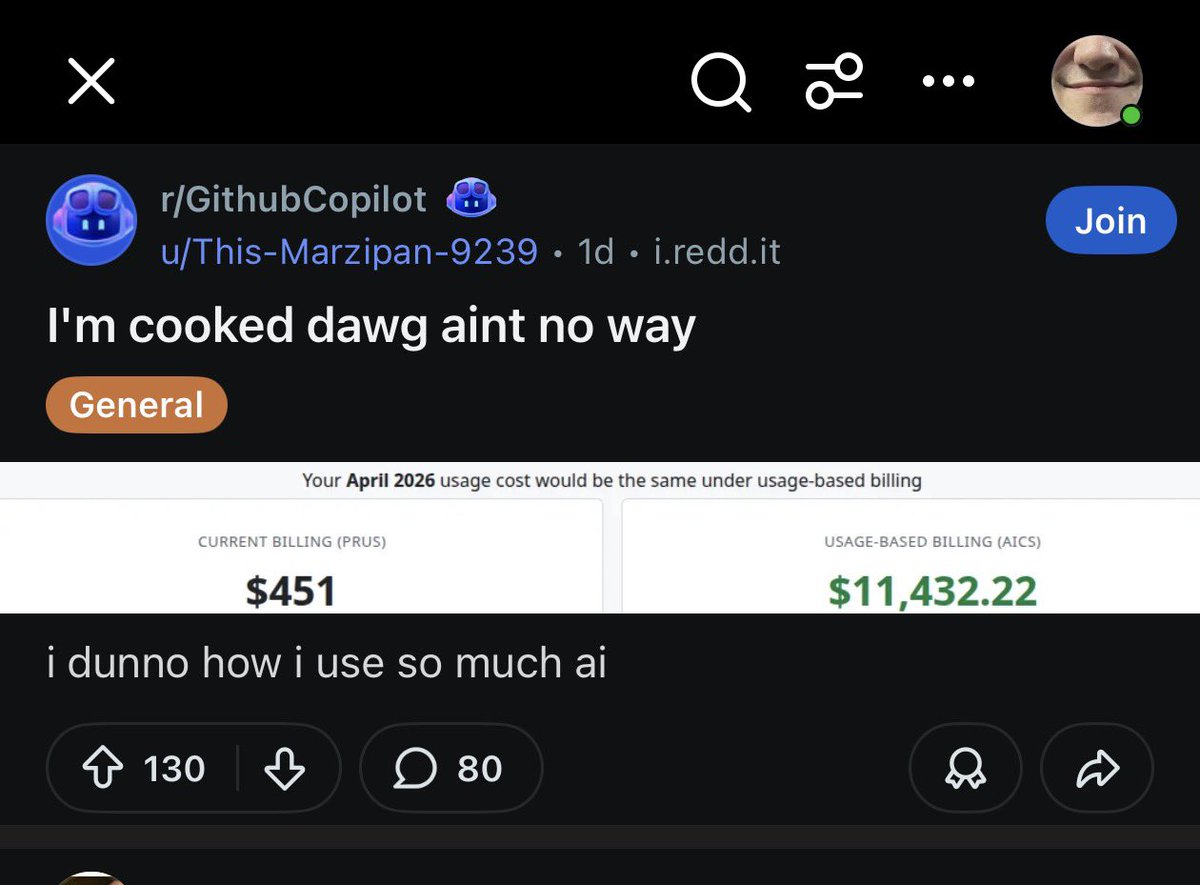
@edzitron posted (188 likes, 3 replies, 12,090 views) that Microsoft's effective Copilot offer had been to subsidize tokens heavily, and the attached billing screenshot showed a preview jumping from $451 to $11,432.22. That image mattered because it turned a vague complaint about hidden AI economics into a number readers could compare against a real plan.
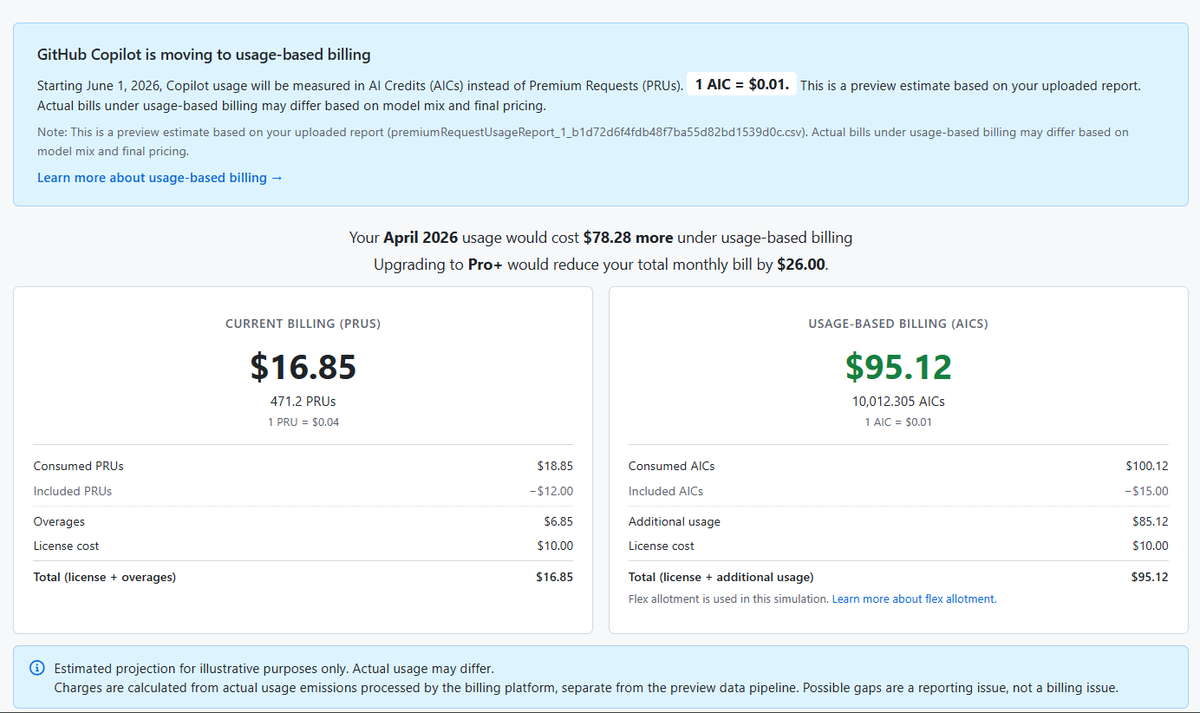
@JohnDoritosKane wrote (1 like, 1 reply, 46 views) that his own April Copilot premium requests would rise from $16.85 under request-based billing to about $95.12 under June's usage-based billing, and he said the 5x change was enough to send him back to evaluating alternatives.
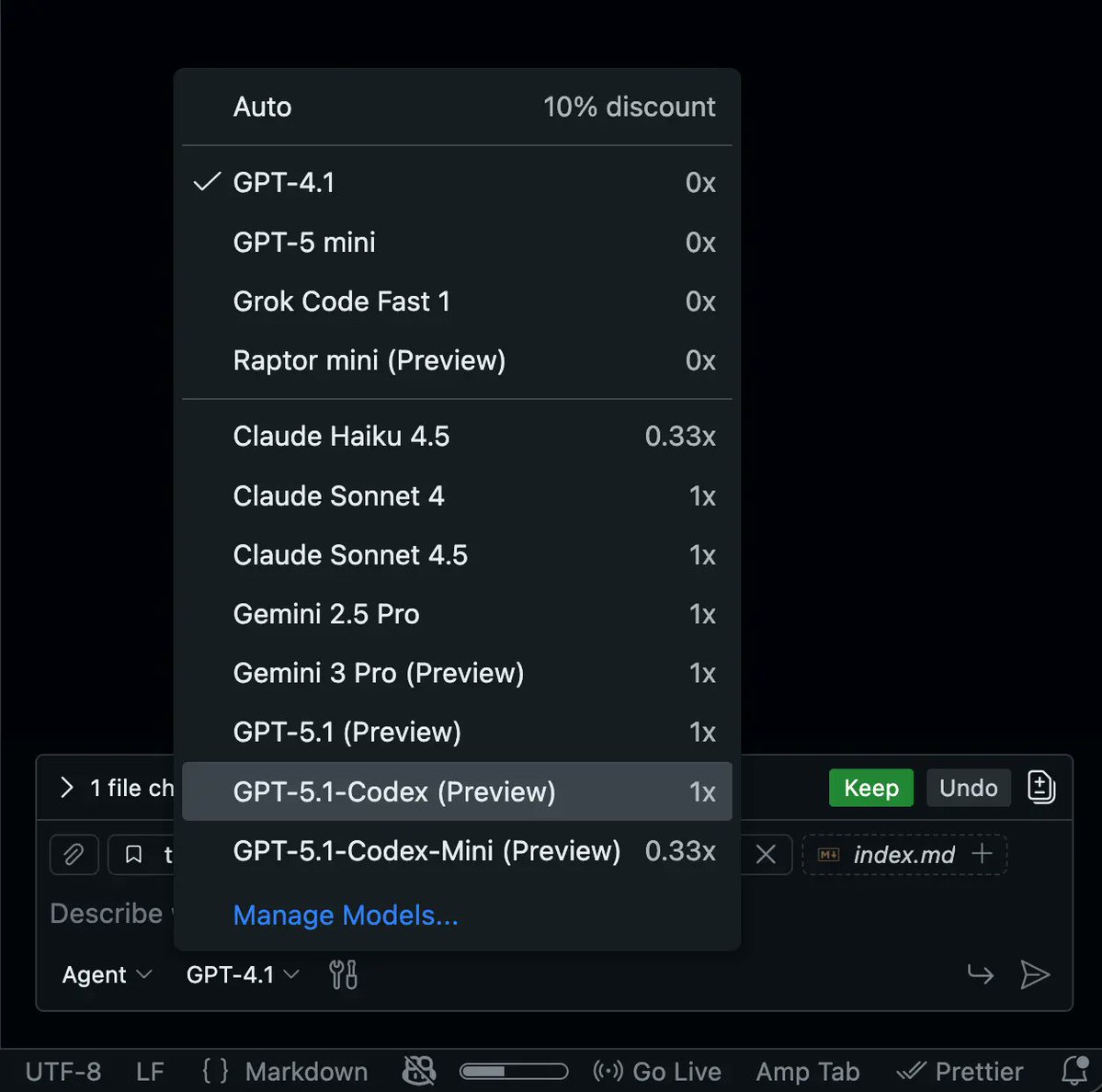
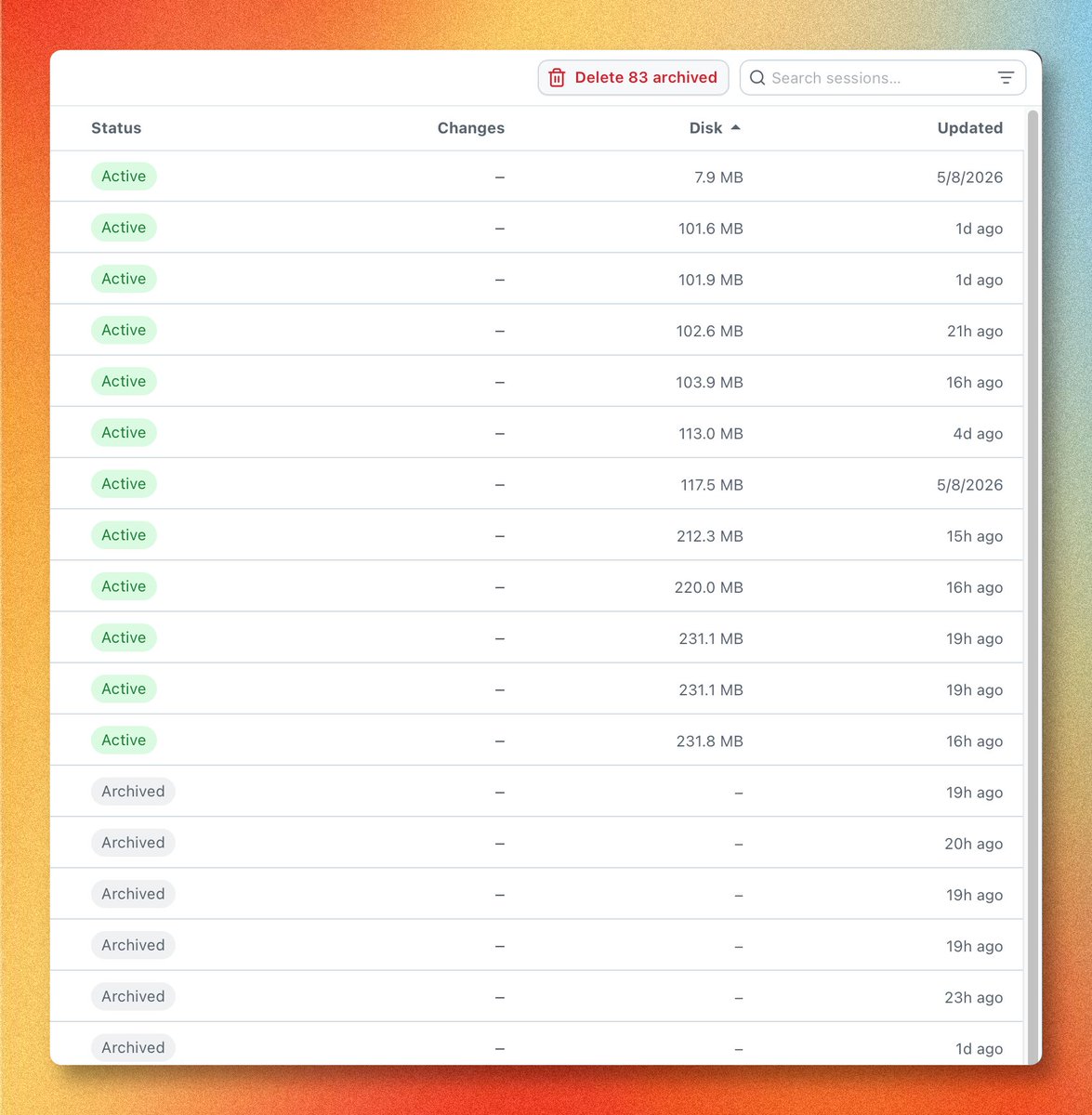
@NickZhu9 announced (24 likes, 1,621 views) that GitHub Copilot CLI was coming into JetBrains with a unified sessions view, and the linked GitHub changelog says the IDE can now delegate to a locally running CLI agent with worktree or workspace isolation, live tool-call progress, and an Ask question tool. The lower-engagement but concrete follow-on evidence came from @JamesMontemagno saying (32 likes, 5 replies, 2,390 views) that 15 days of relying on auto model selection across GitHub Copilot CLI and GitHub Copilot Cloud Agent had rarely forced manual model picking, and from @aiandcloud liking (1 like, 1 reply, 185 views) the Copilot App view for active and archived sessions plus storage usage.
Discussion insight: The strongest GitHub signal was not that Copilot has access to a specific model. It was the combination of rising cost sensitivity with more attention on session state, isolation, and automatic model routing.
Comparison to prior day: On May 15, the GitHub story was still anchored by internal-license-shift chatter and token-burn screenshots. On May 16, the same cost theme persisted, but it was supported by more personal billing evidence and by GitHub-owned workflow details from JetBrains and the Copilot App.
1.2 Codex recovery mattered because phone and voice control surfaces kept expanding 🡕
Five items supported a second theme: the feed combined an operational recovery story with more evidence that Codex is escaping the desktop. What mattered was not just that a reliability issue was fixed, but that people were already treating Codex as something they would monitor, approve, or even talk to away from the main machine.
@yuki_eliot said (39 likes, 11 replies, 596 views) that OpenAI had fixed the GPT-5.5 degradation that had been hurting Codex for two days and reset paid usage limits. The attached screenshot showed @thsottiaux saying the degradation came from two issues over about 48 hours, which made this more than a generic "it's fixed" post.

@nicdunz thanked (25 likes, 5 replies, 1,058 views) the Codex team for a quick fix, but the replies did not read like full trust had returned: one reply said the reset had already happened, while another accused the team of mixed messaging about resets and fast mode. In parallel, @DeryaTR_ quote-tweeted (57 likes, 3 replies, 4,359 views) a mobile-preview roadmap saying push notifications, /fork, better reconnects, device-control fixes, better git diff and full-file views, and fewer mobile thread errors were on the way.
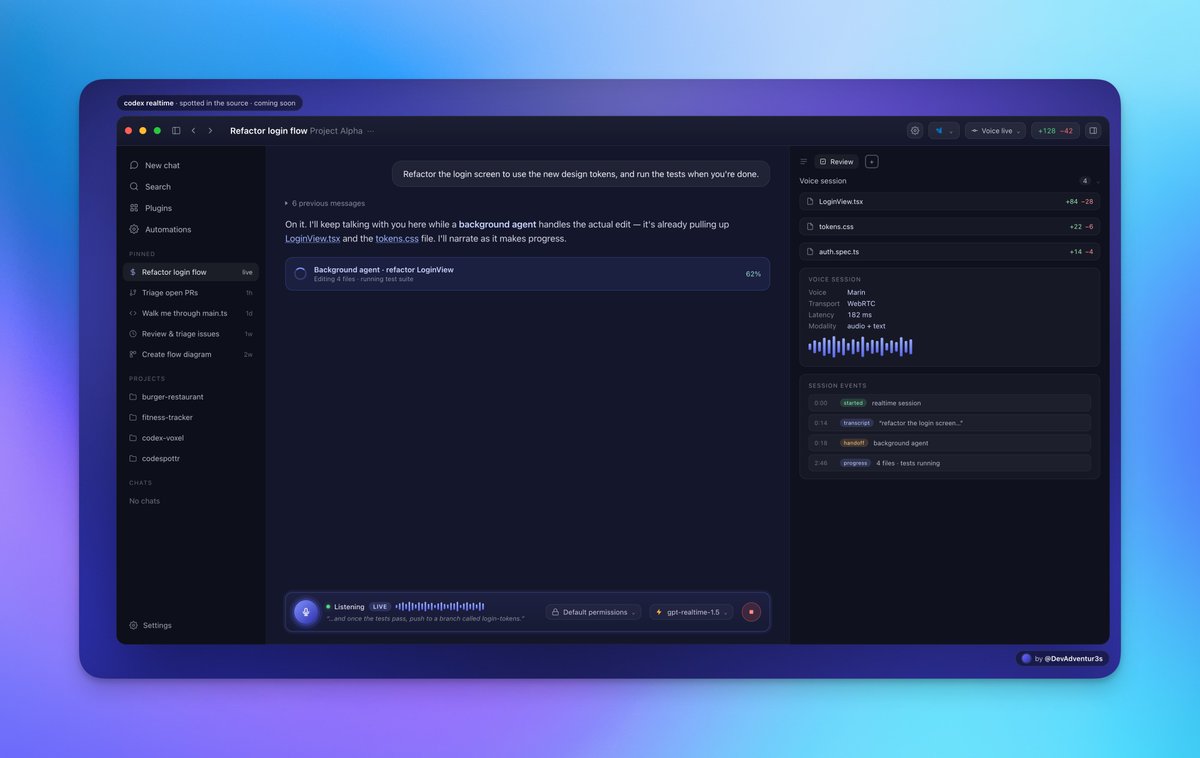
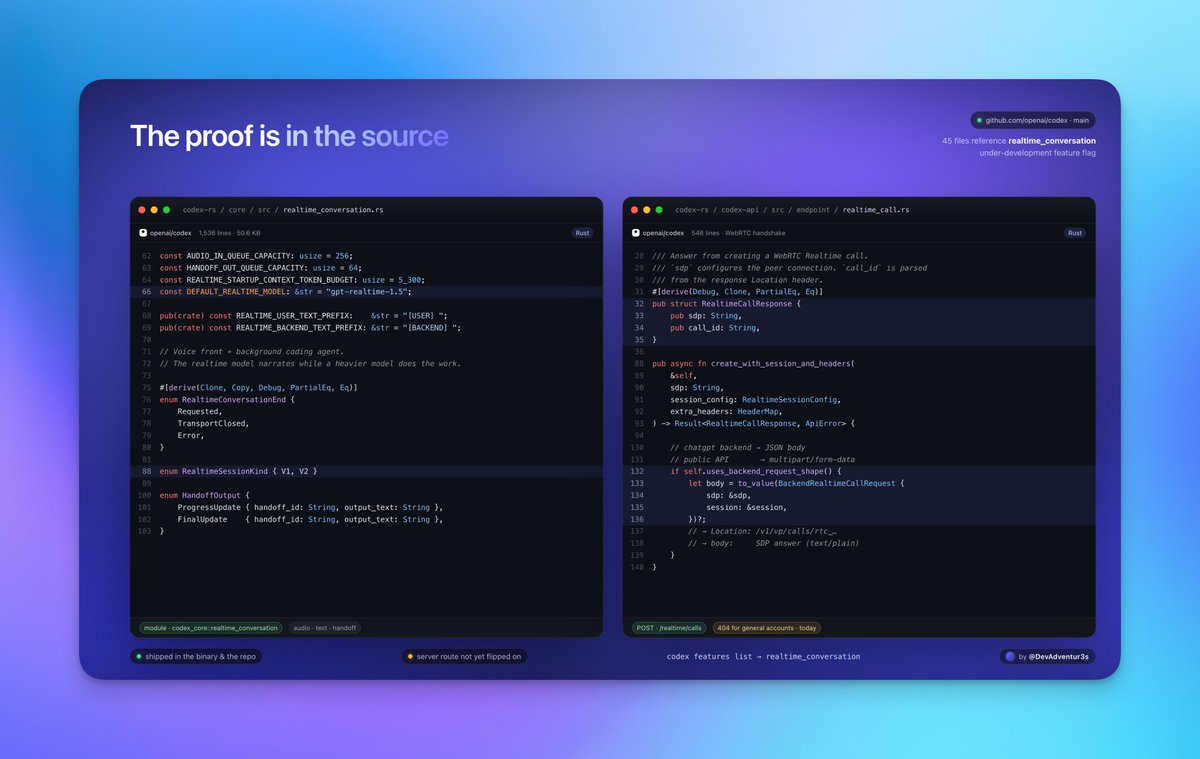
@bawan269 argued (3 likes, 4 replies, 54 views) that Codex in the ChatGPT mobile app should be understood as a control surface for long-running agent work rather than "coding on a phone," and one reply sharpened the requirement by saying mobile approvals need the patch, command requested, test status, and rollback path. The same control-surface idea appeared in @DevAdventur3s claiming (30 likes, 8 replies, 1,767 views, 5 quotes) that OpenAI was building realtime voice mode into Codex: one image showed the intended narrated-agent UX and the other showed realtime_conversation.rs, WebRTC references, and about 1,536 lines of Rust behind it.
Discussion insight: The interesting shift is that the day was not debating whether remote supervision is a real use case. The replies assumed it is useful and instead focused on resets, reconnects, approval context, and whether OpenAI can make the control surface trustworthy.
Comparison to prior day: May 15's control-surface story was mostly mobile-preview excitement plus instability reports. May 16 added an explicit fix/reset statement, a public list of mobile improvements, and source-level evidence for a voice interface.
1.3 Antigravity still looks alive in screenshots, but roadmap trust keeps eroding 🡖
Four items supported a third theme: Google still has public material telling developers to use Antigravity, and users are still sharing current UI surfaces, but the strongest discussion keeps reverting to stale release evidence and missing communication.
@FlutterDev promoted (78 likes, 1 reply, 3,511 views) a Google I/O session whose schedule page says "Vibe coding is an important skill for developers in 2026" and promises to show how Google teams accelerate development with Google Antigravity. That page mattered because it is the clearest same-day counter-signal to shutdown rumors.
@LexnLin posted (87 likes, 10 replies, 4,543 views) a screenshot showing Antigravity Plan mode, model selection, and a local workspace, and speculated that cloud-agent access might be coming at I/O. @Surendar__05 said (54 likes, 28 replies, 2,250 views) he thought Google was shutting Antigravity down, but the attached screenshot still showed a live editor and model picker rather than an absent product.

The harder evidence was negative. @haider1 wrote (4 likes, 2 replies, 185 views) that Antigravity had not visibly updated in over a month, still lost recent project context, forgot checkpoints, and performed worse than Codex or Claude Code for him. The screenshot is specific: release notes were still on v1.23.2 from Apr 16, 2026.

Discussion insight: The contradiction is now stable. Public screenshots keep showing an interface people can still use, while the rumor cycle keeps returning because the visible release and communication cadence do not look like an actively managed flagship product.
Comparison to prior day: May 15 centered on a stale changelog plus Google I/O promotion. May 16 added fresher UI evidence like Plan mode and another live model-picker screenshot, but the strongest new complaint was about context loss and forgotten checkpoints rather than mere silence.
2. What Frustrates People
Pricing is moving from background subsidy to front-and-center workflow risk
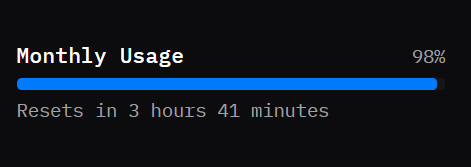
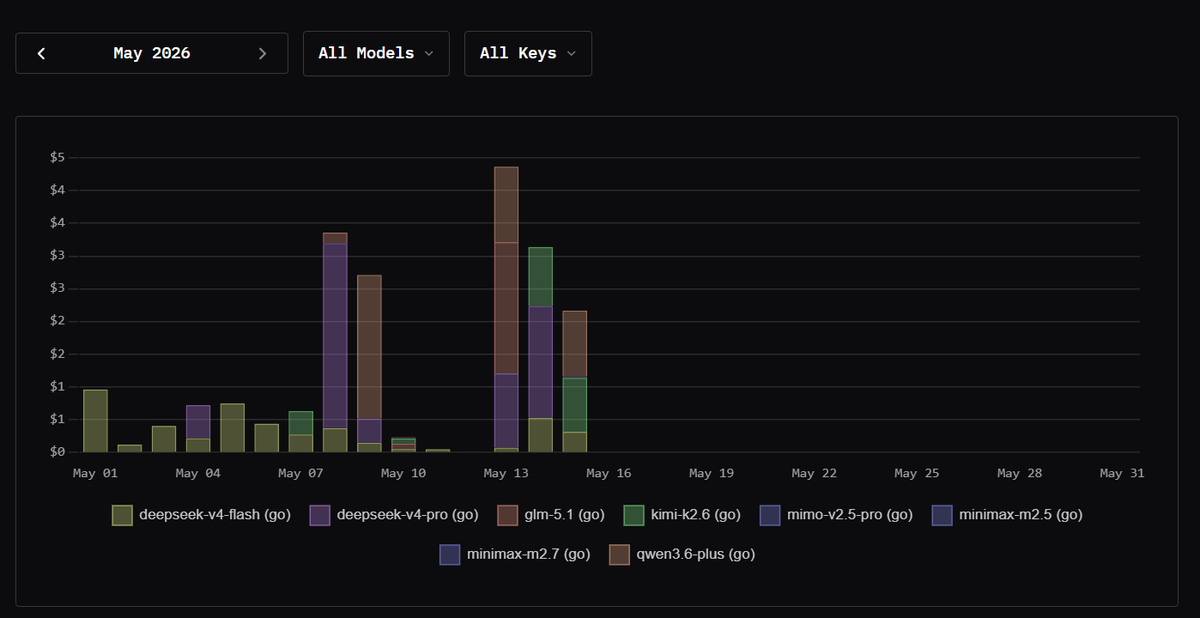
The sharpest frustration was that AI coding bills are becoming legible only after users are already deep in the habit. @edzitron posted (188 likes, 3 replies, 12,090 views) a Copilot billing preview jumping from $451 to $11,432.22, and @JohnDoritosKane showed (1 like, 1 reply, 46 views) his own April usage moving from $16.85 to $95.12 under the June pricing model. The more practical coping pattern came from @pseudokid sharing (21 likes, 3 replies, 1,674 views, 10 bookmarks) a month of OpenCode Go usage that made it to 98% with three hours left by routing work through Pi agent and leaning on DeepSeek V4 Flash, DeepSeek V4 Pro, free Qwen 3.6, Qwen 3.6 Plus, Mimo V2.5 Pro, Kimi K2.6, and GLM 5/5.1. The images mattered because they turned "optimize your stack" into actual quota and model-mix evidence. Severity: High. Worth building for: yes, because the unmet need is now observability plus guardrails, not just cheaper tokens.
Antigravity users are frustrated by silence, instability, and context loss
Antigravity complaints are now more operational than existential. @haider1 wrote (4 likes, 2 replies, 185 views) that the tool still loses recent project context, forgets checkpoints, and feels worse than Codex or Claude Code, while @Surendar__05 asked (54 likes, 28 replies, 2,250 views) whether anyone was even maintaining it. Even the more optimistic @LexnLin post (87 likes, 10 replies, 4,543 views) drew replies asking how Plan mode was still available at all, which turns configuration inconsistency into another layer of friction. The oddest part is that @FlutterDev promoted (78 likes, 1 reply, 3,511 views) a Google I/O session about Antigravity on the same day, so users are treating conference pages as roadmap communication. Severity: High. Worth building for: yes.
Vibe-coded MVPs still fall apart when real users arrive
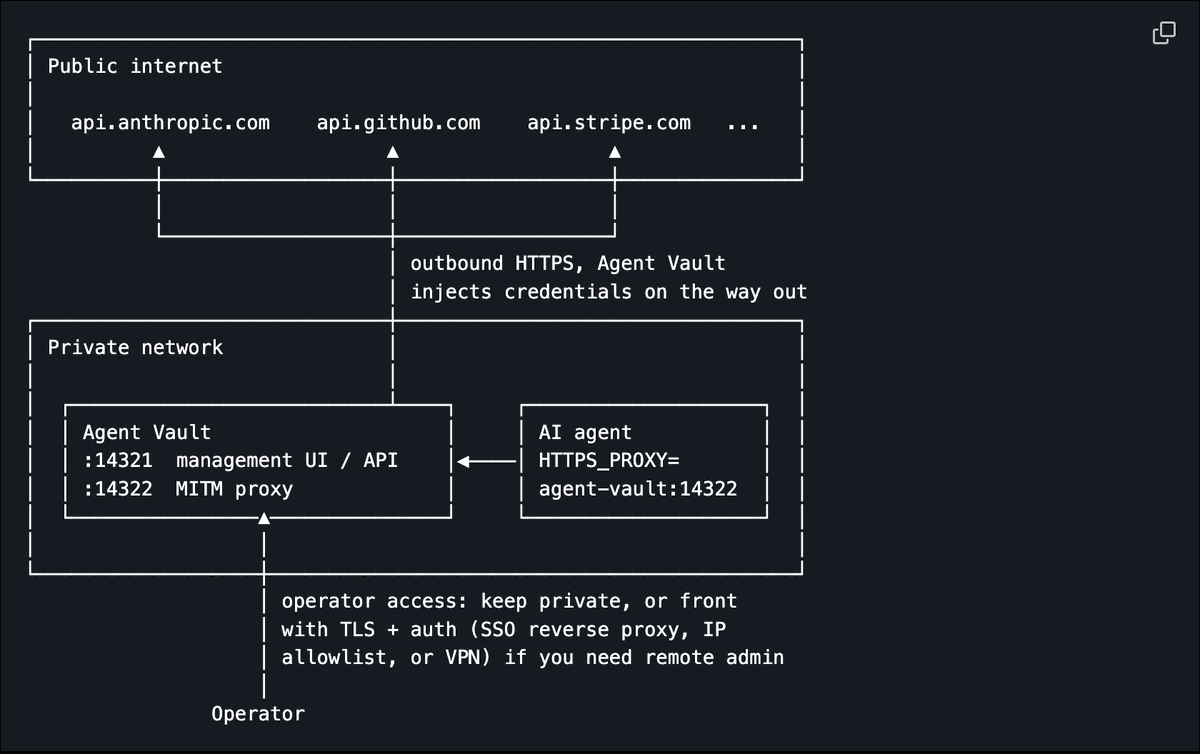
The production-hardening complaint stayed specific. @Mr1_Nobody1 said (4 likes, 2 replies, 124 views) that a vibe-coded MVP looked perfect until real deployment exposed auth leaks, missing limits, and broken security, and the attached infographic lists the missing layers: APIs, database, auth, cloud, security, rate limits, caching, and CDN. A concrete coping pattern appeared in @dangtony98 sharing (2 likes, 14 views) Agent Vault's credential-brokering diagram, which routes outbound requests through a proxy so the agent never sees the real secret at all. Severity: High. Worth building for: yes, especially for auth, quotas, and safe secret handling around AI-built apps.

3. What People Wish Existed
Mobile agent supervision with real approval context
This need was stated in operational terms rather than hype. @DeryaTR_ quote-tweeted (57 likes, 3 replies, 4,359 views) a roadmap promising push notifications, /fork, better reconnects, and better diff/full-file views for Codex mobile, while @bawan269 argued (3 likes, 4 replies, 54 views) that the phone should be a control surface for long-running work, not the place the work executes. The most concrete third-party attempt came from @0xPaulius posting (2 likes, 1 reply, 147 views) an iPhone pairing and chat UI for Codex and Claude Code. This is a practical need with partial answers but no obvious winner yet. Opportunity: direct.

A local control plane for cost, context, cache, and session state
The need here is also practical: people want to see what the agent is doing before the budget is gone or the session drifts. @aiandcloud liked (1 like, 1 reply, 185 views) that the GitHub Copilot App shows active and archived sessions plus storage usage, and @AbdMuizAdeyemo said (1 like, 2 replies, 67 views) that builders still cannot clearly see cost, context, cache, failure points, and workflow quality, which is why he started Talocode. The fetched Talocode repository makes the same pitch in product terms: local daemon, dashboard, phone control, context caching, browser runtime, and worktree-oriented sessions. Opportunity: direct.

Memory and continuity that survive session boundaries and tool changes
What people want is not infinite chat history for its own sake; they want the agent to remember enough to keep long-running work coherent. @haider1 complained (4 likes, 2 replies, 185 views) that Antigravity still loses recent project context and forgets checkpoints, while @goyalshaliniuk said (7 likes, 3 replies, 44 views) that agentmemory records each session, compresses it, and injects the right context into the next one. The fetched agentmemory repo currently describes hooks, MCP, and REST support across Claude Code, Codex CLI, Cursor, Gemini CLI, Hermes, and OpenCode, so partial answers exist already. Opportunity: competitive.
4. Tools and Methods in Use
| Tool | Category | Sentiment | Strengths | Limitations |
|---|---|---|---|---|
| GitHub Copilot CLI | CLI coding agent | (+/-) | JetBrains preview adds worktree/workspace isolation, unified sessions, live tool calls, and Ask question support | June usage-based billing is changing how users evaluate the product |
| GitHub Copilot App | Agent workspace | (+) | Makes session state visible through active/archived views and storage usage | Evidence today was feature-level praise, not broad adoption proof |
| Codex | Coding agent | (+/-) | Limits were reset quickly after GPT-5.5 degradation; mobile roadmap and possible voice mode broaden supervision surfaces | Recent degradation and reset confusion dent trust |
| Google Antigravity | Agent-first IDE | (+/-) | Plan mode, local workspace, model picker, and explicit Google I/O backing still keep it relevant | Visible updates are stale, and users report context loss, forgotten checkpoints, and instability |
| OpenCode Go / Pi agent | Multimodel harness | (+) | Can stretch low-cost plans with careful routing across DeepSeek, Qwen, Mimo, Kimi, and GLM models | Requires active optimization and model-by-model budget awareness |
| Claude Code | CLI coding agent | (+) | Still useful enough that builders use it as an orchestration layer, and beginner training content keeps appearing | Memory, mobile control, and secret handling are still being solved around it |
| agentmemory | Memory layer | (+) | Persistent cross-session memory across many coding agents through hooks, MCP, and REST | Today's signal came from repo/docs and promotion, not large-scale field reports |
| Agent Vault | Security proxy | (+) | Dummy-credential brokering and egress control reduce secret-exfiltration risk | Requires separate proxy/service deployment and setup discipline |
| Talocode | Local control plane | (+) | Sessions, phone control, context caching, browser runtime, and worktree workflows in one local stack | MVP-stage and still early in public adoption |
| Pi App Studio | AI app builder | (+/-) | Shows a category-based AI app creation surface outside the usual IDE battle | Public evidence today confirms the UI surface, not the bigger distribution claims |
Overall satisfaction split along orchestration layers rather than model brands. On the positive end, @JamesMontemagno said (32 likes, 5 replies, 2,390 views) that automatic model selection across GitHub Copilot CLI and Cloud Agent had mostly worked without manual switching, and @aiandcloud liked (1 like, 1 reply, 185 views) that the Copilot App exposed session status and storage usage directly. On the budget-conscious end, @pseudokid shared (21 likes, 3 replies, 1,674 views, 10 bookmarks) a model-mix playbook where DeepSeek V4 Flash handled cheap compaction and surgical edits while other models were rotated in for precision or image work. The common workaround pattern was no longer "pick one winner"; it was "combine a model, a control surface, and a memory or security layer that compensates for the gaps."
5. What People Are Building
| Project | Who built it | What it does | Problem it solves | Stack | Stage | Links |
|---|---|---|---|---|---|---|
| Antigravity Editor for UE5 | Vahab Ahmadvand | Unreal Engine plugin that opens files and lines inside Antigravity from the Unreal Editor | Lets Unreal developers keep Antigravity as their code editor instead of falling back to VS or VS Code tooling | C++, Unreal ISourceCodeAccessor, VSCode-based Antigravity bridge |
Alpha | tweet, repo |
| agentmemory | rohitg00 | Persistent memory server for coding agents that records sessions and injects relevant context back later | Reduces repeated re-explaining and broken continuity across agent sessions | TypeScript, npm package, hooks, MCP, REST, iii engine | Shipped | tweet, repo |
| Agent Vault | Infisical | Credential broker and proxy that lets agents call APIs without directly holding the real secrets | Removes credential-exfiltration risk from agent workflows | Go binary, TLS proxy, CLI, web UI | Shipped | tweet, repo |
| Talocode | Talocode | Local-first control plane for running and supervising coding agents from desktop or phone | Gives builders one place to watch cost, context, sessions, worktrees, and approvals | Local daemon, dashboard, CLI, phone control, context cache, browser runtime, worktrees | Alpha | tweet, repo |
| TachiDUBB Studio + MCP server | @smolekoma | Local-first AI dubbing app that Claude Code can now drive through an MCP server | Replaces expensive cloud dubbing workflows and manual UI operations for multilingual video localization | Claude Code, MCP server, Whisper, speaker detection, Ollama, VoxCPM2, FFmpeg, SQLite queue | Alpha | tweet, thread |
Builders were mostly filling workflow gaps around existing agents rather than launching another general-purpose assistant. @VahabAhmadvand shared (4 likes, 1 reply, 213 views) a UE5 plugin whose fetched README describes instant code navigation from Unreal into Antigravity, while @goyalshaliniuk said (7 likes, 3 replies, 44 views) agentmemory gives Claude Code, Codex, and Hermes effectively persistent memory; the fetched repo currently shows 10,405 stars. @dangtony98 shared (2 likes, 14 views) Agent Vault's credential-brokering model, and the fetched repo explains the security pattern clearly: the agent holds dummy values while the proxy injects the real credentials at the network layer.
@AbdMuizAdeyemo said (1 like, 2 replies, 67 views) Talocode exists because builders still cannot see cost, context, cache, failure points, and workflow quality clearly, and @smolekoma updated (5 likes, 1 reply, 49 views, 6 bookmarks) that TachiDUBB Studio now has an MCP server so Claude Code can drive a local dubbing pipeline without touching the UI. The repeated build pattern was not another base model; it was memory, security, orchestration, or domain-specific execution wrapped around the agent the developer already uses.
6. New and Notable
Codex voice-mode evidence moved from rumor to source-level artifact
@DevAdventur3s claimed (30 likes, 8 replies, 1,767 views, 5 quotes) that OpenAI was wiring realtime voice mode into Codex, and the noteworthy part was not the narration mockup alone. The second screenshot pointed to realtime_conversation.rs, WebRTC references, and roughly 1,536 lines of Rust, which made the feature feel like a real implementation path instead of a generic product teaser.
Claude Code training is being packaged for true beginners
@Tech_p001 pointed (9 likes, 2 replies, 201 views, 3 bookmarks) to a freeCodeCamp Claude Code beginner course, and the thumbnail showed a 4:27:48 runtime. That matters because the onboarding signal is no longer just power-user threads and workshop clips; it is long-form, beginner-oriented training that assumes Claude Code is worth learning from scratch.
Pi App Studio shows AI app-building surfacing outside the usual IDE market
@skadbsgml93 claimed (7 likes, 3 replies, 122 views) that Pi Network's App Studio could turn "vibe coders" into builders using Codex, Claude, and Replit prompts. The broader reach claims in the tweet were not independently verified, but the screenshot did confirm that Pi App Studio exposes a category-driven creation surface for AI, code, apps, and live experiences. That makes it a useful signal that AI-assisted building is showing up in distribution-first ecosystems, not just in IDEs and terminal tools.

7. Where the Opportunities Are
[+++] Cost-aware control planes — The evidence spans @edzitron posting (188 likes, 3 replies, 12,090 views) a Copilot billing preview exploding to $11,432.22, @JohnDoritosKane showing (1 like, 1 reply, 46 views) a 5x personal increase, @aiandcloud liking (1 like, 1 reply, 185 views) visible session and storage state, and @AbdMuizAdeyemo starting (1 like, 2 replies, 67 views) Talocode because builders still cannot see cost, context, cache, and failure points clearly. The opportunity is strong because the pain shows up in both vendor billing changes and independent builder response.
[++] Cross-device approval surfaces — @DeryaTR_ quote-tweeted (57 likes, 3 replies, 4,359 views) a mobile roadmap focused on reconnects, diffs, and control, @bawan269 argued (3 likes, 4 replies, 54 views) that phones should handle judgment points rather than execution, and @0xPaulius posted (2 likes, 1 reply, 147 views) a phone pairing UI for Codex and Claude Code. The demand is obvious, but the surface still looks fragmented and preview-grade.
[+] Production-hardening layers for AI-built apps — @Mr1_Nobody1 said (4 likes, 2 replies, 124 views) that vibe-coded MVPs fail when auth, limits, and security finally matter, while @dangtony98 shared (2 likes, 14 views) a concrete secret-brokering pattern via Agent Vault. This is still an emerging opportunity, but it maps directly to real deployment pain rather than abstract fear.
8. Takeaways
- Copilot's value conversation is now inseparable from visible bills. @edzitron posted (188 likes, 3 replies, 12,090 views) a billing preview exploding to $11,432.22, and @JohnDoritosKane showed (1 like, 1 reply, 46 views) his own expected monthly cost rising from $16.85 to $95.12.
- Codex's next battleground is supervision UX, not just model quality. @yuki_eliot said (39 likes, 11 replies, 596 views) the recent degradation was fixed and limits were reset, but @DeryaTR_ quote-tweeted (57 likes, 3 replies, 4,359 views) a roadmap about reconnects and diff views, and @bawan269 argued (3 likes, 4 replies, 54 views) that mobile control only works if the judgment context is visible.
- Antigravity's evidence set is now genuinely contradictory. @FlutterDev promoted (78 likes, 1 reply, 3,511 views) a Google I/O session about using Antigravity, @LexnLin posted (87 likes, 10 replies, 4,543 views) a live Plan-mode screenshot, and @haider1 wrote (4 likes, 2 replies, 185 views) that the product still loses context and has not visibly updated in over a month.
- The strongest builder energy is going into scaffolding around agents, not another generic agent shell. @goyalshaliniuk said (7 likes, 3 replies, 44 views) agentmemory persists cross-session context, @dangtony98 shared (2 likes, 14 views) Agent Vault's secret-brokering pattern, @AbdMuizAdeyemo started (1 like, 2 replies, 67 views) Talocode to make workflows observable, @VahabAhmadvand shared (4 likes, 1 reply, 213 views) an Antigravity-Unreal bridge, and @smolekoma updated (5 likes, 1 reply, 49 views, 6 bookmarks) TachiDUBB Studio with a new MCP server.