Twitter AI Coding - 2026-05-24
1. What People Are Talking About
1.1 Antigravity drew more skepticism than trust 🡖
Google's Antigravity stayed prominent, but the balance of evidence tilted toward frustration rather than adoption proof. The highest-engagement post was a broad complaint about Google's AI week, while the day's most-repeated Antigravity thread reused the same NotebookLM pairing, setup time, and four use cases across multiple accounts. That makes the conversation look split between distribution-heavy promotion and unresolved product friction.
@ishuagra02 argued (380 likes, 43 replies, 30,706 views, 52 bookmarks) that Google had "an atrocious week," specifically calling Gemini 3.5 Flash underwhelming, Antigravity CLI broken and closed source, and Google Cloud's handling of Railway unacceptable.
@jackcoder0 claimed (50 likes, 30 replies, 12,018 views, 25 bookmarks) that NotebookLM plus Antigravity enables autonomous deep research, custom business skills, context-aware apps, and automatic reports, while @Heykazitarek made nearly the same case (41 likes, 13 replies, 1,137 views, 28 bookmarks) with almost the same setup and use-case list.
@koltregaskes complained (9 likes, 6 replies, 864 views) that Antigravity 2.0 still lacks practical auto mode and keeps forcing approval clicks even after permissions are set to allow.
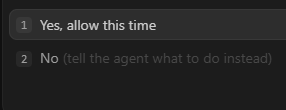
Discussion insight: The repeated NotebookLM threads made the bullish case in detail, but the replies and separate complaint posts kept pulling the conversation back to trust, permissions, and whether Google had actually shipped a smoother workflow.
Comparison to prior day: On May 23, Antigravity was still a mixed story with active defenders. On May 24, the strongest engagement shifted further toward backlash, while the positive case appeared mostly in duplicated setup threads rather than fresh proof points.
1.2 Model routing and account portability are becoming default expectations 🡕
The clearest positive builder trend was that coding agents are increasingly judged on how well they route accounts, subscriptions, and local models. The evidence spanned a 1,400-reply usage chart, Pi screenshots showing subscription switching, Codex local-model demos, and OpenCode's expanding provider surface.
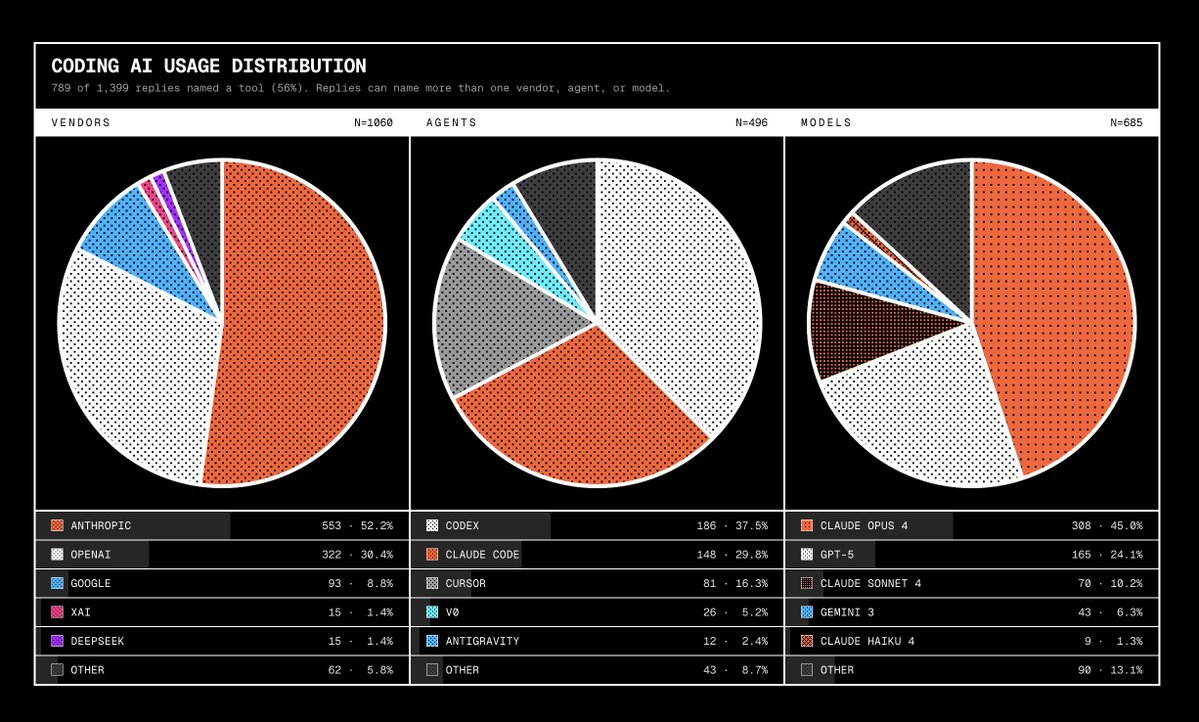
@rauchg reported (144 likes, 30 replies, 16,753 views, 29 bookmarks) that after processing 1,400 replies about products people had built with AI, OpenAI was catching up to Anthropic, Codex had more agent-name mentions than Claude Code, and Anthropic models still dominated the model layer.
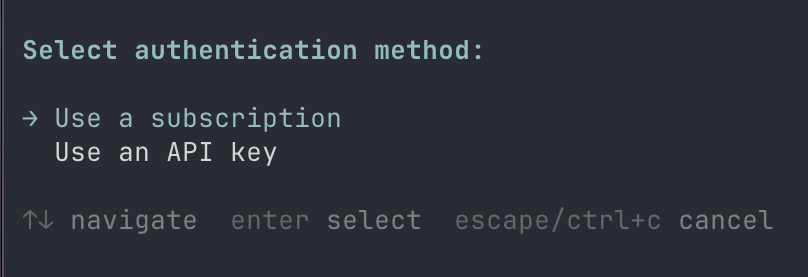
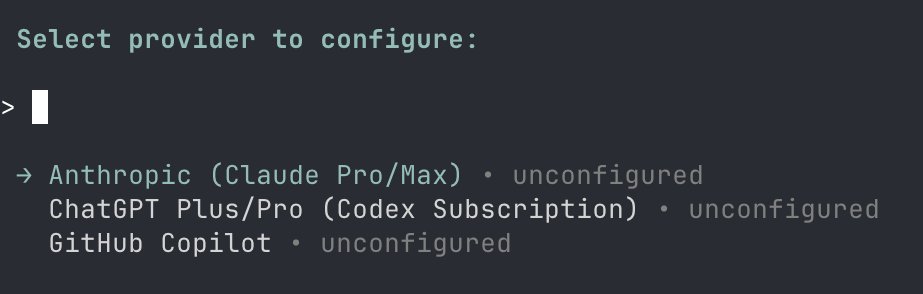
@morganlinton showed (29 likes, 8 replies, 2,807 views, 9 bookmarks) that Pi can start from either a subscription or an API key, then switch among Anthropic, ChatGPT / Codex, and GitHub Copilot accounts.
@RoundtableSpace said (83 likes, 10 replies, 48,453 views, 26 bookmarks) that Codex can be pointed at Gemma 4 through Ollama in "three config lines," while @teslaownersSV posted (36 likes, 6 replies, 2,125 views) that Grok or X Premium can now be used inside OpenCode. The public OpenCode site describes OpenCode as an open-source coding agent for terminal, IDE, and desktop use with GitHub Copilot login, ChatGPT Plus or Pro login, and 75+ providers through Models.dev.
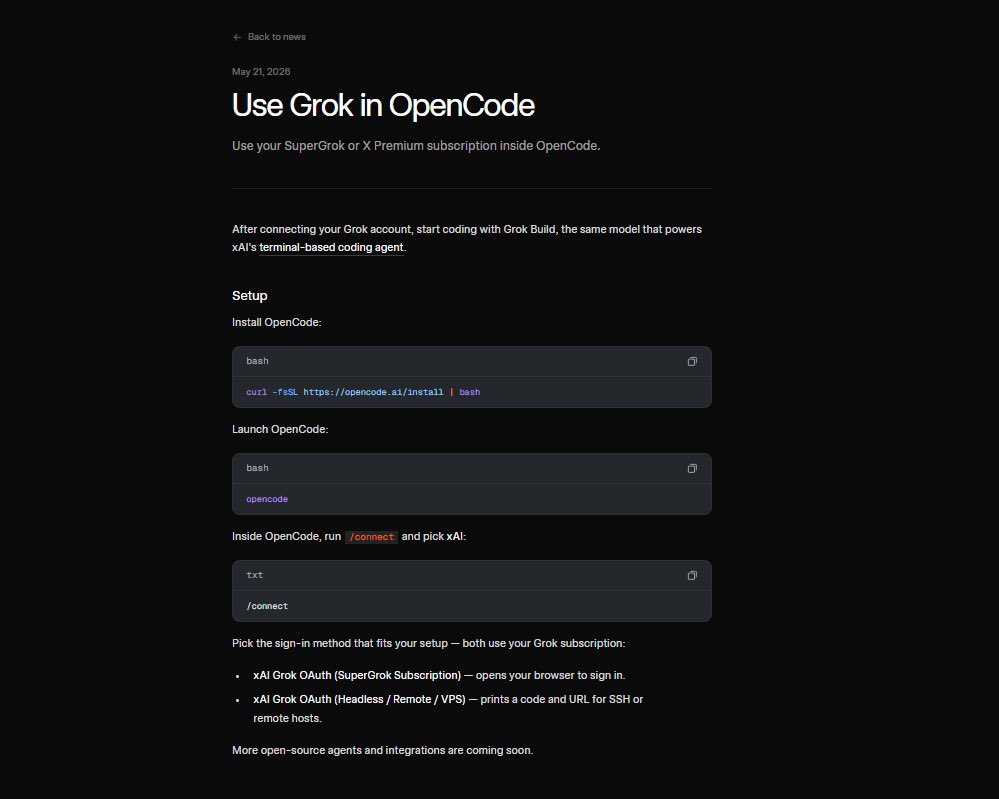
@LyalinDotCom added (13 likes, 627 views) that Codex, Gemini CLI, and OpenCode are all open and worth learning from. The linked repos back that up: openai/codex calls itself a lightweight terminal coding agent, google-gemini/gemini-cli calls itself an open-source terminal AI agent, and anomalyco/opencode describes itself as "the open source coding agent."
Discussion insight: Replies under the routing posts did not treat switching as exotic. They treated it as the new normal, with local Qwen or Gemma setups, subscription reuse, and model portability framed as the practical baseline.
Comparison to prior day: May 23 already treated coding agents as portable harnesses. May 24 pushed that further from abstract discussion into concrete auth screens, repo links, and subscription-routing demos.
1.3 Skills are being productized for narrow workflows, not just general coding 🡕
The skill trend from earlier in the week kept narrowing into specific workflow packs. Instead of generic prompt advice, builders were sharing installable libraries for brand work, SEO, ops, and n8n automation, which suggests the packaging layer around agents is getting more specialized.
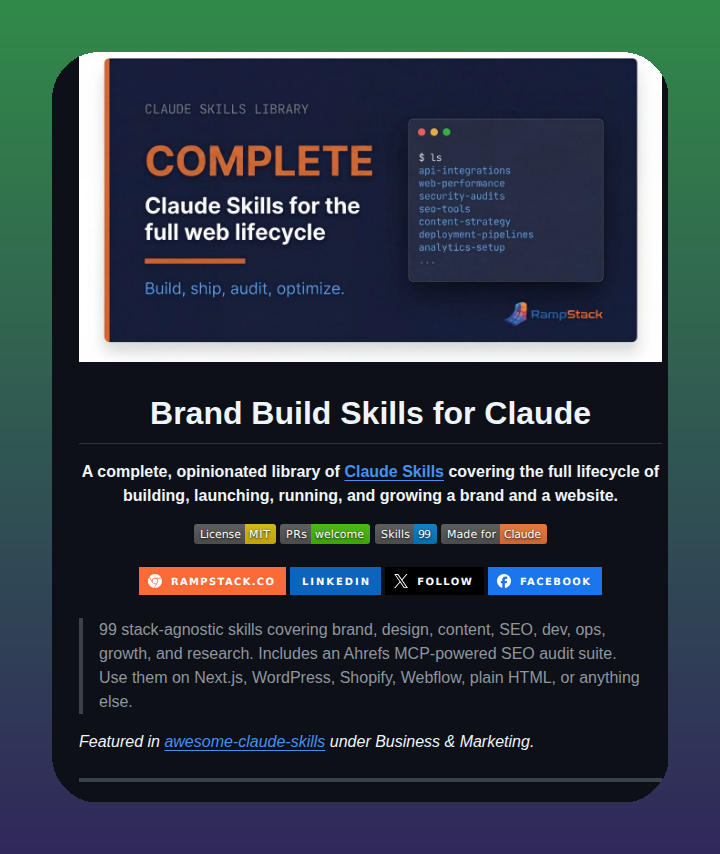
@tom_doerr shared (11 likes, 1 reply, 775 views, 15 bookmarks) a set of 99 stack-agnostic Claude Code skills covering brand, design, SEO, and ops. The linked rampstackco/claude-skills repository describes itself as a full-lifecycle library of Claude Skills for building, launching, running, and growing a brand and website.
@tom_doerr also shared (2 likes, 132 views) an n8n-focused skill pack. The linked czlonkowski/n8n-skills repository says it contains seven complementary Claude Code skills for building production-ready n8n workflows through the n8n-mcp server and explicitly targets validation loops, bad MCP usage, and misconfigured nodes.

@Hesamation shared (9 likes, 1 reply, 231 views, 6 bookmarks) an eight-minute guide to agent harnesses like Codex and Claude Code, framing the harness layer itself as something worth learning independently from any single model.
Discussion insight: The common move was not "here is my prompt." It was "here is my installable package, explainer, or workflow-specific layer." That keeps reinforcing that leverage is moving into reusable context and tooling.
Comparison to prior day: May 23 centered skills and MCP as product surfaces. May 24 extended that trend into narrower, more operational packs aimed at specific jobs like lifecycle marketing and n8n automation.
2. What Frustrates People
Antigravity still turns automation into approval labor
Severity: High. The strongest Google-specific frustration was not abstract model quality but workflow drag. @koltregaskes said (9 likes, 6 replies, 864 views) that even after setting permissions to allow, Antigravity 2.0 still asks for the same approval over and over and forces both a choice and a submit click. @ishuagra02 said (380 likes, 43 replies, 30,706 views, 52 bookmarks) the CLI was broken and closed source while bundling that complaint into a broader indictment of Google's AI week. The coping pattern today was not a workaround so much as public exasperation. This looks worth building for because the failure sits in the inner loop: if approvals do not stay approved, the agent never feels autonomous.
Context-heavy Codex sessions can still fail at the wrong moment
Severity: Medium-High. @zerotalktoai showed (3 likes, 4 replies, 75 views) Codex returning context_length_exceeded during a remote compact task, then said the practical workaround was opening a new chat even though customer work was in progress. The screenshot matters because it turns a vague reliability complaint into a specific failure mode inside an active session.
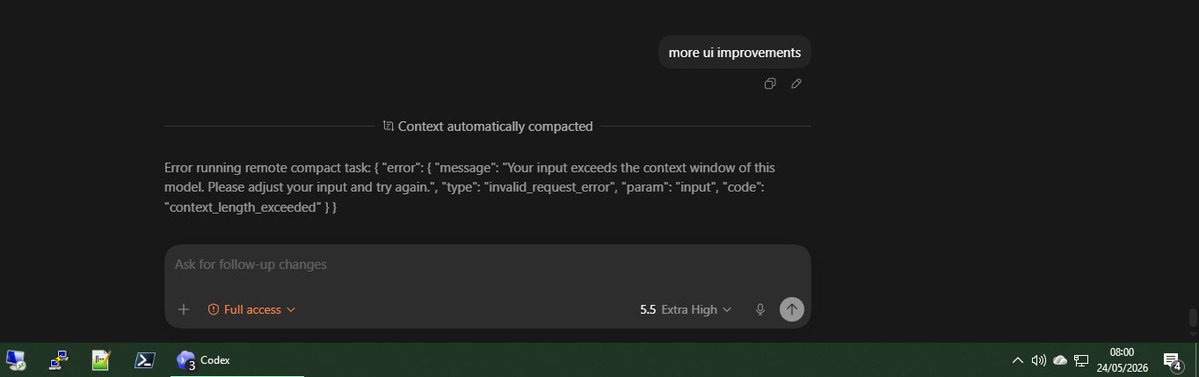
This is worth building for because the pain is operational rather than cosmetic: once the session breaks, users lose flow, continuity, and trust in long-running work.
Plan-tier model access is shaping perceived value more than branding
Severity: Medium. @cheatyyyy complained (15 likes, 3 replies, 806 views) that the GitHub Copilot student plan exposed an old or mini-heavy model list rather than frontier choices. @morganlinton showed (29 likes, 8 replies, 2,807 views, 9 bookmarks) why this matters: Pi's routing flow explicitly treats Anthropic, ChatGPT / Codex, and GitHub Copilot subscriptions as interchangeable inputs to compare and switch.
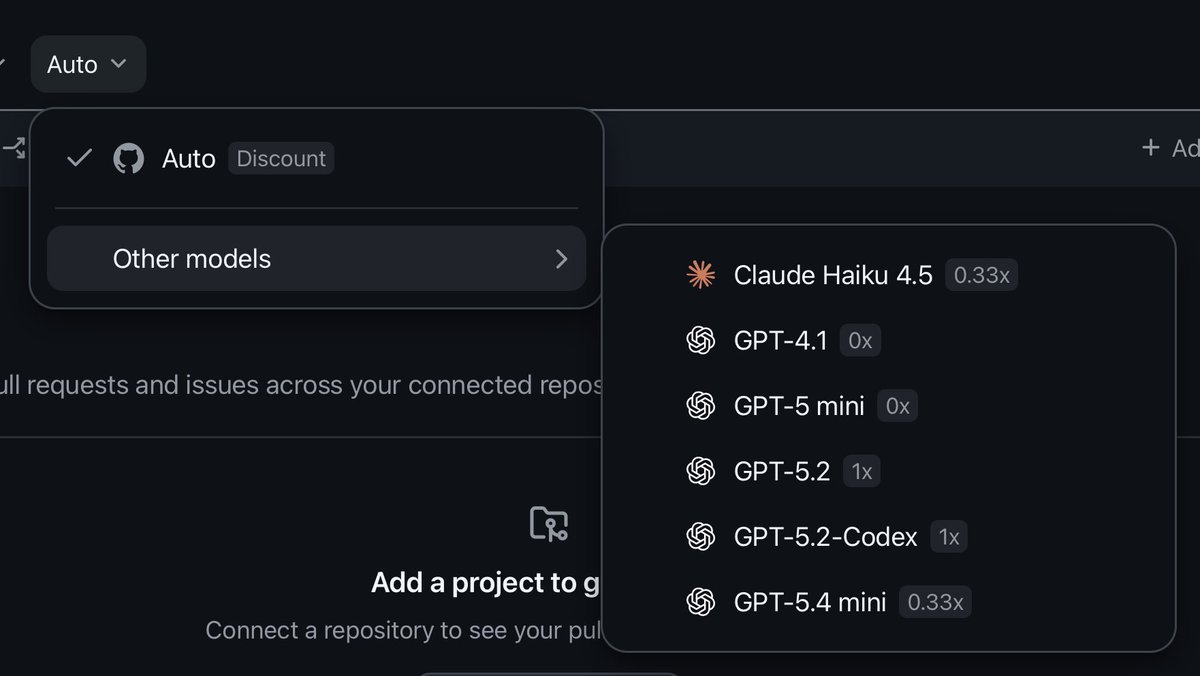
When users can route among plans, limited model menus become a competitive disadvantage immediately. That makes this worth building for both as a pricing-transparency problem and as a routing / dashboard problem.
3. What People Wish Existed
Durable auto mode instead of endless one-time approvals
The most direct request in the feed was for a real auto mode. @koltregaskes explicitly asked where Antigravity 2.0's auto mode was and said one-click approval should replace the current choose-then-submit loop. That is a practical need, not an aspirational one. Opportunity: direct.
A neutral control plane for subscriptions, models, and routing
People are already acting as if model access should be portable across tools. @morganlinton showed Pi switching among Anthropic, ChatGPT / Codex, and GitHub Copilot accounts, while @cheatyyyy framed Copilot's student plan as unattractive because the model menu lagged the market. The missing layer is a clear dashboard that explains what each plan unlocks, what is stale, and when routing elsewhere is better. Opportunity: direct and competitive.
Audited skill packs that travel across agent clients
The build activity around skills keeps implying a packaging gap. @tom_doerr surfaced a 99-skill Claude workflow library, and later the same day shared an n8n-specific pack built around n8n-mcp. The need is no longer "give me a prompt." It is "give me an installable, trustworthy workflow module." Opportunity: direct.
Long-running sessions that fail gracefully instead of resetting
@zerotalktoai described having to open a new chat after a Codex context-window failure during real customer work. That points to a missing recovery layer: compaction, checkpointing, or handoff that preserves task state instead of forcing manual restart. Opportunity: competitive.
4. Tools and Methods in Use
| Tool | Category | Sentiment | Strengths | Limitations |
|---|---|---|---|---|
| OpenAI Codex | Coding agent | (+/-) | Strong mindshare in the 1,400-reply chart; open-source terminal agent per repo; can be routed to local models in user demos | Context-window failures still surface in live work; usage and routing still feel improvised |
| Google Antigravity | Agent IDE / runtime | (+/-) | Gets paired with NotebookLM for research, custom skills, app generation, and report workflows | Broken / closed-source complaints, approval friction, and repeated promo copy weaken trust |
| NotebookLM | Research / context tool | (+) | Used as the source layer for deep research, notebook generation, and content outputs in Antigravity threads | Today's evidence was mostly bundle-style pairing posts rather than independent coding evidence |
| Pi | Routing harness | (+) | Lets users start from subscription or API key and switch among Anthropic, ChatGPT / Codex, and Copilot accounts | The value proposition today was routing, not unique coding capability |
| OpenCode | Open-source coding agent | (+) | Public site promises terminal, desktop, and IDE surfaces plus GitHub, ChatGPT, and many-provider auth; Grok integration expanded its provider story | Most evidence today focused on setup and integration screenshots rather than deep build case studies |
| Claude Code | Coding agent | (+) | Still central enough to inspire large skill libraries and n8n workflow packs; Anthropic models led the model layer in rauchg's chart | Users keep looking for cheaper routing, narrower workflow packs, or alternative harnesses around it |
| GitHub Copilot | Coding assistant / harness | (+/-) | Still visible in routing tools and in AI-assisted Linux kernel patch reporting | Student-plan model availability looked dated relative to competitors |
| Gemini CLI | Open-source coding agent | (+) | Public repo positions it as an open-source terminal agent with MCP support and large context | The day's conversation focused more on Antigravity complaints than on Gemini CLI usage itself |
Overall satisfaction was highest when tools increased portability or packaged workflow knowledge, and lowest when they hid value behind approvals, stale plan tiers, or brittle session behavior. The practical migration pattern was not one clean switch from tool A to tool B. It was routing: reuse existing subscriptions through Pi or OpenCode, test local models through Ollama, and keep specialized skill packs on top of whichever harness stays usable.
5. What People Are Building
| Project | Who built it | What it does | Problem it solves | Stack | Stage | Links |
|---|---|---|---|---|---|---|
| Claude Skills | rampstackco | Packaged Claude workflow library for brand, design, SEO, ops, and related website work | General-purpose coding agents still need reusable domain context for non-code web work | Claude Skills, Claude Code, repo language Python | Shipped | repo |
| n8n-skills | czlonkowski | Seven Claude Code skills for building n8n workflows through n8n-mcp |
n8n workflow generation gets stuck in validation loops, bad MCP usage, and node misconfiguration | Claude Code, n8n-mcp, n8n, Shell |
Shipped | repo |
| OpenCode | anomalyco | Open-source coding agent that runs in terminal, IDE, and desktop with multi-provider auth | Developers want one harness that can reuse existing subscriptions and swap providers without switching products | TypeScript, Models.dev provider routing, GitHub / ChatGPT auth | Shipped | site, repo |
@tom_doerr shared (11 likes, 1 reply, 775 views, 15 bookmarks) Claude Skills as a 99-skill stack-agnostic library, and the linked repo frames it as full-lifecycle support for launching and growing a site or brand rather than just writing application code. That is a notable pattern: builders are packaging surrounding business work, not only coding commands.
@tom_doerr shared (2 likes, 132 views) n8n-skills later the same day, and the repo is explicit that it exists to teach Claude Code how to avoid incorrect MCP usage and validation-error loops when building workflows. That makes it a stronger artifact than a generic tutorial because it is designed to transfer working behavior into repeated tasks.
OpenCode was not presented as a new launch, but it was shared as live infrastructure for portability. @teslaownersSV posted (36 likes, 6 replies, 2,125 views) a Grok-in-OpenCode setup, while OpenCode's site says the product already supports GitHub Copilot login, ChatGPT Plus or Pro login, 75+ providers, and terminal / desktop / IDE surfaces. The repeated build pattern across all three examples is clear: people are building wrappers, skills, and routing layers around existing agents rather than trying to invent another foundation model.
6. New and Notable
AI-assisted Linux kernel fixes keep showing up in weekly patch flow
@phoronix reported (16 likes, 1,100 views) that GitHub Copilot and Claude Code helped with another batch of Linux 7.1-rc5 fixes this week. The linked Phoronix article says the affected areas included graphics, WiFi, AMD display, SMB, Netfilter, sysfs, IO_uring, and Bluetooth, and points readers to kernel history tagged with Assisted-by:. That matters because it is evidence of AI coding tools being used in a high-trust, production-adjacent codebase, not only in demos.
Open-source harnesses are now the default comparison set
@LyalinDotCom posted (13 likes, 627 views) that Codex, Gemini CLI, and OpenCode are all open and worth learning from. The linked repos make that concrete: openai/codex had about 85k stars, google-gemini/gemini-cli about 104k, and anomalyco/opencode about 164k at fetch time. That is notable because the comparison class has shifted from closed product pages to source-available harnesses developers can inspect directly.
7. Where the Opportunities Are
[+++] Cross-harness subscription and model routing — Section 1 showed that Pi, Codex, and OpenCode are all being judged on how well they reuse subscriptions, local models, and provider accounts. Section 4 showed that plan menus and routing flexibility now affect perceived value as much as model quality.
[++] Workflow-specific skill packs with auditability — Section 5's strongest builder signals were not new models. They were reusable libraries like Claude Skills and n8n-skills that package domain knowledge and MCP behavior into installable modules.
[+] Reliability tooling for agent approvals, compaction, and recovery — Section 2 highlighted repeated approval prompts in Antigravity and context-window failures in Codex. The opportunity is emerging because the failures are very concrete, but today's evidence was still concentrated in individual complaints rather than broad project launches.
8. Takeaways
- Google won attention but not trust. The day's biggest Google / Antigravity signal was a high-engagement complaint, while the positive case showed up largely in duplicated NotebookLM pairing threads rather than fresh independent proof. (source)
- Model routing has become a core product feature. Pi account switching, Codex local-model demos, and OpenCode's multi-provider surface all point to portability becoming table stakes. (source)
- Reusable skills are turning into real software categories. Claude Skills and n8n-skills show builders packaging workflow knowledge into installable units rather than leaving it as prompt lore. (source)
- AI coding evidence is moving beyond toy examples. The Phoronix report on Linux kernel fixes assisted by Copilot and Claude Code is a stronger production signal than another demo thread. (source)