Twitter AI Coding - 2026-05-25
1. What People Are Talking About
1.1 Costs, quotas, and rate limits are starting to choose the agent for people 🡕
The highest-signal cluster was about spend ceilings, not benchmark bragging. Microsoft license pullbacks, GitHub Copilot multiplier screenshots, and Antigravity quota workarounds all framed AI coding as a budgeting problem before it is a model-selection problem. Even the positive Antigravity launch news centered on lower token use and quota resets, not new capabilities.
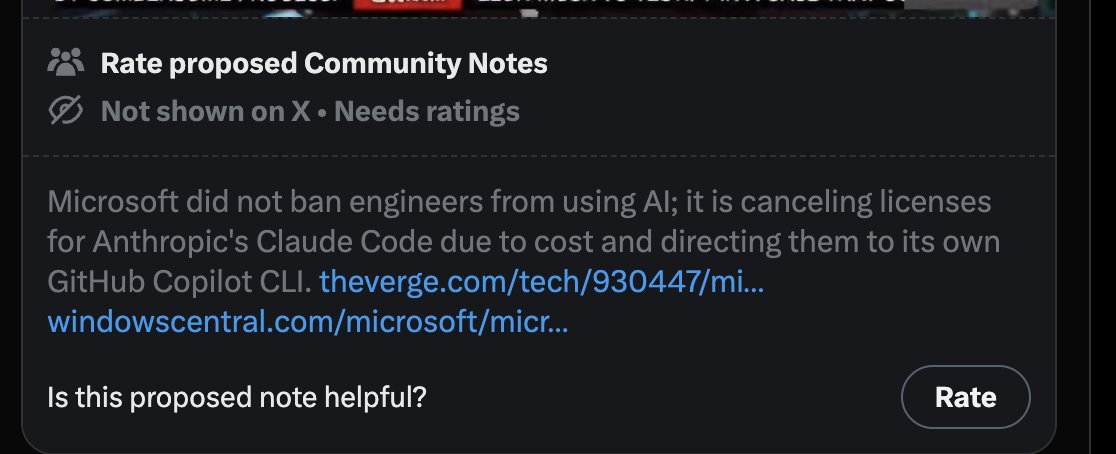
@Pirat_Nation said (1,460 likes, 122 replies, 79,463 views, 181 bookmarks) that Microsoft was reducing internal Claude Code use after AI bills exploded and pushing some teams toward GitHub Copilot. The linked reporting amplified elsewhere in the feed made the nuance sharper: The Verge says Experiences + Devices is winding down most Claude Code licenses by June 30 while keeping Anthropic models available through Copilot CLI, so the decision reads as cost control and harness convergence rather than abandoning AI.
@ardadev summarized (8 likes, 727 views) that correction directly, attaching a proposed Community Note and linking the same Verge and Windows Central coverage.
@testingcatalog reported (356 likes, 25 replies, 24,999 views, 30 bookmarks) that Antigravity added Gemini 3.5 Flash (Low), quoting Google’s claim of roughly 45 percent fewer tokens than Flash Medium and highlighting a quota reset for paid plans. @ai_for_success added (140 likes, 8 replies, 7,039 views, 14 bookmarks) that the new tier now shows up in the CLI as well.


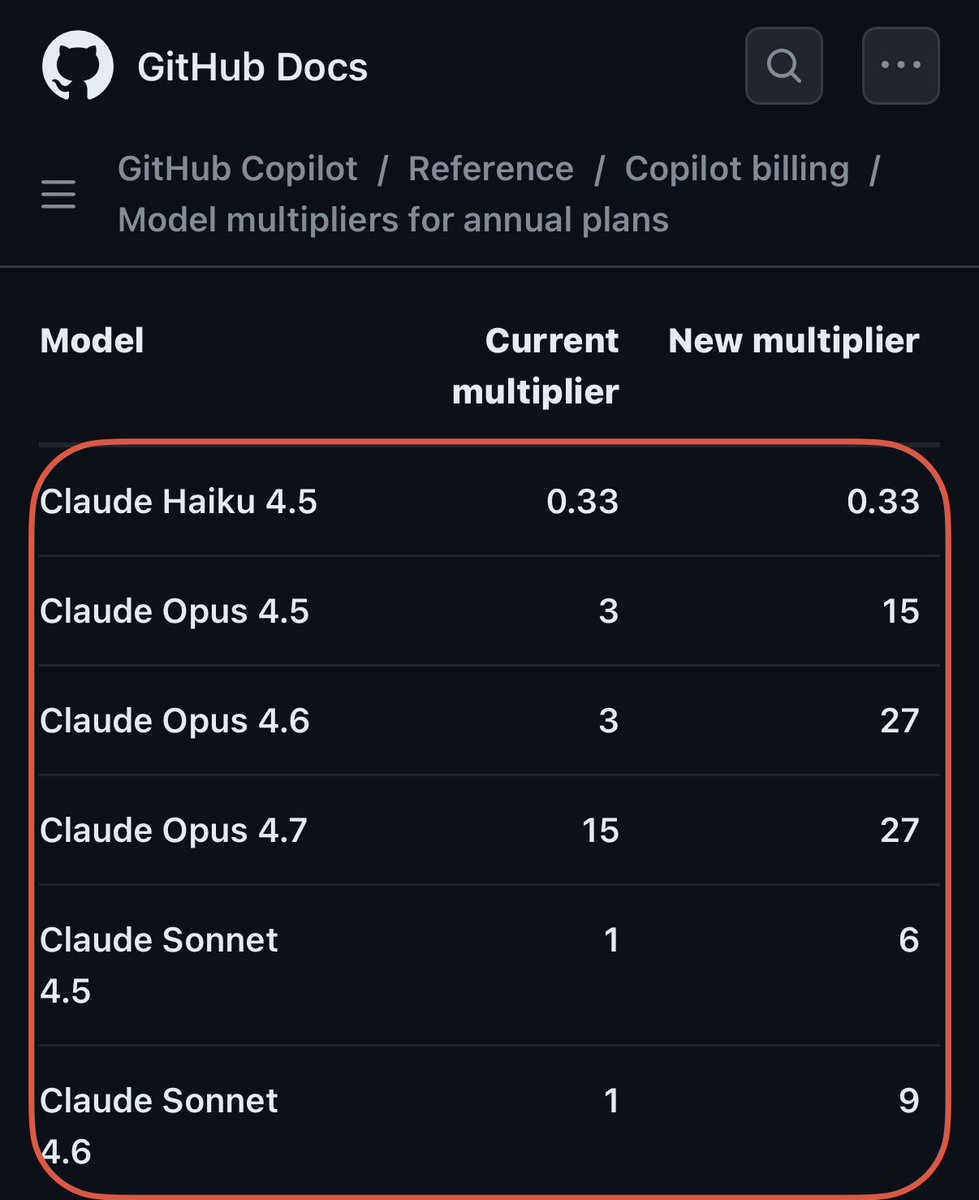
@balakoteswar posted (4 likes, 378 views) a screenshot of GitHub Docs showing annual-plan model multipliers rising sharply for premium Claude models, including Claude Opus 4.5 from 3x to 15x and Claude Sonnet 4.6 from 1x to 9x.
Discussion insight: The replies did not celebrate cheaper tiers uncritically. One reply under the Flash Low post asked whether the change bought only “5 minutes” of extra quota, while the Microsoft thread pulled readers toward Community Note corrections and article links instead of the viral “AI ban” framing.
Comparison to prior day: May 24 still treated quota pain mostly as product friction inside Antigravity. On May 25 the same complaint jumped up a level: Microsoft licenses, Copilot multipliers, and model-limit resets all made budget math the dominant story.
1.2 The competition above the model is thickening into workflow files, memory, and orchestration layers 🡕
The strongest workflow posts were not “here is a better model.” They were “here is how I wire agents together,” “here is how I teach the assistant my conventions,” and “here is how I make the same workflow survive tool changes.” That made the day look more like a battle over control planes than a fight over one best UI.
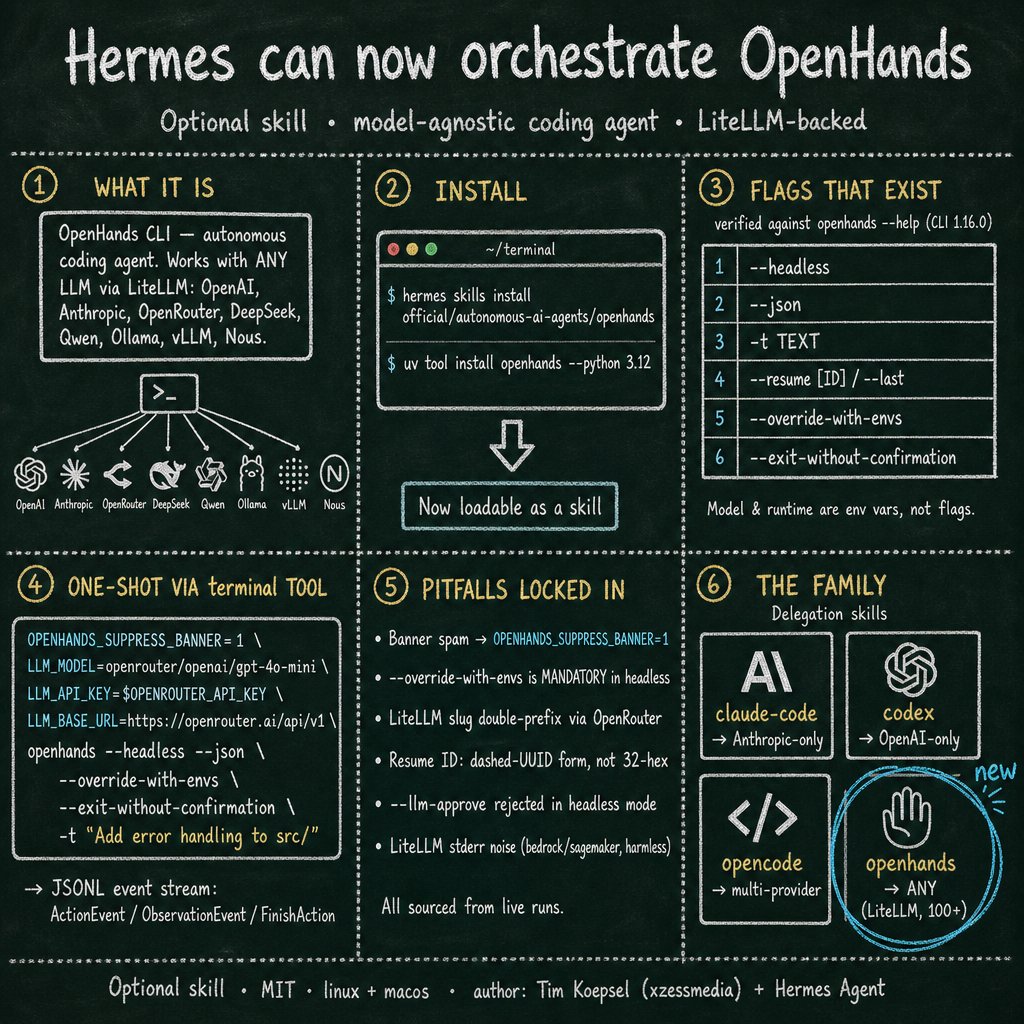
@Teknium announced (58 likes, 8 replies, 2,271 views, 47 bookmarks) that Hermes Agent can now orchestrate OpenHands through an installable skill. The attached infographic makes the integration concrete: OpenHands becomes an optional Hermes skill with LiteLLM-backed support for Anthropic, OpenAI, DeepSeek, Qwen, Ollama, vLLM, and Nous, plus explicit headless flags.
@EXM7777 argued (54 likes, 19 replies, 2,097 views, 44 bookmarks) that strong users get similar quality from Claude Code, Codex, and OpenCode because they understand failure modes, instruction structure, agent systems, memory architecture, and price-quality tradeoffs. One reply pushed that idea further: the real edge is encoding those principles into files that travel with every session and tool.
@code promoted (59 likes, 7 replies, 6,326 views, 17 bookmarks) a Microsoft Build session on why GitHub Copilot misses context, and the session page says Copilot can be taught through shared rules, reusable prompts, skills, and custom agents that scale from five engineers to five hundred.
@PhilSeamark wrote (54 views) that he uses VS Code plus GitHub Copilot as a personal productivity environment “for knowledge workers, not devs,” and his linked setup guide describes morning briefings, transcript ingestion, Power Automate file drops, searchable chat history, and subagents inside the same workspace.
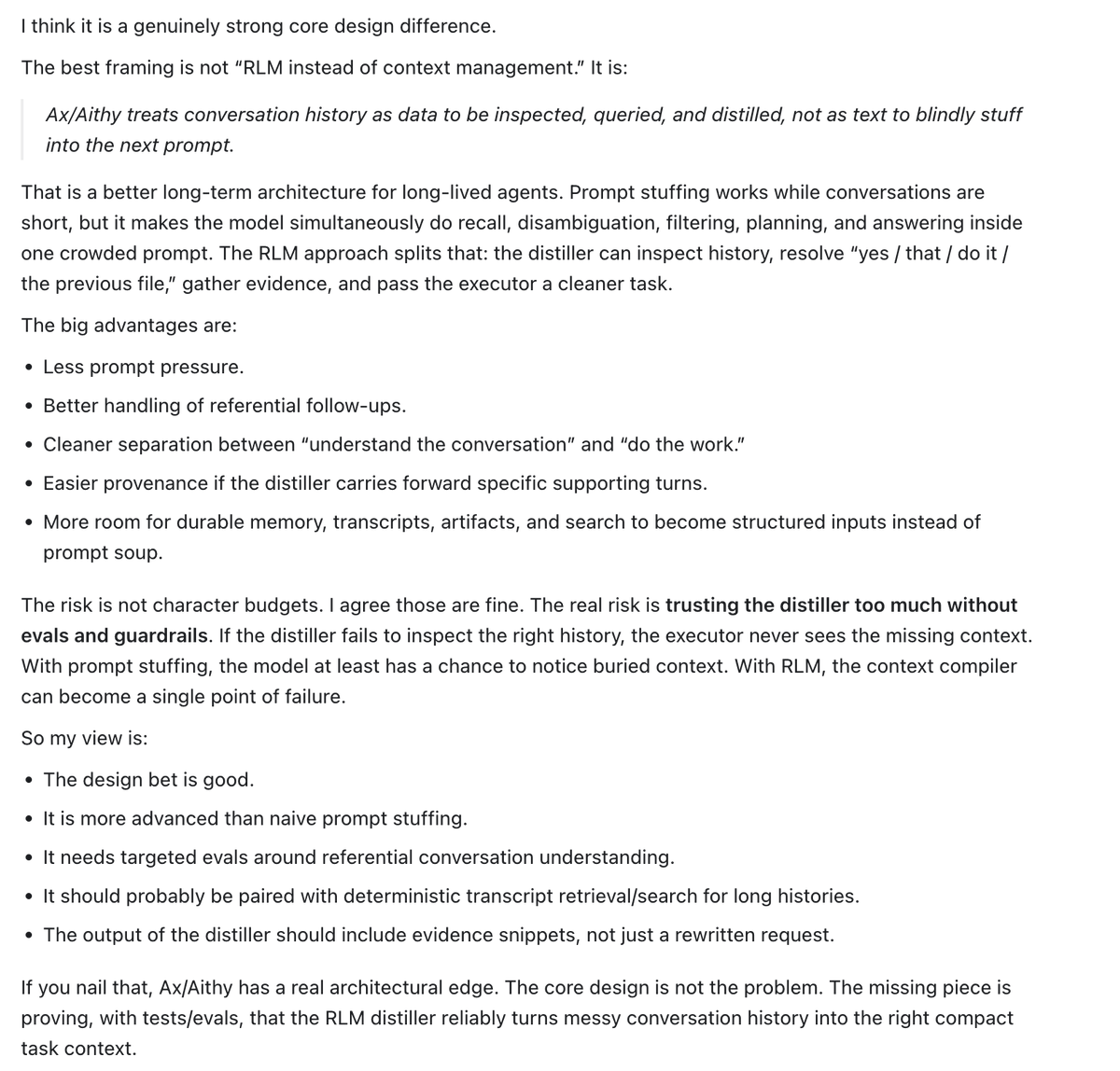
@dosco said (27 likes, 3 replies, 878 views, 20 bookmarks) that Ax/Aithy’s core design advantage is treating conversation history as structured data to inspect and distill. His attached review screenshot made the harder requirement explicit: the missing piece is still a first-class coding-agent tool lane with bounded repo search, transactional patching, diagnostics, rollback, and provenance.
Discussion insight: Teknium’s replies asked for loadouts and less unrelated-file churn, while EXM7777’s replies asked how to make hard-won principles portable. The practical question was how to package workflows so they survive tool switching, not which interface won the week.
Comparison to prior day: May 24 emphasized routing subscriptions and local models. May 25 added a thicker layer of rules, skills, memory, and delegated agents on top of that routing layer.
1.3 Builders are packaging specialized adapters around existing agents, not trying to replace them head-on 🡕
The clearest project-sharing posts added one missing capability to a popular harness: semantic code intelligence, compliance knowledge, provider freedom, or faster remote plumbing. That is a different builder pattern from “launch a new assistant.” It is closer to infrastructure for whichever agent people already trust.
@pvergadia highlighted (1 like, 185 views, 5 bookmarks) codegraph as one of the week’s fastest-growing GitHub repos. The public colbymchenry/codegraph repository describes a TypeScript semantic code knowledge graph for Claude Code, Codex CLI, Cursor, OpenCode, and Hermes Agent, and its README claims average benchmark savings of 35 percent cost and 71 percent fewer tool calls across seven codebases.
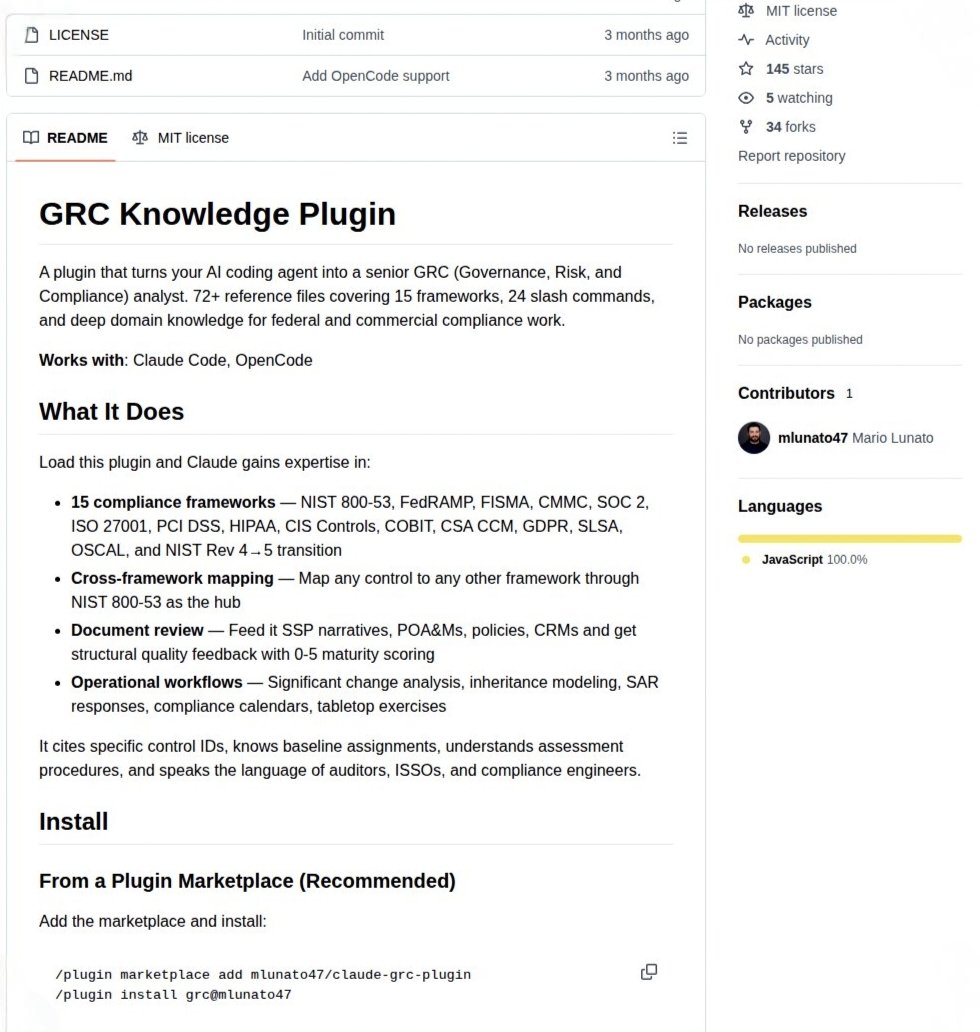
@VivekIntel shared (3 likes, 110 views, 3 bookmarks) mlunato47/claude-grc-plugin, whose README says it gives Claude Code and OpenCode 72 or more reference files, 15 frameworks, and 24 slash commands for FedRAMP, NIST 800-53, CMMC, SOC 2, ISO 27001, HIPAA, and related compliance workflows.
@Liz_Binance pointed to (2 likes, 2 replies, 806 views) ajsai47/backdoor, a Python proxy whose README says it reroutes Claude Code to OpenAI-compatible providers like DeepSeek, Groq, Ollama, OpenRouter, and NVIDIA NIM. The useful part of the post was not the unverified “copied” allegation. It was the existence of a public routing layer built specifically to keep Claude Code’s harness while swapping the model and price point underneath.
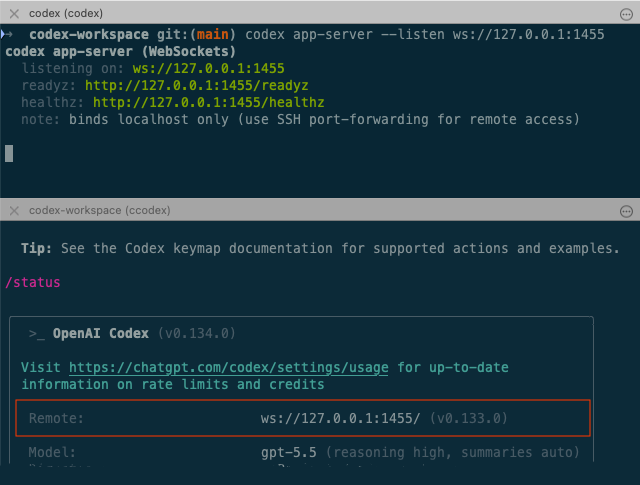
@tmsdnl said (2 likes, 272 views) a Codex feature request went from GitHub issue to merged in 10 hours 41 minutes, attaching screenshots of a new app-server WebSocket flow and /status output. Even as a small feature, it showed the market rewarding thin adapters and quick workflow fixes, not full-stack reinvention.
Discussion insight: These builders keep starting from a strong existing agent and adding one missing thing: semantic context, compliance knowledge, provider freedom, or delegated execution. The pattern is additive, not replacement.
Comparison to prior day: May 24 already had workflow-specific skill packs. May 25 extended that into specialized infrastructure layers: knowledge graphs, compliance plugins, provider proxies, and orchestration skills.
2. What Frustrates People
Quotas still fail before the task is finished
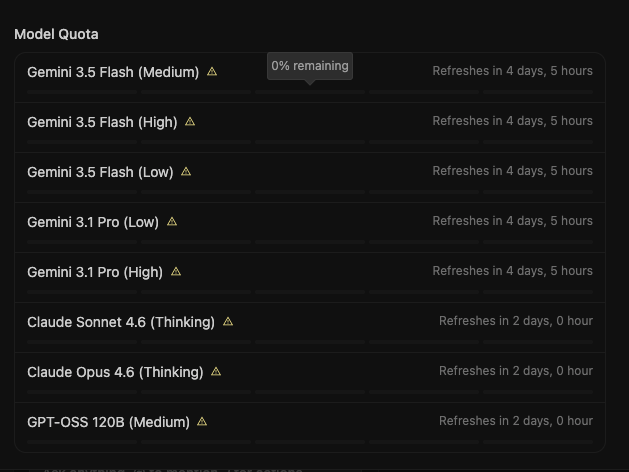
Severity: High. @air_codex said (43 views) that after six prompts he was blocked for two hours, then blocked again for four days after repeated “high traffic” failures, despite doing basic CSS and TSX work. The attached screens matter because they turn a vague complaint into a concrete failure mode: first a traffic error after work completed, then a quota screen showing 0 percent remaining across Flash, Gemini 3.1, Claude 4.6, and GPT-OSS tiers. @testingcatalog reported (356 likes, 25 replies, 24,999 views, 30 bookmarks) Flash Low as a 45 percent token-saving fix, but the replies immediately questioned whether that only bought a few more minutes of useful work. @balakoteswar posted (4 likes, 378 views) a Copilot multiplier screenshot showing that premium-model cost pressure was rising on GitHub’s side too. The coping pattern is model downgrades, waiting for resets, or routing through cheaper backends. This looks worth building for because the failure is task-breaking, not cosmetic.

Public AI-coding discourse still needs correction after the headline wins
Severity: Medium. @Pirat_Nation spread (1,460 likes, 122 replies, 79,463 views, 181 bookmarks) the Microsoft cost story at scale, but the very next layer of conversation was correction: @ardadev circulated (8 likes, 727 views) the Community Note and source reporting to clarify that Microsoft was canceling Claude Code licenses and steering teams toward Copilot CLI, not banning AI. The same pattern showed up on the Google side in a softer form. @DuaFatimaAi repeated (45 likes, 17 replies, 443 views, 9 bookmarks) the familiar NotebookLM plus Antigravity combo pitch, but the post did not add new evidence beyond the setup claim. The coping mechanism is readers bringing article links, screenshots, and corrections into the thread themselves. That is worth building for because verification is becoming part of product discovery.
Orchestration still asks users to invent their own loadouts
Severity: Medium. @Teknium announced (58 likes, 8 replies, 2,271 views, 47 bookmarks) a useful Hermes plus OpenHands skill, but one reply immediately said “you’re going to need load outs soon” so new users can choose sensible presets instead of changing every setting manually. @dosco made the point (27 likes, 3 replies, 878 views, 20 bookmarks) in more technical language: agent architectures still need bounded repo search, transactional patching, diagnostics, rollback, and provenance before they feel complete. @EXM7777 argued (54 likes, 19 replies, 2,097 views, 44 bookmarks) that the workaround is personal infrastructure: learn the principles, encode them into portable files, and carry them between tools. This is worth building for because the workarounds are still homemade.
3. What People Wish Existed
Burst pricing and quota dashboards that match agent behavior
The strongest need was not another abstract benchmark. It was a way to know what a task will cost, what tiers are already exhausted, when they refresh, and whether the cheaper tier will actually finish the work. @air_codex showed (43 views) the failure mode from the user side, @balakoteswar surfaced (4 likes, 378 views) multiplier changes from the plan side, and the Microsoft reporting showed the enterprise version of the same problem. Opportunity: direct.
Portable workflow packs that survive tool switching
@EXM7777 argued (54 likes, 19 replies, 2,097 views, 44 bookmarks) that principles outlast interfaces, while the Microsoft Build session page explicitly framed rules, prompt files, skills, and custom agents as the way to teach Copilot team conventions. @PhilSeamark showed (54 views) the same need in a non-developer setting: the real asset is a repeatable workflow that can process transcripts, calendars, notes, and history without starting from zero. Opportunity: direct and competitive.
Domain-specific agent layers for regulated and non-code work
The builder activity around claude-grc-plugin and Phil Seamark’s Copilot workflow both imply the same gap: generic agents still need a layer that speaks the user’s domain. In one case that means FedRAMP, NIST 800-53, and document-review commands; in the other it means customer notes, travel admin, product feedback, and diary workflows. Opportunity: direct.
Safe multi-agent presets instead of blank-slate orchestration
The replies under @Teknium announcement (58 likes, 8 replies, 2,271 views, 47 bookmarks) asked for loadouts, and @dosco listed (27 likes, 3 replies, 878 views, 20 bookmarks) the missing guardrails more formally: bounded repo search, transactional edits, diagnostics, rollback, and provenance. What people seem to want is a way to start from a trustworthy preset rather than a bag of knobs. Opportunity: competitive.
4. Tools and Methods in Use
| Tool | Category | Sentiment | Strengths | Limitations |
|---|---|---|---|---|
| GitHub Copilot / Copilot CLI | Coding assistant / harness | (+/-) | First-party support for rules, prompt files, skills, and custom agents; shows up in both enterprise and knowledge-work workflows | Multiplier changes and plan math are tightening; some adoption is being pushed by cost and dogfooding decisions |
| Claude Code | Coding agent | (+/-) | Still popular enough that Microsoft had to actively phase licenses down; strong harness inspires routing and proxy projects | Enterprise cost pressure is real, and setup sprawl is a recurring complaint |
| Google Antigravity | Agent runtime / IDE / CLI | (+/-) | Added Flash Low, spans multiple surfaces, and still attracts automation-minded users | High-traffic failures, hard quotas, and repeated promo threads keep undercutting trust |
| Gemini 3.5 Flash (Low) | Model tier | (+/-) | Marketed as roughly 45 percent more token-efficient than Flash Medium and available inside Antigravity surfaces | Users still question how much practical headroom it really buys before limits hit |
| Hermes Agent | Orchestration harness | (+) | Installable skills and delegated execution across multiple agent backends | Replies show demand for safer presets, loadouts, and fewer unrelated edits |
| OpenHands | Autonomous coding agent | (+) | Can now be orchestrated through Hermes and multiple LiteLLM-backed providers | Complexity still leaks through flags and environment variables |
| CodeGraph | Semantic code intelligence | (+) | Pre-indexed local graph promises fewer tool calls, lower cost, and faster exploration across several agents | Requires indexing workflow and still looks like early infrastructure software |
| GRC Knowledge Plugin | Domain plugin | (+) | Adds compliance mappings, document review, and operational commands to Claude Code and OpenCode | Niche unless you work in regulated environments |
| Backdoor | Provider proxy | (+) | Keeps Claude Code’s harness while swapping to cheaper, local, or different providers | Early-stage setup burden and provider-compatibility constraints |
| VS Code + Copilot + Power Automate files | Workflow pattern | (+) | Turns a coding environment into an all-day workspace for transcripts, diaries, customer notes, and subagents | Still behaves more like a custom stack than a default product experience |
Overall satisfaction was highest when a tool widened portability or packaged real workflow knowledge, and lowest when usage caps or billing multipliers interrupted work. The migration pattern was not one clean switch from tool A to tool B. It was routing and layering: keep the harness people like, swap the provider, add a semantic index, add a domain plugin, or attach a delegated agent. The competitive dynamic is moving upward from model quality alone toward context, orchestration, and price control.
5. What People Are Building
| Project | Who built it | What it does | Problem it solves | Stack | Stage | Links |
|---|---|---|---|---|---|---|
| OpenHands skill for Hermes | @Teknium | Lets Hermes orchestrate OpenHands through an installable skill | Developers want one control plane that can delegate to another coding agent instead of doing everything in one loop | Hermes Agent, OpenHands CLI, LiteLLM, Anthropic/OpenAI/DeepSeek/Qwen/Ollama/vLLM/Nous | Shipped | tweet |
| CodeGraph | colbymchenry | Pre-indexed semantic code knowledge graph for several agent clients | Reduces token waste and tool-call sprawl during codebase exploration | TypeScript, SQLite/FTS, MCP, Claude Code/Codex/Cursor/OpenCode/Hermes integrations | Shipped | repo |
| GRC Knowledge Plugin | mlunato47 | Adds compliance frameworks, mappings, and review commands to Claude Code and OpenCode | Generic coding agents do not know enough about regulated documentation and audit workflows | JavaScript plugin, 72+ reference files, 24 slash commands, Claude Code, OpenCode | Shipped | repo |
| Backdoor | ajsai47 | Routes Claude Code through any OpenAI-compatible or local provider | Teams want Claude Code’s harness without Anthropic-only pricing or lock-in | Python proxy, OpenAI-compatible APIs, DeepSeek, Groq, Ollama, OpenRouter, NVIDIA NIM | Beta | repo |
| Codex app-server support | @tmsdnl | Newly merged remote/app-server workflow extension for Codex | Users want Codex to talk to a local or remote service layer instead of staying trapped in one shell flow | Codex, WebSockets, app-server status plumbing | Alpha | tweet |
@Teknium announced (58 likes, 8 replies, 2,271 views, 47 bookmarks) the Hermes plus OpenHands skill as a real installable artifact, not just a concept. The attached graphic shows the exact install command, the existing flags OpenHands supports, and the model-agnostic backend list, which is why the replies immediately moved on to asking for loadouts and safer defaults.
@pvergadia highlighted (1 like, 185 views, 5 bookmarks) CodeGraph’s climb in the weekly repo leaderboard, and the repository itself says it is trying to make Claude Code, Codex CLI, Cursor, OpenCode, and Hermes cheaper and lighter by giving them a pre-indexed graph instead of forcing repeated file reads. @VivekIntel shared (3 likes, 110 views, 3 bookmarks) the GRC Knowledge Plugin, whose README makes the packaging move explicit: reference files, slash commands, and framework mappings wrapped around existing agents.

@Liz_Binance pointed to (2 likes, 2 replies, 806 views) Backdoor, whose README says it can reroute Claude Code to providers like DeepSeek, Groq, OpenRouter, Ollama, and NVIDIA NIM. @tmsdnl added (2 likes, 272 views) a smaller but telling example: a Codex feature request that shipped in 10 hours 41 minutes with screenshots of the new app-server flow already working.
The repeated build pattern was consistent across all five examples: do not replace the popular agent if you can instead make it cheaper, more knowledgeable, easier to route, or easier to delegate. That is why the strongest projects today looked like adapters, plugins, graphs, and orchestration skills.
6. New and Notable
Search interest is spiking faster than broad usage appears to be
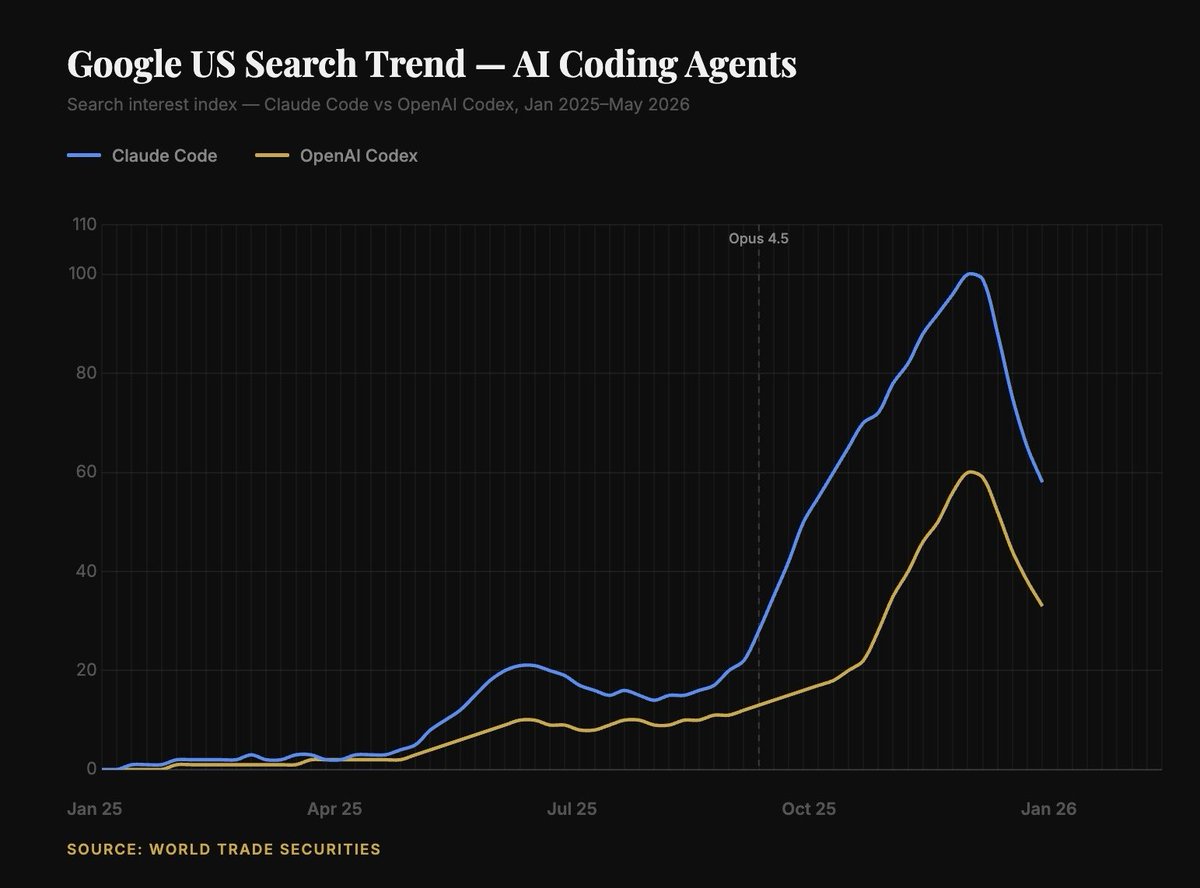
@RealNickMugalli argued (2 likes, 322 views) that Claude Code search interest went vertical after Opus 4.5 and that Codex followed with a lag, attaching a Google US search chart for AI coding agents. The chart itself supports the narrow part of that claim: attention around Claude Code and Codex accelerated sharply into late 2025 and early 2026. That matters because it fits the rest of the day’s evidence, where a relatively small group of heavy users was large enough to surface enterprise budget pain.
Even low-visibility solo builders are surfacing revenue screenshots
@adensdk claimed (5 likes, 3 replies, 284 views, 2 bookmarks) that an AI-built app brought in more than $13,000 and attached a RevenueCat screenshot showing $13,230 in revenue across the prior year. The post does not disclose the stack and the figure is self-reported, so it should be treated cautiously. It still matters as a counter-signal: on the same day enterprises were worrying about token budgets, tiny builder accounts were still posting monetization proof points.

7. Where the Opportunities Are
[+++] Budget-aware routing, quota forecasting, and burst pricing — Section 1 showed Microsoft and GitHub decision-making bending around spend ceilings, while Section 2 showed Antigravity users getting blocked mid-task even after Google introduced Flash Low. Backdoor is already a builder response, which is usually a sign the pain is real and immediate.
[++] Portable workflow packs and memory layers — Section 1.2 and Section 3 showed that rules, prompt files, skills, subagents, and persistent workspaces are becoming the durable asset above any one model. The opportunity is moderate because first-party products are shipping pieces of it, but the cross-tool version is still open.
[++] Specialized plugins for existing harnesses — Section 5’s strongest builders were CodeGraph, GRC Knowledge Plugin, and Backdoor. All three wrap an existing agent with narrower leverage instead of replacing it, which makes this look like a credible product category rather than a one-off hack.
[+] Verification and correction layers for AI-tool discourse — Section 2 showed how quickly headline narratives and promotional setup threads need correction. The opportunity is emerging because readers are already doing this work manually through Community Notes, screenshots, and source links.
8. Takeaways
- Enterprise spend is now steering tool choice. Microsoft’s Experiences + Devices group is winding down most Claude Code licenses and pushing many developers toward Copilot CLI by the end of June, which makes cost and internal leverage part of the product decision. (source)
- Cheaper model tiers are not resolving quota anxiety on their own. Flash Low arrived with a 45 percent token-efficiency claim, but users were still posting high-traffic and zero-remaining quota screenshots after basic work. (source)
- The durable layer is moving above the model. Hermes plus OpenHands orchestration, Microsoft Build’s rules-and-skills framing, and knowledge-work Copilot setups all treat workflow files, skills, and memory as the lasting advantage. (source)
- Builders are winning by shipping adapters. CodeGraph, GRC Knowledge Plugin, Backdoor, and the Codex app-server change all add leverage around existing agents instead of trying to replace them outright. (source)
- Attention and upside still look concentrated. A Google search-trend chart showed Claude Code and Codex interest accelerating sharply, while small builder accounts were still posting self-reported revenue screenshots on the same day enterprises were complaining about cost. (source)