Twitter AI Coding - 2026-06-02
1. What People Are Talking About
1.1 Antigravity turned agent management into the product surface 🡕
The strongest product conversation was no longer about a better autocomplete loop. It was about whether Google Antigravity could become a real workflow hub for research, design, code, and background agent work. Four retained items supported this theme.
@antigravity announced (1,378 likes, 68 replies, 69,241 views, 421 bookmarks) that Antigravity now ships a Science Skills bundle for 30+ scientific databases and Alpha* workflows. The public Science Skills repo says the bundle spans genomics, structural biology, cheminformatics, literature search, and other research tasks, which makes this a vertical workflow pack rather than a generic coding demo.
@kevinhou22 explained (132 likes, 27 replies, 8,167 views, 45 bookmarks) why Antigravity 2.0 split the IDE from the Agent Manager. The linked product discussion and the public XDA review both describe the new surface as a command center with Projects, dynamic subagents, scheduled tasks, and slash-command controls, while a reply in the thread asked for a stronger overseer model managing cheaper subagents, showing that routing and orchestration are now part of the product expectation.
@rseroter pointed to (7 likes, 704 views, 5 bookmarks) Guillaume Laforge's writeup of using Google Stitch with Antigravity CLI to redesign the Groovy Web Console. The post matters because it is not hype: it shows Antigravity helping with UI integration, Cypress tests, DNS and OAuth changes, Google Cloud inspection, and even architecture-diagram generation inside one workflow.
@xdadevelopers shared (16 likes, 2,006 views) a hands-on claim that Antigravity 2.0 "beats Claude Code and Codex at their own game." The attached image is more useful than the headline because it shows the actual manager surface with project tabs, scheduled tasks, an implementation plan, and a long-form plan panel, which is exactly the interface shift people were debating.

Discussion insight: The useful replies were not asking for a slightly smarter editor. They were asking for mixed-model oversight, better collaboration surfaces, and durable workflows that span more than one repo or one prompt.
Comparison to prior day: June 1 already leaned toward workflow packs and integrations. June 2 made the manager surface itself the story, with science bundles, multi-folder projects, and explicit orchestration features.
1.2 The bottleneck moved from generating code to shipping safe, understandable software 🡕
The day's most substantive evidence said AI coding output is growing much faster than released, maintainable software. Four retained items supported this theme.
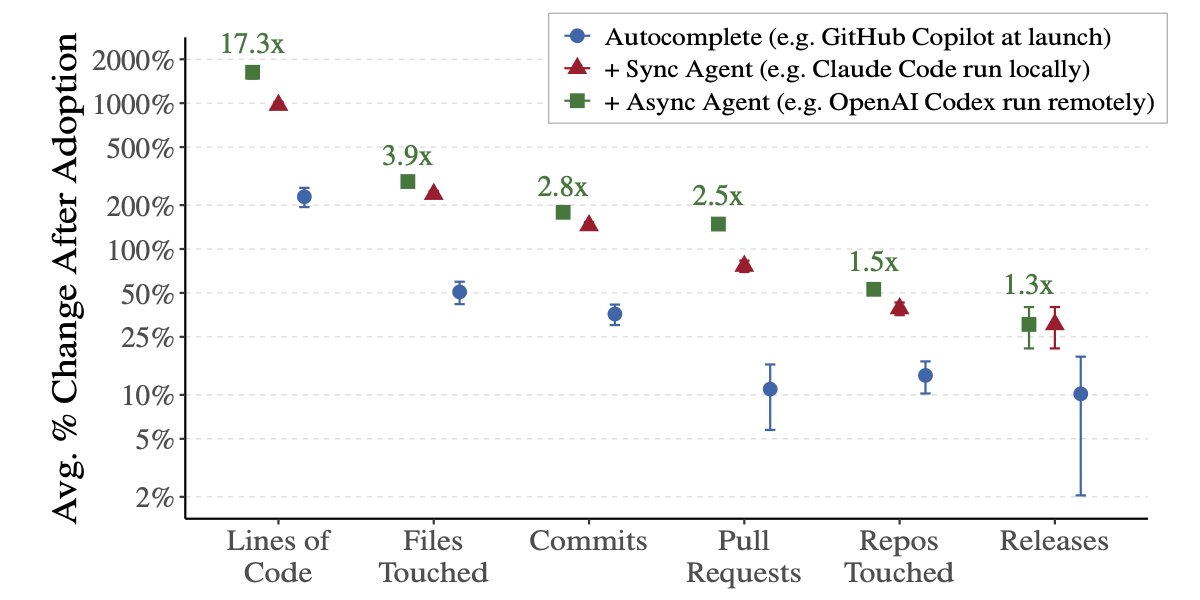
@emollick shared (122 likes, 22 replies, 9,021 views, 60 bookmarks) a new paper on AI coding agents that separates code volume from shipped output. The attached chart shows async agents at 17.3x lines of code, 3.9x files touched, and 2.8x commits versus pre-agent baselines, but only 1.3x releases, while the paper screenshot says the release lift is about 30% after human bottlenecks in the production chain are accounted for.

@svpino warned (8 likes, 4 replies, 1,911 views, 6 bookmarks) that non-technical users are already deploying prompt-made websites without understanding HTML, security, or VPC basics, and that he had heard of companies losing data because "vibe-coding was all they needed." The quoted Superblocks announcement is why the post mattered: it framed secure, in-VPC databases with inherited AWS policies, backups, audit trails, and encryption as the real missing default.
@zhenthebuilder said (12 likes, 350 views) that Replit had been using ViBench internally and was making it public. The public ViBench repo describes a PRD-based benchmark harness for building, seeding, and evaluating full web apps with test plans and isolated environments, which directly fits the day's complaint that coding benchmarks miss application-layer reality.
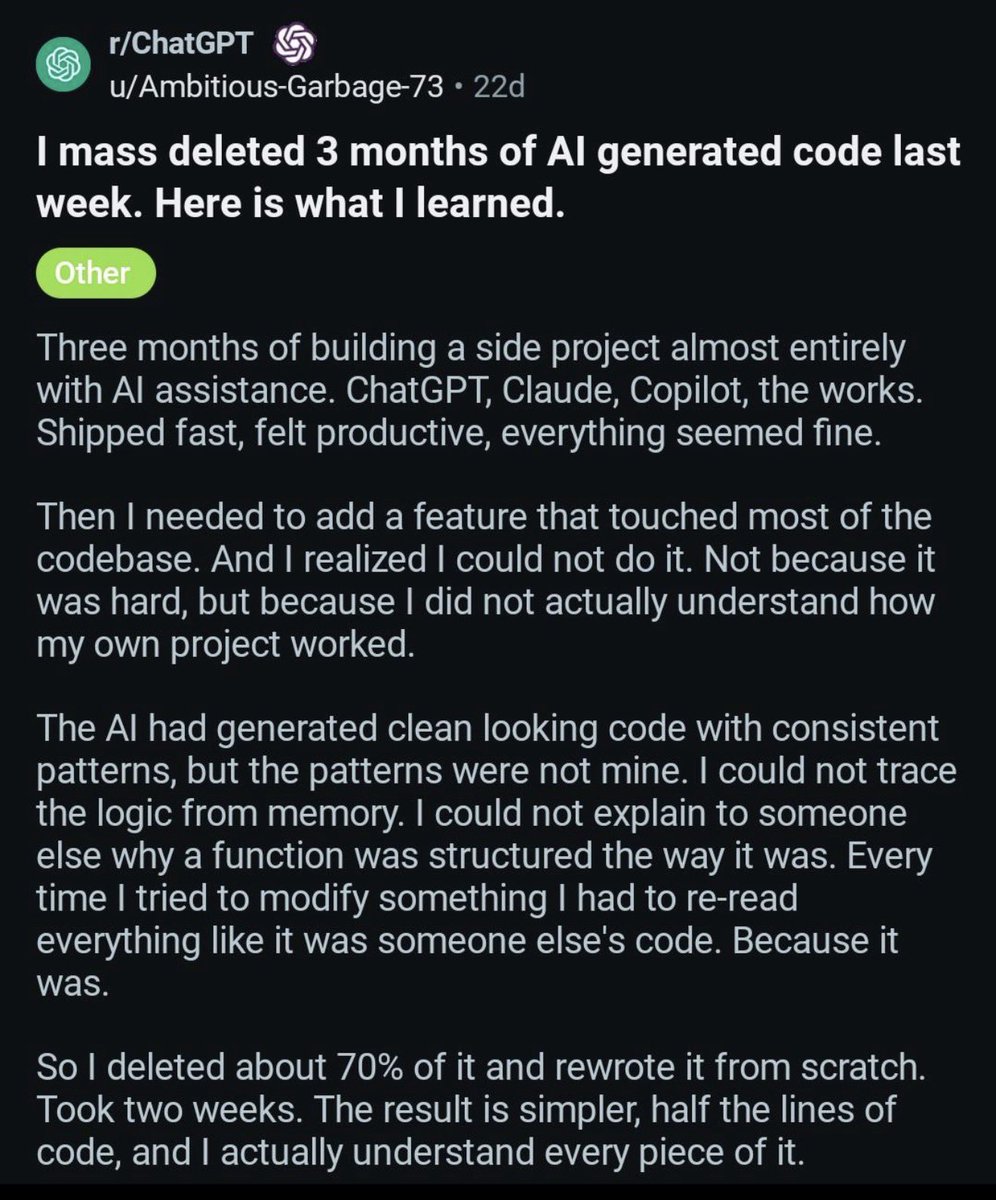
@jain_harshit argued (5 likes, 166 views, 2 bookmarks) that pure vibe coding stops scaling. The screenshot turns that slogan into a specific failure mode: someone deleted about 70% of three months of AI-generated code because they could no longer trace why the system worked and had to re-read it like a stranger's project.
Discussion insight: The best responses did not reject AI coding outright. They kept narrowing the problem to maintainability, guardrails, and release readiness - exactly the layers that raw code-generation wins do not solve.
Comparison to prior day: June 1 focused on pricing shocks and benchmark caveats. June 2 shifted toward whether any of that generated output survives deployment, maintenance, and team understanding.
1.3 Coding workspaces became routers across agents, plugins, and shareable outputs 🡕
The third major theme was the rise of surfaces that route work between multiple agents, plugins, and output formats. Five retained items supported this theme.
@dabit3 launched (40 likes, 7 replies, 3,156 views) Devin Desktop as an ACP-compatible desktop that works with Codex, Claude Agent, OpenCode, and other agents. The screenshot is the key evidence: it shows a live picker with Devin Local, Devin Cloud, Claude Agent, Codex CLI, and Cursor, while one reply explicitly said the IDE is becoming a review/router for agents rather than a single-agent launcher.

@OrenMe highlighted (7 likes, 828 views) the expanded technical preview of the GitHub Copilot app, quoting GitHub's changelog post. GitHub's own June 2 blog post says the app is a control center with My Work, canvases, isolated git worktrees, and background automations, and the attached screenshot shows why that matters: plans, session history, diffs, and status updates live in the same surface.

@waynesutton posted (42 likes, 3 replies, 5,921 views, 20 bookmarks) that the Convex plugin for Codex is live, and @frankdotlee followed (10 likes, 92 views) with a concrete Amplitude plugin example that turns Codex into an "always-on expert product analyst" for opportunity discovery, replay-based UX audits, weekly briefs, and broken-agent investigation. Together those two posts made the Codex plugin story feel operational rather than promotional.
@RoundtableSpace framed (29 likes, 8 replies, 1,116 views) Codex as an app builder that can turn documents and plans into shareable websites and interactive apps. That launch signal mattered because @_simonsmith immediately reported (11 likes, 827 views, 4 bookmarks) a rough rollout: promoted plugins missing, Sites absent from some enterprise accounts, and a new archive bug in Codex.
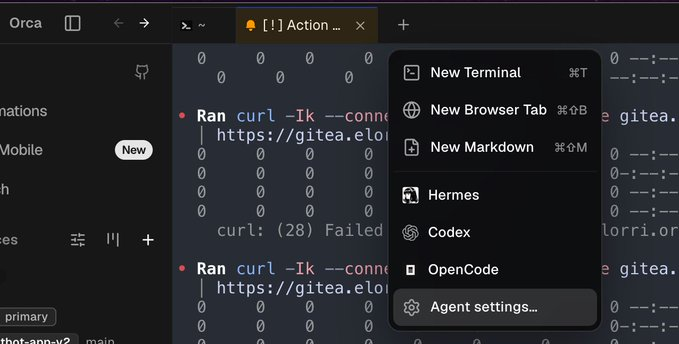
@orca_build added (7 likes, 229 views, 3 bookmarks) a smaller but revealing stack signal: OpenCode + Codex + Hermes together in one workspace. The screenshot is low-volume evidence, but it is still one of the clearest public images of tool routing across multiple coding agents instead of loyalty to a single one.
Discussion insight: The discourse increasingly treats the IDE as a traffic controller. The open question is no longer whether teams want multiple agents; it is whether the desktop, plugin, and rollout layers are stable enough to trust.
Comparison to prior day: June 1 already had early signals around unified workspaces and "super app" packaging. June 2 added concrete desktops, live plugin workflows, and shareable output surfaces that made the router model visible.
2. What Frustrates People
Shipping is still much harder than generating code
Severity: High. @emollick shared (122 likes, 22 replies, 9,021 views, 60 bookmarks) a paper showing that async coding agents drive much larger gains in code output than in actual releases, while @svpino warned (8 likes, 4 replies, 1,911 views, 6 bookmarks) that non-technical users are already deploying prompt-built sites without understanding security basics. @jain_harshit added (5 likes, 166 views, 2 bookmarks) a screenshot-backed case where AI-generated code had to be largely deleted because the owner could no longer explain or safely modify it. People are coping by rewriting code, narrowing scope, and asking platforms for safer defaults like Superblocks' in-VPC database setup. This is worth building for because the gap is not cosmetic - it directly blocks deployment, maintenance, and team ownership.
Limits and launch-day inconsistencies still break trust
Severity: High. @sheriyuo reported (18 likes, 3 replies, 1,314 views) that Codex reset behavior for Free and Go users had shifted from weekly to monthly, and the attached screenshot shows 0% left with a July reset date. @_simonsmith said (11 likes, 827 views, 4 bookmarks) that the day's OpenAI releases were rough, with missing plugins, Sites not appearing in one enterprise account, and an archive bug in Codex, while @wieslawsoltes concluded (17 likes, 653 views) that Copilot pricing now amounted to roughly one working day of acceptable usage. The public coping pattern is straightforward: ration premium tools, switch surfaces, or walk away until pricing and rollout stabilize. This is worth building for because teams are clearly sensitive to both reliability and predictable headroom.
Teams still lack a clean collaboration layer around multiple agents
Severity: Medium-High. @TaylorPearsonMe said (3 likes, 2 replies, 751 views, 2 bookmarks) that everyone he knew was trying to bolt collaboration onto Claude Code and Codex, which felt like rebuilding Google Docs. @dabit3 launched (40 likes, 7 replies, 3,156 views) Devin Desktop as a shared surface for multiple agents, and a reply explicitly reframed the IDE as a review/router layer, but another user immediately said they still could not see all the promised agents. @OrenMe highlighted (7 likes, 828 views) the Copilot app's plan-centric desktop as another attempt to solve the same problem. This is worth building for because the workaround today is stacking multiple tools and hoping context survives the handoff.
3. What People Wish Existed
Safe-by-default deployment for people who can prompt but cannot operate production systems
The clearest practical ask was not "more code generation." It was secure defaults around databases, networking, audit trails, and deployment. @svpino spelled that out (8 likes, 4 replies, 1,911 views, 6 bookmarks), and the quoted Superblocks post framed in-VPC databases and inherited AWS controls as the answer. @jain_harshit added (5 likes, 166 views, 2 bookmarks) that pure vibe coding eventually breaks down when nobody understands the resulting codebase. Opportunity: direct.
Shared plans, state, and review surfaces across multiple agents
Teams want something closer to a common work surface than a pile of isolated chat sessions. @TaylorPearsonMe described (3 likes, 2 replies, 751 views, 2 bookmarks) the current gap as rebuilding Google Docs around Claude Code and Codex. The new GitHub Copilot app blog post and @dabit3 launch (40 likes, 7 replies, 3,156 views) both point at the same need: inspectable plans, shared work state, and routing across multiple agents from one place. Opportunity: direct and competitive.
Benchmarks that predict shipped quality, not just generated output
The feed kept separating "writes a lot of code" from "helps teams ship good software." @emollick shared (122 likes, 22 replies, 9,021 views, 60 bookmarks) research showing release gains lagging far behind output gains, while @zhenthebuilder pointed to (12 likes, 350 views) ViBench as an attempt to evaluate end-to-end web app delivery. The need is practical: people want a benchmark that predicts maintenance, release readiness, and user-facing correctness. Opportunity: direct.
Stable plugin and output layers for non-coding work inside coding agents
June 2 showed strong interest in letting coding agents handle analytics, docs, and app publishing, but the rollout was still uneven. @waynesutton announced (42 likes, 3 replies, 5,921 views, 20 bookmarks) the Convex plugin for Codex, @frankdotlee described (10 likes, 92 views) Amplitude workflows inside Codex, and @RoundtableSpace framed (29 likes, 8 replies, 1,116 views) Codex Sites as a way to turn plans into shareable apps. @_simonsmith immediately noted (11 likes, 827 views, 4 bookmarks) missing plugins and inconsistent enterprise availability. Opportunity: competitive.
4. Tools and Methods in Use
| Tool | Category | Sentiment | Strengths | Limitations |
|---|---|---|---|---|
| Google Antigravity 2.0 | Agent manager / IDE | (+) | Multi-folder Projects, dynamic subagents, scheduled tasks, strong workflow packaging around Gemini | Still depends on model trust and is asking users to learn a new manager-first surface |
| Science Skills | Skill bundle | (+) | Extends Antigravity into genomics, biology, chemistry, literature search, and other scientific workflows | Some skills need API keys and the bundle is still tied to the Antigravity ecosystem |
| Stitch + Antigravity CLI | Design-to-code workflow | (+) | Lets non-front-end developers iterate on UI, integrate exported designs, update tests, and touch cloud config in one loop | Still requires manual review and project-specific cleanup after generation |
| GitHub Copilot app | Desktop control center | (+) | My Work view, canvases, isolated worktrees, inspectable plans, and background automations | Technical preview only, and broader Copilot usage still faces pricing sensitivity |
| Devin Desktop | Multi-agent desktop | (+/-) | One desktop surface for local and cloud agents across multiple vendors | Launch-day replies show that some promised agents were not visible for every user |
| Codex plugin ecosystem (Convex, Amplitude) | Plugin / MCP surface | (+) | Turns Codex into a backend builder and product-analysis surface instead of just a coder | Plugin rollout was uneven and some docs/availability signals were still fragmented |
| Codex Sites | App publishing / collaboration surface | (+/-) | Converts plans and documents into shareable web outputs and interactive apps | Same-day reports said the feature was not visible in some enterprise accounts |
| ViBench | Benchmark harness | (+) | Measures end-to-end web app delivery with PRDs, test plans, and isolated evaluation runs | New benchmark; still one proxy for shipped quality rather than a complete production measure |
| Superblocks secure defaults | Deployment platform | (+) | In-VPC databases, inherited security policies, audit trails, and safer defaults for non-experts | Platform-specific answer to a broader deployment and maintainability problem |
| Claude Platform CLI / Claude Code shell workflows | API / terminal tool | (+) | Makes APIs and managed agents runnable from the terminal and scriptable from shell workflows | More infrastructure than end-user collaboration layer; still early compared with mature CLIs |
Overall sentiment was pragmatic rather than loyal. People were willing to mix Antigravity, Codex, Copilot, Claude Code, OpenCode, and Hermes if each handled a different part of the workflow well. The most common workarounds were routing expensive or fragile tasks to a different surface, using one desktop as a review/router layer while another tool did the actual work, and demanding safer defaults when vibe-coded projects reached deployment. The competitive dynamic also shifted: Antigravity pressed on orchestration and speed, Codex expanded through plugins and shareable outputs, GitHub emphasized inspectable agent plans, and smaller players like Orca and Devin leaned into multi-agent routing.
5. What People Are Building
| Project | Who built it | What it does | Problem it solves | Stack | Stage | Links |
|---|---|---|---|---|---|---|
| Science Skills | @antigravity / Google DeepMind | Adds domain-specific scientific workflows and databases to Antigravity | Generic coding agents do not come with scientific tools, data sources, or research-specific procedures | Antigravity plugin/skills, Alpha* models, 30+ scientific databases | Shipped | tweet / repo |
| ViBench | @zhenthebuilder / Replit via @pirroh | Public benchmark harness for end-to-end web app development | Existing coding benchmarks miss application-layer quality and shipped-app behavior | PRDs, test plans, OpenHands-based runner, Docker orchestration, multi-model evaluation | Shipped | tweet / repo |
| GitHub Copilot app | GitHub, highlighted by @OrenMe | Agent-native desktop for sessions, plans, canvases, automations, and worktrees | Agent work is fragmented across terminals, PRs, and chat windows | Desktop app, canvases, git worktrees, local/cloud sandboxes, background automations | Beta | tweet / blog |
| Devin Desktop | Cognition, shared by @dabit3 | Desktop surface for local and cloud agents from multiple vendors | Developers want one place to plan, delegate, review, and switch between coding agents | Desktop UI, ACP-compatible agents, local/cloud execution surfaces | Beta | tweet |
| Convex plugin for Codex | Convex, shared by @waynesutton | Lets Codex build and manage apps on the Convex backend | Codex needs deeper backend integration than plain code generation | Codex plugin, Convex backend | Shipped | tweet / community post |
| Amplitude plugin for Codex | Amplitude, shared by @frankdotlee | Gives Codex analytics and replay workflows such as opportunity mining and UX audits | Product analysis is usually disconnected from the coding surface where changes get made | Codex plugin, Amplitude MCP, curated skills | Shipped | tweet |
@antigravity framed (1,378 likes, 68 replies, 69,241 views, 421 bookmarks) Science Skills as a vertical bundle, while @zhenthebuilder used (12 likes, 350 views) ViBench to make benchmark design itself into an open project. @OrenMe showed (7 likes, 828 views) Copilot app as a plan-centric desktop, and @dabit3 showed (40 likes, 7 replies, 3,156 views) Devin Desktop as a multi-agent router.
The repeated build pattern was clear: one layer for orchestration, one layer for domain or data access, and one layer for evaluation or publishing. Plugins like Convex and Amplitude pushed Codex into backend and analytics work, while control-center desktops tried to make multi-agent work reviewable and routable. Even the evaluation story followed the same pattern: ViBench exists because teams now need a productized way to judge whether agent-written code survives full app delivery instead of only a benchmark snippet.
6. New and Notable
ViBench made application-layer evaluation a public project
@zhenthebuilder said (12 likes, 350 views) that Replit had been using ViBench internally and was publishing it to help builders, while the quoted @pirroh post framed it as an end-to-end benchmark for web application development. The public ViBench repo backs that up with PRDs, test plans, runner harnesses, and build-seed-evaluate pipelines across multiple models. That matters because it directly answers the day's argument that code-centric benchmarks miss what users actually ship.
Codex moved further into publishing and role-specific work
@RoundtableSpace said (29 likes, 8 replies, 1,116 views) that Codex can now turn documents and plans into shareable apps and sites, while @frankdotlee showed (10 likes, 92 views) a more specialized direction through Amplitude workflows inside Codex. The notable part is not just feature breadth - it is that Codex is trying to become a publishing, analytics, and collaboration surface for non-coding work too.
Claude's platform APIs got a more agent-friendly terminal surface
@minchoi highlighted (12 likes, 644 views, 7 bookmarks) a new Claude Platform CLI that can call APIs, stand up agents, upload files, sync YAML, and inspect runs from the shell, while the quoted @ClaudeDevs post said Claude Code can use it directly. That is notable because it moves more platform plumbing into the same terminal surface where developers are already orchestrating coding agents.
7. Where the Opportunities Are
[+++] Safe-by-default agent delivery - Evidence came from multiple sections: @svpino flagged data-loss risk from prompt-built apps, @jain_harshit showed maintainability collapse, and the quoted Superblocks post showed concrete demand for secure-by-default databases and policies. This is strong because the pain is operational, immediate, and expensive.
[+++] Multi-agent control centers with shared plans - GitHub Copilot app, Devin Desktop, and Antigravity 2.0 all converged on the same product shape: one surface for plans, agent routing, background tasks, and review. @TaylorPearsonMe made the unmet need explicit by describing today's workaround as rebuilding Google Docs around coding agents.
[++] Release-readiness and application-layer evaluation - The Emollick paper showed that code output rises much faster than releases, and ViBench exists because teams need a public way to test end-to-end app delivery rather than snippet quality. This is a moderate opportunity because the need is clear, but benchmarks still have to prove they predict real production outcomes.
[+] Domain packs and role-specific plugins - Science Skills, Convex for Codex, and Amplitude for Codex all show that generic agents are being wrapped in workflow-specific layers. This is emerging rather than fully proven, but the demand spans science, backend building, analytics, and other non-chat tasks.
8. Takeaways
- AI coding competition is shifting from editor features to orchestration surfaces. Antigravity 2.0, Devin Desktop, and GitHub Copilot app all competed on plans, routing, scheduled/background work, and multi-agent control instead of on autocomplete alone. (source)
- More code does not automatically mean more shipped software. The Emollick paper's chart and abstract made the gap concrete, and the maintainability complaint in the deleted-code screenshot showed the same problem from a practitioner's perspective. (source)
- The next trust moat is guardrails, not raw output speed. Secure-by-default infrastructure, rollout consistency, and predictable quotas were all more urgent than another marginal model win. (source)
- Plugins and domain packs are turning coding agents into broader work platforms. Science Skills, Convex, Amplitude, and Codex Sites all pushed the category beyond code generation toward research, analytics, backend construction, and shareable outputs. (source)