Twitter AI Coding - 2026-06-09
1. What People Are Talking About
1.1 Claude Fable 5 pulled AI-coding discussion back to frontier-model economics 🡕
June 9 AI-coding discussion snapped back from workflow files and control planes to one launch-day question: what does Claude Fable 5 actually change for long-horizon coding, and what are the policy and billing tradeoffs that come with it? Three high-signal items supported this theme.
@kimmonismus argued (771 likes, 46 replies, 104,549 views, 179 bookmarks) that Fable 5 is a step-change model for software engineering, attaching benchmark slides that made the claim concrete instead of rhetorical. The most useful slide compared agentic-coding and knowledge-work scores side by side: 80.3% on SWE-Bench Pro and 29.3% on FrontierCode (Diamond) for Claude Fable 5 versus 69.2% and 13.4% for Claude Opus 4.8, and 58.6% and 5.7% for GPT-5.5. A reply immediately narrowed the hype: one practitioner said smaller-scale use did not yet feel massively better, and the author answered that real testing still needed to happen that evening, so even the bullish thread treated codebase-scale validation as unfinished work.

@github announced (381 likes, 43 replies, 49,496 views, 56 bookmarks) that Claude Fable 5 was rolling out in GitHub Copilot for long-horizon autonomous coding and knowledge-work tasks. The linked GitHub changelog added the practical constraints the tweet itself only hinted at: rollout is gradual, the model is available across VS Code, Copilot CLI, the Copilot app, github.com, mobile, Xcode, and JetBrains, it is billed at provider list pricing under Usage Based Billing, and it is the one Claude model in Copilot that requires up to 30 days of data retention for Anthropic safety classifiers.
@Azure said (271 likes, 12 replies, 13,509 views, 34 bookmarks) that the same model landed in Microsoft Foundry and GitHub Copilot the same day. The strongest reply was operational, not celebratory: one user answered that Azure still showed quota unavailable, which turned a launch announcement into an access complaint immediately.
Discussion insight: The interesting split was not “Fable 5 good” versus “Fable 5 bad.” It was “how much of the benchmark jump will survive real codebase work?” plus “what do retention and usage-based billing do to trust and cost?” Those caveats showed up within the first wave of replies.
Comparison to prior day: June 8 was dominated by reusable skills, routines, and control planes. June 9 shifted attention to a single model launch and the exact places, policies, and price surfaces where developers could use it.
1.2 GitHub Copilot App started reading like a control center, not a sidecar 🡕
The other strong cluster was about GitHub’s own surface area around agents. The Copilot App was described less as “another place to chat” and more as the working environment where parallel sessions, canvases, and persistent memory make agent output inspectable. Four high-signal items supported this theme.
@kdaigle said (30 likes, 7 replies, 6,038 views, 6 bookmarks) that she uses the GitHub Copilot App every morning “with automations and the work around the work,” then codes on projects in the evening. The linked GitHub Copilot App launch post explains why that matters: the app gives a single My Work view across active sessions, issues, pull requests, and background automations; every session runs in its own git worktree; Agent Merge carries pull requests through review, checks, and merge; and cloud/local sandboxes let the same system inspect, test, and iterate instead of only suggesting code.
@burkeholland showed (37 likes, 1 reply, 1,906 views, 12 bookmarks) the new canvas feature in that app generating a live interface that showed project worktrees and how far they had diverged from main. That made “canvas” less abstract than the launch copy: it was a concrete view for inspecting agent-managed repo state.
@code_kartik explained (5 likes, 386 views, 8 bookmarks) GitHub Copilot’s memory as a fact store tied to exact file-and-line citations that gets re-read on the current branch and rewritten when code changes. The attached diagram made the mechanism inspectable: store_memory writes a structured object into a Memory API/DB, read-time checks verify citations against the current branch, and the cited production result was a pull-request merge rate moving from 83% to 90%.

@_Evan_Boyle posted (86 likes, 8 replies, 5,391 views, 36 bookmarks) that he was hiring product and AI engineers to work on the GitHub Copilot App and asked candidates to bring proof. That is a useful builder signal because it shows GitHub staffing around this surface as a long-lived product, not a one-off preview.
Discussion insight: The strongest Copilot-App evidence on June 9 was inspectability: worktrees you can see, memory with citations, and canvases that expose live state. The feed rewarded mechanisms more than slogans.
Comparison to prior day: June 8 treated Antigravity as the workspace story. June 9 gave GitHub Copilot App similar “control center” language, but with more explicit evidence around worktrees, memory, and agent review.
1.3 Access stayed fragmented across Antigravity, Codex, OpenCode, and router panels 🡒
Even with Fable 5 and the Copilot App dominating the day, the market still looked fragmented at the access layer. People were still asking what Google’s equivalent to Codex or Claude Code is, still stitching one-tap mobile entry by hand, and still trying unified router panels to avoid switching tools. Five retained items supported this theme.
@petergyang asked (84 likes, 31 replies, 11,004 views, 9 bookmarks) what Google’s equivalent of Codex and Claude Code actually is, and whether Antigravity belongs inside Gemini. The most useful reply did not praise a model. It said Antigravity is the closest thing Google has, but it is more of an IDE bet, while Claude Code keeps winning on the harness—how it plans, chains tools, and recovers from failed commands.
@Google said (70 likes, 2 replies, 5,838 views, 8 bookmarks) that Search can use Antigravity with Gemini 3.5 Flash to build custom generative UI and interactive visuals, while a reply in the same thread said Search can also create information agents that monitor topics and send detailed updates. Separately, Ars Technica reported that NotebookLM now has its own cloud computer with embedded Antigravity and more than 100 software skills, which pushed Antigravity further toward a recurring-task runtime rather than a one-off demo.
@dabit3 showed (22 likes, 2 replies, 738 views, 16 bookmarks) ACP as a single pane of glass that can dispatch Codex, Claude, OpenCode, Devin, Gemini, and roughly 40 other agents from one selector. That is a strong builder signal because it implies the winning product category might be the router surface above the agents, not one more agent brand.
@thdxr asked (67 likes, 23 replies, 11,685 views, 3 bookmarks) OpenCode users in smaller windows to send screenshots if space felt poorly used. The replies were specific: even on larger screens, elaborate questions leave too little vertical room to read; users wanted the question panel minimized and the sidebar hidden more easily.
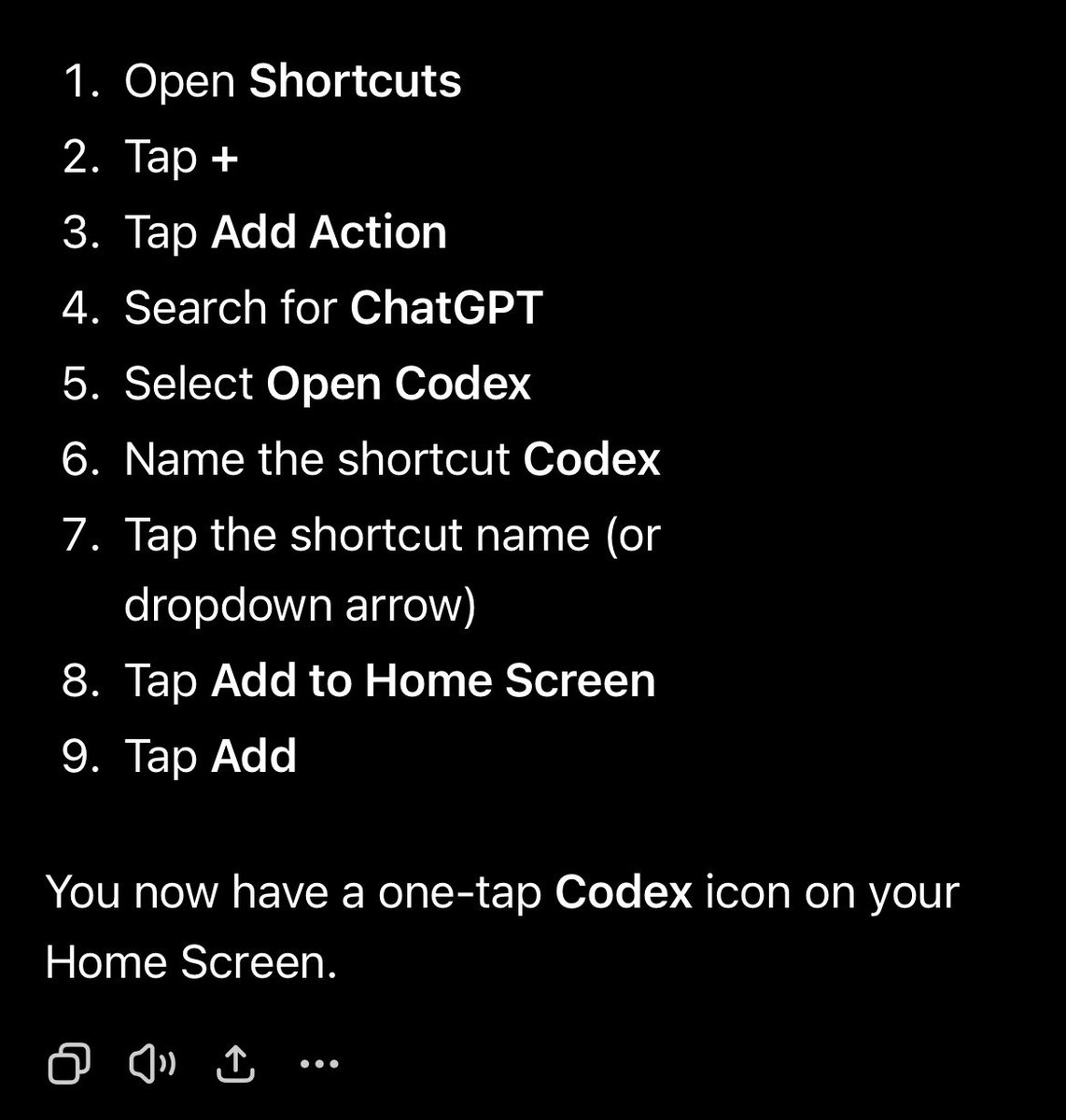
@petergyang showed (35 likes, 15 replies, 3,144 views, 14 bookmarks) a nine-step Shortcuts recipe to put Codex on an iPhone home screen because a first-party one-tap entry path does not exist yet. The screenshot made the workaround look real rather than rhetorical.
Discussion insight: When people asked for “the best agent,” they often meant the best access layer: the best work surface, the best router, the cleanest mobile entry, or the most reliable harness behavior.
Comparison to prior day: June 8 already treated Antigravity as an access layer. June 9 made the fragmentation more obvious by putting Antigravity, Codex mobile hacks, OpenCode layout complaints, and ACP’s router approach in the same conversation.
2. What Frustrates People
Billing is unpredictable once agent work becomes meterable
Severity: High. @DavidOndrej1 argued (37 likes, 8 replies, 3,062 views, 16 bookmarks) that GitHub Copilot’s June 1 shift to AI Credits made agentic use feel like a billing shock rather than a simple subscription. His follow-up post (8 likes, 2 replies, 1,241 views, 3 bookmarks) summarized the product change cleanly: subscriptions now buy a monthly credit pool, and agent mode, chat, multi-step runs, and tool calls are metered past that pool. The attached image made the model transition visible by contrasting “premium requests counted per request” with “AI Credits based on model usage.” GitHub’s own Claude Fable 5 changelog reinforced the point by stating that Fable 5 is billed at provider list pricing under Usage Based Billing. This is worth building for because users are already reacting by hunting for subsidies, free eligibility, or alternative routing instead of trusting the default bill.

Access still breaks exactly where “daily use” should feel easiest
Severity: Medium-High. @petergyang needed (35 likes, 15 replies, 3,144 views, 14 bookmarks) nine Shortcuts steps just to launch Codex from an iPhone home screen, and replies immediately asked why something people use every day still needs that much ceremony. @Azure announced (271 likes, 12 replies, 13,509 views, 34 bookmarks) Fable 5 availability in Foundry and Copilot, but the most salient reply complained that the Claude models still showed quota unavailable in Azure. @thdxr collected (67 likes, 23 replies, 11,685 views, 3 bookmarks) OpenCode layout complaints from users who wanted more vertical room and less sidebar friction. This is worth building for because the pain is at the point of entry and daily operation, not at the benchmark layer.
Trust and policy settings are now part of the product experience
Severity: Medium. GitHub’s Fable 5 announcement (381 likes, 43 replies, 49,496 views, 56 bookmarks) turned policy into launch-day news because the linked changelog said Fable 5 requires up to 30 days of prompt/output retention for Anthropic safety classifiers, while other Claude models in Copilot continue under zero data retention. A different kind of trust issue showed up in @code_kartik post (5 likes, 386 views, 8 bookmarks), where the selling point was that memory is anchored to file-and-line citations and re-checked against the current branch. This is worth building for because long-horizon agents are being evaluated on whether people can explain, verify, and govern them—not only on how much code they can generate.
3. What People Wish Existed
Preflight cost forecasting and budget-aware routing
The strongest need was not just “cheaper models.” It was a way to know what an agent run will cost before it starts, how much headroom is left in the credit pool, and when a task should be routed to a cheaper model or another surface. @DavidOndrej1 made the bill volatility explicit, while GitHub’s own changelog for Fable 5 confirmed provider-priced usage-based billing on the official side. This is a practical need, not an emotional one. Opportunity: direct.
First-class cross-device entry points
@petergyang did the work to turn Codex into a one-tap iPhone shortcut because the first-party path was missing. At the same time, GitHub’s Copilot App launch post described cloud and local sandboxes meant to let sessions continue anywhere. The need is obvious: if these tools are becoming all-day work surfaces, they need equally good desktop, terminal, and mobile entry. Opportunity: direct.
One control surface for many agents
@dabit3 demonstrated ACP as one selector across many agents, @petergyang explicitly asked what Google’s equivalent to Codex or Claude Code is, and GitHub’s Copilot App pitch is itself a control-center argument. The request here is operational: one place to route, inspect, and compare work across agents without losing context. Opportunity: competitive.
Verifiable memory and safety controls for long-running agents
The day’s most credible trust stories were both mechanism-heavy: GitHub’s Fable 5 retention disclosure and Copilot memory facts tied to file-line citations. Developers seem willing to adopt long-horizon agents, but they want safety and memory behavior to be auditable rather than magical. Opportunity: direct.
4. Tools and Methods in Use
| Tool | Category | Sentiment | Strengths | Limitations |
|---|---|---|---|---|
| Claude Fable 5 | Frontier model | (+/-) | Strong public benchmark framing for long-horizon coding, broad Copilot rollout, claimed lower tool-call and token use in GitHub’s internal workflows | Launch immediately raised retention-policy and provider-pricing questions; real-world gains were still being debated in replies |
| GitHub Copilot App | Agent-native desktop | (+) | My Work dashboard, git-worktree isolation, Agent Merge, canvases, and sandboxed execution make multi-agent work inspectable | Still in technical preview and strongest evidence came from launch materials and early product demos rather than long-term usage reports |
| GitHub Copilot / Copilot CLI | Coding assistant / agent runtime | (+/-) | Broad surface area across IDE, CLI, app, web, and mobile; memory and review features are becoming more explicit | AI Credits and usage-based billing make spend less predictable for heavy agent use |
| Google Antigravity | Agent workspace / runtime | (+/-) | Expanding into Search, NotebookLM, SDK, CLI, and information-agent workflows | Users still question whether it is intuitive enough or complete enough to be Google’s true Claude Code / Codex equivalent |
| OpenAI Codex | Coding agent | (+/-) | Strong daily-use demand and recognizable brand for coding work | Mobile access still requires awkward workarounds; people keep pairing it with other surfaces |
| OpenCode | Open-source agent UI | (+/-) | Active iteration and a user base willing to provide concrete interface feedback | Smaller-window layout problems and sidebar friction show the product still needs UX tightening |
| ACP | Multi-agent router | (+) | One selector for many agent backends reduces switching cost between tool brands | Public evidence on this date was mostly product demo, not deep technical documentation |
| Azure AI Foundry | Model platform | (+/-) | Fast landing spot for new frontier models alongside Copilot | Quota availability complaints surfaced immediately in replies |
Overall sentiment was pragmatic. People were positive about strong work surfaces and stronger models, but they kept evaluating them through the lens of billing, policy, access, and orchestration. The common workaround was stacking tools: use the Copilot App as a control center, Codex where people already have habit and trust, Antigravity where Google bundles a path, ACP where one selector matters, and OpenCode where people want openness and iteration. The competitive battle is moving above the raw model into routing, work visibility, and trust controls.
5. What People Are Building
| Project | Who built it | What it does | Problem it solves | Stack | Stage | Links |
|---|---|---|---|---|---|---|
| GitHub Copilot App | GitHub | Agent-native desktop control center for sessions, canvases, reviews, automations, and merges | Multi-agent development workflows are otherwise scattered across windows, repos, and chat threads | My Work view, git worktrees, Agent Merge, canvases, local/cloud sandboxes, shared runtime with CLI/cloud agent | Beta | feature page, launch post, tweet |
| ACP | @dabit3 | Single pane of glass for Codex, Claude, OpenCode, Devin, Gemini, and dozens of other agents | Developers do not want to swap UIs every time they swap an agent backend | Unified selector, multi-agent desktop surface, Devin Desktop demo path | Beta | post |
| Search information agents with Antigravity | Search and NotebookLM experiences that build mini apps, trackers, and monitored updates | Ongoing research and recurring tasks still require too many separate tools and manual check-ins | Search, Antigravity, Gemini 3.5 Flash, NotebookLM cloud computer, 100+ software skills | Beta | post, Ars coverage | |
| html-video | @GithubProjects | Local-first studio that turns HTML, CSS, and data into MP4s from plain-text instructions | Demo and artifact creation still often requires a separate rendering vendor or manual video workflow | Local-first renderer, 14 agent backends, 21 templates, optional AI soundtrack, Apache-2.0 | Shipped | post |
The Copilot App mattered because GitHub’s own description finally matches the way power users talk about agent work: multiple isolated sessions in motion, one place to inspect them, and explicit handoffs through review and merge. Burke Holland’s canvas demo made that more concrete by showing a live interface for worktree divergence rather than another generic “AI can build apps” claim.
html-video was notable for a different reason: it treats media output as something a coding agent can produce locally from HTML and data. The attached screenshot emphasized the shape of the product—21 templates, 14 backends, no API key requirement—so the distinctive angle is not “AI video” in the abstract. It is “artifact generation that stays inside the agent toolchain.”
The repeated builder pattern was clear: people are not only launching new assistants. They are building control surfaces, recurring-task runtimes, and artifact layers around whatever agent the user already prefers.

6. New and Notable
GitHub made Copilot memory mechanics legible
@code_kartik summarized (5 likes, 386 views, 8 bookmarks) Copilot memory as facts stored with file-line citations and revalidated against the current branch before reuse. The attached architecture diagram made that more than a slogan by showing a read-time verification path and quoting a production pull-request merge lift from 83% to 90%.
Fable 5’s retention policy became part of the launch story
GitHub’s launch post (381 likes, 43 replies, 49,496 views, 56 bookmarks) and linked changelog made the policy difference explicit: Fable 5 requires up to 30 days of retention for safety classifiers, while other Claude models in Copilot remain zero-data-retention. That turned governance itself into a product differentiator people had to evaluate on day one.
7. Where the Opportunities Are
[+++] Spend-aware agent routing — Evidence from the AI Credits shift, Fable 5’s provider-priced billing, and subscription-shopping threads all points to the same gap: developers need preflight cost estimates, budget caps, and automatic routing before they hit “run.”
[++] Cross-device agent workspaces — The Copilot App launch describes a durable desktop control center, but Codex still needed a nine-step iPhone shortcut hack to feel like an everyday mobile tool. There is room for a truly consistent desktop-terminal-mobile experience.
[++] Verifiable long-horizon agents — Fable 5’s retention disclosure and Copilot’s citation-checked memory diagram show that trust features are becoming first-class product requirements. Teams want explicit retention, proof trails, and branch-aware memory validation.
[+] Router layers above the model — ACP’s multi-agent selector and the ongoing “what is Google’s equivalent?” thread both suggest a growing market for control surfaces that normalize many agents behind one workflow.
8. Takeaways
- Model launches now get judged on policy and billing as much as raw benchmarks. Fable 5’s coding-performance slides drew attention, but GitHub’s retention and usage-based billing terms shaped the response just as quickly. (benchmark thread, GitHub changelog)
- GitHub is trying to own the control plane around agent work, not only the model picker. The Copilot App launch, canvas demo, and memory-architecture explanation all point toward inspectable multi-agent workflows rather than lightweight chat assistance. (Copilot App launch post, canvas demo, memory thread)
- The access layer is still fragmented enough that people are building around it. ACP’s unified selector, Antigravity’s spread into Search and NotebookLM, and Codex’s home-screen workaround all show demand for cleaner routing and entry points above any single model. (ACP post, Google post, Codex shortcut thread)
- Builder energy is moving toward control surfaces and artifact layers. The most distinctive shipped-looking work on this date was not another chatbot. It was a multi-agent desktop control center, recurring information agents, and a local HTML-to-video pipeline. (GitHub Copilot App, Google/NotebookLM coverage, html-video post)