Twitter AI Coding - 2026-06-17
1. What People Are Talking About
1.1 Model-agnostic bridges and workflow layers moved closer to the center of AI coding 🡕
June 17 put more emphasis on the layer around the model than on the model itself. The strongest cluster was about making Codex, ChatGPT, and Claude Code more portable across providers, workflows, and repos. Four retained items supported the theme.
@thsottiaux reminded (955 likes, 107 replies, 27,715 views, 332 bookmarks) that the Codex App, CLI, and SDK can work with open-source models rather than only OpenAI-hosted ones. The linked OpenAI docs made that concrete by documenting local-provider and custom-base-URL configuration, while replies immediately turned the thread toward practical concerns like Kotlin/Java token burn and whether one model can orchestrate others.
@wshxnv launched (234 likes, 14 replies, 23,634 views, 420 bookmarks) DevSpace, an MCP connector that turns ChatGPT into a Codex-style local coding surface. The public GitHub repo describes a self-hosted Node server that can read, edit, search, and run code in approved local folders through a tunnel, which made the post more than a generic "MCP" pitch.
@rebel0x0 shared (4 likes, 483 views, 5 bookmarks) CodexPro as a parallel idea: a local MCP bridge that gives ChatGPT repo access, safe checks, and handoff back into Codex or other harnesses. Its public README was notable for the explicit boundary-setting: it says the tool uses official ChatGPT Developer Mode and is not a rate-limit bypass.
@tom_doerr pointed to (2 likes, 467 views, 5 bookmarks) Claude Prime, a one-command toolkit for reusable Claude Code workflows built around shared skills, rules, hooks, and setup helpers. Together with DevSpace and CodexPro, that pushed the day toward workflow portability and reusable context layers rather than one-tool lock-in.
Discussion insight: The replies were more practical than ideological. People wanted open models for privacy, spend control, or extra surface area, but they also argued about minimal tool surfaces, native-harness quality, and whether context survives long enough to make the bridge worth it.
Comparison to prior day: The shift was up. Raw mention counts for mcp rose to 33 on June 17 from 14 on June 16, and the conversation moved from generic integration talk toward concrete local bridges and reusable workflow packaging.
1.2 GitHub turned Copilot into a more explicit operations surface and showed the math behind it 🡕
The second major theme was GitHub making agent work both more visible and more measurable. June 17 combined a large product milestone for the GitHub Copilot app with unusually specific infrastructure numbers about token and latency savings. Four retained items supported the theme.
@code announced (72 likes, 7 replies, 12,356 views, 14 bookmarks) that the GitHub Copilot app is now generally available, framing it as a handoff surface from agent-driven flows into full coding. GitHub's changelog and docs backed up the claim with concrete features: sessions from issues or PRs, parallel work on separate branches/worktrees, canvases, cloud automations, and bring-your-own model/tool support through MCP.
@code also published (86 likes, 6 replies, 6,339 views, 34 bookmarks) a detailed account of how the Copilot team is cutting token usage in VS Code through longer-lived prompt caching, deferred tool loading, WebSockets, and specialized subagents. The linked post mattered because it quantified harness work rather than treating efficiency as a vague aspiration.
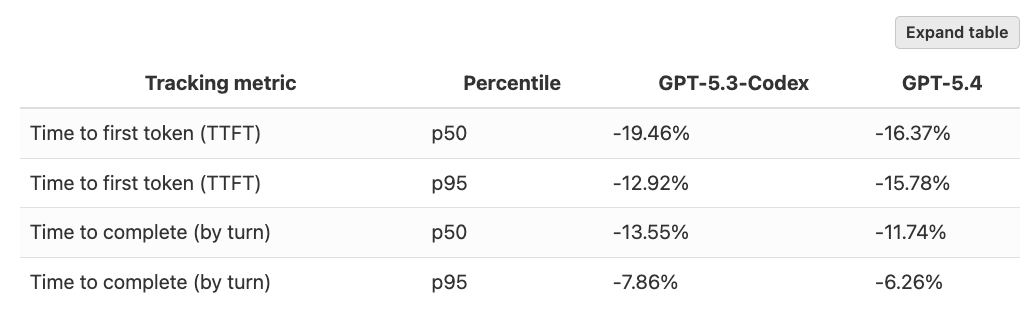
@pamelafox highlighted (4 likes, 279 views, 3 bookmarks) the WebSocket portion of that work. Her attached screenshot summarized the rollout table showing lower time-to-first-token and lower time-to-complete for both GPT-5.3-Codex and GPT-5.4 in multi-turn sessions.
@danshipper added (11 likes, 4,929 views, 4 bookmarks) platform-scale context: GitHub was already seeing 17 million agent-created pull requests in March and a projected jump from 1 billion to 14 billion commits per year, while model routing was becoming part of the pricing conversation. That gave the efficiency work a clear reason to exist.
Discussion insight: Replies did not simply celebrate the launch. They questioned whether handoffs really preserve context and diffs, whether BYOK should reach free tiers, and whether token savings matter if the state model between tools still leaks.
Comparison to prior day: This theme strengthened. copilot app appeared 12 times on June 17 versus 8 on June 16 and only 3 on June 15, and June 17 paired those mentions with harder operational evidence about cost and latency.
1.3 Open-source and self-hosted alternatives were being used as hedge strategies, not side hobbies 🡕
A third cluster showed people shopping for alternatives on purpose: cheaper models, self-hosted Git surfaces, and open-source replacements for the most popular coding products. Four retained items supported the theme.
@heynavtoor compiled (29 likes, 3 replies, 2,044 views, 21 bookmarks) a "Cursor Acquisition Survival Kit" of open-source options including Cline, Aider, Continue, OpenHands, Zed, Void, Tabby, Kilo Code, and Codex CLI. Even as a promotional carousel, it was useful evidence that replacement-shopping had become explicit enough to package as a migration guide.
@TheMaran argued (27 likes, 5 replies, 919 views, 12 bookmarks) that GLM-5.2 through z.ai is becoming a viable low-cost coding/agent model because of its 1,000,000-token context window and promotional credits. The replies added nuance rather than pure cheerleading: people asked about production quality and one reply warned that long-task harness compaction can still drop earlier decisions.
@heyrimsha pushed (20 likes, 1,461 views, 11 bookmarks) Gitea as a self-hosted alternative to leaving private repos in Microsoft's stack. The linked repository README confirmed the functional pitch: Git hosting, code review, issues, wiki, package registry, and CI/CD that can reuse GitHub Actions.
@syndica posted (2 likes, 2 replies, 33 views) an informative chart on AI-coauthored commits by tool, claiming Claude at 79.3%, Cursor at 11.5%, Copilot at 6.0%, and Codex at 0.1% in the measured set. The low engagement mattered less than the image, which turned vague market-share talk into a concrete competitive framing.

Discussion insight: The alternative stack conversation was not just about saving money. Posts kept emphasizing BYOK control, self-hosting, local ownership, and the freedom to mix planning and execution surfaces rather than accept one vendor's full stack.
Comparison to prior day: The hedge mentality intensified even as overall cursor mentions fell from 80 on June 16 to 42 on June 17. Instead of arguing about the leading IDE in the abstract, the feed spent more time on what to switch to, how to self-host, and how to keep options open.
2. What Frustrates People
Shipping still feels harder than generating the app
Severity: High. @ErickSky said (17 likes, 11 replies, 6,146 views, 19 quotes) that vibe-coding an app with AI is easier than getting it live, then turned the complaint into a concrete checklist: connect GitHub, deploy in one click, add a domain, and skip usage-based billing. A lower-engagement quote-post from @exploraX_ (4 likes, 2 replies, 101 views) restated the same pain more directly: "it works on my machine" is not the same as "it's live with my own domain." People are coping by routing generated code into managed hosting flows instead of building their own release path. This looks worth building for because the friction showed up as a repeatable bottleneck, not a one-off complaint.

Reliability and admin surfaces still break too early in the workflow
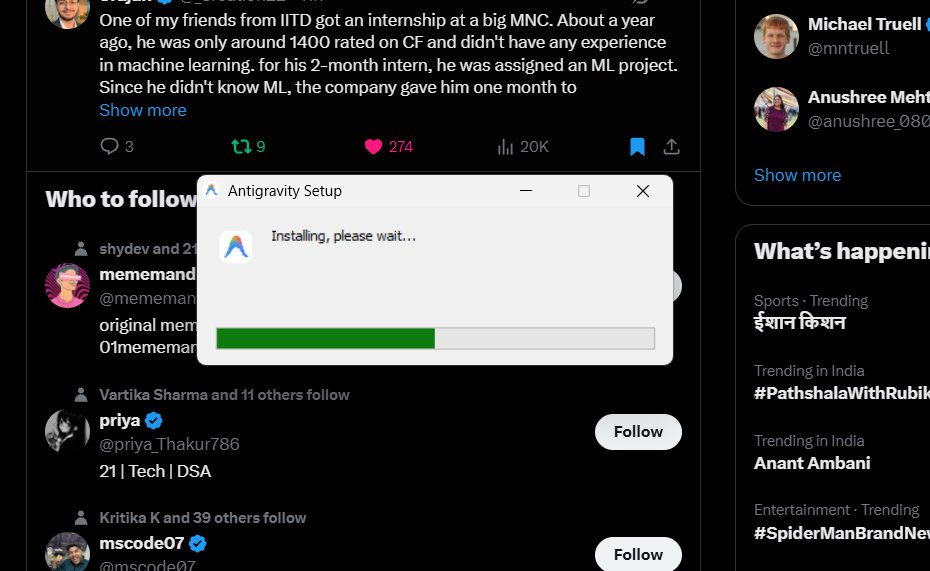
Severity: High. @edandersen reported (8 likes, 1 reply, 710 views) that a global GitHub Copilot incident temporarily reduced model availability to GPT-5 Mini and Gemini 3 Flash. @robinebers said (22 likes, 6 replies, 1,293 views) that Codex sentiment had shifted because the app felt buggy and the model felt less smart after Fable 5 disappeared. On Google's side, @_Creation22 showed (14 likes, 4 replies, 259 views) Antigravity stuck in an install flow, and replies said users may need both Antigravity and Antigravity IDE, which made the onboarding path look even less obvious. The workaround today is retries, surface-switching, or dropping back to another tool. This is worth building for because agent workflows fail before the model quality question even matters.
People still struggle to understand which surface or harness should own the job
Severity: Medium. @haider1 asked (95 likes, 12 replies, 6,003 views, 13 bookmarks) why Google's coding strategy still feels confusing across AI Studio, Antigravity, IDE surfaces, and Jules. In the replies, one user said the tools serve distinct roles while another said the ecosystem still looks messy, which is useful evidence that the boundaries are not obvious to buyers. A separate thread from @EXM7777 (39 likes, 13 replies, 2,182 views, 23 bookmarks) argued that native lab harnesses are becoming bloated and that users should build lighter, model-agnostic stacks instead, while @TheMaran got (27 likes, 5 replies, 919 views, 12 bookmarks) a reply warning that even cheap large-context models still suffer when the harness auto-compacts. People are coping by splitting planning and execution across multiple tools, but the split itself has become extra work. This looks worth building for because the confusion now sits at the workflow architecture level, not just the UI level.
3. What People Wish Existed
Official, model-agnostic local bridges
The strongest practical wish was for coding surfaces that keep working across products and providers. @thsottiaux surfaced (955 likes, 107 replies, 27,715 views, 332 bookmarks) official Codex support for open-source/local providers, while @wshxnv built (234 likes, 14 replies, 23,634 views, 420 bookmarks) DevSpace and @rebel0x0 built (4 likes, 483 views, 5 bookmarks) CodexPro to expose local repos to ChatGPT through MCP. The need is practical, not aspirational: users want to preserve repo context, reuse subscriptions they already pay for, and keep a fallback when one product surface goes down. Opportunity: direct.
Handoffs that survive the whole trip from plan to code to deployment
The feed also showed a clear wish for state that survives handoffs. @code claimed (72 likes, 7 replies, 12,356 views, 14 bookmarks) the Copilot app can hand work into full coding without losing context, but a reply immediately asked whether that includes file diffs or only chat history. At the far end of the workflow, @ErickSky framed (17 likes, 11 replies, 6,146 views, 19 quotes) deployment itself as the missing handoff: AI can build the app, but shipping still needs a smoother path. This is a practical need with direct user-value impact because each broken handoff forces people back into manual glue work. Opportunity: direct.
Lightweight harnesses with clearer token and context control
A third wish was for agents that waste less context and give users clearer control over what gets loaded. @code published (86 likes, 6 replies, 6,339 views, 34 bookmarks) the most explicit official response: reduce tool overhead, keep prompt caches warm longer, and use WebSockets to lower latency. But @EXM7777 argued (39 likes, 13 replies, 2,182 views, 23 bookmarks) that native lab harnesses are becoming too bloated, and a reply under @TheMaran's GLM post warned that long tasks can still lose early decisions when the harness auto-compacts. The implied product request is simple: let me see what the agent loaded, what it dropped, and what it cost. Opportunity: direct.
4. Tools and Methods in Use
| Tool | Category | Sentiment | Strengths | Limitations |
|---|---|---|---|---|
| OpenAI Codex | Coding agent / CLI-app surface | (+/-) | Official support for open-source/local providers, strong ecosystem attention, widely used as a handoff/execution target | Users still report buggy app behavior, quality drift, and token burn on some stacks |
| GitHub Copilot app | Agent workspace | (+/-) | Starts from issues/PRs/prompts, runs parallel sessions on isolated branches/worktrees, adds canvases and cloud automations | Replies still question BYOK/free access and whether handoffs preserve full tool state |
| Claude Code | Coding agent | (+) | Strong execution reputation, growing skills ecosystem, repeatable workflow packaging around the core tool | Long tasks can still lose context through compaction, and cost/harness debates are active |
| DevSpace | MCP bridge | (+) | Gives ChatGPT secure local repo access with file, shell, and worktree tools; minimal-tool design | Requires a tunnel and owner approval flow; still depends on separate ChatGPT/Codex product boundaries |
| CodexPro | MCP bridge | (+) | Uses official ChatGPT Developer Mode plus MCP, defaults to workspace-only writes and safe verification commands | Requires Plus/Pro + Developer Mode, and some ChatGPT model surfaces still lack connector/tool support |
| GLM-5.2 via z.ai | Model/API | (+/-) | Large context window, low-cost experimentation, works inside existing coding tools | Free credits are temporary, production quality is still questioned, and harness compaction can erase gains |
| Gitea | Self-hosted Git platform | (+) | GitHub-like collaboration stack with Actions reuse, low hardware needs, and local ownership | Self-hosting adds operational burden, and today's evidence came mostly from privacy-sensitive users |
| OpenTUI | TUI framework | (+) | Production terminal UI core with TypeScript bindings already powering OpenCode and planned terminal-native products | Infrastructure layer rather than turnkey app; native build/toolchain complexity remains |
| MCP servers (pattern) | Integration method | (+) | Real tool orchestration, reusable local context, and visible builder activity across .NET, DevSpace, and CodexPro | Setup and tool-surface design still confuse users, especially when tunnels or multiple app surfaces are involved |
The satisfaction spectrum was pragmatic. People praised tools that reduced setup tax, preserved local control, or made agent work more inspectable, and they criticized tools when the surface got bloated, unstable, or hard to price.
The clearest migration pattern was away from single-vendor dependence. Users were pairing official Codex support for local/open providers with ChatGPT bridges such as DevSpace and CodexPro, shopping open-source replacements for Cursor, and considering self-hosted Git surfaces such as Gitea when privacy or ownership mattered more than SaaS convenience.
The competitive split was no longer just model versus model. It was native workspace versus bridge, SaaS versus self-hosted, and thick harness versus lightweight context layer. GitHub's Copilot work focused on making the native harness cheaper and faster, while builder activity focused on making the surrounding workflow more portable.
5. What People Are Building
| Project | Who built it | What it does | Problem it solves | Stack | Stage | Links |
|---|---|---|---|---|---|---|
| DevSpace | @wshxnv / Waishnav | Self-hosted MCP server that lets ChatGPT read, edit, search, and run code in approved local projects | Reuses ChatGPT as a local coding surface instead of forcing work into one hosted agent product | Node.js, MCP, local shell/file tools, git worktrees, HTTPS tunnel | Beta | repo |
| CodexPro | @rebel0x0 / rebel0789 | Connects ChatGPT Developer Mode to a local repo with read/edit/search/verify tools and handoff modes | Keeps repo work moving when Codex or another surface is constrained, while preserving explicit local context | Node.js, MCP, ChatGPT Developer Mode, AGENTS.md/.ai-bridge context, safe command layer | Beta | repo |
| GitHub Copilot app | @code / GitHub | Native desktop app for starting, steering, and landing agent work across repositories | Centralizes issue/PR-to-agent workflow, review, and parallel execution in one place | Native desktop app, isolated git worktrees, canvases, cloud automations, MCP/model selection | Shipped | repo, docs |
| AI in .NET Starter Kit | @TheCodeMan__ | Educational MCP server and performance-analysis demo for .NET APIs | Gives developers a realistic MCP example instead of a toy demo, including load testing and report generation | .NET, ASP.NET Core API, custom load-testing engine, Blazor dashboard, MCP tools | Alpha | site |
| Claude Skills | alexknowshtml / @tom_doerr | Curated skill packs that turn reusable Claude Code prompts into slash commands | Reduces repeated prompting and makes high-signal workflows portable across repos | Markdown skills, Claude Code slash commands | Shipped | repo |
| Claude Prime | avibebuilder / @tom_doerr | One-command toolkit that installs shared Claude Code skills, rules, hooks, and setup helpers | Cuts repo setup tax and standardizes context for teams using Claude Code | Node package, hooks, reusable skills/rules, setup scripts | Shipped | repo |
| OpenTUI | anomalyco / @GithubProjects | Native terminal UI core with TypeScript bindings used by OpenCode and intended for terminal.shop | Gives terminal-native AI tools a shared high-performance UI substrate instead of bespoke shells | Zig core, C ABI, TypeScript bindings, React/Solid reconcilers, WebGPU renderer | Shipped | repo |
@wshxnv stood out (234 likes, 14 replies, 23,634 views, 420 bookmarks) because DevSpace was not just another prompt wrapper. The repo README made the build unusually explicit: file and shell tools, worktrees, tunnel-based access, and owner-password approval. @rebel0x0 showed (4 likes, 483 views, 5 bookmarks) the same broad pattern independently with CodexPro, which suggests the bridge-to-ChatGPT idea is a real builder pattern rather than a one-off hack.
@tom_doerr shared (4 likes, 435 views, 5 bookmarks) Claude Skills and later shared (2 likes, 467 views, 5 bookmarks) Claude Prime. Those two projects mattered less as individual launches than as evidence of a second repeated pattern: packaging reusable context, commands, and rules around Claude Code so teams stop re-explaining the same repo and workflow every session.
@TheCodeMan__ built (5 likes, 1 reply, 160 views, 4 bookmarks) a .NET MCP starter kit around API performance analysis, which is a good example of domain-specific tooling rather than generic "AI agent" talk. The tool list in the tweet—load tests, p50/p95/p99 latency, thread-pool starvation detection, and generated reports—made the use case concrete.
@code used (72 likes, 7 replies, 12,356 views, 14 bookmarks) the Copilot app launch to define the product end of the market: a full agent-native desktop home. At the infrastructure end, @GithubProjects highlighted (5 likes, 625 views, 5 bookmarks) OpenTUI as a shared terminal substrate already used in production by OpenCode.

The repeated build pattern on June 17 was clear: people are not waiting for a base model vendor to solve every workflow problem. They are building bridges into existing chat products, packaging repeatable context layers, and creating domain-specific or terminal-native shells around the agent.
6. New and Notable
OpenAI made model-agnostic Codex usage official
@thsottiaux surfaced (955 likes, 107 replies, 27,715 views, 332 bookmarks) a small but important documentation change: Codex can now be configured against open-source/local providers, not just OpenAI-hosted models. That matters because it legitimizes a workflow the community was already experimenting with and lines up with the day's bridge-building projects.
The GitHub Copilot app crossed from preview novelty into a shipping workspace
@code announced (72 likes, 7 replies, 12,356 views, 14 bookmarks) Copilot app general availability, while the public changelog described issue/PR starts, parallel sessions, canvases, cloud automations, and MCP-backed bring-your-own model/tool support. The launch was notable because it framed agent work as a desktop operating surface, not just an editor feature.
Harness-level latency and token efficiency became unusually measurable
@code published (86 likes, 6 replies, 6,339 views, 34 bookmarks) the clearest official efficiency write-up of the day, and @pamelafox distilled (4 likes, 279 views, 3 bookmarks) one of the most concrete artifacts from it: a table showing WebSocket-driven reductions in time to first token and time to complete. The notable shift was that harness design itself was being reported like product performance engineering.
7. Where the Opportunities Are
[+++] Build-to-deploy handoff layers — Evidence came from multiple sections at once: section 2's repeated complaint that AI can generate the app faster than people can ship it, section 3's wish for stateful handoffs, and section 5's builder activity around fuller workflow shells. The strongest opening is not better code generation by itself, but a release path that preserves context from prompt to repo to live environment.
[+++] Model-agnostic local bridges and workflow shells — Official Codex support for local/open providers, the DevSpace and CodexPro launches, and the Claude Skills/Claude Prime packaging wave all point to the same opportunity: let users keep repo context, personal rules, and preferred models while moving between surfaces. This is strong because multiple independent builders are solving the same problem from different angles.
[++] Token-visible, low-overhead agent harnesses — GitHub's own efficiency work, Pamela Fox's latency table, EXM7777's harness-bloat complaint, and the GLM thread's compaction caveat all point to a clear need for thinner workflows with better accounting. The opportunity is moderate because big vendors are already working on it, but user frustration shows the problem is far from closed.
[+] Self-hosted AI coding infrastructure — Gitea, OpenTUI, and the broader open-source replacement framing showed a visible but still smaller appetite for local ownership, privacy, and terminal-native stacks. The signal is emerging rather than dominant, but it keeps appearing whenever users discuss vendor lock-in or repo control.
8. Takeaways
- The day's strongest signal was workflow portability, not a new model drop. Official Codex support for open-source/local providers landed on the same day that DevSpace and CodexPro pushed ChatGPT-to-local-repo bridges into public view. (source)
- GitHub is turning Copilot into both an operating surface and a performance-engineering story. Copilot app GA, explicit worktree/canvas/automation features, and quantified token/latency improvements all pointed in the same direction. (source)
- The community still experiences a real gap between generating code and shipping reliable software. Deployment remained a named bottleneck, while incidents, install failures, and buggy app behavior kept breaking trust earlier in the loop. (source)
- Open-source and self-hosted alternatives are being treated as active hedges, not fringe experiments. The feed bundled replacement guides, low-cost model stacks, self-hosted Git infrastructure, and commit-share charts into a coherent anti-lock-in story. (source)