Twitter AI Coding - 2026-06-18
1. What People Are Talking About
1.1 Gemini CLI's shutdown became an ecosystem trust test 🡕
June 18 was the day Google's terminal strategy stopped being hypothetical. Three retained items anchored the theme: the maintainer goodbye from Jack Wotherspoon, the official @geminicli transition notice, and an image-backed post quoting Google's docs. Replies then shifted from polite thanks to anger about install failures, telemetry gating, and a lack of 1:1 parity in Antigravity CLI.
@JackWoth98 said goodbye (262 likes, 44 replies, 31,344 views, 30 bookmarks) to Gemini CLI users and explicitly said individual Google AI Pro, Ultra, and free-tier accounts stopped working on June 18. The tone mattered: he called it "a sad day" and replied that the project did not end the way he had hoped, which made the migration feel imposed rather than celebratory.
@geminicli confirmed (72 likes, 18 replies, 6,146 views, 13 bookmarks) the same cutoff in the official channel and drew the line between individual and enterprise users: Code Assist license holders and API-key users stay unaffected. Google's own public blog post said the move is about consolidating around Antigravity's unified multi-agent backend, while also admitting there is no 1:1 feature parity at launch (blog).
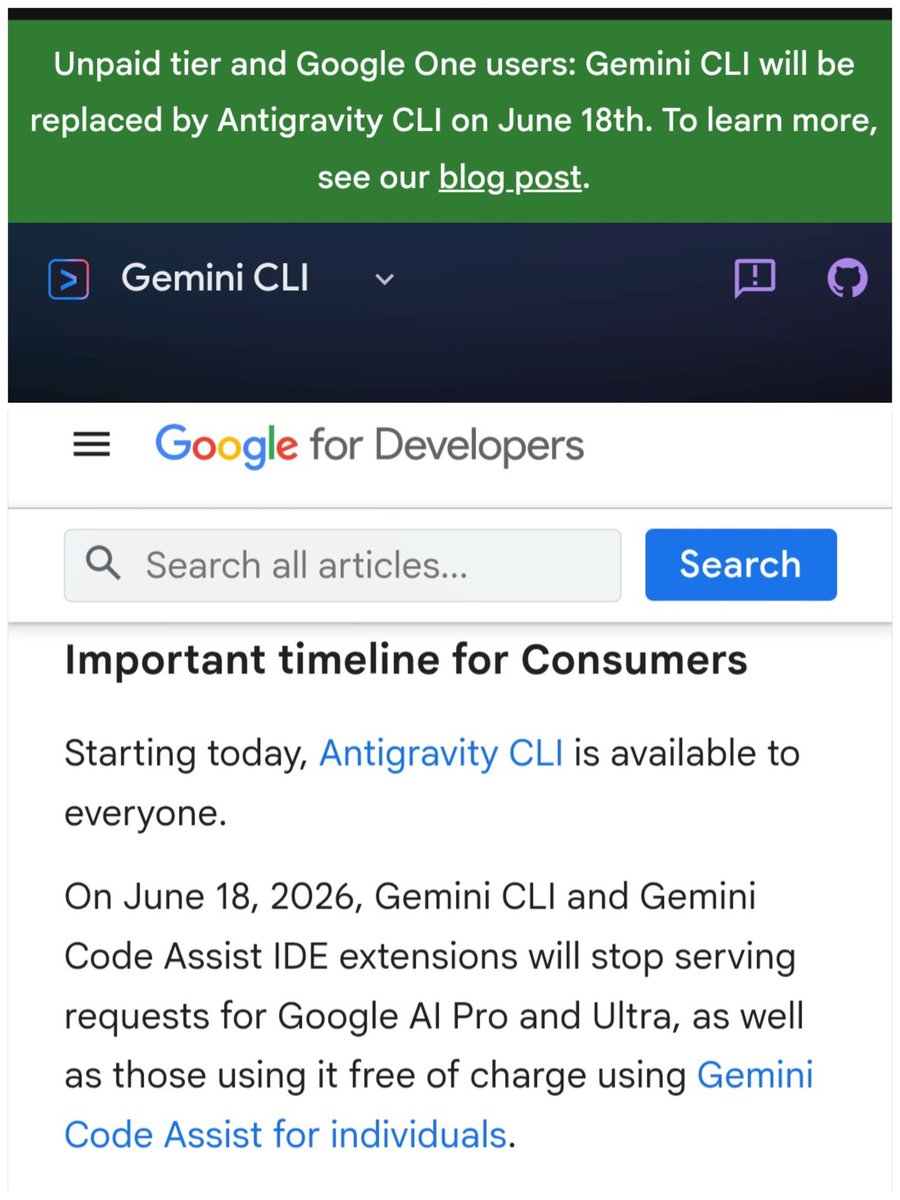
@ai_for_success amplified (55 likes, 9 replies, 4,102 views, 7 bookmarks) the most concrete artifact: a screenshot of Google's migration notice stating that Gemini CLI and Gemini Code Assist IDE extensions stop serving individual Pro, Ultra, and free users on June 18.
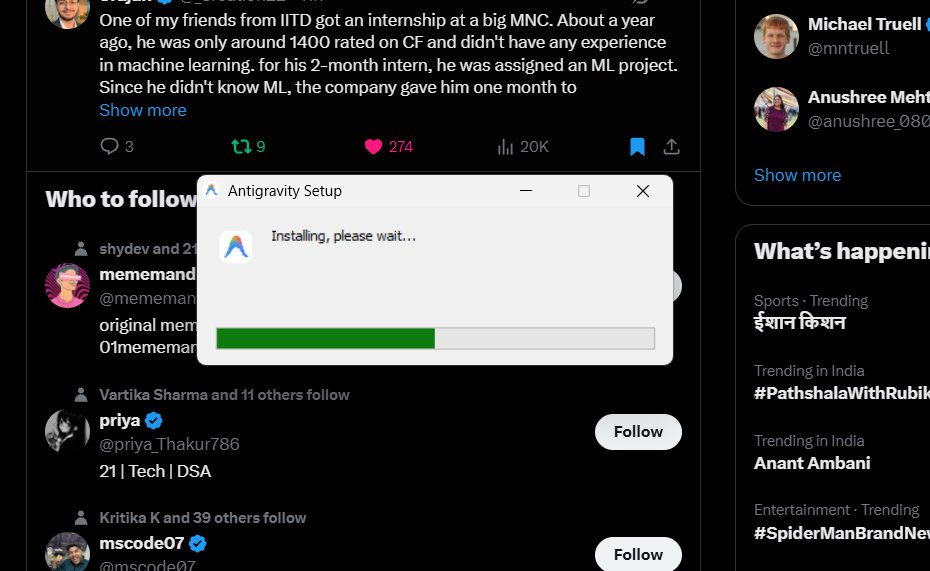
@robinebers reported (25 likes, 10 replies, 1,664 views) that Antigravity IDE would not proceed unless telemetry was enabled, while @_Creation22 showed (17 likes, 4 replies, 325 views) an install flow stuck mid-session. Those complaints turned the migration into a trust problem, not just a rename.
Discussion insight: The strongest replies were not about nostalgia. They were about what broke in practice: install loops, product-split confusion between Antigravity and Antigravity IDE, and blunt statements that Google had "messed up the new models, the CLI, and Antigravity" after forcing the switch.
Comparison to prior day: Compared with June 17, when Antigravity was still one surface inside a broader Google coding-stack conversation, June 18 made the shift irreversible and deadline-driven.
1.2 Workflow capture and operating layers moved closer to the center 🡕
The second major theme was not a new model release but better ways to package work around models. Five retained items supported it: Codex Record & Replay, the CLAUDE.md error-rate thread, AI DevKit, gstack, and ClaudeKit Skills.
@mark_k posted (205 likes, 19 replies, 13,061 views, 28 bookmarks) the June 18 Codex app changelog, led by Record & Replay: show Codex a workflow once on macOS, turn it into a reusable skill, then manage it later. The OpenAI changelog added the operational constraints that shaped the reaction: it depends on Computer Use, and the feature is unavailable at launch in the EEA, UK, and Switzerland (changelog).

@DevAdventur3s showed (34 likes, 1 reply, 2,874 views, 10 bookmarks) the user-facing side of the same feature: a plugin panel that records clicks, typed text, and window content for up to 30 minutes, then turns the run into a promptable skill. That mattered because it turned "automation" from marketing language into an inspectable UI.

@cyrilXBT argued (60 likes, 5 replies, 4,526 views, 11 bookmarks) that context, not raw model weakness, explains most coding-agent failures, summarizing a 41% to 11% to 3% error-rate progression as CLAUDE.md guidance gets more explicit. That thesis was echoed by builders rather than just commentators: @DanKornas launched (10 likes, 6 replies, 559 views, 8 bookmarks) AI DevKit as a workflow control plane with verification gates and local memory, @oliviscusAI pointed to (5 likes, 1 reply, 184 views, 4 bookmarks) Garry Tan's newly open-sourced gstack workflow, and @tom_doerr linked (8 likes, 426 views, 6 bookmarks) ClaudeKit Skills as a marketplace-installable package of reusable agent skills.
Discussion insight: The replies pushed in two directions at once: people liked the move from one-off prompting toward repeatable workflows, but they also complained whenever those workflows were locked to one OS, one market, or one agent surface.
Comparison to prior day: June 17 emphasized bridges between products. June 18 went a level deeper and emphasized reusable operating layers inside the products themselves.
1.3 GitHub and VS Code made model control more explicit 🡕
A third cluster showed GitHub and VS Code turning model choice, routing, and automation into visible product surfaces instead of hidden defaults. Four retained items supported it.
@pierceboggan explained (29 likes, 4 replies, 1,231 views, 5 bookmarks) that Copilot Auto now uses a routing model that considers reasoning depth, code complexity, debugging difficulty, and tool orchestration needs. GitHub's accompanying post described prompt caching, deferred tool loading, and the HyDRA router as the mechanism for cutting token waste while still routing up when the task requires it (blog).

@pierceboggan also highlighted (23 likes, 3 replies, 1,211 views, 5 bookmarks) that VS Code Chat can now use BYOK providers without any GitHub account or Copilot plan. Microsoft's own write-up made the scope clear: BYOK works for chat and agent workflows, including offline local-model setups, but not for inline completions or embedding-dependent features (blog).
@github announced (80 likes, 4 replies, 10,455 views, 15 bookmarks) that MAI-Code-1-Flash is now available in additional Copilot surfaces, and @_Evan_Boyle added (40 likes, 4 replies, 2,087 views, 6 bookmarks) that Copilot App signups reopened across Pro, Pro+, and Max individual plans. Together, those posts made June 18 feel like GitHub's follow-through day after the June 17 GA launch.
Discussion insight: The main pushback was not against routing itself. It was about control. Replies asked for more visibility into when Auto picks the cheaper model, whether MAI should enter the routing pool, and how much of the workflow users can steer directly.
Comparison to prior day: June 17 established Copilot App as the operating surface. June 18 filled in the control mechanisms underneath it: Auto routing, BYOK, and broader MAI model availability.
1.4 Agent-native design and game workflows kept expanding, but replies stayed skeptical 🡒
A smaller but persistent theme was AI coding leaking into design and game production surfaces. Three retained items supported it.
@TheShortBear framed (58 likes, 11 replies, 15,044 views, 15 bookmarks) Unreal Engine 5.8's experimental MCP server support as a step toward user-customized "elevated Roblox" game creation. The quoted Unreal post mattered because it explicitly said teams can connect any agent into the engine's sources, pipeline, and workflow.
@OpenDesignHQ positioned (6 likes, 2 replies, 447 views, 7 bookmarks) Open Design as an open-source alternative to Claude Design, centered on canvas editing, plugins, and 22+ agents. The public repo description pushed the same idea further: a local-first design workspace with 150 design systems, 261 plugins, BYOK model routing, and support for Claude Code, Codex, Copilot, Antigravity, and other coding agents (repo).
@kr0der surfaced (2 likes, 1 reply, 62 views) a Claude Design /design-sync flow that reads a codebase's design system and reuses existing components. That screenshot was low-engagement but high-signal because it showed where the design-tool boundary is moving.
Discussion insight: Replies were much less utopian than the launch framing. Under the Unreal thread, people immediately worried about AI slop, moderation, persistence, and whether the experimental plugin actually works on Linux.
Comparison to prior day: The prior day was more about workflow portability between coding tools. June 18 extended the same logic into design and game production, but with more skepticism close at hand.
2. What Frustrates People
Forced migrations and setup breakages
Severity: High. The biggest frustration was not model quality but being forced onto a new surface before it felt ready. @JackWoth98 made (262 likes, 44 replies, 31,344 views, 30 bookmarks) the cutoff unmistakable for individual Gemini CLI users, while Google's own migration post said Antigravity CLI does not yet have 1:1 feature parity with Gemini CLI (blog). On the user side, @robinebers said (25 likes, 10 replies, 1,664 views) Antigravity IDE would not open unless telemetry was enabled, and @_Creation22 showed (17 likes, 4 replies, 325 views) an installation flow that kept spinning while replies said both Antigravity and Antigravity IDE may now be required. People are coping by delaying the move when they can, falling back to enterprise/API-key paths that remain supported, or reinstalling multiple Google surfaces until one works. This is worth building for because the failure happens before any productive coding starts.
Repo context still feels insufficient and opaque
Severity: High. @sudoingX asked (16 likes, 5 replies, 1,474 views) why Codex still does not default subscribers to a 1M-context mode, reducing the pain to one sentence: users should not have to debug whether the agent read enough of the repo. @cyrilXBT used (60 likes, 5 replies, 4,526 views, 11 bookmarks) the opposite framing to the same effect, arguing that most failures come from missing context rather than weak models and citing a 41% to 11% to 3% error-rate drop as guidance became more explicit. Builders are coping by adding sidecars instead of trusting defaults: AI DevKit adds local memory and verification gates, and gstack/ClaudeKit package more explicit workflow rules around the agent. This is worth building for because the pain is structural and keeps appearing across tools, not just in one vendor thread.
New capabilities still arrive behind hard gates
Severity: Medium. The day also showed repeated frustration with access constraints around otherwise attractive features. @mark_k highlighted (205 likes, 19 replies, 13,061 views, 28 bookmarks) Codex Record & Replay, but replies immediately complained that it is macOS-only, while OpenAI's own changelog says Computer Use is required and the feature is unavailable in the EEA, UK, and Switzerland at launch (changelog). On GitHub's side, @pierceboggan said (48 likes, 7 replies, 1,419 views) MAI-Code-1-Flash was rolling out on individual Copilot plans, but replies still asked whether the model was visible yet and whether mixed-model behavior was debuggable. The current workaround is waiting for staged rollouts, using another region or device, or sticking to older flows that are less capable but more predictable. This is worth building for, but the opening is narrower because platform vendors are already shipping pieces of the fix.
3. What People Wish Existed
Durable repo memory and context control
The clearest practical wish was for agents that reliably understand the repo without making users guess. @sudoingX reduced (16 likes, 5 replies, 1,474 views) the ask to a context question: in an agentic coding product, users should not have to debug whether the tool read enough of the codebase. @cyrilXBT answered (60 likes, 5 replies, 4,526 views, 11 bookmarks) with a workflow answer instead of a model answer, arguing that explicit rules and checkpoints are what collapse error rates. AI DevKit, gstack, and ClaudeKit all exist because this need is practical and urgent: people want memory, conventions, and verification to survive across sessions without bloating every prompt. Opportunity: direct.
Secret-safe agent execution
A second need was for agents to touch real systems without pulling secrets into chat transcripts. @glcst launched (19 likes, 4 replies, 857 views, 7 bookmarks) keymaxxer specifically to keep tokens in a local encrypted vault, let agents request named secrets, and require approval for sensitive runs. The repo description made the subtext explicit: the common alternative is pasting API keys into a shell, a prompt, or both. This is a practical need with immediate operational value because the agent era increases the number of commands, tools, and providers touching credentials. Opportunity: direct.
Workflow packages that survive vendor and surface changes
The feed also showed a wish for workflows that travel even when the front-end tool changes. Google forced individual Gemini CLI users onto Antigravity; GitHub pushed BYOK and Auto; builders responded with portable layers such as AI DevKit, gstack, ClaudeKit Skills, and Open Design. @DanKornas described AI DevKit as one repeatable engineering workflow across Claude Code, Cursor, Codex CLI, Gemini CLI, and Copilot, while @tom_doerr linked a reusable skill marketplace and @OpenDesignHQ pushed the same portability into design artifacts. The need is practical but increasingly competitive because multiple builders are already attacking the same portability layer from different angles. Opportunity: competitive.
4. Tools and Methods in Use
| Tool | Category | Sentiment | Strengths | Limitations |
|---|---|---|---|---|
| Antigravity CLI / IDE | Coding agent surface | (+/-) | Unified multi-agent backend, faster Go CLI, keeps key Gemini CLI features, enterprise path remains supported | Forced migration for individuals, no 1:1 parity at launch, install and telemetry complaints |
| OpenAI Codex app | Agent workspace | (+/-) | Record & Replay turns demonstrated macOS workflows into reusable skills; Browser Use and automation controls keep expanding | macOS-only for the new feature, unavailable in EEA/UK/Switzerland, users still question context limits |
| GitHub Copilot Auto + App | Agent workspace / routing | (+) | Task-aware model routing, prompt caching, deferred tool loading, reopened individual access, visible automation workflows | Users still want more routing transparency, more explicit model control, and less rollout lag |
| VS Code BYOK | Editor model layer | (+) | Works without a GitHub account or Copilot plan, supports provider keys and local models, extends chat and agent workflows | Does not cover inline completions or embedding-heavy features; provider billing stays separate |
| AI DevKit | Agent control plane | (+) | One config, one console, local memory, cross-agent messaging, verification gates, shared lifecycle across tools | Adds another layer to install and maintain; value depends on team discipline |
| keymaxxer | Secret manager / MCP | (+) | Keeps secrets out of transcript context, injects them only at command time, adds approvals for sensitive use | Still requires local unlock/approval flow and does not remove same-user machine risks |
| Open Design | Agentic design workspace | (+/-) | Local-first, open source, design systems plus plugins, works with many coding-agent CLIs and BYOK model routing | Separate design surface is still stabilizing, and the ecosystem breadth adds setup complexity |
| gstack | Claude Code workflow kit | (+) | Turns Claude Code into a structured planning/review/QA/security/release system with many specialist commands | Strongly opinionated workflow, centered on Claude Code rather than fully model-agnostic use |
| ClaudeKit Skills | Skill marketplace / workflow library | (+) | Installable skill packs, context-engineering coverage, MCP-management subagent, reusable repo workflows | Mainly benefits teams already committed to Claude Code plugin patterns |
The satisfaction spectrum was pragmatic rather than ideological. People rewarded tools that made context, automation, or safety more explicit, and they pushed back when the same products hid limits behind staged rollouts, OS restrictions, or migration cliffs.
The clearest migration pattern was away from single-surface dependence. Google pushed individual users from Gemini CLI to Antigravity, while GitHub and VS Code moved in the opposite direction by broadening model choice through Auto, BYOK, and MAI-Code-1-Flash.
The competitive split was no longer just model versus model. It was vendor-native workspace versus portable control plane, raw context window versus memory/retrieval layer, and direct shell access versus approval-gated secret execution.
5. What People Are Building
| Project | Who built it | What it does | Problem it solves | Stack | Stage | Links |
|---|---|---|---|---|---|---|
| AI DevKit | @DanKornas / CodeaholicGuy | Gives coding agents one shared operating layer with live console, memory, verification, and lifecycle skills | Replaces isolated agent tabs, duplicated rules, and false "done" claims with a coordinated control plane | Node.js CLI, .ai-devkit.json, local SQLite memory, MCP, agent console, workflow skills |
Shipped | repo, docs |
| keymaxxer | @glcst / glommer | Secret manager that lets coding agents run commands with named secrets without seeing the secret values | Keeps API keys and tokens out of prompts, transcripts, and provider logs while preserving automation | MCP server, Turso-encrypted vault, AES-256-GCM, CLI, native approval dialogs | Shipped | repo |
| Open Design | @OpenDesignHQ / nexu-io | Local-first open-source Claude Design alternative that turns coding agents into design and artifact engines | Keeps design generation, editing, and brand systems inside the same agent stack teams already use for code | Desktop app, MCP, skills, plugins, BYOK model router, multi-agent CLI support | Shipped | repo, site |
| gstack | @oliviscusAI / garrytan | Slash-command workflow that turns Claude Code into a virtual engineering team with planning, review, QA, security, and ship steps | Adds repeatable engineering roles and release discipline around raw coding-agent output | Markdown skills, Claude Code, Bun setup, browser QA, security and release commands | Shipped | repo |
| ClaudeKit Skills | @tom_doerr / mrgoonie | Marketplace-installable skill packs and MCP-management helpers for Claude Code | Reduces repeated prompting and packages reusable workflow knowledge across repos | Claude Code plugin marketplace, Markdown skills, MCP-management subagent | Shipped | repo |
@DanKornas made (10 likes, 6 replies, 559 views, 8 bookmarks) AI DevKit stand out by describing a shared lifecycle across Claude Code, Cursor, Codex CLI, Gemini CLI, and Copilot rather than a single-tool add-on. The repo README made the architecture explicit: one config, one console, local memory, cross-agent communication, and verification gates, while a reply said the verification gate caught an agent claiming a green build that never compiled.

@glcst positioned (19 likes, 4 replies, 857 views, 7 bookmarks) keymaxxer as trust middleware rather than another generator. Its repo description centered on a useful boundary: agents can ask to run a command with named secrets, but the actual secret value stays outside the context window and can require approval at use time.
Open Design, gstack, and ClaudeKit Skills showed the same broader pattern from different angles. Open Design extends coding agents into design systems and artifact export, gstack turns Claude Code into a 23-specialist software factory, and ClaudeKit Skills packages context-engineering and MCP-management workflows into a marketplace shape. The repeated trigger across all three is the same: builders no longer want raw model access alone; they want reusable operating systems around the agent.
6. New and Notable
MAI-Code-1-Flash became a visible native Copilot model
@github announced (80 likes, 4 replies, 10,455 views, 15 bookmarks) that MAI-Code-1-Flash is now available across more Copilot surfaces, and @pierceboggan backed that up (48 likes, 7 replies, 1,419 views) with a model-picker screenshot showing MAI-Code-1-Flash beside GPT-5.5 and Claude Opus 4.8. The notable part was not only the rollout, but that replies immediately treated it as a real routing and debugging question inside Copilot rather than a brand-only announcement.

Copilot automations started looking like scheduled operations, not demos
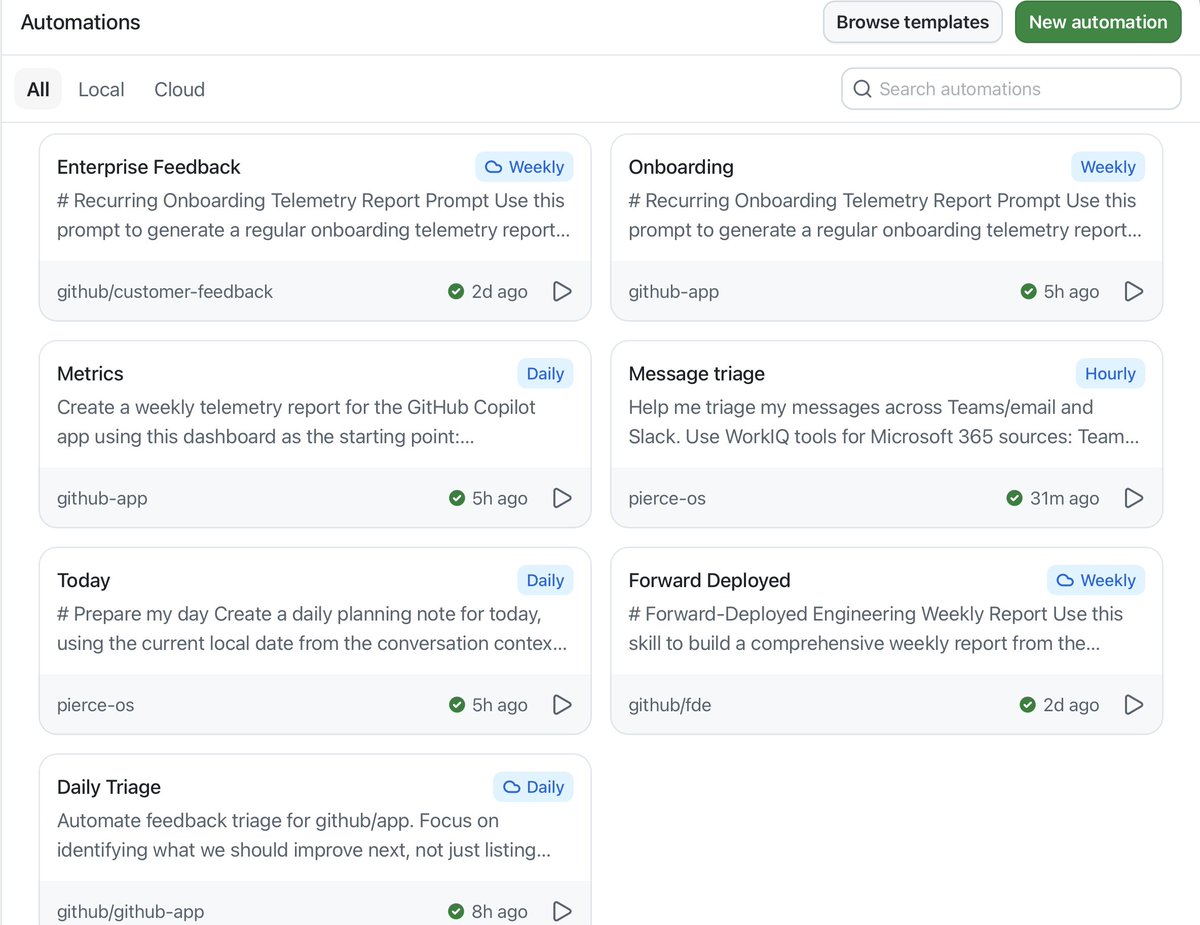
@pierceboggan shared (21 likes, 2 replies, 681 views, 7 bookmarks) a concrete set of hourly, daily, and weekly Copilot automations for day prep, message triage, feedback triage, and telemetry review. That screenshot mattered because it showed agent work being scheduled like operations work, with named runs and recurring cadence rather than one-off chat sessions.
Claude Design exposed a direct codebase-to-design sync flow
@kr0der posted (2 likes, 1 reply, 62 views) a Claude Design modal that asks users to run /design-sync so the tool can read tokens and React components from an existing design system. The engagement was small, but the feature mattered because it showed design tools pulling components directly from code rather than starting from a blank canvas.

7. Where the Opportunities Are
[+++] Migration-proof agent operating layers — Evidence came from sections 1, 3, 4, and 5 at once: Google forced users off Gemini CLI, GitHub and VS Code expanded model choice, and builders responded with AI DevKit, gstack, ClaudeKit Skills, and Open Design. The strongest opening is a workflow layer that preserves memory, rules, and handoffs even when the underlying agent surface changes.
[+++] Trust infrastructure for agent context, verification, and secrets — Section 2's context complaints, section 3's demand for durable repo memory and secret-safe execution, and section 5's launches of AI DevKit and keymaxxer point to the same gap. This is strong because the pain is operational and immediate: users do not trust that agents saw enough, verified enough, or handled credentials safely enough.
[++] Visible routing and BYOK control planes — GitHub's HyDRA/Auto work, VS Code's BYOK rollout, and the MAI-Code-1-Flash expansion all show users wanting model choice to be explicit and steerable. The opportunity is moderate because major vendors are already shipping here, but replies still show unmet demand for cost sliders, better debugging visibility, and cleaner rollouts.
[+] Agent-native design and game pipelines — Unreal MCP support, Open Design, and Claude Design's /design-sync flow all point toward a wider agent stack that spans code, design, and content. The signal is emerging rather than dominant because the same threads also surfaced worries about slop, moderation, and whether the integrations actually work reliably.
8. Takeaways
- June 18 turned Google's coding-agent transition into an enforced migration event, not a gradual preference shift. The maintainer goodbye, official Gemini CLI notice, and public Google migration post all said the same thing: individual users were cut over on this date whether they were ready or not. (source)
- Workflow capture and process packaging mattered more than a fresh model launch. Codex Record & Replay, CLAUDE.md discipline, AI DevKit, gstack, and ClaudeKit Skills all pointed toward reusable operating layers around the model rather than excitement about raw weights alone. (source)
- GitHub and VS Code are competing on routing, model choice, and agent operations, not just autocomplete. HyDRA routing, BYOK without a Copilot account, reopened Copilot App signups, and MAI-Code-1-Flash availability all expanded the control surface around coding work. (source)
- The strongest builder pattern was middleware around agents: memory, verification, secrets, and design systems. AI DevKit, keymaxxer, Open Design, gstack, and ClaudeKit each attacked a workflow gap that base agents still leave open. (source)