Twitter AI Coding - 2026-06-20
1. What People Are Talking About
1.1 Copilot and Codex kept expanding from single assistants into larger operating surfaces 🡕
The strongest cluster was about coding assistants turning into broader workflow surfaces rather than isolated chats. Six retained items supported it: GitHub's new Copilot CLI features, a same-day Copilot credit push that triggered pricing complaints, a voice-driven Copilot stack running through Telegram, a poster documenting Codex commands inside Claude Code, a guarded MCP bridge for Solana work, and a street photo showing OpenAI swapping ChatGPT billboards for Codex.
@github announced (244 likes, 30 replies, 31,165 views, 76 bookmarks) that Copilot CLI now has on-device speech-to-text and a built-in Rubber Duck agent. GitHub's linked product page in the reply matched the tweet: the launch was about changing how people operate the CLI, not just adding another model selector.
@shanselman said (21 likes, 2 replies, 3,301 views, 11 bookmarks) he built an app almost entirely by voice through a Telegram chat wired into OpenClaw, ACP, GitHub Copilot, and Brady Gaster's squad agent. That was useful firsthand evidence that speech and multi-agent delegation are already being used together in real workflows rather than only in demos.
@NainsiDwiv50980 argued (6 likes, 2 replies, 733 views) that the important release this week was Codex running inside Claude Code. The reviewed poster mattered more than the rhetoric because it documented concrete commands such as /codex review, /codex adversarial-review, /codex rescue, and /codex status, turning a general claim about AI teams into observable product behavior.

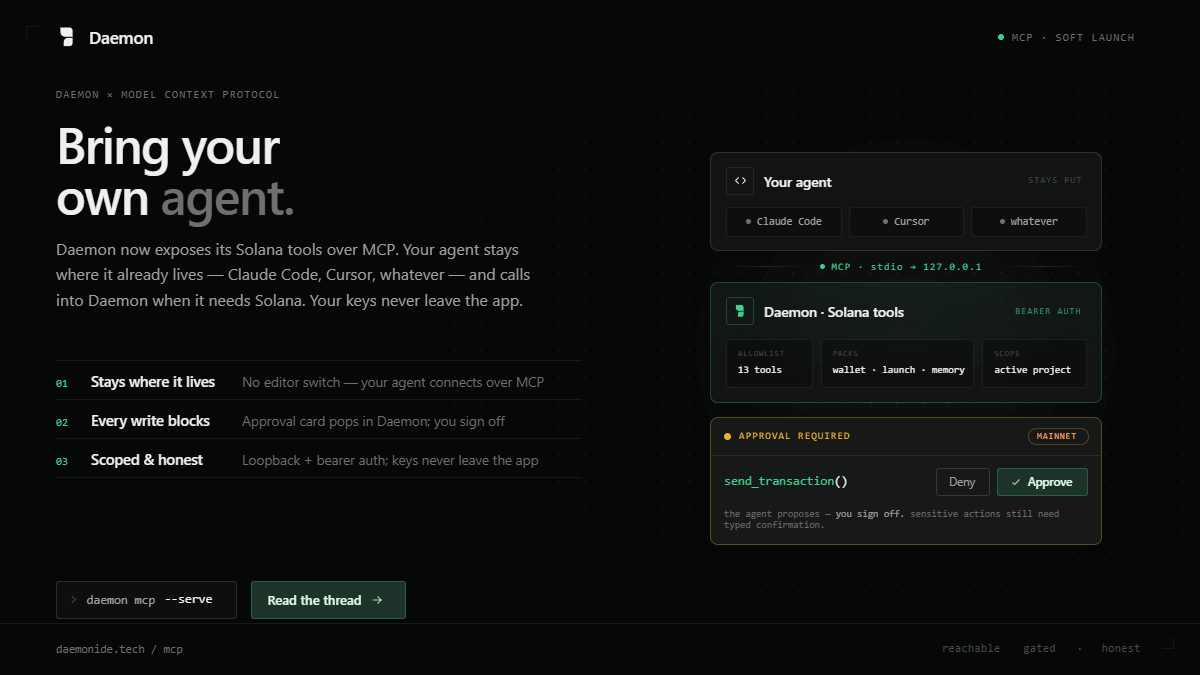
@DaemonTerminal announced (25 likes, 4 replies, 1,012 views) that Daemon now exposes Solana tools over MCP while letting the user stay in Claude Code, Cursor, or another existing agent surface. The follow-up thread added the most important detail: every write tool blocks behind an approval card, mainnet calls are labeled, and tool access is scoped by capability packs and current working directory.
@ParkerOrtolani showed (21 likes, 1,619 views) OpenAI replacing ChatGPT billboards with Codex branding in the city. That was small in engagement but strong as public evidence that Codex is being marketed as a primary surface, not just an internal feature name.

Discussion insight: Replies pulled the same theme in two directions. Copilot users asked whether Rubber Duck still adds cloud latency and requested stacked pull requests, while Daemon's thread stressed approval cards and scoped tools so agents could touch sensitive surfaces without losing control.
Comparison to prior day: June 19 was already about product consolidation around Copilot, Codex, and Antigravity. June 20 pushed the idea further into operation: voice input, cross-agent command surfaces, scoped MCP bridges, and public Codex branding all became visible at once.
1.2 GLM 5.2 plus OpenCode kept eroding premium-plan confidence 🡕
A second theme was price-performance pressure from open or mixed stacks. Four retained items supported it: a direct GLM-versus-Codex substitution claim, a longer local-evaluation thread putting GLM close to Opus on coding, a corroborating image post saying multiple users saw similar parity, and an Abacus routing screen showing vendors already packaging mixed open and closed model tiers.
@burkov said (119 likes, 17 replies, 6,338 views, 30 bookmarks) that after three days with GLM 5.2 in OpenCode he did not see a meaningful gap versus Codex except vision. He explicitly tied that to spend, saying he would cancel his $100 per month OpenAI subscription if the pattern held and had already canceled Anthropic.
@PatrickToulme reported (73 likes, 12 replies, 4,732 views, 22 bookmarks) that GLM 5.2 running locally through an OpenCode harness felt like a real frontier coding model, with strong tool calling and planning and near-Opus quality on one renderer task. His replies added needed nuance: he still preferred Opus for one-shot intent reading, and the local run used 8 H100s and still felt slow.
@Hesamation summarized (46 likes, 8 replies, 1,520 views) the market implication more bluntly: if coding quality stays this close, premium plans cannot remove subsidies without inviting open-model switching. The image was informative because it showed two separate user screenshots making similar GLM-plus-OpenCode claims, which turned one opinion into a small corroborating cluster.

@abacusai promoted (27 likes, 3 replies, 63,734 views) a product that mixes premium and cheaper model tiers instead of betting on one vendor. The reviewed screen exposed the actual routing design: xHigh mode used Opus 4.8 plus GPT-5.5, while xLow used Kimi 2.7 plus GLM 3.2.

Discussion insight: The replies did not deny that the gap had narrowed, but they kept narrowing where the claim should apply. People pointed to screenshot handling, long-context work, and total token cost as the remaining places where closed models could still defend premium pricing.
Comparison to prior day: GLM 5.2 was already present on June 19, but it became harder to treat as an isolated anecdote on June 20. Mention counts rose again, and the feed added direct cancellation language, local-serving details, and a packaged mixed-routing example.
1.3 Builders spent more effort on memory, structure, and guardrails than on raw model novelty 🡕
The third theme was operational tooling around agents: memory, alerts, specs, and guarded execution. Seven retained items supported it, including Moraine's session-ingest release, two Dan Kornas plugins aimed at continuity, GitHub's Spec Kit workflow image, Google's Open Knowledge Format post, PixelRAG's screenshot-first retrieval framing, and a real production story from GamerXSociety's multimodal coaching stack.
@fujikanaeda released (17 likes, 4,256 views, 28 bookmarks) Moraine v0.6.x with OpenCode and Cursor live-session ingest, remote ClickHouse support, and File Radar in Moraine MCP. Moraine's public site added the broader shape: a fully local session record, a monitor UI, and cross-provider search so agents can query their own history.
@DanKornas introduced (10 likes, 3 replies, 485 views, 6 bookmarks) Magic Context as a CortexKit plugin that compresses older history into scored compartments, captures durable project facts, and recalls them across sessions in OpenCode and Pi. That sat next to a second Dan Kornas post about Claude Notifications, which turns Claude Code hook events into desktop or webhook alerts so people do not have to sit in front of the terminal the whole time.
@DanKornas described (97 views) Claude Notifications as a way to surface task complete, review complete, question, plan ready, session limit, and API error states. The reviewed image added the practical interface details: platform badges, notification examples, and support for common terminal and multiplexer setups.

@devopscube highlighted (9 likes, 316 views, 9 bookmarks) Spec Kit from GitHub as a requirements-first toolkit for AI coding tools. The image mattered because it showed the actual workflow graph from Spec to Plan to Tasks to Implement, plus rule files and validation checkpoints, instead of leaving the idea at a slogan level.

@jakew connected (39 views) Google's new Open Knowledge Format directly to a repeated-prompt problem: he wants Pi, Claude, and GitHub Copilot to share the same markdown-based project knowledge instead of making him restate how to query New Relic, handle secrets, or follow local rules. Google's linked post defined OKF v0.1 as markdown files with YAML frontmatter meant to be portable across agents.
@DataChaz pointed to (5 likes, 317 views, 6 bookmarks) PixelRAG, a screenshot-first retrieval system that avoids HTML parsing and includes a Claude Code plugin. The reviewed image helped because it showed the actual README and API examples behind the pitch.

@GoogleCloudTech linked (52 likes, 5 replies, 4,798 views, 23 bookmarks) a case study on GamerXSociety's GamerVision system. The article gave a full multimodal stack: gemini-3.1-flash-live for screen understanding, gemini-2.5-flash-native-audio-preview for voice, gemini-3.1-flash for coaching, gemini-3.1-pro for premium validation, Firestore for storage, and ADK plus Antigravity and Gemini CLI for orchestration and coding.
Discussion insight: The common move was not "try a new model" but "wrap the model in more structure." Builders wanted project memory, status interrupts, requirement gates, and portable context bundles so agent work could survive beyond one foreground terminal tab.
Comparison to prior day: June 19 emphasized loops and trace visibility. June 20 widened the operational layer around that idea with memory tiering, session notifications, markdown context bundles, spec-first workflows, and a production multimodal ADK stack.
1.4 Vibe coding showed up as monetized products, marketplace categories, and new hardware ideas 🡕
A fourth cluster showed vibe coding moving from discourse into packaging and distribution. Seven retained items supported it: a revenue screenshot from a zero-code founder claim, a local-dictation editor prototype, a design-to-code tool screenshot, a hardware control-deck mockup, Fiverr adding "Vibe Coding" as a service category, and a student discount thread for Mistral and related tools.
@DanKulkov claimed (11 likes, 4 replies, 323 views) that vibe coding had changed his life while writing "0 lines of code." The image was the real evidence: it showed a live business dashboard with 41 trials, 191 subscriptions, $2,160 revenue, and 4,057 new customers.

@lucas_montano said (10 likes, 2 replies, 459 views) he was building a deliberately simple text editor in 2026 so writing would feel closer to his own thoughts. The reviewed screen showed the app already combining local Apple-model dictation, source lookup using an OpenAI subscription, and skill or MCP hooks for Codex, Claude, and Gemini.

@xdadevelopers promoted (2 likes, 846 views) a free vibe-coding tool as a replacement for Claude Design, Figma Make, and Replit. The linked article URL did not resolve cleanly in-shell, but the reviewed image was still useful because it showed a phone mockup next to generated code in a design-to-code workflow.

@SipeedIO asked (5 likes, 285 views) whether Claude Code, Codex, and OpenCode should have a physical control deck. The mockup gave the proposal substance by showing customizable keys for prompts, tests, approvals, agent switching, and voice input.

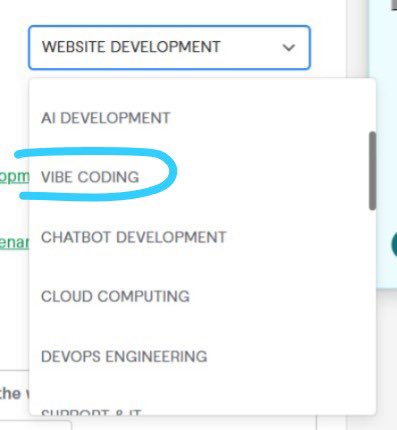
@Raynerdtech noticed (4 likes, 3 replies, 112 views) Fiverr adding "Vibe Coding" as an explicit service option. The image made that real by showing the category inside a marketplace menu rather than just describing it.
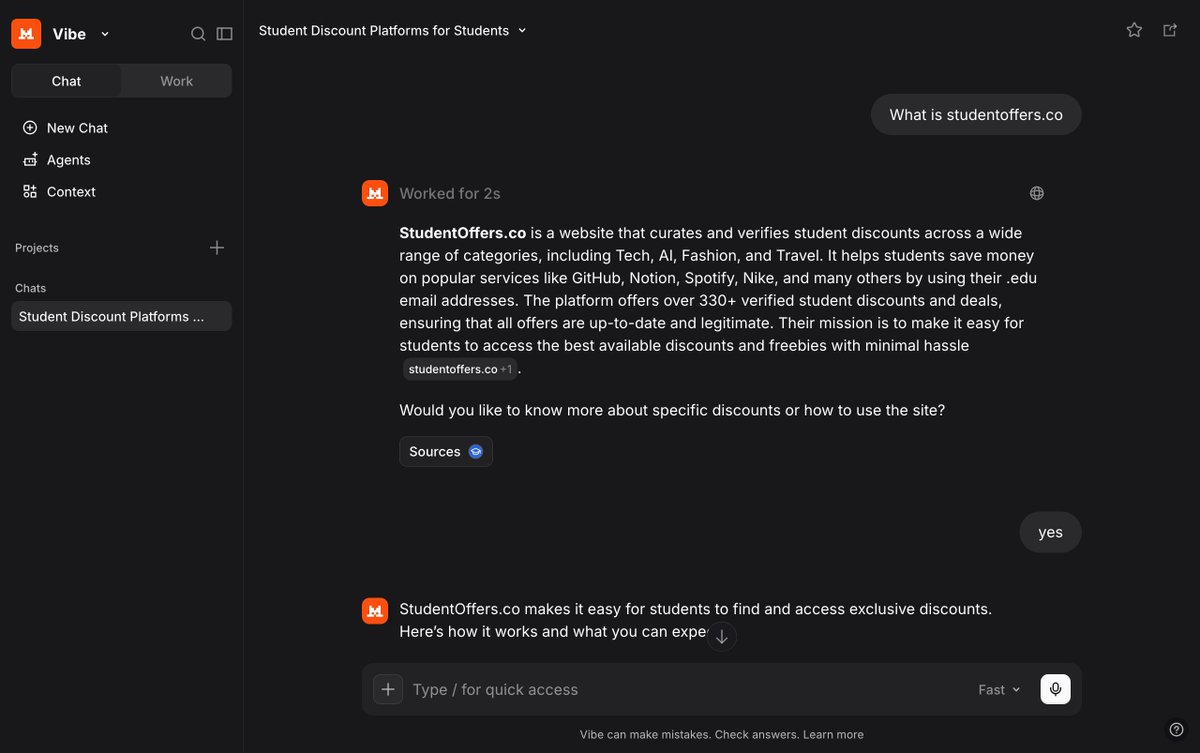
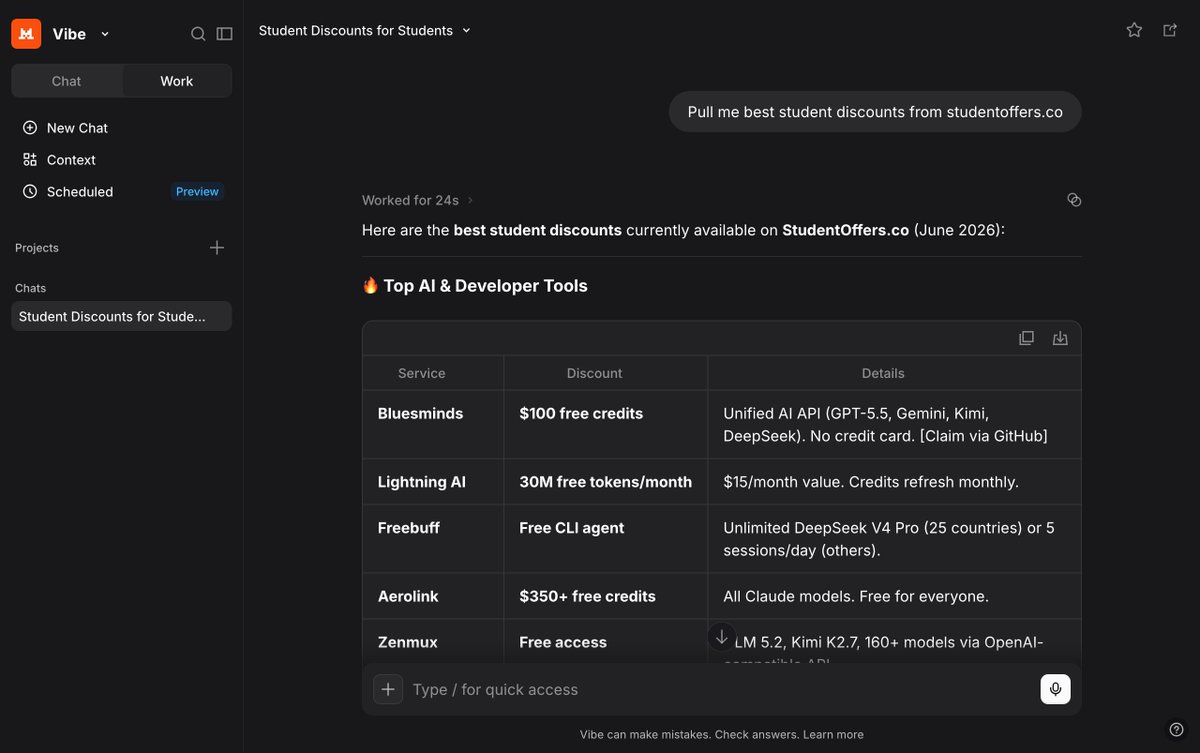
@StudentOffersHQ shared (1 like, 1 reply, 164 views) a pricing post around Mistral Large 3, Mistral Medium 3.5, Devstral 2, and a discounted Vibe Pro plan for students. The informative images did more work than the tweet: one showed a grounded chat answer with cited source material, and the second listed concrete student discounts across AI and developer tools.
Discussion insight: The replies were thin, but the artifacts were not. Revenue dashboards, marketplace menus, discount tables, and hardware mockups all pointed to the same shift: vibe coding is being packaged as something to sell, buy, or operationalize, not just something to debate.
Comparison to prior day: June 19 centered on platform owners reorganizing their surfaces. June 20 added evidence that adjacent businesses are already commercializing those workflows through products, marketplaces, and access bundles.
2. What Frustrates People
Pricing pressure and unclear value at the premium end
Severity: High. The sharpest frustration was not that premium coding tools were bad, but that the price gap was getting harder to defend. @burkov said (119 likes, 17 replies, 6,338 views, 30 bookmarks) he could replace Codex with GLM 5.2 in OpenCode except when he needed vision, and he tied that directly to canceling a $100 per month OpenAI plan. @Hesamation argued (46 likes, 8 replies, 1,520 views) that vendors cannot remove subsidies if open models stay this close on coding tasks. @github offered (131 likes, 16 replies, 19,939 views, 20 bookmarks) an extra $200 in Copilot credits, but replies immediately asked whether that only buys a couple of hours, why students were excluded, and why context optimization matters more than one-time credit drops. People are coping by mixing cheaper models, switching providers mid-session, or waiting for discounts and student bundles. This is worth building for because the pain is economic and recurring, not cosmetic.
Session continuity still breaks when agents need memory, alerts, or human attention
Severity: High. The feed repeatedly showed that developers still expect agents to lose context unless they build extra scaffolding around them. @DanKornas said (10 likes, 3 replies, 485 views, 6 bookmarks) coding agents should not start from zero every session and described Magic Context as a way to move older history into scored memory compartments. @DanKornas also said (97 views) Claude Code should ping the user instead of forcing them to babysit the terminal. @jakew explained (39 views) that he keeps repeating the same operational facts in prompts and specs today. @no7wade documented (1 reply, 312 views, 2 bookmarks) how Codex runs still hit wrong draft focus, body text pasted into the title, blank-line cleanup, and broken list formatting before the workflow was turned into a reusable skill. People are coping with plugins, skills, markdown knowledge bases, and direct preview routes. This is worth building for because the workflow damage happens in normal use, not only at extreme scale.
Fast AI coding still creates review and security debt
Severity: Medium. @StellarLock warned (32 likes, 15 replies, 229 views) that AI-written code can leak API keys, skip row-level security, hallucinate unsafe SQL, and miss auth checks unless someone audits it. @devopscube showed (9 likes, 316 views, 9 bookmarks) Spec Kit as a response from the other side: force a spec, plan, tasks, and validation before code generation starts. @DaemonTerminal added (25 likes, 4 replies, 1,012 views) that sensitive MCP actions should block behind approval cards and typed confirmations. People are coping with ad hoc scanners, review commands, and manual approval gates. This is worth building for because the feed showed both the failure modes and the first generation of tools trying to contain them.
3. What People Wish Existed
Durable project memory with asynchronous awareness
The clearest practical need was for coding agents that can keep their bearings when a job runs long or the user walks away. @DanKornas described (10 likes, 3 replies, 485 views, 6 bookmarks) a plugin that compresses old history, stores durable project facts, and recalls them later, while his separate Claude Notifications post asked (97 views) for smart alerts instead of terminal babysitting. @fujikanaeda released (17 likes, 4,256 views, 28 bookmarks) Moraine features that let agents search their past sessions and file history, and @jakew wanted (39 views) a shared knowledge bundle so Pi, Claude, and GitHub Copilot can reuse the same operating context. This is a practical need with immediate value because people are already building partial fixes around it. Opportunity: direct.
Interoperable agent teams instead of one locked surface
A second need was for workflows where multiple agents, tools, and approval layers can cooperate without forcing a full switch of interface. @NainsiDwiv50980 highlighted (6 likes, 2 replies, 733 views) Codex commands running inside Claude Code, @DaemonTerminal showed (25 likes, 4 replies, 1,012 views) Solana tools exposed over MCP with explicit approval gates, and @shanselman described (21 likes, 2 replies, 3,301 views, 11 bookmarks) a voice workflow that hops from Telegram to OpenClaw to ACP to Copilot squad agents. Even the Sipeed control-deck mockup assumed (5 likes, 285 views) that developers will want hardware shortcuts for switching prompts, approvals, tests, and agents across surfaces. The need is practical, not emotional: people want composability with guardrails. Opportunity: competitive.
Cheaper high-quality coding access, especially for students and small teams
The feed also showed a concrete wish for premium-like coding quality without premium subscription pain. @burkov questioned (119 likes, 17 replies, 6,338 views, 30 bookmarks) why he should keep paying for Codex if GLM 5.2 in OpenCode keeps matching it on ordinary coding tasks, and @Hesamation turned (46 likes, 8 replies, 1,520 views) that into a broader price-pressure claim. @github ran (131 likes, 16 replies, 19,939 views, 20 bookmarks) a weekend credit drop, but replies asked for student access and better steady-state economics instead. @StudentOffersHQ added (1 like, 1 reply, 164 views) a student-specific pricing angle around Mistral and Vibe Pro. This is a practical need with immediate budget impact and visible switching behavior. Opportunity: direct.
4. Tools and Methods in Use
| Tool | Category | Sentiment | Strengths | Limitations |
|---|---|---|---|---|
| GitHub Copilot CLI | Coding agent CLI | (+) | On-device speech-to-text, Rubber Duck second-opinion flow, strong public rollout from GitHub | Users still asked about cloud latency and wanted more workflow features such as stacked PR support |
| GitHub Copilot app / Copilot Max | Agent workspace | (+/-) | Keeps attracting build activity and credit incentives; integrated with broader Copilot surface | Replies questioned whether bonus credits last long enough and asked for student-friendly access |
| OpenAI Codex | Coding agent / review surface | (+/-) | Still strong on vision and is now appearing inside Claude Code command flows and public marketing | Premium cost stays under pressure, and users still build workarounds for fragile long tasks and browser automation |
| Claude Code | Coding agent CLI | (+/-) | Native screenshot paste, strong reasoning reputation, growing plugin ecosystem | Premium pricing and session-management pain keep pushing users toward mixed or cheaper stacks |
| OpenCode | Open harness / coding CLI | (+) | Makes model swapping easy, supports GLM experiments, appears in many builder stacks | Still depends on surrounding memory, notification, and observability tooling for longer workflows |
| GLM 5.2 | Coding model | (+/-) | Multiple users said it was close enough to Codex or Opus on coding to trigger cancellation talk | Vision is weaker, long-context parity is still questioned, and local serving economics can be heavy |
| Moraine | Memory / observability layer | (+) | Live ingest across multiple agent tools, local monitor UI, cross-provider search, session recall | Still an extra layer users must install and operate themselves |
| Magic Context | Memory plugin | (+) | Compresses history, stores durable facts, and supports cross-session recall | Evidence today came from one builder post rather than broad user adoption |
| Claude Notifications | Alerting plugin | (+) | Lets builders step away from the terminal with stateful alerts and focus restoration | Early-stage plugin with limited public discussion so far |
| MCP / ACP | Integration method | (+) | Lets agents call external tools while staying in their preferred surface; shows up in Copilot, Daemon, and OpenClaw workflows | Needs explicit guardrails, approvals, and capability scoping to stay safe |
| Daemon over MCP | Domain tool bridge | (+) | Keeps Solana actions inside the current agent flow and blocks sensitive writes behind approvals | Specialized to one domain and only valuable if users trust the guardrail layer |
| Spec Kit | Agent planning method | (+) | Forces spec, plan, task, and validation steps before code generation | Adds process overhead compared with direct prompting |
| Shipyard | Multi-agent build workflow | (+) | Combines planning, approval, parallel worktrees, testing, review, security, and evals in one loop | Early hackathon-stage project and still tied to a self-managed stack |
| Google ADK + Gemini stack | Multimodal agent stack | (+) | Real production example spanning live vision, voice, reasoning, and validation agents | Higher implementation complexity and mostly presented through a Google Cloud case study |
| PixelRAG | Retrieval method | (+) | Preserves visual layout, ships with a Claude Code plugin, and claims stronger QA than text baselines | Still framed as research tooling rather than a mainstream default |
| Abacus AI Agent | Mixed-model workspace | (+/-) | Explicitly routes between premium and cheaper model bundles, matching the market's cost sensitivity | Marketing-heavy evidence and limited public proof beyond the reviewed routing screen |
The overall satisfaction spectrum was pragmatic rather than loyal. People praised tools that made workflows cheaper, more visible, more portable, or easier to interrupt and resume. They were much less patient with surfaces that still required constant supervision or expensive premium plans.
The common workarounds were also consistent: swap models mid-session for vision, attach memory or notification plugins, move sensitive actions behind approval cards, codify brittle tasks into reusable skills, and keep context in markdown bundles or searchable session logs instead of one live chat window.
Migration pressure was visible in both directions. Burkov's switch from Codex to GLM 5.2 in OpenCode, GitHub replies comparing Copilot credits against Claude plus OpenCode bundles, and Abacus advertising mixed-model routing all pointed to a market where developers are increasingly willing to assemble their own stack if the cost or continuity story is better.
5. What People Are Building
| Project | Who built it | What it does | Problem it solves | Stack | Stage | Links |
|---|---|---|---|---|---|---|
| GamerVision | GamerXSociety / Jeff Ivory | Real-time gaming coach that watches gameplay, listens, talks back, and rewards players | Platform APIs were too delayed and limited for live coaching | gemini-3.1-flash-live, gemini-2.5-flash-native-audio-preview, gemini-3.1-flash, gemini-3.1-pro, Firestore, ADK, Antigravity, Gemini CLI | Shipped | tweet, article |
| Moraine | @fujikanaeda | Local session record, ingest, search, and monitor layer for coding agents | Teams need searchable memory and observability across many agent runs | Moraine CLI, MCP, ClickHouse, local monitor UI | Shipped | tweet, site |
| Magic Context | @DanKornas | Self-managing long-term context plugin for coding agents | Agents lose useful project memory across long sessions | CortexKit plugin, OpenCode, Pi, shared project memory database | Alpha | tweet |
| Claude Notifications | @DanKornas | Desktop and webhook notification plugin for Claude Code | Builders do not want to babysit long-running terminal sessions | Claude Code hooks, desktop notifications, webhooks, tmux/zellij/kitty integrations | Alpha | tweet |
| Daemon MCP for Solana | @DaemonTerminal | Lets existing agents call guarded Solana tools through MCP | Domain-specific actions were trapped in a separate app or required unsafe key handling | MCP, approval cards, capability packs, project scoping | Beta | tweet |
| Shipyard | @ArchitThorat | Telegram-controlled AI project factory with planning, parallel worktrees, tests, review, security, and evals | Solo builders want parallel agent execution with human approval and merge gates | Telegram, Codex, Whisper, GPT-4o-mini, Flask, git worktrees, Pytest | Alpha | tweet, repo |
| Refine Publish X Article skill | @no7wade | Reusable Codex skill for formatting and publishing X Articles | Browser-based publishing tasks were brittle and repetitive | GPT-5.5 Codex, X Article editor workflow, browser automation | Alpha | tweet, skill |
| Voice-first script editor | @lucas_montano | Minimal text editor with local dictation and agent integrations | Existing writing tools felt less connected to the author's own thought flow | Apple's local model, OpenAI-backed source search, MCP or skill integrations for Codex, Claude, and Gemini | Alpha | tweet |
GamerVision was the most concrete build of the day because the linked article filled in the entire agent stack and the product constraint. It was not just "AI for games" marketing; it named which model handled vision, which handled voice, which handled reasoning, and why a premium validation path existed at all.
Shipyard and the X Article skill showed the same pattern in smaller form: developers are turning one-off agent behaviors into explicit workflows with approvals, retries, previews, and reusable instructions. Shipyard's repo said it was built solo with Codex in seven hours, while the X Article skill post documented the exact browser-failure modes that had to be encoded away.
The repeated build pattern was not model invention. It was workflow scaffolding: memory layers, notification layers, guarded tool bridges, approval checkpoints, and transport surfaces like Telegram or MCP that make agents easier to supervise without stripping away autonomy.
6. New and Notable
Open Knowledge Format as a context-sharing primitive
@jakew connected (39 views) Google's Open Knowledge Format to a concrete day-to-day problem: repeating the same instructions about secrets, errors, and local systems across Pi, Claude, and GitHub Copilot. Google's linked post defined OKF v0.1 as markdown files with YAML frontmatter, which made it notable as a portable context format rather than another hosted service.
PixelRAG pushing screenshot-first retrieval into coding workflows
@DataChaz highlighted (5 likes, 317 views, 6 bookmarks) PixelRAG as an open-source retrieval system that indexes screenshots instead of flattened HTML and includes a Claude Code plugin. The tweet claimed an 18.1 percent gain over a text baseline on text-only QA and a 30 million screenshot index for 8.28 million Wikipedia articles, which made it one of the more specific technical artifacts in the day's feed.
"Vibe Coding" becoming a marketplace label
@Raynerdtech posted (4 likes, 3 replies, 112 views) a marketplace screenshot where "Vibe Coding" appears as a selectable freelance service. That matters because it shows the term crossing from community slang into a platform taxonomy that buyers and sellers can transact on.
7. Where the Opportunities Are
[+++] Agent memory and async supervision — Multiple sections pointed to the same gap. Magic Context, Moraine, Claude Notifications, Open Knowledge Format, and the Copilot credit replies all showed that people still need project memory, searchable history, and reliable interrupts when they are away from the terminal.
[++] Guardrailed cross-agent orchestration — Daemon's approval-gated MCP bridge, Codex commands inside Claude Code, Hanselman's Telegram-to-ACP-to-Copilot voice stack, and Shipyard's gated multi-agent pipeline all pointed to demand for workflows that combine tools without surrendering control.
[++] Security and specification gates for fast AI coding — StellarLock's audit pitch and Spec Kit's requirements-first flow were responses to the same failure mode: code generation is fast, but review and validation still lag. A layer that enforces specs, scans, and approvals before shipping has direct evidence behind it.
[+] Budget-aware model routing and access bundles — Burkov's cancellation logic, Hesamation's subsidy argument, Abacus's mixed routing screen, and Student Offers' discount table all suggest continued room for products that optimize cost, credits, and student access without asking users to give up useful coding quality.
8. Takeaways
- Coding-agent vendors are competing on operating surface, not only model quality. GitHub added speech and Rubber Duck to Copilot CLI, Codex commands appeared inside Claude Code materials, and Codex branding moved into street advertising. (source)
- Open or mixed coding stacks are now credible enough to trigger explicit subscription-cancellation talk. Burkov said GLM 5.2 in OpenCode was good enough to replace Codex for many tasks, and Hesamation's corroborating image post turned that into a broader price-pressure theme. (source)
- The hardest unsolved problems are continuity, supervision, and guardrails. Magic Context, Moraine, Claude Notifications, Spec Kit, and Daemon all focused on memory, alerts, spec gates, or approval gates rather than raw generation quality. (source)
- Vibe coding is becoming something people can sell, buy, and budget around. The feed included a revenue dashboard, a Fiverr category, and a student pricing table, which is stronger evidence of market formation than generic enthusiasm. (source)