Twitter AI Coding - 2026-06-22
1. What People Are Talking About
1.1 Memory, graphs, and orchestration layers moved closer to the center of AI coding 🡕
The strongest theme was that people kept treating model quality as only one layer of the stack. The heavier discussion was about persistent memory, codebase graphs, routing layers, and orchestration systems that help agents stay oriented across long sessions or large repositories. Four retained items supported this theme, and several of them explicitly argued that the missing value now sits above the base model.
@SakanaAILabs explained (140 likes, 4 replies, 10,465 views, 36 bookmarks) that Sakana Fugu acts like a single OpenAI-compatible model while internally selecting, delegating, verifying, and synthesizing work across an agent pool. The attached architecture and benchmark images mattered because they turned a vague orchestration claim into a concrete product surface and showed Sakana benchmarking Fugu and Fugu Ultra against frontier reasoning and coding models.

@RoundtableSpace said (63 likes, 13 replies, 35,896 views, 21 bookmarks) that Jumbo Context exists because coding agents still suffer from "agent amnesia." Its public README backs that up with a local memory model, goal packets, hook-based session guidance, and concurrent-agent support across Claude, Codex, Gemini, and Copilot.
@pengsonal argued (34 likes, 15 replies, 1,392 views, 15 bookmarks) that codebase-memory-mcp cuts out the most wasteful phase of AI coding by indexing a repository into a queryable graph before the agent starts searching file by file. The project’s public README says it supports 158 languages, ships 14 MCP tools, and was evaluated at 10x fewer tokens and 2.1x fewer tool calls than file-by-file exploration.

@cyrilXBT shared (20 likes, 1 reply, 2,589 views, 4 bookmarks) Graphify as another "second brain" pattern for Claude Code. The public graphify README says /graphify builds a persistent graph, Obsidian vault, wiki export, and graph report across code, PDFs, markdown, and images, and claims 71.5x fewer tokens per query on a mixed corpus.
Discussion insight: The most useful pushback came from people saying memory has to stay inspectable and file-backed. Jumbo replies argued that context windows are lossy, while the graph tools and orchestration tools tried to make structure queryable instead of asking the model to rediscover it every session.
Comparison to prior day: June 21 already featured memory and multi-agent supervision, but June 22 pushed the conversation one layer deeper into graph construction, orchestration systems, and persistent codebase understanding.
1.2 The GitHub Copilot app kept growing from an assistant into a full workflow surface 🡕
A second major theme was the GitHub Copilot app turning into more than a chat shell. The day’s strongest Copilot posts covered built-in skills, delegated research, PR completion, and even cost dashboards, suggesting the app is being shaped as a persistent operating surface for agent work rather than only a place to request code. Five retained items supported this theme.
@github announced (69 likes, 9 replies, 10,525 views, 14 bookmarks) that Impeccable is now a built-in skill in the GitHub Copilot app. The replies made the real expectation clear: people want these built-in skills to preserve a codebase’s existing style and catch issues like CSS drift or accessibility gaps before a PR is merged.
@JamesMontemagno said (4 likes, 2,157 views) the Copilot app launched two background subagents to research Windows and Mac AV APIs and assemble a plan. That low-engagement post still mattered because the screenshot showed visible concurrent delegation rather than a single serialized chat.

@JamesMontemagno also said (18 likes, 2 replies, 1,406 views) that agent merge is now a practical part of the Copilot app workflow. The screenshot showed the agent preparing a PR by addressing review comments, fixing CI failures, resolving conflicts, and queuing it for merge.
@pierceboggan showed (43 likes, 6,079 views, 6 bookmarks) that Copilot Max users had a temporary extra $200 in credits through the end of June. That was not just a marketing aside; it fit the day’s broader pattern of GitHub pushing people to try these app-native agent workflows now.
@elbruno shared (7 likes, 2 replies, 365 views) a Canvas extension prototype that tracks Copilot app usage and cost in real time. The public Copilot App Cost PRD says the goal is to separate live session estimates from official GitHub billing rather than quietly blending them.

Discussion insight: The replies were not asking for more model novelty. They kept asking whether Copilot app workflows preserve house style, surface quality problems early, and make credit burn understandable while the agent is still running.
Comparison to prior day: June 20 already framed the Copilot app as a remote execution surface. June 22 extended that into built-in skills, background subagents, PR finishing, and visible cost instrumentation.
1.3 Price pressure and routing flexibility kept driving stack experiments 🡕
A third theme was price-performance pressure turning into concrete routing experiments. Instead of just saying open or cheaper models were "good enough," people were posting dashboards, benchmarks, temporary credits, and swap-in router surfaces that let them move between providers without rewriting their whole workflow. Five retained items supported this theme.
@israfill posted (23 likes, 14 replies, 1,057 views, 16 bookmarks) that Runtime by Bad Theory Labs gives 10 million free tokens per month on a smart router model and drops into any OpenAI-compatible tool with a base-URL change. The public BTL Runtime site confirms that positioning: routing to cheaper providers, caching repeat requests, showing benchmark cost versus customer charge on every response, and letting users bring their own OpenAI or Anthropic keys.
@TimJayas shared (9 likes, 4 replies, 642 views) a DeepSWE comparison where GLM-5.2 beat Claude Sonnet 4.6 on PASS@1 while staying far cheaper than the top closed models. The benchmark image mattered because it kept the claim grounded: GLM-5.2 sat at 42% PASS@1, below GPT-5.5 and Opus-tier models, but with materially lower listed average cost.

@Anaya_sharma876 asked (41 likes, 38 replies, 706 views) which tool would become the default if Anthropic and OpenAI both launched a $10 per month developer tier. The two attached mock pricing cards made the comparison explicit, and the replies quickly split between people who still preferred Codex and people who said a cheaper Claude tier would change the default stack.
@uzairansar reported (3 likes, 614 views) that Claude Code API errors pushed him to switch to GLM 5.2 in OpenCode, while @jamwt showed (14 likes, 1 reply, 1,985 views) a provider screen where Claude Opus 4.8 was unavailable even though GPT still worked. Those posts mattered because they connected the cost debate to reliability and availability, not only to price.
Discussion insight: The conversation did not say cheaper stacks had fully won. It kept converging on a narrower rule: if routing is easy, then premium pricing has to justify itself through reliability, polish, or genuinely better outcomes.
Comparison to prior day: June 21 already showed cost pressure from GLM 5.2 and open stacks. June 22 added more operational evidence: routers, benchmark tables, temporary credits, and first-hand provider failures that made switching feel rational.
1.4 Long-running agent work was increasingly wrapped in goals, skills, and formal process 🡕
The fourth theme was that more people were trying to stabilize long-running agent behavior with explicit goals, reusable skills, and process scaffolds. The best examples were not new models; they were new ways to pin objectives, record workflows, and turn software development into a repeatable protocol. Four retained items supported this theme.
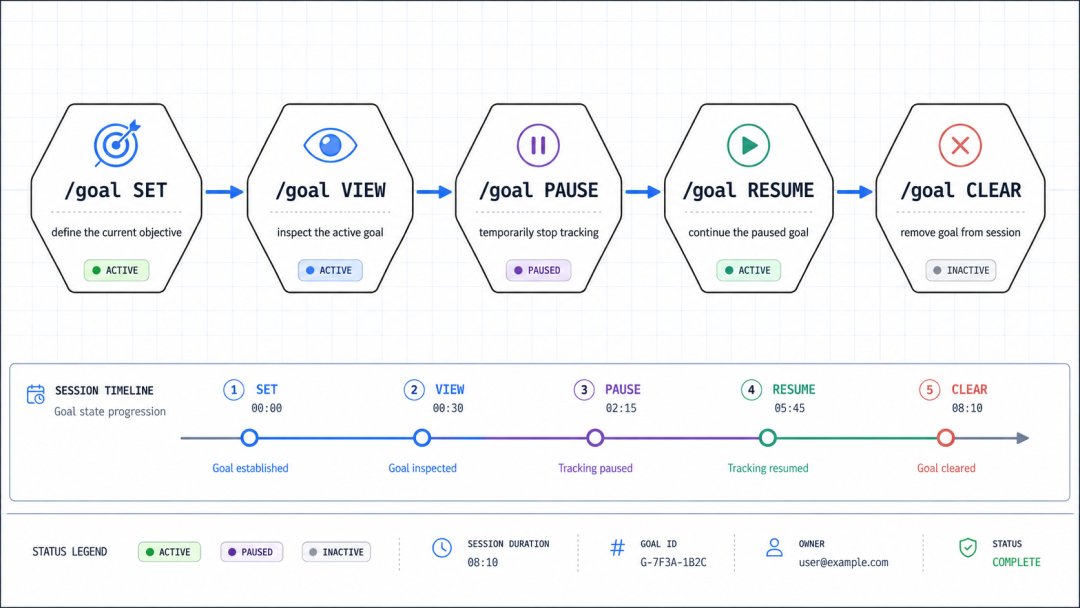
@sitin_dev wrote (5 likes, 1 reply, 56 views) that Codex CLI’s /goal command reduces drift by reinforcing a session-wide objective across many turns. The four-image set was unusually informative: it documented pause, resume, update, and clear states, optional token budgets, and example use cases like multi-file refactors and migrations.
@praedico open-sourced (9 likes, 48 views, 4 bookmarks) a portable spec-driven skill pack for agentic software development. The public README and the workflow diagram both frame the repository itself as durable memory, with separate passes for requirements, architecture, implementation, testing, traceability, and release review.

@WesRoth summarized (8 likes, 1 reply, 1,594 views, 6 bookmarks) OpenAI’s new Record & Replay flow for Codex, where demonstrating a recurring task once turns it into an inspectable and editable skill. @NainsiDwiv50980 added (3 likes, 188 views) a different kind of signal: Anthropic is now publicly teaching Claude 101, Claude Code in Action, agent skills, and MCP topics through free courses and certificates.
Discussion insight: The pattern across these posts was that "prompt better" no longer felt sufficient. Builders were pinning goals, teaching repeatable workflows, and publishing formal process maps so long-horizon agent work would be inspectable and reproducible.
Comparison to prior day: June 21 centered on second-opinion loops and async supervision. June 22 made those habits more explicit by documenting goal pinning, reusable skills, and process-first curricula.
2. What Frustrates People
Paying for agent work without good enough visibility or steady economics
Severity: High. The feed showed repeated anxiety about how quickly AI coding sessions can turn into a billing problem. @pierceboggan showed (43 likes, 6,079 views, 6 bookmarks) a temporary $200 Copilot AI Credit offer for Max users, which framed the Copilot app as something worth subsidizing to increase use. @Anaya_sharma876 asked (41 likes, 38 replies, 706 views) which tool would become the default at a hypothetical $10 per month price point, turning price sensitivity into the entire point of the post. @elbruno shared (7 likes, 2 replies, 365 views) a Copilot app cost dashboard because, in his words, AI is fun "until the invoice shows up," and the public PRD explicitly treats live estimates and official billing as separate sources that must not be confused. People are coping by hunting for temporary credits, building their own dashboards, and routing traffic through services like BTL Runtime that promise per-request savings visibility. This looks worth building for because the pain is recurring, measurable, and already motivating new tools.
Hitting provider errors, uneven model availability, and fragile new endpoints
Severity: High. Several of the day’s most useful low-ego posts were about simple breakage. @jamwt showed (14 likes, 1 reply, 1,985 views) an OpenCode error where Claude Opus 4.8 was unavailable while GPT still worked. @uzairansar reported (3 likes, 614 views) that Claude Code API errors pushed him to switch to GLM 5.2 in OpenCode instead. @FNDEVVE said (24 views) he could only get a Sakana-backed workflow to respond in Vercel Playground after five hours, and the screenshots showed repeated 503 Service temporarily unavailable responses for sakana/fugu-ultra. Even the Interactions API launch thread picked up integration friction: a reply on @_philschmid asked (56 likes, 9 replies, 3,239 views, 16 bookmarks) why the official Google .NET SDK still did not support the API at GA. People are coping by keeping fallback providers handy, switching harnesses, or using cheaper/open models when premium endpoints wobble. This is worth building for because reliability and failover determine whether routing flexibility is actually usable.
Watching agents waste time rediscovering the same repository or drifting off the original goal
Severity: High. A third recurring frustration was not raw generation quality, but losing time to re-exploration and context drift. @pengsonal argued (34 likes, 15 replies, 1,392 views, 15 bookmarks) that most coding agents still burn hundreds of thousands of tokens exploring a repo file by file before they can do useful work. @RoundtableSpace said (63 likes, 13 replies, 35,896 views, 21 bookmarks) that this shows up as "agent amnesia," and one reply boiled the workaround down to "context is RAM; files are disk." @sitin_dev wrote (5 likes, 1 reply, 56 views) that /goal exists because models gradually forget their original constraints across long sessions. People are coping by indexing repos into graphs, pinning explicit goals, exporting knowledge into files or Obsidian vaults, and keeping more project state outside the live chat window. This looks worth building for because it appears before advanced use cases; it hits any developer who tries to do real multi-file work with an agent.
3. What People Wish Existed
Durable project memory that survives session resets and tool switching
The strongest practical need was for memory that outlives one terminal session and one vendor. @RoundtableSpace said (63 likes, 13 replies, 35,896 views, 21 bookmarks) Jumbo Context exists because coding agents forget too much between sessions, while @pengsonal argued (34 likes, 15 replies, 1,392 views, 15 bookmarks) that agents still waste huge token budgets rediscovering repository structure. @cyrilXBT shared (20 likes, 1 reply, 2,589 views, 4 bookmarks) Graphify as another way to turn a folder into a persistent knowledge graph and Obsidian vault. The need is practical and immediate: people want memory that is queryable, inspectable, and portable across Claude, Codex, Copilot, and adjacent tools. Opportunity: Direct.
Cheap routing with clear cost visibility and automatic failover
People also clearly want to keep their existing workflow while changing the economics underneath it. @israfill posted (23 likes, 14 replies, 1,057 views, 16 bookmarks) Runtime as a no-card, OpenAI-compatible router with free launch credits, while @elbruno shared (7 likes, 2 replies, 365 views) a dashboard that makes Copilot app cost visible inside the workflow. The need becomes more urgent when endpoints fail: @jamwt showed (14 likes, 1 reply, 1,985 views) provider gaps for Claude Opus inside OpenCode, and @FNDEVVE reported (24 views) repeated 503s for Sakana Fugu Ultra. This is a practical need with visible willingness to switch. Opportunity: Direct.
Quality, design, and security layers that intervene before shipping
A third need was for more trustworthy output layers around agent-generated code. @github announced (69 likes, 9 replies, 10,525 views, 14 bookmarks) that Impeccable is now built into the Copilot app, and the replies immediately asked whether that means style-aware design review, accessibility checks, or CSS fixes before the PR stage. @JamesMontemagno said (18 likes, 2 replies, 1,406 views) agent merge can now prepare PRs for final merge, while @reach_vb described (111 likes, 13 replies, 7,678 views, 9 bookmarks) Codex Security scanning, threat modeling, validating findings, and generating patches inside familiar workflows. The need is practical but already crowded because multiple surfaces are trying to own it. Opportunity: Competitive.
Long-horizon task control that is explicit, reusable, and teachable
People also want agent workflows that do not depend on perfectly phrased one-off prompts. @sitin_dev wrote (5 likes, 1 reply, 56 views) that /goal helps preserve intent across large refactors and migrations, @WesRoth summarized (8 likes, 1 reply, 1,594 views, 6 bookmarks) Record & Replay as a way to turn recurring tasks into editable skills, and @praedico open-sourced (9 likes, 48 views, 4 bookmarks) a spec-driven skill pack for bounded development stages. @NainsiDwiv50980 added (3 likes, 188 views) that Anthropic is now teaching Claude Code and MCP workflows directly through free courses. The need is both practical and educational: people want reusable structure, not just better prompting folklore. Opportunity: Direct.
4. Tools and Methods in Use
| Tool | Category | Sentiment | Strengths | Limitations |
|---|---|---|---|---|
| GitHub Copilot app | Agent workspace | (+/-) | Background subagents, agent merge, built-in skills, growing app surface | Credit burn remains salient and users still build separate cost-visibility layers |
| Impeccable | Quality / design skill | (+) | Adds design and quality checks inside existing agent workflows | Users still question whether it preserves local style and covers accessibility well |
| Jumbo Context | Memory / orchestration | (+) | Local memory, continuity across sessions, concurrent agents, model portability | Requires users to trust and maintain a structured memory layer |
| codebase-memory-mcp | Code intelligence / MCP server | (+) | 158-language graph index, fast structural queries, fewer tokens than file-by-file exploration | Static analysis limits remain, and indexing adds one more local setup step |
| Graphify | Knowledge-graph skill | (+) | Multimodal graph building, Obsidian export, wiki export, persistent graph reports | Requires Claude Code plus Python, and extraction quality depends on the source corpus |
| OpenCode | Agent harness | (+/-) | Easy model swapping and a familiar place to test GLM, Claude, and other providers | Provider availability is still uneven, and users surfaced concrete Anthropic error states |
| BTL Runtime | Routing / cost layer | (+/-) | OpenAI-compatible URL swap, caching, savings visibility, optional bring-your-own keys | Launch economics may change, and it inserts another operational dependency |
| GLM-5.2 | Model | (+/-) | Strong cited price-performance, cheaper than top closed models, increasingly used through OpenCode-style harnesses | Still trails the best closed models on the cited benchmark and often needs more steering |
| Sakana Fugu | Orchestration model | (+/-) | Single endpoint for multi-agent orchestration and strong benchmark positioning | Fresh availability problems and early reliability questions showed up immediately |
| Interactions API | Agent API / runtime | (+) | Unifies model inference and managed agents, supports remote sandboxes and background execution | Launch-day SDK support gaps and questions about where real work should run |
Codex CLI /goal |
Workflow control method | (+) | Pins intent across long sessions, supports pause/resume, and can cap token budgets | Evidence today came mostly from one detailed explainer thread |
Overall satisfaction was pragmatic rather than loyal. People rewarded anything that made agents easier to supervise, cheaper to run, or less likely to lose context, even when that meant stitching together multiple layers instead of trusting one default surface.
The common workarounds were consistent: move memory into files or graphs, route requests through cheaper or fallback providers, expose cost estimates next to the work, and pin a session-level goal before handing a model a long refactor. The strongest migration pattern was not one vendor fully replacing another; it was Claude, Codex, Copilot, GLM, and routed APIs being mixed according to cost, availability, and the kind of task in front of the user.
Competitive dynamics increasingly sat above the base model. The feed paid more attention to orchestration, memory, cost visibility, quality skills, and fallback behavior than to one more leaderboard claim in isolation.
5. What People Are Building
| Project | Who built it | What it does | Problem it solves | Stack | Stage | Links |
|---|---|---|---|---|---|---|
| codebase-memory-mcp | DeusData, shared by @pengsonal | Builds a persistent code graph and exposes structural MCP queries over a repository | Agents waste tokens rediscovering code structure file by file | Tree-sitter, Hybrid LSP, SQLite, MCP tools, optional graph UI | Shipped | tweet · GitHub |
| Graphify | Safi Shamsi, shared by @cyrilXBT | Turns folders, docs, PDFs, and images into a knowledge graph, Obsidian vault, and wiki for Claude Code | Developers want a persistent second brain instead of repeated raw-file reading | Python, Claude Code skill, tree-sitter, NetworkX, Leiden clustering, vis.js | Beta | tweet · GitHub |
| Jumbo Context | @RoundtableSpace | Keeps project memory, goals, and context portable across coding agents | Agent amnesia, context loss, and vendor lock-in across sessions | TypeScript CLI, local storage, hooks, AGENTS.md support, SQLite projections | Shipped | tweet · GitHub |
| Portable Agentic SDD Skills Pack | @praedico | Provides reusable, vendor-neutral skills for spec-driven agentic software development | Teams need reproducible engineering workflows instead of ad hoc conversational coding | Markdown skills, shell installer, Codex/Claude/Cursor adapters | Alpha | tweet · GitHub |
| Copilot App Cost | @elbruno | Canvas extension that shows live Copilot session estimates alongside official billing data | Copilot app users lack trustworthy, in-workflow cost visibility | GitHub Copilot App Canvas, GitHub billing APIs, Copilot session RPC metrics | Alpha | tweet · GitHub |
The repeated build pattern was not "train a better model." It was wrap the model with memory, structure, or observability. codebase-memory-mcp and Graphify attack the same waste problem from different angles, while Jumbo treats continuity itself as the product.
The process-heavy projects pointed in the same direction. Praedico’s skill pack assumes serious teams need requirements, architecture review, traceability, and release gates around agent output, while Copilot App Cost assumes long-running agent sessions need the same kind of cost observability that engineers already expect for latency or cloud spend.
Multiple people independently built around the same missing layers: memory, cost visibility, and explicit workflow control. That convergence is stronger evidence than any single launch tweet.
6. New and Notable
Claude Code practices are turning into formal curriculum
@NainsiDwiv50980 highlighted (3 likes, 188 views) that Anthropic is now openly teaching Claude 101, Claude Code in Action, agent skills, and MCP topics through free courses. The public Claude 101 page confirms a curriculum that explicitly covers the desktop app’s Chat, Cowork, and Code modes, which makes this notable as a formalization signal rather than just another community guide.
Codex Security pushed AI coding deeper into trusted security workflows
@reach_vb said (111 likes, 13 replies, 7,678 views, 9 bookmarks) OpenAI Daybreak now makes Codex Security easier to use across the CLI, plugins, and Codex app while also introducing GPT-5.5-Cyber for verified defenders. The tweet’s own numbers and the attached CyberGym benchmark chart made this notable as more than launch copy: it framed AI coding tools as part of patching, threat modeling, and vulnerability remediation workflows.
Quality tooling is moving from optional plugin to default app surface
@github announced (69 likes, 9 replies, 10,525 views, 14 bookmarks) that Impeccable is now built into the Copilot app, and @impeccable_ai added (6 likes, 416 views, 3 bookmarks) that the tool stays open source and continues working in Claude Code, Codex, Cursor, and other agents. That is notable because it suggests a new distribution pattern: standalone quality layers getting absorbed into the default agent surface while still trying to remain multi-agent.
7. Where the Opportunities Are
[+++] Portable memory and codebase intelligence — Jumbo Context, codebase-memory-mcp, Graphify, and the /goal discussion all point to the same gap: agents still waste time re-learning project structure or forgetting constraints between sessions. The opportunity is strong because multiple builders are independently converging on graph, memory, and context-packet layers.
[+++] Cost-visible routing and failover — BTL Runtime, Copilot App Cost, the Copilot Max credit push, GLM-5.2 benchmark talk, and the day’s provider-error screenshots all point to a market where price, fallback behavior, and trust in the meter matter almost as much as raw model quality. A product that combines routing, cost attribution, and reliability handling has direct evidence behind it.
[++] App-native quality, review, and security surfaces — Impeccable inside the Copilot app, agent merge, and Codex Security all suggest room for tools that intervene before code ships. The opportunity is moderate because platform owners are moving into it quickly, but the demand is real and the workflows are still early.
[+] Reusable workflow scaffolds for long-running agent work — /goal, Record & Replay, spec-driven skill packs, and Anthropic’s course catalog all suggest an emerging market for explicit, teachable agent workflows. The signal is earlier than memory or cost-routing, but it is becoming easier to see how these practices could turn into default product features.
8. Takeaways
- The conversation kept moving above the base model layer. Sakana Fugu, Jumbo Context, codebase-memory-mcp, and Graphify all got attention because they changed memory, routing, or structure around the model rather than just offering another model choice. (source)
- The GitHub Copilot app is being shaped as a durable agent workspace, not just a code assistant. Built-in skills, background subagents, agent merge, and temporary credit incentives all pointed in that direction. (source)
- Price pressure now shows up as routing products, benchmarks, and migration behavior. Runtime’s router pitch, GLM-5.2 benchmark screenshots, and same-day switches away from failing Claude endpoints all suggested that developers are increasingly willing to assemble their own cheaper stack. (source)
- Reliability and visibility remain the fastest way to lose trust. OpenCode provider errors, Sakana 503s, and cost-dashboard prototypes all showed that developers still need stable endpoints and honest meters before they can treat agent workflows as routine infrastructure. (source)
- Long-running agent work is becoming more explicit and teachable.
/goal, Record & Replay, spec-driven skill packs, and Anthropic’s course catalog all pointed to a shift from one-off prompting toward reusable workflow design. (source)