Twitter AI Coding - 2026-07-01
1. What People Are Talking About
1.1 GitHub Copilot kept widening from a model-launch story into a broader platform story (🡕)
The strongest platform signal on July 1 was that GitHub Copilot kept adding both model choice and new operating surfaces. Four items carried the theme: Kimi K2.7 Code became the first open-weight model in Copilot, browser tools reached general availability in VS Code, Claude Fable 5 was re-enabled in Copilot, and Claude Sonnet 5 remained a live rollout topic. Together they show Copilot moving beyond “one assistant in one editor” toward a broader agent platform.
@GHchangelog announced (155 likes, 17 replies, 20 bookmarks, 12,741 views) that Kimi K2.7 Code is now generally available in GitHub Copilot. The linked GitHub changelog says it is the first open-weight model in Copilot’s picker, hosted by GitHub on Azure, rolling out across VS Code, Visual Studio, Copilot CLI, the cloud agent, the Copilot app, github.com, mobile, JetBrains, Xcode, and Eclipse, with Business and Enterprise admins needing to enable it explicitly.
@GHchangelog added (17 likes, 4 bookmarks, 1,262 views) that browser tools for Copilot in VS Code are generally available. The linked announcement matters because it makes the permissions model explicit: agent-opened tabs are isolated, user tabs stay private until shared, and enterprise admins can gate destinations with network-domain controls.
@github reported (153 likes, 18 replies, 19,605 views) that Claude Fable 5 is re-enabled and generally available in Copilot. The quoted launch text describes Fable 5 as a long-horizon model for autonomous coding and knowledge work, while replies added the more operational nuance: some users still distrust the rollout after the earlier disablement, one reply complained about hallucinated fixes, and another noted that older annual subscriptions were excluded.
@msdev reported (172 likes, 7 replies, 10,548 views) that Claude Sonnet 5 is generally available in GitHub Copilot and Microsoft Foundry. A detailed follow-up reply from @github in that thread says early Sonnet 5 testing showed strong CLI-style performance, competitive latency at lower effort levels, and good prompt-cache utilization, which helps explain why model rollout posts kept attracting practitioner attention instead of feeling like routine marketing.
Discussion insight: The most useful replies were not “which model wins?” arguments. They were pricing, rollout, and trust questions: whether Kimi pricing was documented yet, whether Fable 5 would stay available this time, and which subscriptions actually got access.
Comparison to prior day: June 30 was already a Sonnet 5 rollout day. July 1 broadened that story: Copilot added its first open-weight option, pushed browser control into GA, and had to absorb community reaction to a re-enabled long-horizon model.
1.2 Orchestration layers, skills, and parallel-agent workspaces kept multiplying (🡕)
The second major cluster treated AI coding as a coordination problem rather than a single-model problem. The recurring idea was that developers now want reusable skills, installable workflows, parallel task execution, and explicit orchestration rules across more than one model or client. At least six concrete artifacts supported this theme.
@Ziven_Coder posted (90 likes, 31 replies, 12 bookmarks, 1,551 views) a map of Google’s AI ecosystem that places coding inside a much wider product lattice. The attached chart matters because it explicitly groups Gemini variants, Antigravity, AI Studio, Jules, App Builder, Firebase, and Vertex AI into one system instead of treating coding assistance as a standalone feature.

@DivyanshT91162 highlighted (29 likes, 10 bookmarks, 2,093 views) Google’s official agents-cli, which teaches Claude Code, Codex, Antigravity CLI, and other coding agents how to scaffold, evaluate, and deploy agents. The public google/agents-cli repo confirms seven built-in skills covering ADK coding patterns, scaffolding, evaluation, deployment, publishing, and observability.

@Techjunkie_Aman reported (397 views) that JetBrains Air lets users run Codex, Claude Agent, Gemini CLI, and Junie in parallel. The public Air site backs up the core claim: it is a standalone agentic development environment with Docker or Git-worktree isolation, concurrent task execution, and review surfaces rather than a chat pane embedded inside the IDE.

@DanKornas introduced (6 likes, 12 bookmarks, 1,527 views) Antigravity Skill Vault as a 300+ skill collection for Google Antigravity, ported from the Claude Code agent ecosystem. The public repository confirms searchable installs, bundles, aliases, and an explicit warning that too many installed skills raise token usage and trigger irrelevant auto-activation.

The same account also shared (7 likes, 8 bookmarks, 1,230 views) Council of High Intelligence, a Claude Code and Codex skill that forces 18 personas to restate, debate, and synthesize hard decisions. The public repo confirms multi-provider routing across Claude, OpenAI, Gemini, and Ollama plus structured “full,” “quick,” and “duo” deliberation modes.

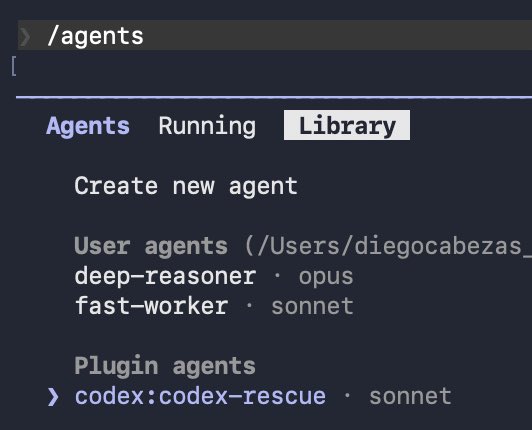
Low-engagement posts still added useful practitioner detail. @undefinedKi surfaced (67 views) a CLAUDE.md file derived from Boris Cherny’s Claude Code workflow, and the attached image lists rules like plan mode, subagent strategy, verification, and self-improvement loops. @diegocabezas01 added (234 views) a specific orchestration recipe: Fable 5 as the lead model, Opus as the deep-reasoning subagent, Sonnet as the fast worker, and Codex as a parallel peer through a plugin.

Discussion insight: The interesting shift was that people no longer argued mainly about raw model quality. They kept publishing ways to supervise, compose, and constrain agents: skill bundles, install flows, worktrees, councils, CLAUDE.md files, and model-role splits.
Comparison to prior day: June 29 and June 30 already pushed workflow kits and control planes into the center of the conversation. July 1 made that direction more installable and more multi-vendor, with official Google tooling, JetBrains’ parallel-agent workspace, and multiple open skill/orchestration packs.
1.3 Spend, quotas, and routing discipline became first-class product surfaces (🡕)
Cost pressure did not disappear, but the way it showed up changed. Instead of only complaining about limits, people shared dashboards, built quota-inspection tools, published plan comparisons, and pointed to in-product commands for reducing token burn. The day’s strongest operational theme was that AI coding now looks like something teams expect to meter and optimize.
@israfill claimed (40 likes, 15 replies, 46 bookmarks, 3,028 views) that OmniRoute can connect coding agents to 231 providers, 50+ of them free, with auto-fallback and compression. The public OmniRoute repo confirms a single endpoint across 236 providers, 17 routing strategies, RTK+Caveman compression, and setup paths for Claude Code, Codex, Cursor, Cline, Copilot, and Antigravity. The attached dashboard makes the economic pitch concrete with routed-request counts, token-saved counts, provider health, and fallback activity.

@burkeholland showed (31 likes, 32 bookmarks, 2,144 views) that GitHub Copilot now exposes /chronicle cost-tips. The screenshot matters because it turns cost control into a native agent command instead of an external spreadsheet or unofficial extension.

@gufronatto argued (15 views) that GitHub ending unlimited Copilot usage shows AI becoming a real engineering resource with real costs. The attached billing screen gives that argument a concrete artifact: AI credits, dollar-denominated usage, and a team-level breakdown instead of a fuzzy “fair use” abstraction.

@kylecompute compiled (109 views) plan pricing across Anthropic, OpenAI, Google, xAI, Mistral, Amazon Kiro, and several Chinese vendors. The Western-model comparison image is especially useful because it places Anthropic, OpenAI, Google, xAI, Mistral, and Kiro plans into one visible matrix rather than leaving cost comparisons to scattered pricing pages.

@dfinke shared (134 views) a PowerShell module for inspecting Codex resets. The public Codex-Resets repo confirms that it reads local auth state and exposes reset-credit grant and expiry dates, turning quota timing into something scriptable instead of something users guess at.

Discussion insight: The cost conversation is maturing into operations. Builders are comparing plans, routing across providers, inspecting resets, and asking the product itself for cost tips instead of treating token burn as an unavoidable mystery.
Comparison to prior day: June 30 already had resets, compaction, and credit anxiety. July 1 pushed that one step further by adding dashboards, plan tables, native cost-reduction commands, and a local reset-inspection tool.
1.4 Builders kept moving from code generation toward memory, deployment, and product operations (🡕)
A fourth theme focused on what happens after code is generated: how agents remember, how products deploy, and how real usage grows. The most informative items were not “AI can code” celebrations. They were concrete attempts to fix context loss, deployment friction, and the gap between a prototype and a durable system.
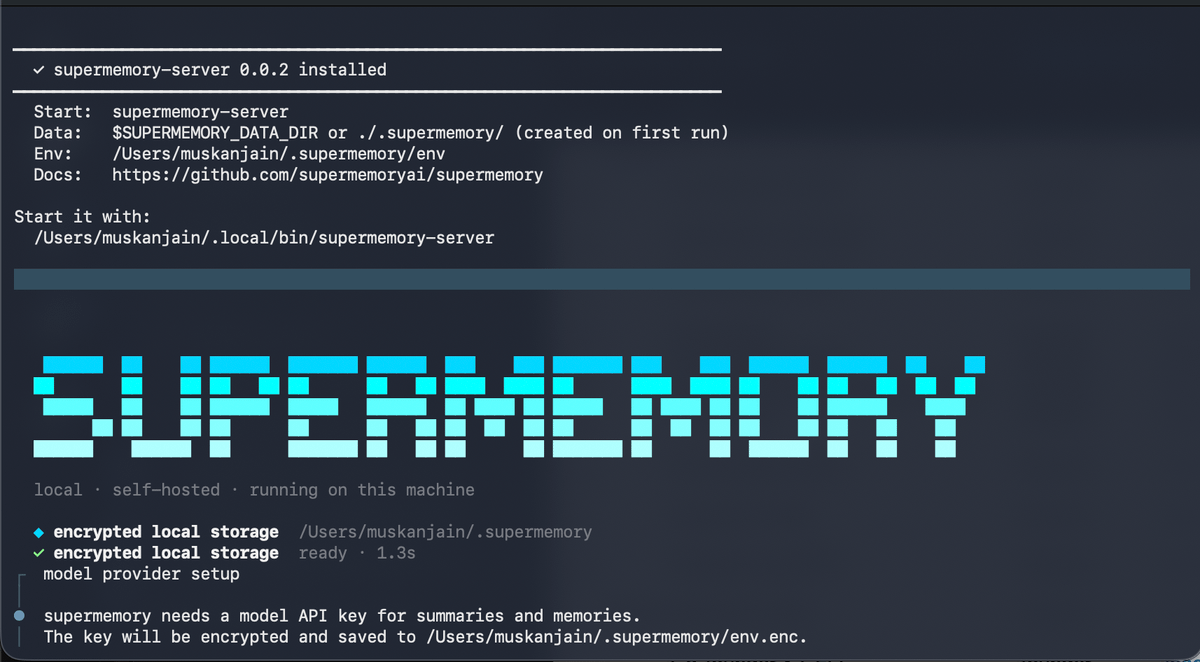
@supermemory announced (27 likes, 24 bookmarks, 2,304 views) that supermemory now runs entirely on a user’s own machine. The public repo confirms a local memory/context layer with user profiles, hybrid search, connectors, and integrations for Claude Code, OpenCode, OpenClaw, Hermes, Cursor, and other MCP-aware tools.
@lwastuargo launched (35 likes, 11 bookmarks, 1,248 views) Anna, a proactive AI agent for parents, and used the launch thread to argue that plain-text memory is not enough. The public homepage for Anna is sparse, but the tweet itself is specific: the system uses structured memory, PostgreSQL-backed task and calendar data, and explicit schema or ontology work because “loop engineering” cannot rescue weak system design.
@humble_ulzzang argued (45 likes, 42 replies, 165 views) that AI IDEs still leave users stranded at deployment time and framed CodeXero as a build-deploy-scale layer that closes the gap. Even without a rich public artifact, the unusually reply-heavy thread is a strong unmet-need signal: people still get from “the AI wrote code” to “now I have to self-deploy” far too often.
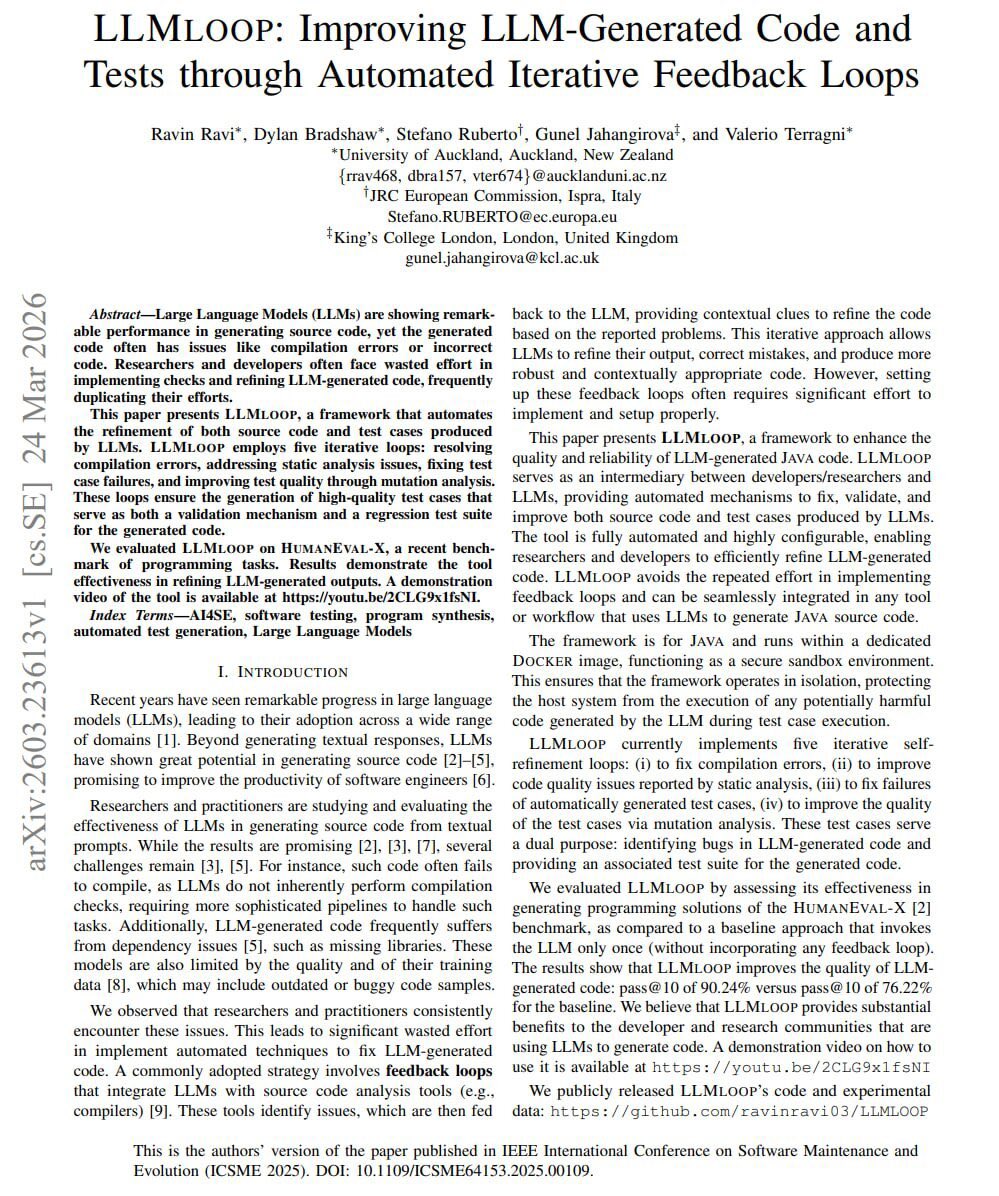
@LunarResearcher highlighted (16 likes, 11 bookmarks, 403 views) a five-loop engineering workflow around compile errors, static analysis, tests, fixes, and reruns. The attached paper image matters because it presents code quality as an explicit iterative system rather than a prompt-style trick.
@jayair reported (76 likes, 9 replies, 1,329 views) that OpenCode has doubled monthly active users since April. The attached chart shows a steep climb to roughly 13 million actives by June, which makes it one of the clearest same-day adoption artifacts for an open coding-agent surface.

Discussion insight: The common lesson across these posts is that the bottleneck is shifting outward. Memory needs structure, deployment needs a handoff layer, and quality needs loops. The model alone is not presented as the full system.
Comparison to prior day: June 30 already emphasized memory layers and the gap between shipping code and shipping products. July 1 added more concrete products and artifacts: a local memory engine, a structured-memory consumer agent, a deployment-gap complaint with heavy replies, a formal loop-engineering paper, and a visible OpenCode adoption chart.
2. What Frustrates People
Quotas, pricing opacity, and token burn are becoming normal workflow overhead
Severity: High. The feed showed that people increasingly treat AI coding like cloud spend: measurable, rationed, and easy to overshoot. @burkeholland showed (31 likes, 32 bookmarks, 2,144 views) Copilot shipping /chronicle cost-tips, which only makes sense if cost reduction is a frequent enough pain to deserve a first-class command. @gufronatto argued (15 views) that the end of unlimited Copilot usage means AI has become a real engineering resource with a real bill, and the attached credits dashboard supports that framing. @kylecompute compiled (109 views) plan tables across Western and Chinese providers because people now compare agent subscriptions the way they compare cloud SKUs. @dfinke responded (134 views) by building a local Codex-Resets tool just to inspect reset timing. The coping pattern is explicit: route around expensive paths, monitor resets, compare plans, and ask the product itself for savings advice. This is worth building for because the pain is persistent and operational rather than ideological.
AI can generate code faster than most builders can deploy, operate, and retain users around it
Severity: High. The most repeated post-generation complaint was that writing code is no longer the main barrier. @humble_ulzzang wrote (45 likes, 42 replies, 165 views) that AI IDEs still leave users to self-deploy through contradictory infrastructure choices, and the reply volume shows the complaint resonated even if the audience was small. @degensing argued (70 likes, 8 replies, 9 bookmarks, 1,324 views) that vibe coding gets to working code quickly but does not solve onboarding, distribution, or retention, which is a sharper way of stating the same gap. @lwastuargo added (35 likes, 11 bookmarks, 1,248 views) that even expensive loop engineering cannot out-engineer weak system design. Builders are clearly looking for a layer that connects generated code to deployable, operable, and user-ready products.
Weak memory structure and vague instructions still cause avoidable agent mistakes
Severity: Medium-High. Several of the day’s most useful posts were basically workarounds for brittle context handling. @lwastuargo said (35 likes, 11 bookmarks, 1,248 views) that “memory as plain text sucks” and argued for PostgreSQL-backed structured memory plus explicit schema or ontology design. @LunarResearcher highlighted (16 likes, 11 bookmarks, 403 views) a five-loop workflow built around compile, analyze, test, fix, and rerun passes, which treats prompt quality as a systems problem instead of a magic-command problem. @mardehaym complained (30 likes, 10 replies, 2,940 views) about silent wrong assumptions, unrequested abstractions, touching unspecified code, and treating “fix the bug” as a complete specification. The workaround pattern is now obvious: externalize operating rules, make memory structured, and force extra verification loops. This is worth building for because the failure mode is not cosmetic; it directly changes what code gets written.
3. What People Wish Existed
A single path from prompt to deployed, scalable product
The clearest practical request was for a layer that does not stop at code generation. @humble_ulzzang (45 likes, 42 replies, 165 views) explicitly argued that users still get lost between building, deploying, and scaling. @DivyanshT91162 (29 likes, 10 bookmarks, 2,093 views) pointed at agents-cli as one answer on the Google stack: scaffolding, evals, deployment, and observability in one workflow. The need is practical and immediate, especially for builders who can now generate features faster than they can operationalize them. Opportunity: Direct.
Portable structured memory that survives tool switching and long-running work
What people seem to want is not “more context window” in the abstract. They want a memory layer that stores the right information in the right shape and follows them across tools. @lwastuargo (35 likes, 11 bookmarks, 1,248 views) made the structured-memory argument directly with PostgreSQL, schemas, and ontology language, while @supermemory (27 likes, 24 bookmarks, 2,304 views) offered a local, cross-tool memory engine that plugs into Claude Code, Codex, Cursor, and other clients. This is a practical need with real urgency because people are already compensating for missing memory by externalizing files and rules. Opportunity: Direct.
A cross-provider spend and quota governor for agent loops
The day’s cost posts all point at the same wish: one layer that understands plans, resets, provider health, and token burn, then acts on that information before work stalls. @israfill (40 likes, 15 replies, 46 bookmarks, 3,028 views) pitched OmniRoute as the routing answer. @burkeholland (31 likes, 32 bookmarks, 2,144 views) showed Copilot exposing cost-tips in-product. @dfinke (134 views) built a local reset inspector because that layer does not yet exist cleanly. The need is direct rather than aspirational; users already manage AI work like expiring cloud credits. Opportunity: Direct.
Better orchestration that forces review, clarification, and disagreement before code lands
A subtler but recurring wish was for agent workflows that do not let the first confident answer win. @Techjunkie_Aman (397 views) pointed to JetBrains Air as a parallel-workspace answer. @DanKornas (7 likes, 8 bookmarks, 1,230 views) showed a council pattern built around disagreement. @undefinedKi (67 views) and @diegocabezas01 (234 views) surfaced orchestration files that explicitly separate planning, subagents, and verification. Existing tools partially address this, but the number of different workarounds suggests the need remains open. Opportunity: Competitive.
4. Tools and Methods in Use
| Tool | Category | Sentiment | Strengths | Limitations |
|---|---|---|---|---|
| GitHub Copilot | Coding agent platform | (+/-) | Broad surface coverage, model-picker expansion, browser tools in VS Code, native spend guidance via /chronicle cost-tips |
Metering, pricing questions, subscription exclusions, and trust scars around model availability |
| Kimi K2.7 Code | Coding model | (+) | First open-weight model in Copilot, lower-cost option, broad rollout target across Copilot surfaces | Enterprise availability is gated by admin policy; pricing details were immediately questioned |
| Claude Fable 5 | Long-horizon coding model | (+/-) | Positioned for autonomous, long-running coding and knowledge tasks | Re-enable drama, hallucination concerns, and plan-eligibility complaints affect trust |
| Claude Sonnet 5 | Frontier coding model | (+) | Strong CLI-style results, cache efficiency, and continued distribution through Copilot and Foundry | Benchmark quality remains contested in practitioner replies |
| Google agents-cli | Agent lifecycle CLI / skill suite | (+) | Unifies scaffold, eval, deploy, publish, and observability for coding agents on Google Cloud | Best fit is the Google stack; it adds another control layer to learn |
| JetBrains Air | Multi-agent workspace | (+) | Parallel agents, isolation via Docker or worktrees, side-by-side review, code-aware tasking | Still a separate workspace to operate; workflow value depends on active supervision |
| OmniRoute | Routing / cost-control layer | (+) | Multi-provider fallback, compression, one endpoint for many coding tools, visible runtime dashboard | Adds routing complexity and depends on provider/account configuration |
| Supermemory Local | Memory / context layer | (+) | Local-first persistent memory, profiles, hybrid search, broad MCP-style integrations | Adds infrastructure and ontology choices outside the main coding client |
| OpenCode | Open-source coding agent | (+) | Visible usage momentum, rapid release cadence, open-surface positioning | Control and management tooling around it is still evolving |
| Antigravity Skill Vault | Skill packaging layer | (+) | 300+ installable skills, targeted bundles, token-efficiency guidance, cross-domain coverage | Too many skills raise token use and irrelevant auto-activation risk |
| Council of High Intelligence | Deliberation method / skill | (+) | Forces disagreement, restatement, and synthesis across multiple providers | More process overhead than a single-agent answer; best for hard decisions, not routine edits |
| CLAUDE.md-style workflow files | Operating method | (+) | Externalized rules for planning, delegation, verification, and self-correction | Effectiveness depends on user discipline and does not solve model limits by itself |
The overall spectrum on July 1 ran from managed platforms toward operating layers around them. Copilot and Anthropic-backed models carried the highest attention, but much of the practical energy went into wrappers: Google’s lifecycle CLI, JetBrains’ orchestration workspace, routing and quota tooling, persistent memory, installable skills, and externalized workflow files. Common workarounds included routing across providers, inspecting reset banks, externalizing rules into CLAUDE.md files, splitting work across specialized subagents, and moving from “one tool does everything” toward a stack where memory, routing, review, and deployment are separate concerns. The clearest migration pattern was not from one model family to another; it was from single-agent use toward explicitly managed multi-layer workflows.
5. What People Are Building
| Project | Who built it | What it does | Problem it solves | Stack | Stage | Links |
|---|---|---|---|---|---|---|
| agents-cli | Gives coding agents skills and commands for scaffolding, evaluating, deploying, and publishing agents on Google Cloud | Agent builders otherwise have to stitch together ADK usage, evals, deployment, and observability manually | Python CLI, Node-based skills, Google ADK, Google Cloud | Shipped | tweet (29 likes, 10 bookmarks, 2,093 views) · repo | |
| JetBrains Air | JetBrains | Runs Codex, Claude Agent, Gemini CLI, and Junie side by side in isolated workspaces | One-agent-at-a-time workflows make delegation and comparison awkward | Desktop app, Docker, Git worktrees, multi-agent integrations | Beta | tweet (397 views) · site |
| OmniRoute | @israfill / diegosouzapw | Routes AI requests across hundreds of providers with fallback and compression | Hitting limits, juggling providers, and burning tokens mid-session | OpenAI-compatible gateway, RTK+Caveman compression, routing strategies, dashboard | Shipped | tweet (40 likes, 15 replies, 46 bookmarks, 3,028 views) · repo |
| Supermemory Local | supermemoryai | Runs a memory and context engine locally with profiles, search, and connectors | Coding agents forget user and project context between sessions | Local binary, API, MCP integrations, embeddings, hybrid search, connectors | Shipped | tweet (27 likes, 24 bookmarks, 2,304 views) · repo |
| Antigravity Skill Vault | rmyndharis | Packages 300+ reusable skills for Google Antigravity with search, bundles, and aliases | Rewriting the same workflows and domain instructions across sessions | Skill directories, npm installer, catalog files, bundles, aliases | Shipped | tweet (6 likes, 12 bookmarks, 1,527 views) · repo |
| Council of High Intelligence | 0xNyk | Forces 18 personas to deliberate architecture, strategy, and debugging questions | Single-agent answers often hide disagreement and framing errors | Claude Code / Codex skill, multi-provider routing, structured deliberation modes | Shipped | tweet (7 likes, 8 bookmarks, 1,230 views) · repo |
| Anna | @lwastuargo | Proactive AI assistant for parents with structured memory around tasks and calendars | Family coordination needs durable memory and product-level system design, not just chat context | Structured memory, PostgreSQL-backed data model, taxonomy/ontology design, loop engineering | Shipped | tweet (35 likes, 11 bookmarks, 1,248 views) · site |
| Codex Resets | dfinke | Inspects local Codex reset-credit grants and expiry dates from PowerShell | Users otherwise guess when quotas refresh | PowerShell module, local auth inspection, undocumented backend call | Shipped | tweet (134 views) · repo |
The strongest builder pattern was not “another coding chatbot.” It was infrastructure around coding agents. Agents CLI, JetBrains Air, Antigravity Skill Vault, and Council of High Intelligence all package coordination: how to scaffold, how to delegate, how to install workflows, and how to force review or disagreement before a change lands.
A second pattern was memory becoming a data-model problem instead of a prompt-history problem. Supermemory Local ships a reusable cross-tool context layer, while Anna’s launch thread argues for structured memory, explicit schemas, and ontology work because product behavior degrades when agents only “remember” plain text.
A third pattern was metering and reliability as builder territory. OmniRoute treats quota exhaustion and provider failover as a routing problem, while Codex Resets turns reset timing into a local tool. Multiple teams are independently building the operating layer that managed AI coding platforms still only partially expose.
6. New and Notable
Copilot crossed an important line by adding its first open-weight model
@GHchangelog announced (155 likes, 17 replies, 20 bookmarks, 12,741 views) Kimi K2.7 Code as a selectable model in GitHub Copilot, and the linked changelog says it is the first open-weight model offered there. That matters because it changes Copilot’s market position from “closed-model wrapper” toward a broader broker of model choice.
Browser control moved into general availability with explicit user and admin boundaries
@GHchangelog reported (17 likes, 4 bookmarks, 1,262 views) browser tools reaching general availability in VS Code. The linked post is notable not just because agents can click and type in real browsers, but because it spells out the control model: user tabs stay private until shared, agent tabs are isolated, and enterprise admins can restrict reachable domains.
Search and usage charts both suggested that tool attention is widening beyond the legacy leaders
@jayair showed (76 likes, 9 replies, 1,329 views) OpenCode’s actives doubling since April, which is a direct same-day adoption signal. A lower-reach post from @francchen added (156 views) a monthly-search chart comparing Claude Code, GitHub Copilot, Cursor, and OpenCode. The exact search numbers should be treated as poster-supplied, but the chart is still notable because people are now publicly sizing AI coding tools against each other as a competitive category.

7. Where the Opportunities Are
[+++] Cross-provider spend and quota control plane — Evidence came from multiple angles in one day: OmniRoute, Copilot’s /chronicle cost-tips, public plan-comparison tables, a metered Copilot billing screenshot, and Codex Resets. The pain is frequent, operational, and already spawning workaround tools.
[+++] Structured memory and schema-aware context management — supermemory and Anna both treat memory as infrastructure rather than chat history, and the surrounding discussion repeatedly warned that plain-text memory and vague context produce bad outputs. This is strong because it spans both developer tools and end-user agent products.
[++] Multi-agent orchestration and review workspace — JetBrains Air, agents-cli, Antigravity Skill Vault, Council of High Intelligence, and CLAUDE.md-style workflow files all attack the same problem from different directions: delegation, oversight, reuse, and disagreement. The opportunity is moderate because the market is active, but the need is clearly real.
[+] Build-to-deploy handoff for AI-built software — The CodeXero deployment thread and the broader “working code versus working products” complaints show a gap between generation and real-world operation. The signal is emerging rather than settled, but the user pain is easy to understand and repeated by multiple builders.
8. Takeaways
- GitHub Copilot is expanding on two axes at once: more model choice and more agent surface area. Kimi K2.7 Code became the first open-weight model in Copilot, while browser tools reached GA in VS Code. (@GHchangelog tweet (155 likes, 17 replies, 20 bookmarks, 12,741 views))
- The center of builder activity is shifting upward from model output to orchestration. Google’s agents-cli, JetBrains Air, Antigravity Skill Vault, Council of High Intelligence, and CLAUDE.md workflow files all focused on delegation, structure, and review rather than raw text generation. (@DivyanshT91162 tweet (29 likes, 10 bookmarks, 2,093 views))
- Cost management is no longer a side conversation; it is part of the product experience. OmniRoute’s dashboard, Copilot cost tips, pricing tables, metered billing screenshots, and Codex reset tooling all point to the same reality. (@israfill tweet (40 likes, 15 replies, 46 bookmarks, 3,028 views))
- Memory quality is being treated as a data-model problem, not just a prompt problem. Supermemory Local and Anna both emphasized structured context, while loop-engineering posts stressed repeated verification instead of one-shot prompting. (@lwastuargo tweet (35 likes, 11 bookmarks, 1,248 views))
- The remaining bottlenecks are increasingly post-generation bottlenecks. Deployment, product quality, context integrity, and human review keep showing up after the code is already written. (@humble_ulzzang tweet (45 likes, 42 replies, 165 views))