Twitter AI Coding - 2026-07-02
1. What People Are Talking About
1.1 Control planes, skills, and orchestration patterns mattered more than raw model bragging (🡕)
The densest cluster was not “which model is smartest?” but “which harness makes work reliable?” At least seven retained items pushed that framing: Google’s official agents-cli, Antigravity skill packs, Codeman’s session dashboard, a reusable Agentic MapReduce pattern, a visual workflow canvas, and a long-form post arguing that pricing and task routing have become part of the product boundary itself. Compared with July 1’s orchestration story, July 2 pushed even further away from one-agent chat metaphors and toward control planes, workflow packaging, and explicit manager/worker patterns.
@HeyAnjula shared (12 likes, 963 views, 12 bookmarks) Google’s official agents-cli and described it as a way to turn Claude Code, Codex, Antigravity, and other coding agents into Google Cloud-capable builders. The public agents-cli README backs up the key claim: seven official skills cover scaffolding, ADK coding, evaluation, deployment, publishing, and observability rather than just prompt snippets.
@DanKornas posted (8 likes, 1,563 views, 13 bookmarks) Antigravity Skill Vault as a 300-plus-skill collection ported from the Claude Code ecosystem. The public repository adds the useful operational nuance that targeted installs, bundles, and aliases are there partly to avoid the token overhead and irrelevant auto-activation that come from loading too many skills at once.

@tom_doerr shared (11 likes, 2,329 views, 13 bookmarks) Codeman, whose README describes it as “mission control for AI coding agents” across Claude Code, OpenCode, Codex, and terminal sessions. That is a stronger signal than the engagement count suggests because the screenshot shows the exact product shape many smaller posts were converging on: a session list, logs, and a browser surface for supervising long-running agent work instead of living inside one terminal buffer.

@softmax3d argued (79 views) that Cognition’s “Agentic MapReduce” is really a reusable orchestration primitive: first enumerate all relevant files, then batch, then spawn parallel subagents, then merge. The attached diagram matters because it turns “go inspect the repo” from a vibes-based request into a checklist-driven coverage system, and the author explicitly says the same pattern works in Claude Code, Codex, and OpenCode.

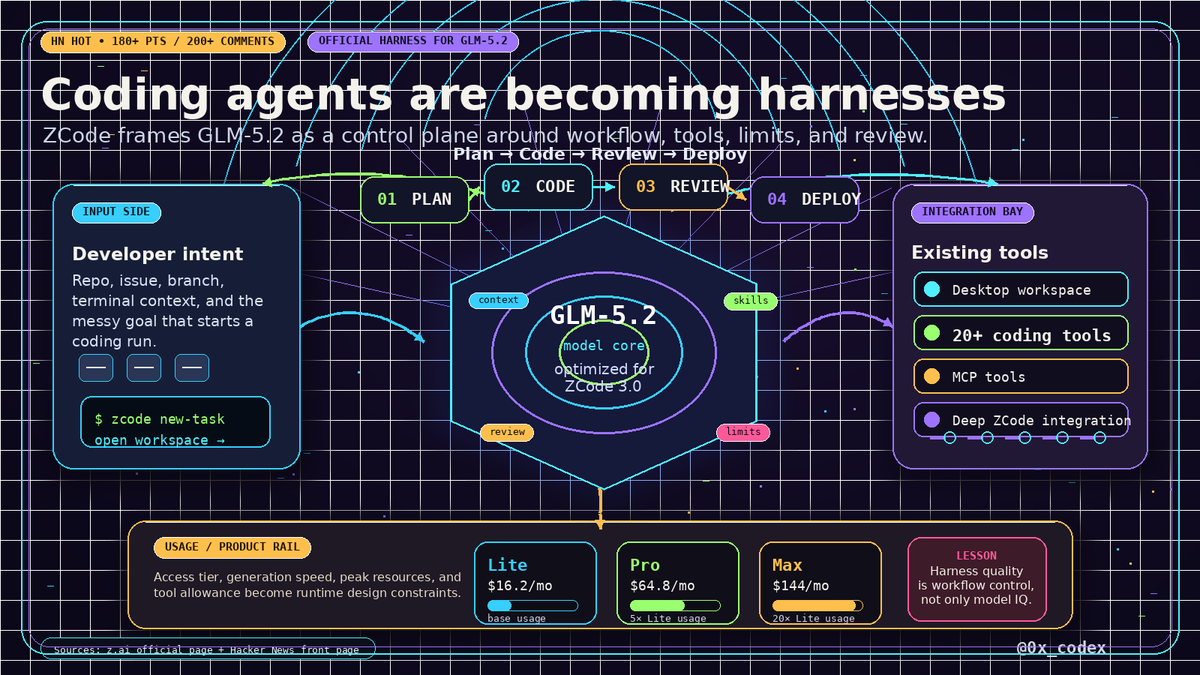
@0x_codex wrote (65 views) that the next contest in coding agents will be won by the harness, not by the smartest standalone model. The attached diagram is the substantive evidence: it centers a plan-code-review-deploy loop and visible Lite/Pro/Max pricing tiers, making cost limits, tool access, and routing part of the engineering surface rather than hidden implementation details.
Discussion insight: The strongest replies were not model-leaderboard arguments. They focused on token overhead, coverage, session management, and how to keep manager and worker agents from losing track of the checklist.
Comparison to prior day: July 1 already featured skills and parallel workspaces. July 2 made the pattern more concrete: more dashboards, more installable catalogs, more visual workflow tools, and a clearer mental model of the harness as the real product.
1.2 Governance, review discipline, and formal operator roles hardened quickly (🡕)
A second major theme was that agentic coding is starting to inherit professional boundaries instead of living as a free-form demo space. Four strong items supported it: GH-600 framed agent supervision as certifiable work, Godot drew a human-authorship line, GitHub Copilot exposed a higher-effort review mode, and a Codex thread argued that PRDs still matter because agents need durable state and reviewable intent. Compared with July 1’s emphasis on broader platform rollout, July 2 shifted toward who is accountable when agents act and what review structure should exist around them.
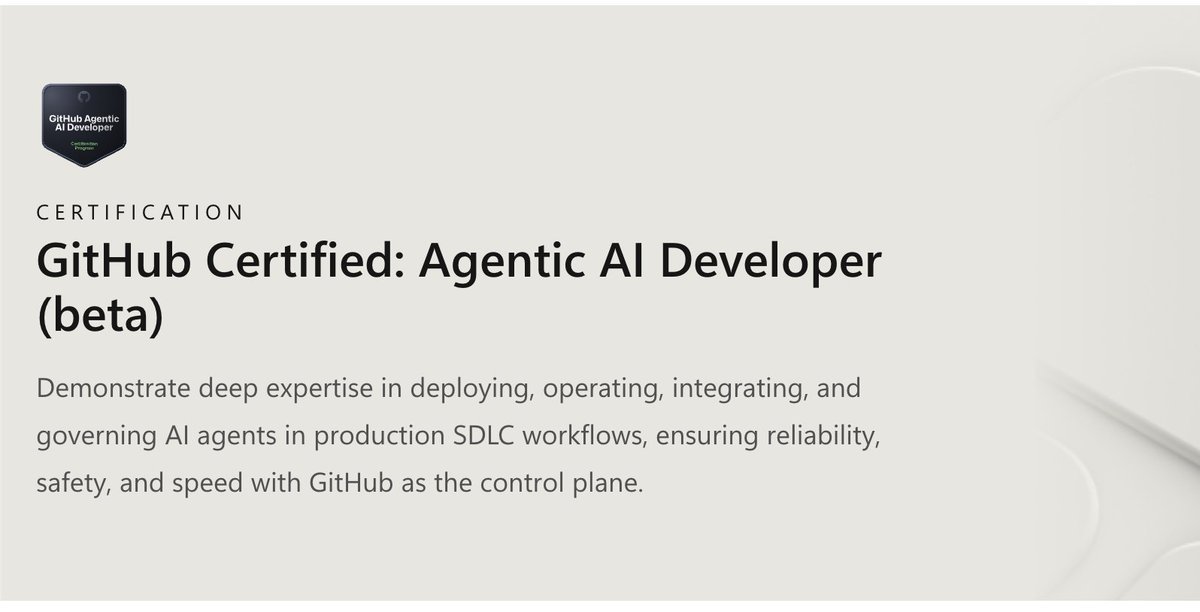
@cyrilXBT claimed (68 likes, 22 replies, 6,306 views, 27 bookmarks) that GH-600 marks the rise of the “Agentic AI Developer” as a recognized engineering role. The official Microsoft Learn study guide confirms the important part of that claim: Exam GH-600 covers tool use, memory and state, evaluation, multi-agent coordination, and guardrails or accountability, which means governance and supervision are being tested as first-class skills.
@Pirat_Nation reported (136 likes, 13 replies, 8,106 views, 13 bookmarks) that the Godot Foundation will no longer accept code made by autonomous AI agents or “vibe coding,” while still allowing narrower assistive uses like regex or small suggestions. The post’s own wording is the critical evidence here: “We require all code to be human authored,” and the replies centered on reviewer fatigue, responsibility, and whether contributors can actually fix what they submit.
@github announced (77 likes, 9 replies, 24,702 views, 27 bookmarks) that medium-depth reviews are now in public preview for GitHub Copilot code review. That matters less as a feature checklist than as a product posture: GitHub is telling users that review quality should be adjustable and that some pull requests deserve more reasoning budget than others.
@lennysan posted (63 likes, 16 replies, 15,026 views, 49 bookmarks) the simple line “PRDs are not dead,” and the most useful public evidence came from the replies. One reply argued PRDs matter even more with agents because they become durable, model-agnostic state that later sessions can diff, test against, and update instead of relying on whatever fit inside the last chat window.
Discussion insight: The most valuable replies were about auditability and responsibility, not anti-AI rhetoric. People kept returning to the same questions: who owns the output, how do you review it, and what source of truth survives across sessions.
Comparison to prior day: July 1 emphasized shipping surfaces and agent capabilities. July 2 added harder edges: credentialing, stricter contribution norms, deeper review settings, and renewed respect for written specs.
1.3 Cost, routing, and observability became visible parts of the coding workflow (🡕)
The third theme was that model choice is no longer only about quality; it is also about billing paths, fallback rules, and whether teams can even see where usage went. The strongest evidence combined one official platform launch with three workaround-style posts: GitHub put a lower-cost open-weight option into Copilot, users shared their own reset/expiry tooling, another post showed how to disable silent fallback from Fable to Opus, and LangChain argued that mixed-tool logging breaks spend visibility the moment a team uses more than one agent surface.
@github announced (340 likes, 24 replies, 36,069 views, 52 bookmarks) that Kimi K2.7 Code is now generally available in GitHub Copilot. The linked GitHub changelog confirms it is the first open-weight model in Copilot’s picker, hosted on Azure, billed at provider list pricing, and initially off by default for Business and Enterprise admins until they enable it.
@LangChain argued (18 likes, 3 replies, 2,438 views) that the real reason coding-agent bills become impossible to explain is that Claude Code, Cursor, and Copilot all log activity differently. The post is promotional, but the pain point is specific and matches the rest of the day’s evidence: once teams mix tools, visibility itself becomes a missing feature.
@souravbhar871 shared (98 views, 2 bookmarks) npx codex-resets credits list as a workaround until OpenAI makes expiry timing easier to understand. That small screenshot is unusually high-signal because it shows real users reaching for local CLI utilities just to learn when quota resets happen.

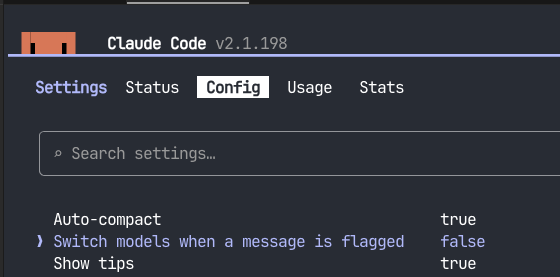
@JinjingLiang advised (320 views, 3 bookmarks) Claude Code users to turn off “Switch models when a message is flagged” so Fable 5 stops silently falling back to Opus 4.8. The quoted thread and screenshot together make the operational issue concrete: users now care not just which model is selected, but whether the agent quietly spent a different budget tier than the one they intended.
Discussion insight: The replies were less about ideology than about hidden rails: reset clocks, fallback behavior, and missing trace normalization. People want fewer surprises, not just cheaper tokens.
Comparison to prior day: July 1 already treated spend as operations. July 2 moved closer to the product edge, with pricing, routing, reset timing, and trace formats all becoming visible workflow problems.
1.4 Builders kept pushing coding-agent infrastructure into adjacent production systems (🡕)
A fourth theme was that the same agent patterns are now being applied well outside “write code in my repo.” The most interesting builder posts were not new foundation models. They were vertical systems for video production, security investigation, and revenue operations that happen to use coding agents as the execution substrate. Compared with July 1’s focus on memory and deployment gaps, July 2 showed more explicit expansion into domain-specific operating systems.
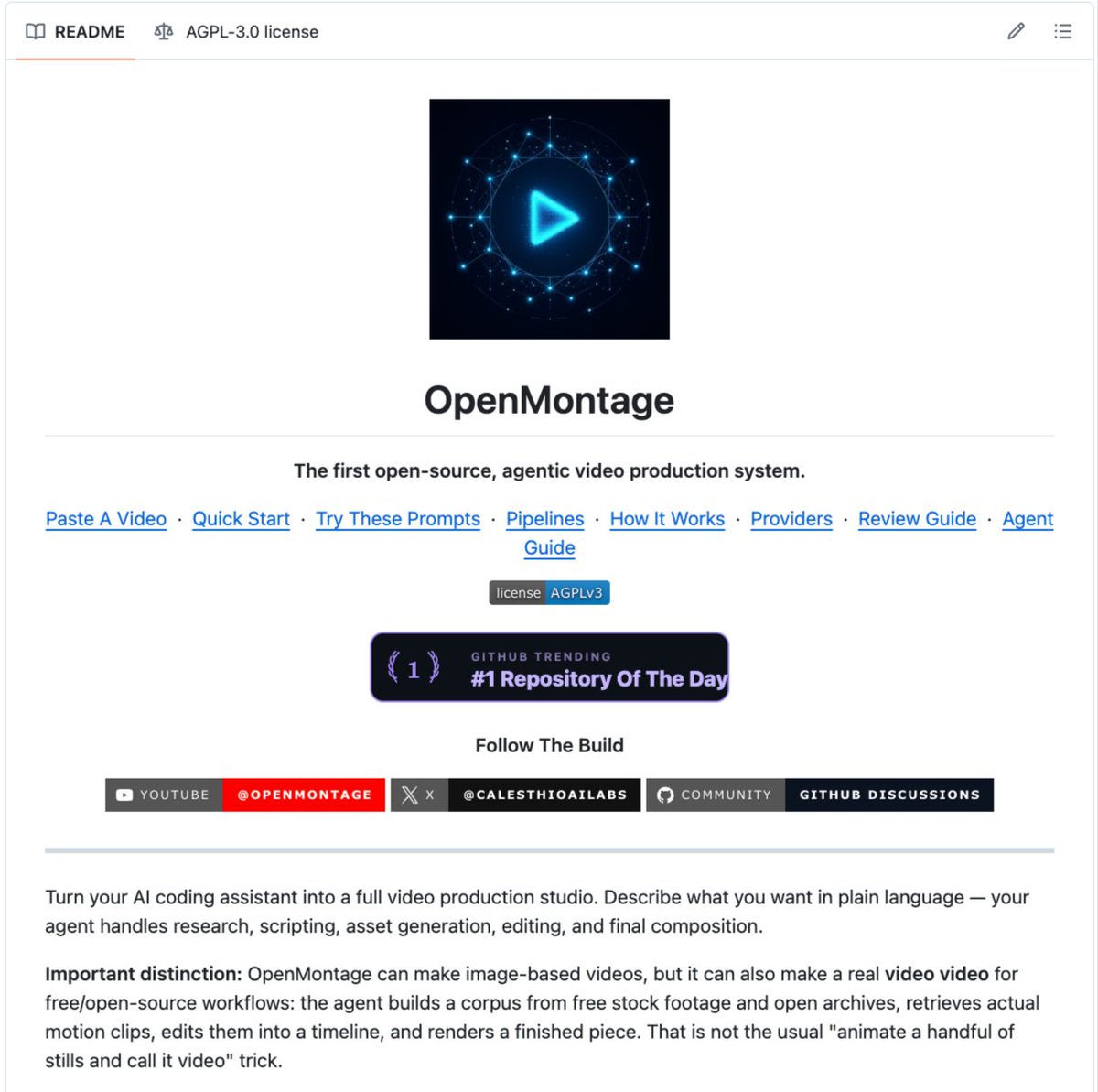
@heynavtoor highlighted (10 likes, 4 replies, 2,443 views, 12 bookmarks) OpenMontage, which its README calls “the first open-source, agentic video production system.” The tweet and README line up on the core point: a coding assistant can coordinate research, scripting, asset generation, narration, editing, and final composition, with examples ranging from low-cost explainers to multi-scene trailers.
@tom_doerr shared (12 likes, 2,795 views, 6 bookmarks) the Security Investigation Automation System. Its README describes 25 specialized agent skills that combine GitHub Copilot, VS Code Agent Skills, MCP servers, Microsoft Sentinel, Defender XDR, and Graph API so investigators can ask natural-language questions and still get structured KQL, enrichment, and reports.

@MichLieben claimed (105 views, 5 bookmarks) that Claude Code now sits in the middle of a 19-API GTM stack across signal capture, enrichment, sequencing, CRM, booking, and revenue tracking. The post is marketing-heavy, but the attached architecture image is still informative: it shows the same orchestration pattern being applied to sales operations, not just software delivery.

Discussion insight: What changed was not just the domain. It was the packaging: these projects increasingly look like composed systems with explicit stages, integrations, and handoff boundaries, not one clever prompt.
Comparison to prior day: July 1’s “beyond code generation” theme centered on memory and deployment. July 2 broadened that into adjacent operating systems for media, security, and go-to-market work.
2. What Frustrates People
Hidden routing, quota timing, and fragmented spend visibility
Severity: High. The clearest operational frustration was not “models are expensive” in the abstract, but “I cannot see what happened to my budget.” @LangChain argued (18 likes, 3 replies, 2,438 views) that mixed usage across Claude Code, Cursor, and Copilot destroys spend visibility because each tool logs differently. @souravbhar871 shared (98 views, 2 bookmarks) npx codex-resets credits list because reset timing is still obscure enough that users need a local utility just to inspect expiry dates. @JinjingLiang showed (320 views, 3 bookmarks) people explicitly disabling silent fallback from Fable 5 to Opus 4.8 so usage does not drift into a different pricing lane without consent. The coping pattern is consistent: bolt on your own tracing, inspect resets locally, and disable automation that hides model switching. This is worth building for because the pain is concrete, recurring, and already producing workarounds.
Review burden and accountability for agent output
Severity: High. Several posts converged on the same complaint from different angles: agents can generate output faster than teams can responsibly review it. @Pirat_Nation reported (136 likes, 13 replies, 8,106 views, 13 bookmarks) that Godot will reject autonomous-agent or substantial AI-authored code because maintainers want contributors who understand and can fix their own submissions. @github launched (77 likes, 9 replies, 24,702 views, 27 bookmarks) a medium-effort review mode, which is effectively GitHub admitting that review depth needs its own dial. @cyrilXBT framed (68 likes, 22 replies, 6,306 views, 27 bookmarks) GH-600 around supervising failure modes in production, and a reply on @lennysan’s PRD post (63 likes, 16 replies, 15,026 views, 49 bookmarks) argued that written specs matter because otherwise the next session cannot reliably recover intent. The coping pattern is more process: slower review, stricter contribution rules, and more written state.
Skill and workflow sprawl
Severity: Medium. The feed repeatedly implied that there are now too many skills, prompts, and workflow files to manage manually. @DanKornas opened (8 likes, 1,563 views, 13 bookmarks) with “Stop loading every agent skill just to find the one you need,” then pointed to targeted installs and bundles as the remedy. @0x0SojalSec presented (6 likes, 698 views, 5 bookmarks) a visual workflow designer that exports to .claude/, .cursor/, and .github/prompts/, which only makes sense if hand-authoring these files is already painful enough to deserve tooling. Even the official Anthropic Skilljar catalog surfaced in the day’s posts as a structured training layer for Claude Code, MCP, and agent skills. This is worth building for, but the opportunity is more competitive than greenfield because multiple teams are already shipping discovery and packaging layers.
3. What People Wish Existed
Direct “someone should build this” asks were thinner than workaround posts today, so this section is lower-confidence and based on explicit gaps people pointed to while sharing fixes.
Clear cost and fallback controls inside the agent UX
The cleanest direct need was for products to explain resets, expiry dates, and fallback behavior without forcing users into detective work. @souravbhar871 posted (98 views, 2 bookmarks) a Codex reset command specifically because expiry dates are still confusing, and @JinjingLiang shared (320 views, 3 bookmarks) a config change to stop hidden fallback from Fable 5 to Opus 4.8. This is a practical need, not an aspirational one: people want the agent to show what model actually ran, what it cost, and when usage resets. Opportunity: Direct.
Better skill discovery and workflow authoring
@DanKornas described (8 likes, 1,563 views, 13 bookmarks) the exact problem statement: people are loading every skill just to find the one they need. @0x0SojalSec responded (6 likes, 698 views, 5 bookmarks) with a visual workflow designer that exports markdown skill files, while @SaurabhDub28465 surfaced (22 likes, 97 views) Anthropic’s free course catalog for Claude Code, MCP, and agent skills. The need here is for searchable, teachable, low-friction workflow packaging rather than another giant prompt dump. Opportunity: Competitive.
Safer, more auditable orchestration around real systems
This was usually implied rather than requested outright, but the same gap showed up in several places. @cyrilXBT treated GH-600 as proof that teams need people who understand where agents fail, @Pirat_Nation highlighted Godot’s insistence on human responsibility for code, and @softmax3d shared a checklist-first orchestration pattern specifically to avoid incomplete repo audits. This is partly a practical need and partly a trust need: people want systems whose coverage, permissions, and review boundaries are visible before something destructive happens. Opportunity: Direct.
4. Tools and Methods in Use
| Tool | Category | Sentiment | Strengths | Limitations |
|---|---|---|---|---|
| GitHub Copilot | coding platform | (+/-) | Wider model surface; medium-depth review mode; enterprise reach | Pricing, policy, and rollout complexity stay visible |
| Kimi K2.7 Code | model | (+) | Lower-cost open-weight option inside Copilot; broad surface rollout | Gradual availability; Business and Enterprise default-off |
| Claude Fable 5 | model | (+/-) | Long-horizon autonomous tasks; strong interest from advanced users | Quiet disable/re-enable history hurt trust; fallback behavior can be opaque |
| Claude Code | coding agent | (+/-) | Strong subagent and workflow usage across many posts; broad integrations | Hidden fallback, token burn, and workflow sprawl keep surfacing |
| agents-cli | CLI / workflow kit | (+) | Official scaffold/eval/deploy/observability skills for multiple coding agents | Tilted toward Google Cloud and ADK workflows |
| Antigravity Skill Vault | skill library | (+) | 300+ searchable, installable skills with bundles and aliases | Too many installed skills can waste tokens or auto-activate badly |
| Codeman | dashboard / control plane | (+) | Unified session management for Claude Code, OpenCode, Codex, and terminal work | Evidence today is early-stage and dashboard-centric |
| Agentic MapReduce | orchestration method | (+) | Checklist-first coverage; clean manager/subagent split; cross-harness reuse | Best for read-heavy audits; edit-heavy work still needs careful batching |
| LangSmith | observability | (+/-) | Normalized traces across mixed coding-agent tools | Commercial layer on top of an already fragmented stack |
| codex-resets | quota utility | (+) | Exposes reset grants and expiry timing in a scriptable way | Stopgap for missing product-native visibility |
| CC Workflow Studio | workflow designer | (+) | Visual authoring plus markdown export for agent workflows | Early evidence only; unclear how broadly adopted it is |
| OpenMontage | agentic production system | (+) | Turns coding assistants into end-to-end video production pipelines | Complex stack; adjacent to core software work rather than universal |
| Security Investigation Automation System | vertical workflow | (+) | Rich domain workflow using Copilot, MCP, Sentinel, and Defender XDR | Security-stack specific and heavier to adopt |
Overall satisfaction was mixed but maturing. People were clearly excited by richer control surfaces, official workflow kits, and domain-specific agent systems, but the workarounds tell the other half of the story: users still patch over reset timing, hidden fallback, fragmented logs, and skill overload themselves. Migration patterns were less “I switched forever” and more “I route different jobs through different harnesses,” while the competitive line moved away from model quality alone and toward orchestration, visibility, and packaging.
5. What People Are Building
| Project | Who built it | What it does | Problem it solves | Stack | Stage | Links |
|---|---|---|---|---|---|---|
| agents-cli | CLI plus skill suite for building, evaluating, deploying, and publishing agents | Replaces ad hoc cloud-agent setup with packaged workflow commands | Python, uv, Node.js, ADK, Google Cloud, Gemini Enterprise Agent Platform |
Shipped | repo, tweet | |
| Codeman | Ark0N | Web dashboard for supervising Claude Code, OpenCode, Codex, and terminal sessions | Gives long-running agent work a control plane instead of scattered terminal tabs | Node.js, TypeScript, Fastify | Shipped | repo, tweet |
| Antigravity Skill Vault | rmyndharis | Searchable installable vault of 300+ Antigravity skills | Reduces manual skill hunting and enables targeted installs | npm, JSON catalogs, bundle metadata, Antigravity skill packages | Shipped | repo, tweet |
| CC Workflow Studio | @0x0SojalSec | Visual designer for multi-agent workflows that exports markdown prompts and skills | Makes workflow authoring easier than editing raw prompt files by hand | Drag-and-drop canvas, markdown exports for .claude/, .cursor/, and .github/prompts/ |
Alpha | tweet |
| OpenMontage | calesthio | Agentic video production system that turns plain-language requests into finished videos | Extends coding-agent workflows into research, scripting, generation, editing, and render pipelines | Claude Code/Cursor/Copilot/Codex, Remotion, FFmpeg, Kling, Runway, Veo, TTS and music tools | Shipped | repo, tweet |
| Security Investigation Automation System | SCStelz | Natural-language security investigation framework with specialized skills and MCP integrations | Automates repetitive investigation, enrichment, and report-writing steps | GitHub Copilot, VS Code Agent Skills, MCP, Microsoft Sentinel, Defender XDR, Graph API, Python | Shipped | repo, tweet |
The strongest repeated build pattern was not “new model wrapper” but “workflow packaging.” agents-cli, Skill Vault, Codeman, and CC Workflow Studio all try to make multi-step agent work more installable, observable, or reusable, which matches the day’s broader control-plane theme.
OpenMontage stood out because it pushes the same orchestration ideas into a completely different production domain. Its README and the tweet both emphasize prompt-to-pipeline composition rather than one-shot generation, which makes it a good example of coding-agent infrastructure escaping software engineering into adjacent creative work.
The Security Investigation Automation System and the lower-confidence 19-API GTM stack shared by @MichLieben here suggest another repeatable pattern: once teams trust an agent loop inside the terminal, they start wiring it into security operations, sales operations, and other live business systems. That is a stronger builder signal than another generic “AI app” launch.
6. New and Notable
GH-600 turned agent supervision into an explicit certification target
@cyrilXBT surfaced (68 likes, 22 replies, 6,306 views, 27 bookmarks) GH-600 as a new GitHub certification for agentic AI work, and the official Microsoft Learn study guide confirms domains like memory/state, multi-agent coordination, and guardrails. That matters because it treats supervising agents as operational engineering work with testable competencies, not as informal prompt folklore.
Godot drew one of the day’s clearest anti-slop boundaries
@Pirat_Nation reported (136 likes, 13 replies, 8,106 views, 13 bookmarks) that Godot will no longer accept code made by autonomous AI agents or “vibe coding,” while still allowing narrower assistive tasks. Whether or not other projects follow, it was one of the day’s strongest public statements that reviewer load and accountability are now big enough to shape contribution policy.
Free agent-skill education kept moving from niche to default
@SaurabhDub28465 compiled (22 likes, 97 views) Anthropic’s free course catalog, and the public Anthropic Skilljar hub foregrounds courses on Claude, Claude Code, MCP, and agent skills. Together with Google’s agents-cli materials, that suggests workflow knowledge is being standardized and given away faster than many “AI course” sellers can differentiate.
7. Where the Opportunities Are
[+++] Unified agent control plane for cost, routing, and trace visibility — Evidence came from Section 1’s Codeman and harness posts, Section 2’s complaints about hidden fallback and reset timing, and Section 4’s LangSmith and codex-resets entries. Teams are already stitching together dashboards, trace layers, and local quota utilities because no single surface cleanly explains what ran, what it cost, and why.
[+++] Review and governance layers for agent-generated work — Section 1 showed GH-600, Godot’s policy shift, and Copilot’s medium-depth reviews all moving in the same direction, while Section 2 made the review burden explicit. Strong opportunities sit around audit trails, permission boundaries, review queues, and spec-to-output traceability.
[++] Skill discovery and workflow packaging — Section 1’s Skill Vault, agents-cli, and Agentic MapReduce posts, plus Section 3’s direct need for better workflow authoring, all point to the same gap: people have more useful agent patterns than they can conveniently browse, teach, install, or share. This looks competitive, but the demand is real.
[+] Vertical agent operating systems beyond software delivery — Section 1 and Section 5 both showed the same orchestration ideas being reapplied to video production, security investigations, and GTM systems. The emerging opportunity is not another generic assistant but domain-specific workflows with strong integrations, safe defaults, and measurable output.
8. Takeaways
- The market focus kept shifting from models to harnesses. The strongest same-day posts were about skills, dashboards, orchestration patterns, and workflow packaging rather than raw benchmarks. (source, source, source, source)
- Governance is no longer a side topic. GH-600, Godot’s human-authorship line, and Copilot’s higher-effort review mode all point to the same conclusion: agent supervision, review depth, and accountability are becoming product and hiring surfaces. (source, source, source)
- Cost control now means understanding the rails, not just buying cheaper tokens. Kimi’s lower-cost Copilot slot, LangSmith’s logging complaint, codex-resets, and the Fable fallback toggle all show users trying to make billing, routing, and reset behavior legible. (source, source, source, source)
- Coding-agent infrastructure is already escaping software engineering into adjacent operations. OpenMontage, the Security Investigation Automation System, and the GTM stack post all reused the same agent orchestration ideas for media, security, and revenue workflows. (source, source, source)