Twitter AI Coding - 2026-07-04
1. What People Are Talking About
1.1 Official multi-agent workflows moved from hacks to first-party products (🡕)
The strongest cluster was about turning agent coordination into a product surface instead of a private setup. At least four retained items showed the same shift from different angles: repo-defined custom agents, an official Codex-inside-Claude plugin, explicit model-role playbooks, and unified-app chatter around ChatGPT and Codex. Compared with July 3's harness-and-handoff discussion, July 4 was more concrete: named commands, install steps, and reusable workflow files.
@github announced (109 likes, 15 replies, 18,420 views, 29 bookmarks) custom agents in GitHub Copilot CLI; the linked GitHub blog says the agent profiles live in .github/agents, use Markdown plus YAML frontmatter, and can encode role, tools, and guardrails for repeatable terminal workflows.
@HeyAnjula showed (28 likes, 10 replies, 508 views, 4 bookmarks) OpenAI's codex-plugin-cc running inside Claude Code. The public README backs up the key claims: /codex:review, /codex:adversarial-review, /codex:rescue, /codex:status, and /codex:result are all shipped commands, and the plugin uses the local Codex CLI plus ChatGPT or API-key auth rather than a separate hosted runtime.
@Hyde_ai3 published (30 likes, 2 replies, 277 views) a concrete orchestration recipe: Fable 5 as orchestrator, Opus as deep-reasoning subagent, Sonnet as fast worker, and Codex as an independent peer engineer. The attached graphic is the important evidence because it includes the actual /agents, /plugin, and /codex:setup steps plus guidance to keep each model in a distinct role instead of letting one model do everything.

@thsottiaux joked (656 likes, 89 replies, 24,628 views, 27 bookmarks) that OpenAI is bringing “ChatGPT to Codex so that Codex can be in ChatGPT in Codex in ChatGPT,” but the replies made it practical. One reply asked for a no-tabs workflow, another raised a roughly 500-thinking-token truncation issue, and a longer reply asked for visible schedules, milestones, and execution state when a goal-driven workflow starts looping.
Discussion insight: The useful replies were about ownership, context windows, and execution visibility. People liked the integration direction, but they still wanted clear work units, separate memory, and better traceability when one agent delegates to another.
Comparison to prior day: July 3 treated orchestration as a harness problem. July 4 pushed it into first-party product surfaces with documented commands and versionable agent files.
1.2 Quotas, resets, and cost-routing stayed central, but the talk became more operational (🡕)
Cost pressure was still a major decision-maker, but the conversation moved beyond generic price complaints. The day's stronger items were about routing around limits, inspecting reset expiry, and building stacks that survive rate limits. Compared with July 3's public price-shopping mood, July 4 was more about operational control.
@CrypSaf said (119 likes, 73 replies, 4,039 views) that upgrading Safio to a mix of Claude, GPT/Codex, Gemini, Kimi, and GLM brought his average monthly cost to about $180 while improving fallbacks and reducing rate-limit pain. The quoted context matters because he describes the agent as a locally run operator tied into Discord data, sheets, bots, and code rather than a single-chat assistant.
@Mr_Salio posted (126 likes, 21 replies, 8,739 views, 10 bookmarks) a Codex popup showing GPT-5.6 Sol, Terra, Luna, and new speed controls. The replies did not confirm what Terra and Luna are, but they did show that people are already treating model naming, rollout states, and speed tiers as workflow-planning inputs.
@Ananth7e shared (36 likes, 2,456 views) a Codex reset panel with explicit expiry times, then quoted an OpenAI employee saying it is “coming soon.” That matters because reset opacity was a live complaint on July 3; this is the first stronger evidence in the feed that expiry windows are being surfaced in-product.

@israfill claimed (3 likes, 4 replies, 291 views, 3 bookmarks) that routing Claude Code through Microsoft Foundry plus Azure credits can avoid the usual five-hour Claude limits. The screenshot is useful public evidence even if the economics remain a user report: it shows an Azure cost panel with $32.93 incurred and $1,977.07 in available credits, which is exactly the kind of routing workaround users are now circulating.
Discussion insight: Readers cared less about raw benchmark superiority than about the mechanics of resets, expiry clocks, pricing lanes, and whether a workflow can keep running without a surprise stop.
Comparison to prior day: July 3 was heavy on pricing maps and reset anxiety. July 4 added concrete UI evidence for resets and more explicit credit-routing hacks.
1.3 Security hardening around AI coding became a checklist category of its own (🡕)
Security was no longer framed as a future concern. Three retained items treated it as an immediate workflow layer: deployment checklists, skill-supply-chain scanning, and a concrete exploit chain against an agent product. This continued July 3's trust theme, but in a more procedural form.
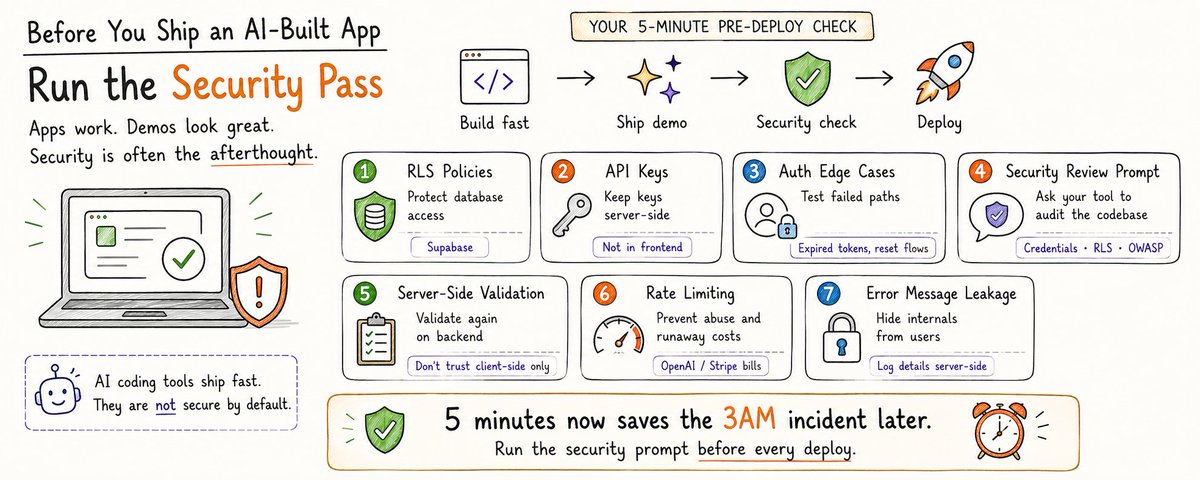
@dashboardlim warned (8 likes, 776 views, 14 bookmarks) that Cursor, Claude Code, Lovable, Antigravity, and Codex ship fast but not securely by default. The attached checklist is the core evidence because it names seven concrete checks: Supabase RLS policies, server-side API key handling, auth edge cases, security-specialist review prompts, backend validation, rate limiting, and error-message leakage.
@DanKornas highlighted (7 likes, 5 replies, 1,116 views, 5 bookmarks) Skill Scanner, a best-effort security scanner for AI Agent Skills. The screenshot makes the distinctive angle explicit: it combines static analysis, YAML and YARA patterns, LLM semantic judging, behavioral dataflow analysis, SARIF output, and GitHub Code Scanning integration to review agent assets before installation or team rollout.
@TakSec summarized (6 likes, 791 views, 3 bookmarks) ODIN research showing Google Antigravity can be induced to exfiltrate secrets through a hidden <title> tag plus rendered image URL. The screenshot of the ODIN write-up makes the exploit class concrete rather than hypothetical.
Discussion insight: The notable change was format. Instead of vague “AI safety” claims, the feed contained actual pre-deploy checks, scanner features, and exploit mechanics.
Comparison to prior day: July 3 focused on trust tooling and exploit write-ups. July 4 added a more operational “run this before deploy” posture.
1.4 Workflow packaging and role-specific enablement kept expanding (🡒)
A lower-volume but still meaningful cluster was about packaging AI coding into teachable systems for specific roles. The evidence was not just more model hype; it was learning tracks, decomposition frameworks, and role-based tool stacks.
@ameliahazelai shared (21 likes, 16 replies, 198 views, 10 bookmarks) a list of 18 free Anthropic courses. The public Skilljar curriculum confirms that the track spans Claude desktop workflows, Claude Code, MCP, agent skills, and subagents, which shows how quickly structured training has grown around these tools.
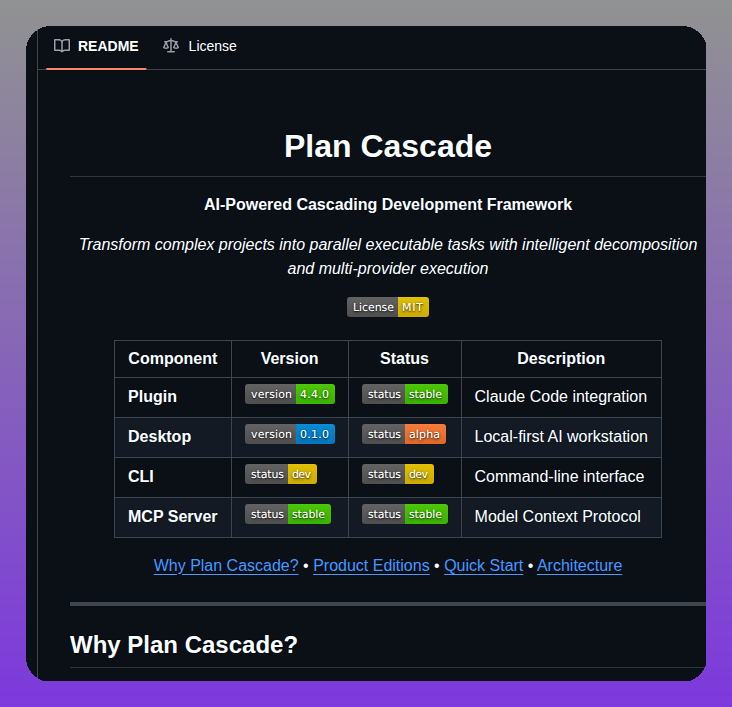
@tom_doerr shared (4 likes, 1 reply, 2,255 views, 10 bookmarks) Plan Cascade, whose README describes an AI-powered cascading development framework for turning complex projects into parallel executable task batches. The repo is notable because it exposes the exact product shape many workflow posts are converging on: decomposition layers, quality gates, plugin commands, and multi-provider execution.
@parmardarshil07 listed (23 likes, 2 replies, 1,321 views, 19 bookmarks) a day-to-day data-engineering stack spanning GitHub Copilot, Claude, ChatGPT, Cursor, Amazon Q, Snowflake Cortex, Databricks Genie, dbt assistants, and k8sgpt. That is useful because it shows specialization by task rather than loyalty to one assistant.
Discussion insight: The role-based posts implied that adoption is no longer “pick one best model.” It is increasingly “assemble a workflow, a curriculum, and a tool roster that fit the job.”
Comparison to prior day: July 3 already had workflow-discipline packs. July 4 broadened that into formal learning tracks and more role-specific stack disclosures.
2. What Frustrates People
Opaque limits, resets, and session state still interrupt real work
Severity: High. The cost conversation was really a control conversation. @CrypSaf said (119 likes, 73 replies, 4,039 views) he rebuilt Safio around multiple model families specifically for stronger fallbacks and fewer rate-limit choke points, while @Ananth7e shared (36 likes, 2,456 views) a Codex reset panel because expiry timing itself has become planning-critical. @israfill pitched (3 likes, 4 replies, 291 views, 3 bookmarks) Azure Foundry credits as a way around Claude Code's time caps, and a reply under @thsottiaux's ChatGPT-in-Codex post (656 likes, 89 replies, 24,628 views, 27 bookmarks) complained that goal-driven work can loop without making its plan or progress visible. The coping pattern is clear: users stack models, inspect reset grants, route through alternate billing rails, or manually supervise long-running goals. This is worth building for because the workarounds are already operational, not theoretical.

AI coding tools still do not feel secure by default
Severity: High. @dashboardlim argued (8 likes, 776 views, 14 bookmarks) that popular AI coding tools routinely skip RLS, leak API keys into client code, miss auth edge cases, and omit rate limits unless the user asks explicitly. @TakSec linked (6 likes, 791 views, 3 bookmarks) an Antigravity prompt-injection chain that can dump environment variables and exfiltrate secrets, and @DanKornas responded (7 likes, 5 replies, 1,116 views, 5 bookmarks) with a Skill Scanner that treats agent-skill installs as a supply-chain surface. People are coping by adding explicit pre-deploy checklists and separate scanning tools. This is worth building for because the gap is specific, recurring, and tied directly to production risk.
Multi-agent chains and local runtimes still have rough edges
Severity: Medium. The day had repeated signs that chaining agents together is still brittle in practice. In replies to @HeyAnjula's plugin post (28 likes, 10 replies, 508 views, 4 bookmarks), one person said two agents without a shared memory layer is “a debugging nightmare,” while another asked whether the agents share tokens and could hit limits early. @diegomarino reported (1 like, 1 reply, 460 views, 3 bookmarks) that OpenCode hangs when LM Studio cold-loads the model, prompting him to build a pre-warming plugin, and @BrightOginni used (2 likes, 66 views, 2 bookmarks) Gitterm to share OpenCode sessions and open ports more cleanly. These are worth building for because they are concrete runtime and collaboration problems, not abstract requests for “better AI.”
3. What People Wish Existed
Transparent usage-state and smarter cost routing
The clearest practical need was for tools to explain their own operating envelope. @Ananth7e shared (36 likes, 2,456 views) a reset panel precisely because expiry timing matters, @israfill recommended (3 likes, 4 replies, 291 views, 3 bookmarks) routing through Azure credits to escape Claude limits, and @CrypSaf framed (119 likes, 73 replies, 4,039 views) multi-model fallbacks as a direct response to rate limits. This is an urgent practical need: users want products to show reset timing, current lane, fallback behavior, and remaining runway without external hacks. Opportunity: Direct.
Delegation with visible work units, memory boundaries, and progress
The most explicit workflow wish was for multi-agent delegation to become inspectable. Under @HeyAnjula's plugin post (28 likes, 10 replies, 508 views, 4 bookmarks), one reply said the real object to manage is the delegated work unit: owner, scope, tools, logs, reviewer, cost profile, and stop condition. A reply under @thsottiaux's Codex post (656 likes, 89 replies, 24,628 views, 27 bookmarks) asked for a task schedule, milestones, and visible progress because the current goal mode can get stuck in loops. This is a direct product gap rather than an aspirational idea. Opportunity: Direct.
Safer defaults for generated apps and installed agent skills
People are not asking for more generic “AI safety.” They are asking for products that stop generating risky defaults. @dashboardlim listed (8 likes, 776 views, 14 bookmarks) the exact checks users now have to remember manually, while @DanKornas promoted (7 likes, 5 replies, 1,116 views, 5 bookmarks) a separate scanner just to review agent skills before installation. This is a practical need with active competition from checklists and scanners, but the fact that users are layering these on top of coding tools suggests the core tools still leave room for a native answer. Opportunity: Competitive.
Spec and doc changes that automatically propagate into code
This was a weaker but still visible emerging ask. @belindmo asked (3 likes, 1 reply, 27 views, 3 bookmarks) for an agent that watches a product doc and updates the codebase when the document changes. The evidence is thin today, but it fits the day's broader move toward specification-first and workflow-first coding. Opportunity: Emerging.
4. Tools and Methods in Use
| Tool | Category | Sentiment | Strengths | Limitations |
|---|---|---|---|---|
| GitHub Copilot | IDE assistant | (+) | Used for SQL, Python, PySpark, and dbt; broad fit in day-to-day engineering stacks | Repeated workflows still push users toward extra packaging layers instead of raw autocomplete alone |
| GitHub Copilot CLI custom agents | CLI workflow layer | (+) | Repo-defined roles, tools, and guardrails for repeatable terminal work | Replies showed skepticism that Markdown guardrails alone will be enough in high-stakes workflows |
| Claude Code | Coding agent | (+/-) | Strong main work surface, often used as orchestrator or primary coding agent | Session limits, context-loop complaints, and security footguns when prompts are underspecified |
| Codex | Coding agent | (+/-) | Background rescue, review, and second-opinion roles inside larger workflows | Reset management, rollout ambiguity, and some complaints about truncation or hidden state |
| OpenCode | Coding agent / workspace | (+/-) | Useful for cloud workspaces and sharing-based workflows | Local-model cold starts and collaboration still need add-ons like warming plugins or Gitterm |
| Azure Foundry | Hosting / billing rail | (+/-) | Lets users route Claude-family usage through credits and enterprise billing surfaces | Setup overhead, expiring credits, and workaround status rather than a first-class product answer |
| Plan Cascade | Orchestration framework | (+) | Breaks large projects into parallel tasks with explicit quality gates and multi-provider execution | Product maturity is mixed: stable plugin, alpha desktop, development CLI |
| Skill Scanner | Security tool | (+) | Multi-engine detection for agent skills, with SARIF and GitHub Code Scanning support | README explicitly says it is best-effort only and still requires human review |
| Anthropic Skilljar courses | Training | (+) | Structured learning for Claude desktop, Claude Code, MCP, and subagents | Useful for onboarding, but does not remove runtime coordination and governance problems |
The overall pattern was composition, not replacement. @parmardarshil07 described (23 likes, 2 replies, 1,321 views, 19 bookmarks) a role-based data-engineering stack where Copilot writes routine code, Claude handles architecture and debugging, and Cursor or Codex are used selectively. @Hyde_ai3 treated (30 likes, 2 replies, 277 views) Claude, Opus, Sonnet, and Codex as separate roles inside one workflow, while @HeyAnjula showed (28 likes, 10 replies, 508 views, 4 bookmarks) the same role split becoming an official plugin surface. The common workarounds were to add structure around the model: custom agents for repeated terminal work, Foundry for billing and quotas, warming plugins for local runtimes, and security passes before deploy.
5. What People Are Building
| Project | Who built it | What it does | Problem it solves | Stack | Stage | Links |
|---|---|---|---|---|---|---|
| Custom agents in GitHub Copilot CLI | @github | Defines reusable terminal agents in Markdown with explicit tools and guardrails | Re-running the same CLI workflows and re-explaining team context | Markdown agent profiles, YAML frontmatter, GitHub Copilot CLI, existing team tools | Shipped | tweet, blog |
| Codex plugin for Claude Code | @HeyAnjula surfaced OpenAI's plugin | Runs Codex inside Claude Code for review, rescue, adversarial review, status, and result retrieval | Tab switching and manual handoff between coding agents | Node.js 18.18+, Codex CLI, Codex app server, Claude Code, ChatGPT or API-key auth | Shipped | tweet, repo |
| Plan Cascade | @tom_doerr shared Taoidle's project | Decomposes complex software projects into parallel executable task batches with quality gates | Large-project context loss and sequential one-agent execution | Python core, Claude Code plugin, React/Rust desktop app, MCP server, multi-provider LLM backends | Beta | tweet, repo |
| Skill Scanner | @DanKornas | Scans AI Agent Skills for prompt injection, exfiltration, and malicious code patterns | Unsafe agent-skill installs and team workflow supply-chain risk | Python 3.10+, YAML and YARA patterns, LLM semantic checks, behavioral dataflow, SARIF, GitHub Actions | Beta | tweet |
| lmstudio-warm | @diegomarino | Keeps a local LM Studio model loaded before OpenCode requests fire | OpenCode hangs caused by LM Studio cold-loads or mid-session evictions | OpenCode plugin, LM Studio | Alpha | tweet |
| GangPrompt / Gitterm | @BrightOginni | Shares OpenCode sessions and exposed dev ports more safely through cloud workspaces | Hard-to-share local agent sessions and live dev apps | OpenCode, Gitterm cloud workspaces and shared port forwarding | Beta | tweet, site |
@tom_doerr shared (4 likes, 1 reply, 2,255 views, 10 bookmarks) Plan Cascade as a framework rather than a single-agent wrapper, and its README is unusually explicit about why: decomposition layers, quality gates, and multiple product surfaces are all first-class objects.
The repeated build pattern was not “make one smarter chatbot.” It was “add a layer around agents”: orchestration frameworks, security scanners, runtime warmers, and collaboration surfaces. Even when the project was small, like lmstudio-warm, the triggering pain point was concrete and operational. When the project was larger, like Plan Cascade or GitHub custom agents, the builder pattern was to formalize work decomposition, guardrails, and quality checks so the workflow survives beyond one long chat.
6. New and Notable
Repo-defined custom agents reached the mainline CLI stack
@github announced (109 likes, 15 replies, 18,420 views, 29 bookmarks) custom agents for GitHub Copilot CLI, and the linked blog says they live in .github/agents as reviewable Markdown files with explicit tools and guardrails. That is notable because it turns agent behavior itself into repository state rather than hidden personal setup.
Codex reset visibility finally showed up as product UI
@Ananth7e shared (36 likes, 2,456 views) a reset panel with expiration dates, then quoted an OpenAI employee saying it is coming soon. After several days of public reset math and quota confusion, an actual expiry-oriented panel is a meaningful product-surface change.
Free structured training around Claude Code, MCP, and subagents expanded
@ameliahazelai posted (21 likes, 16 replies, 198 views, 10 bookmarks) a list of 18 free Anthropic courses, and the public curriculum confirms modules for Claude desktop workflows, Claude Code, MCP, and subagents. That matters because the ecosystem is now large enough that onboarding itself is becoming a product category.
7. Where the Opportunities Are
[+++] Usage-state and routing control plane for coding agents — Evidence came from sections 1, 2, and 3: reset panels, Azure credit routing, multi-model fallback stacks, and repeated complaints about opaque limits. A product that shows current lane, reset timing, fallback behavior, and remaining runway without forcing users into workarounds looks especially strong.
[++] Secure-by-default shipping and agent-skill provenance — The dashboardlim checklist, Skill Scanner, and ODIN exploit chain all point to the same gap: generated apps and imported agent assets still need separate safety passes. The opportunity is moderate-to-strong because there are already checklists and scanners, but native integration is still missing.
[++] Work-unit orchestration with explicit memory and progress boundaries — The official Codex plugin, GitHub custom agents, and replies asking for owner/scope/log/reviewer metadata show clear demand for better delegation surfaces. The opportunity is moderate because many teams are hacking this together already, but the workflow object is still underbuilt.
[+] Collaboration and runtime glue around local or cloud agent workspaces — Gitterm, lmstudio-warm, and the OpenCode workflow posts suggest a newer layer of needs around session sharing, port exposure, and local model readiness. This is still emerging, but the pain points are concrete enough to watch.
8. Takeaways
- Agent orchestration is becoming a versioned workflow layer, not just a private power-user trick. GitHub shipped repo-defined custom agents, and OpenAI's Codex plugin turned Claude-to-Codex delegation into named commands rather than ad hoc copy-paste. (source)
- Quota and reset visibility still shape behavior as much as model quality. Today's strongest cost signals were not benchmark charts; they were reset UI, Azure credit routing, and multi-model fallbacks designed to keep work from stopping mid-session. (source)
- Security is now part of the everyday AI coding workflow. The feed contained a concrete pre-deploy security pass, a skill-supply-chain scanner, and an Antigravity exploit write-up, all pointing to operational hardening rather than abstract safety talk. (source)
- Builders are adding infrastructure around agents instead of waiting for one perfect model. Plan Cascade, Skill Scanner,
lmstudio-warm, and Gitterm all exist because decomposition, review, warm-up, and sharing are still separate product problems. (source) - Role-specific stacks are normalizing. A data engineer's public stack and Hyde's explicit Fable/Opus/Sonnet/Codex split both showed that people increasingly assign different assistants to different phases of work. (source)