Twitter AI Coding - 2026-07-07
1. What People Are Talking About
1.1 Antigravity moved from demo curiosity toward agent infrastructure (🡕)
Antigravity-related chatter got broader today, not just louder. The day mixed Google's own product proof, tutorial posts, hobby builds, and an infrastructure explainer; across the day's posts, antigravity mentions rose to 23 from 16 on July 6, and notebooklm rose to 5 from 1. Instead of treating Gemini as a chat endpoint, people increasingly treated Antigravity as a plain-English front end for research tasks, side projects, and managed agents.
@GoogleDeepMind unveiled (339 likes, 24 replies, 36,422 views, 92 bookmarks) a “Predicting the Past” skill in Antigravity, positioning Gemini as a plain-English interface to Aeneas and Ithaca for studying Greek and Latin texts.
@rahulbais136 argued (70 likes, 13 replies, 708 views, 15 bookmarks) that NotebookLM plus Google Antigravity is an underused combination and turned the pitch into a two-minute setup guide, which is a stronger adoption signal than generic hype. @shashwth added (54 likes, 5 replies, 5,776 views, 17 bookmarks) a concrete builder example: using Gemini plus Antigravity to make custom music software for a 2008 PSP.
@rohanpaul_ai explained (18 likes, 2 replies, 2,296 views, 7 bookmarks) why Managed Agents matter operationally: background tasks, remote MCP, function calls, credential refresh, free-tier access, and Google-hosted Linux sandboxes that preserve interaction state across long jobs.
Discussion insight: The strongest supporting posts were not “Gemini got smarter.” They were workflow posts about setup guides, MCP access, and long-running tasks. That is a shift from prompt novelty to operational framing.
Comparison to prior day: July 6 already featured Antigravity in auth and routing talk. July 7 added official product evidence and more builder/tutorial usage, so the story moved up-stack from access problems to infrastructure and use cases.
1.2 Mission-control layers became the default answer to “too many agents, too much state” (🡕)
A second cluster treated orchestration itself as the product. Explicit “control center,” “mission control,” and multi-agent dashboard language showed up across several of the day's posts, and mission control mentions rose from 0 to 2 day over day. The core pattern was persistent supervision across backends, sessions, and agent brands rather than one more single-agent IDE.
@nyk_builderz announced (16 likes, 5 replies, 744 views, 16 bookmarks) Mission Control v2.1.0, and the public repo plus site confirm the substance behind the launch: a self-hosted TypeScript/SQLite dashboard for task dispatch, spend monitoring, RBAC, skills, security panels, and a Claude Code bridge.
@GithubProjects introduced (1 like, 2,243 views, 5 bookmarks) OpenHands Agent Canvas, whose README describes a self-hosted control center that can run OpenHands, Claude Code, Codex, Gemini, or any ACP-compatible agent across local, Docker, VM, and cloud backends without losing context.

@omnigent_ai shipped (9 likes, 433 views, 2 bookmarks) Omnigent v0.4.0 with a harness plugin SDK and per-turn router, and the repo backs the broader claim that sessions can span terminal, web, phone, managed sandboxes, and policy layers. @tom_doerr pointed to (10 likes, 3,454 views, 15 bookmarks) oh-my-githubcopilot, whose README advertises 28 agents, 37 skills, stateful workflows, and hooks layered on top of Copilot.
Discussion insight: The common complaint behind these launches was not missing model intelligence. It was missing supervision, approvals, spend visibility, and context continuity once several agents or sessions exist at once.
Comparison to prior day: July 6 already had meta-harness chatter around Omnigent and workflow shells. July 7 made the dashboard and control-room framing more explicit and more public.
1.3 Copilot spread outward through the desktop app, extensions, and thin bridges (🡕)
GitHub Copilot was less a single feature today than a surface-area expansion story. copilot app mentions rose from 1 to 4 versus July 6, while raw codex mentions cooled from 70 to 44; the shift was from model-name discourse to adapters, extensions, and distribution. Several posts treated Copilot as one endpoint inside a larger toolchain rather than the whole tool.
@GHchangelog announced (27 likes, 2,587 views, 2 bookmarks) that the GitHub Copilot app is now on every plan, and the official July 7 changelog plus BYOK changelog confirm three important details: macOS, Windows, and Linux support; Free and Education coverage; and bring-your-own-key sessions against outside providers, with admin policy gates on Business and Enterprise.
@JamesMontemagno updated (17 likes, 1,062 views, 9 bookmarks) a Visual Studio workshop that now covers agent mode, plan mode, vision, debugging, watch windows, MCP, prompt skills, auto summaries, and cloud delegation, showing how quickly the practical training surface is widening.
@DanKornas shared (9 likes, 1 reply, 1,389 views, 13 bookmarks) Codex MCP Server, whose README confirms a bridge that lets Claude Code call Codex for analysis, review, and web search through MCP. He also showed (14 likes, 7 replies, 1,362 views, 14 bookmarks) ask-search, a SearxNG-backed self-hosted search skill for Claude Code, Antigravity, and shell workflows.
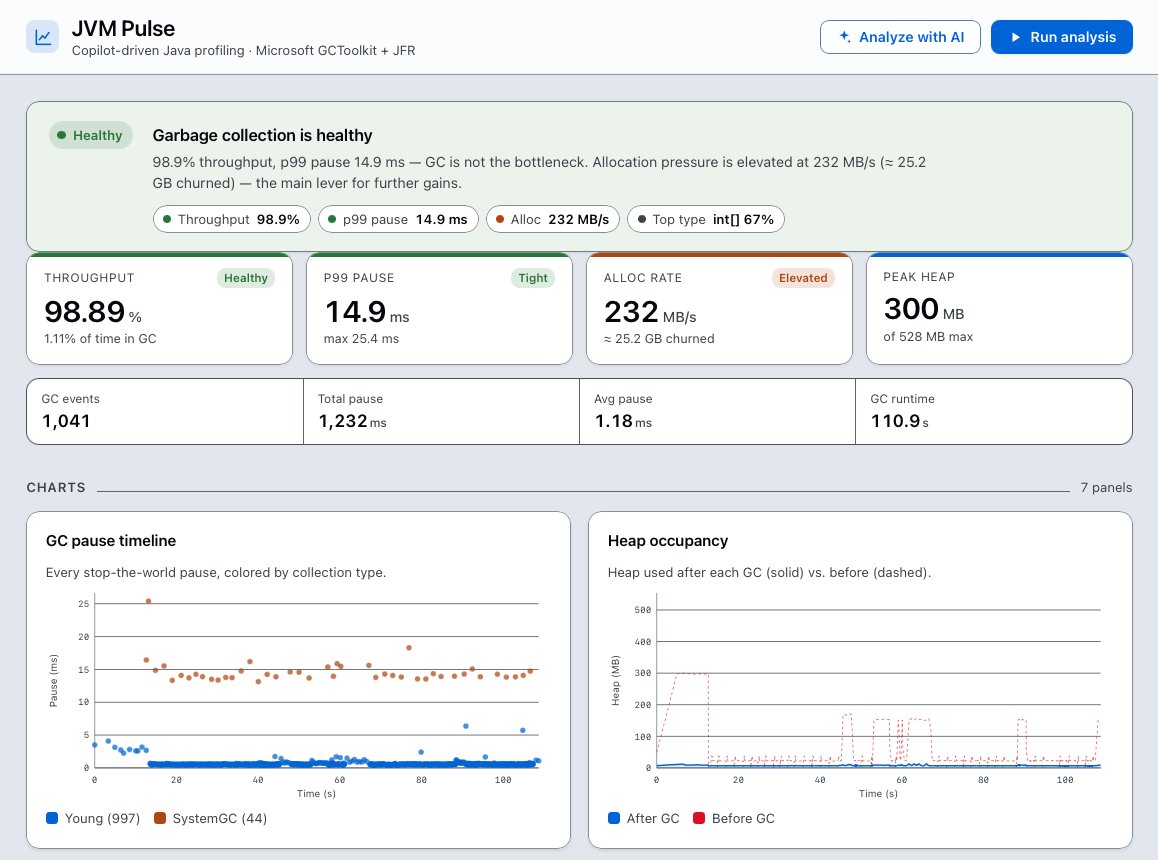
@DanKornas highlighted (8 likes, 5 replies, 1,377 views, 1 bookmark) MCP Unity, which exposes scenes, GameObjects, assets, logs, packages, and tests to coding agents. @brunoborges previewed (14 likes, 2 replies, 1,491 views, 9 bookmarks) JVM Pulse, a Copilot canvas extension that turns GC and JFR telemetry into an AI-readable runtime dashboard.
Discussion insight: The interesting move was not “Copilot versus X.” It was people treating Copilot, Codex, Claude Code, and MCP servers as interchangeable components that can call each other or share the same extension surface.
Comparison to prior day: July 6 already had vertical extensions like JVM Pulse and Unity bridges. July 7 added the official Copilot app rollout and more cross-agent connectors, making distribution and interoperability more central than standalone feature wins.
1.4 Verification, limits, and governance were discussed as core product work, not cleanup (🡕)
The fourth theme was that people no longer talked about evaluation, quota management, or security as side chores. The same day included a public verification talk, a harness-engineering course, a benchmark that runs the same model through multiple agent harnesses, a paper arguing for probabilistic LLM verification, quota dashboards, and a live security warning about prompt injection. The through-line was that the hard part of AI coding is now operating the loop, not opening the chat.
@businessbarista shared (30 likes, 4 replies, 5,552 views, 76 bookmarks) a dense summary of Sakana AI's continual-learning talk, emphasizing replayable environments, verifier-driven feedback, memory versus harness updates, and regression-aware improvement. @GithubProjects also promoted (9 likes, 2,462 views, 10 bookmarks) a course explicitly about environment design, state management, verification, and control mechanisms for reliable AI coding agents.
@gurtej__gill_ highlighted (2 likes, 15 views, 1 bookmark) the LLM as a Verifier project, pointing to fine-grained probabilistic scoring and strong Terminal-Bench 2.0 and SWE-Bench Verified results. @AgentSparko announced (1 like, 149 views, 2 bookmarks) AEON-BENCH, and the public repo confirms a controlled, signed pipeline for running the same model through multiple agent harnesses.
@Jason_Young1231 updated (48 likes, 11 replies, 9,727 views, 7 bookmarks) CC Switch to track usage across Claude Code, Codex, Gemini, Kimi, GitHub Copilot, and other coding providers, while @DataScienceDojo framed (2 likes, 1 reply, 823 views, 1 bookmark) 9Router as the answer to “I hit my Claude limit.” @The_Cyber_News warned (31 likes, 3 replies, 3,274 views, 4 bookmarks) that “GitLost” can trick GitHub Agentic Workflows into leaking private repository contents through indirect prompt injection.

Discussion insight: The sharpest skepticism came from @lgrammel, who asked (20 likes, 6 replies, 4,717 views, 8 bookmarks) what evidence actually shows prebuilt harnesses outperform open or custom ones. That question makes the benchmark, course, and verifier posts feel like responses to a live credibility gap rather than adjacent research.
Comparison to prior day: July 6 already centered loops and validation. July 7 pushed the theme into public infrastructure: courses, benchmark tooling, live usage dashboards, and a security case study all landed on the same day.
2. What Frustrates People
Context loss and hidden configuration state still make agents feel disposable
Severity: High. @anupamrjp summed it up (14 likes, 5 replies, 250 views): the worst part of vibe coding is opening a new chat and having to “re-download your entire brain” into the IDE before writing a line. @Kacper95682155 showed (6 replies) the coping pattern from the other side: most of his Claude Code setup lives globally in ~/.claude/, and his replies explain that one global CLAUDE.md, 21 skills, and multiple standards files then compose with project-local files. That helps power users, but it also proves the problem: critical behavior often lives outside the repo and outside shared review. This is worth building for because durable, portable context is still being hacked together with dotfiles and supervision layers.
Limits, quotas, and provider juggling keep interrupting active work
Severity: High. @Jason_Young1231 updated (48 likes, 11 replies, 9,727 views, 7 bookmarks) CC Switch because people want live usage tracking and balance checks across Claude Code, Codex, Gemini, Kimi, and Copilot. @DataScienceDojo pitched (2 likes, 1 reply, 823 views, 1 bookmark) 9Router around the same pain: once one provider hits a limit, the session should continue instead of dying mid-refactor. @0x_sakata shared (15 likes, 12 replies, 316 views, 4 bookmarks) a directory of 40+ free-provider key pages as a workaround for credit and rate-limit friction, and GitHub's official changelog shows BYOK being normalized inside the Copilot app itself. This is worth building for because continuity under limits is now a first-order product requirement.
Review and evaluation still break at the scale agents encourage
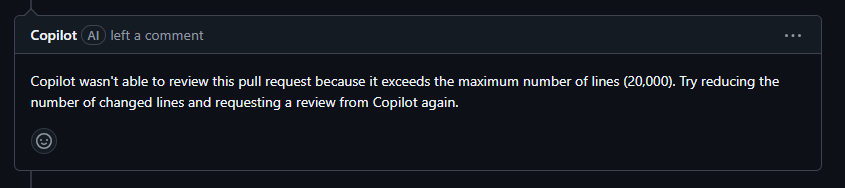
Severity: High. @awakecoding showed (5 likes, 3 replies, 492 views) GitHub Copilot refusing to review a pull request because the diff exceeded 20,000 changed lines. @lgrammel asked (20 likes, 6 replies, 4,717 views, 8 bookmarks) the sharper strategic question: what evidence says prebuilt harnesses outperform open or custom ones at all? In response, the day was full of attempts to close the gap - @businessbarista describing replayable verification loops, LLM as a Verifier offering better trajectory scoring, and AEON-BENCH running multi-harness benchmarking - but the need is clearly not met yet. This is worth building for because long-horizon agent work now outruns the review surfaces meant to contain it.
Security and compliance boundaries remain brittle
Severity: High. @The_Cyber_News warned (31 likes, 3 replies, 3,274 views, 4 bookmarks) that GitLost can trick GitHub Agentic Workflows into leaking private repositories through indirect prompt injection. @TechLead187 said (5 replies, 65 views) that the gaps in current agentic IDEs become “terrifying” once enterprise compliance, data sovereignty, and production shipping matter. Even the positive infrastructure posts reflect the same anxiety: @rohanpaul_ai emphasized isolated Linux sandboxes and credential refresh for Managed Agents, and Mission Control's repo stresses hashed keys, roles, and security review panels. This is worth building for because enterprise adoption is being gated by trust boundaries, not by lack of model enthusiasm.
3. What People Wish Existed
Durable shared memory and portable standards across chats and repos
People are not merely asking for longer context windows; they want context that survives the next handoff. @anupamrjp described (14 likes, 5 replies, 250 views) the pain of reloading context into every new chat, while @Kacper95682155 showed (6 replies) why advanced users move standards and skills into global files instead. The popularity of control-center projects like OpenHands Agent Canvas and Omnigent points to the same unmet need: shared, durable state that survives backend switches. Opportunity: Direct.
Native usage telemetry, BYOK routing, and graceful failover
People repeatedly build around the same continuity problem. @Jason_Young1231 wanted (48 likes, 11 replies, 9,727 views, 7 bookmarks) usage tracking across providers; @DataScienceDojo wanted (2 likes, 1 reply, 823 views, 1 bookmark) a router that downgrades rather than stops; @0x_sakata wanted (15 likes, 12 replies, 316 views, 4 bookmarks) a playbook for assembling many free fallbacks; and GitHub's Copilot app BYOK support makes the same requirement official. This is an urgent practical need, not an aspirational one. Opportunity: Direct.
Review and evaluation surfaces that stay credible on long tasks
The community wants more than generic “judge” claims. @awakecoding showed (5 likes, 3 replies, 492 views) a hard product ceiling on large diffs, and @lgrammel asked (20 likes, 6 replies, 4,717 views, 8 bookmarks) for evidence that harness choices actually improve outcomes. The answer space is forming - @businessbarista describing (30 likes, 4 replies, 5,552 views, 76 bookmarks) replayable verification environments, LLM as a Verifier on continuous scoring, and AEON-BENCH on multi-harness evaluation - but it is still early. Opportunity: Direct.
Policy-aware agent operations for teams
Once agents touch private repos, internal APIs, or long-running jobs, people want infrastructure rather than prompts. @rohanpaul_ai described (18 likes, 2 replies, 2,296 views, 7 bookmarks) Google-hosted managed agents with sandboxing, remote MCP, and credential refresh; @nyk_builderz shipped (16 likes, 5 replies, 744 views, 16 bookmarks) Mission Control around dispatch, roles, and spend governance; and @The_Cyber_News surfaced (31 likes, 3 replies, 3,274 views, 4 bookmarks) GitLost as a reminder that prompt-injection risks are already concrete. There are multiple early answers, but no obvious standard yet. Opportunity: Competitive.
4. Tools and Methods in Use
| Tool | Category | Sentiment | Strengths | Limitations |
|---|---|---|---|---|
| Google Antigravity / Managed Agents | Agent platform | (+) | Plain-English skills, background tasks, remote MCP, isolated Linux sandboxes | Still new; practical knowledge today mostly arrived through explainers and setup guides |
| NotebookLM + Antigravity | Research workflow | (+) | Fast way to turn notes and sources into guided research or build workflows | More of a front end and synthesis layer than a full coding environment |
| GitHub Copilot app | Desktop coding assistant | (+/-) | Available on every plan, BYOK support, growing extension surface | Business and Enterprise require admin policy; large-diff review limits still surfaced today |
| CC Switch | Usage dashboard | (+) | Cross-provider usage tracking and balance checks for major coding agents | Adds another overlay tool users must maintain |
| 9Router | Local routing proxy | (+/-) | One endpoint, quota-aware fallback, token compression, broad provider coverage | Adds a translation layer, and quality after fallback remains an open question |
| ask-search | Self-hosted search skill | (+) | Free and private web search via SearxNG across Claude Code, Antigravity, and shell flows | Requires self-hosted SearxNG and setup effort |
| Codex MCP Server | Cross-agent bridge | (+) | Lets Claude Code call Codex for review, analysis, and web search | Depends on Codex CLI setup and external provider access |
| MCP Unity | Editor bridge | (+) | Exposes scenes, assets, logs, packages, and tests as agent-callable tools | Unity-specific workflow and configuration overhead |
| JVM Pulse | Runtime telemetry extension | (+) | Turns GC and JFR data into a Copilot-readable dashboard and AI tuning loop | Java-only, and still in preview form |
| Mission Control | Orchestration dashboard | (+) | Dispatch, spend tracking, RBAC, security panels, and Claude Code bridge | Alpha software with self-hosting overhead |
| OpenHands Agent Canvas | Control center | (+) | Run mixed agents across local, Docker, VM, and cloud backends without losing context | Early self-hosted project with security-hardening burden |
| Omnigent | Meta-harness | (+) | Per-turn harness and model routing, cross-device sessions, policy controls | Heavier toolchain with multiple local and sandbox dependencies |
No single vendor dominated the satisfaction curve. The visible pattern was layering: people keep their preferred agent, then add BYOK, localhost proxies, self-hosted search, global standards files, or a control plane around it. Migration pressure looked less like “switch from tool A to tool B” and more like “keep tool A but bolt on 9Router, ask-search, Codex MCP, CC Switch, or Mission Control so the workflow stops breaking.”
5. What People Are Building
| Project | Who built it | What it does | Problem it solves | Stack | Stage | Links |
|---|---|---|---|---|---|---|
| Mission Control | @nyk_builderz | Self-hosted dashboard for dispatching agents, workflows, spend, and policy | Teams need one ops surface for many agents | TypeScript, SQLite, WebSocket/SSE, Claude Code/Codex adapters | Alpha | post repo site |
| OpenHands Agent Canvas | @GithubProjects | Self-hosted control center for mixed coding agents and automations | Keep multiple agents running across backends without losing context | TypeScript, ACP, local/Docker/VM/cloud backends | Beta | post repo |
| Omnigent v0.4.0 | @omnigent_ai | Meta-harness with plugin SDK, routing, and shared sessions | Mix harnesses and models while preserving supervision | Python, Node, tmux, managed sandboxes | Beta | post repo |
| 9Router | @DataScienceDojo | Local proxy that routes coding tools to 40+ providers with fallback | Avoid session interruptions and token waste | JavaScript, RTK compression, localhost API | Shipped | post repo |
| ask-search | @DanKornas | Self-hosted search CLI and MCP skill around SearxNG | Paid or privacy-leaking web search for local agents | Python, SearxNG, Docker, MCP | Shipped | post repo |
| Codex MCP Server | @DanKornas | MCP wrapper that lets Claude Code call Codex CLI | Need second-opinion review and search without leaving the editor | TypeScript, Codex CLI, MCP | Shipped | post repo |
| MCP Unity | @DanKornas | Unity Editor bridge exposing scenes, assets, logs, and tests | Code assistants cannot see game-editor state by default | C#, Node.js, Unity, MCP | Beta | post repo |
| JVM Pulse | @brunoborges | Copilot extension that profiles GC and JFR data | Coding agents need runtime telemetry, not just source code | JavaScript, JBang, GCToolkit, JFR, Copilot Canvas | Alpha | post repo |
| oh-my-githubcopilot | @tom_doerr | Multi-agent orchestration layer with 28 agents and 37 skills | Copilot users want deeper workflow and state tooling | TypeScript, MCP, hooks, skill packs | Beta | post repo |
| last30days-skill | @CDGalpha | Cross-platform research skill that searches many social and web sources in parallel | No single AI has the full information surface agent builders want | Python, agent skills, platform APIs, browser sessions | Shipped | post repo |
The strongest build pattern was not “new base model.” It was “new control plane.” Mission Control, OpenHands Agent Canvas, Omnigent, and oh-my-githubcopilot all wrap existing agents with routing, persistence, approvals, or shared state, which suggests builders see coordination and supervision as the real bottleneck.
A second pattern was thin adapters that patch missing surfaces without asking users to abandon their current toolchain. 9Router adds quota-aware fallback, ask-search adds self-hosted web retrieval, Codex MCP lets Claude call Codex, and last30days turns multi-platform research into a reusable skill.
The third pattern was domain exposure. MCP Unity and JVM Pulse expose scene graphs and runtime telemetry as first-class agent context, while @alex_barashkov showed (76 likes, 7 replies, 1,738 views, 44 bookmarks) Toolcraft driving real Blender renders from a web UI with Eevee previews and Cycles finals. That broadens “AI coding” from file edits into operational control over external creative and runtime systems.
6. New and Notable
GitHub Copilot app reached every plan
The official July 7 changelog made the expansion explicit: the desktop app now supports Free, Education, Business, and Enterprise users across macOS, Windows, and Linux, while the earlier BYOK changelog keeps outside providers in play. That combination matters because it widens adoption at the low end while still supporting enterprise routing and policy at the high end.
Managed agents started sounding like infrastructure, not a feature demo
@rohanpaul_ai described (18 likes, 2 replies, 2,296 views, 7 bookmarks) Managed Agents as Google-hosted workers with interaction state, remote MCP, credential refresh, and sandboxed execution. Combined with @GoogleDeepMind showing (339 likes, 24 replies, 36,422 views, 92 bookmarks) an Antigravity skill grounded in specialist models, the message was that Google wants Antigravity to be seen as an execution layer and skill surface, not just a chat UI.
GitLost put prompt-injection risk back on the front page
@The_Cyber_News reported (31 likes, 3 replies, 3,274 views, 4 bookmarks) that a single GitHub Issue can be used to trick Agentic Workflows into leaking private repository contents. Even without the full article, the public summary was specific enough to land as a notable warning for anyone wiring agents into repo automation.
Verification moved from theory to public artifacts
The day produced several different answers to the “show me the evidence” problem: LLM as a Verifier for finer-grained scoring, AEON-BENCH for multi-harness benchmarking, and public course material about harness engineering and control mechanisms. That combination made verification feel closer to an ecosystem race than a single research thread.
7. Where the Opportunities Are
[+++] Durable supervisor layer across chats, tools, and agents - The strongest repeated pain was state loss and fragmented configuration, from @anupamrjp describing the need to reload context every chat to @Kacper95682155 keeping critical behavior in global files, while Mission Control, OpenHands Agent Canvas, and Omnigent all built around the same gap.
[+++] Native cost and quota continuity - CC Switch, 9Router, free-provider directories, and Copilot BYOK all exist because people still lose productive time to limits, billing boundaries, and provider switching. A first-party answer that combines visibility, routing, and graceful fallback would address a daily blocker.
[++] Verification that survives big diffs and long-horizon runs - The 20,000-line Copilot review ceiling, public skepticism about harness evidence, continual-learning discussions, and new benchmarking artifacts all point to the same opening: review and evaluation tooling that remains usable once the agent's scope gets large.
[++] Policy and trust boundaries for enterprise agent automation - GitLost, enterprise-compliance complaints, managed-agent sandboxing, and orchestration dashboards with RBAC all show demand for a secure operations layer around agent workflows, not just better prompts.
[+] Domain bridges into richer runtime and creative systems - MCP Unity, JVM Pulse, and Toolcraft's Blender workflow suggest a smaller but real opportunity in exposing scene graphs, telemetry, and external tools as first-class agent context.
8. Takeaways
- Antigravity moved up the stack. Official product proof, tutorial posts, hobby builds, and Managed Agents all framed it as workflow infrastructure rather than a one-off model demo. (GoogleDeepMind, rahulbais136, rohanpaul_ai)
- The main build pattern was “control plane for existing agents.” Mission Control, OpenHands Agent Canvas, Omnigent, and oh-my-githubcopilot all wrap current agents with supervision, routing, policy, or persistent state rather than trying to replace the base model. (nyk_builderz, GithubProjects, omnigent_ai, tom_doerr)
- Copilot got broader, not just better. The all-plan desktop rollout, BYOK support, Visual Studio training updates, JVM Pulse, Unity MCP, and Codex bridges all expanded the usable Copilot surface. (GHchangelog, GitHub changelog, JamesMontemagno, brunoborges)
- Continuity under limits is still unsolved. Usage dashboards, fallback proxies, and free-provider playbooks are thriving because mid-session quota failure is still normal enough to build products around. (Jason_Young1231, DataScienceDojo, 0x_sakata)
- Verification and security are now first-class requirements. The large-diff review ceiling, public demand for better evidence, new verifier and benchmark artifacts, and GitLost all say trustworthy operation matters as much as generation. (awakecoding, lgrammel, LLM as a Verifier, AEON-BENCH, The_Cyber_News)