Twitter AI Coding - 2026-07-11
1. What People Are Talking About
1.1 Google’s agent story was about workflow stacks, not just models (🡕)
The strongest Google-adjacent conversation was not another benchmark claim. It was a set of concrete operating recipes for combining research memory, skills, and long-running agents. At least two retained items showed people treating Google’s coding stack as an end-to-end workflow surface rather than a standalone model choice.
@shubham_crazy08 argued (248 likes, 11 replies, 26,396 views, 368 bookmarks) that NotebookLM plus Google Antigravity was an underused combination, then used his reply thread to spell out specific jobs for it: deep-research agents, business-specific skills that reread local markdown context, context-aware app generation, automatic NotebookLM report outputs, and Python-driven ingestion pipelines. The distinctive point was not “Google is good”; it was that the pairing reduces manual data movement and turns stored context into something an agent can act on.
@antigravity pointed (26 likes, 8,747 views, 22 bookmarks) to a reflective-memory build series, and the linked source thread broke the problem into learning the user, learning the job, defining the boundary between agent and harness, and implementing the loop with Google Cloud plus Antigravity. That gave the day’s Google discussion a more architectural flavor than simple product promotion.
Discussion insight: The practical emphasis was on memory, ingestion, and reusable skills. Even when the posts sounded promotional, the details people responded to were concrete operating questions: where context lives, how it is refreshed, and how an agent turns stored knowledge into code or reports.
Comparison to prior day: July 10’s Google signal leaned on ecosystem maps and “full stack” positioning. July 11 moved one layer closer to implementation, with concrete NotebookLM-plus-Antigravity workflows and reflective-memory designs replacing broad platform rhetoric.
1.2 Harnesses kept turning into portable products and verification layers (🡕)
The second major cluster was about the harness itself: how to prove an agent fixed the right thing, how to move workflows across hosts, and how to borrow a polished interface without giving up a custom backend. At least five retained items fit that frame, which made July 11 feel like a day about operating surfaces rather than raw model launches.
@thdxr showed (112 likes, 6 replies, 9,432 views, 19 bookmarks) an OpenCode flow where an issue becomes a PR with a video verifying the fix. The screenshot made the promise concrete: the agent is not just editing files, it is expected to produce reviewable evidence about what changed.

@kitlangton explained (53 likes, 5 replies, 5,416 views, 34 bookmarks) a new “hot context” feature in OpenCode 2.0, while the quoted beta thread made the maturity tradeoffs explicit: possible data wipes, broken features, a not-final v2 API, and a built-in skill system. In parallel, @ArchitectHappy_ highlighted (36 likes, 10 replies, 3,581 views, 38 bookmarks) the wshobson/agents marketplace, whose public README describes 92 plugins, 199 agents, 162 skills, 106 commands, and 16 orchestrators generated from one Markdown source for Claude Code, Codex CLI, Cursor, OpenCode, Gemini CLI, and GitHub Copilot.
Smaller but still meaningful builder posts pushed the same direction. @S1r1u5_ described (14 likes, 3 replies, 1,090 views, 11 bookmarks) a protocol translation layer that lets his team keep a custom security-oriented agent harness while reusing OpenCode’s TUI and UI surface, and @Marco_Ramilli shared (1 likes, 1 replies, 35 views, 1 bookmarks) ultracodex, which publicly positions itself as a way to run Claude Code workflows on Codex and OpenCode with loops, schedules, and long-lived orgs.
Discussion insight: Replies on the OpenCode verification post pulled the theme back to reality. Supporters still pointed out that someone has to review the PR, that monorepos remain harder than toy demos, and that CPU or battery issues still matter. The appetite was for better evidence and better surfaces, not for zero oversight.
Comparison to prior day: July 10’s OpenCode discussion centered on the beta opening and skill-pack distribution. July 11 advanced that into specific mechanics: verification videos, cache-preserving context, protocol reuse, and repo-shaped portability across harnesses.
1.3 Benchmark wins had to survive distribution and budget reality (🡕)
A third cluster showed that “best model” arguments no longer end at leaderboard placement. People kept tying benchmark results to host availability, reset windows, and real session economics. At least five retained items reinforced that shift.
@ArtificialAnlys reported (96 likes, 10 replies, 7,348 views) that Muse Spark 1.1 scored 69 on its coding-agent index in the OpenCode harness, placing just below GPT-5.5 in Codex and ahead of Claude Opus 4.8 in Claude Code while landing at roughly $1.4 per task. The attached chart mattered because it showed the cost-performance trade rather than a single headline rank.

But availability immediately became the next question. @sethsaler complained (24 likes, 3 replies, 5,798 views, 4 bookmarks) that Muse Spark 1.1 was still absent from Cursor, Devin, OpenCode, Replit, Lovable, Venice, and Manus, and Alexandr Wang replied that integrations were coming. On the operator side, @Aytunc reminded (5 replies, 1,826 views) Codex users to run /usage before unused Ultra or Fast capacity reset, while @cjzafir showed (5 likes, 4 replies, 1,165 views) a day with more than $1,200 worth of tokens burned, a manual limit reset, 91% weekly capacity restored, and three long-running goals still active.
Discussion insight: Replies under benchmark posts were notably skeptical about harness-normalized rankings. People explicitly said the useful question was no longer “who is number one?” but “what does this cost on my workload, and can I actually use it in the product I already live in?”
Comparison to prior day: July 10’s cost talk was mostly about rollout surfaces and price positioning. July 11 moved toward day-to-day operations: expiring capacity, reset clocks, host support gaps, and long-running goals competing for runway.
1.4 The answer to vibe-coding anxiety was more structure, not less (🡕)
The last clear theme was that the most credible response to “vibe coding” was not a return to manual everything. It was more specs, more evals, more verification, and more explicit guardrails. At least four retained items pointed in that direction from different angles.
@Pirat_Nation reported (389 likes, 28 replies, 21,819 views, 57 bookmarks) that a Donkey Kong 64 PC recompilation team announced early mainly to distinguish itself from a rival project said to rely heavily on AI “vibe coding.” The strongest reply was not anti-AI absolutism; it was the argument that experienced teams still win when they wrap models in deterministic scaffolding and maintenance discipline.
@hasantoxr listed (45 likes, 24 replies, 6,857 views, 54 bookmarks) “AI projects that will get you hired,” but the substance was that the starter stack now begins with evals, monitoring, guardrails, and workflow orchestration: RAG with evaluations, agent-ops dashboards, code-review AI, prompt security, and multi-agent planners. The attached screenshots pointed to LangGraph and Unstructured as concrete building blocks, not abstract hype.
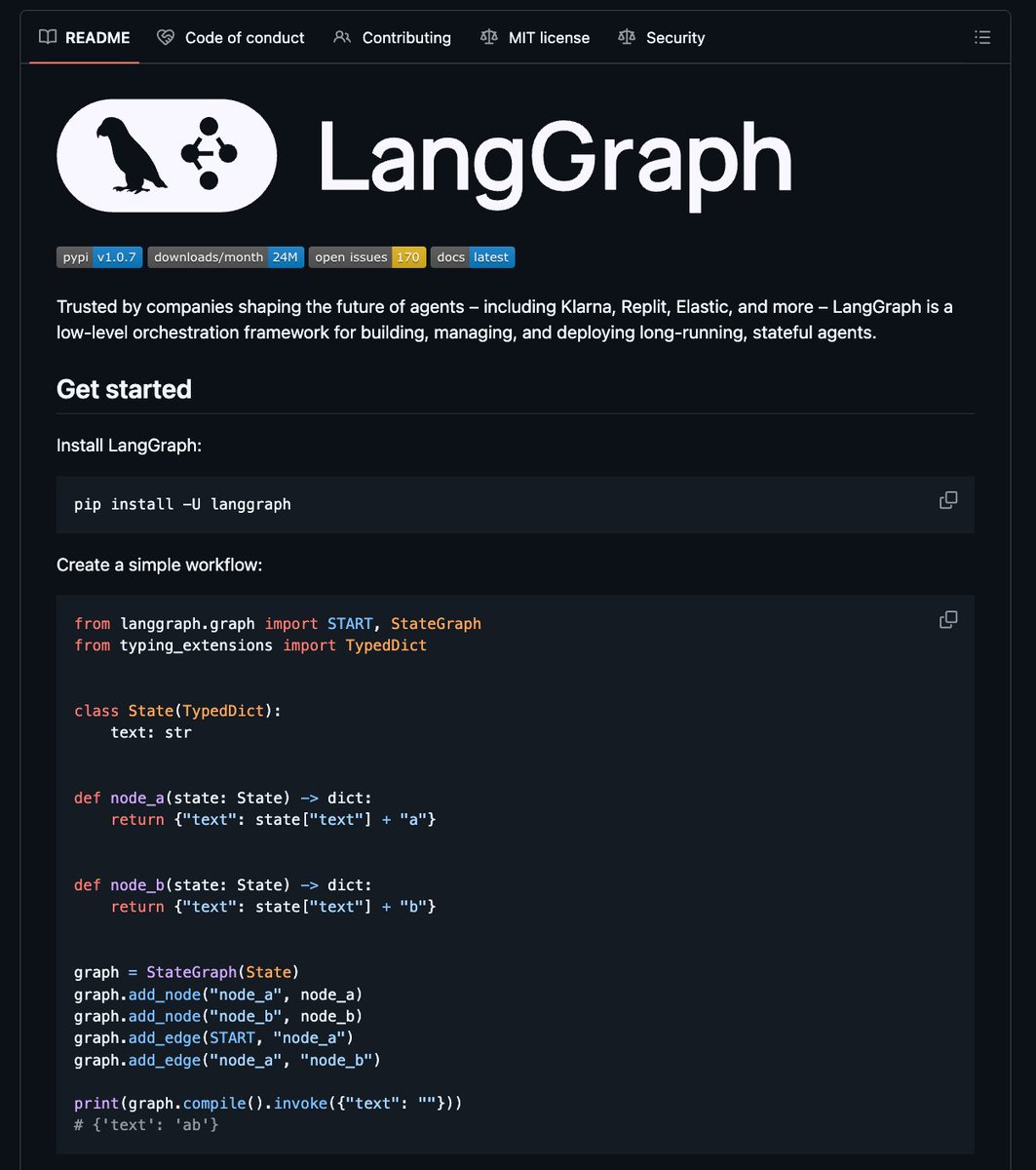
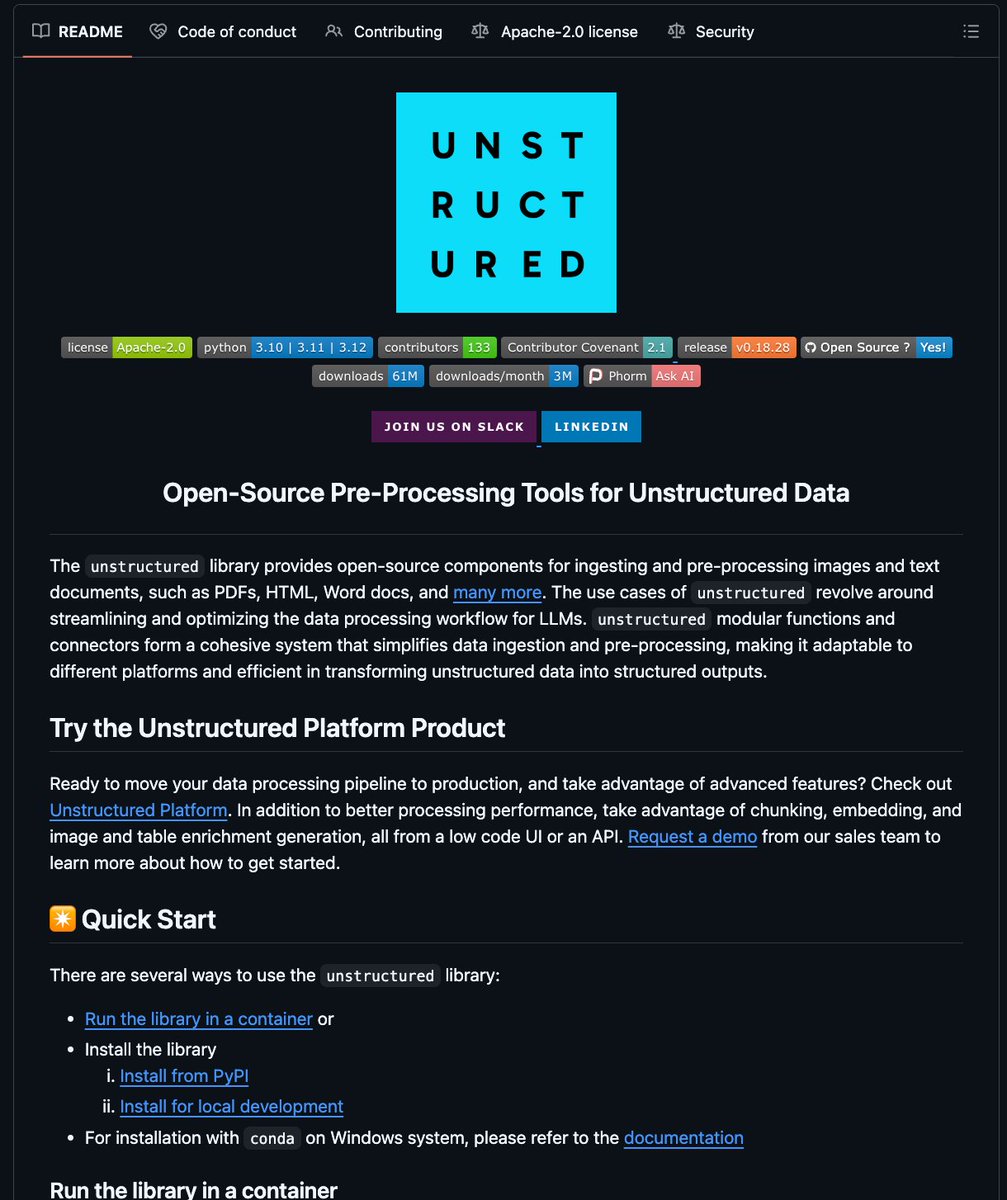
The same instinct showed up in smaller workflow posts. @xieike said (8 likes, 3 replies, 37 views, 6 bookmarks) that a /grill-me skill asks 40-plus clarifying questions before Claude Code writes anything, and @gippp69 showed (12 likes, 5 replies, 154 views, 5 bookmarks) a vault spec that stopped Claude from auto-merging notes after it surfaced a buried rule change instead of blindly following it.
Discussion insight: The pro-agent side of the conversation did not argue for less process. It argued for moving process earlier: question trees before coding, specs that can fail a run, and repo or workflow structures that catch the dangerous assumption before the model acts on it.
Comparison to prior day: July 10’s trust discussion focused on quotas, hidden controls, and mislabeled modes. July 11 pushed that same trust problem deeper into the workflow itself, where specs, evals, and pre-execution checks are being treated as the real antidote to bad agent output.
2. What Frustrates People
Model availability, quotas, and reset clocks still decide what people can actually use
Severity: High. The benchmark story kept running into host reality. @sethsaler complained (24 likes, 3 replies, 5,798 views, 4 bookmarks) that Muse Spark 1.1 was missing from most of the major coding products people actually use, even while @ArtificialAnlys showed (96 likes, 10 replies, 7,348 views) strong cost-performance results. On top of that, @Aytunc told (5 replies, 1,826 views) Codex users to check /usage before unused capacity reset, and @cjzafir showed (5 likes, 4 replies, 1,165 views) how quickly a heavy day could turn into “$1,200 worth of tokens burned” plus a limit reset while three long-running goals were still active. The coping pattern was to watch reset timers, compress context where possible, and install wrappers such as Token Time, whose public site emphasizes local-only usage tracking on macOS. This is worth building for because people are clearly optimizing around runway and host support before they optimize around benchmark rank.


People still do not trust prompt-only coding without stronger guardrails
Severity: High. The day’s most viral skepticism came from @Pirat_Nation reporting (389 likes, 28 replies, 21,819 views, 57 bookmarks) that a Donkey Kong 64 recompilation team wanted to distinguish itself from a competitor said to rely heavily on AI “vibe coding.” The more technical response came from builders trying to add friction in the right places: @xieike said (8 likes, 3 replies, 37 views, 6 bookmarks) /grill-me prevents Claude Code from writing before clarifying the problem, @gippp69 showed (12 likes, 5 replies, 154 views, 5 bookmarks) a spec file catching a dangerous auto-merge rule before execution, and @michabbb described (2 replies, 82 views) dcg as a pre-execution firewall for destructive shell and git commands. Even the OpenCode PR-verification demo drew replies saying someone still has to review the result and that monorepos remain harder than showcase runs. This is worth building for because the market is not asking agents to act faster; it is asking them to make fewer irreversible mistakes.
Generic harnesses still break down in domain-specific or highly customized workflows
Severity: Medium. @S1r1u5_ wrote (14 likes, 3 replies, 1,090 views, 11 bookmarks) that provider harnesses such as Codex, Claude Code, OpenCode, and Pi did not fit a deeply opinionated security workflow, so his team built a custom agent harness and then translated it into OpenCode’s UI layer. @Markojak listed (1 replies, 81 views, 1 bookmarks) a long Apple-app toolchain because WWDC content is JavaScript-locked, models still struggle with visual app quality, and computer-use testing plus MCP-backed docs are needed just to get to a usable workflow. The workaround pattern was to pile on skills, MCPs, templates, and domain plugins such as Microsoft’s power-platform-skills. This is worth building for because many of the day’s best practitioner posts were really stories about patching gaps in the base harness.
3. What People Wish Existed
One spend-and-runway control layer across hosts
The clearest practical need was not another leaderboard. It was one place to understand what an agent session is costing, when capacity resets, and whether a long-running job should keep going. @Aytunc telling (5 replies, 1,826 views) users to check /usage, @cjzafir pacing (5 likes, 4 replies, 1,165 views) a day around token burn plus resets, and @wzulfikar pointing (2 likes, 41 views, 2 bookmarks) to Token Time all described the same gap from different angles. @riabcevv added (5 likes, 5 replies, 114 views) a second workaround by pitching context compression as a way to avoid paying to resend junk history. Opportunity: Direct.
Portable workflow packs that survive model and host switching
People repeatedly showed that they do not want to rebuild the same workflow for every harness. @ArchitectHappy_ surfaced (36 likes, 10 replies, 3,581 views, 38 bookmarks) wshobson/agents as a cross-harness marketplace with plugins, agents, skills, commands, and orchestrators; @Marco_Ramilli pointed (1 likes, 1 replies, 35 views, 1 bookmarks) to ultracodex as a way to run Claude Code workflows on Codex and OpenCode; and @schneika linked (1 likes, 1 retweets, 82 views, 1 bookmarks) Microsoft’s power-platform-skills marketplace for Power Platform work. The practical ask was simple: write the workflow once, then carry it across tools without losing the surrounding skills, commands, and safety assumptions. Opportunity: Competitive.
Safety and specification layers that stop bad assumptions before execution
The desire here was not “make the agent more creative.” It was “make the agent ask, check, and refuse at the right moments.” @xieike promoted (8 likes, 3 replies, 37 views, 6 bookmarks) /grill-me precisely because it forces clarifying questions before code, @gippp69 used (12 likes, 5 replies, 154 views, 5 bookmarks) a vault spec as a second reviewer that caught a hidden auto-merge rule, and @michabbb described (2 replies, 82 views) dcg as a hook that blocks destructive shell and git commands before an agent can execute them. The need was highly practical and highly urgent: people want cheaper mistakes, not just faster output. Opportunity: Direct.
Better domain grounding for UI-heavy or JavaScript-locked ecosystems
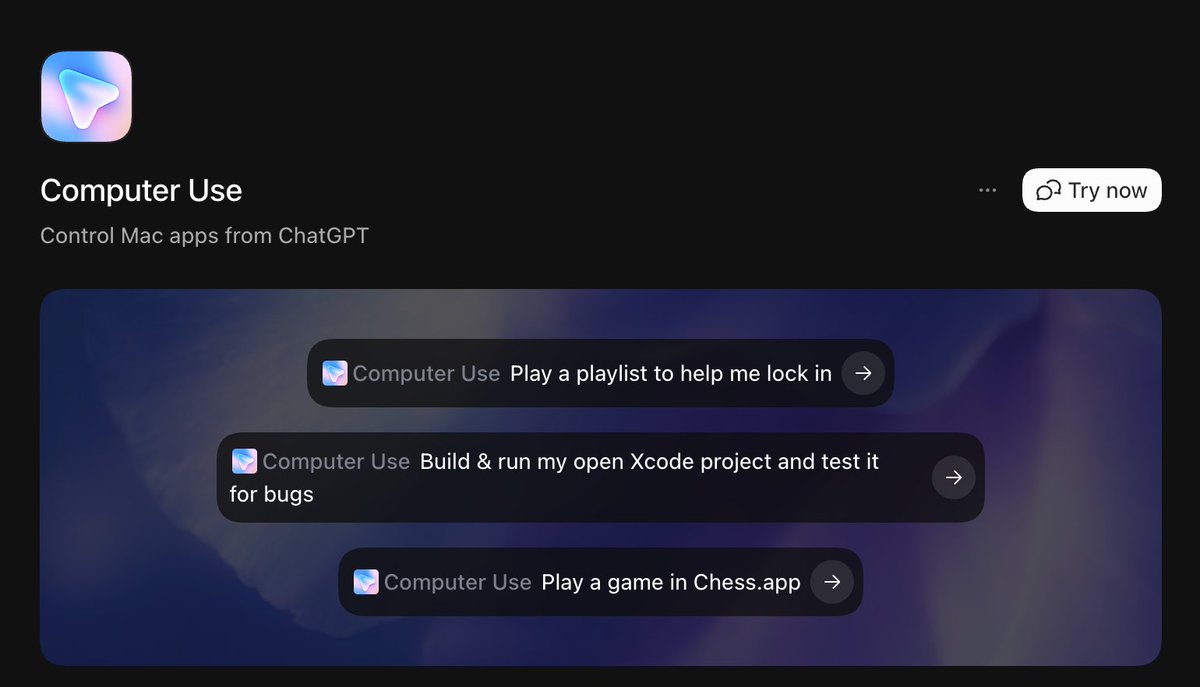
A more specialized but important need came from people working in stacks where the model cannot see enough of the real environment. @Markojak said (1 replies, 81 views, 1 bookmarks) Apple’s WWDC content is not crawlable, models still produce weak interface and animation work, and computer-use plus MCP-backed documentation are needed to make app-building sessions reliable. Microsoft’s power-platform-skills pointed at the same need from the enterprise side by packaging domain-specific plugins instead of asking general-purpose agents to infer Power Platform workflows from scratch. This looks less like a generic “better AI” request and more like demand for grounded adapters around specific ecosystems. Opportunity: Aspirational.
4. Tools and Methods in Use
| Tool | Category | Sentiment | Strengths | Limitations |
|---|---|---|---|---|
| NotebookLM | Research memory | (+) | Strong source grounding, reusable notebook context, useful report and app-output pairing when connected to an agent harness | Most of the day’s evidence depended on pairing it with Antigravity rather than using it alone |
| Google Antigravity | Agent harness / orchestrator | (+/-) | Reflective-memory patterns, schedules, skills, and strong fit with NotebookLM workflows | Advanced teams still needed custom wrappers or translation layers for specialized workflows |
| OpenCode 2.0 | Agent harness / TUI | (+/-) | Video-backed verification loops, cache-aware “hot context,” reusable UI/TUI surface | Beta volatility, unfinished APIs, plugin breakage, and continued human-review overhead |
| Claude Code | Coding-agent CLI | (+/-) | Mature skill/MCP ecosystem, strong fit for spec-first workflows, capable of shipping real projects fast | Users still add /grill-me, vault specs, and destructive-command blockers to make it trustworthy |
| Codex / GPT-5.5 / GPT-5.6 Sol | Coding-agent CLI + frontier models | (+/-) | Supports long-running goals, computer use, and fast delivery paths like the jpmap CRAN release | Reset windows, capacity tiers, and spend telemetry heavily shape when and how people use it |
| Muse Spark 1.1 | Frontier coding model | (+/-) | Strong public cost/performance story on coding-agent benchmarks | Distribution still lags across the main products where people want to use it |
| wshobson/agents | Skills / plugin marketplace | (+) | Large cross-harness catalog with plugins, skills, commands, and orchestrators from one source | The surface area is large enough that curation becomes part of the work |
| power-platform-skills | Domain plugin marketplace | (+) | Official, reusable workflows for Power Pages, model apps, canvas apps, mobile apps, and flows | Narrow to a specific enterprise ecosystem and its PAC/CLI toolchain |
| ultracodex | Workflow runtime bridge | (+) | Runs Claude-style workflows on Codex and OpenCode, then adds loops, schedules, and orgs | Still early-stage and much smaller than the main harnesses it connects |
| Token Time / context compression tools | Spend-control utilities | (+) | Make usage visible or reduce resent context so long sessions stay cheaper and more predictable | The evidence is early and the solutions remain fragmented, host-specific, or niche |
Overall, the satisfaction spectrum looked less like “best model wins” and more like “best operating surface wins.” People were happy to use Claude Code, Codex, OpenCode, Antigravity, or Muse Spark when the surrounding workflow made sense, but they kept routing around missing integrations, hidden usage state, and weak domain grounding.
The most common workarounds were to add structure around the base tool: portable skill packs (wshobson/agents), runtime bridges (ultracodex), domain-specific plugin marketplaces (power-platform-skills), preflight questioning (/grill-me), and spend-control wrappers such as Token Time. Migration pressure looked pragmatic rather than ideological. People wanted whichever combination gave them better memory, better reviewability, more remaining capacity, or a host that actually exposed the model they wanted.

5. What People Are Building
| Project | Who built it | What it does | Problem it solves | Stack | Stage | Links |
|---|---|---|---|---|---|---|
| OpenCode 2.0 | @thdxr | Agent harness that turns issues into PRs with verification artifacts and adds cache-aware context handling | Proving that an agent fixed the right thing and keeping long sessions usable | OpenCode 2.0 TUI, built-in skills, verification video flow, hot context | Beta | docs, verification post, hot-context post |
| wshobson/agents | wshobson | Cross-harness plugin marketplace with agents, skills, commands, and orchestrators from one source | Rebuilding the same workflow for each coding client | Markdown source, registries, plugin manifests, harness adapters | Shipped | repo, post |
| power-platform-skills | Microsoft | Official plugin marketplace for Power Platform development in Claude Code and GitHub Copilot | General-purpose agents lack domain-specific Power Platform workflows | PAC CLI, React/TypeScript, MCP apps, Power Automate tooling | Shipped | repo, post |
| ultracodex | YuanpingSong | Runs Claude-style workflows on Codex and OpenCode, then layers loops, schedules, and orgs on top | Wanting cheaper or less-rationed backends without rewriting workflow scripts | Node, Codex CLI, OpenCode, Claude Code, TUI | Alpha | repo, post |
| jpmap + jpmapdata | @YusakuHoriuchi | CRAN-ready R package pair for drawing Japan maps with tabular joins and inset controls | Repeated one-off GIS scripting for Japan-focused mapping work | R, CRAN, companion data package, Codex-assisted development | Shipped | site, post |
| dcg | @michabbb | Pre-execution guard that blocks destructive shell and git commands before an agent can run them | Losing local work to rm -rf, git reset --hard, or hidden destructive scripts |
Rust, SIMD quick-reject, AST analysis, allowlists, CLI hooks | Alpha | post |
| Apple app agent toolchain bundle | @Markojak | Proposed recipe that bundles skills, MCP-backed docs, templates, and computer-use testing for Apple app builds | Apple docs are JS-locked and models still struggle with UI and animation quality | skills, Sosumi MCP, computer use, template repos, Deepwiki MCP, FAISS plan | RFC | post |
The biggest build pattern was clearly the workflow layer around existing agents. @ArchitectHappy_ surfacing (36 likes, 10 replies, 3,581 views, 38 bookmarks) wshobson/agents, @schneika linking (1 likes, 1 retweets, 82 views, 1 bookmarks) Microsoft’s power-platform-skills, and @Marco_Ramilli sharing (1 likes, 1 replies, 35 views, 1 bookmarks) ultracodex all pointed to the same idea: the workflow kit is becoming the product, not just the model endpoint.
OpenCode sat right in the middle of that pattern. @thdxr showing (112 likes, 6 replies, 9,432 views, 19 bookmarks) issue-to-PR verification and @kitlangton explaining (53 likes, 5 replies, 5,416 views, 34 bookmarks) hot context made it clear that product energy is going into reviewability, state handling, and runtime ergonomics rather than raw “write code” demos.
The smaller builders were just as revealing. @YusakuHoriuchi announced (6 likes, 213 views, 1 bookmarks) a CRAN-ready package pair built with Codex in less than 24 hours, while @michabbb outlined (2 replies, 82 views) a safety hook that exists purely because current coding agents can still destroy uncommitted work. That combination matters: people are shipping real packages faster, but they are also building protection around the agents that helped them ship.
6. New and Notable
A model can win the chart and still lose distribution
@ArtificialAnlys reported (96 likes, 10 replies, 7,348 views) a strong Muse Spark 1.1 cost-performance result, but @sethsaler immediately pointed out (24 likes, 3 replies, 5,798 views, 4 bookmarks) that the model was still absent from many of the major coding products people actually use. That gap between benchmark victory and real distribution was one of the clearest signals of the day.
Safety wrappers are becoming first-class AI coding products
@michabbb described (2 replies, 82 views) dcg as a dedicated pre-execution firewall for destructive commands, while @xieike framed (8 likes, 3 replies, 37 views, 6 bookmarks) /grill-me as a way to force clarification before any code is written. The notable part is that these are not “better prompts.” They are standalone safety layers around coding agents.
AI-assisted shipping reached real package-maintainer speed
@YusakuHoriuchi announced (6 likes, 213 views, 1 bookmarks) that jpmap and jpmapdata were ready on CRAN less than 24 hours after the idea stage with Codex in the loop. That mattered because it was not another demo thread; it was a public package pair with a project site and a concrete distribution outcome.
7. Where the Opportunities Are
[+++] Spend, reset, and context-budget control layers — Evidence came from multiple directions: @Aytunc asking (5 replies, 1,826 views) users to monitor expiring Codex capacity, @cjzafir working around (5 likes, 4 replies, 1,165 views) heavy token burn plus resets, @wzulfikar pointing (2 likes, 41 views, 2 bookmarks) to Token Time, and @riabcevv pitching (5 likes, 5 replies, 114 views) context compression. This is strong because the pain is repeated, operational, and already spawning workaround products.
[+++] Portable workflow packs and domain plugin marketplaces — wshobson/agents, ultracodex, power-platform-skills, and OpenCode’s own beta patterns all point at the same demand: people want workflows, not just chats, and they do not want to rebuild those workflows for every harness. This is strong because the signal spans community repos, official vendor packages, and runtime bridges.
[++] Specification and pre-execution safety rails — The DK64 backlash, /grill-me, vault-spec verification, and dcg all converge on one message: trust is now a workflow problem. The moderate opportunity is to package clarifying questions, spec checks, and command safety into something easier to install than today’s scattered scripts and skills.
[+] Domain-grounded adapters for UI-heavy and documentation-hostile stacks — @Markojak made (1 replies, 81 views, 1 bookmarks) the Apple case explicitly, and Microsoft’s Power Platform plugins reinforced the same need from another ecosystem. This is still emerging, but the pattern is clear: once docs are hidden behind JavaScript and visual quality matters, general-purpose agents need stack-specific adapters.
8. Takeaways
- Google’s strongest coding signal was operational, not rhetorical. The biggest Google-adjacent posts were about pairing NotebookLM with Antigravity, reflective memory, and reusable skills rather than just praising a model name. (source)
- The harness layer kept absorbing product value. OpenCode verification loops, hot context, cross-harness marketplaces, and runtime bridges all got more concrete than abstract “AI can code” claims. (source)
- A benchmark win now has to survive host support and budget reality. Muse Spark’s public chart looked strong, but the same day’s replies and companion posts quickly turned to missing integrations, reset windows, and runway management. (source)
- The market answer to vibe-coding anxiety was more structure, not less. The highest-signal fixes were eval-heavy project templates, clarification skills, spec checks, and command guards rather than a retreat from AI-assisted coding. (source)
- Real shipped outputs and protective wrappers mattered more than hype alone. A CRAN-ready mapping package, official plugin marketplaces, and destructive-command guards gave the day a more practical tone than generic product promotion. (source)