Twitter AI Coding - 2026-07-12
1. What People Are Talking About
1.1 Codex’s merged stack turned usage accounting into the main story (🡕)
The densest cluster was not another leaderboard fight. It was people trying to understand what actually burns Codex capacity, what counts against the shared pool, and which tools can make that spending legible. At least six retained items fit this theme, which made July 12 feel more like an operations day than a model-launch day.
@0x_kaize argued (2 likes, 1 retweet, 2 replies, 239 views, 3 bookmarks) that most users still misunderstand the difference between Chat, Work, and Codex, then summarized the key rule: Chat has its own message limits, but Work and Codex share an "agentic usage" pool, so daytime report generation can reduce nighttime coding capacity. The distinctive point was that product packaging, not just model selection, now decides how far a session runs.
@hqmank reported (105 likes, 8 replies, 18,777 views, 23 bookmarks) that a reply from OpenAI Codex lead Thomas Sottiaux said Codex does not charge extra above the default context and that GPT-5.6 Sol is tuned for the default limit, while a technical reply in the same thread clarified that 372K/334.8K default settings differ from the 272K/240K settings some users had switched to. That did not settle the issue: @aibuilderclub_ countered (16 likes, 2 replies, 7,836 views, 32 bookmarks) that API-doc pricing above 272K tokens still matches the sudden usage burn many Codex users are reporting.

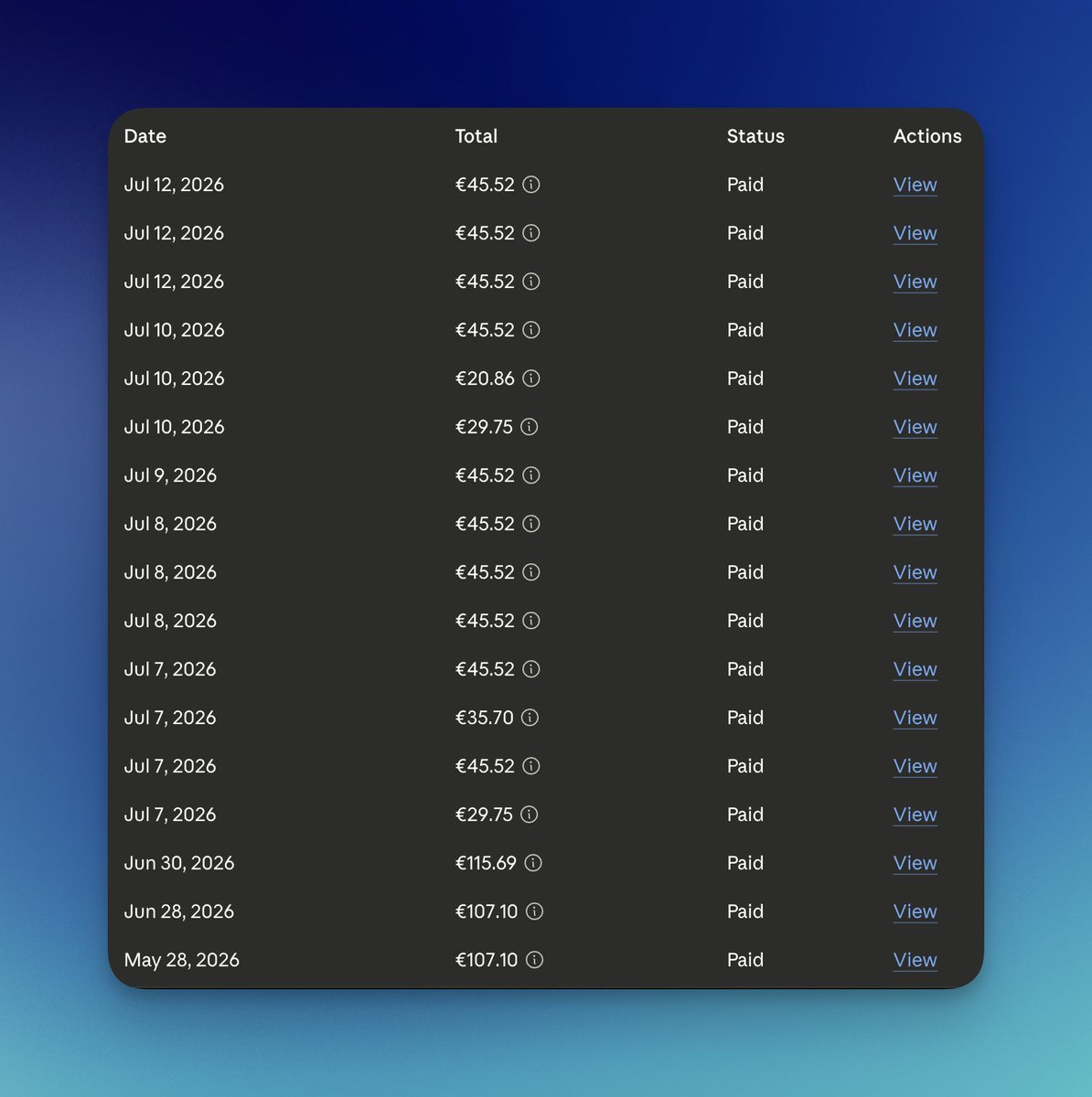
The downstream reaction was predictable: people started buying visibility and routing. @robinebers shipped (18 likes, 4 replies, 1,179 views) OpenUsage 0.7.4 with a cross-provider total-spend card, a cost/tokens menu, GPT-5.6 pricing aliases, and OpenCode support, while @RituWithAI promoted (13 likes, 7 retweets, 6 replies, 371 views, 7 bookmarks) codex-lb, a proxy that spreads requests across multiple accounts and exposes usage in a dashboard. At the more personal end of the same problem, @nyk_builderz listed (9 likes, 4 retweets, 181 views, 8 bookmarks) a month of $200 Codex, $200 Claude Code, $200 Hermes, $200 Cursor, plus another $1,000 in API credits.
Discussion insight: Even when a thread carried guidance from an OpenAI lead, the replies treated usage as an empirical problem, not a messaging problem. People wanted concrete answers about defaults, compression thresholds, per-mode pools, dashboards, and audit trails.
Comparison to prior day: July 11 already linked benchmark claims to reset clocks and spend. July 12 went one layer deeper into pooled limits, long-context defaults, and after-the-fact accounting.
1.2 Workflow portability kept winning over tool loyalty (🡕)
A second cluster treated the harness as something you should be able to rewire rather than marry. At least four retained items showed people trying to carry the same workflows across hosts, providers, and schedules instead of picking one permanent winner.
@ArchitectHappy_ highlighted (41 likes, 11 replies, 4,519 views, 46 bookmarks) wshobson/agents, whose public README advertises 92 plugins, 199 agents, 162 skills, 106 commands, and 16 orchestrators generated from one Markdown source for Claude Code, Codex CLI, Cursor, OpenCode, Gemini CLI, and GitHub Copilot. The important signal was not scale alone; it was the promise that switching harnesses should not mean rebuilding the workflow kit.
@Saboo_Shubham_ pointed (9 likes, 4 replies, 977 views, 10 bookmarks) to openai/codex-plugin-cc, whose README says Claude Code users can run /codex:review, /codex:adversarial-review, and /codex:rescue without leaving their existing environment. In parallel, @chenzeling4 bookmarked (35 likes, 4 retweets, 2,396 views, 39 bookmarks) deepseek-ai/awesome-deepseek-agent, a public guide pack that wires DeepSeek-V4-Pro or V4-Flash into Claude Code, Codex, GitHub Copilot, GitHub Copilot CLI, OpenCode, Qwen Code, and other tools.

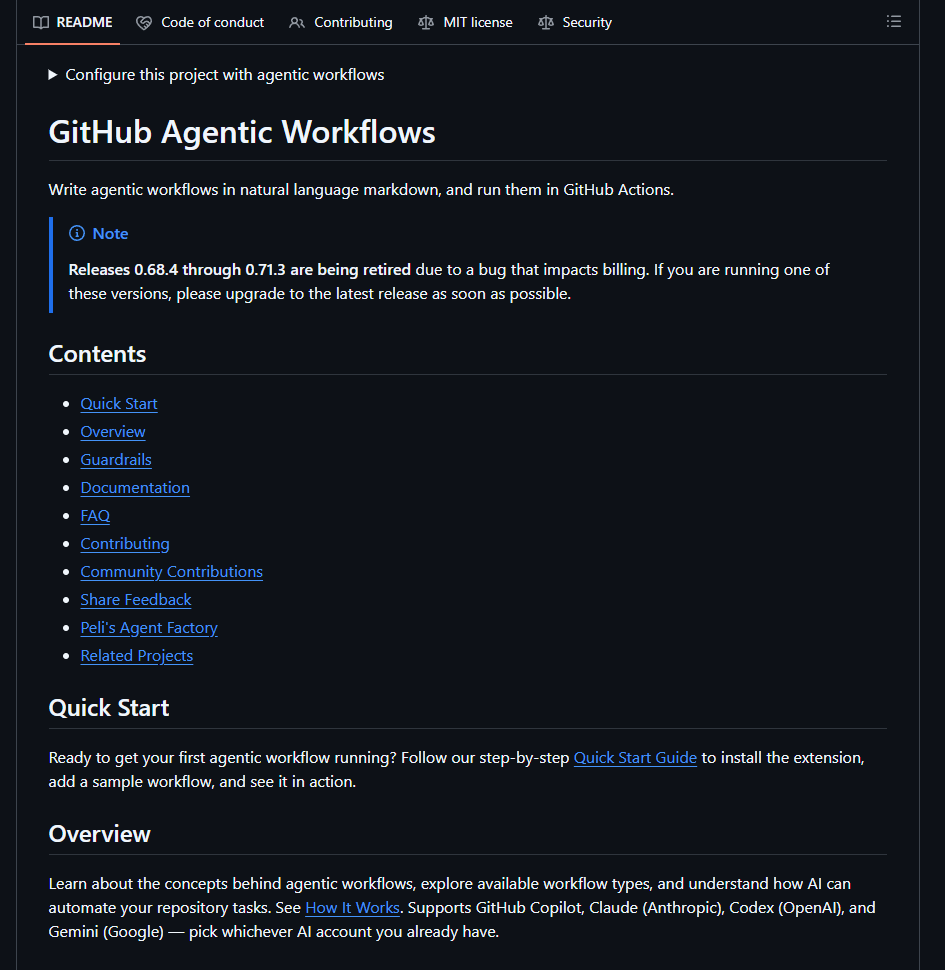
@iiiichigo_chan said (22 likes, 5 replies, 812 views, 16 bookmarks) GitHub Agentic Workflows can put Claude Code, Codex, or Copilot "on the night shift" by turning a markdown workflow into a scheduled GitHub Actions job. The public README makes that concrete: markdown-defined workflows can run across Copilot, Claude, Codex, and Gemini, while the maintainers also had to retire releases 0.68.4 through 0.71.3 because of a billing bug.
Discussion insight: The conversation did not sound ideological. People were happy to mix Codex, Claude Code, Copilot, DeepSeek, and GitHub Actions as long as the glue layer was explicit and reusable. The main reply-level concern was curation: big marketplaces and bridge layers are useful, but someone still has to decide which pieces are worth carrying forward.
Comparison to prior day: July 11 already showed protocol translation and marketplace growth. July 12 made the same instinct more concrete with official plugin bridges, provider-authored guides, and scheduled repo jobs.
1.3 The anti-vibe answer was specs, graphs, and bounded-risk use cases (🡕)
The strongest response to "vibe coding" was not a retreat to manual everything. It was a push toward earlier structure, better repo memory, and clearer limits on where agent output is acceptable. At least four retained items supported that reading from different angles.
@DivyanshT91162 framed (8 likes, 491 views, 9 bookmarks) Spec Kit as GitHub's answer to vague prompting, and the public README matches the post's workflow: constitution, specify, clarify, plan, tasks, then implementation. The claim was not that agents should improvise better; it was that specifications should become executable before code starts changing.

@techNmak argued (5 likes, 354 views, 5 bookmarks) that Graphify should map a codebase once rather than grep it forever. The public README confirms a /graphify skill that builds a persistent multimodal knowledge graph from code, docs, PDFs, images, and more, uses tree-sitter for code extraction, and claims 71.5x fewer query tokens than rereading raw files.

@badlogicgames recommended (18 likes, 1 reply, 1,801 views, 26 bookmarks) Terence Tao's post on using modern coding agents to port about two dozen old Java applets to JavaScript in a few hours, with only one minor bug found so far and two original bugs surfaced by the agent. Tao's own distinction mattered: he was comfortable using agents for low-risk educational visualizations because the outputs were supplementary and easy to discard if wrong.
Discussion insight: Credibility came from moving structure earlier or narrowing the blast radius, not from asking agents to improvise harder. The public artifacts that carried weight were specs, graphs, and well-bounded examples rather than generic exhortations to trust the model.
Comparison to prior day: July 11 argued that the answer to vibe-coding anxiety was more structure. July 12 supplied concrete public tools for that structure and a respected practitioner example of where the boundary can safely sit.
1.4 Trust boundaries moved from prompt safety to owned memory (🡕)
The last clear theme was that "trust" increasingly meant owning the memory layer, the logs, and the permission model around the agent. At least two retained items made that shift explicit.
@mardehaym argued (57 likes, 19 retweets, 9 replies, 16,076 views, 54 bookmarks) that companies "pay for AI twice" when prompts, corrections, and workflow-specific handling all flow back to providers, and the most substantive reply sharpened that into an architectural rule: every correction should land in versioned files the team owns because "the model visits our memory. It doesn't keep it." The important move was from complaining about vendor terms to naming the assets that must stay inside the company's boundary.
@DhravyaShah described (11 likes, 1 reply, 809 views, 3 bookmarks) an internal "company brain" that checks Sentry, GitHub commits, and PostHog, preserves permissioning, and exposes the same context inside Claude Code or other harnesses through plugins or MCP. That was a smaller post, but it gave the day a concrete example of the memory layer the trust-boundary discussion was really about.
Discussion insight: Even the optimistic posts treated permissioning, versioned files, and owned logs as the non-negotiable assets. Better models were interesting; controllable memory was the thing people sounded protective about.
Comparison to prior day: July 11's trust discussion centered on quotas, buried controls, and hidden limits. July 12 made internal memory ownership and permission boundaries the explicit frontier.
2. What Frustrates People
Opaque usage pools and runaway spend
Severity: High. The biggest practical frustration was not "the model is bad." It was "I still do not know what is draining my allowance." @0x_kaize explained that Work and Codex share one agentic pool, @hqmank relayed guidance to keep the default Codex settings, and @aibuilderclub_ argued that API-doc pricing above 272K tokens still matches the heavier burn users are seeing. That uncertainty bled straight into bills: @nyk_builderz counted $200 Codex, $200 Claude Code, $200 Hermes, $200 Cursor, plus another $1,000 in API credits, while OpenUsage shipped a menu-bar tracker precisely because people want one place to see session limits, weekly limits, credits, and spend. The coping pattern was to watch settings more closely, install usage dashboards, and treat mode selection as a budget decision. This is worth building for because the pain is repeated, operational, and already creating standalone tracking products.
Rate walls still break long-running agent sessions
Severity: High. Even when people understood the pool, they still hit hard stops in the middle of work. @RituWithAI described the familiar failure mode: an agent is iterating through a task, then the session freezes on a rate-limit pause and the whole loop loses momentum. The attraction of codex-lb was that it pooled multiple accounts behind one endpoint, queued requests, and exposed per-account usage in a dashboard. But the most useful reply also named the next problem: per-project budget attribution, policy exposure, and failed-run recovery do not disappear just because the proxy found another key. This is worth building for because people clearly want smoother continuity, but they also want the workaround to remain auditable.

Workflow glue is still too fragmented
Severity: Medium. The popularity of wshobson/agents, openai/codex-plugin-cc, awesome-deepseek-agent, and gh-aw was evidence of the same frustration: people do not want to recreate the same workflow every time they switch harnesses or providers. @ArchitectHappy_ stressed that the same Markdown source can survive across Claude Code, Codex, Cursor, OpenCode, Gemini CLI, and Copilot, while @Saboo_Shubham_ and @chenzeling4 highlighted bridges that keep existing workflows intact. The workaround today is to add marketplaces, plugins, guides, and scheduled job layers around the base tool. This is worth building for because the audience is already rewarding portability layers with stars, bookmarks, and repeated reposting.
Faster prototyping still does not solve the learning problem
Severity: Medium. @maxedapps gave the clearest firsthand version of this problem: AI helps them understand unfamiliar libraries and APIs, but because they did not have to write the code from the ground up, it does not feel like real learning. The replies were practical rather than ideological. People said they now separate "core" libraries worth learning deeply from occasional dependencies where AI acceleration is acceptable, and they pair AI discussion with docs, tutorials, and videos. Even Terence Tao's article fits the same boundary from another angle: use the agent where the output is supplementary and discardable, not where unexamined code becomes foundational. This is worth building for because the need is not just speed; it is speed without losing the path to durable understanding.
Enterprise teams still do not want their memory layer outsourced
Severity: High. @mardehaym framed the problem as paying providers twice: once in cash and again in the institutional knowledge embedded in prompts, corrections, and workflow-specific edits. The strongest reply in that thread said every correction should land in versioned files the team owns because "the model visits our memory. It doesn't keep it." @DhravyaShah pointed at the corresponding workaround: an internal company brain that reads Sentry, GitHub commits, and PostHog while preserving permissioning, then exposes that context back into Claude Code or other harnesses via plugins or MCP. This is worth building for because the demand is explicit: teams want reusable agent memory, but they want the ownership boundary and access control to stay theirs.
3. What People Wish Existed
One transparent usage cockpit across agent modes and providers
The clearest practical ask was one place to see what is burning which allowance. @0x_kaize said Work and Codex share an "agentic usage" pool, @hqmank and @aibuilderclub_ showed users trying to map long-context behavior, and @nyk_builderz showed how quickly those unknowns turn into stacked subscriptions and API burn. OpenUsage and codex-lb are partial answers, but they split tracking from routing. The implicit wish was for one control plane that explains mode semantics, forecasts burn, and enforces budgets before the next agent run starts. Opportunity: Direct.
Workflow packs that survive harness switching
People repeatedly asked for the same thing in different forms: write the workflow once, then keep the skills, safety assumptions, and schedules intact wherever the next model or harness lives. wshobson/agents partially addresses that with one Markdown source for multiple hosts, openai/codex-plugin-cc keeps Codex inside Claude Code, awesome-deepseek-agent distributes provider-specific setup guides, and gh-aw turns markdown into scheduled repo jobs. The need is clearly practical rather than emotional: users do not want another migration tax every time the preferred tool changes. Opportunity: Competitive.
Agents that ask, spec, or map before they edit
The strongest structure tools of the day all started before code generation. Spec Kit forces a constitution/specify/plan/tasks flow, Graphify asks the agent to query a prebuilt graph instead of rereading the repo, and Terence Tao's writeup showed the appeal of keeping AI work inside low-risk, discardable scopes. The need here was not "make the model smarter." It was "make the agent orient itself properly before it touches the codebase." Opportunity: Direct.
A learning mode that accelerates without hiding the lesson
@maxedapps stated the problem plainly: AI can help you understand an unfamiliar library without forcing you to struggle through the code deeply enough to feel like you learned it. The replies suggested improvised workarounds such as using AI to discuss the code while still relying on docs, tutorials, and videos, or reserving deep study for "core" libraries and letting AI handle more occasional dependencies. That means the wish is only partially practical and partly emotional: people want the speed of prototyping without giving up the sense that the knowledge is really theirs. Opportunity: Aspirational.
Private company memory that still works across every harness
The trust-boundary discussion pointed to a specific missing layer: reusable agent memory that stays inside the company perimeter. @mardehaym argued that prompts and corrections become institutional knowledge flowing back to providers unless teams own the gateway, logs, and evals, while @DhravyaShah described an internal system that already exposes Sentry, GitHub, and PostHog context back into Claude Code or other harnesses through plugins/MCP. The wish is not just for a smarter agent. It is for one permissioned company brain that can travel with the workflow without handing the memory layer to a vendor. Opportunity: Direct.
4. Tools and Methods in Use
| Tool | Category | Sentiment | Strengths | Limitations |
|---|---|---|---|---|
| Codex / GPT-5.6 Sol | Coding agent / model | (+/-) | Strong repo-task positioning, direct code-editing workflow, and positive practitioner sentiment on design/graphics work | Shared agentic usage pool with Work, unclear long-context behavior for many users, and fast burn when misconfigured |
| Claude Code | Coding harness | (+/-) | Stable outer workflow for plugins, reviews, repo context, and internal memory layers | Users still bolt on Codex, DeepSeek, Graphify, or company-specific layers to fill gaps |
| ChatGPT Work | Agentic knowledge-work mode | (+/-) | Plugins, scheduled tasks, finished deliverables, shared interface with Codex | Documentation is fragmented and its shared usage pool with Codex surprises users |
| wshobson/agents | Plugin marketplace | (+) | One Markdown source, broad multi-harness reach, large catalog of reusable workflow parts | Catalog size creates curation and maintenance overhead |
| GitHub Agentic Workflows | Scheduled agent orchestration | (+/-) | Turns markdown into standing GitHub Actions jobs across multiple engines, with public guardrail documentation | Setup and supervision still matter, and the project had to retire several releases because of a billing bug |
| Codex plugin for Claude Code | Bridge / plugin | (+) | Keeps Codex reviews and delegated tasks inside Claude Code, with background status/result commands | Still consumes Codex usage limits and adds plugin setup complexity |
| DeepSeek agent guides | Provider integration docs | (+) | Fast setup across many assistants, useful for cost-conscious experimentation, explicit first-run instructions | Today's evidence was about integration convenience, not superior outcomes inside any one harness |
| Spec Kit | Spec-driven workflow | (+) | Forces constitution/specify/plan/tasks before coding, reducing vague prompting | Adds upfront process and a larger command surface |
| Graphify | Repo memory / knowledge graph | (+) | Persistent code graph, tree-sitter parsing, multimodal inputs, graph-first retrieval | Requires an indexing step and another artifact to maintain |
| OpenUsage | Spend tracker | (+) | Native menu-bar visibility, cross-provider spend views, local HTTP API for usage data | Mostly observes and summarizes usage after the fact rather than preventing burn |
| codex-lb | Proxy / load balancer | (+/-) | Smooths rate limits, pools accounts, and exposes dashboard views for usage and capacity | Moves risk into account policy, audit, and shared-budget attribution |
Overall, sentiment was mixed-positive toward the base agents and strongly positive toward the layers that explain or reuse them. People were willing to pay for Codex when it solved a specific job, but they kept adding OpenUsage, codex-lb, plugin bridges, and workflow packs to make the sessions predictable enough to trust.
The most common workarounds were compositional. Keep Claude Code as the outer harness, call Codex through a plugin when you want a second review or delegated task, wire DeepSeek into the same shells when cost matters, and add Spec Kit or Graphify before the model starts touching files. Competitive dynamics looked combinatorial rather than winner-take-all: the same day produced bridge plugins, provider guide packs, marketplace registries, and scheduled GitHub Actions jobs instead of evidence that one agent had swallowed the whole workflow.

5. What People Are Building
| Project | Who built it | What it does | Problem it solves | Stack | Stage | Links |
|---|---|---|---|---|---|---|
| wshobson/agents | wshobson | Cross-harness marketplace of installable plugins, agents, skills, commands, and orchestrators | Rebuilding the same workflow kit for every coding client | Markdown source, registries, harness adapters | Shipped | repo, post |
| GitHub Agentic Workflows | GitHub | Runs markdown-defined agentic workflows on schedule in GitHub Actions | Reopening the same repo and restating context for recurring work | Go extension, GitHub Actions, Copilot/Claude/Codex/Gemini engines | Shipped | repo, post |
| codex-plugin-cc | OpenAI | Brings Codex review and delegation commands into Claude Code | Switching tools just to use Codex as a reviewer or delegated worker | Node.js, Claude Code plugin, Codex CLI | Shipped | repo, post |
| awesome-deepseek-agent | deepseek-ai | Guide pack for wiring DeepSeek models into many assistants | Setup friction when trying a new provider across multiple harnesses | Markdown docs, provider configs, DeepSeek-V4-Pro/V4-Flash | Shipped | repo, post |
| codex-lb | Soju06 | Load balances Codex/ChatGPT accounts and tracks usage in a dashboard | Rate-limit pauses and fragmented account capacity | Python, FastAPI, SQLAlchemy, OpenAI-compatible proxy | Beta | repo, post |
| Spec Kit | GitHub | Toolkit for spec-driven development with a slash-command workflow | Vague prompts and unpredictable vibe-coded edits | specify CLI, slash commands, project templates | Shipped | repo, post |
| Graphify | Graphify Labs | Builds a queryable multimodal knowledge graph for a repo or corpus | Agents keep rereading and reconstructing the same codebase | Python, tree-sitter, Claude vision, MCP, graph exports | Beta | repo, post |
| OpenUsage | robinebers | Menu-bar tracker for AI coding subscriptions, limits, and spend | Hard to see session, weekly, and cost usage across providers | Swift, macOS menu bar, local HTTP API, provider log readers | Shipped | repo, post |
| Tao applet migrations and new visualizers | Terence Tao | Restores legacy Java applets and adds new interactive math visualizations with AI assistance | Old educational tools were broken and new visualizations were too time-consuming by hand | JavaScript, AI coding agent, static site | Alpha | article, applets |
The biggest build pattern was portability as product. wshobson/agents, codex-plugin-cc, awesome-deepseek-agent, and gh-aw all assume the workflow will outlive the current favorite model or host. One package turns the workflow into a marketplace, another into a bridge, another into provider-specific setup docs, and another into scheduled markdown jobs.

A second pattern was structure before execution. Spec Kit and Graphify attack different parts of the problem, but both refuse to start from a blank prompt: one demands a specification and task plan, while the other precomputes a graph of the repo so the agent can query structure instead of rebuilding it from scratch every session.
The operational layer was just as active. OpenUsage and codex-lb do not make the agent smarter; they make usage, limits, and spend survivable enough to keep the workflow running. That is a strong builder signal because two separate projects attacked the same pain point from opposite directions: visibility versus routing.
Terry Tao's applet work was a different kind of build signal. It showed a respected domain expert using an agent where the downside of a subtle bug is low, the output is easy to inspect, and the value of faster iteration is high. That boundary-setting matters as much as the code itself.
6. New and Notable
A top mathematician published a concrete low-risk agent workflow
@badlogicgames pointed readers (18 likes, 1 reply, 1,801 views, 26 bookmarks) to Terence Tao's writeup, which is unusually specific about what the agent did, how long it took, how many bugs appeared, and why the risk was acceptable. That matters because it was not hype about general intelligence; it was a public case study in using coding agents where the outputs are supplementary, inspectable, and easy to discard if something is wrong.
Weekly repo growth clustered around tooling that makes agents usable
@thehypedotnews ranked (8 likes, 2 replies, 1,544 views, 6 bookmarks) the week's fastest-growing repos and found meeting capture, system-prompt leakage catalogs, autonomous pentesting, Office-file automation for agents, and token compression near the top. That was notable because the list was not dominated by a new base model launch. It was dominated by tooling that makes existing agents easier to operate.
Scheduled markdown jobs are no longer a toy feature
@iiiichigo_chan used (22 likes, 5 replies, 812 views, 16 bookmarks) gh-aw to pitch recurring bug triage, flaky-test cleanup, release notes, and dependency updates as standing jobs. The notable part was the maturity signal around it: GitHub's public README already includes guardrail architecture and a warning that multiple releases were being retired because of a billing bug. That is what a real product surface looks like, not a weekend demo.
7. Where the Opportunities Are
[+++] Agent spend and runway control planes — Evidence came from @0x_kaize explaining shared Work/Codex usage, @hqmank and @aibuilderclub_ arguing over long-context burn, @nyk_builderz showing stacked monthly bills, and builders shipping both OpenUsage and codex-lb. This is strong because the pain is repeated, operational, and already monetizable.
[+++] Portable workflow packs and bridge layers — wshobson/agents, codex-plugin-cc, awesome-deepseek-agent, and gh-aw all solve the same underlying problem: users want workflows, not just chats, and they do not want to rewrite those workflows when the preferred harness changes. This is strong because the signal spans independent builders, official vendor projects, and GitHub's own workflow layer.
[++] Structure-before-edit tooling — Spec Kit, Graphify, and Terence Tao's article all point toward the same idea: ask questions, map the repo, or narrow the risk before the agent starts editing. This is moderate because the need is obvious, but the winning product shape could be a spec tool, a memory layer, or a domain-specific workflow.
[++] Private company memory with permissioning — @mardehaym made the ownership argument explicit, and @DhravyaShah described an internal company brain that already carries Sentry, GitHub, and PostHog context into coding harnesses. This is moderate because the value is high, but the public evidence is still early and enterprise-specific.
[+] Learning-preserving copilots — @maxedapps captured a real tension between prototyping speed and durable understanding, and none of the day's concrete tools fully solved it. This is emerging because the pain is credible, but the product category is still mostly an articulated need rather than a proven market.
8. Takeaways
- The main OpenAI coding conversation shifted from benchmark bragging to usage semantics. People spent July 12 explaining shared Work/Codex pools, default context settings, and why long-context behavior still feels confusing in practice. (source)
- Portability beat loyalty. The strongest builder signals were marketplaces, bridges, guide packs, and scheduled jobs that let the same workflow survive across Claude Code, Codex, Copilot, DeepSeek, and GitHub Actions. (source)
- The credible answer to vibe-coding anxiety was more structure, not less. Spec-first workflows, repo graphs, and bounded low-risk use cases carried more weight than generic claims that the model will "just figure it out." (source)
- Spend and limit tooling is becoming its own product category. OpenUsage and codex-lb attacked the same pain from different directions, while bill-shock posts made the demand obvious. (source)
- Enterprise trust is moving toward owned memory, logs, and permissioning. The sharpest trust-boundary posts were about where corrections live and who controls the context layer around the model. (source)
- Learning remains an unsolved part of AI coding. Fast prototyping helps people ship, but at least one practitioner thread made it clear that understanding generated code is not the same as truly learning the stack behind it. (source)