Twitter AI Coding - 2026-07-27
1. What People Are Talking About
1.1 Google stayed in the middle of AI-coding talk, but the argument shifted to model choice and access economics (🡒)
Google remained highly visible in AI-coding discussion, but the day's strongest Google posts were less about a single Antigravity breakthrough than about what you could access, what it cost, and which models were missing. Five retained items supported the theme: a widely shared Google AI Plus student offer, an official Antigravity SDK demo, repeated calls to add Kimi K3, an OpenCode Zen launch for Kimi K3, and a small but telling Copilot screenshot showing Kimi 2.7 already present elsewhere. The practical question was no longer whether Google had an agent, but which model menu you got inside which harness and on what terms.
@StudentOffersHQ reported (287 likes, 14 replies, 33,284 views, 332 bookmarks) that Google AI Plus was free for twelve months through student-facing distribution channels in India, the US, and Canada, while also noting that the offer did not raise Antigravity limits. That mattered because it framed Google's AI-coding push as a bundle-and-distribution play rather than just a model launch.
@antigravity showed (478 likes, 40 replies, 30,655 views, 86 bookmarks) an Antigravity 2.0 agent building a collaborative Markdown editor with real-time multi-agent state syncing and live previewing on 3.6 Flash. The demo gave Google a concrete shipped artifact, but the reply thread immediately pulled attention back to model inventory: several users asked for Anthropic or Kimi instead of Gemini and questioned whether Flash-class models are enough for complex work.
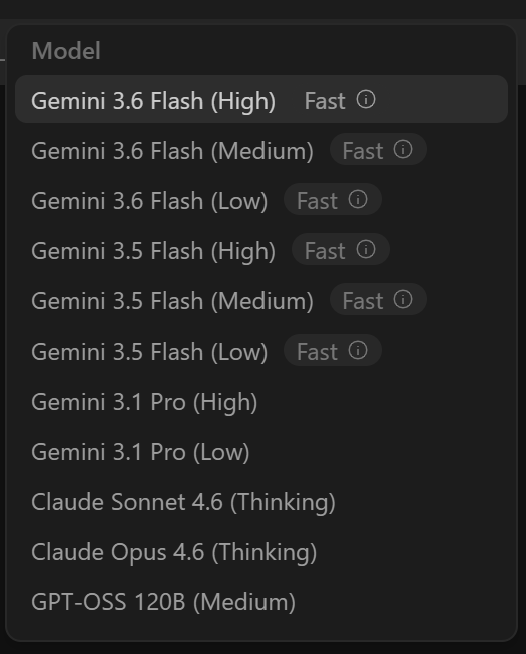
@HarshithLucky3 asked (342 likes, 32 replies, 20,416 views) Google to add Kimi K3 to Antigravity. The screenshot matters because it makes the complaint concrete: the live menu showed several Gemini tiers, Claude 4.6 variants, and GPT-OSS 120B, but not Kimi K3. @opencode answered from the other side (290 likes, 16 replies, 5,488 views) by shipping Kimi K3 in OpenCode Zen, and the first replies were already about cost and whether the open-weight win had arrived late.
The competitive contrast extended beyond Google. @pamelafox showed (5 likes, 2 replies, 1,473 views) Kimi 2.7 selected inside GitHub Copilot, which made Antigravity's missing Kimi slot feel like a product gap rather than a theoretical feature request.
Discussion insight: The sharpest replies were not fanboying one brand over another. They were about menus, latency, cost, and whether a harness gives access to the model people actually want to code with.
Comparison to prior day: Earlier Google-centered days were dominated by bundle-pricing and Antigravity-versus-Codex trust arguments. July 27 kept Google central, but the strongest pressure shifted toward model availability inside the harness itself.
1.2 Cache behavior, routing, skills, and policy controls became front-of-screen product features (🡕)
Operational details that used to live in docs or backend diagrams became first-order social content. Five retained items supported this theme: GitHub's public HyDRA routing claim, Burke Holland's cache-miss list, Burke's cache-break notifier plugin, Skills.sh's skill marketplace pitch, and GitHub's expansion of enterprise-managed settings. The throughline was that people are no longer just comparing models; they are comparing the control surface around the model.
@github said (55 likes, 9 replies, 13,070 views) that prompt caching and tool search let more of each Copilot session go toward useful work, while Auto chooses models based on task intent and real-time model health. GitHub's public post adds the missing mechanism: routing happens at natural cache boundaries, tool definitions are loaded on demand instead of shoved into every turn, and HyDRA matched OpenRouter Auto's 70.8% resolution rate at 3.3x the savings.

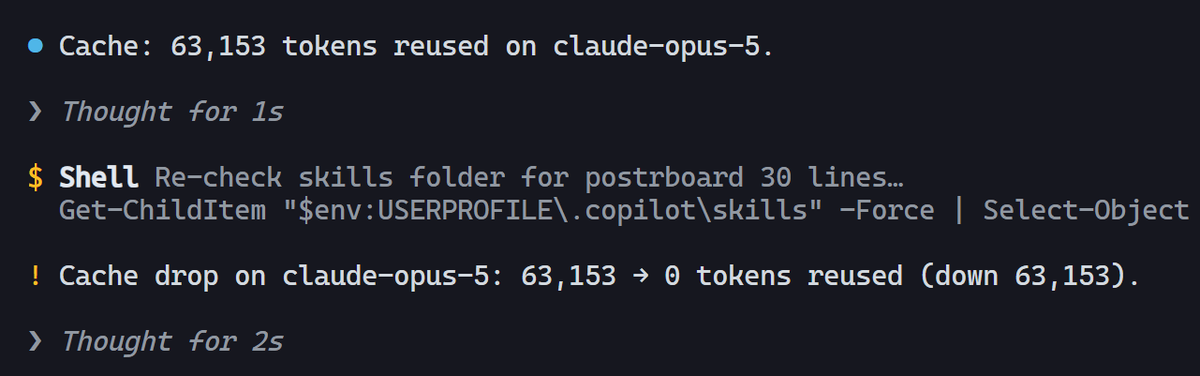
@burkeholland listed (25 likes, 8 replies, 3,766 views) the actions that break Copilot cache reuse: switching models, changing reasoning level, toggling a skill or MCP server, waiting past TTL, changing custom agents, or hitting compaction. That post got a second, more practical follow-up when he shared (13 likes, 2 replies, 1,465 views, 15 bookmarks) a Copilot CLI plugin that explicitly shows cache drops, after his own screenshot captured 63,153 reused tokens collapsing to zero. The burden of proof in the reply thread was very operational: people asked whether routers account for cache math at all and whether a tiny local model could triage cache relevance instead of forcing a miss.
@ihteshamali argued (17 likes, 5 replies, 1,412 views, 13 bookmarks) that Skills.sh is effectively an app store for agent capabilities, with one-command installs, source visibility, install counts, supported agents, and security audit results. The site itself is sparse, but it does confirm the basic product idea: an open agent skills ecosystem built around reusable capabilities and npx skills add <owner/repo>. The most useful reply was also the most skeptical: one user asked whether audit results go stale every time a skill repository changes.
The governance layer moved too. @pierceboggan reported (5 likes, 1 reply, 411 views) that enterprise-managed settings now reach the Copilot app, and GitHub's changelog says the same policy file now applies to the cloud agent as well.
Discussion insight: The conversation around these tools has become legibly operational. People are asking about cache TTLs, approval bypass, audit freshness, and model-health routing, not just model IQ.
Comparison to prior day: Efficiency and skills were already in the air earlier in the week, but July 27 brought them into concrete operator surfaces: charts, plugins, install commands, and policy files.
1.3 Builders kept shipping local-first workspaces, memory layers, and review loops around existing models (🡕)
The biggest builder signal was how many projects treated the model as only one piece of the system. Eight retained items fed this theme: OpenWorker, jcode, Claudian, pauliusztin_'s coding-agent loop, Ködade/KödWeb, fjzeit's multi-harness console, Victor Kildahl's agent notch, and alphabatcher's vertical-slice delivery diagram. The common move was to wrap agents in local files, approvals, memory, dashboards, review panes, or remote workspaces.
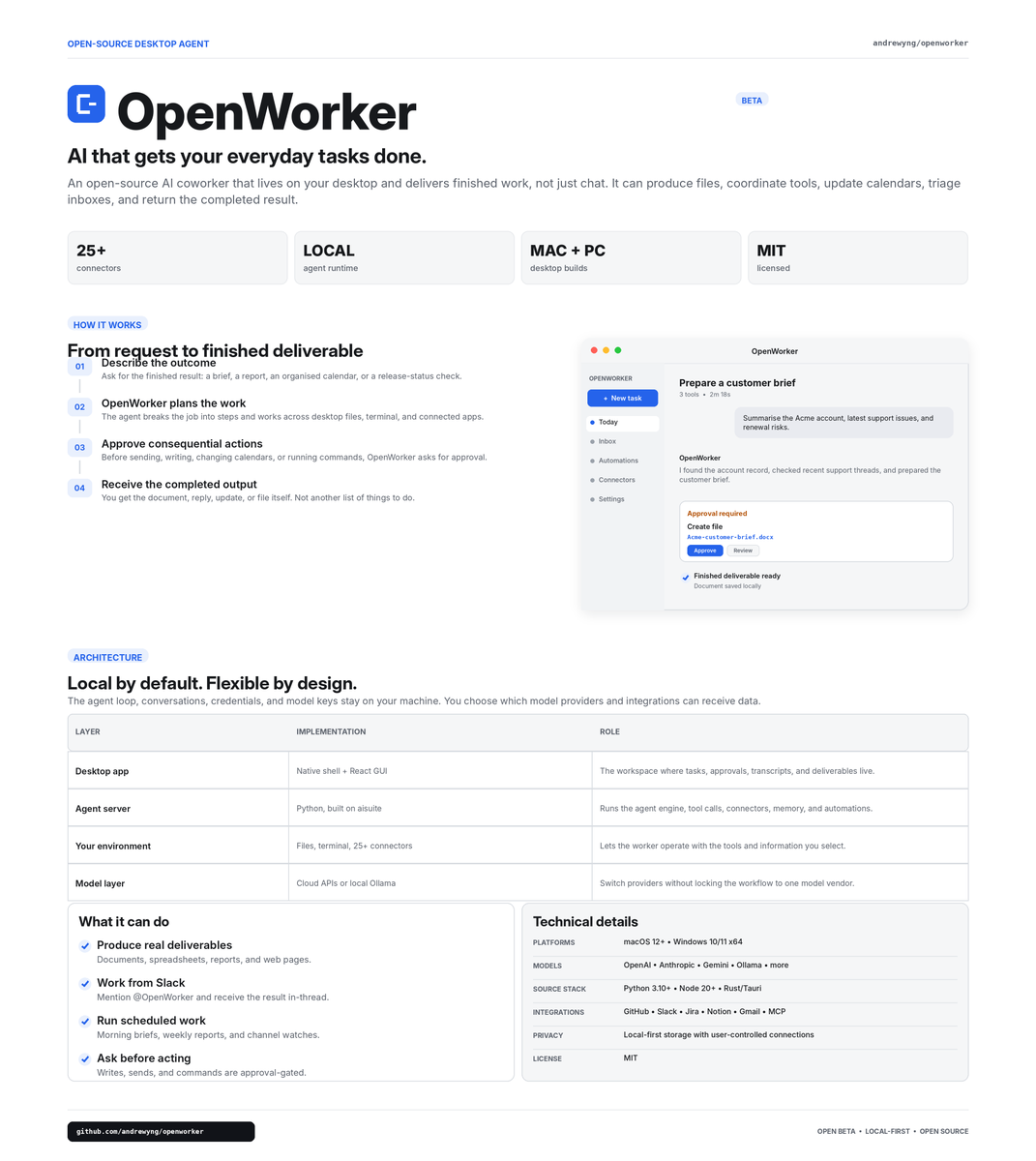
@socialwithaayan shared (36 likes, 18 replies, 5,741 views) OpenWorker as a local AI coworker that breaks work into steps, crosses desktop files and connected apps, and asks for approval before consequential actions. The repo and screenshot sharpen that claim: 25+ connectors, a Python backend on aisuite, React/Tauri desktop UI, MCP support, and scheduled runs all point to a product trying to replace manual cross-app follow-through rather than just generate suggestions.
@thisguyknowsai promoted (31 likes, 13 replies, 2,500 views, 35 bookmarks) jcode as a Rust harness built around low RAM usage, semantic memory graphs, and swarm-style multi-agent coordination. The public repo backs the architecture, but the reply thread is what keeps the post useful: several people immediately asked whether faster boot means anything if first useful deliverable, approvals, or conflict handling still lag.
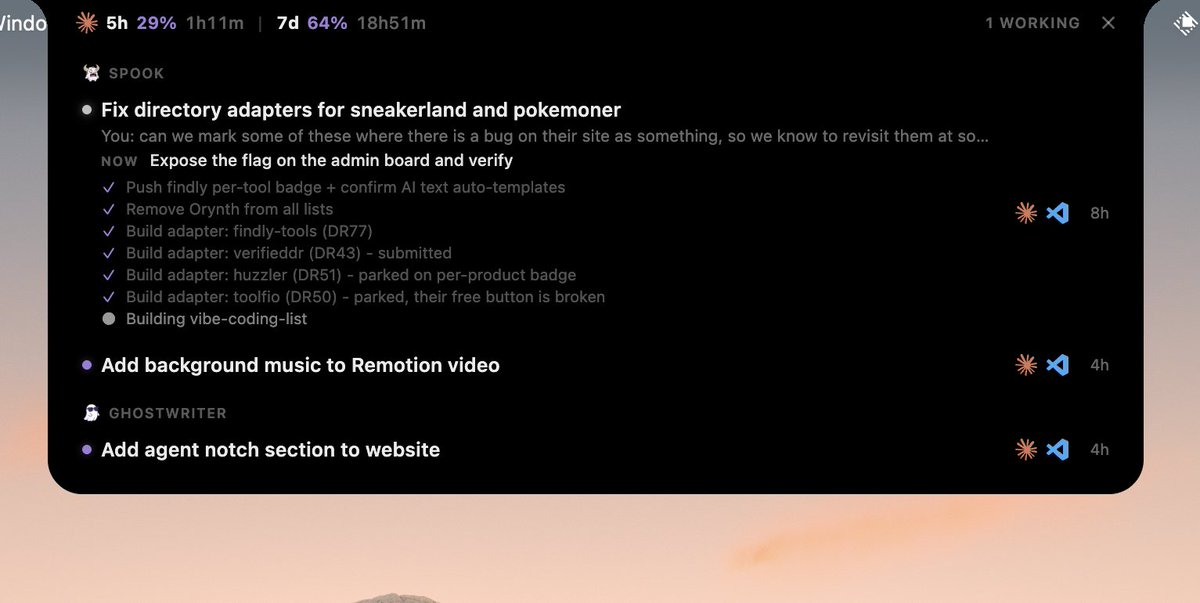
@gippp69 framed (27 likes, 10 replies, 18 bookmarks) Claudian as a way to make an Obsidian vault searchable and usable by Claude Code, while @pauliusztin_ explained (1 reply, 156 views) that the interesting engineering is the queue, runner, permission gate, steering, and tracing around the agent loop. @contractorkeith showed (2 replies, 186 views) Ködade as an ADE with built-in review and a browser-paired KödWeb mode, while @VictorKildahl showed (2 likes, 1 reply, 26 views) a tiny “agent notch” built just to keep many sessions visible and flag which ones are waiting on the human.
At the workflow level, @alphabatcher warned (7 likes, 2 replies, 1,135 views) against 2,000-line one-shot agent PRs and pushed vertical slices instead, while @fjzeit showed (1 like, 2 replies, 25 views) a local console with command gating, code-quality policies, and side-by-side GitHub Copilot and Claude Code panes.
Discussion insight: The strongest corrective voices did not say “don't use agents.” They said the interesting part is the harness: memory, permissions, review boundaries, remote session handling, and visibility into what the agents are doing.
Comparison to prior day: Earlier memory-system talk was still mostly about principles and playbooks. July 27 added more concrete surfaces: desktop coworkers, browser-paired workspaces, built-in review panes, and dashboards for concurrent sessions.
2. What Frustrates People
Hidden cache, routing, and safety state makes agent behavior expensive and hard to predict
Severity: High. @burkeholland listed (25 likes, 8 replies, 3,766 views) the model, reasoning, skill, MCP, TTL, custom-agent, and compaction events that break Copilot cache reuse. He then shared (13 likes, 2 replies, 1,465 views, 15 bookmarks) a notifier plugin because the default UI does not make those misses obvious enough. GitHub's public routing post explains why this hurts: cache-aware routing is valuable precisely because switching models mid-session can cost more than it saves.
@aramh complained (10 likes, 3 replies, 352 views) that a GPT-5.6/Codex request about interaction nets redirected to an OpenAI safety page instead of answering. OpenAI's own help article confirms the broad pattern: some cybersecurity and biological requests trigger additional automated checks that can delay or suppress a response. The coping behavior visible today was pragmatic rather than ideological: keep the session stable, surface misses in the UI, and narrow prompts when a safety screen appears. This is worth building for because the pain is not just bad output; it is hidden session state that changes cost and behavior without enough warning.
Large one-shot agent changes still feel less trustworthy than vertical slices and early review
Severity: High. @alphabatcher warned (7 likes, 2 replies, 1,135 views) that AI coding agents often hand over 2,000 lines before a human can click anything, while dex's alternative is to ship the same feature in small vertical slices and check each one on the way through. The key numbers were blunt: most one-shot PRs come back needing about 50% rework, and 30 minutes of planning saves hours later.

The correction appears elsewhere too. Replies under @thisguyknowsai promoting (31 likes, 13 replies, 2,500 views, 35 bookmarks) jcode said boot time matters less than first useful deliverable, clean logs, and approval gates. Replies under @antigravity showing (478 likes, 40 replies, 30,655 views, 86 bookmarks) its Markdown-editor demo said Flash-class models still do not inspire trust on harder work. People cope by forcing smaller slices, adding curl or browser checks, and keeping human review near the change rather than after the entire PR. This is worth building for because the live answer to agent slop is workflow architecture, not bigger screenshots.
Tool sprawl and parallel-session sprawl still outrun the UI
Severity: Medium. @mark_k asked (39 likes, 41 replies, 2,707 views) for a favorite AI coding environment, and the replies scattered across Grok Build, Orca, Herdr, Pi via OpenRouter, Codex, Claude Code, Cursor, and Devin instead of converging on one stack. @VictorKildahl said (2 likes, 1 reply, 26 views) the hard part of vibe-coding multitasking was keeping track of all the running agents, then showed a notch UI that flags sessions waiting on him.
@gippp69 used (27 likes, 10 replies, 18 bookmarks) Claudian to turn an Obsidian vault into agent memory, while @contractorkeith showed (2 replies, 186 views) Ködade with a built-in review surface and browser-paired workspace. Those are all coping mechanisms for the same strain: too many tools, too many sessions, and not enough shared context or oversight. This is worth building for because the current answers are bespoke and low-reach, which usually means the product surface is still open.
3. What People Wish Existed
Model portability inside the same coding workflow
This was an immediately practical need, not abstract benchmarking chatter. @HarshithLucky3 asked (342 likes, 32 replies, 20,416 views) Google to add Kimi K3 to Antigravity, while his screenshot made the absence of Kimi in the current menu impossible to miss. @opencode showed (290 likes, 16 replies, 5,488 views) that OpenCode Zen already had Kimi K3, and @pamelafox showed (5 likes, 2 replies, 1,473 views) Kimi 2.7 running inside GitHub Copilot.
OpenWorker and jcode push in the same direction from the tooling side: both let the workflow stay put while the provider changes underneath it. Opportunity: Competitive. The unmet need is not another isolated model menu; it is a stable coding harness where memory, tools, approvals, and review habits survive a model swap.
Memory that persists across sessions and across tools
This was a practical need with multiple concrete answers. @gippp69 used (27 likes, 10 replies, 18 bookmarks) Claudian to turn an Obsidian vault into a searchable AI memory system, while the Claudian repo confirms that the vault becomes the agent's working directory rather than a passive attachment. @thisguyknowsai promoted (31 likes, 13 replies, 2,500 views, 35 bookmarks) jcode's semantic memory graph and background consolidation, and KödWeb's public docs say project memory stays on the always-on machine that hosts the workspace.

@pauliusztin_ explained (1 reply, 156 views) why that persistence matters: the queue, runner, session log, and permission gate are the real runtime, not just the LLM call. Opportunity: Direct. People do not just want more context in one chat; they want memory and runtime state that compound across sessions, tools, and interfaces.
Human-visible control planes for approvals, cost, and many simultaneous agents
The need here was part governance, part usability. @socialwithaayan shared (36 likes, 18 replies, 5,741 views) OpenWorker's rule that consequential actions stop for approval, while @burkeholland listed (25 likes, 8 replies, 3,766 views) the invisible events that destroy cache efficiency and then published (13 likes, 2 replies, 1,465 views, 15 bookmarks) a plugin to expose them.
@VictorKildahl showed (2 likes, 1 reply, 26 views) a compact notch just to surface which agents were waiting on him, and @pierceboggan reported (5 likes, 1 reply, 411 views) that GitHub's enterprise-managed settings now reach the Copilot app and cloud agent. Opportunity: Direct. The practical ask is not autonomy without limits; it is visible limits, visible cost, and visible waiting states.
4. Tools and Methods in Use
| Tool | Category | Sentiment | Strengths | Limitations |
|---|---|---|---|---|
| Google Antigravity / Antigravity SDK | Agent platform | (+/-) | Student-bundle access, official SDK demos, collaborative build examples | Current model menu drew repeated Kimi and Anthropic complaints; trust on harder tasks is still contested |
| GitHub Copilot | Agent platform | (+/-) | Prompt caching, tool search, Auto/HyDRA routing, expanding enterprise policy surface | Cache reuse breaks on model, reasoning, skill, or MCP changes; users want better visibility |
| Claude Code | Agent CLI | (+/-) | Remains the reference tool around which memory plugins, job-application agents, and local workstations are built | People still route away from it for some tasks and keep adding memory, approval, and review layers around it |
| Skills.sh | Skills marketplace | (+) | One-command reusable capabilities across many agents; source and audit metadata | Users immediately asked how audits stay fresh when skill repos change |
| OpenWorker | Local AI coworker | (+) | Local-first, 25+ connectors, approval-gated actions, scheduled runs, bring-your-own-model support | Open beta; messy multi-app workflows still need a human eye |
| jcode | Harness / ADE | (+/-) | Low RAM footprint, semantic memory graph, swarm coordination, broad provider logins | Speed benchmarks invite skepticism if delivery quality and conflict handling lag |
| Claudian | Memory / workspace plugin | (+) | Embeds multiple coding agents inside Obsidian with inline edit, MCP, and slash commands | Best fit is still note-centric users; broad adoption signal remains small |
| Ködade / KödWeb | ADE / remote workspace | (+/-) | Built-in review, browser-paired workspace, project memory stays on the host machine | Pre-release, no public download, unsigned test builds |
| Kimi K3 / Kimi 2.7 Code | Model | (+) | Strong demand as a coding model and visible entry into OpenCode Zen and Copilot UI | Still absent from some major harnesses; broader frontier-status debate continues |
| Gemini CLI | Terminal agent | (+) | Free tier, 1M token context, built-in search/MCP, open-source terminal-first workflow | Today's practitioner evidence came mostly through roundup-style discovery rather than deep first-hand threads |
The widest pattern was mix-and-match rather than winner-take-all. @mark_k asked (39 likes, 41 replies, 2,707 views) for a favorite AI coding environment, and the replies named Orca, Herdr, Pi via OpenRouter, Codex, Claude Code, Cursor, Grok Build, and Devin instead of producing a clear winner. @fjzeit showed (1 like, 2 replies, 25 views) a multi-pane console that auto-configures GitHub Copilot and Claude Code while running mostly on GLM-5.2 and DeepSeek-v4-flash through Ollama's cloud models.
The migration pattern was equally clear. @pamelafox showed (5 likes, 2 replies, 1,473 views) Kimi 2.7 inside Copilot, while @HarshithLucky3 asked (342 likes, 32 replies, 20,416 views) for Kimi K3 in Antigravity and @opencode shipped (290 likes, 16 replies, 5,488 views) Kimi K3 in OpenCode Zen. The workaround market matched the tool market: keep the model stable to preserve cache, add a notifier when you cannot, install reusable skills instead of repeating workflow prompts, and wrap serious tasks in local-first memory plus approval gates.
5. What People Are Building
| Project | Who built it | What it does | Problem it solves | Stack | Stage | Links |
|---|---|---|---|---|---|---|
| OpenWorker | Andrew Ng / OpenWorker team | Local-first desktop coworker that turns prompts into finished files and cross-app actions | Replaces the manual copy-paste-and-follow-up loop across apps and files | Python backend on aisuite, React/Tauri desktop UI, Rust STT sidecar, MCP, 25+ connectors | Beta | Repo · Tweet (36 likes, 18 replies, 5,741 views) |
| jcode | 1jehuang | High-performance coding harness with semantic memory and swarm-style collaboration | Gives power users lighter multi-agent sessions and persistent memory without manual lookup tools | Rust, memory graph, sideagents, custom terminal/renderer, multi-provider logins | Beta | Repo · Tweet (31 likes, 13 replies, 2,500 views, 35 bookmarks) |
| Claudian | Yishen Tu | Obsidian plugin that embeds Claude Code, Codex, Grok, Opencode, and Pi inside a vault | Keeps project notes and agent work in one memory-rich workspace | TypeScript Obsidian plugin, provider CLIs, MCP, inline edit | Shipped | Repo · Tweet (27 likes, 10 replies, 18 bookmarks) |
| Ködade / KödWeb | @contractorkeith | Agentic development environment with built-in review, files, browser access, and remote browser pairing | Solves the sprawl of running multiple agent CLIs and workspaces separately | Desktop + server/browser workspace, multiple agent CLIs, review pane, project memory | Alpha | Docs · Tweet (2 replies, 186 views) |
| Skills.sh | Vercel Labs | Catalog and installer for reusable agent skills | Stops users from re-explaining repeatable workflows to every agent session | Web catalog, one-command install, source/audit metadata, cross-agent compatibility | Shipped | Site · Tweet (17 likes, 5 replies, 1,412 views, 13 bookmarks) |
| Cache Break Notifier | Burke Holland / Derek Legenzoff | Copilot CLI plugin that announces when a prompt cache miss happens | Makes hidden token and cost penalties visible during long agent sessions | Copilot CLI plugin distributed as a gist | Shipped | Gist · Tweet (13 likes, 2 replies, 1,465 views, 15 bookmarks) |
OpenWorker and jcode show two ends of the same build pattern. OpenWorker turns approval-gated work across Slack, GitHub, Jira, Notion, and the local filesystem into the product itself, while jcode turns performance, memory, and native multi-agent coordination into the product. In both cases, the durable differentiation sits above the model and below the final deliverable.

Claudian, Ködade, and Victor Kildahl's tiny notch UI suggest a second repeated pattern: builders are trying to decide where shared project context should live and how one human should watch many agents at once. Claudian puts that context into a note vault, KödWeb keeps terminals, files, and project memory on the host machine while a browser pairs in, and Victor's prototype flags which session is blocked on the human rather than forcing constant tab-checking.
Skills.sh and Cache Break Notifier point to a third build pattern: small control-layer products around existing agents rather than another new base model. One packages reusable procedures with installable metadata; the other exposes cost state that the default UI hides. Across all six projects, the trigger is the same: people are trying to make agents more legible, more reusable, and easier to supervise.
6. New and Notable
Cross-client Copilot governance expanded into the app and cloud agent
@pierceboggan reported (5 likes, 1 reply, 411 views) that the GitHub Copilot app now supports enterprise-managed settings. GitHub's changelog makes the scope clearer: the same managed-settings.json can now govern plugins, marketplaces, approval-bypass behavior, and Auto defaults across the Copilot app and Copilot cloud agent, not just CLI and IDE surfaces. That is notable because policy consistency is becoming a product feature for agentic coding, not an afterthought.
OpenAI's extra safety-check UX became a visible coding-workflow complaint
@aramh complained (10 likes, 3 replies, 352 views) that a technical query sent him to an OpenAI safety explainer instead of a useful response. The Help Center article confirms that some cybersecurity and biological requests trigger extra automated review that can slow or block an answer.

That is notable not because safety checks are new, but because the UX has become visible enough that users are now discussing it alongside routing, cache misses, and model menus as part of everyday coding-tool behavior.
Kimi moved from abstract hype to actual menu slots
@opencode shipped (290 likes, 16 replies, 5,488 views) Kimi K3 in OpenCode Zen, while @pamelafox showed (5 likes, 2 replies, 1,473 views) Kimi 2.7 selected inside GitHub Copilot.
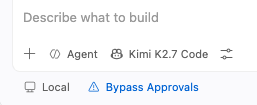
That matters because the real signal today was not a benchmark thread saying Kimi is strong. It was that Kimi-family models were visibly entering real agent menus, which makes every harness that lacks them look older.
7. Where the Opportunities Are
[+++] Cache-aware routing and visibility layers — GitHub's HyDRA and prompt-caching push, Burke Holland's cache-break list and notifier plugin, and aramh's safety-check complaint all point to the same gap: long-running agent sessions have too much hidden state. Products that surface cache boundaries, model-routing consequences, approval state, and blocked/slow paths would answer a pain point visible in both official product posts and user complaints.
[+++] Shared project memory and session-overview layers — Claudian, jcode, Ködade, pauliusztin_'s agent-loop diagram, and Victor Kildahl's notch all attack the same missing layer: durable context plus a human-readable overview of what multiple agents are doing. This is strong because it shows up as a theme, a frustration, an unmet need, and direct builder activity on the same day.
[++] Approval and policy control planes for local-first coworkers — OpenWorker's approval gates, GitHub's enterprise-managed settings expansion, and KödWeb's browser-paired remote workspace all suggest demand for autonomy inside explicit boundaries. The opportunity is moderate because real products are already emerging, but the current surfaces are still fragmented by environment and audience.
[+] Plug-compatible model menus inside existing harnesses — Requests for Kimi K3 in Antigravity, Kimi shipping in OpenCode Zen, and Kimi 2.7 appearing inside Copilot all suggest there is room for products that separate workflow loyalty from model loyalty. The signal is emerging because the need is obvious, but the main evidence still comes from menu screenshots, replies, and early integrations rather than broad deployment stories.
8. Takeaways
- Google still owned attention, but the argument moved to menus and access. @StudentOffersHQ flagged (287 likes, 14 replies, 33,284 views, 332 bookmarks) Google's bundle economics, @antigravity showed (478 likes, 40 replies, 30,655 views, 86 bookmarks) a shipped SDK demo, and @HarshithLucky3 asked (342 likes, 32 replies, 20,416 views) for Kimi K3 in the same harness.
- The conversation is moving up the stack from model quality to harness economics. @github claimed (55 likes, 9 replies, 13,070 views) cost-sensitive HyDRA routing and better prompt caching, while @burkeholland listed (25 likes, 8 replies, 3,766 views) the settings that silently break cache reuse and then shipped (13 likes, 2 replies, 1,465 views, 15 bookmarks) a plugin to expose the miss.
- Local-first, approval-gated coworkers are no longer just a concept post. @socialwithaayan shared (36 likes, 18 replies, 5,741 views) OpenWorker as a desktop coworker with approvals and 25+ connectors, while @contractorkeith showed (2 replies, 186 views) Ködade's review-heavy ADE and browser-paired KödWeb mode.
- Persistent memory and multi-session oversight are becoming product surfaces of their own. @gippp69 used (27 likes, 10 replies, 18 bookmarks) Claudian to turn a vault into agent memory, @thisguyknowsai promoted (31 likes, 13 replies, 2,500 views, 35 bookmarks) jcode's semantic memory graph, and @VictorKildahl showed (2 likes, 1 reply, 26 views) a notch UI just to track which agents were waiting on him.
- The practical answer to agent slop is still more structure around the model. @alphabatcher warned (7 likes, 2 replies, 1,135 views) that one-shot agent PRs often need major rework, @pierceboggan reported (5 likes, 1 reply, 411 views) broader managed settings for Copilot surfaces, and @aramh complained (10 likes, 3 replies, 352 views) when opaque safety state got in the way of a technical query.