Twitter AI Coding - 2026-07-28
1. What People Are Talking About
1.1 Google's Antigravity push: Gemini 3.6 Flash demos and a free-tools flood 🡕
Google/Antigravity dominated the day's highest-engagement posts, running back-to-back official demo threads alongside a viral "15 free AI tools" listicle that got reposted by at least three separate accounts.
@antigravity showed (637 likes, 48 replies, 42,843 views) a full-stack collaborative Markdown editor with real-time multi-agent state syncing, built end-to-end through the Antigravity SDK on Gemini 3.6 Flash — the top-scoring post of the day. A second official demo the same day turned a tldraw canvas sketch into interactive themed UI (277 likes, 15 replies, 20,239 views), which a paying user's reply flagged as the actual time-saver: "going from a rough sketch straight to working interactive code without any manual translation step."
@mikenevermiss listed (167 likes, 235 bookmarks, 13,440 views) 15 free Google AI tools — Pomelli, Stitch, Opal, Antigravity, NotebookLM, Jules, Gemini CLI, Code Wiki, Firebase Studio, and Gemini Code Assist among them — a list independently reposted near-verbatim by @DivyanshT91162 and @k2sbhai the same day. Fetching labs.google/pomelli confirms these are real, currently-free products rather than vaporware. Replies were split: one reader praised NotebookLM for RAG prototyping ("saved me days of setup on 3 projects"), while another pushed back that "free tools can lead to hidden costs — like time spent learning and integrating them."
Google also surfaced a non-coding production case: a Michigan dairy farmer's "Farm Brain" (153 likes, 48,891 views), a local multi-agent system built with Gemini 3.6 Flash inside Antigravity that automates daily farm performance tracking — evidence Antigravity usage is spreading past demo apps into real operational tooling. In a similar vein, @xdadevelopers gave Antigravity access to an Obsidian vault (24 likes, 8,665 views) and had it audit years of accumulated notes, surfacing broken internal links, orphaned notes, and duplicate-content clusters automatically.
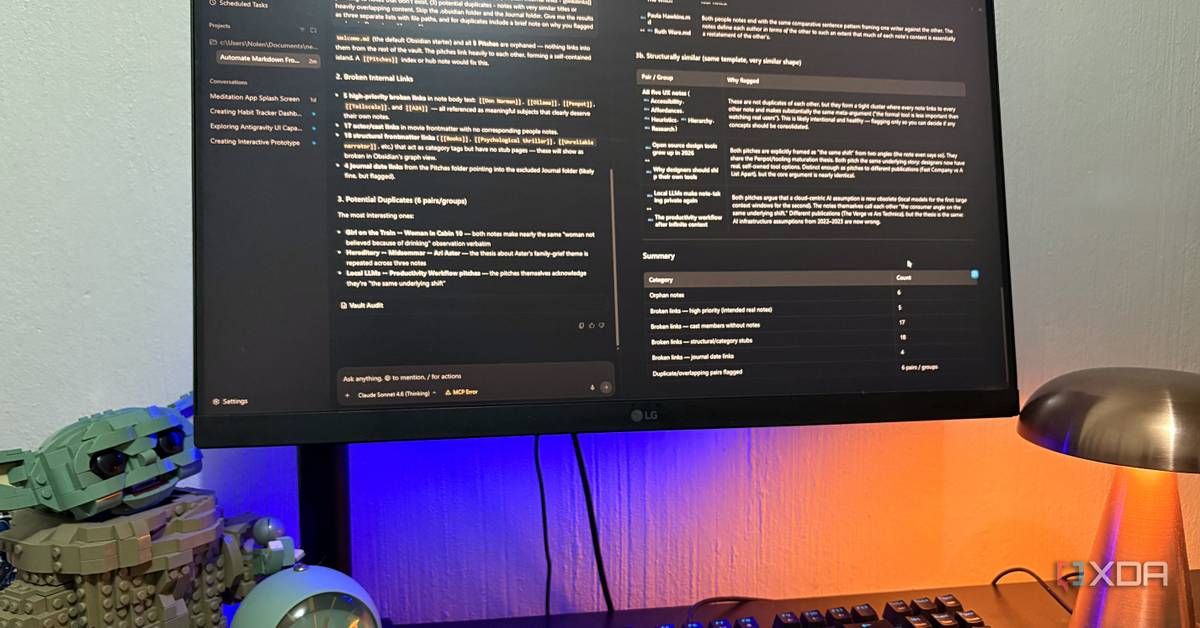
Discussion insight: Sentiment on Antigravity itself is mixed even inside official threads. Replies include "I uninstalled antigravity yesterday" and "Gemini can't do any complex work... things are looking very very bad" when the frontier default model is a Flash-tier model, alongside concrete feature requests (mobile handoff to a host-laptop agent, BYOK for newer models since native Opus is "still stuck on 4.6").
1.2 The "harness, not gimmicks" narrative takes hold at GitHub Copilot 🡕
A recurring theme was pushback against tool/prompt-hoarding in favor of mastering one harness deeply. @burkeholland wrote (34 likes, 2,488 views) "You're not behind. There's no secret everyone else has. There's just the harness, and it's mostly all you need," linking a github.blog post that recommends picking one Copilot surface, enabling YOLO/allow-all mode inside a sandbox (Codespaces or devcontainers), and prototyping before hardening. The official @github account reshared it (63 likes, 72 bookmarks, 18,492 views) the same day.
Replies mixed agreement and skepticism: one reader called version control "the other half" of safe YOLO mode ("when everything the agent touches is a git diff, autonomy stops being scary"), while another countered "harness is a strong word for duct tape... my workflow still broke twice before lunch." A related thread from @jamescoder12 argued (41 likes, 28 replies, 1,477 views) that "80% of Cursor users use it as VS Code with better autocomplete," walking through Cursor Rules, multi-file Composer, and Background Agents with concrete time claims (a feature that took "2-3 hours" manually down to "15-20 minutes" with Composer).
1.3 Grok 4.5 lands inside GitHub Copilot 🡕
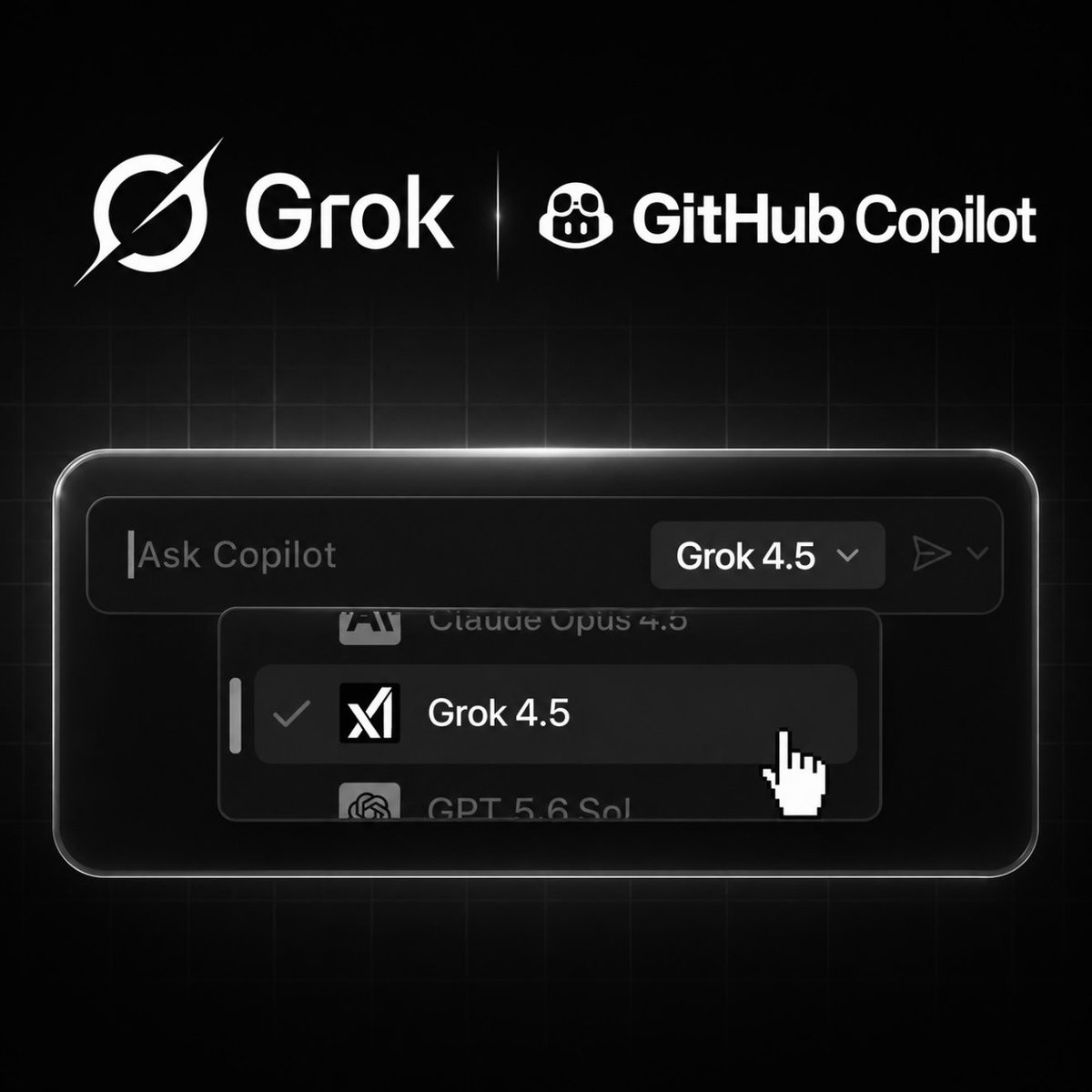
@cb_doge broke (215 likes, 75 replies, 20,152 views) that Grok 4.5 is now available in GitHub Copilot, "built for fast agentic coding and complex multi-step workflows" with a 500,000-token context window, image support, and adjustable reasoning effort. GitHub's own changelog confirms the rollout mechanics: available to Pro, Pro+, Max, Business, and Enterprise, across VS Code, Visual Studio, Copilot CLI, the Copilot cloud agent, the Copilot app, JetBrains, Xcode, and Eclipse, though Business/Enterprise admins must flip the policy on manually (off by default). @veggie_eric independently confirmed (162 likes, 4,044 views) the same rollout with a screenshot, and the official @GHchangelog account posted its own summary (18 likes, 1,199 views). A reply raised the real test: "the real test is whether it can keep a repo's weird local rules straight after 40 minutes of edits. That's where coding agents usually wobble."
1.4 Kimi K3 goes free via Modal, and people want it in Antigravity 🡕
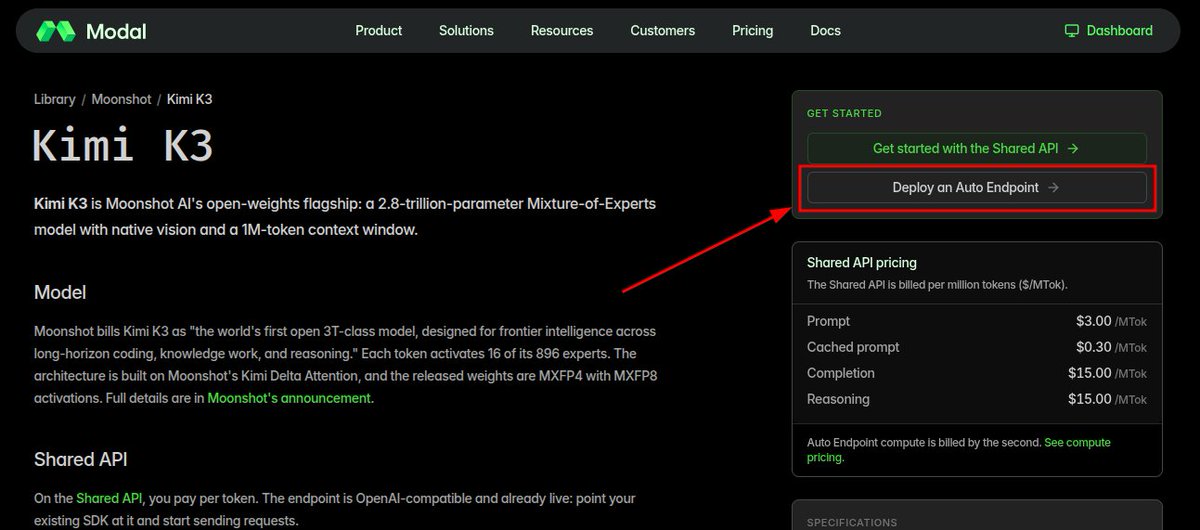
@StudentOffersHQ publicized (88 likes, 117 bookmarks, 4,364 views) that Modal gives $30/month in free compute credits usable on Kimi K3, no credit card required — roughly 10M input or 2M output tokens a month, refilling monthly with no rollover. The Modal product page (screenshotted in the tweet) confirms Kimi K3 is Moonshot AI's "2.8-trillion-parameter Mixture-of-Experts model with native vision and a 1M-token context window," billed at $3/MTok prompt, $0.30/MTok cached, and $15/MTok for completion and reasoning. @SahilPanhotra posted (23 likes, 19 replies) a nearly identical walkthrough with four screenshots of the same Modal deploy-and-OpenCode-config flow, and both threads describe the same 2-minute setup: GitHub/Google login, create a Managed Endpoint, generate a proxy token, paste the resulting config into OpenCode.
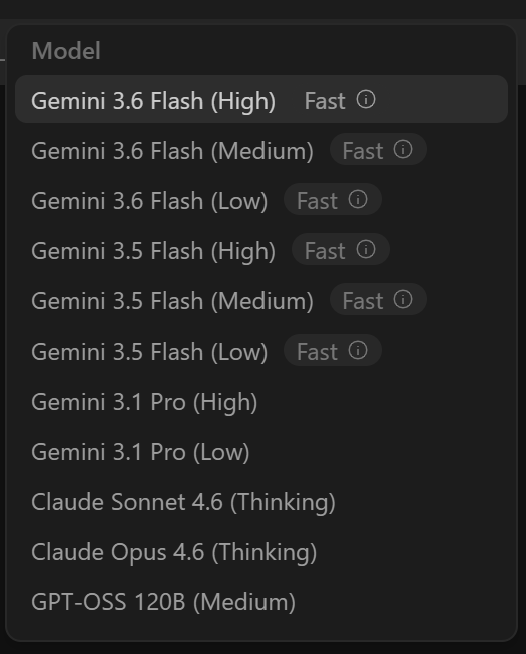
Separately, @HarshithLucky3 posted (474 likes, 40 replies, 32,764 views) "Hey Google add Kimi K3 to Antigravity," with a screenshot of Antigravity's current model picker showing only Gemini 3.6/3.5 Flash, Gemini 3.1 Pro, Claude Sonnet/Opus 4.6, and GPT-OSS 120B — no Kimi K3 — making the request's motivation visible. A same-day follow-up from the same author ("so many want Kimi K3 in Antigravity," 76 likes) reinforced the demand signal.
2. What Frustrates People
Token-metered pricing eating into subscriptions (High severity)
The clearest frustration thread is that flat-fee AI subscriptions are quietly backed by metered token costs that can spike unpredictably. @sam_ess604 asked OpenAI directly (15 likes, 1,778 views) "when's openAI going to fix the tool calling issue draining everyone's weekly usage? 5.5 would parallelize tool calls so they worked within the same context, and 5.6 fetches context per every tool call, resulting in more model turns," linking a specific GitHub issue — a concrete regression complaint, not vague griping. @MLStreetTalk separately reported hitting an account-linking bug that stops the Codex phone app connecting to Codex "because I have multiple accounts," suggesting "OpenAI should just introduce a $1000 per month option so we can stop messing around with multiple pro accounts." At the macro level, an interview with Ed Zitron reposted by @OwenGregorian (15 likes, 1,415 views) cites reporting that OpenAI lost $20.9B on $13.07B revenue in 2025 and that Uber exhausted its entire annual token budget in one quarter, arguing subscriptions give away "20 to 40 times the amount of tokens" their price would justify — a structural version of the same complaint users voice about burning through usage limits.
Multi-tool credential and config friction (Medium severity)
Running several coding agents side by side creates real setup friction. @_GateAI built a router (8 likes) explicitly "because 'edit three config files' is where most people quit," auto-detecting Claude Code, Cursor, OpenClaw, Codex, and OpenCode and routing each through one sign-in. The same pain point drove @theAIsailor's BaseCode tool, built after "our Anthropic bill started zooming toward $1 million," to centrally inject identities, policies, skills, and MCP servers across Claude Code, Codex, Copilot, Gemini, and OpenCode, and to track spend per engineer.
Copilot integration fatigue on the desktop (Medium severity)
@alex_verem complained (9 likes, 2,206 views) that a paid Windows 11 Pro license still ships "a Copilot button in Notepad, Photos, and the Snipping Tool," bundled telemetry, and Recall screenshotting that can't be fully disabled in Settings — prompting recommendation of the third-party WinUtil tool (20M+ downloads on its debloat script) to strip it back out. This isn't a complaint about GitHub Copilot's coding features, but it signals fatigue with unremovable AI-assistant surface area on the OS itself.
Shared-chat links leaking into search (High severity, one-off but severe)
@HedgieMarkets reported (10 likes, 838 views) that Claude's public share-link feature let strangers' chats — some containing crypto wallet keys and home addresses — get indexed by Google over the weekend before Anthropic patched it on July 26. More than 11,000 shared messages were reportedly copied to a public page before the fix, meaning deleting a link now "won't undo that." The same account notes this is the third time a major AI vendor (ChatGPT, then Claude twice) has shipped an easy-share feature and dealt with the privacy fallout afterward — a repeated pattern worth tracking for coding-adjacent tools that also support shareable session links.
3. What People Wish Existed
Mobile handoff and BYOK for Antigravity (Direct opportunity)
A paying user's reply to Google's own tldraw-canvas demo asked for (reply from @huzaifashaikh_) the ability to send tasks from a phone to agents running on a host laptop (like Cursor/Claude support), plus BYOK support "so we can use the newest model versions ourselves (your native Opus is still stuck on 4.6)." This is a practical, urgently-wanted gap directly addressable by the vendor, not an aspirational wish.
Kimi K3 support inside Antigravity (Direct opportunity, already partially met elsewhere)
The demand to add Kimi K3 to Antigravity's model picker (@HarshithLucky3, 474 likes; repeated the same day at 76 likes) is already partially satisfied by third parties — Modal's free managed endpoint and OpenCode's one-click config mean the model is reachable today, just not natively inside Google's own IDE. This is a competitive opportunity for whichever vendor ships native support first.
An embodied, always-on voice assistant persona (Aspirational)
@xikhar built (48 likes, 4,461 views) a 3D face/body wrapper around ChatGPT's Realtime Voice mode and pitched it directly at OpenAI: "this is what Codex Pets could become." This reads as emotional/aspirational rather than a pressing practical need, but it echoes the same desire for agents that persist and feel present rather than existing only in a chat window.
One config, every agent (Direct opportunity, partially met)
Across three separate posts, the same wish recurs: stop re-configuring credentials and policy per coding agent. @_GateAI's one-click router and @theAIsailor's BaseCode both ship partial answers today (credential routing and spend/policy governance respectively), suggesting the market has recognized the need faster than any single vendor has closed it end-to-end.
4. Tools and Methods in Use
| Tool | Category | Sentiment | Strengths | Limitations |
|---|---|---|---|---|
| GitHub Copilot | IDE assistant / agent | (+/-) | Now serves Grok 4.5 (500K context) across VS Code, CLI, JetBrains, Xcode, Eclipse; new "harness" workflow guidance; Spring Tools MCP integration cuts token use in Eclipse | Enterprise admins must manually enable new models; one user's workflow "broke twice before lunch" even following the harness guide |
| Grok 4.5 (via GitHub Copilot) | LLM | (+) | 500,000-token context, image input, adjustable reasoning, strong at parallel tool dispatch per GitHub's internal testing | Rollout gradual/tier-gated; independent leaderboard scores it mid-pack (5.9/10) on cost-adjusted coding tasks |
| Kimi K3 | LLM | (+) | 2.8T-param MoE, native vision, 1M context; free via Modal's $30/month managed-endpoint credit; ranks 7th on an independent leaderboard (7.75/10) | Slowest average time-per-prompt (16:12) among top-15 tested models; not natively available in Antigravity |
| Claude Code | Agentic coding CLI | (+/-) | Anthropic reportedly trimmed 80% of its system prompt; official 17-plugin/141-skill marketplace; dominant per The Information despite rising cost | 386.6MB RAM and ~3,436ms cold-start cited by a competing tool's benchmark; shared-chat links briefly leaked into Google search |
| Codex / Codex CLI | Agentic coding CLI | (+/-) | Voice Mode enables hands-free multitasking (reported ~8 parallel work streams); physical keypad (Codex Micro) shipped and sold out | Tool-calling regression between 5.5 and 5.6 reportedly drains weekly usage faster; app UI is closed source despite "open harness" framing; multi-account phone linking bug |
| Cursor | AI code editor | (+) | Composer 2.0 (multi-file agent) and Background Agents cut a claimed 2-3 hour task to 15-20 minutes; India-specific Start plan at Rs 649/month | Most users reportedly only use ~20% of its capability, treating it as "VS Code with better autocomplete" |
| jcode | Coding agent harness | (+) | MIT-licensed Rust harness: ~14ms first-frame boot vs 3,436ms for Claude Code, 27.8MB vs 386.6MB RAM per session, 30+ provider OAuth, built-in memory graph | Untested for long-session stability past initial benchmarks per a skeptical reply; new project (11-13k stars gained rapidly) |
| Antigravity | AI coding workspace | (+/-) | Multi-agent SDK builds full apps from a prompt/canvas sketch; used for a real dairy-farm ops tool, not just demos | Default frontier model is Flash-tier only ("Gemini can't do any complex work" per one reply); no mobile handoff; no BYOK for newer models |
| Modal (Kimi K3 hosting) | Inference platform | (+) | $30/month free managed-endpoint credit, no card required, 2-minute OpenCode setup | Credits don't roll over; workloads stop hard at the $30 cap |
| OpenBB | Open-source finance terminal | (+) | 70,000+ GitHub stars, free alternative to a ~$32K/year Bloomberg Terminal, AI copilot cites its sources | Domain-specific (finance), not a general coding tool |
| GPT-5.6-Sol / GPT-5.6-Luna | LLM | (+/-) | Sol tops an independent leaderboard (9/10) via Codex CLI; Luna (Medium) flagged as best value at $0.15/prompt for 8.25/10 | Sol is "ridiculously expensive" per the same benchmark author ($1.38/prompt) |

Overall, sentiment splits along a cost-versus-capability axis: cheaper models (GPT-5.6-Luna, Kimi K3) are winning "best value" praise on independent benchmarks, while flagship models (Opus 5, GPT-5.6-Sol) are acknowledged as strongest but criticized as expensive. Migration signals point toward OpenAI's Codex ecosystem in some corners ("switched to primarily codex in december; none of the claude models... tempted me back") while Anthropic's Claude Code retains dominance by usage share per The Information's reporting despite rising per-user cost. The GitHub Copilot ecosystem is absorbing outside models (Grok 4.5) rather than competing purely on its own models, and MCP servers (Spring Tools, codebase-memory-mcp) are emerging as the mechanism for giving any of these agents structured, token-efficient project context instead of blind repository search.
5. What People Are Building
| Project | Who built it | What it does | Problem it solves | Stack | Stage | Links |
|---|---|---|---|---|---|---|
| jcode | 1jehuang | Ultra-fast, low-RAM coding agent harness with a queryable memory graph and multi-agent "swarm" mode | Slow cold-starts and high RAM overhead of existing harnesses (Claude Code, OpenCode) when running many parallel agent sessions | Rust, custom terminal (Handterm), custom mermaid renderer | Shipped | github.com/1jehuang/jcode |
| BaseCode | @theAIsailor / Lyzr | MDM-style dashboard attributing coding time and token spend per person/project across Claude Code, Codex, Copilot, Gemini, OpenCode | Runaway, unattributed AI-coding spend (a ~$1M Anthropic bill) with no per-engineer visibility | Treemap dashboard, agent-attribution badges | Beta | x.com/theAIsailor/status/2082028903305039891 |
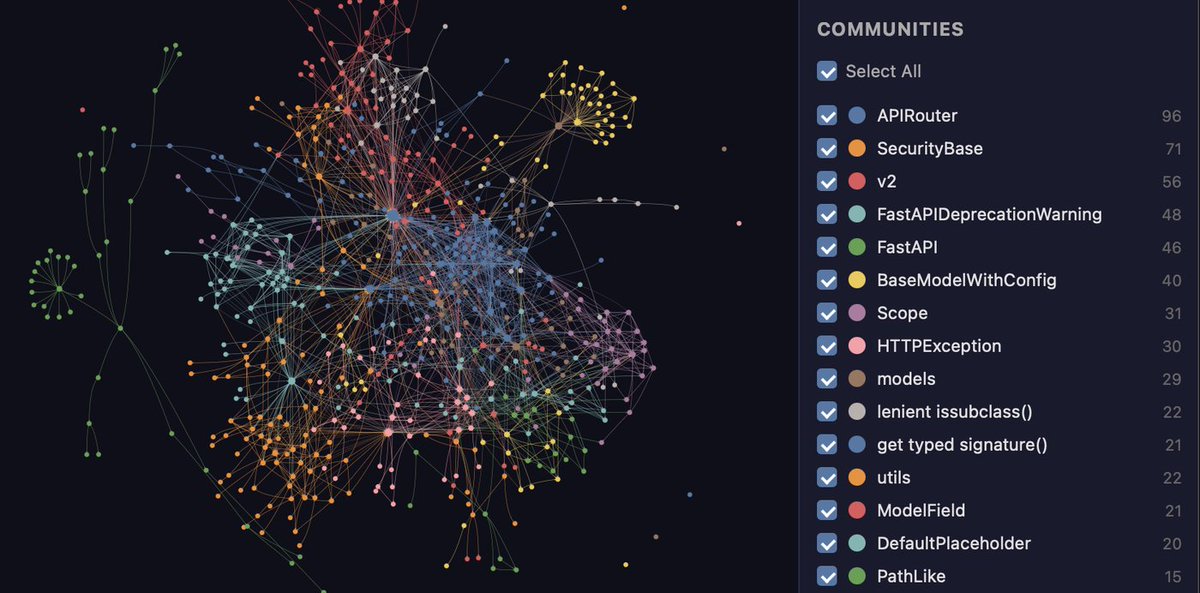
| Graphify | @techwith_ram | Converts a codebase (plus docs, PDFs, SQL schemas, images) into a queryable knowledge graph for coding agents | Vector-embedding/grep-based context retrieval misses relationships between code and non-code artifacts | Works with Claude Code, Cursor, Codex, Gemini CLI, GitHub Copilot | Beta | x.com/techwith_ram/status/2081989612990505234 |
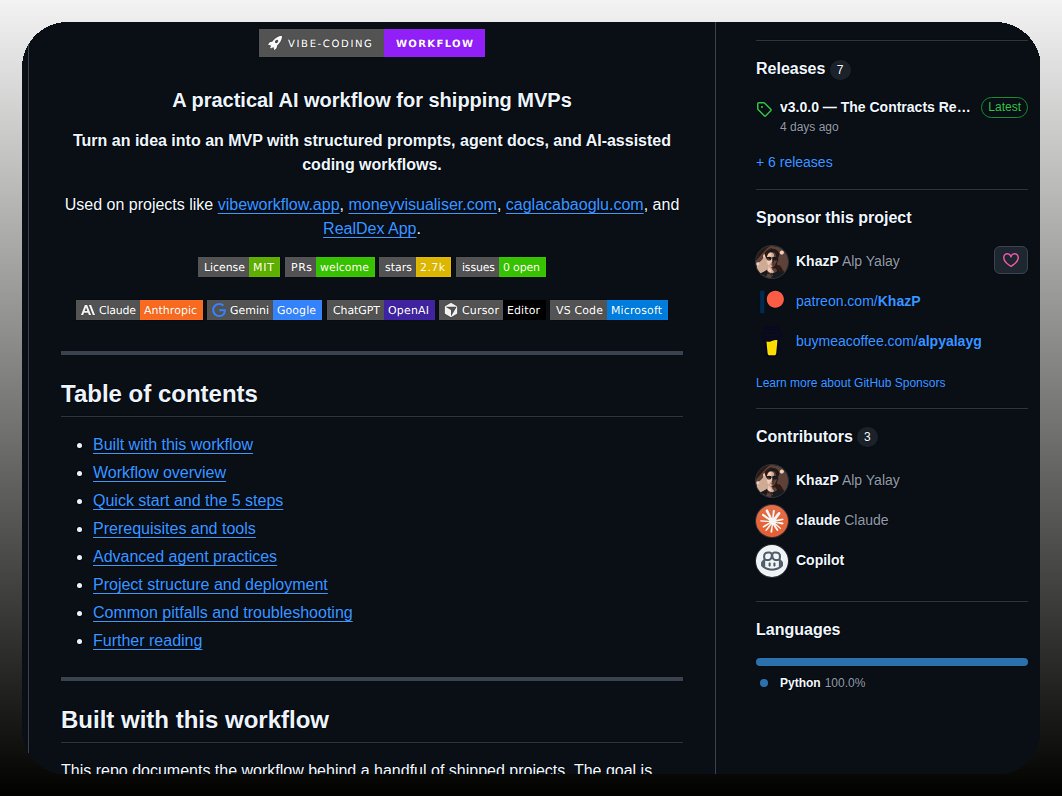
| vibe-coding-prompt-template | KhazP | Structured prompt templates that turn raw ideas into research summaries, PRDs, and technical designs for AI coding workflows | Ad hoc, inconsistent prompting when starting a new MVP | Python, tagged for Claude/Gemini/ChatGPT/Cursor/VS Code | Shipped (2.7k stars, MIT, used on 3+ live projects) | github.com/KhazP/vibe-coding-prompt-template |
| Gate Connect | @_GateAI | Auto-detects installed coding agents and routes credentials through a single one-click sign-in | Manual per-tool config-file editing ("edit three config files is where most people quit") | Cross-tool credential router | Shipped | x.com/_GateAI/status/2082168711142646014 |
| OpenBB | Didier (community) | Open-source financial terminal with an AI copilot that cites sources across stocks, filings, and market data | Cost of Bloomberg Terminal (~$32,000/year) | Python (pip install openbb) |
Shipped (70k+ stars) | x.com/He1s_Sammy/status/2082076288370593817 |
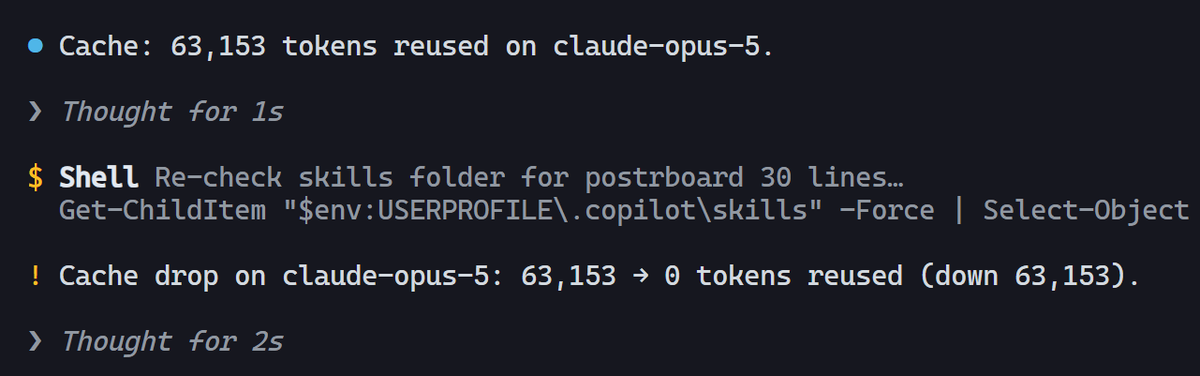
| Copilot CLI cache-break notifier | @DerekLegenzoff / @burkeholland | Copilot CLI extension that surfaces prompt-cache misses live (e.g. "63,153 -> 0 tokens reused") | Silent cache misses that quietly inflate token cost | GitHub Copilot CLI plugin | Shipped | gist.github.com/burkeholland |
| Viral-video recreation pipeline | @eptwts | Scrapes high-performing TikToks, scene-splits them (PySceneDetect + ffmpeg), analyzes each scene with Gemini, then regenerates scenes with Seedance 2.0 | Manually reverse-engineering why a video went viral before remaking it | Claude Code orchestrating yt-dlp, PySceneDetect, ffmpeg, Gemini API, Seedance 2.0 | Alpha (workflow described, TikTok research API "dropping soon") | x.com/eptwts/status/2082110884562833793 |
| One-shot AAA-style FPS build | @mattshumer_ prompt, run by @ericbahn | A ThreeJS first-person shooter built via a single elaborate prompt that fans Claude Code sub-agents into a build-then-harshly-critique loop | Demonstrating how far sub-agent orchestration plus iterative self-critique can push one-shot output quality | Claude Code, ThreeJS, sub-agent "harsh critic" loop | Alpha (demo/prompt showcase) | x.com/ericbahn/status/2082229982592680240 |
BaseCode and jcode both trace directly back to a named cost/performance pain point (a runaway Anthropic bill; slow, memory-heavy harnesses), reinforcing the pattern that this cycle's builder energy is going into managing and speeding up existing agents rather than building new base models. Graphify, vibe-coding-prompt-template, and Gate Connect all explicitly advertise compatibility across the same five-tool set (Claude Code, Cursor, Codex, Gemini CLI/Copilot, OpenCode) — a sign the ecosystem is consolidating around interoperability rather than lock-in.

6. New and Notable
Codex Security: an official OpenAI vulnerability scanner
@badlogicgames flagged (14 likes, 999 views) @openai/codex-security, a newly surfaced official CLI/TypeScript SDK ("npm install @openai/codex-security") for finding, validating, and fixing vulnerabilities, with ChatGPT or API-key auth and CI integration per its GitHub README.
Anthropic trims 80% of Claude Code's system prompt
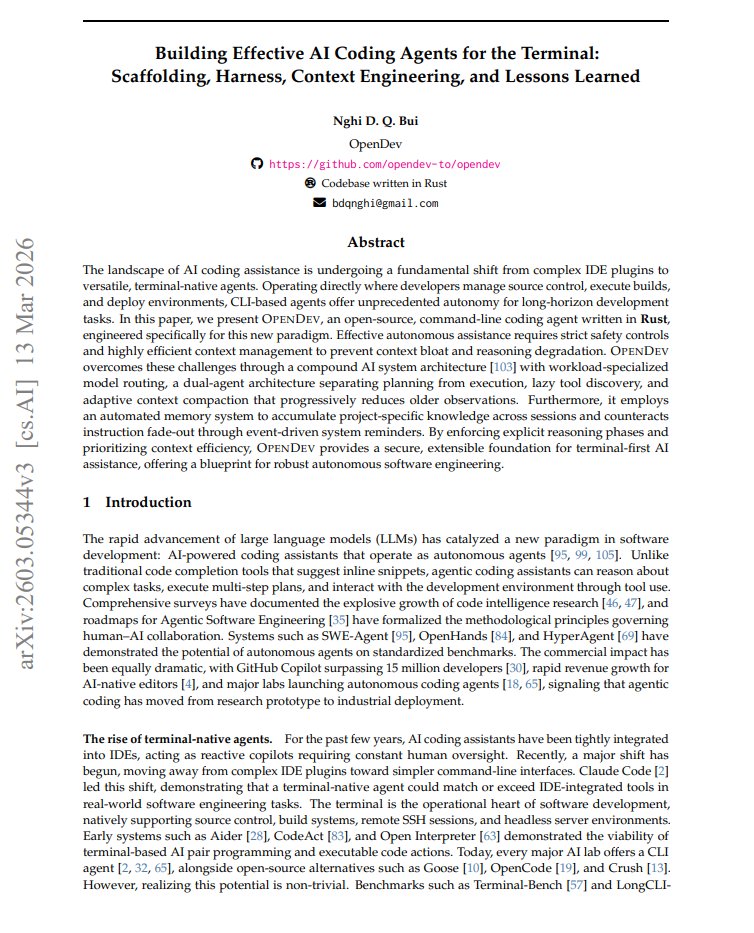
At the AI Engineer World's Fair, Anthropic's Thariq Shihipar presented "Seeing Like an Agent," stating "we removed 80% of the system prompt from Claude Code" — captured in a slide shared by @dani_avila7 (5 likes, 264 views), who asked whether the same trimming logic should apply to CLAUDE.md/SKILL.md project files. The same day, Microsoft's Harald Kirschner (GitHub Copilot/VS Code) and Anthropic's Ado Kukic ran a joint panel on context engineering (12 likes), and an arXiv paper shared by @marfinxx — "Building Effective AI Coding Agents for the Terminal" (arXiv:2603.05344) — formalizes similar techniques (AST-diff compaction, state-hash routing, adaptive context compaction) in an open-source CLI agent called OpenDev. Three independent, same-day sources converging on "less context, curated well" is a notable cross-vendor signal.

GitHub Copilot app adds stacked-PR management
@_JeremyMoseley demoed an agent creating and managing stacked PRs directly from the GitHub Copilot app, amplified same-day by @_Evan_Boyle and GitHub's own @pierceboggan, who linked the feature directly (gh.io/app).
GitHub Copilot app gets enterprise-managed settings
@pierceboggan (12 likes) announced the GitHub Copilot app now supports enterprise-managed settings, confirmed via GitHub's changelog, giving admins finer-grained behavior control.
Codex Micro keypad sells out, resells for 5-8x
Work Louder's "Codex Micro" keypad — 13 keys, a joystick, and a dial for controlling Codex agents, with RGB keys that change color by agent status — sold out in about 12 hours per @Prompt_ProfitAI (10 likes), with resales at $1,250 and $1,850 on eBay. @btibor91 posted hands-on photos confirming the device is real and functioning.
ChatGPT Work challenges Claude's Cowork
@JJEnglert (1 like, 299 views) got early hands-on time with ChatGPT Work, describing a Chat/Work toggle, an "Approve for me" action button, easy subagent delegation with per-subagent progress views, and one-click site deployment he rated "better than artifacts." He called it serious competition for Anthropic's Cowork, while questioning the design choice to copy Cowork's chat/work toggle rather than unify everything under one ChatGPT surface.

Anthropic's official plugin marketplace: 17 plugins, 141 skills
@Suryanshti777 (3 likes, 87 views) mapped Anthropic's official Claude plugin marketplace across four groups — Build, Grow, Operate, and People & Lab — down to named skills like "The Engineer" (code review/debug/deploy) and a new "claude-security" guardian plugin that runs a scan-verify-patch pipeline. This is the most granular public view of Anthropic's own (not community) skills ecosystem seen in the dataset this week.


7. Where the Opportunities Are
[+++] Cross-agent spend and credential governance — BaseCode (born from a ~$1M Anthropic bill), Gate Connect (one-click credential routing), and the Copilot cache-break notifier (surfacing silent cache misses) all address the same underlying gap: nobody has clean, budgeted, cross-tool visibility into what Claude Code, Codex, Copilot, and OpenCode are actually costing or doing. This is validated by three independent builders solving pieces of the same problem the same day.
[++] Native fast/light coding-agent harnesses — jcode's viral reception (14ms boot vs 3,436ms for Claude Code, tiny RAM footprint, three independent reposts of the same benchmark) shows real demand for lighter-weight agent runtimes, though its long-session stability is untested per a skeptical reply.
[++] Context engineering as a durable, cross-vendor discipline — Anthropic (Claude Code's 80%-trimmed system prompt), Microsoft (joint context-engineering panel), and academic research (the OpenDev/arXiv paper) all converged on the same theme the same day, suggesting this is a maturing practice rather than a single vendor's marketing angle.
[+] Native multi-model flexibility inside vertically-integrated IDEs — Both the Antigravity Kimi K3 request and the BYOK/mobile-handoff feature request point to the same friction: users want their preferred model inside their preferred workspace, and are currently bridging the gap themselves via third-party hosts (Modal) rather than waiting on the vendor.
[+] AI-coding-specific physical hardware — The Codex Micro's sellout and 5-8x resale prices are a small but concrete signal that a niche market exists for dedicated agent-control peripherals, beyond keyboards/mice repurposed from other use cases.
8. Takeaways
- Google is flooding the market with free AI tooling while its flagship coding workspace lags on model flexibility. The 15-free-tools listicle was reposted independently by at least three accounts the same day, while Antigravity users are asking for Kimi K3 support and BYOK that the product doesn't yet offer. (mikenevermiss, HarshithLucky3)
- Grok 4.5's arrival in GitHub Copilot confirms Copilot's strategy of aggregating outside frontier models rather than competing solely on proprietary ones, rolling out across eight surfaces (VS Code, Visual Studio, CLI, cloud agent, app, JetBrains, Xcode, Eclipse) per GitHub's own changelog. (GHchangelog)
- Kimi K3's free tier via Modal is a genuine cost disruptor — $30/month in credits with no card required, replicated independently by two different authors' walkthroughs the same day, though it ranks mid-pack (7th of 15) on an independent cost/quality leaderboard. ("Paying for GPU servers to try Kimi K3 doesn't make much sense anymore" — SahilPanhotra)
- Context engineering hardened into a named, technical discipline this week, with Anthropic, Microsoft, and an arXiv paper all describing the same pattern (compact, route, and scope context rather than dumping raw files) independently on the same day. (dani_avila7, marfinxx)
- The most technically detailed builder story of the day (jcode) is also the least verified — a 245x boot-speed claim against Claude Code spread across at least three accounts with near-identical text, and the only critical reply asked about behavior "past a two-hour repo session," a question nobody answered publicly. (Voxyz_ai)
- A real security incident (Claude's leaked shared-chat links) landed the same week as a security-focused product launch (Codex Security), underscoring that trust and safety remain live risks even as vendors ship more autonomy and more official tooling. (HedgieMarkets, badlogicgames)