Twitter AI Coding - 2026-07-30
1. What People Are Talking About
1.1 Enterprise harnesses, review loops, and branchable workflows got concrete 🡕
The strongest Twitter AI-coding discussion was not a new model benchmark or a flashy one-shot demo. It was what a durable operating model looks like once agent work has to survive enterprise governance, code review, and real branch structure. Five retained items supported the theme: Satya Nadella's governed ROIC app walkthrough, GitHub's new scale metrics, GitHub's stacked-session modernization story, Copilot code review's GA skills/MCP support, and Rubber Duck's cross-family review loop.
@satyanadella showed (610 likes, 95 replies, 65,497 views, 316 bookmarks) a detailed ROIC Intelligence app built from a Morgan Stanley PDF with one prompt plus a /drill-me skill, Copilot autopilot, and /rubber-duck testing. The distinctive part was not “CEO builds app.” It was the stack discipline: he said the app lived in Copilot, the code in GitHub Enterprise, and the data pipelines, lake, and semantic models in Fabric, all under IT, security, and FinOps control. The architecture image sharpened that claim by showing authoritative sources flowing through Fabric orchestration and OneLake into a Direct Lake semantic model and a React plus TypeScript application layer.

@kdaigle added (59 likes, 7 replies, 7,393 views) the scale context around that enterprise framing: 225 million developers on GitHub, 50 million Copilot users, and 1 in 3 pull requests involving an agent. A second tweet (35 likes, 1 reply, 5,084 views, 11 bookmarks) pointed to Cassidy Williams's stacked sessions and pull requests write-up, where a failed one-shot modernization of an old React 15 app turned into a chain of stacked sessions and stacked PRs. That matters because it frames agentic coding as branch choreography and review hygiene, not just a faster prompt loop.
@GHchangelog reported (20 likes, 4 replies, 2,392 views, 5 bookmarks) that Copilot code review now generally supports agent skills and MCP servers. The linked GitHub changelog says reviews can use .github/skills/.../SKILL.md, MCP calls stay read-only, and existing cloud-agent MCP configuration carries over automatically. That was reinforced by @burkeholland pointing to (30 likes, 3 replies, 3,145 views, 11 bookmarks) Rubber Duck, GitHub's cross-family critique loop for Copilot CLI.
Discussion insight: The replies under Satya's thread reinforced the same theme as the post itself: enterprise value comes from governed, reusable artifacts rather than disposable output. The Cassidy write-up added the second half of that picture by showing that even with strong agents, one-shot modernization still failed and had to be restarted as a stacked branch flow. The practical trust boundary was not “can the model code?” It was “can the work survive governance and review?”
Comparison to prior day: July 29 already pushed the conversation toward skills, observability, and remote workspaces. July 30 moved one level deeper into operating models: governed data stacks, branch-aware session chains, review-time repository context, and explicit second-opinion loops.
1.2 Google's free AI stack kept circulating, but Antigravity's eval workflow carried the real substance 🡒
Google remained one of the most visible presences in the dataset, but the highest-value evidence was not another generic “15 free tools” repost. It was the combination of Antigravity being framed as a real research-eval surface and free-stack listicles trying to distribute Google's coding and design tools as a broad bundle. Two retained items carried the theme.
@antigravity showed (558 likes, 20 replies, 27,768 views, 180 bookmarks) Antigravity being used for research-eval analysis: natural-language table reading, quantitative analysis, hypothesis generation, and parallel subagents to isolate failure modes. That is a more operational pitch than a canvas demo or quick UI conversion. The most useful replies were not celebration but capability pressure: one user said Claude still has stronger connectors into Google Drive, Figma, and report generation, another asked for much deeper explainer videos, and another claimed DeepMind benchmark work backs the subagent pattern.
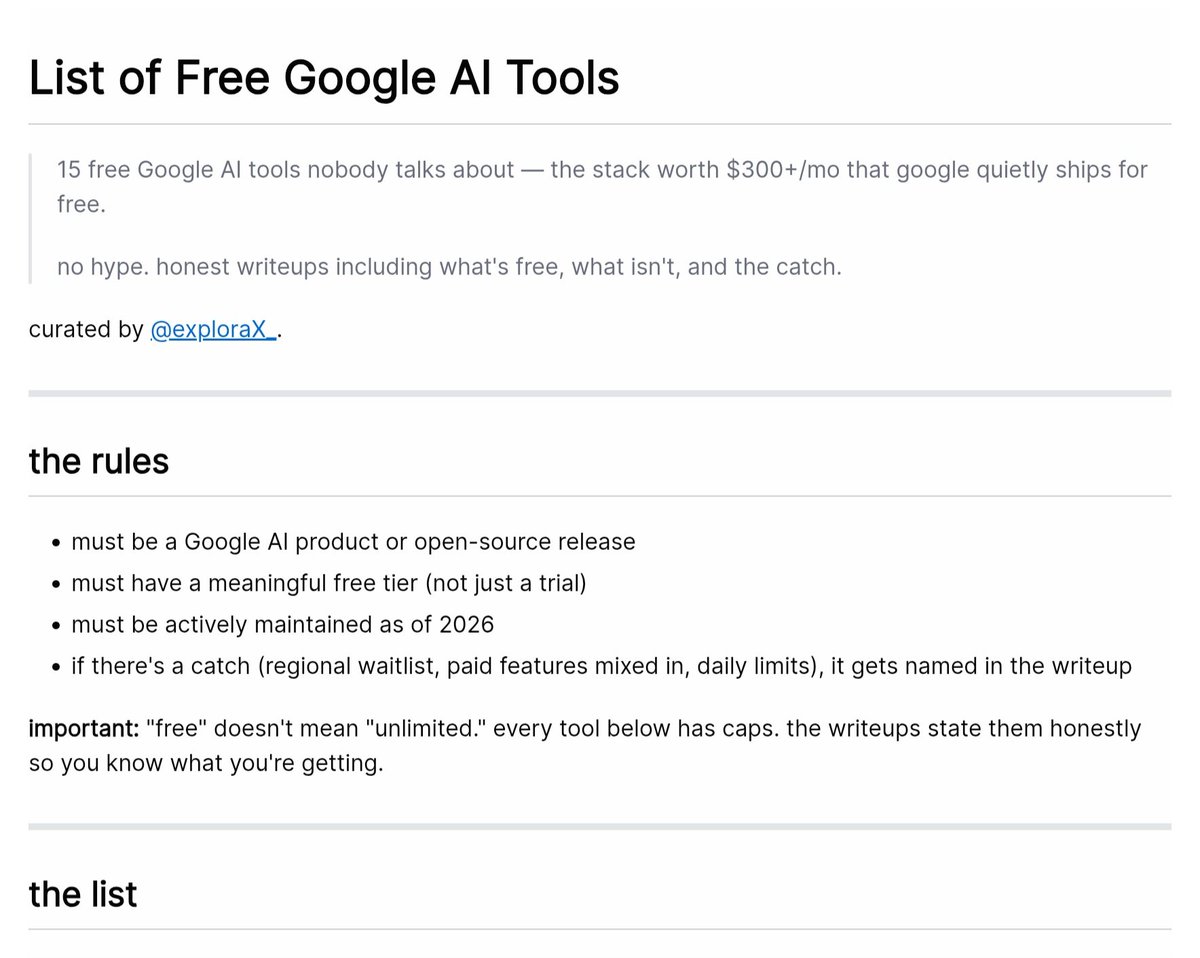
@AIHighlight listed (135 likes, 13 replies, 10,868 views, 118 bookmarks) 14 Google AI tools spanning Pomelli, Stitch, Opal, Antigravity, Jules, Gemini CLI, Code Wiki, Gemini Code Assist, and Firebase Studio. The image mattered because it was more disciplined than the average tool collage: it said the list only included Google or open-source products with meaningful free tiers, active maintenance, and explicit notes about limits or catches. Fetching Pomelli by Google Labs confirmed at least one flagship product in the list is real and publicly available.
Discussion insight: The pushback stayed concrete. Antigravity skeptics were not attacking the idea of agents; they were asking for connectors, stronger evidence, and more precise product explanation. That is a healthier signal than vague hype because it shows readers are evaluating workflow depth, not just cheering a logo.
Comparison to prior day: July 28 and July 29 were already full of Antigravity demos and Google's “free stack” distribution story. July 30 kept that theme steady, but the most substantive Google item was the research-eval workflow rather than another pure demo clip.
1.3 Codex broadened from coding assistant to multimodal work surface 🡕
OpenAI's AI-coding story shifted from yesterday's quota and vendor-switch talk toward a broader product surface: richer visual editing, browser and computer-use workflows, cheaper tiering, and benchmark gains tied to harness settings rather than the base model alone. Four retained items supported the theme.
@OpenAIDevs said (359 likes, 28 replies, 31,425 views, 117 bookmarks) that ImageGen in Codex now has a lightbox and canvas. The quoted OpenAI demo clarified the actual workflow: point at a character, erase what should disappear, and comment where a title or other edit should land. Replies immediately drew the real line between UI and capability: one user liked the editability, another asked when the underlying image quality would improve, and another asked for draw-plus-prompt composition.
@Codex_Changelog reported (98 likes, 4 replies, 5,193 views) app version 26.727 with address-bar history, Google search fallback, history lookup, and Chrome-extension tab and highlight support. The linked Codex changelog is broader than the tweet: it says Codex now includes an in-app browser, computer use, chats that start without a project folder, thread automations, PR review inside the app, and an artifact viewer for files like PDFs and spreadsheets. That is a clear move from “coding agent” toward “general work surface that happens to code.”
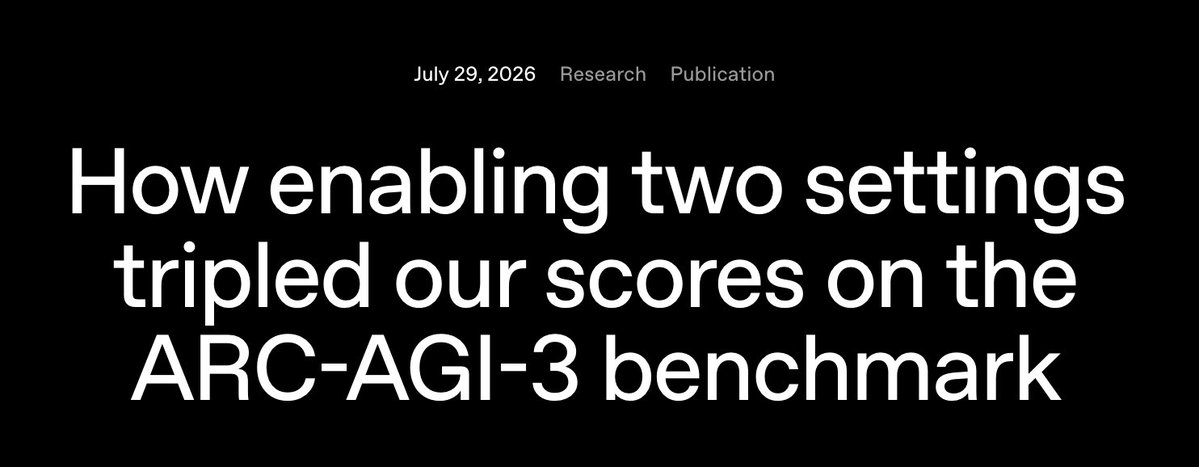
@gabrielchua wrote (17 likes, 6 replies, 712 views) that two API settings — retained reasoning and server-side compaction — improved GPT-5.6 Sol's ARC-AGI-3 score by roughly 3x while using about 6x fewer output tokens. The image is the most important part of the claim: it shows the stronger harness reaching a much higher score at far lower token usage than the official harness, and the companion slides explicitly recommend the Responses API plus retained reasoning and compaction.
@LuminaXspace summarized (19 likes, 1,064 views) OpenAI's price changes as Luna becoming 80% cheaper, Terra 20% cheaper, Sol getting a fast mode, and Codex/ChatGPT Work allowances stretching further. That made the day's follow-up from @schaerpfcom especially revealing (11 likes, 5 replies, 2,628 views): the new pricing only becomes fully useful if Sol can spawn cheaper Luna or Terra subagents instead of forcing every child to inherit the parent model and effort.
Discussion insight: The linked open GitHub issue behind the subagent complaint says the current runtime hides routing controls and blocks the intended Sol-to-Terra/Luna workflow. So even on a day when OpenAI was making models cheaper and the app more capable, the most actionable user request was still about orchestration, not raw model IQ.
Comparison to prior day: July 29 focused on Codex cost, quotas, and enterprise vendor choice. July 30 kept cost in frame, but the center of gravity moved toward workflow breadth, multimodal editing, and harness configuration.
1.4 Builders kept packaging cross-tool capability layers instead of betting on one model 🡕
Another clear pattern was that builders are not waiting for vendors to settle the stack for them. They are shipping portable layers that sit above the model: cheap-model bridges, installable agent rosters, internet-access layers, and loop-based skill systems. Five retained items supported the theme.
@ridark_eth framed (46 likes, 22 replies, 725 views, 28 bookmarks) a “harness swap” story where Codex acts as the controller, DeepSeek is the cheap backend model, and a local file-aware agent keeps context and executes code. Whether or not readers buy the monetization pitch around it, the technical takeaway is straightforward: people are actively decomposing the stack into orchestration, context, and model-cost layers.
@rightnowai_co said (5 likes, 172 views) it built a localhost bridge that translates between the APIs expected by Claude Code, Codex, Cline, Aider, and OpenCode, while also quantizing Kimi-Linear-48B down to 28.8 GB so it can run on a single 32 GB GPU. That is a direct response to fragmentation: keep the agent you like, swap the backend you can afford.
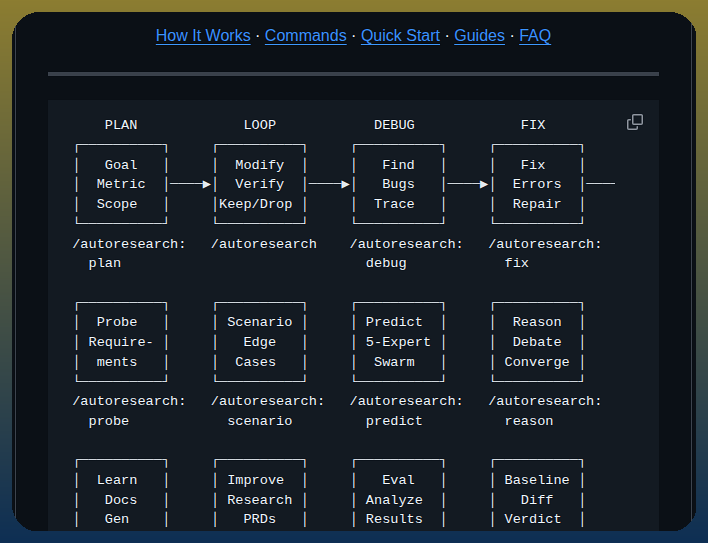
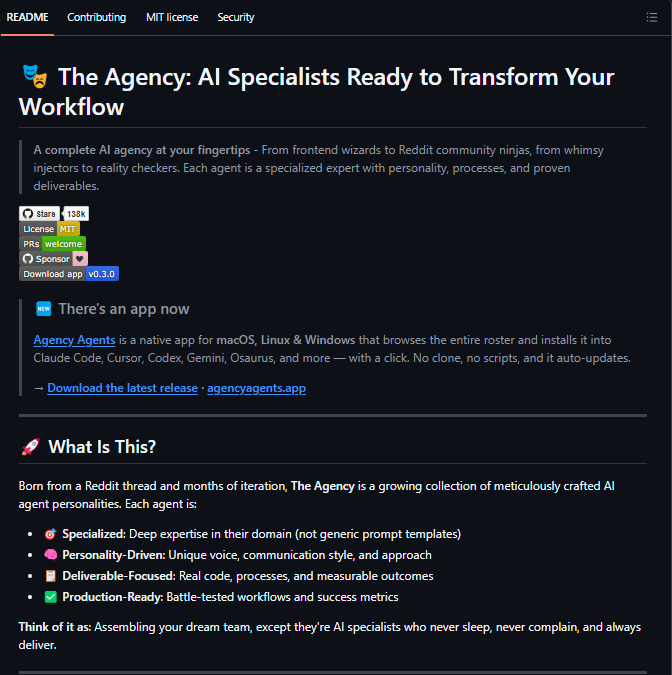
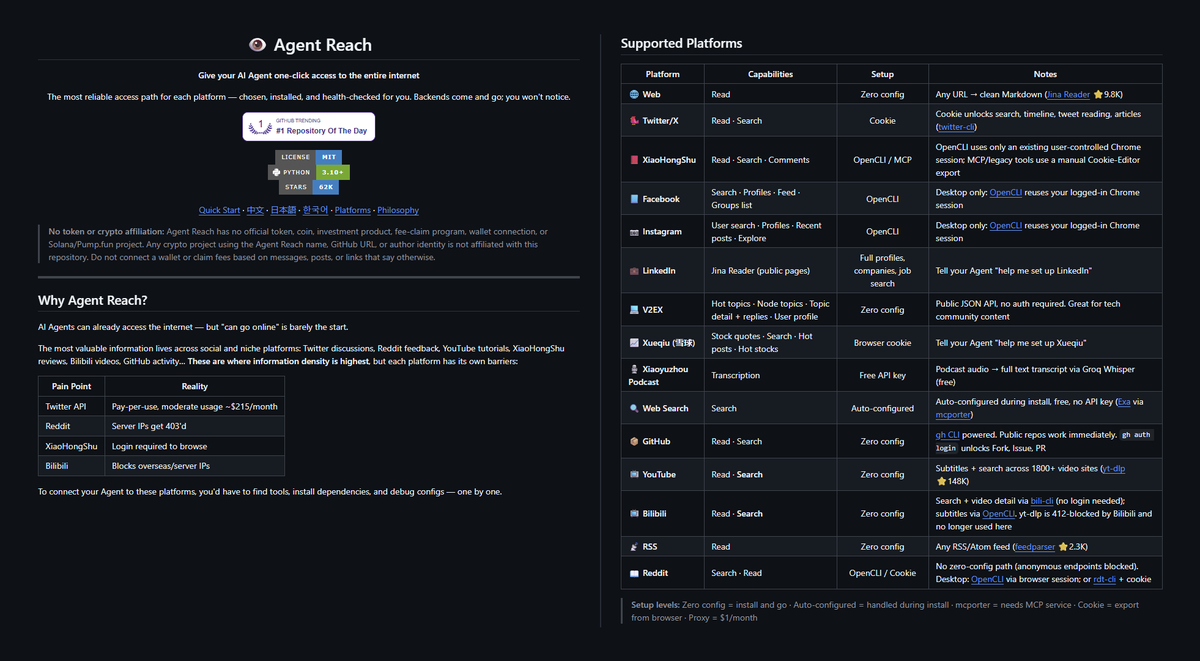
@tom_doerr shared (20 likes, 2,293 views, 20 bookmarks) Autoresearch, whose README describes 14 commands spanning Claude Code, OpenCode, and Codex and claims a 95% token reduction after splitting a monolithic skill into thinner command files. @charliejhills showed (18 likes, 8 replies, 1,311 views) The Agency, now paired with a desktop app that installs specialized agents into Claude Code, Cursor, Codex, Gemini CLI, and other tools. @undefinedKi described (8 likes, 129 views, 4 bookmarks) Agent Reach, a capability layer whose README explicitly cites Twitter API costs around $215/month and packages social/web access for agents behind a one-command install.
Discussion insight: The best warning came from inside the agent-pack story itself. Charlie Hills said OpenCode only loads about 119 agents and quietly ignores the rest, while a reply argued that even a “reality checker” still needs access to the actual artifact, not just a summary. In other words: portability is improving, but verification and runtime limits still decide whether these packs are useful.
Comparison to prior day: July 29 already had public skills repos and customizations. July 30 widened that into full installers, internet-capability layers, and local-model bridges that treat model choice as a replaceable part.
2. What Frustrates People
Harness/model mismatches that fail quietly
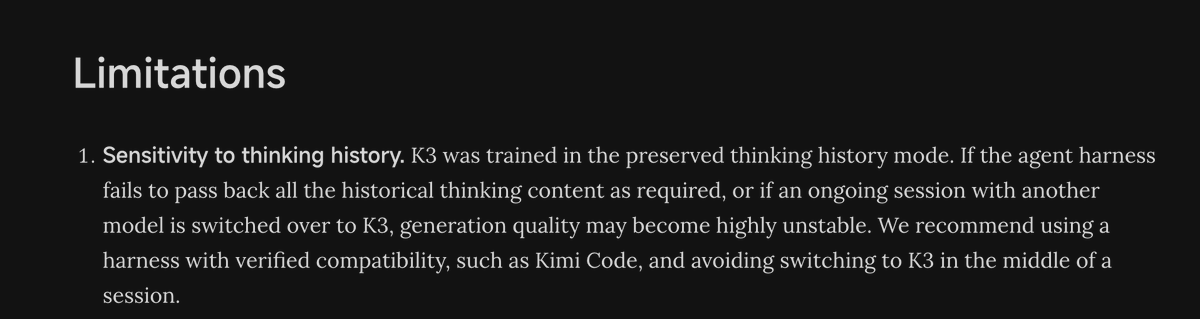
Severity: High. The day's sharpest frustration was not “AI can't code.” It was that the stack can look healthy while the harness and model assumptions are already drifting apart. @0xJeyx argued (34 likes, 4,817 views, 36 bookmarks) that pure vibe coding produces guess-and-check loops where “we could do a hundred different tries” and still get a different implementation each time, explicitly using spec-driven development as the antidote. That complaint was made much more concrete by @radshaan warning (184 views) that Kimi K3 is sensitive to preserved thinking history, and that switching a session or using an incompatible harness can make output quality unstable.
The same trust problem appeared from the product side. Replies under @OpenAIDevs showing (359 likes, 28 replies, 31,425 views, 117 bookmarks) Codex's new lightbox and canvas immediately asked whether the release improved image quality or only the editing surface. People are willing to use smarter tooling, but they want to know which part of the stack actually got better.
This is worth building for because the failures are subtle. A model can still answer, an agent can still finish, and the workflow can still be wrong in ways that only show up later.
Price cuts that stop at the parent agent
Severity: High. OpenAI made pricing a user-facing story again, but the responses showed that lower list prices do not solve much unless the orchestration layer can route work intelligently. @LuminaXspace summarized (19 likes, 1,064 views) the official changes as Luna becoming 80% cheaper, Terra 20% cheaper, and Codex/ChatGPT Work allowances stretching further. Yet @schaerpfcom immediately asked (11 likes, 5 replies, 2,628 views) for Sol to spawn cheaper Luna or Terra subagents, because otherwise every child agent inherits the expensive parent setup.
The linked GitHub issue makes the complaint unusually specific: the current runtime is said to hide routing controls, force model inheritance, and block the intended Sol-to-Terra/Luna workflow. A separate cost boundary showed up in @alexcooldev asking (19 likes, 9 replies, 1,106 views) whether it makes more sense to pay $20 a month for existing SaaS than to spend thousands of dollars worth of tokens rebuilding it yourself, especially as codebases and maintenance needs grow.
People are coping by timing heavy work against subscription limits, switching backends, or asking for cheaper child agents rather than just cheaper parent sessions. This is worth building for because it is no longer a pure pricing problem; it is a routing and workload-shaping problem.
Cross-agent integration still requires bridges and capability layers
Severity: Medium. Independent builders kept shipping glue code because the core tools still assume different APIs, auth paths, and platform access rules. @rightnowai_co said (5 likes, 172 views) it built a localhost bridge so Claude Code, Codex, Cline, Aider, and OpenCode can all point at the same local Kimi backend without custom rewrites. @undefinedKi described (8 likes, 129 views, 4 bookmarks) Agent Reach, whose README explicitly exists because Twitter API access costs around $215 a month, Reddit often 403s anonymous server IPs, and several platforms require cookie or browser-session workarounds.
That same pattern is why @charliejhills highlighted (18 likes, 8 replies, 1,311 views) The Agency's one-click installer across Claude Code, Cursor, Codex, and Gemini CLI. The new products are not just “more agents.” They are attempts to make a fractured agent ecosystem feel like one environment.
This is worth building for because multiple separate teams are already solving the same problem from different angles: API translation, internet access, and multi-tool installation. That usually means the platform gap is real.
3. What People Wish Existed
Heterogeneous child agents inside Codex
The clearest explicit request today was for parent agents to choose cheaper or more suitable child models instead of forcing inheritance. @schaerpfcom asked for Sol to spin up Terra or Luna subagents after OpenAI cut those prices, and the linked issue expands that into concrete product asks: configurable child model selection, stricter child-agent permissions, and access to routing controls that are currently hidden. This is a practical need, not an emotional one, because the value of the day's official price cuts depends on whether the runtime can exploit them. Opportunity: direct.
Verified compatibility contracts for model swaps
A second need is confidence that an open model will behave correctly in a given harness before teams commit a workflow to it. @radshaan surfaced a Kimi K3 screenshot saying the model depends on preserved thinking history and should be used only with a verified-compatible harness, while @rightnowai_co built a localhost bridge precisely because Claude Code, Codex, Cline, Aider, and OpenCode all expect different APIs. @ridark_eth treated model swapping as normal engineering work, but today's evidence shows it is still brittle enough that people want explicit guarantees, not folklore. Partial answers exist in bridges and custom wrappers, but there is no standard trust contract. Opportunity: direct.
One-click portable capability bundles
People also want reusable capabilities that move with them across tools instead of being reassembled for each vendor stack. @charliejhills emphasized one-click agent installation across multiple coding tools, @undefinedKi promoted one-command social/web access through Agent Reach, and @tom_doerr highlighted ClaudeSkills as a tested set of end-to-end workflows for PRDs, decision briefs, decks, and articles. This is a practical need with competitive pressure already visible: several open-source projects partially address it, but each one covers a different slice of the problem. Opportunity: competitive.
4. Tools and Methods in Use
| Tool | Category | Sentiment | Strengths | Limitations |
|---|---|---|---|---|
| GitHub Copilot app and code review | Agent platform | (+) | Large installed base, stacked sessions/PRs, review-time skills and MCP context, enterprise governance fit | Still depends on branch discipline and explicit review structure |
| Rubber Duck | Review method | (+) | Uses a second model family for critique, improves hard multi-file review quality, built into Copilot CLI | Adds orchestration steps and only helps when teams pause for review |
| Codex app | Coding workspace | (+/-) | In-app browser, computer use, history lookup, automations, PR review, artifact viewing, image-editing canvas | Users still ask whether surface upgrades improve underlying quality; child-agent routing remains constrained |
| Retained reasoning plus compaction | Agent runtime method | (+) | Much better long-task performance and lower token use in the shared GPT-5.6 Sol ARC example | Requires specific API/runtime support and is easy to miss if a harness hides the knobs |
| Antigravity | Agent workspace | (+/-) | Natural-language eval analysis, quantitative reasoning, parallel subagents, strong visibility in the Google stack | Replies still ask for connectors, better explainers, and harder evidence |
| Google's free AI tool stack | Tool suite | (+) | Broad free distribution across coding, design, docs, and backend workflows | Free tiers still have catches, and list popularity can outrun actual daily usage |
| DeepSeek and local Kimi backends | LLM backends | (+/-) | Cheap execution, local control, viable behind existing agent shells, quantized Kimi on one 32 GB GPU | API mismatches, compatibility assumptions, and harness-sensitive quality |
| Autoresearch | Loop framework | (+) | 14 cross-agent commands, goal-directed improvement loops, claimed 95% token reduction | Needs deliberate setup and ongoing measurement, not a one-shot prompt |
| ClaudeSkills | Skill pack | (+) | Tested end-to-end workflows for research, PRDs, decks, and articles | Narrower scope and lower reach than giant general-purpose agent packs |
| The Agency | Agent pack and installer | (+/-) | Huge library of role-specific agents plus one-click installs across major coding tools | Too many agents can create overload; some runtimes silently skip part of the pack |
| Agent Reach | Capability layer | (+) | One-command web and social access, strong research utility, explicit setup paths for blocked platforms | Some targets still need cookies, OpenCLI, or extra local configuration |
Overall satisfaction tracked the completeness of the harness more than the brand of the base model. Copilot earned positive sentiment when people talked about governed artifacts, stacked review flow, and second-opinion checks; Codex earned positive sentiment when people talked about broader work surfaces and cheaper tiers, but mixed sentiment when users hit hidden routing limits; Antigravity drew interest, then immediate questions about connectors and proof.
The common workarounds were consistent across the table: move from one-shot prompts to specs and loops, swap expensive backends for cheaper ones, add a second reviewer model, and install capability layers for data access or role libraries. The competitive dynamic is now three-sided: GitHub is strongest where governance and review matter, OpenAI is pushing breadth and runtime efficiency, and open-source builders are moving fastest on portability across tools.
5. What People Are Building
| Project | Who built it | What it does | Problem it solves | Stack | Stage | Links |
|---|---|---|---|---|---|---|
| ROIC Intelligence app | @satyanadella | Turns public financial research into a governed interactive ROIC analysis app with history, lookups, scenarios, and what-if tools | Shows how agent-built outputs can become reusable enterprise assets instead of disposable chats | Copilot Code, /drill-me, autopilot, /rubber-duck, GitHub Enterprise, Fabric, OneLake, Direct Lake semantic model, React, TypeScript |
Alpha | tweet |
| Autoresearch | uditgoenka | Runs goal-directed improvement loops across Claude Code, OpenCode, and Codex through a command set | Reduces token waste and turns coding agents into iterative improvement systems | Cross-agent command framework, reusable skill files, Claude Code, OpenCode, Codex | Shipped | repo, tweet |
| ClaudeSkills | staruhub | Provides 13 tested skills for decision briefs, PRDs, decks, articles, and related deliverables | Replaces ad hoc prompting with repeatable workflow artifacts and validation | Skill files, install scripts, validation-oriented workflow packaging | Shipped | repo, tweet |
| The Agency | msitarzewski | Packages a large roster of role-specific agents plus a desktop installer for major coding tools | Gives teams portable specialist roles without writing each agent from scratch | Agent definitions, role-specific workflows, desktop installer, Claude Code, Cursor, Codex, Gemini CLI | Shipped | repo, tweet |
| Agent Reach | Panniantong | Adds social, web, video, and research access to agents behind one command | Bypasses API fees, blocked anonymous requests, and setup sprawl for market research | CLI capability layer, GitHub/YouTube/web readers, X and Reddit auth paths, search connectors | Shipped | repo, tweet |
| Local Kimi bridge | @rightnowai_co | Translates multiple coding-agent APIs to a local Kimi backend running on one GPU | Lets teams keep their preferred agent shell while swapping to a cheaper local model | Kimi-Linear-48B, quantization, custom decode kernels, localhost API translation | Alpha | tweet |
The Satya Nadella example was the most enterprise-shaped build in the set. The interesting part was not novelty for its own sake, but that the app was presented as a reusable governed system: data in Fabric, code in GitHub Enterprise, app logic in Copilot, and review in a dedicated /rubber-duck pass. That is much closer to internal product development than to a disposable demo.
Autoresearch, ClaudeSkills, and The Agency all point in the same direction: builders are productizing process. Autoresearch turns cross-agent iteration into a command grid; ClaudeSkills treats end-to-end deliverables like software that should be tested; The Agency defines dozens of specialist roles and then ships them through a desktop installer so they can be dropped into multiple tools.

Agent Reach and the local Kimi bridge show the same builder instinct applied to infrastructure rather than prompts. Agent Reach packages access to data sources that are usually blocked by APIs, auth, or browser state, while the Kimi bridge packages model portability across incompatible local agent APIs. The common trigger was not “we need a smarter model”; it was “we need the same capability everywhere.”
Repeated build patterns were easy to see. People are building installers, bridges, capability layers, and skill packs because the pain points are portability, reviewability, and data access. Multiple teams independently built “one layer above the model” products on the same day, which is strong evidence that the gap is structural rather than niche.
6. New and Notable
Codex's July 30 app update turned it into a broader workspace
The Codex 2026-07-30 app changelog, surfaced by @Codex_Changelog in this tweet, is notable because it expands beyond code generation into browser use, computer use, chats without a project, automations, in-app PR review, and artifact previews. Combined with @OpenAIDevs showing the new ImageGen lightbox and canvas, the product is being presented less as a terminal agent and more as a general work surface.
Copilot code review pulled skills and MCP into GA
@GHchangelog reported that Copilot code review now generally supports agent skills and MCP. The linked GitHub changelog matters because it operationalizes repository-specific workflow knowledge through .github/skills/.../SKILL.md and read-only MCP context inside review comments, rather than keeping that knowledge trapped in local prompts or human memory.
Harness settings themselves became benchmark news
@gabrielchua showed that retained reasoning plus server-side compaction can change both performance and token economics for GPT-5.6 Sol on ARC-AGI-3. That is notable because it shifts part of the competitive conversation away from raw model family choice and toward runtime configuration: the harness is becoming part of the benchmark story, not just a hidden implementation detail.
7. Where the Opportunities Are
[+++] Pricing-aware orchestration across model tiers — Evidence came from multiple directions at once: OpenAI cut Luna and Terra pricing, @schaerpfcom asked for Sol to route work into those cheaper children, @ridark_eth described a manual “harness swap,” and @rightnowai_co built a bridge so existing agent shells can point at a different backend. This is strong because users are already assembling the workaround by hand.
[+++] Enterprise governance for reusable agent work — Satya Nadella's governed Fabric-plus-GitHub build, GitHub's 1-in-3-agent-PR scale claim, stacked sessions and stacked PRs, Copilot code-review skills, and Rubber Duck all point to the same opportunity: teams need agent workflows that create durable reviewed assets, not throwaway answers. This is strong because both first-party vendors and practitioners are converging on the same control points.
[++] Portable capability and workflow bundles — The Agency, ClaudeSkills, Autoresearch, and Agent Reach all package reusable layers above the model: roles, skills, command loops, and external-data access. This is moderate rather than fully open because there is already visible open-source competition, but the solutions are fragmented by capability and runtime.
[+] Compatibility verification for open-model harnesses — The Kimi K3 preserved-thinking warning, spec-driven-development complaints about inconsistent outputs, and the need for localhost API bridges all show a smaller but growing opportunity: standardized compatibility tests for agent-plus-model combinations. This is emerging because the pain is real, but the market signal is still concentrated among more technical users.
8. Takeaways
- Enterprise agent adoption is being framed as governed system design, not just faster prompting. Satya Nadella's ROIC walkthrough and GitHub's scale numbers both centered durable artifacts, governance, and review flow rather than raw model novelty. (source)
- Google still wins attention through breadth and free distribution, but users are judging Antigravity on workflow depth. The free-tools list spread reach, while the Antigravity eval thread drew questions about connectors, evidence, and real analysis capability. (source)
- Codex is expanding into browser, visual, and long-running work, not staying a narrow coding agent. The July 30 app changelog and the ImageGen canvas update both widened the product surface materially. (source)
- Cheaper models only matter when the orchestration layer can actually use them. OpenAI's Luna and Terra cuts immediately triggered requests for heterogeneous child agents, while builders kept shipping manual bridges and backend swaps. (source)
- Open-source builders are moving fastest on portability layers above the model. Autoresearch, ClaudeSkills, The Agency, Agent Reach, and the local Kimi bridge all treated skills, installs, access, and routing as the product surface. (source)