Twitter AI Coding - 2026-07-31
1. What People Are Talking About
1.1 Pricing, access, and model governance turned into one operating question (🡕)
The strongest AI-coding discussion on Twitter was not a new demo. It was the operating question behind model choice: where teams should run work, which models stay available on which surfaces, how cheap routine agent work can get, and who inside an organization should receive access. Six retained items supported the theme, and the raw dataset reinforced the shift: GPT-5.6 mentions rose again from the prior day, Luna mentions roughly doubled, and DeepSeek posts increasingly framed Codex-compatible alternatives as practical routing options rather than side experiments.
@OpenAIDevs said (449 likes, 38 replies, 27,118 views, 31 bookmarks) that GPT-5.4 and GPT-5.4 mini will leave the signed-in ChatGPT surface on August 31 but remain available through the OpenAI API and Codex sessions authenticated with an API key. The replies clarified why that mattered: several developers explicitly said the API and Codex path was the part they cared about, while another immediately asked whether retiring the two models changes allowance resets. This was less a model obituary than a reminder that serious coding workflows are being anchored to API-backed and agent-backed surfaces rather than the consumer chat surface alone.
@github said (141 likes, 19 replies, 27,855 views, 13 bookmarks) that GPT-5.6 Luna is now 80% cheaper and GPT-5.6 Terra 20% cheaper inside GitHub Copilot. The replies quickly moved from celebration to workload placement: one user said it was time to throw Luna at background jobs, another said the lower prices help startups, and another complained that a $40 Copilot plan still “died in 2 prompts.” In other words, lower list prices matter, but users are already judging them by whether they materially change day-to-day routing and quota behavior.
@burkeholland wrote (69 likes, 10 replies, 4,089 views, 9 bookmarks) that Luna had become the cheapest model in Copilot and pinned the rate at roughly $0.20 per million input tokens and $1.20 per million output tokens. The screenshot made the economics much more concrete by showing Luna's 328K context window and Copilot's AI-credit accounting for input, cached input, and output. Replies did not ask whether the price cut was real; they asked whether default agents would route to Luna and whether heavier parent agents should be able to push routine sub-work into cheaper children.

@GHchangelog reported (16 likes, 1,710 views, 4 bookmarks) that enterprise teams can now target Copilot model policies in public preview. The linked GitHub changelog says admins can now mark models as Enabled, Disabled, or Optional at the enterprise level and then grant optional models to specific teams with least-restrictive access. That matters because the day's price and access changes were immediately colliding with role-based governance: it is no longer just “which model is best,” but “which model should finance, platform, or frontier teams be allowed to use by default.”
Alternative-provider posts supplied the pressure from below. @0x_sakata posted (21 likes, 14 replies, 561 views) an OpenRouter DeepSeek V4 Flash listing showing 1M context and direct pricing around $0.14 per million input tokens and $0.28 output, while @0x_kaize circulated (29 likes, 11 replies, 2,188 views, 5 bookmarks) a benchmark table from DeepSeek positioning Flash 0731 above its earlier Flash and Pro previews on several agent-style rows. These posts were clearly promotional, but their screenshots still mattered as public evidence that cheaper, Codex-adapted, responses-API-compatible backends are being sold directly into the same routing conversation as Luna and Terra.

Discussion insight: The replies were unusually consistent across official and unofficial posts. People were not simply cheering cheaper models. They were asking whether cheaper models become the default for background work, whether limits still bite too early, and whether access controls can keep up with changing model menus.
Comparison to prior day: July 30 already centered quotas and price cuts. July 31 pushed the conversation into access and governance: which surfaces lose models, which teams get which models, and which cheaper providers are now viable default lanes.
1.2 Antigravity's footprint stayed steady, but the examples got more applied (🡒)
Google Antigravity remained a major presence, but the highest-value evidence shifted away from generic “free tools” circulation and toward more applied builds. Three retained items carried the theme. In the wider review set, courses and listicles kept the brand visible, but the strongest retained evidence came from telemetry, hardware, and SDK packaging.
@antigravity showed (99 likes, 11 replies, 7,262 views, 10 bookmarks) Google Developer Experts building an AI Race Coach at Sonoma Raceway that bridged vehicle telemetry and software orchestration. The linked Google developer write-up made the stack unusually concrete: Python handled telemetry ingestion from a Pixel 10 wired into the vehicle, Jetpack Compose powered the cockpit dashboard, Gemma 4 ran locally for low-latency alerts, and Gemini API handled deeper driver modeling in the cloud. That moved Antigravity from “agent IDE” marketing into a trust-sensitive, edge-plus-cloud system with a clear failure cost.
@googledevs shared (22 likes, 2 replies, 5,022 views, 4 bookmarks) Glanceboard, an open-source e-ink picture frame that uses Gemini 3.6 Flash and Nano Banana to turn calendar data, weather, and family characters into a daily illustration. The repository README says the project runs on a local FastAPI server, works with off-the-shelf hardware, and uses Antigravity in the build process rather than as the product itself. That is a useful shift in positioning: Antigravity is showing up as the tool builders used to ship the thing, not merely the thing being demoed.

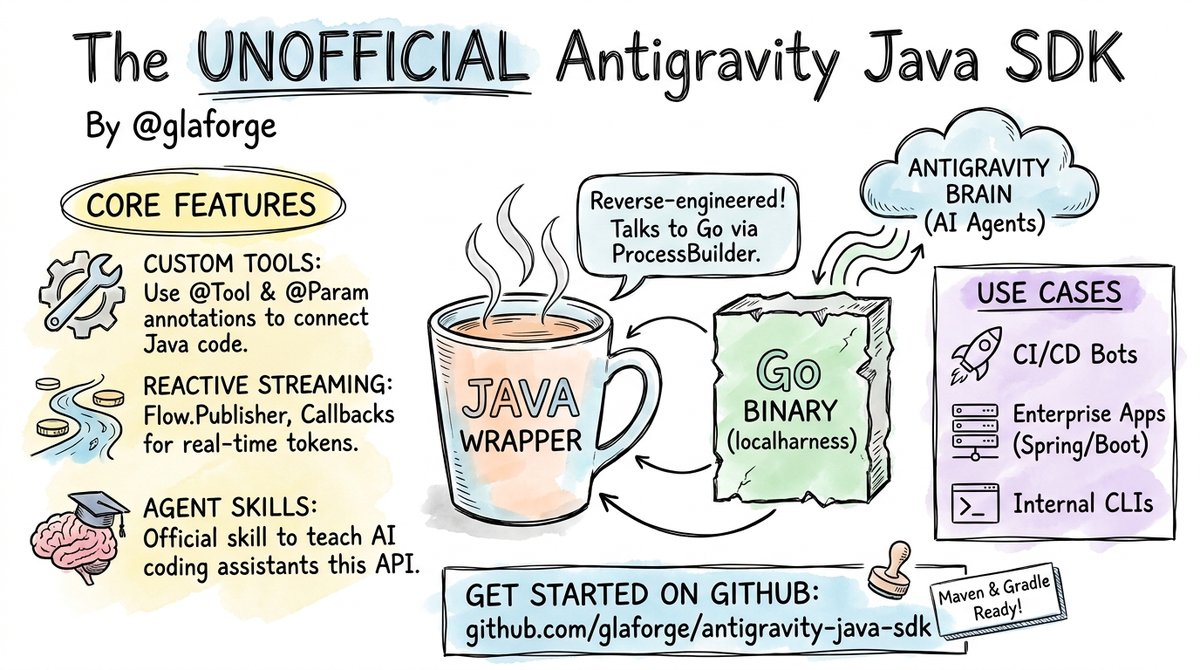
@glaforge built (18 likes, 2 replies, 788 views, 5 bookmarks) an unofficial Java SDK for Antigravity. The announcement and linked repo describe a Java wrapper around the underlying Go binary, support for custom tools and reactive streaming, and explicit use cases in enterprise Java applications, CI/CD bots, and internal CLI tooling. That matters because it extends Antigravity into the runtime and language territory where many enterprise teams already live.
Discussion insight: The replies under the race-coach thread were not generic praise. People asked about tougher benchmark tracks and sensor synchronization, which suggests readers were evaluating operational depth rather than only reacting to the Google branding.
Comparison to prior day: Antigravity's raw visibility looked roughly steady versus July 30. The change was qualitative: less “look at this tool bundle,” more “here is the telemetry stack, hardware loop, or enterprise SDK.”
1.3 Skills, memory, and reusable context packaging became a product layer (🡕)
The clearest builder pattern of the day was externalizing context into reusable layers: long-form skills, domain-specific skill packs, memory engines, shared-memory MCP servers, and visual skill managers. Six retained items supported the theme, and the underlying dataset moved with them: “memory” mentions rose sharply versus July 30, while MCP and skills mentions also increased.
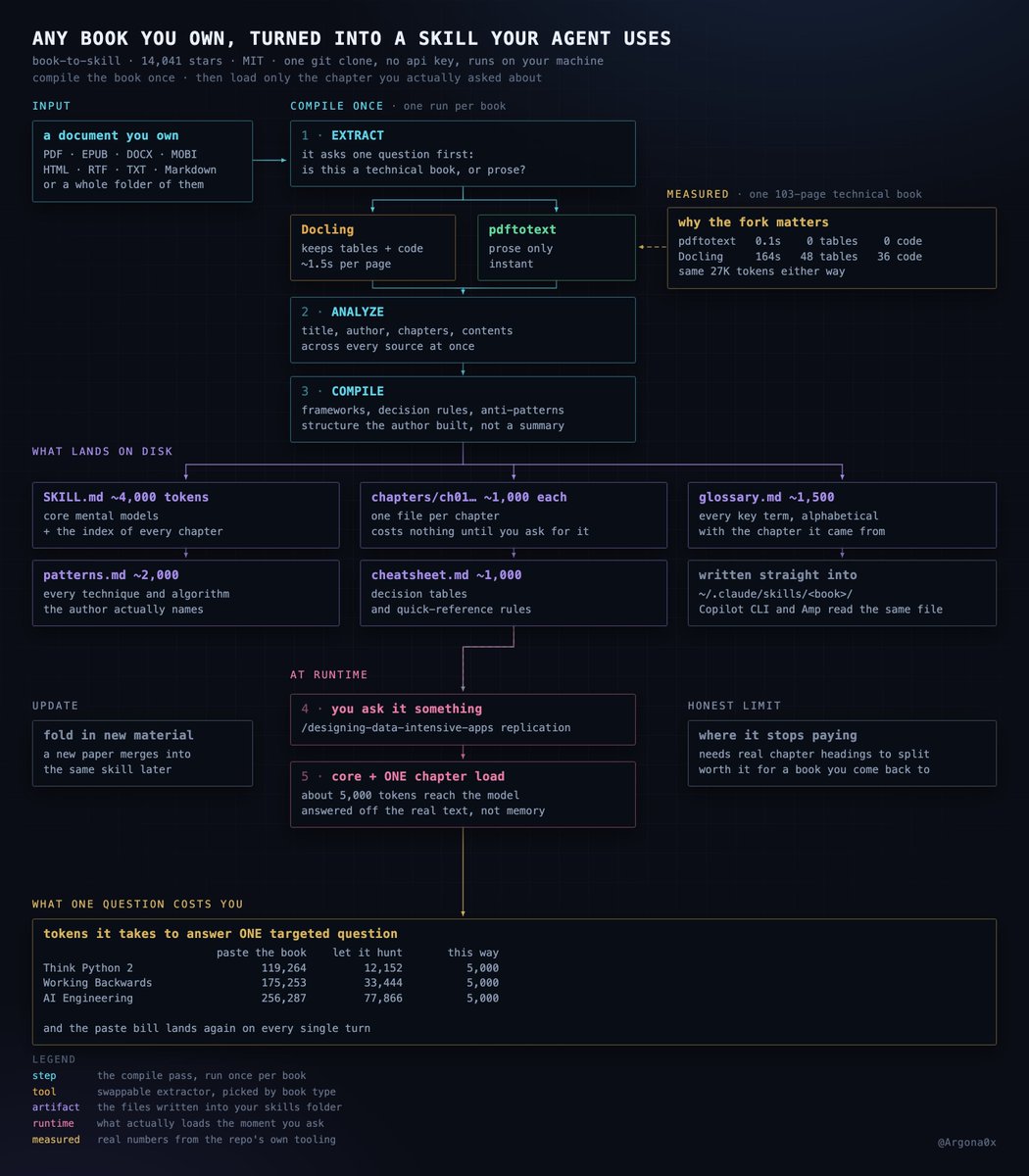
@Argona0x highlighted (24 likes, 6 replies, 969 views, 21 bookmarks) book-to-skill, a repo that turns a book or document corpus into an installable agent skill instead of forcing repeated PDF hunting or brute-force context stuffing. The tweet image and README lined up closely: the generated artifact includes a SKILL.md, chapter files, a glossary, named patterns, and a cheatsheet, while the README claims 24x-51x fewer tokens than dumping the book into context for a targeted question. The most useful reply did not ask for more storage. It said the real upgrade is making knowledge instantly usable when needed, and another reply noted that newer releases now scan incoming skills for prompt injection.
@tom_doerr shared (11 likes, 2 replies, 2,698 views, 16 bookmarks) Supabase Agent Skills, whose README says the package works with 18+ agents and ships both a general Supabase skill and a Postgres best-practices skill. @Scallop_io launched (22 likes, 9 replies, 2,752 views) Scallop Skills with 22 protocol skills, 3 expert agents, verified TypeScript and Python examples, and support for Claude Code, Codex CLI, Cursor, GitHub Copilot, and Windsurf. The pattern in both cases was the same: encode domain knowledge once, then make it portable across whichever coding agent the team happens to use.

Two separate memory layers also moved up the stack. @QCXINT_ highlighted (8 likes, 3 replies, 179 views, 4 bookmarks) agentmemory, emphasizing local operation, hybrid retrieval, 53 MCP tools, and broad cross-agent support. @DhravyaShah introduced (23 likes, 3 replies, 4 quotes, 1,426 views, 5 bookmarks) the new Supermemory MCP, whose docs position it as a shared memory layer with memory, recall, and whoAmI tools, OAuth auth, and project-scoped context. Between the two, one pitch was “local-first persistent memory engine,” the other was “shared context across tools and teams,” but both were solving the same meta-problem: coding agents are still stateless enough that people are now buying or building memory as infrastructure.

@tom_doerr shared (2 likes, 832 views, 3 bookmarks) SkillsGate, a desktop app and terminal UI for browsing, installing, editing, and syncing skills across more than 20 agents. The fact that a skill manager is now itself a product is revealing: the catalog of reusable instructions is large enough that “copy markdown into the right folder” no longer scales.
Discussion insight: The replies and docs were aligned on one point: the pain is not merely missing context. It is missing context that is portable, trustworthy, cheap to retrieve, and available on whichever surface a team uses next.
Comparison to prior day: July 30 already had public skill packs and agent customizations. July 31 made the layer much more explicit with memory servers, visual skill management, and document-to-skill compilation as standalone products.
1.4 The work surface above the prompt loop kept thickening (🡕)
Another strong theme was that builders kept shipping orchestration layers above the single prompt loop. Four retained items supported it: branch-aware session chains, bespoke generated tools inside the work surface, an open harness that bundles the usual agent plumbing, and a multiplayer harness built around rooms rather than a lone operator.
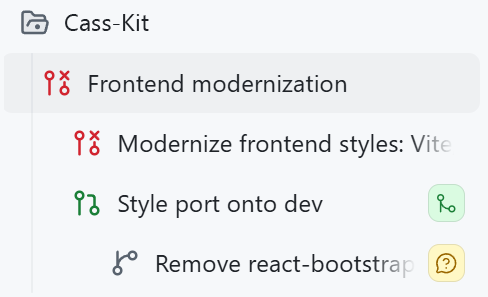
@kdaigle pointed (42 likes, 1 reply, 7,089 views, 16 bookmarks) to GitHub's stacked sessions and stacked pull requests workflow. The linked GitHub blog post is important because it openly shows a failed one-shot modernization getting restarted as a chain of dependent sessions and PRs off a dev branch. The pitch is no longer “one perfect prompt.” It is branch choreography, incremental review, and preserving enough context to keep large changes mergeable.
@burkeholland showed (143 likes, 14 replies, 8,522 views, 33 bookmarks) that he asked for a SQLite editor inside the GitHub Copilot app and got one “with Intellisense.” The replies immediately moved from wonder to lifecycle questions: what do you do with the generated tool next, and how do you persist or reuse it across runs? That is exactly the next-layer question once one-shot tool synthesis starts working.
@DamiDefi highlighted (65 likes, 2 replies, 3,504 views, 4 bookmarks) Deep Agents, whose README describes a model-agnostic harness with sub-agents, filesystem access, context management, shell execution, persistent memory, and human-in-the-loop controls. @omarsar0 pointed (15 likes, 8 replies, 2,933 views, 11 bookmarks) to YC's QM, whose README reframes the unit of work as a person, room, or project with scoped memory, files, permissions, crons, and shared skills across Slack and the web. In both cases, the product is no longer the model alone. It is the durable operating environment around the model.
@perplexitydevs announced (9 likes, 2 replies, 258 views, 5 bookmarks) a remote MCP server that works by API key and requires nothing local to install. That is a quieter but important sign of the same shift: more of the useful surface area is becoming a pluggable service endpoint that agents can call on demand.
Discussion insight: The best replies under Burke and QM were about persistence, file-edit authority, and handoff state. The live question is no longer whether agents can produce output. It is how many surfaces, sessions, rooms, and child agents can safely share state around that output.
Comparison to prior day: July 30 already emphasized stacked sessions and branch-aware workflows. July 31 pushed further into multiplayer harnesses, generated bespoke tools, and remote tool endpoints.
2. What Frustrates People
Cheap models do not help if the harness or credit model is wrong
Severity: High. The day's price cuts were real, but the discussion around them showed that cheaper frontier models still do not solve much unless the harness, routing logic, and credit accounting are also sane. @github said (141 likes, 19 replies, 27,855 views, 13 bookmarks) Luna and Terra were getting cheaper inside Copilot, but replies immediately split between “use Luna for background jobs” and “my paid plan still dies too quickly.” @burkeholland wrote (69 likes, 10 replies, 4,089 views, 9 bookmarks) that Luna had become Copilot's cheapest model, and the next question in replies was whether default agents and subagents would actually route into it.
The same frustration showed up from the benchmark side. @Hesamation argued (10 likes, 4 replies, 1,205 views, 1 bookmark) that Claude Code was dramatically more expensive than Kimi Code in a quoted 28-task harness run, and the chart made that complaint specific: 61K tokens and $0.22 on Kimi Code, 67K and $0.28 on Hermes, and 340K plus $2.00 on Claude Code for similar completion rates. @0x_sakata posted (21 likes, 14 replies, 561 views) a cheaper DeepSeek V4 Flash path through OpenRouter for the same reason: people are now actively shopping for better routing economics, not just better raw model quality.
People are coping by pushing routine work toward Luna, comparing harnesses more aggressively, and testing cheaper Codex-compatible backends. This is worth building for because the problem has shifted from headline model pricing to workload shaping, default routing, and transparent budget control.
Re-explaining context is still expensive enough that people are building around it
Severity: High. The cleanest frustration signal was not a complaint tweet. It was the number of products built to avoid restating context yet again. @Argona0x highlighted (24 likes, 6 replies, 969 views, 21 bookmarks) book-to-skill because technical books become useless in practice once chapter-level knowledge is trapped in PDFs instead of agent-usable context. @QCXINT_ highlighted (8 likes, 3 replies, 179 views, 4 bookmarks) agentmemory with the explicit pitch of “no more repeating yourself,” while @DhravyaShah introduced (23 likes, 3 replies, 4 quotes, 1,426 views, 5 bookmarks) Supermemory MCP as shared context across Claude, Cursor, Codex, and OpenCode.
Domain packs were solving the same problem from another angle. @tom_doerr shared (11 likes, 2 replies, 2,698 views, 16 bookmarks) Supabase Agent Skills, and @Scallop_io launched (22 likes, 9 replies, 2,752 views) Scallop Skills, both of which pre-package domain knowledge so teams do not keep spending context on the same database or protocol background. The reply under book-to-skill that mattered most said the gain is not storing more knowledge; it is making knowledge instantly usable.
People are coping by compiling documents into skills, adding memory servers, or installing domain packs and skill managers. This is worth building for because the frustration is both practical and recurring, though the space is already getting crowded with overlapping approaches.
Trust, permissions, and account plumbing still lag behind capability
Severity: Medium-High. As agents gained more repository context and more shared surfaces, people kept running into the question of what should actually be trusted and who should be allowed to do what. @sunglasses_dev warned (1 like, 2 replies, 20 views) that GitHub Copilot code review loading repo SKILL.md files and MCP context does not make those inputs trustworthy by default. The linked Sunglasses post explains how AGENTS.md, CLAUDE.md, SKILL.md, .cursor/rules, and .github/copilot-instructions.md can all carry hostile report-suppression or credential-moving instructions while still looking like ordinary repo guidance.

The same concern surfaced in workflow products. @GHchangelog reported (16 likes, 1,710 views, 4 bookmarks) new team-level model policies for Copilot, and replies under @omarsar0 pointing to (15 likes, 8 replies, 2,933 views, 11 bookmarks) QM asked a precise question: when several agents share one Slack channel, who is allowed to edit files and how is that bound to a branch or scope? Even basic account state is still brittle. @awakecoding reported (1 like, 2 replies, 313 views) being unable to work for 20 minutes because the Copilot app thought it was logged out even while its health check showed authorization as good.
People are coping by narrowing permissions, treating repo instructions as untrusted input, and adding more explicit policy layers around models and shared rooms. This is worth building for because the trust boundary is now one of the main constraints on whether richer agent workflows can be safely adopted.
3. What People Wish Existed
Cheap child-agent routing with clear credit semantics
This was the clearest practical need of the day. The official price changes only become fully useful if agent runtimes can actually push routine work into the cheaper lanes and explain how credits are being consumed. @github said (141 likes, 19 replies, 27,855 views, 13 bookmarks) Luna and Terra were getting cheaper in Copilot, but replies immediately jumped to background-job routing and plan exhaustion. @burkeholland wrote (69 likes, 10 replies, 4,089 views, 9 bookmarks) that Luna was now Copilot's cheapest model, and replies immediately asked whether default agents would use it. @OpenAIDevs said (449 likes, 38 replies, 27,118 views, 31 bookmarks) GPT-5.4 and GPT-5.4 mini would remain on API and Codex even as they left ChatGPT, and one of the first follow-up questions was about limits. This is a direct need, not an aspirational one: the lower-cost models already exist, but users still lack enough runtime control and budget clarity to exploit them cleanly. Opportunity: direct.
Portable knowledge and memory that follow the work across tools
The second need was just as practical: people want context that survives across sessions, tools, and teammates without being re-pasted into every conversation. @Argona0x highlighted (24 likes, 6 replies, 969 views, 21 bookmarks) book-to-skill because long-form technical knowledge is otherwise trapped in PDFs; @QCXINT_ highlighted (8 likes, 3 replies, 179 views, 4 bookmarks) agentmemory as a local cross-agent memory engine; and @DhravyaShah introduced (23 likes, 3 replies, 4 quotes, 1,426 views, 5 bookmarks) Supermemory MCP as shared context with team permissions. The emotional layer is visible too: people are tired of repeating themselves and losing useful prior work. But the dominant signal is operational, because every retained project in this cluster promises fewer wasted tokens, fewer repeated explanations, or more reliable reuse of prior decisions. Opportunity: competitive.
Trust-scored instruction and permission systems for agent context
As repository instructions, MCP resources, and shared rooms become normal, people want a stronger answer to “what should the agent trust here?” @sunglasses_dev warned (1 like, 2 replies, 20 views) that read-only repo instructions and MCP results are not automatically trustworthy, and the linked article shows how instruction files can smuggle suppression or credential-moving directives into apparently normal guidance. @GHchangelog reported (16 likes, 1,710 views, 4 bookmarks) new team-level model policy targeting, while replies under @omarsar0 pointing to (15 likes, 8 replies, 2,933 views, 11 bookmarks) QM immediately asked how edit authority is scoped in shared channels. This is a practical need with high urgency because richer workflows are already here, but trustworthy provenance and permission models are still patchy. Opportunity: direct.
One-click discovery and installation for skills, memory, and remote tools
A quieter but important need is that the new layers should be easy to adopt. @perplexitydevs announced (9 likes, 2 replies, 258 views, 5 bookmarks) a remote MCP server with nothing local to install beyond an API key, while @tom_doerr shared (2 likes, 832 views, 3 bookmarks) SkillsGate as a visual and terminal skill manager across more than 20 agents. @Scallop_io launched (22 likes, 9 replies, 2,752 views) a domain pack with an explicit install surface, and @tom_doerr shared (11 likes, 2 replies, 2,698 views, 16 bookmarks) Supabase Agent Skills with standard installation paths. This is practical, but more competitive than empty white space: multiple teams already see that setup friction is now a product opportunity. Opportunity: competitive.
4. Tools and Methods in Use
| Tool | Category | Sentiment | Strengths | Limitations |
|---|---|---|---|---|
| GPT-5.6 Luna / Terra in GitHub Copilot | LLM | (+/-) | Much lower listed cost inside Copilot, large context window for Luna, positioned for routine and background work | Replies still complained about plan exhaustion and unclear default routing into the cheaper models |
| GPT-5.4 / GPT-5.4 mini via API and Codex | LLM/API | (+/-) | Remain available for API-backed and Codex workflows even after ChatGPT removal | Leaving the signed-in ChatGPT surface created uncertainty about access patterns and allowances |
| DeepSeek V4 Flash via OpenRouter | LLM/API | (+/-) | Very low posted price, 1M context, sold as Codex-compatible and responses-API-compatible | Evidence today came mostly from vendor and reseller screenshots rather than broad independent validation |
| GitHub Copilot app and stacked sessions | Coding agent surface | (+/-) | Supports stacked session chains, stacked PRs, and one-shot tool synthesis inside the app | Auth state looked brittle in one report, and users still asked how generated tools persist and which models agents actually use |
| Google Antigravity | Agent workspace | (+) | Used in applied builds spanning telemetry, hardware, local models, cloud models, and new SDK wrappers | Public proof points were still concentrated in showcase builds rather than broad production postmortems |
| book-to-skill | Knowledge packaging | (+) | Converts books and document corpora into reusable skills with lower runtime token load | Validation today came from repo claims and early user replies, not broad adoption data |
| Supabase Agent Skills / Scallop Skills | Domain skill packs | (+) | Reusable domain guidance, verified examples, multi-agent compatibility | The market is fragmenting across many agent surfaces and installation paths |
| Supermemory MCP | Memory / MCP | (+/-) | Shared context across tools, OAuth, project scoping, simple memory and recall primitives | Replies immediately asked about backend architecture and operational shape |
| agentmemory | Local memory engine | (+) | Local-first storage, hybrid retrieval, many tools, broad cross-agent support | Claims were strong, but discussion volume was still small |
| SkillsGate | Skill manager | (+) | Browse, install, edit, and sync skills across 20+ agents through desktop and TUI surfaces | Early signal only, with limited public usage discussion today |
| Deep Agents | Orchestration framework | (+) | Bundles sub-agents, filesystem, shell access, memory, and human-in-the-loop controls | Still mostly framework-level evidence rather than operator stories |
| QM | Multiplayer agent harness | (+/-) | Shared rooms, scoped memory, permissions, files, crons, and vendor-agnostic agent usage | Replies immediately focused on permission scope and edit authority in shared spaces |
| Perplexity remote MCP server | Remote tool endpoint | (+) | API-key access and nothing local to install reduce setup friction | Public evidence today was limited to announcement and docs rather than usage reports |
The overall satisfaction spectrum ran from “useful but still operationally fuzzy” to “promising layer that still needs trust and workflow polish.” People were clearly willing to mix surfaces: frontier models inside Copilot for primary coding, cheaper OpenRouter-style backends for cost-sensitive work, document-to-skill compilation for durable knowledge, and memory or MCP layers to carry context across tools. The most visible migration pattern was not one model displacing another; it was teams trying to move repetitive or background work toward cheaper models while reserving expensive models for harder reasoning. Competitive pressure therefore came from three directions at once: cheaper model routing, better context packaging, and lower-friction orchestration around the model.
5. What People Are Building
| Project | Who built it | What it does | Problem it solves | Stack | Stage | Links |
|---|---|---|---|---|---|---|
| AI Race Coach | Google Developer Experts via @antigravity | Turns car telemetry into coaching feedback for drivers | Bridges the domain gap between racing expertise, sensor streams, and AI assistance | Antigravity, Python, Pixel 10 telemetry capture, Gemma 4, Gemini API, Jetpack Compose | Alpha | post, blog |
| Glanceboard | Google Gemini team via @googledevs | E-ink picture frame that turns calendar and weather into a family planner illustration | Makes household planning ambient instead of another app tab | FastAPI, Gemini 3.6 Flash, Nano Banana, e-ink hardware | Beta | post, repo |
| Antigravity Java SDK | @glaforge | Java wrapper for using Antigravity from JVM applications | Lets enterprise Java teams adopt Antigravity without switching runtimes | Java, Antigravity Go binary, custom tools, reactive streaming | Alpha | post, repo |
| book-to-skill | Shared by @Argona0x | Compiles books and long docs into installable agent skills | Avoids repeatedly stuffing long references into context windows | Structured Markdown skills, chapter splitting, glossary and pattern extraction | Beta | post, repo |
| Supabase Agent Skills | Shared by @tom_doerr | Official Supabase and Postgres skill packs for coding agents | Reuses database and platform know-how across many agent surfaces | Markdown skill packs, Supabase guidance, Postgres best practices | Beta | post, repo |
| idea-validation-agents | Shared by @tom_doerr | AI venture analyst workflows for idea generation, validation, market deep dives, and pivots | Helps builders validate demand before spending engineering time | Claude Code, OpenAI Codex, Cursor, persistent memory folder | Beta | post, repo |
| Scallop Skills | @Scallop_io | Protocol skill pack with expert agents and verified language examples | Gives teams reusable on-chain and protocol guidance across coding agents | Skill packs, TypeScript examples, Python examples, multi-agent support | Beta | post |
| Deep Agents | Shared by @DamiDefi | Open agent framework with subagents, memory, shell access, and human review hooks | Saves teams from rebuilding the standard agent runtime pieces | LangChain, sub-agents, filesystem, shell, persistent memory | Beta | post, repo |
| QM | YC Software via @omarsar0 | Multiplayer AI workspace organized around rooms, files, permissions, and crons | Supports collaborative agent work instead of isolated solo chats | Slack, web app, scoped memory, files, permissions, crons | Beta | post, repo |
| agentmemory | Shared by @QCXINT_ | Persistent local memory layer for many coding agents | Stops users from re-explaining context and losing prior decisions | Local memory engine, hybrid retrieval, MCP tools | Beta | post, repo |
| SkillsGate | Shared by @tom_doerr | Desktop app and TUI for browsing and syncing skills | Reduces setup friction as the skill ecosystem fragments | Desktop app, terminal UI, skill discovery and sync | Beta | post, repo |
| Supermemory MCP | @DhravyaShah | Shared memory server for multiple agent tools | Keeps project and team context portable across coding surfaces | MCP, OAuth, project-scoped memory and recall tools | Beta | post, docs |
The most distinctive build of the day was AI Race Coach because it tied agent tooling to a hard real-world loop: local vehicle telemetry, on-device and cloud models, and live driver feedback. Glanceboard pointed in a very different direction, showing that Antigravity-adjacent work is also moving into ambient household software rather than staying trapped inside coding demos.
The densest repeated build pattern was packaging expertise for reuse. book-to-skill, Supabase Agent Skills, Scallop Skills, SkillsGate, and Supermemory all assume that useful agent behavior should be installable, transferable, and retrievable instead of rewritten from scratch for every session. idea-validation-agents extends that same pattern from technical knowledge into pre-build market judgment.
The second repeated pattern was building the operating substrate around agents. Deep Agents, QM, and agentmemory each tackle a different layer of that substrate: orchestration, collaborative workspace structure, and persistent memory. Multiple independent builders working on those layers the same day is a strong sign that the limiting factor is no longer raw generation alone.
6. New and Notable
GPT-5.4 and GPT-5.4 mini are leaving ChatGPT but not developer workflows
@OpenAIDevs said (449 likes, 38 replies, 27,118 views, 31 bookmarks) the two models will leave the signed-in ChatGPT surface on August 31 while staying available via the OpenAI API and Codex sessions that use an API key. That matters because the replies showed developers immediately interpreting the change through workflow continuity rather than consumer access: the important question was whether coding paths and allowances remain intact.
GitHub added enterprise-team model policy targeting
@GHchangelog reported (16 likes, 1,710 views, 4 bookmarks) that enterprise teams can now receive optional Copilot models through targeted policies. The linked changelog says models can be marked Enabled, Disabled, or Optional, then granted to selected teams with least-restrictive access. This is notable because it turns model choice into an admin surface, not just an end-user preference.
Perplexity moved MCP access toward a remote-service model
@perplexitydevs announced (9 likes, 2 replies, 258 views, 5 bookmarks) a remote MCP server that works through an API key with nothing local to install. The docs make that promise explicit. This is notable because it lowers the setup bar for tool connectivity just as more teams are experimenting with MCP-backed workflows.
A visible Copilot auth mismatch exposed a reliability gap
@awakecoding reported (1 like, 2 replies, 313 views) that the GitHub Copilot app believed it was logged out for 20 minutes even while its own health check showed authorization as good. That is a small-sample incident, but it is notable because it captures a concrete failure mode in a surface that is otherwise being promoted as the center of more complex agent workflows.
Instruction-file poisoning became a named trust problem
@sunglasses_dev warned (1 like, 2 replies, 20 views) that repo instruction files and MCP context should not be trusted simply because they are loaded in a read-only review flow. The linked analysis walks through hostile patterns embedded in normal-looking files such as AGENTS.md, CLAUDE.md, and .github/copilot-instructions.md. This is notable because it gives the day's broader trust and permissions discussion a concrete attack model.
7. Where the Opportunities Are
[+++] Budget-aware routing and quota control for coding agents — Evidence came from multiple sections: GitHub's Luna and Terra price cuts, Burke Holland's rate screenshot, OpenAI's API-versus-ChatGPT model-surface split, and the Kimi-versus-Claude cost comparison all pointed to the same gap. Teams need a runtime that can route child work into cheaper lanes, explain spend in plain terms, and keep expensive models reserved for the hard parts.
[+++] Trusted reusable context layers — book-to-skill, Supabase Agent Skills, Scallop Skills, Supermemory MCP, agentmemory, and SkillsGate all exist because persistent knowledge is still too fragile and too expensive to keep recreating. The strongest opportunity is not just “memory” in the abstract, but portable context that is cheap to retrieve, easy to install, and verifiably safe to consume.
[++] Policy, permissions, and provenance for shared agent work — Team model targeting, QM's permission questions, the Copilot auth mismatch, and the Sunglasses instruction-poisoning analysis all showed that richer workflows are outrunning their control planes. There is a moderate but urgent opportunity for products that make model access, file authority, instruction trust, and auditability legible to both admins and operators.
[++] Remote-tool and skill distribution infrastructure — Perplexity's remote MCP server and SkillsGate's cross-agent installer point to the same opening: the ecosystem now needs easy discovery, install, update, and revocation of tools and skills across many agent surfaces. The opportunity is moderate because several builders already see it, but the user need is concrete.
[+] Domain-specific agent kits that prove value outside the IDE — AI Race Coach, Glanceboard, and idea-validation-agents showed that the most memorable projects were not generic coding demos. They were domain kits with clear workflows, artifacts, and end users. This is an emerging opportunity because the pattern is visible, but today's examples were still early and heterogeneous.
8. Takeaways
- Cheaper models changed the conversation from capability to routing and governance. GitHub's Luna and Terra price cuts immediately triggered questions about background-job routing, plan exhaustion, and team model access rather than excitement about raw intelligence alone. (source 1, source 2, source 3)
- Developer continuity now matters more than consumer-surface continuity. OpenAI's GPT-5.4 and GPT-5.4 mini announcement mattered mainly because the models remain on the API and in Codex, which is the path developers in replies cared about preserving. (source)
- Reusable context is becoming its own product layer. The day's strongest cluster of builds focused on converting documents into skills, packaging domain guidance, or carrying memory across tools rather than on new raw model wrappers. (source 1, source 2, source 3)
- The agent surface above the prompt loop is getting materially thicker. Stacked sessions, multiplayer workrooms, generated internal tools, and remote MCP endpoints all pointed to a future where the useful product is the workspace around the model, not the model call alone. (source 1, source 2, source 3)
- Trust and reliability are becoming first-order adoption blockers. The public instruction-file poisoning write-up and the Copilot auth-state mismatch report both showed that richer agent workflows still break on provenance and plumbing, not only on model quality. (source 1, source 2)