Twitter AI Coding - 2026-08-01
1. What People Are Talking About
1.1 Antigravity turned into a workflow catalog and applied runtime, not just an IDE (🡕)
The strongest AI-coding conversation on Twitter was still around Google Antigravity, but the valuable posts were no longer generic free-tools threads. They were concrete workflow examples: physical deployments, telemetry-driven systems, UI-skill guidance, and loop-based build guides. That made Antigravity look less like a novelty interface and more like a packaging layer for applied coding work.
@antigravity posted (465 likes, 24 replies, 2 quotes, 55,305 views, 248 bookmarks) a community roundup thread whose replies linked concrete build patterns: a Flutter frontend built through loops, four rules for interactive UI skills, retro web games deployed to arcade cabinets, and automated video editing. The high bookmark count mattered because people were saving a workflow catalog, not reacting to a product announcement.
@antigravity showed (179 likes, 17 replies, 5 quotes, 13,427 views, 23 bookmarks) an AI Race Coach built at Sonoma Raceway, and the linked Google developer write-up explained the coding stack clearly: Python telemetry ingestion on a Pixel 10, Jetpack Compose cockpit dashboard, Gemma 4 for local low-latency alerts, Gemini API for deeper cloud reasoning, and TTS for delivery. That is much more operational than a prompt demo because the system had to handle real sensor input and a hard latency budget. (Google developer write-up)

@antigravity separately highlighted (33 likes, 1 reply, 8,301 views, 19 bookmarks) a project that prompts retro web games and deploys them directly to physical arcade cabinets, making the coding agent responsible not just for generating code but for packaging and shipping it to hardware.
Discussion insight: The replies were less about whether Antigravity is real and more about whether the builds are operationally deep enough — benchmarks, sensor sync, and how these flows survive contact with real environments.
Comparison to prior day: July 31 already showed Antigravity getting more applied. August 1 pushed further into community-packaged workflows and edge deployments rather than generic tool tours.
1.2 Harness engineering became the shared frame for coding-agent infrastructure (🡕)
The clearest conceptual shift of the day was that harness became the common noun for the useful layer around coding models. Multiple posts used the term to talk about context persistence, permissions, routing, tool surfaces, checkpoints, and evaluation rather than the model itself. This was the strongest sign that the coding-agent conversation is moving beyond model shopping.
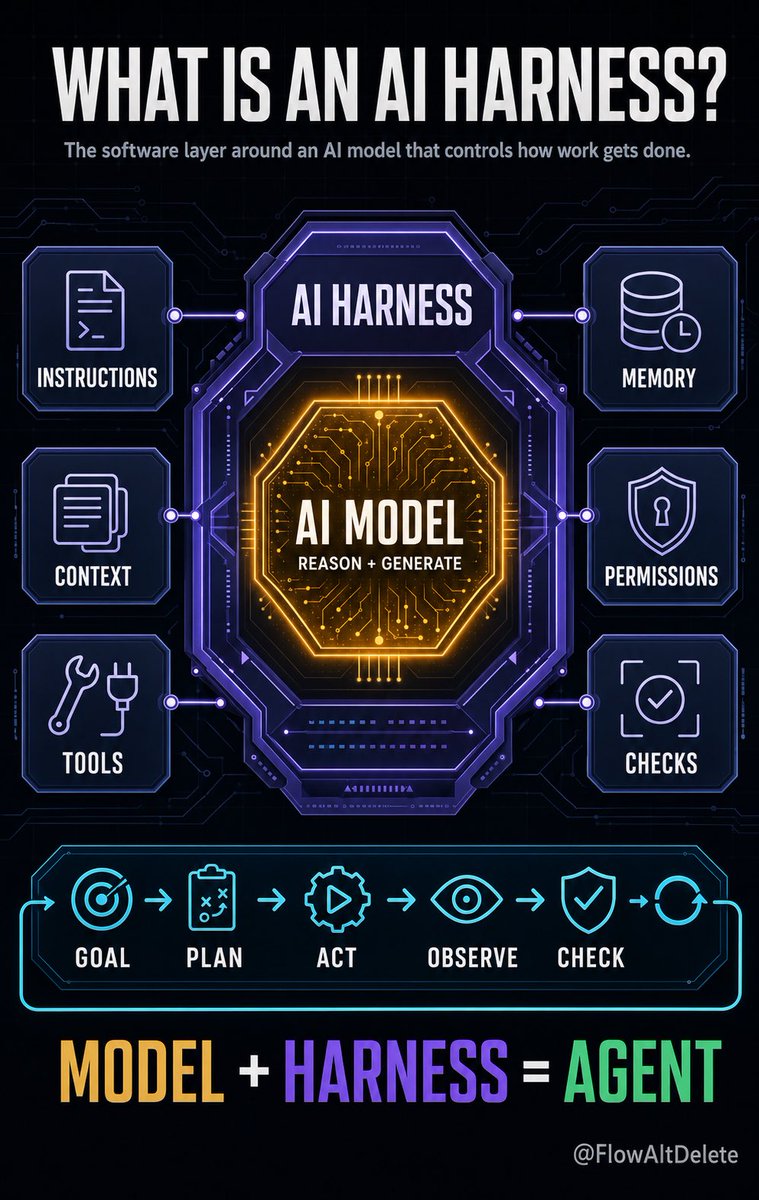
@FlowAltDelete argued (11 likes, 3 replies, 470 views, 5 bookmarks) that the model race gets headlines but the harness race decides what actually ships. The accompanying graphic was useful because it reduced the harness to concrete concerns — context, memory, tools, permissions, subagents, loops, goal, plan, observe, and check — instead of leaving it as marketing language.
@undefinedKi used OpenAI's own numbers (10 likes, 4 replies, 150 views, 6 bookmarks) to claim that harness changes alone made the same model roughly three times stronger on the same token budget by preserving notes between turns and compacting old context instead of discarding it. The reply was equally useful because it mapped the same idea onto Anthropic: pass previous thinking blocks forward and use context-management features instead of replaying from scratch.
@akshay_pachaar showed (17 likes, 10 replies, 1 quote, 3,660 views, 19 bookmarks) QM as a concrete enterprise harness: fixed tool surface, scoped memory/files/permissions, durable sandboxes, and a thin TypeScript core over Postgres. @github added (39 likes, 8 replies, 9,491 views, 8 bookmarks) a more productized version of the same trend with the Copilot app for every plan and stacked pull requests, although replies immediately pointed to branch-splitting and persistence issues that are still unsolved.

Discussion insight: Even supportive replies kept translating harness back into operational questions: what persists between runs, how much of the tool surface is exposed, and who can see or approve a state change.
Comparison to prior day: July 31 already emphasized thicker work surfaces above the prompt loop. August 1 made the harness itself the named battleground and showed people comparing specific design choices inside it.
1.3 Operators are routing jobs across model stacks instead of backing one assistant (🡕)
The most practical operator post of the day was a long stack breakdown that assigned different models to different jobs. That was not unusual because it praised one model. It was unusual because it openly treated coding work as a routing problem across planners, reviewers, endurance workers, vision helpers, research models, and private local models.
@Da7_Tech laid out (52 likes, 11 replies, 5 quotes, 3,495 views, 37 bookmarks) a stack where Kimi K3 orchestrates in Cursor, Grok 4.5 handles pull requests, GLM does 12-16 hour goal-mode work inside Claude Code, Luna handles lighter Hermes tasks, MiniMax fills vision gaps, and Bonsai 27B handles private local work. In replies, the author said Kimi quota on Cursor Pro can disappear in days and that every model needs a job it fits rather than universal usage. That is a useful public example of workload shaping by capability, endurance, vision, and price.
@yasser_elsaid_ recommended (27 likes, 6 replies, 655 views, 31 bookmarks) that founders connect GTM tools to Claude or Codex through CLI/API instead of MCP, with each system living as a folder inside one repo so an agent can produce a conversational business pulse. The most revealing part was the reply: direct API or CLI makes it easier to keep reusable code that can process large amounts of data, which shows why code-native operators are still skeptical of thin connector layers.
@MParakhin added (53 likes, 3 replies, 5,898 views, 9 bookmarks) that OpenAI's API has much stricter — his word was slopier — content controls than ChatGPT or Codex. @jasondeanlee voiced (264 likes, 35 replies, 1 quote, 25,936 views, 17 bookmarks) the same gap from another angle: OpenAI can solve frontier math internally while his Codex run spins for 40 hours and gets nowhere, with replies pointing to internal models, much larger loop counts, and uneconomical test-time compute that customers do not receive.
Discussion insight: The public question is no longer which coding tool wins. It is which surface, which model, which approval mode, and which pricing lane should handle this job.
Comparison to prior day: July 31 centered pricing and access. August 1 turned that into explicit workload placement and surfaced more day-to-day frictions between API, chat, and agent surfaces.
2. What Frustrates People
Long-running coding agents still hit economic and capability ceilings
Severity: High. @jasondeanlee made the frustration blunt: OpenAI can produce math breakthroughs while a 40-hour Codex run gets nowhere. The replies pointed to more internal compute, different models, and larger loop counts, which is another way of saying customers still cannot reliably buy the same autonomy the lab can run internally. @ClutchPBCFO added (71 likes, 7 replies, 12,526 views, 4 bookmarks) the cost-control version of the same problem with a documented $1,149.26 Scout misconfiguration and a 75-test repair. @Da7_Tech showed the everyday version: even light tasks can eat enough Kimi quota that a monthly plan becomes a few focused days of work. This is worth building for because users now speak about limits in operational units — hours, runs, and percentage of plan burned — not abstract token prices.
API and surface differences still make workflows brittle
Severity: High. @MParakhin described intermittent OpenAI API failures that do not happen on ChatGPT or Codex. @yasser_elsaid_ explicitly chose CLI/API over MCP because reusable repo code is easier to reason about and scale across many data sources. @github showcased stacked pull requests, but replies still complained about refactors splitting across incompatible branches and questioned whether state really persists cleanly across runs. The ecosystem is clearly more capable, but it is still too surface-dependent.
Safety and validation are still happening too late
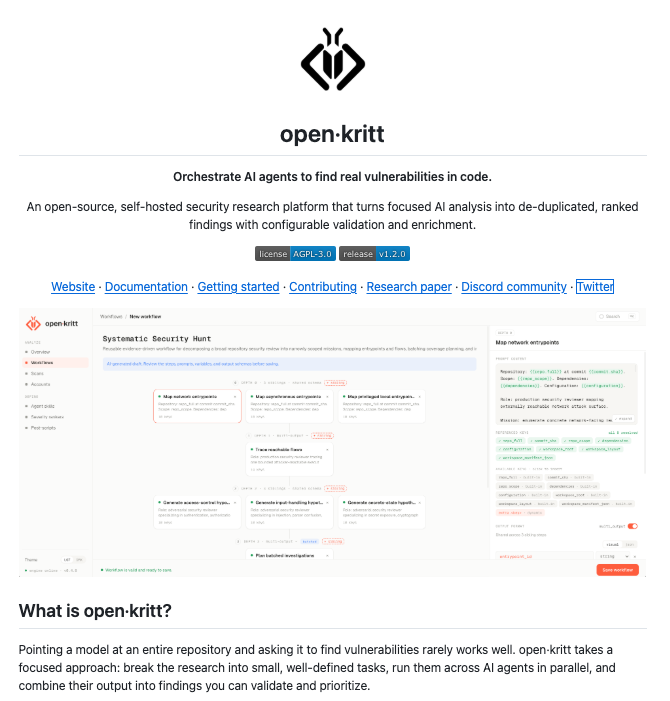
Severity: Medium to High. @socialwithaayan promoted (27 likes, 6 replies, 3,505 views, 7 bookmarks) iFixAi as a 45-check, A-to-F preflight for agents inside Claude Code, Codex, and Cursor precisely because teams need to catch risky behavior before deployment. @ihteshamali described (8 likes, 2 replies, 346 views, 4 bookmarks) open-kritt as a workflow-based vulnerability hunting system that splits the job into focused agents with validation and ranking. The underlying frustration is that too many teams still deploy first and build inspection later.
3. What People Wish Existed
Persistent, inspectable harnesses with scoped memory and permissions
Practical need. QM, GitHub's stacked PR work surface, and the wider harness discussion all point to the same request: a coding agent should not feel stateless, branch-blind, or permission-opaque once a task spans multiple sessions. Opportunity: direct.
Preflight safety, grading, and regression checks for autonomous coding work
Practical need. iFixAi, open-kritt, and the HyperAgent postmortem all treat validation as its own product layer. Teams want to know if an agent is about to overspend, go off-policy, or miss obvious flaws before the run touches real systems. Opportunity: direct.
Better code-native automation across business, research, and ops tools
Practical need. The repo-folder pattern from @yasser_elsaid_ and the model-routing stack from @Da7_Tech both show users wanting automation that stays programmable, inspectable, and close to the codebase rather than disappearing into brittle connectors. Opportunity: competitive.
Real-world deployment patterns beyond browser chat
Emerging need. AI Race Coach and the QR-light file transfer project both matter because they make coding agents responsible for real hardware, offline transfer, and latency-constrained systems rather than text-only outputs. Opportunity: emerging.
4. Tools and Methods in Use
| Tool | Category | Sentiment | Strengths | Limitations |
|---|---|---|---|---|
| Google Antigravity | Agent IDE/runtime | (+) | Strong workflow examples, loops, UI skills, hardware-adjacent builds | Still easy to drown signal in generic tool-tour content |
| Claude Code | Coding agent surface | (+) | Strong long-running work, native skill ecosystem, broad mindshare | Surrounded by many secondary harnesses and migration layers |
| GitHub Copilot app | Workspace/orchestration | (+/-) | App access for every plan, stacked PRs, broader workspace framing | Branch conflicts and state persistence are still pain points |
| Codex/OpenAI API | Model surface | (+/-) | Powerful when paired with the right harness and compute budget | API behavior differs from ChatGPT/Codex and autonomy ceilings stay visible |
| QM | Multi-user harness | (+) | Scoped memory/files/permissions, durable sandboxes, small tool surface | Complex organizational rollout and policy design |
| Hermes | Multi-model harness | (+/-) | Lets operators route Luna, Grok, GLM, DeepSeek, MiniMax by task | Performance and parity depend on external model stacks |
| Kimi K3 in Cursor | Planner/orchestrator | (+/-) | Broad planner, useful orchestrator for multi-model setups | Slow and quota-hungry in daily use |
| iFixAi | Agent auditing | (+) | Fast preflight scorecard, works across multiple agent surfaces | Another step teams must remember to run before launch |
| open-kritt | Security research platform | (+) | Focused parallel scans, validation, ranking, BYO model access | Requires dedicated infra and private deployment hygiene |
| Harness engineering | Method | (+) | Clarifies where performance comes from beyond the model | Still partly vocabulary work; tools are catching up |
The tool landscape looked less winner-take-all than the raw branding noise suggests. People are increasingly combining surfaces: one tool for routing, another for endurance, another for vision, another for governance, and another for auditing or validation.
5. What People Are Building
| Project | Who built it | What it does | Problem it solves | Stack | Stage | Links |
|---|---|---|---|---|---|---|
| AI Race Coach | Google Developer Experts | Real-time driver coaching from live car telemetry | Shows how coding agents can bridge software orchestration and physical telemetry | Antigravity, Python, ADK, Jetpack Compose, Gemini API, Gemma 4, TTS | Beta | tweet, write-up |
| QM | Y Combinator | Multi-user harness for org-wide agent work | Gives each person or room isolated state, tools, files, and policy | TypeScript, Node, Fastify, Postgres, Slack/web, Codex/Claude Code/OpenCode/Pi | Shipped | repo, tweet |
| iFixAi | iFixAi team | Audits agents and grades risky behavior in under 120 seconds | Catches blind spots before an agent ships | Python CLI/plugin/skill, multi-provider judges, 45 inspections | Shipped | repo, tweet |
| open-kritt | Kritt team | Self-hosted workflow builder for AI vulnerability research | Replaces one giant find-bugs prompt with focused parallel tasks and validation | Docker, Node, Codex/Claude Code/OpenAI/Anthropic/OpenRouter | Beta | repo, tweet |
| QR light file transfer | Open-source builder summarized by RoundtableSpace | Transfers files between phones using animated QR frames and camera capture | Solves offline or air-gapped file sharing without WiFi or Bluetooth | Fountain codes, camera reconstruction, Claude Code-built prototype | Beta | tweet |
The AI Race Coach project was the strongest signal that AI coding is not confined to editors anymore: it depended on a real telemetry pipeline, an edge model, a cloud model, and a dashboard that had to hold up under latency constraints. QM, iFixAi, and open-kritt showed a parallel pattern on the software side: as coding agents grow more autonomous, more of the real product value is shifting into the harness, the audit layer, and the validation pipeline rather than the model alone. The QR-transfer project was smaller but important because it showed Claude Code being used to prototype an offline systems trick with clear technical constraints and a real use case.
6. New and Notable
GitHub pushed the Copilot app toward a broader workspace layer
The July shipped summary mattered because it bundled new models, app access for every plan, and stacked pull requests into one public signal that GitHub wants Copilot to act more like a workspace than a single chat surface. (source)
OpenAI's harness work turned memory preservation into a public performance lesson
The most practical performance insight of the day was that keeping notes between turns and compacting context can materially improve agent output without changing the model or token budget. (source)
QM made multi-user harness design inspectable
Between YC's announcement and the detailed reverse-engineering thread from @rohit4verse, QM turned organizational agent design into something other builders can actually read, critique, and copy. (source)
Security specialists are productizing preflight and research workflows
iFixAi and open-kritt both matter because they carve out dedicated layers for grade-it-before-launch and scan-it-systematically rather than treating security as a side effect of the main coding loop. (source)
7. Where the Opportunities Are
[+++] Harness observability, policy, and persistence — The biggest gap sits between model output and real work: durable context, scoped permissions, branch-aware state, and causal logs that explain what happened.
[+++] Model routing, quotas, and budget control — Da7's stack, Jason Dean's complaint, and the HyperAgent postmortem show a growing need for systems that assign jobs to the right model and stop waste automatically.
[++] Preflight security and regression testing for agents — iFixAi and open-kritt show the market forming around audit layers, validation workflows, and specialized security orchestration.
[+] Edge, offline, and hardware-adjacent coding agents — AI Race Coach and QR-light transfer suggest more room for agents that build or operate systems with real sensors, latency limits, or disconnected environments.
8. Takeaways
- Antigravity's story kept moving from hype to applied workflows. The best evidence was a community roundup of concrete builds plus a race-coach system grounded in live telemetry and edge/cloud reasoning. (source)
- The harness is becoming the real unit of competition in AI coding. Multiple posts treated context persistence, permissions, tool surfaces, and checks as the decisive layer around the model. (source)
- Serious operators are openly routing work across many models. Planning, execution, review, endurance, vision, research, and private local work are increasingly handled by different tools in the same stack. (source)
- Economic frustration is now concrete and measurable. People are talking in hours of wasted autonomy, plan percentages burned, and four-figure misconfigurations rather than abstract concern about tokens. (source)
- Security is forming into its own coding-agent layer. iFixAi and open-kritt show growing demand for tools that test or research agents before deployment instead of trusting the main coding loop to stay safe. (source)