Twitter AI Coding - 2026-08-02
1. What People Are Talking About
1.1 Quota-aware routing and free-model gateways moved from side hack to core workflow (🡕)
The loudest practical theme was not a single model launch. It was the attempt to keep coding sessions alive when plans, quotas, or provider limits fail. Twitter had multiple posts for local routers, free-tier aggregators, and gateway credits, which together made uninterrupted access feel like a product category of its own rather than a workaround.
@RoundtableSpace argued (29 likes, 11 replies, 16,960 views, 11 bookmarks) that OmniRoute makes paid API access optional by exposing one endpoint across 290 providers and 90+ free tiers. The repo README backs up the broader architecture claim: zero-config auto, 19 routing strategies, and RTK/Caveman compression layered on top of provider fallback. (OmniRoute repo)

@snskritinaruka reported (34 likes, 13 replies, 2,109 views, 5 bookmarks) that 9Router keeps Claude Code, Codex, Cursor, Cline, and Copilot sessions from dying mid-task by auto-switching from subscriptions to cheap or free providers. The repo description adds the operational detail missing from the tweet: a local proxy at localhost:20128, RTK token saving, and quota tracking rather than simple key rotation. (9Router repo)

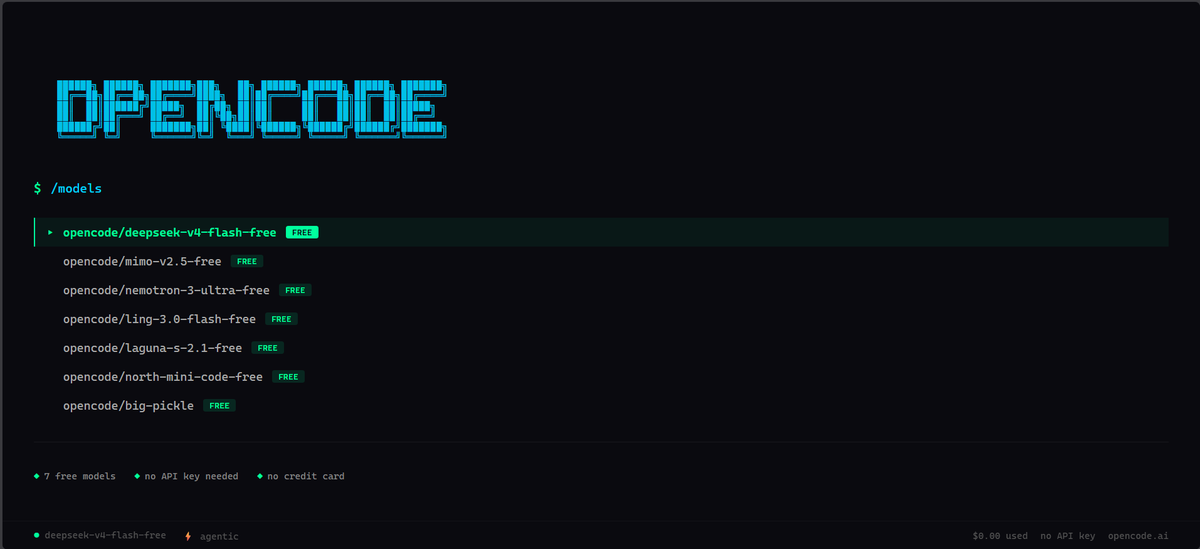
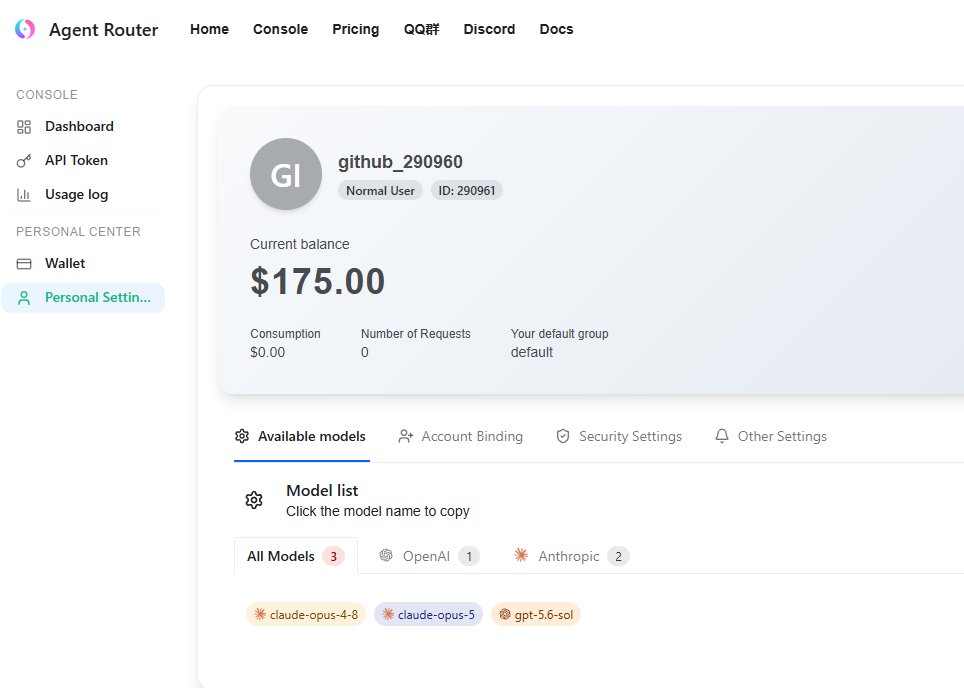
@Alan_Earn highlighted (10 likes, 5 replies, 305 views, 5 bookmarks) a related but narrower version of the same trend: OpenCode shipping DeepSeek V4 Flash as a built-in free model inside its open-source coding terminal, alongside other free models and MCP/LSP support. @nftmufettisi added (152 likes, 36 replies, 10,586 views, 54 bookmarks) the credit-arbitrage angle with an AgentRouter signup showing a funded wallet and ready-to-copy model IDs for Claude and GPT tools.
Discussion insight: The strongest reply under the OmniRoute post was not hype. It was a correction that “aggregated capacity isn’t guaranteed capacity” unless fallback preserves context and tool calls reliably. That same skepticism appeared in 9Router replies asking about lag and continuity when a provider switches.
Comparison to prior day: August 1 already showed people routing work across models. August 2 made the routing layer itself the product: local proxies, free-tier pools, and credits became as discussable as the models behind them.
1.2 Antigravity stayed in the conversation by packaging repeatable workflows, not just demos (🡒)
Antigravity remained one of the most visible names in AI coding, but the valuable posts were not generic “build anything” claims. The highest-signal material was workflow packaging: reusable loops for learning Python/ADK, UI-skill design rules, and a prompt-to-arcade pipeline that connected coding output to physical hardware.
@antigravity posted (605 likes, 29 replies, 77,143 views, 338 bookmarks) a roundup thread whose own replies became the real evidence: a Flutter frontend built while learning Python/ADK through loops, a UI-skill guide focused on namespacing and direct-response phrasing, and an arcade workflow that deploys generated retro web games to physical cabinets. The linked summaries from Flutter and Google for Developers turned those into concrete patterns rather than vague feature tours. (Flutter summary, UI skills summary, Arcade summary)
@antigravity separately amplified (42 likes, 1 reply, 10,945 views, 24 bookmarks) the arcade build, and the linked Google description made the stack clearer: custom Antigravity skills, Firebase, Google Cloud, and deployment to physical machines rather than only a browser tab.
@refrip98 added (110 likes, 115 replies, 686 views) a smaller but relevant adjacent pattern with Canopy Templates: GitHub-started scaffolds that ask a developer to implement only five functions, ship wallet and explorer support out of the box, and include an AGENTS.md note so assistants can orient faster.

Discussion insight: Even in a supportive Antigravity thread, replies pushed on practical limits: state recovery, model freshness, and whether the workflow still holds once a project leaves the demo path.
Comparison to prior day: August 1 emphasized Antigravity as a catalog of applied builds. August 2 kept that momentum but shifted further toward teachable recipes and AI-readable scaffolds.
1.3 The “harness” story broke into separate layers: workspace, skills, graph context, review, and verification (🡕)
What changed most from the prior day was not the idea of a harness. It was the number of separate products now claiming a slice of it. Twitter posts split the stack into workspace surfaces, skill syncing, graph-based context control, specialized review, and explicit verification gates.
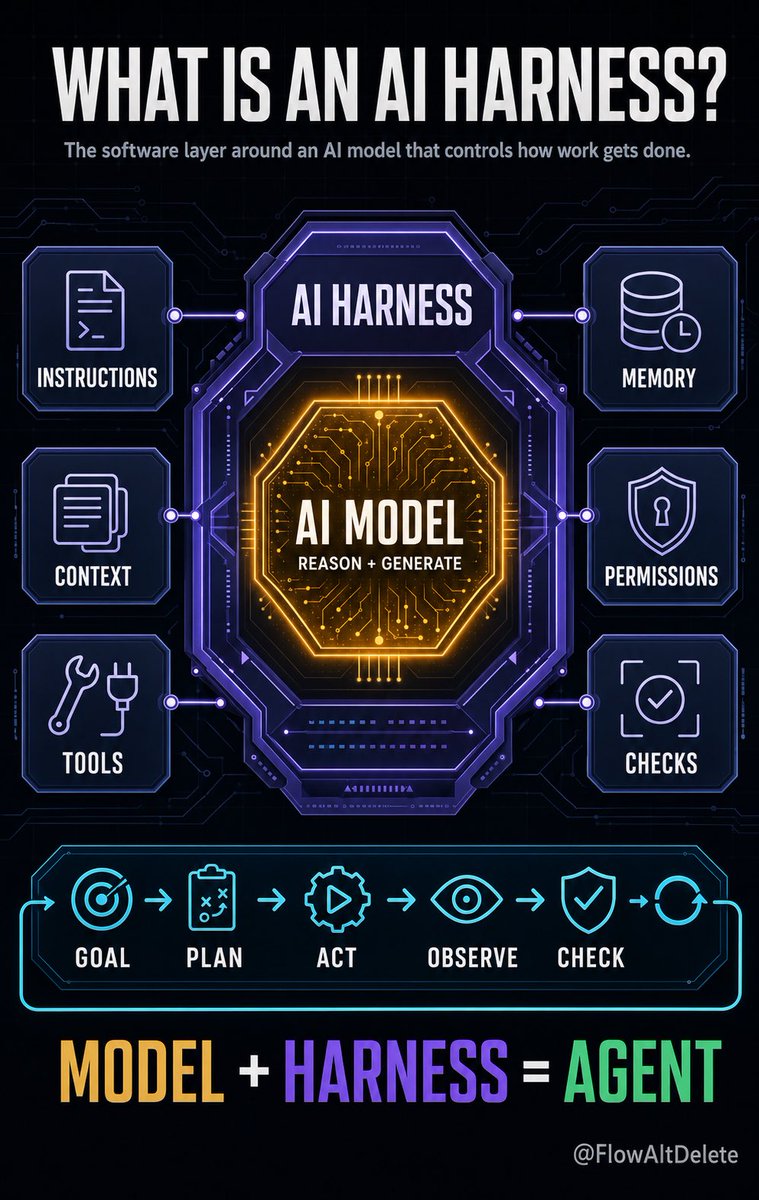
@FlowAltDelete framed (13 likes, 3 replies, 618 views, 6 bookmarks) the concept plainly: the model is only one layer, and the useful system around it is instructions, context, tools, memory, permissions, checks, and a goal-plan-act-observe-check loop. That vocabulary mattered because the rest of the day supplied concrete implementations of those boxes.
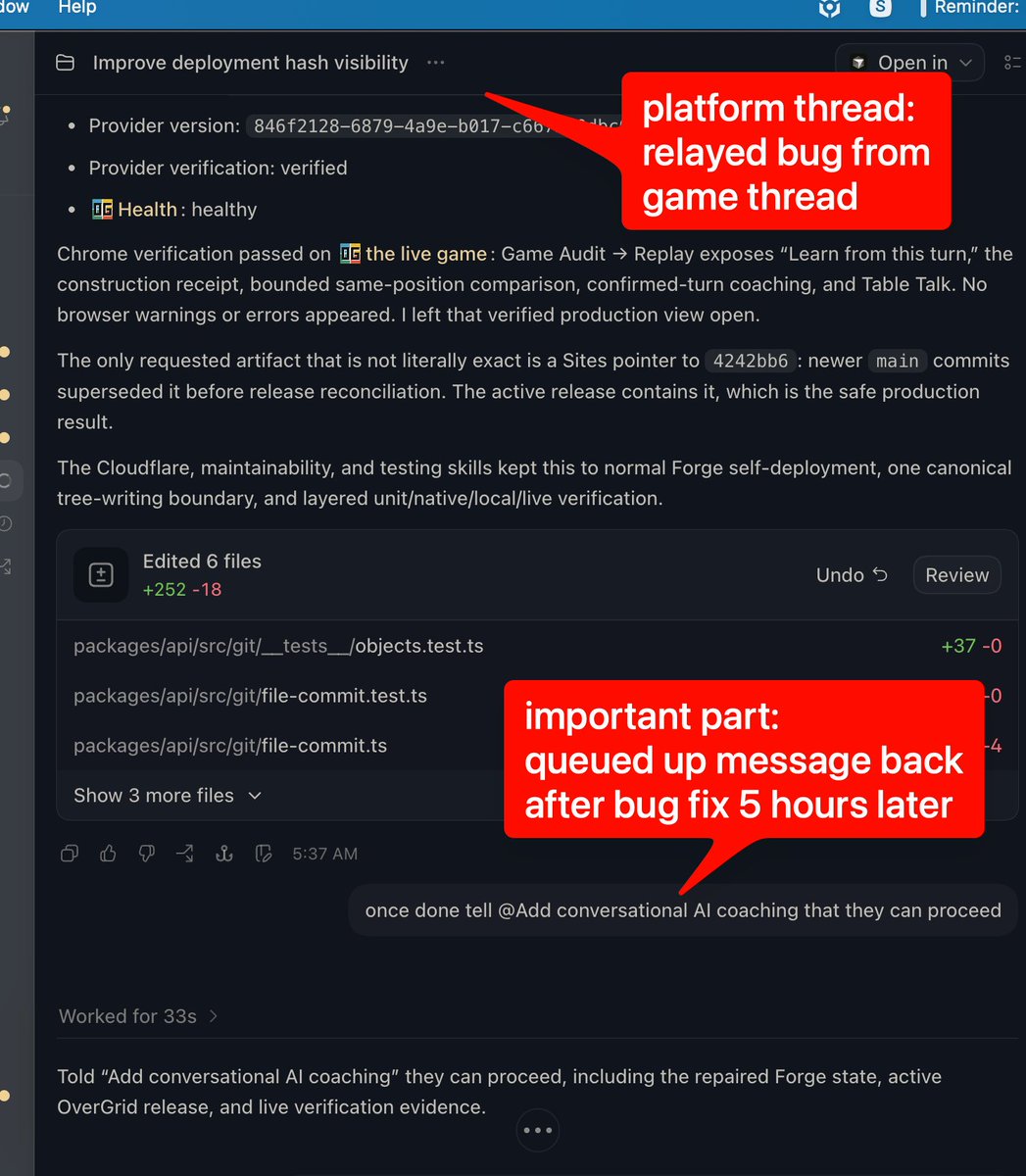
@github announced (64 likes, 10 replies, 32,340 views, 16 bookmarks) the Copilot app on every plan, BYOK support, and stacked pull requests in public preview. @swyx showed (16 likes, 17 replies, 5,006 views, 5 bookmarks) what a more demanding multiagent workspace looks like in practice: a platform thread fixed a deployment bug, then sent the repaired state back to a blocked product thread so work could resume. (GitHub changelog)

@tom_doerr shared (4 likes, 1 reply, 2,182 views, 9 bookmarks) Universal Skills Manager, whose README shows cross-tool discovery, installation, syncing, and install-time scanning across Claude Code, Codex, Gemini CLI, Antigravity, OpenCode, Cursor, and Cline. @dr_cintas shared (4 likes, 565 views, 7 bookmarks) code-review-graph, which uses Tree-sitter, SQLite, and MCP to cut rereads down to the change blast radius. @Granite0x shared (11 likes, 1 reply, 140 views, 10 bookmarks) Alibaba's Open Code Review, and @Alexvx_nft argued (46 likes, 15 replies, 357 views, 19 bookmarks) that none of these layers matter if the system still lets the writer review its own work without a hostile verifier.

Discussion insight: The replies under GitHub, swyx, and Alexvx all converged on the same operational question: what persists, what gets verified, and how work is handed across threads without losing state or trust.
Comparison to prior day: August 1 named the harness as the battleground. August 2 filled in the battleground map with specific products for skills, context pruning, code review, workspace packaging, and verification.
2. What Frustrates People
Credit cliffs and hidden quota ceilings still kill momentum
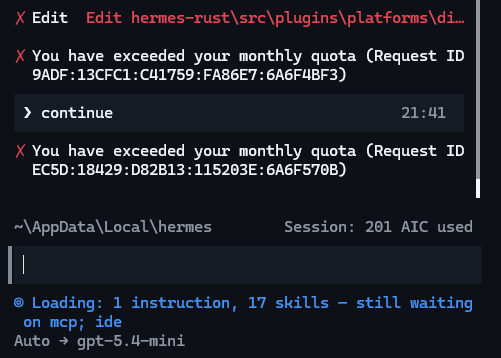
Severity: High. @qilua02 complained (18 likes, 3 replies, 1,209 views) that one long GitHub Copilot Pro prompt burned the entire monthly quota and still failed to finish the task. @snskritinaruka framed (34 likes, 13 replies, 2,109 views, 5 bookmarks) 9Router as a direct response to the same interruption problem, and @RoundtableSpace sold (29 likes, 11 replies, 16,960 views, 11 bookmarks) OmniRoute on the promise that a coding session should not stop when one provider runs out. The common coping behavior is obvious in the tweets themselves: people add a gateway, a local router, or a free-tier pool instead of trusting the default plan limits.
Cloud and harness surfaces still impose the wrong constraints on agentic workloads
Severity: High. @ForwardEditor described (21 likes, 11 replies, 2,915 views, 9 bookmarks) spending six hours trying to move heavy looping work into Codex cloud environments, only to find that model choice and effort controls were effectively forced. A reply distilled the complaint well: cloud environments inherit timeout and rate-limit assumptions that do not match agentic workloads. The DeepSeek V4 Flash review amplified the same kind of surface mismatch from another direction, saying Claude Code can choke long planning with output limits while Codex can require 30-40% more steps for the same task. That makes this worth building for: people are not asking for smarter models in the abstract, they are asking for fewer harness-imposed bottlenecks.
Verification and security still sit outside the default happy path
Severity: High. @Alexvx_nft argued (46 likes, 15 replies, 357 views, 19 bookmarks) for a separate verifier layer, and the replies made the gap explicit when someone asked who verifies the loops before they ship and the answer was “nobody by default.” @Granite0x pointed (11 likes, 1 reply, 140 views, 10 bookmarks) to Open Code Review as a way to avoid letting the same agent review its own code, while AISLE's published write-up confirmed a one-click RCE issue in Cursor, VS Code, and Google Antigravity caused by malicious links in commit messages. (Open Code Review repo, AISLE disclosure) The workaround today is to bolt on an extra reviewer or security scanner after the main agent loop, which is exactly the friction people keep describing.
3. What People Wish Existed
A routing layer that preserves continuity when plans, keys, or providers fail
Practical need. The strongest evidence is not a single direct request but the pileup of workaround products and complaints on the same day: OmniRoute, 9Router, AgentRouter credits, OpenCode's built-in free models, and Copilot quota frustration all point to the same missing default. People want coding sessions to survive quota resets, provider outages, and budget limits without manual reconfiguration. Opportunity: direct.
Built-in verification gates that are separate from the writing agent
Practical need. @Alexvx_nft explicitly argued (46 likes, 15 replies, 357 views, 19 bookmarks) that width and loops are useless without a hostile proof step, and Open Code Review plus AISLE's disclosure show why that resonates: teams still need a second system to catch obvious review mistakes or dangerous behavior. Opportunity: direct.
Durable workspace state that can move work between threads, tools, and roles cleanly
Practical need. The swyx Forge screenshots showed a product thread blocked on a platform issue until another thread repaired and relayed the state back. GitHub's Copilot app push and Universal Skills Manager's cross-tool sync solve adjacent parts of the same problem, but replies still questioned persistence, branch behavior, and drift between surfaces. Opportunity: competitive.
Cheap, usable model tiers for routine maintenance work
Practical need. @matteocollina wrote (12 likes, 6 replies, 1,046 views) that DeepSeek V4 Flash looked sufficient for “boring” OSS maintenance, and the DeepSeek V4 Flash review plus OpenCode free-model post point to the same behavior: save premium models for hard problems, and route maintenance, lint-like fixes, or routine OSS patches to cheaper tiers that are good enough. Opportunity: direct.
4. Tools and Methods in Use
| Tool | Category | Sentiment | Strengths | Limitations |
|---|---|---|---|---|
| Google Antigravity | Workflow/harness | (+/-) | Reusable loops, UI-skill guidance, hardware-adjacent deployment examples | Replies still question state recovery and model freshness |
| GitHub Copilot app | Workspace surface | (+/-) | App on every plan, BYOK, stacked PR preview | Branch splitting, persistence questions, quota complaints |
| Codex / ChatGPT app | Agent workspace | (+/-) | Improved computer use, visual diffs, /goal loops, cheap Luna anecdotes |
Cloud environments can force model/effort choices |
| DeepSeek V4 Flash | Coding model | (+/-) | Strong web/frontend work, usable on routine maintenance, cheaper than larger tiers | Higher token use, weaker Rust/iOS+server results, harness bottlenecks |
| OpenCode | Open-source terminal agent | (+) | Built-in free models, MCP, LSP, multi-session support | Free depth depends on which built-in models are currently included |
| OmniRoute | Gateway/router | (+) | 290+ providers, 90+ free tiers, zero-config auto, compression and fallback | Reply skepticism focused on whether context survives provider changes |
| 9Router | Local smart router | (+) | Subscription-to-cheap-to-free fallback, quota tracking, token saving | Users still asked how smooth the handoff is after a limit hit |
| AgentRouter | Gateway/credits | (+/-) | One key for many models, immediate starter credits, works with common coding tools | More promo-driven and less inspectable than open-source routing layers |
| Open Code Review | Review CLI | (+) | Precise comments, full-file scans, deterministic review pipeline | Explicitly favors precision over recall, so it may miss some issues |
| code-review-graph | Code intelligence/MCP | (+) | Tree-sitter graph, blast-radius context, sharp token savings | Requires local indexing and an extra graph-maintenance step |
| Universal Skills Manager | Skill operations | (+) | Cross-tool discovery, sync, packaging, install-time scanning | Adds another layer of skill governance to maintain |
The day did not show one winner. It showed a stack under assembly. People route trivial work to cheaper models, keep premium models for difficult tasks, and increasingly add a router, a graph layer, a skill layer, or a reviewer instead of expecting a single assistant to do everything.
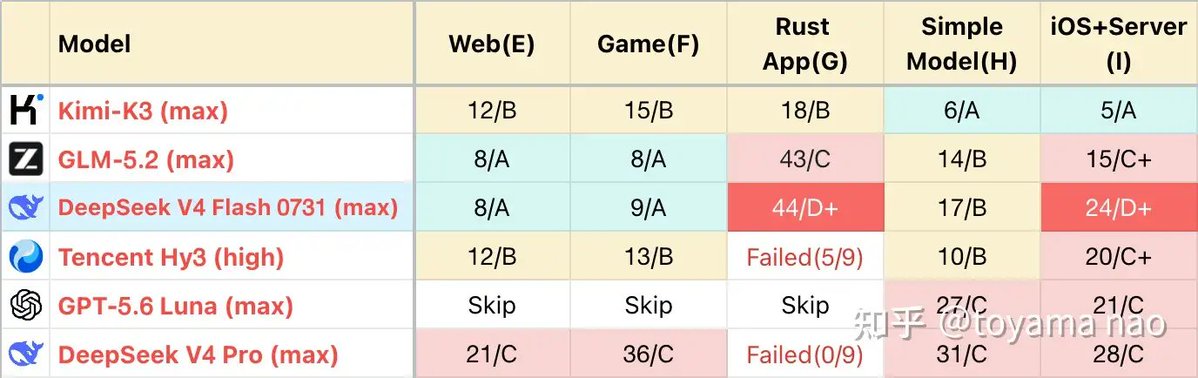
@ZhihuFrontier shared (41 likes, 2 replies, 3,066 views, 8 bookmarks) the clearest task-level breakdown: DeepSeek V4 Flash looked strong on web and game work, but weaker on Rust and iOS+server tasks, while also spending more tokens than earlier previews. @matteocollina echoed (12 likes, 6 replies, 1,046 views) the same operating pattern from OSS maintenance: use a cheaper model for boring patches and reserve stronger models for harder work.


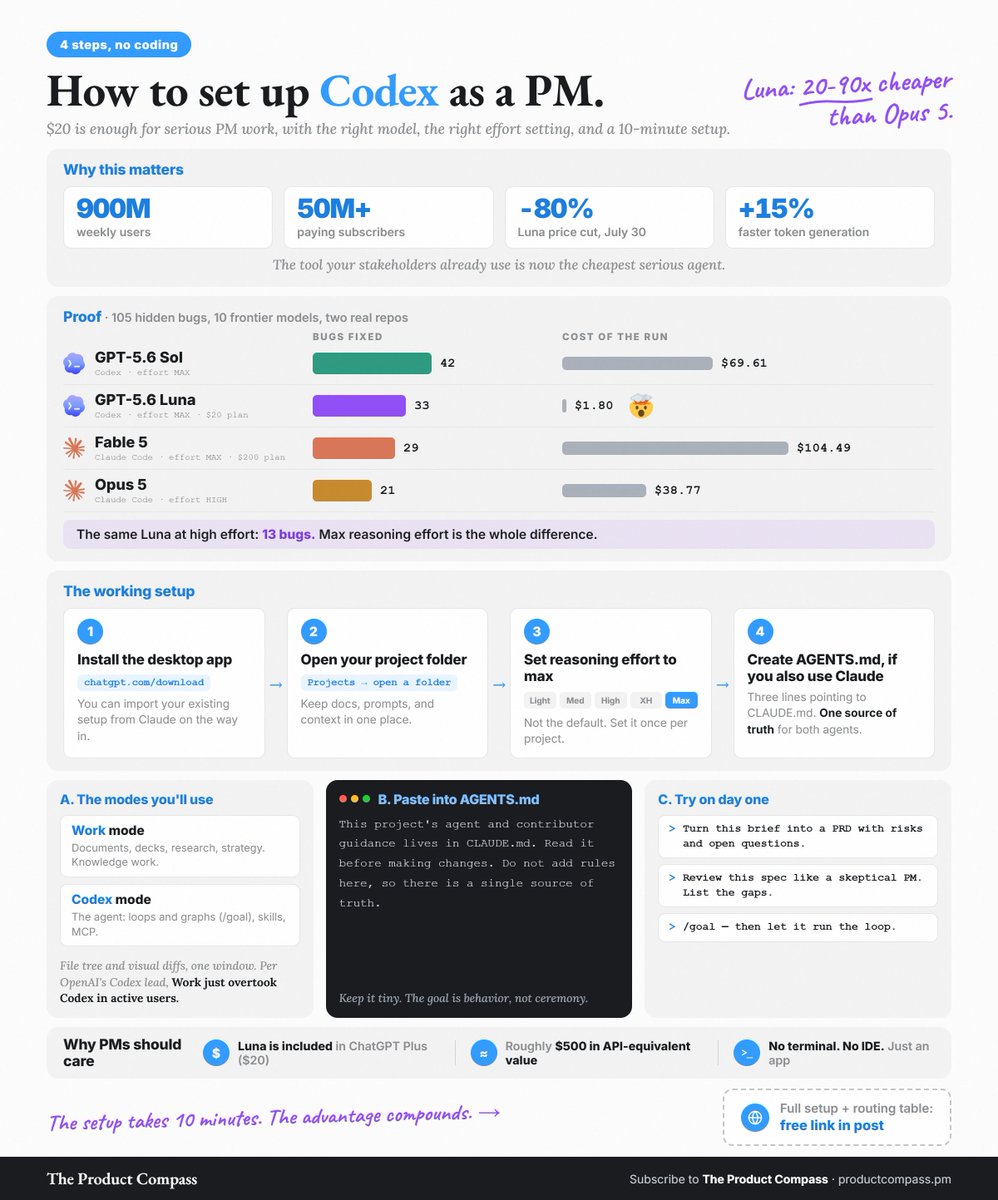
@PawelHuryn showed (5 likes, 3 replies, 817 views, 8 bookmarks) the other side of the same migration: for some PM-style repo work, max-effort Luna inside the ChatGPT app was presented as far cheaper than Opus while still fixing a meaningful number of benchmarked bugs.
5. What People Are Building
| Project | Who built it | What it does | Problem it solves | Stack | Stage | Links |
|---|---|---|---|---|---|---|
| Antigravity Arcade | @JamesOR via @antigravity | Generates retro web games and deploys them to online and physical arcade targets | Moves prompt-to-code work into a concrete deployment pipeline instead of a toy demo | Antigravity, Gemini, Firebase, Google Cloud | Beta | tweet, quoted thread |
| OmniRoute | diegosouzapw | Self-hosted AI gateway with fallback, compression, and broad provider coverage | Rate-limit fragmentation, quota exhaustion, and provider sprawl across coding tools | OpenAI-compatible endpoint, 290+ providers, RTK, Caveman, desktop/PWA, Docker/npm | Shipped | repo, tweet |
| 9Router | decolua | Local smart router that shifts between subscriptions, cheap models, and free tiers | Coding sessions dying when one plan or provider hits its cap | Local proxy, RTK token saver, quota tracker, OpenAI-compatible API | Shipped | repo, tweet |
| Open Code Review | Alibaba | AI code-review CLI with line-precise comments and full-file audit mode | General-purpose agents missing files, drifting on line positions, and reviewing too noisily | npm CLI, configurable LLM endpoint, Git diff pipeline, OCR scan | Shipped | repo, tweet |
| code-review-graph | tirth8205 | Builds a structural graph so coding agents read only the blast radius of a change | Re-reading whole codebases and burning tokens on unchanged context | Python, Tree-sitter, SQLite, MCP | Shipped | repo, tweet |
| Universal Skills Manager | jacob-bd | Discovers, installs, scans, and syncs skills across multiple coding assistants | Repeated skill setup and version drift between tools | Shell installer, Python validators/scanners, SkillsMP/SkillHub/ClawHub | Shipped | repo, tweet |
| Canopy Templates | @refrip98 describing CNPY/Canopy | Fork-and-fill scaffolds for launching a blockchain with wallet and explorer included | Boilerplate-heavy onchain builds that are hard for humans and agents to start cleanly | GitHub templates, Go/TypeScript/Python/Kotlin/C#, AGENTS.md |
Beta | tweet |
The strongest build pattern was meta-infrastructure for AI coding itself. OmniRoute, 9Router, Open Code Review, code-review-graph, and Universal Skills Manager all sit one layer above the model: they solve access continuity, review quality, context scope, or skill portability rather than shipping a single end-user application.
Antigravity Arcade was the notable exception because it points outward from the tooling layer. The interesting part was not “AI can make a game,” but that the workflow includes skills, cloud services, and deployment to physical cabinets. Canopy Templates pointed in a similar direction for niche domains: make the scaffold small enough, structured enough, and AI-readable enough that agents can start from a clean project shape.
6. New and Notable
A real security disclosure hit mainstream coding surfaces
AISLE's published write-up matters because it was not a hypothetical agent-risk thread. It described a one-click RCE route through malicious links in commit messages across Cursor, VS Code, and Google Antigravity, and stated that fixes have now shipped. That is a concrete reminder that the AI-coding stack inherits editor and link-handling risk, not just model risk. (source)
DeepSeek V4 Flash emerged as a serious “cheap but usable” coding tier
@ZhihuFrontier shared (41 likes, 2 replies, 3,066 views, 8 bookmarks) the clearest example: DeepSeek V4 Flash is being evaluated not as a novelty model, but as a candidate for real web work, routine patching, and budget-sensitive agent tasks.
GitHub's mainstreaming push is now visible at the app-distribution layer
The Copilot app becoming available on every plan, with BYOK support for non-subscribers, matters because it widens the top of the funnel for workspace-style agent use instead of keeping advanced surfaces inside premium tiers only. (source)
Visual computer use kept improving, but attribution is still contested
@ChrisGPT reported (130 likes, 15 replies, 5,184 views, 8 bookmarks) a documentation task falling from days of brittle coordinate automation to a single 10-minute run, and the replies debated whether the leap came from the model, the harness, or both. That reply pattern shows practitioners have stopped treating “the model got better” as a sufficient explanation.
7. Where the Opportunities Are
[+++] Quota-aware routing with context continuity — OmniRoute, 9Router, AgentRouter, OpenCode's free tier, and Copilot quota complaints all point to the same market gap: uninterrupted coding work across subscriptions, API keys, and free tiers, with reliable handoff instead of brittle failover.
[+++] Verification, review, and security gates outside the writing loop — Open Code Review, Alexvx's verifier argument, and AISLE's disclosure all show demand for a separate trust layer that checks code, policy, and editor behavior before merge or execution.
[++] Repo intelligence and cross-tool portability — code-review-graph and Universal Skills Manager suggest a growing opportunity in products that keep context, skills, and repo knowledge portable across Claude Code, Codex, Copilot, Antigravity, and open-source terminals.
[+] AI-native scaffolds for niche domains and hardware-adjacent builds — Antigravity Arcade and Canopy Templates show room for domain-specific starting points where agents can ship faster because the project shape, deployment path, and rules are already encoded.
8. Takeaways
- Routing is becoming a first-class part of AI coding. The most repeated practical story was how to keep sessions alive across quotas, providers, and plans, not which single model won a benchmark, as @RoundtableSpace argued (29 likes, 11 replies, 16,960 views, 11 bookmarks).
- Antigravity stayed relevant by turning workflows into reusable patterns. The signal was strongest where the posts exposed loops, UI-skill rules, and concrete deployment paths rather than generic build-anything claims, as @antigravity showed (605 likes, 29 replies, 77,143 views, 338 bookmarks).
- The harness narrative got more specific. Twitter no longer talked about the harness as an abstract moat; it talked about separate products for workspace state, skill sync, graph context, review precision, and verification, as @FlowAltDelete framed (13 likes, 3 replies, 618 views, 6 bookmarks).
- Cheap-but-usable model tiers are changing workload allocation. DeepSeek V4 Flash and Luna were repeatedly framed as good enough for web work, PM-style repo work, or boring maintenance while frontier models stay reserved for harder tasks, as @ZhihuFrontier shared (41 likes, 2 replies, 3,066 views, 8 bookmarks).
- Trust still lags capability. The day produced both a public RCE disclosure and repeated calls for separate verifier layers, which shows why more autonomy alone is not the whole product. (source)