Twitter AI Coding - 2026-08-11
1. What People Are Talking About
1.1 Portable state and local runtimes are becoming part of the product, not an afterthought (🡕)
At least six retained items treated AI coding as a workspace portability problem rather than a single-model problem. The shared move was to keep projects, chats, skills, and models transferable across surfaces: import your setup into Codex, swap cheaper or open-weight models inside Copilot, or run the whole stack locally through a desktop app that still plugs into Claude Code and Codex. Compared with August 10's focus on installable workflow layers, August 11 pushed the conversation into productized runtime choice and state sync.
@UnslothAI launched (546 likes, 39 replies, 15,861 views, 275 bookmarks) Unsloth Desktop as an open-source local runtime and training app for macOS, Windows, and Linux. The tweet framed it as a way to connect Claude Code and Codex to local LLMs while adding sandboxed execution, web search, and multi-hardware support. Unsloth's own desktop docs back up the same positioning and make the local-first point explicit: the coding shell can stay familiar even while the inference and training stack moves onto the user's machine.
@OpenAIDevs said (230 likes, 23 replies, 11,334 views, 74 bookmarks) ChatGPT Work and Codex can now import projects, chats, skills, and plugins, with import history and optional automatic updates in the desktop app. The interesting signal was not just one more sync feature; it was that workflow assets are now treated as portable objects worth carrying between agents rather than disposable setup state.
@github announced (164 likes, 7 replies, 28,592 views, 27 bookmarks) that MAI-Code-1.1-Flash is rolling out across Copilot surfaces with native vision support and a 73% lower list price than MAI-Code-1-Flash. GitHub's changelog adds the missing operational detail: the model is available across Copilot CLI, cloud agent, app, chat, and major IDEs, and it carries a 0.25x premium request multiplier for annual subscribers.
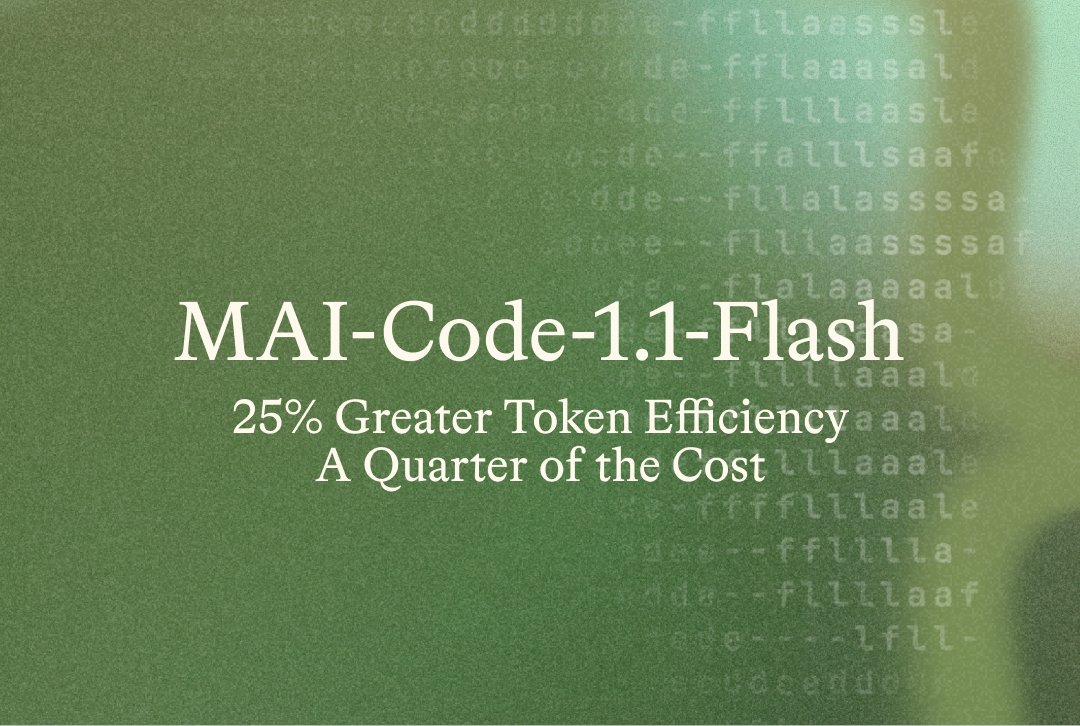
@mustafasuleyman reinforced (137 likes, 7 replies, 8,181 views, 20 bookmarks) the same pricing fight from Microsoft's side with a simpler claim card: the latest code model is 25% more efficient and a quarter of the cost of the June model. @RoundtableSpace reported (44 likes, 12 replies, 42,198 views, 9 bookmarks) that Kimi K3 is now available inside GitHub Copilot for VS Code via Fireworks, and one of the sharper replies said Copilot is starting to look more like a model marketplace than a single assistant. Together, the posts pointed to the same outcome: users increasingly expect one shell to broker many models.
Discussion insight: Replies focused less on frontier-model prestige than on switching costs, quota timing, and whether imported configs or cheaper models actually reduce day-to-day friction.
Comparison to prior day: August 10 turned workflow discipline into installable kits. August 11 made portability, model choice, and local runtime control visible as mainstream product features.
1.2 Google is turning vibe coding into a mass-market funnel, but users think the product map is messy (🡕)
At least five retained items cast Google as the most aggressive distributor of AI-coding entry points on the day. The pattern ran from free tools to formal training to prize-backed business creation: get people building through zero-cost products, teach non-coders to ship apps in plain language, then push the strongest teams into a real-revenue competition. The counter-signal was just as strong: practitioners think the portfolio is crowded, unstable, and poorly communicated.
@kv1nsiii argued (36 likes, 8 replies, 1,828 views, 21 bookmarks) that Google already has a free working stack in plain sight: Stitch for UI generation, Opal for no-code workflows, Antigravity for whole-repo coding, AI Studio for app prototyping, and Flow for media generation. @nahid_pro09 expanded (16 likes, 7 replies, 2,486 views, 15 bookmarks) that into a 15-tool catalog spanning design, coding, repo explanation, backend, and IDE assistance, with a punchline that many people are still paying subscription bundles for work Google is letting them try at $0.

@GoogleStartups promoted (9 likes, 761 views, 6 bookmarks) a new vibe-coding course inside the Google AI Professional Certificate. Google's own launch post says the course went live that day, teaches planning, testing, debugging, and deployment with no coding experience required, and ties the launch to 140% year-over-year U.S. search growth for “vibe coding.”
@venture_launch flagged (25 likes, 1 reply, 1,341 views, 21 bookmarks) the Build with Gemini XPRIZE as the next step up the funnel: 90 days to build a real AI business on Gemini, Antigravity, Cloud Run, and AI Studio. The official XPRIZE announcement confirms a $2 million pool, an August 17 submission deadline, and judging based on business viability, AI-native operations, and category impact rather than demo polish alone.
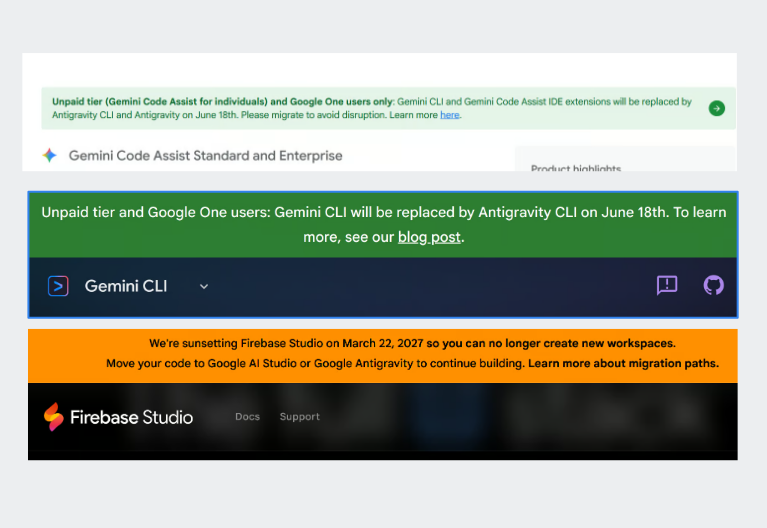
@shacrw_ argued (7 likes, 1 reply, 2,522 views, 4 bookmarks) that the portfolio has become too hard to parse: flagship coding products, separate prototyping tools, and then inconsistent migration advice as products get sunset or renamed. The three images mattered because they made the critique concrete instead of generic.


Discussion insight: The strongest pushback was not against Google's pace of shipping. It was against quota caveats, sunset risk, and the feeling that consolidation arrived only after too many overlapping product names had already landed.
Comparison to prior day: August 10 showed Google as a credible packager of skills and plugins. August 11 showed Google as the loudest mass distributor in the feed, but also as the company drawing the sharpest complaints about portfolio complexity.
1.3 Trust and operational control are still the main missing layer above agent speed (🡕)
Several of the strongest items were not about writing more code. They were about controlling what agents can do, seeing what they did, and keeping the cleanup burden manageable after they move faster than humans. That included exploit paths through MCP, visualizers for tracing agent decisions, release-note races around safer subagent execution, and GitHub workflow changes meant to make AI-generated output reviewable.
@TheHackersNews reported (9 likes, 4,584 views, 5 bookmarks) GhostSplice, an attack where a malicious MCP server splits a harmful request across channels so no single fragment looks obviously hostile. The tweet's most important number was that splitting the request in two raised average compliance across eleven tested models from 42% to 82%, which turns “be careful with MCP” into a concrete behavioral failure mode.

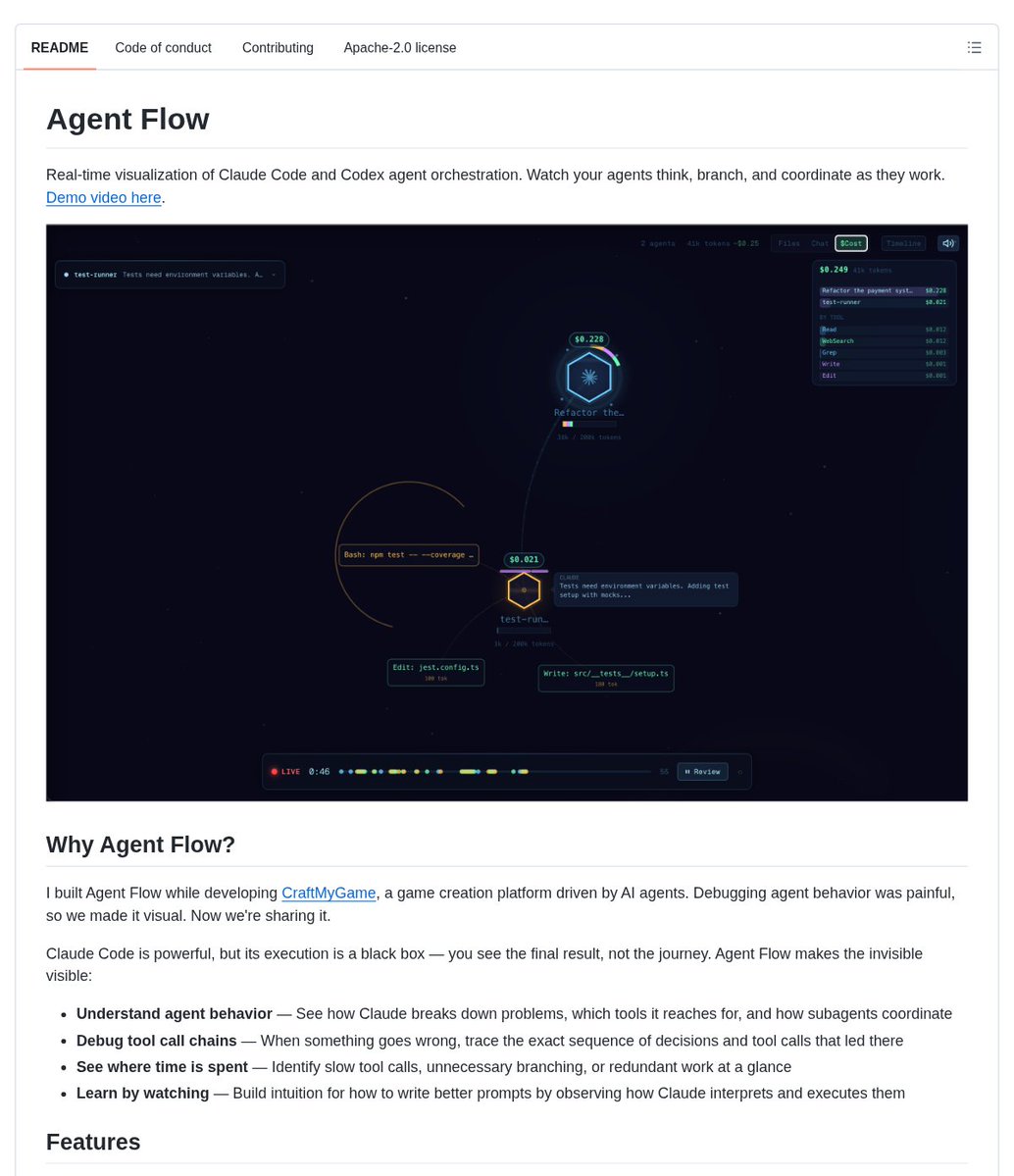
@XFreeze posted (54 likes, 9 replies, 2,603 views, 6 bookmarks) a Grok Build release centered on safer multi-agent scaling: bounded subagent fan-out, read-only tool reporting, disk-usage inspection, and tabbed usage/context views. @DanKornas pointed to (1 like, 403 views, 2 bookmarks) Agent Flow, whose public repo describes a live graph for Claude Code and Codex tool calls, branching, transcripts, and replay. Both items assume the same thing: the agent is already productive enough that operators now need visibility and safeguards around it.

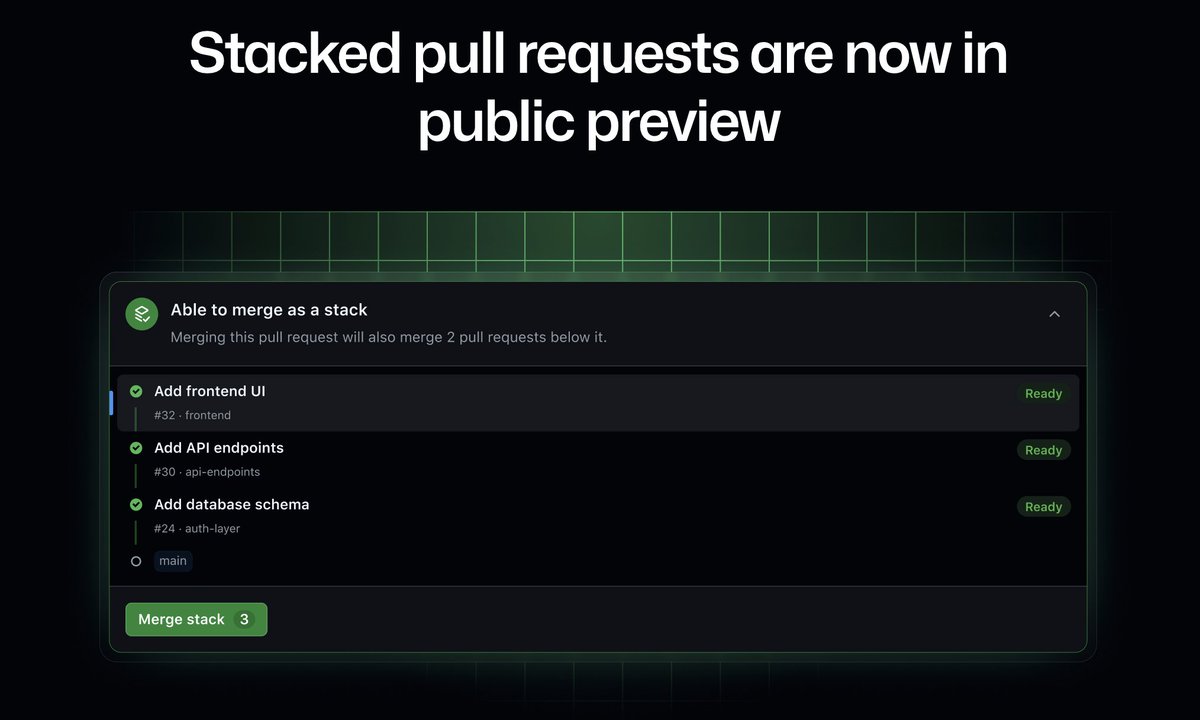
@suraj_sharma14 framed (11 likes, 2 replies, 514 views, 4 bookmarks) GitHub's stacked pull requests preview as the missing review-side fix for 10x coding speed: smaller dependent diffs, auto-rebasing, and one-click stack merges instead of exhausted humans approving giant AI-generated branches.
Discussion insight: The day's control-plane language was very concrete: bounded fan-out, read-only tools, graph traces, stack merges, and exploit compliance rates. People were not asking for more magic; they were asking for surfaces that make fast agents governable.
Comparison to prior day: August 10's trust debate sat mostly above skills and plugins. August 11 widened it into exploit paths, review structure, traceability, and the operational mess agents leave behind after the code is written.
2. What Frustrates People
Capacity, safety routing, and hidden policy changes still interrupt normal coding work
This was a High-severity frustration because it stops work mid-session rather than merely slowing it down. @mohitmor_ai showed (1 like, 81 views) the Codex app returning a plain “model is at capacity” error, while @sudoingX complained (3 likes, 2 replies, 382 views, 2 bookmarks) that a benign SSH-and-restart workflow was flagged as a cybersecurity risk and the model was swapped without asking. The frustration also showed up one layer up the stack in replies to @RoundtableSpace reporting (44 likes, 12 replies, 42,198 views, 9 bookmarks) Kimi K3 in Copilot, where one user said new model additions came too late because usage-limit changes had already pushed them to cancel.


This is worth building for directly. The coping behavior is obvious: users want pinned models, explicit explanations for safety interventions, and capacity or quota telemetry before they waste a turn.
Google's portfolio expansion is colliding with product and migration confusion
This landed between Medium and High severity because the problem is not lack of tools; it is too many overlapping surfaces with inconsistent migration guidance. @shacrw_ said (7 likes, 1 reply, 2,522 views, 4 bookmarks) Google had ended up with more than five products, uneven replacement messaging, and multiple different destinations for users leaving Gemini CLI, Gemini Code Assist, or Firebase Studio. The more optimistic list-posts made the same complexity visible from another angle: @nahid_pro09 listed (16 likes, 7 replies, 2,486 views, 15 bookmarks) fifteen free Google tools, but one reply immediately undercut the “free” framing by saying Antigravity's free requests had already been cut to around twenty per day.
This is worth building for indirectly through consolidation layers, migration dashboards, or current-state product maps. Right now users are coping by making their own lists and reading banners across multiple product pages to figure out which surface is still alive.
Review throughput and workspace cleanup still lag behind coding speed
This was a Medium-severity frustration, but it appeared in practical, specific terms. @suraj_sharma14 argued (11 likes, 2 replies, 514 views, 4 bookmarks) that AI can make developers 10x faster while PR reviews remain 1x, so giant diffs, manual rebases, and blocked dependent branches become the real bottleneck. @burkeholland said (11 likes, 2 replies, 1,013 views, 3 bookmarks) that worktrees can fill a hard drive quickly, quoting a complaint about 20GB of repeated node_modules, then pointed to new Copilot archive and auto-delete controls as the workaround.

This is worth building for directly. The demand is not abstract; people want smaller review units, automated branch hygiene, and cleanup policies that keep agent-heavy workflows from turning into storage clutter.
MCP and agent-control trust boundaries still feel unsafe
This was a High-severity frustration because the failure mode is silent data exfiltration rather than inconvenience. @TheHackersNews reported (9 likes, 4,584 views, 5 bookmarks) that GhostSplice could raise model compliance from 42% to 82% by splitting a malicious request across MCP channels, turning innocuous-looking fragments into a combined exfiltration path for .env files, SSH keys, source code, and customer data. Users do not have a clear coping pattern here beyond caution and tool avoidance, which is exactly why the opportunity remains open.
This is worth building for directly, but the bar is high: users need capability boundaries, channel-aware inspection, and proof that multi-step tool chains cannot quietly reassemble into something dangerous.
3. What People Wish Existed
Portable workflow state that follows the user across agent surfaces
The positive response to @OpenAIDevs shipping (230 likes, 23 replies, 11,334 views, 74 bookmarks) imports for projects, chats, skills, and plugins showed that this need already existed before the feature arrived. One reply called cross-agent importing “a lot less painful,” which is the clearest wording in the thread for the problem being solved. @UnslothAI launching (546 likes, 39 replies, 15,861 views, 275 bookmarks) a local runtime that still plugs into Claude Code and Codex pointed at the same desire from another angle: keep the workflow, change the runtime. Opportunity: Direct.
One simplified Google builder surface with a single migration story
@shacrw_ said (7 likes, 1 reply, 2,522 views, 4 bookmarks) Google's AI coding portfolio should really collapse into an IDE, a CLI, a VS Code extension, and an API playground, with one common migration banner and one or two blog posts instead of scattered replacement advice. That is a practical request rather than a vague complaint. The day also showed why it matters: @GoogleStartups is now funneling (9 likes, 761 views, 6 bookmarks) non-coders into vibe coding, which raises the cost of a confusing product map. Opportunity: Competitive.
Hands-free, voice-first coding and testing beyond the laptop
@johnrush spelled this out directly (10 likes, 7 replies, 1,031 views): AR glasses for vibe coding, voice control for prompting, voice control for browser-use testing, and a persistent feed for monitoring work without sitting at a desk. The replies argued about whether the beach is the right setting, but they did not really contest the underlying interface idea.

This is still aspirational rather than immediate, but it is one of the clearest form-factor requests in the day's dataset. Opportunity: Aspirational.
Session controls that explain quotas, safety interventions, and cleanup automatically
The request was visible in negative form across multiple posts. @mohitmor_ai hit (1 like, 81 views) a capacity wall, @sudoingX objected (3 likes, 2 replies, 382 views, 2 bookmarks) to a model swap triggered by a benign SSH restart command, and @burkeholland pointed to (11 likes, 2 replies, 1,013 views, 3 bookmarks) archive and auto-delete controls because worktrees can consume disk space quickly. In the same direction, @XFreeze highlighted (54 likes, 9 replies, 2,603 views, 6 bookmarks) tabbed usage and context views as release-worthy product surface. Users want the agent to explain what happened, what it cost, and how to clean it up without requiring detective work. Opportunity: Direct.
4. Tools and Methods in Use
| Tool | Category | Sentiment | Strengths | Limitations |
|---|---|---|---|---|
| Unsloth Desktop | Local runtime / desktop app | (+) | Local model running and training, Codex/Claude connectors, sandboxed execution, cross-platform | Beta product; strong claims on tool-call accuracy and VRAM savings are not independently validated in the thread |
| GitHub Copilot | Coding workspace | (+/-) | Rapidly expanding model catalog, native stacked PRs, archive and cleanup controls | Capacity complaints, usage-limit churn, and identity drift toward “model marketplace” |
| MAI-Code-1.1-Flash | Model | (+) | Native vision, lower price, broad Copilot surface support | Enterprise and business access requires admin policy enablement; positioned as a small-tier option |
| Kimi K3 in Copilot | Model | (+/-) | Open-weight choice inside Copilot via Fireworks hosting | Real multi-file edit and tool-call reliability remain unproven in the discussion |
| ChatGPT Work + Codex sync | Workflow portability | (+) | Imports projects, chats, skills, and plugins; optional auto-syncs | Desktop-app centric; replies still ask how foreign workflows translate across tools |
| Google AI coding stack (Stitch, Opal, Antigravity, AI Studio, Jules, Gemini CLI) | Platform suite | (+/-) | Free entry points across design, automation, coding, and prototyping; strong beginner funnel | Fragmented branding, sunsets, inconsistent migration advice, and quota caveats |
| Grok Build | Coding harness | (+) | Bounded subagent fan-out, read-only tool metadata, usage/context tabs, disk inspection | Evidence is mostly vendor release notes rather than third-party validation |
| Agent Flow | Observability | (+) | Live graph of tool calls and branches, transcript and timeline views, Claude/Codex support | Requires extra setup and only improves visibility, not execution quality |
Stacked Pull Requests / gh-stack |
Review workflow | (+) | Smaller diffs, dependent stacks, auto-rebase, native GitHub merge flow | Adds branch-management discipline and depends on teams adopting the method |
| Frontend UI Design Agents Collection | Prompt pack | (+/-) | Reusable frontend specialists for design systems, components, responsive layout, and accessibility | Manual prompt selection and curation rather than autonomous execution |
Satisfaction split along a clear line. Users sounded most positive about tools that lower switching cost, expose more control, or reduce cash burn: local runtimes, cheaper models, imports, stacked reviews, and visualizers. Sentiment turned mixed or negative when products hid quota state, changed routing behavior, or forced users to memorize shifting product names.
Migration behavior was also explicit. Some users are pulling work local with Unsloth Desktop, some are treating Copilot as a model shelf rather than a single assistant, and some are testing Google's free stack because it bundles design, prototyping, and coding into a zero-cost funnel. The competitive dynamic is no longer “whose model is smartest”; it is “which surface preserves state, exposes control, and gives me acceptable capability at the right price.”
5. What People Are Building
| Project | Who built it | What it does | Problem it solves | Stack | Stage | Links |
|---|---|---|---|---|---|---|
| Unsloth Desktop | UnslothAI | Local desktop app for running, training, and deploying models while connecting Claude Code and Codex to local LLMs | Cloud-only coding agents still create token cost, privacy, and runtime-control constraints | Desktop app, local inference and training, MLX/GGUF, sandboxed tools, web search | Beta | docs · repo |
| Agent Flow | patoles via Dan Kornas | Real-time visualizer for Claude Code and Codex orchestration | Agent sessions are hard to debug when users only see the final result | Hook server, JSONL rollout tailing, interactive web or VS Code UI | Beta | repo |
| AI Marketing Suite for Claude Code | zubair-trabzada via Dan Kornas | Terminal-first marketing audit and asset-generation system that routes Claude Code through specialist agents | Agency-style analysis work is scattered across manual prompts and disconnected tools | Claude Code skills, 5 parallel agents, Python scripts, markdown/PDF reports | Shipped | repo |
| Frontend UI Design Agents Collection | mustafakendiguzel via Tom Doerr | Prompt-pack library for design systems, components, mobile UI, responsive layouts, and accessibility | Frontend work still benefits from reusable role-specific specialists instead of one generic prompt | Markdown prompt library for Claude | Shipped | repo |
| AA-AnalystAgent | Artificial Analysis | Benchmark and reference harness for spreadsheet and document analyst agents | The field needs repeatability metrics for real multi-step analysis work, not just one-shot demos | Stirrup harness, pass^5 scoring, code execution, web fetch, image viewing | Shipped | article |
@UnslothAI launched (546 likes, 39 replies, 15,861 views, 275 bookmarks) the clearest “move the runtime local” build of the day. The docs say the app is available on all major desktop platforms, while the tweet connects that local stack back into Claude Code and Codex instead of asking users to abandon their preferred shell. That combination makes the project more than another local-model wrapper; it is a portability layer for existing coding habits.
@DanKornas surfaced (1 like, 403 views, 2 bookmarks) Agent Flow as an observability build, and later highlighted (371 views, 1 bookmark) AI Marketing Suite for Claude Code as a vertical skill system that turns the coding shell into a multi-agent service business tool. Those two projects share the day's most important build pattern: people are not just extending models, they are building operating layers around them for tracing, orchestration, and domain-specific workflows.

@tom_doerr pointed to (5 likes, 1 reply, 1,344 views, 8 bookmarks) a lighter-weight variant of the same idea with the Frontend UI Design Agents Collection: instead of autonomous subagents, it packages reusable specialist prompts for UI design, web development, animation, responsive layout, and accessibility. The public repo matters because it shows builders still value small, composable specialist libraries even while bigger multi-agent systems get the headlines.

@ArtificialAnlys announced (35 likes, 7 replies, 2,596 views, 9 bookmarks) AA-AnalystAgent as a standalone benchmark for document and spreadsheet work. The linked write-up and reply thread make the distinctive angle clear: the headline metric is pass^5, so a model only gets credit when it solves the task correctly on all five runs rather than getting lucky once. That is the same control-plane instinct again, applied to evaluation instead of execution.

6. New and Notable
Reliability benchmarking moved closer to real analyst work
@ArtificialAnlys announced (35 likes, 7 replies, 2,596 views, 9 bookmarks) AA-AnalystAgent as a benchmark for quantitative analysis over real spreadsheets and documents. The public write-up says it covers 80 tasks across 14 domains and grades models on pass^5 reliability, not just one-shot accuracy. That matters because the thread made a sharper claim than most benchmark launches do: in analyst work, getting an answer right once is not enough if a rerun can drift.
Vibe coding crossed into formal education and prize-backed business creation
@GoogleStartups promoted (9 likes, 761 views, 6 bookmarks) a new vibe-coding course in the Google AI Professional Certificate, and Google's blog post says the course launched that day for no-code builders. @venture_launch paired (25 likes, 1 reply, 1,341 views, 21 bookmarks) that beginner funnel with the Build with Gemini XPRIZE, whose official announcement requires real users and real revenue during a 90-day build window. The notable part is the sequence: learn to build in natural language, then compete on shipping an actual business.
7. Where the Opportunities Are
[+++] Portable workflow and runtime layers across agents — Sections 1, 3, 4, and 5 all pointed here. OpenAI shipped imports for chats, skills, and projects; Unsloth Desktop kept the shell while moving inference local; Copilot kept adding models under one roof. This is strong because the demand is visible from both vendor launches and user relief.
[+++] Control planes for quotas, safety decisions, and multi-tool trust — Capacity errors, silent model swaps, GhostSplice, and new usage or cleanup surfaces all point to the same missing layer. This is strong because the pain ranges from inconvenience to data exfiltration, and today's fixes are still partial and scattered.
[++] Review and observability infrastructure for agent-heavy development — Agent Flow, stacked pull requests, and Copilot archive controls all target the mess around fast agent output rather than the generation step itself. This is moderate because the demand is clear, but multiple credible solutions are already appearing.
[++] Simplified onboarding and migration guides for broad AI-builder suites — Google's free tools, training course, and XPRIZE create a powerful funnel, but the same day also produced one of the sharpest critiques of overlapping surfaces and migration advice. This is moderate because the need is obvious, but platform owners may solve it themselves.
[+] Vertical specialist systems built on top of coding shells — AI Marketing Suite and the Frontend UI Design Agents Collection show that domain workflows and reusable specialists still matter even as general-purpose coding agents improve. This is emerging because the pattern is concrete, but the public examples are still early and niche.
8. Takeaways
- The main AI-coding competition is shifting from “best model” to “best portable workspace.” Unsloth Desktop, OpenAI imports, MAI-Code-1.1-Flash, and Kimi K3 all assumed users want one shell that can carry state while swapping runtimes or models. (source)
- GitHub Copilot is increasingly being read as a model marketplace, not just a single assistant. MAI-Code-1.1-Flash and Kimi K3 launches, plus reply commentary around pricing and usage limits, made that interpretation explicit. (source)
- Google's biggest AI-coding move was distribution, not just tooling. The day combined free-tool lists, a no-code vibe-coding course, and a prize-backed business competition on the same stack. (source)
- Trust and operations remain the soft underbelly of agentic coding. GhostSplice, capacity failures, silent safety rerouting, stacked PR demand, and session cleanup controls all pointed to governance and workflow friction after generation. (source)
- Builders are increasingly wrapping coding agents with specialist layers instead of waiting for a perfect general agent. Agent Flow, AI Marketing Suite, frontend prompt packs, and AA-AnalystAgent all added control, domain method, or evaluation around existing models. (source)