Twitter AI Coding - 2026-08-16
1. What People Are Talking About
1.1 Codex context, access, and quota policy became the day's main argument (🡕)
The biggest cluster was no longer "which model is best" but "what access do I really have, what does it cost, and how do I keep long sessions alive?" At least six distinct posts pushed the same underlying concern from different angles: OpenAI finally documented the 1M-context path for Codex, users complained that the option had been effectively hidden, heavy users warned that deep sessions still burn through paid plans fast, and lower-signal posts circulated hidden-model workarounds or reset screenshots as coping mechanisms. The conversation was practical and adversarial rather than celebratory.
@reach_vb showed (143 likes, 27 replies, 13,046 views, 45 bookmarks) the working Codex config for GPT-5.6 Sol at a 1,000,000-token window with model_auto_compact_token_limit = 900000, but the same post also carried the catch: tokens beyond the default window count 2x against usage limits. The replies immediately turned that into a pricing and trust argument, with one user asking why 2x pricing starts after roughly 272k context and another saying local cache files were still capping them lower.
@ChrisGPT reacted (74 likes, 21 replies, 8,751 views) by saying "the whole community was unaware" of the 1M option, which turned a product-setting update into a feature-discovery complaint. That mattered because the practical value of a context feature is lower when users only learn about it through quote-tweets and screenshots.
@0x_kaize circulated (45 likes, 5 replies, 5,424 views, 71 bookmarks) a hidden gpt-5.6-sol-wm workaround that claimed to expose Sol-level performance without consuming subscription limits, but the replies complicated the story with unsupported-account errors and reports that the trick had already stopped working for some users. Even if the workaround was unstable, its spread showed how quickly users were hunting for routes around plan ceilings.

@alliekmiller described (59 likes, 20 replies, 4,847 views, 55 bookmarks) a mobile Codex Remote workflow for walking while triaging email, Slack, and task lists by voice, but her own warning list made the limits plain: hot phone, camera lockout, a 90-minute voice cutoff, silent permission stalls, and awkward conversation recovery. That thread showed why people care so much about stable long-running sessions in the first place: they are starting to build real routines around them.
@Haleeeemahh mocked (28 likes, 13 replies, 550 views) the way every Tibo thread now fills with reset requests, including from OpenAI employees. It was a small post, but it captured the day's mood better than most official updates.

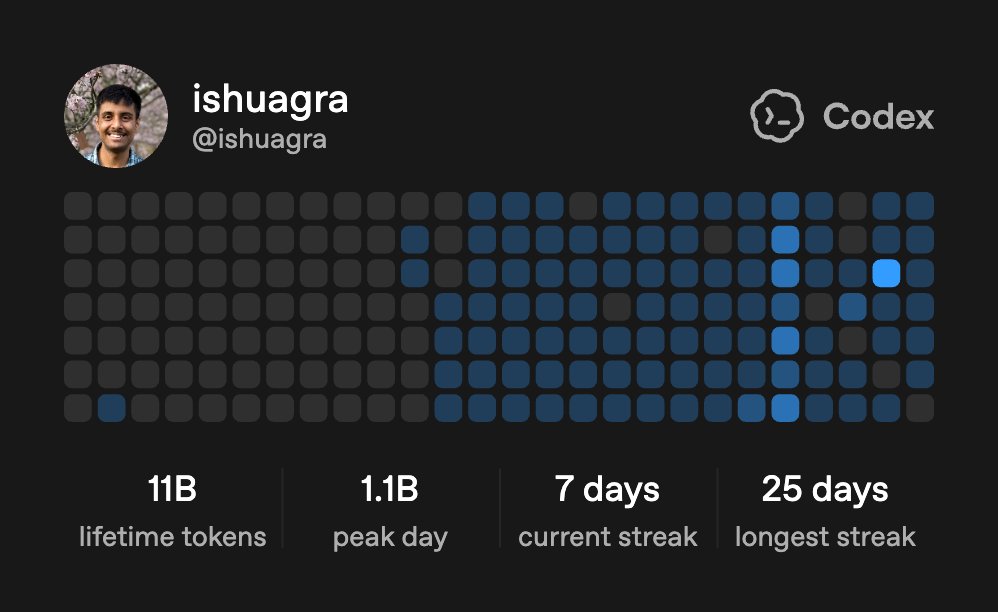
@ishuagra02 shared (27 likes, 9 replies, 2,336 views) a usage heatmap and argued from heavy use that the $100 GPT-5.6 Sol plan still feels finite once sessions run for hours. The attached chart mattered because it grounded the abstract quota debate in observed burn patterns rather than generic complaining.
Discussion insight: The tone was not "please give us a bigger context window" in the abstract. It was "tell us exactly where the cap is, how compaction behaves, when billing changes, and whether everyone gets the same setting." Hidden-model posts and reset memes only spread because the official product boundaries still felt hard to read.
Comparison to prior day: On 2026-08-15, pricing and reset complaints were already visible. On 2026-08-16, the discussion got more operational: concrete config values, hidden model catalogs, first-hand burn-rate reports, and explicit mobile-workflow failure modes.
1.2 Skills, specs, and control surfaces kept replacing prompt improvisation (🡕)
The second theme was the continued rise of workflow scaffolding around agents. Instead of arguing about prompt phrasing, people kept posting systems that package repeatable behavior: registrar skills, spec-first command chains, per-repo review depth, skill browsers, domain-specific instruction packs, usage monitors, and tools that compress reference material into reusable knowledge. The shared idea was that successful AI coding now depends on the environment around the model as much as the model itself.
@github pointed (119 likes, 11 replies, 36,669 views, 45 bookmarks) to a GitHub blog walkthrough where Copilot CLI plus a community Namecheap skill takes a project from empty repo to GitHub Pages on a custom domain with HTTPS in about 14 minutes. The linked post is concrete: buy the domain, enable Namecheap's API, install the skill with gh skill install github/awesome-copilot namecheap --scope user, replace parking DNS records, and verify the site.
@github added (129 likes, 12 replies, 27,703 views, 37 bookmarks) a second control surface the same day: Balanced versus Lite Copilot code review depth, with repo- and org-level defaults. That is a small UI knob, but it reflects a bigger shift toward sizing agent effort to change risk instead of treating every PR the same.
@MAXdeg0 framed (21 likes, 15 replies, 1,079 views, 14 bookmarks) GitHub's Spec Kit as a direct answer to "agents that confidently build the wrong thing," walking through /speckit.constitution, /speckit.specify, /speckit.clarify, /speckit.plan, /speckit.tasks, and /speckit.implement. The repo backs that framing: an MIT-licensed spec-driven toolkit intended to work across many coding agents rather than one house model.
@DanKornas introduced (11 likes, 5 replies, 1,422 views, 9 bookmarks) SkillsGate, an open-source desktop app and TUI for browsing, installing, and managing skills across 20+ agents from one interface instead of copying markdown files around by hand.

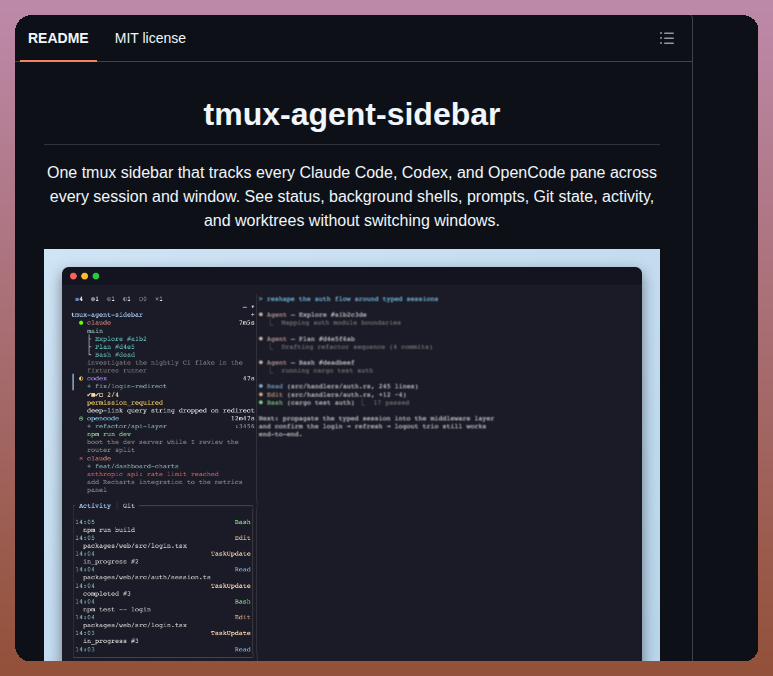
@tom_doerr shared (11 likes, 2 replies, 2,078 views, 8 bookmarks) tmux-agent-sidebar, which monitors Claude Code, Codex, and OpenCode panes across tmux sessions, including prompts, tool calls, worktrees, and notifications. That is not model innovation; it is operator tooling for people already juggling multiple active agents.
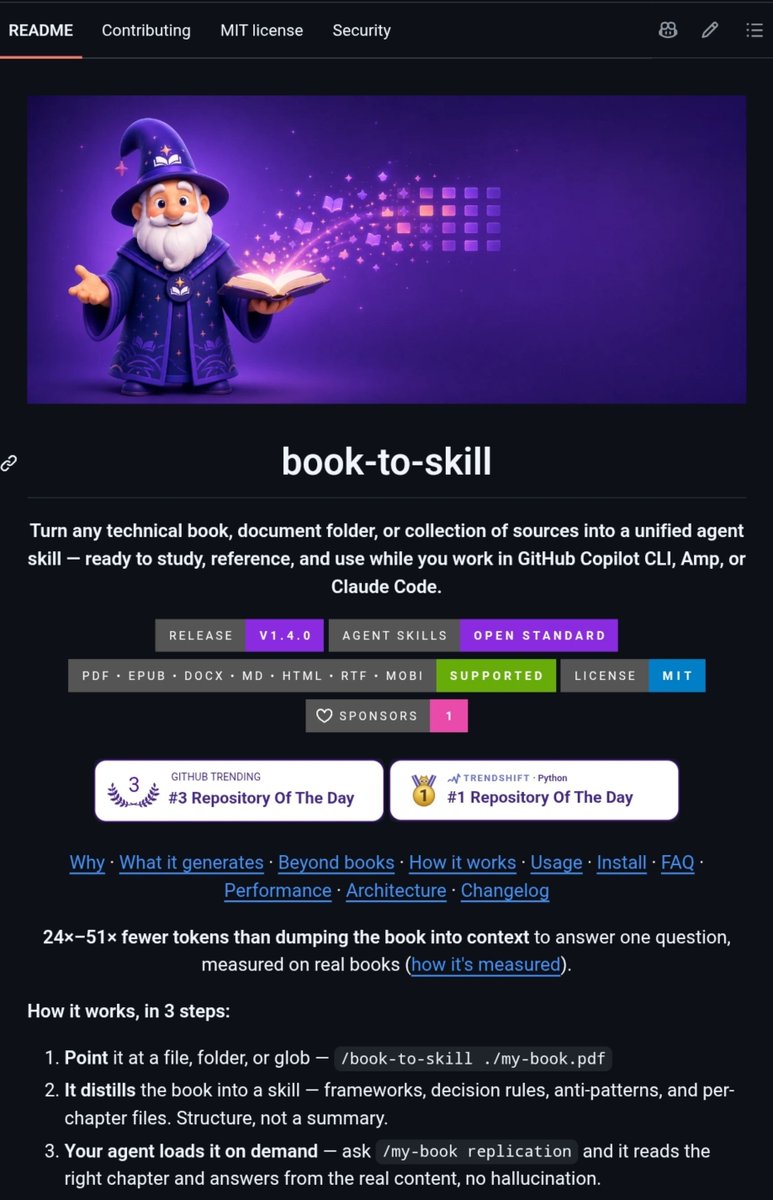
@_vmlops posted (9 likes, 3 replies, 402 views) book-to-skill, whose repo turns books or docs into installable agent skills and claims 24x-51x lower token use than dumping whole PDFs into context for one question. That fits the same pattern: less raw context dumping, more structured retrieval.
Discussion insight: The replies here focused on integration gaps and policy, not clever prompts. One Spec Kit reply asked whether the workflow survives real multi-file projects; the review-depth thread argued that defaults should map to risk; the broader lesson is that users increasingly want repeatable control planes, not charismatic demos.
Comparison to prior day: On 2026-08-14 and 2026-08-15, harness engineering was already a visible theme. On 2026-08-16, it became more installable and operational: DNS skills, review-depth switches, skill marketplaces, agent-pane monitors, and documentation-to-skill converters.
1.3 Builder energy stayed focused on concrete workflows, not generic AI-app hype (🡕)
The third cluster came from builders using agents to run specific business or product loops. The strongest posts were not benchmark screenshots or vague "build anything" promises; they were concrete systems for auth UI generation, sales-ops memory, recruiting pipelines, self-hosted agent computers, demo-video production, and language tutoring. The common pattern was narrow scope plus explicit review points.
@antigravity showed (626 likes, 41 replies, 30,634 views, 73 bookmarks) Gemini 3.7 Flash generating native auth screens across SwiftUI, React Native, Jetpack Compose, and Flutter. The replies were useful because they did not simply cheer; one asked how many harnesses still need installing, another said Gemini still skips files versus Claude, and a third warned that auth screens are where cross-platform claims usually get tested hardest.
@termsheetinator outlined (4 likes, 416 views, 16 bookmarks) a "Sales Ops Brain" built with Codex or Grok Bot desktop, Fathom transcripts, OpenAI structured outputs, scheduled tasks, and a rule that every claim must link back to a source call and date. That was one of the day's clearest examples of agents being aimed at an operational backlog, not a toy demo.

@ryancharleston started (2 likes, 2 replies, 83 views) an "Agentic Recruiter Swarm" with Scout, Judge, Researcher, and Writer agents, built on n8n + Claude + Notion + 2 search APIs, with a stated cost of about $3 per night. The post was modest in reach, but unusually clear about pipeline stages, cost, and the final human review step.

@Granite0x highlighted (19 likes, 5 replies, 643 views, 18 bookmarks) Rakazo, an open-source Grok Bot alternative whose repo promises one thread and one computer per bot, bring-your-own model and sandbox, bot spawning, and self-hosting without a Rakazo control plane. That pushed the builder conversation one step further: not just better prompts, but owning the whole runtime.
@yutasaito_pt launched (2 likes, 1 reply, 231 views) an iOS app called "Am I a Polyglot?" and explicitly said it was built entirely through AI-powered vibe coding despite the author's non-engineering background. The screenshots showed the most tangible part of the claim: one phrase rendered across six languages, with an inline AI tutor for follow-up questions.

Discussion insight: These builder posts were strongest when they exposed the review boundary. The sales-ops system links every claim back to a call, the recruiter swarm leaves only five finalists for the human, and Rakazo makes the sandbox choice explicit. The pattern is less "replace the operator" and more "compress the operator's repetitive work."
Comparison to prior day: Earlier in the week, builder energy leaned toward agent infrastructure. On 2026-08-16, more posts moved closer to concrete end-user workflows: recruiting, sales, mobile tutoring, cross-platform auth UI, and self-hosted desktop agents.
2. What Frustrates People
Quota rules and paid-plan ceilings are still too opaque
This was the sharpest frustration in the dataset, and it showed up from official settings all the way down to memes. @reach_vb showed (143 likes, 27 replies, 13,046 views, 45 bookmarks) that Codex can be pushed to a 1M-token window, but only with explicit config edits and a 2x usage warning beyond the default limit. @ChrisGPT said (74 likes, 21 replies, 8,751 views) that most of the community did not even know the feature existed, while @Haleeeemahh turned (28 likes, 13 replies, 550 views) the resulting reset culture into a joke.
The heavy-user complaint was even simpler: the plans still feel small under real work. @ishuagra02 argued (27 likes, 9 replies, 2,336 views) that the $100 GPT-5.6 Sol plan is fine for ordinary coding but drains quickly on multi-hour sessions, while @0x_kaize spread (45 likes, 5 replies, 5,424 views, 71 bookmarks) a hidden-model workaround precisely because users were already trying to route around visible caps. This looks worth building for. Severity: High. The pain is repeated, practical, and expensive.
Remote and autonomous workflows still break on interface friction and vendor dependence
The most detailed complaint came from @alliekmiller describing (59 likes, 20 replies, 4,847 views, 55 bookmarks) a workable Codex Remote routine that nevertheless suffers from phone heat, no camera access, a 90-minute voice cutoff, silent permission popups, and poor conversation discovery. That is not a model-quality problem; it is a product and control-flow problem.
A second version of the same fragility appeared when @doublenickk posted (9 likes, 7 replies, 426 views, 7 bookmarks) screenshots of Claude and the Anthropic status page during an outage, and one reply said a deadline-day handoff was now in trouble. The post's language was exaggerated, but the failure mode was real enough in public evidence: when the hosted assistant goes dark, users who built their workday around it are stuck.


This is worth building for if the answer improves fallback behavior, permission visibility, and session recovery. Severity: Medium-High. The pain is less universal than quota complaints, but the workflow damage is immediate when it hits.
Agents still need human supervision at the integration and refactor layer
The feed kept distinguishing between "it works" and "it is designed well." In a reply-rich Spec Kit thread, one user asked whether the process survives contact with a real multi-file project rather than a clean greenfield demo. @huacnlee wrote (15 likes, 1 reply, 1,849 views) that a Codex-assisted feature still took more than 10 hours because the AI produced something that worked but not the best API design, forcing continuous monitoring and refactoring.
The same gap showed up in product demos. Under the Antigravity auth-screen thread, one reply said Gemini still skips folders or files and still does not match Claude's reasoning quality. This looks worth building for because it is exactly where fast prototype wins run into production expectations. Severity: Medium-High.
3. What People Wish Existed
Bigger context controls that are easy to find and easy to trust
The most explicit wish came from @Soso_fun_yt saying (17 likes, 1 retweet, 1,250 views) that Google Antigravity should expose the same kind of larger-context control that Codex had just documented, "in a simpler way." Together with @ChrisGPT saying the community did not know the 1M option existed and @alliekmiller building long mobile workflows around remote sessions, the practical need is clear: users want larger working memory only if it comes with clear discovery, predictable billing, and less settings archaeology.
Opportunity: direct. This is a practical need, not an aspirational one.
A single place to compare quotas and decide where the next task should run
People kept asking a buyer question that current products answer badly. @YashHustle_22 asked (18 likes, 27 replies, 656 views) which of Claude Code, Codex, Cursor, Antigravity, and GitHub Copilot is actually worth paying for right now. @DanKornas built (7 likes, 2 replies, 1,174 views, 4 bookmarks) ClaudeBar precisely for that gap: one menu-bar view of quota health, usage windows, and alerts across multiple providers.

The wish here is not another frontier model. It is a routing dashboard that helps a user decide where a task belongs before they waste a paid window. Opportunity: direct to competitive.
Domain packs that make agents useful without repo hunting or document dumping
@DanKornas showed (11 likes, 5 replies, 1,422 views, 9 bookmarks) SkillsGate because managing skills "gets messy fast." @DanKornas posted (5 likes, 4 replies, 910 views, 8 bookmarks) Supabase Agent Skills as a way to stop agents from guessing through Auth, Realtime, Storage, and Postgres best practices. @_vmlops shared (9 likes, 3 replies, 402 views) book-to-skill to turn books and docs into installable knowledge instead of pasting them into context.
That is effectively wish-language in product form: users want reusable, install-once knowledge packs for recurring domains. Opportunity: competitive, with room for strong vertical winners.
4. Tools and Methods in Use
| Tool | Category | Sentiment | Strengths | Limitations |
|---|---|---|---|---|
| GPT-5.6 Sol in Codex | LLM / coding agent | (+/-) | 1M-token path exists, strong long-session potential, compaction controls are explicit | 2x usage past default window, confusing caps, reset culture |
| Codex Remote via ChatGPT mobile | Remote workflow | (+/-) | Lets users triage email and tasks by voice while away from desk | Phone heat, silent permissions, 90-minute voice cutoff, weak conversation discovery |
| GitHub Copilot CLI + Namecheap skill | DevOps / deployment | (+) | Automates registrar setup and GitHub Pages custom-domain work with human approval | Tied to Namecheap flow and still requires API setup |
| Copilot code review depth | Code review | (+) | Lets teams match review effort to change risk with org/repo defaults | Only two preset levels were discussed; deeper edge-case coverage still depends on humans |
| Spec Kit | Workflow method | (+/-) | Forces specification, clarification, planning, and task breakdown before implementation | Users still questioned multi-file and integration durability |
| SkillsGate | Skill management | (+) | One interface for discovery, install, edit, SSH remote use, and per-agent targeting | Solves skill sprawl, but only after users adopt skills as a workflow layer |
| Supabase Agent Skills | Domain skill pack | (+) | Gives agents concrete Supabase and Postgres guidance, including RLS and performance | Valuable only when teams accept external skill packs and keep them current |
| tmux-agent-sidebar | Observability | (+) | Tracks multiple agent panes, prompts, tool calls, worktrees, and notifications | Best fit for tmux-heavy operators, not casual users |
| ClaudeBar | Quota monitoring | (+) | Multi-provider quota health and alerts in one place | macOS-only app; it monitors pain rather than removing it |
| Exa API | Search / research API | (+) | Public $20 signup credits, $10 monthly free credits, live search/crawl/research endpoints for agents | Still usage-based credits, not flat-rate research |
| Antigravity | Coding harness | (+/-) | Strong cross-platform UI generation demos with Gemini 3.7 Flash | Users still complained about harness setup and missed files |
| Rakazo | Self-hosted agent runtime | (+/-) | Bring-your-own model and sandbox, per-bot computers, self-hosted control plane | Early beta, requires Docker/Postgres and more operator effort |
Below the table, the satisfaction spectrum was split less by model quality than by workflow fit. Official GitHub posts and domain skill packs got positive reactions because they reduce brittle setup work. Codex and Antigravity drew the most mixed responses: powerful when aligned with the task, but quickly frustrating when quotas, context ceilings, or harness gaps surfaced. The dominant workaround pattern was not wholesale switching; it was routing around constraints with skills, monitors, cheaper research APIs, or self-hosted runtimes.
@StudentOffersHQ highlighted (33 likes, 3 replies, 1,975 views, 52 bookmarks) Exa as live web-search infrastructure for agents, and Exa's public pricing page confirms the core numbers in the pitch: $20 in signup credits plus $10 more every month on the free tier.

5. What People Are Building
| Project | Who built it | What it does | Problem it solves | Stack | Stage | Links |
|---|---|---|---|---|---|---|
| Rakazo | elie222 | Open-source Grok Bot alternative with its own computer per bot | Avoids renting a closed bot computer and keeps control of model + sandbox choices | TypeScript, React 19, Electron, Expo, Hono, Postgres, Prisma, Docker/E2B, bring-your-own model | Beta | post · repo |
| SkillsGate | skillsgate | Desktop app and TUI for discovering and installing skills across many agents | Removes manual GitHub-repo hunting and per-agent file copying | TypeScript, Electron, TUI, SQLite, skills.sh | Shipped | post · repo |
| Supabase Agent Skills | supabase | Installable Supabase and Postgres best-practices skill packs | Reduces agent guesswork on common database and app tasks | TypeScript, agent-skills format, Supabase docs and references | Shipped | post · repo |
| tmux-agent-sidebar | hiroppy | Sidebar for monitoring Claude Code, Codex, and OpenCode panes across tmux | Gives operators one control surface for many active agent sessions | Rust, tmux plugin hooks | Shipped | post · repo |
| ClaudeBar | tddworks | Menu bar app for multi-provider quota monitoring | Helps users decide where to run the next task before a plan is exhausted | Swift, macOS menu bar app | Shipped | post · repo |
| book-to-skill | virgiliojr94 | Converts books and document folders into installable agent skills | Preserves reference knowledge without blowing up context windows | Python, agent-skill generation pipeline | Shipped | post · repo |
| Sales Ops Brain | @termsheetinator | Scheduled transcript-ingestion and sales-memory workflow | Turns call transcripts into evidence-linked reports, objections, and prompts | Fathom API, OpenAI API, Codex/Grok Bot desktop, scheduled tasks | Alpha | post |
| Agentic Recruiter Swarm | @ryancharleston | Multi-agent job search pipeline with scouting, judging, research, and writing | Cuts repetitive application prep and focuses the user on a shortlist | n8n, Claude, Notion, 2 search APIs | Alpha | post |
| Am I a Polyglot? | @yutasaito_pt | AI-assisted iOS app for learning six languages side by side | Gives non-engineers a small, concrete consumer app to ship quickly | AI-powered iOS app, exact stack not disclosed | Shipped | post |
| Recordly | webadderallorg | Open-source screen recorder/editor for walkthroughs and demos | Replaces expensive demo-video editing workflows with a local tool | TypeScript desktop app, macOS/Windows/Linux | Shipped | post · repo |
The repeated build pattern was operational compression. Rakazo, tmux-agent-sidebar, and ClaudeBar all wrap existing agents with better ownership, observability, or quota awareness. SkillsGate, Supabase Agent Skills, and book-to-skill package reusable knowledge so users stop rebuilding the same setup. Sales Ops Brain and Agentic Recruiter Swarm take that same logic outside engineering and apply it to transcripts and job applications.
@exploraX_ showed (12 likes, 4 replies, 1,626 views, 7 bookmarks) Recordly as an open-source alternative to a $229/year demo-video tool, while the repo positions it as a cross-platform recorder/editor for walkthroughs and product videos.

The stronger projects also shared one discipline: they kept a human review boundary close to the output. The recruiter swarm leaves five finalists for the morning review, Sales Ops Brain insists on source-linked claims, and Rakazo makes sandbox choices explicit instead of hiding them behind a hosted control plane.
6. New and Notable
Official 1M Codex configuration arrived, but it landed as a policy debate
The notable part of the 1M-context story was not only that OpenAI documented it. It was that the surrounding posts turned the announcement into a test of discoverability, quota fairness, and trust. @reach_vb translated the official config into a working setup, @ChrisGPT complained that the community had not known about it, and @Soso_fun_yt asked for a simpler version of the same capability in Antigravity.
Cheap live research APIs are becoming part of the agent stack
Exa was not the biggest post in the feed, but it was notable because it framed live search, crawl, and answer APIs as a normal ingredient for coding agents rather than a separate research product. @StudentOffersHQ marketed it directly into Claude Code, Cursor, Codex, OpenCode, and Hermes workflows, while Exa's public pricing page backs the low-friction entry point with signup credits and ongoing monthly free credits.
7. Where the Opportunities Are
[+++] Quota-aware routing and context planning — Evidence appears across sections 1-4: 1M-context configuration posts, reset memes, heavy-user burn-rate charts, buying confusion, and ClaudeBar. The strongest opportunity is not a new model but a control plane that predicts cost, warns about compaction tradeoffs, and routes tasks across providers before a session becomes expensive or brittle.
[++] Installable domain workflows and knowledge packs — SkillsGate, Supabase Agent Skills, book-to-skill, Spec Kit, and the Namecheap skill all point in the same direction. Users want task-specific structure that removes guesswork from repeated domains such as deployment, databases, documentation, and research.
[+] Human-review-first back-office agents — Sales Ops Brain and Agentic Recruiter Swarm show a practical pattern: let agents do repetitive triage, scoring, enrichment, and drafting, then hand a small reviewed set back to the human. The opportunity is emerging because the workflows are concrete, but the evidence set is still smaller than the quota and skill-pack themes.
8. Takeaways
- The biggest fight was over usable access, not model prestige. The 1M Codex option mattered because it exposed hidden assumptions about caps, compaction, and billing, and users immediately argued about those instead of the benchmark headline. (source)
- The community kept moving from prompt tricks to packaged control surfaces. Namecheap skills, Spec Kit, skill managers, tmux sidebars, and quota monitors all solve surrounding workflow problems rather than core-model intelligence. (source)
- Builder energy stayed concentrated on narrow, reviewable workflows. The strongest build posts were sales ops, recruiting, auth UI generation, self-hosted agent computers, and small consumer apps, not general "AI will do everything" claims. (source)
- Reliance on a single hosted assistant remains a visible operational risk. The Claude outage screenshots and deadline reply showed that once users build their day around an assistant, downtime becomes a workflow failure, not just a product annoyance. (source)