Twitter AI Coding - 2026-08-19
1. What People Are Talking About
1.1 Codex finally got a named enterprise ROI story, and people treated it like a category milestone (🡕)
The biggest conversation shift was from abstract “agent potential” to a concrete enterprise backlog that actually moved. At least five items supported it: OpenAI’s Asana case study, a second-order commentary on why the migration mattered, a high-engagement “Codex for scale” signal from OpenAI’s Thibault Sottiaux, and a CNBC relay claiming Codex user growth accelerated again. Compared with 2026-08-18, when the emphasis was harness engineering and runtime ownership, 2026-08-19 centered on whether agents were now clearing work that teams had already priced and postponed.
@OpenAIDevs said (467 likes, 37 replies, 34,815 views, 61 bookmarks) that Asana used Codex to finish an Enzyme-to-React-Testing-Library migration in two calendar weeks after previously expecting the work to take five more years. Public follow-on coverage from OpenAI, Asana, and the linked Fathom summary added the parts Twitter cared about: roughly $12,000 total cost, up to four agents working in parallel, and engineers mainly reviewing pull requests twice daily rather than manually grinding through the migration.
@murtuza_merc argued (81 likes, 8 replies, 1,812 views, 10 bookmarks) that the Asana story proved the real blocker was not technical complexity but permission to let AI touch production code. That line landed because it reframed the case study from “Codex is fast” to “governance was the queue.”
@thsottiaux posted (3,082 likes, 593 replies, 146,721 views, 111 bookmarks) a terse “Codex for scale,” which carried more weight than the image itself because it came from the product lead and drew a large reply chain immediately debating resets, timing, and rollout confidence. Separately, @firesidealpha relayed (24 likes, 4,428 views, 5 bookmarks) a CNBC segment claiming Codex users had reached 20 million and that OpenAI’s quarter-to-date run rate was up 35 percent, with enterprise up 50 percent; that figure is useful as public context, but lower confidence than the Asana case because it came through a TV transcript rather than a first-party post.
Discussion insight: The most useful replies were not asking for better autocomplete. They stressed that boring migrations across large codebases are exactly the kind of work people want agents to eat first, and that the remaining barrier is organizational trust, review cadence, and permissioning.
Comparison to prior day: On 2026-08-18, the strongest discussion was about harness design and lifecycle management. On 2026-08-19, the center moved to hard ROI and visible usage momentum.
1.2 Safety and auditability became the main condition for trusting coding agents (🡕)
A second cluster treated safety failures as product-defining, not edge cases. The common thread was that agent usefulness no longer matters if destructive commands, closed-loop review, or unverifiable skills can silently do the wrong thing. Compared with the prior day’s broader governance talk, this was more specific: people wanted named failure modes, explicit mitigations, and measurable evidence that a workflow actually helps.
@thsottiaux wrote (2,092 likes, 554 replies, 119,534 views, 233 bookmarks) a detailed recap of Codex changes after reports that GPT-5.6 sometimes took destructive actions outside user intent. The post named the concrete failure patterns — malformed temp cleanup pointing at $HOME, deletion targets not being checked, risky permission combinations — and said Codex now checks deletion targets, prefers recoverable actions, strengthens high-risk command review, and replays failures in targeted evaluations. The replies mattered too: one user said the new protections may now be too conservative on cleanup, while others folded the safety update back into broader frustration about quotas and platform changes.
@shawnchauhan1 said (6 likes, 1 reply, 275 views) that GitHub’s own AI security review passed the Snowflake GitHub Actions vulnerability that Wiz Red Agent later exploited, calling the problem one of auditability rather than raw coding quality. The attached article excerpt is informative because it names the public repo, the script-injection path, and the fact that Copilot Autofix did not flag the critical issue.
@openclaw said (93 likes, 7 replies, 16,430 views, 17 bookmarks) that “skills should come with receipts, not vibes,” while quoting a SkillEvaluator rollout for ClawHub. The best reply made the operator standard explicit: the real trust signal is not a leaderboard of wins, but seeing the rows where a skill produced zero lift.
Discussion insight: The useful safety conversation was no longer “should agents be sandboxed?” It was “show the exact failure, show the mitigation, and show the eval that proves the mitigation worked.”
Comparison to prior day: On 2026-08-18, governance and runtime controls were an architectural theme. On 2026-08-19, users demanded proof artifacts, receipts, and named postmortems.
1.3 Spend pressure turned into explicit meter-reading, promotions, and proxy arbitrage (🡕)
Cost was still a top story, but the tone changed from generic limit complaints to operator tactics. At least five items supported it: a Fable 5 credit popup, a community DevTools walkthrough for Codex quota accounting, an official OpenCode usage boost, free Hetzner inference, and a proxy that reroutes Claude Code onto other subscriptions. Compared with 2026-08-18, the conversation became much more instrumented.
@monosarin posted (26 likes, 5 replies, 1,163 views) a screenshot showing Fable 5 moving from a plan inclusion to usage credits with a $100 promotional buffer. The long thread turns that into a wider thesis about enterprise monetization, but the strongest hard evidence is the image itself: consumer AI-coding plans are visibly being remetered.

@vinayakbuild shared (5 likes, 44 views, 1 bookmark) a community workaround for quota opacity: open the Codex usage page, inspect the daily-workspace-usage-counts network response, and read credits, tokens, and turns directly. The screenshots are informative because they show the exact DevTools path and response shape, but the suggested credit ceilings are explicitly community estimates rather than official OpenAI numbers.
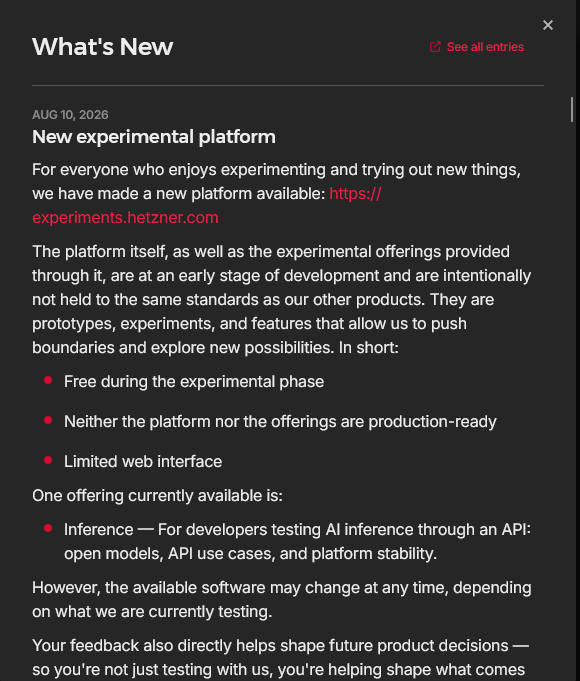
@opencode announced (92 likes, 11 replies, 2,446 views, 8 bookmarks) an 8x Hy3 usage promotion for OpenCode Go subscribers through August 30, while @TheMaran posted (11 likes, 5 replies, 2,255 views, 4 bookmarks) a free but slow OpenAI-compatible Hetzner Experiments endpoint for Qwen-style testing in OpenCode or Cursor. The linked Hetzner Experiments page explicitly says the service is experimental, free during the phase, and not production-ready.
@doublenickk highlighted (13 likes, 5 replies, 225 views, 11 bookmarks) claude-code-proxy, a local process that reroutes Claude Code traffic through OpenAI, Kimi, Grok, or Cursor-compatible backends. The public repo confirms the underlying mechanics: an ANTHROPIC_BASE_URL override, SQLite request logging, a live dashboard, and optional provider routing.
Discussion insight: Users are not just switching products when pricing gets weird. They are reading hidden counters, stacking temporary promotions, and proxying one vendor’s UX through another vendor’s billing surface.
Comparison to prior day: On 2026-08-18, pricing talk centered on resets and free fallbacks. On 2026-08-19, the workarounds became concrete enough to copy.
1.4 The most credible builders were shipping verification loops and governed surfaces, not prettier demos (🡕)
The most interesting builder posts were about the layer around generation: exact measurement, background review, reusable tool access, local context, and packaging. This kept the prior day’s harness-engineering theme alive, but with a more operational emphasis on proving and distributing work.
@theansarh said (2 likes, 1 reply, 158 views, 1 bookmark) that most design-to-code flows fail because agents treat Figma as inspiration instead of geometry. The attached diagram is the important part: extract exact measurements, write native UI, build, screenshot, compare, and fix across SwiftUI and Kotlin/Compose rather than hand-waving spacing.

@GithubProjects introduced (4 likes, 1,431 views, 3 bookmarks) Every Code as a Codex fork with background Auto Review, ghost-commit worktrees, and a Code Bridge that streams errors, console output, and screenshots through an MCP server. The public repo makes the positioning explicit: this is not just another shell wrapper, but an attempt to add continuous review and long-session stability around upstream Codex.
@screenpipe posted (9 likes, 287 views, 3 bookmarks) that Screenpipe now supports Cursor, Codex, Claude Code, Copilot, and Pi as harnesses, and the public repo and docs describe the underlying idea: local capture, MCP/REST access, and scheduled “pipes” so agents can act on computer history without shipping that context to a centralized cloud first. @0x_fokki added (6 likes, 2 replies, 123 views, 3 bookmarks) the parallel pain point around auth reuse, pointing to Aident Loadout’s “connect once, reuse everywhere” layer for Codex, Claude Code, and ChatGPT.
Discussion insight: The strongest builder pattern was not “I made a cooler agent.” It was “I reduced one of the repetitive trust problems around agents: fidelity, review, auth, or state.”
Comparison to prior day: On 2026-08-18, harness engineering was becoming a category. On 2026-08-19, the more believable builds were the ones that wrapped harnesses in verification and governance.
2. What Frustrates People
Unsafe or self-approved agent actions still feel too expensive to trust blindly
This was a High-severity frustration because the evidence included both first-party admissions and an independent security failure. @thsottiaux explained (2,092 likes, 554 replies, 119,534 views, 233 bookmarks) that Codex had produced destructive cleanup behavior severe enough to warrant new deletion-target checks, stronger high-risk command review, and targeted replay evaluations. The replies made the tradeoff visible: one user said the new protections may now be too conservative, but that is still a better failure mode than deleting the wrong directory.
The security-review version of the same frustration came from @shawnchauhan1 arguing (6 likes, 1 reply, 275 views) that GitHub Advanced Security / Copilot Autofix missed the Snowflake GitHub Actions issue that Wiz Red Agent later exploited. The image matters because it shows the actual public disclosure context rather than vague fear about “AI bugs.” Together, these posts say the pain is not merely that agents can be wrong. It is that they can be wrong while holding enough permissions, workflow trust, or brand trust to do real damage. This looks worth building for directly.
Quotas, credits, and usage accounting are still too opaque for day-to-day planning
This was another High-severity frustration because people kept reaching for debugging steps instead of product docs. @monosarin showed (26 likes, 5 replies, 1,163 views) that Fable 5 had moved behind usage credits, while @vinayakbuild posted (5 likes, 44 views, 1 bookmark) a manual way to inspect Codex usage via the browser’s network tab because users no longer trust their own rough sense of what they consumed.

The coping behavior is already sophisticated. @opencode offered (92 likes, 11 replies, 2,446 views, 8 bookmarks) an 8x Hy3 allowance to subscribers, @TheMaran shared (11 likes, 5 replies, 2,255 views, 4 bookmarks) a free Hetzner route for slow experimental inference, and @doublenickk spotlighted (13 likes, 5 replies, 225 views, 11 bookmarks) a proxy that keeps Claude Code’s workflow while shifting the bill elsewhere. The frustration is no longer simple sticker shock; it is not knowing what a run will cost, why a limit changed, or whether the “best” workflow will still be affordable tomorrow. This looks worth building for directly.
“Almost right” outputs still leave humans doing the hardest cleanup
This landed between Medium and High severity. @theansarh described (2 likes, 1 reply, 158 views, 1 bookmark) the familiar design-to-code loop: the UI looks close, but padding is off, safe areas are wrong, and text wraps differently, so the human spends the next hour correcting pixel-level drift. @Seltaa_ said (13 likes, 4 replies, 418 views) the same thing more broadly: Codex can write code, but it still lacks product sense, UX judgment, and the instinct to notice when something is obviously wrong.
What makes this frustration interesting is that the workaround is not “use a better model.” It is to add measurement and verification after generation. That is why the most credible fix today came from custom skills that turn design work into a compare-and-correct loop instead of a one-shot prompt. This looks worth building for directly.
3. What People Wish Existed
A spend control plane that tells the truth before the run starts
The clearest practical need was visibility into usage, limits, and fallback options before work begins. @monosarin turned (26 likes, 5 replies, 1,163 views) a Fable 5 credit popup into a broader pricing warning, @vinayakbuild resorted (5 likes, 44 views, 1 bookmark) to DevTools inspection to understand Codex accounting, and the immediate escape hatches were @opencode boosting (92 likes, 11 replies, 2,446 views, 8 bookmarks) Hy3 allowances, @TheMaran pointing (11 likes, 5 replies, 2,255 views, 4 bookmarks) to free experimental inference, and claude-code-proxy letting users preserve one workflow while paying through another provider.
This is a practical need, not an aspirational one. People are already building the workaround stack by hand. Opportunity: direct.
Agent workflows that prove correctness instead of asking for trust
The day’s strongest builder signals all shared the same shape: evaluate the skill, check the diff, replay the failure, or validate the finding. @openclaw wanted (93 likes, 7 replies, 16,430 views, 17 bookmarks) “receipts,” @theansarh built (2 likes, 1 reply, 158 views, 1 bookmark) a screenshot-comparison loop for UI fidelity, @GithubProjects emphasized (4 likes, 1,431 views, 3 bookmarks) background Auto Review and Code Bridge, and the public open·kritt repo packages multi-agent security research into ranked findings plus proofs of concept.
What people seem to want is not more autonomous output by itself. They want the agent to show its work, bound its risk, and make verification cheaper than manual cleanup. Opportunity: direct.
Shared tool access and context that survive provider switching
Several posts pointed to the same missing layer around the model. @0x_fokki highlighted (6 likes, 2 replies, 123 views, 3 bookmarks) Aident Loadout’s promise to connect Gmail, Slack, Notion, and other tools once and reuse them across agents. The public Loadout overview says the product is built around integrations, vault credentials, policies, and audit receipts instead of raw secrets inside prompts. @screenpipe pushed (9 likes, 287 views, 3 bookmarks) the local-context version of the same idea, while claude-code-proxy showed how badly some users want to keep a preferred workflow surface while swapping the model or billing backend underneath it.
This is both practical and competitive. The wish is for an agent-facing control plane that preserves auth, context, and audit history even when the user changes model vendors. Opportunity: direct to competitive.
4. Tools and Methods in Use
| Tool | Category | Sentiment | Strengths | Limitations |
|---|---|---|---|---|
| Codex | Coding agent | (+/-) | Cleared a large legacy-test migration at Asana and carried the day’s strongest scale/momentum narrative | Recent destructive-action fixes show trust is still fragile; users also complain about opaque usage accounting and weak product sense |
| Claude Code | Coding agent | (+/-) | Preferred workflow surface for many builders, strong file hooks and subagent habits | API burn is high enough that users are building proxies and arbitrage layers around it |
| OpenCode | Agent shell / router | (+) | Aggressive usage promotions and multi-model flexibility make it a practical escape hatch | Value is tied to rotating promotions and model availability rather than one stable default |
| Aident Loadout | Integration / tool-access layer | (+) | One-time auth, governed integrations, vault support, audit receipts | Adds another control-plane layer teams must trust and configure |
| claude-code-proxy | Proxy / routing middleware | (+/-) | Preserves Claude Code UX while rerouting to other providers; adds logging and dashboards | Unofficial workaround that may add account, security, or compatibility risk |
| Every Code | Codex fork / review layer | (+) | Background Auto Review, Code Bridge, multi-agent flows, long-session hardening | Early community fork with more moving parts to learn and maintain |
| Screenpipe | Local context harness | (+) | Local capture plus MCP/REST access gives agents reusable context across providers | Requires careful privacy and permission boundaries because it captures computer history |
| open·kritt | Security research platform | (+) | Parallel vulnerability workflows, validation scripts, ranked findings, proof-of-concept generation | Specialist setup and heavier operational footprint than ordinary coding agents |
| Google Antigravity + Gemini 3.7 Flash | Hosted build surface | (+/-) | Fast multi-platform generation and broad builder mindshare | Precision still needs explicit measurement loops; generic demos are losing persuasive power |
| Hetzner Experiments Inference | Inference API | (+/-) | Free OpenAI-compatible endpoint for testing tools and custom providers | Hetzner explicitly labels it experimental, limited, and not production-ready |
The overall spectrum ran from “impressive when tightly scoped” to “too opaque to budget or trust casually.” The common workaround pattern was to keep one interface people like, then bolt on a separate layer for spend control, auth reuse, review, or context. Migration patterns were therefore less about permanent switching than about routing: Claude Code into other backends, OpenCode into temporary promos, or external control layers like Aident and Screenpipe sitting above the model choice.
5. What People Are Building
| Project | Who built it | What it does | Problem it solves | Stack | Stage | Links |
|---|---|---|---|---|---|---|
| open·kritt | Kritt | Self-hosted AI security research platform with workflows, validation scripts, and ranked findings | Single-prompt code review misses real exploitable issues | Docker, web UI, headless CLI, Codex/Claude/OpenRouter | Shipped | repo · launch |
| claude-code-proxy | seifghazi | Transparent proxy and dashboard for Claude Code, with optional routing to other providers | Keep Claude Code’s workflow while changing the billing/model backend | Go, React, SQLite, Anthropic/OpenAI-compatible routing | Beta | repo |
| Every Code | just-every | Community Codex fork with Auto Review, Auto Drive, and Code Bridge | Long sessions and code-writing flows need continuous review plus live app feedback | Terminal CLI, worktrees, MCP, multi-model orchestration | Beta | repo |
| Aident Loadout | Aident | Shared tool-access layer with integrations, vault, and audit receipts across agents | Re-authing Gmail, Slack, GitHub, and other tools for every agent is repetitive and risky | OAuth integrations, vault credentials, MCP-compatible setup, audit log | Shipped | site · docs |
| Screenpipe | screenpipe | Local-first context layer that exposes screen, audio, and history to coding agents | Agents lose situational context across runs and providers | Local capture, pipes, MCP, REST API | Shipped | repo |
| TinyAtom | TinyAtom | Local-first macOS internal-tool builder around existing coding agents | Small teams want bespoke internal tools without servers or a full deployment pipeline | macOS app, local data, Claude/Codex/Cursor/Gemini support | Beta | site |
| Figma verification Agent Skills | @theansarh | Design-to-code skills that measure, build, screenshot, compare, and fix native UI | “Almost right” generated UI still wastes time in cleanup | SwiftUI, Kotlin/Compose, Gemini CLI, Claude Code, Codex | Alpha | tweet |
The standout project was open·kritt because it directly answered the day’s loudest security complaint. Instead of treating code review as one prompt against a whole repository, it breaks work into explicit research steps, runs agents in parallel, validates findings, and packages reports and proofs of concept.

claude-code-proxy, Every Code, Aident Loadout, and Screenpipe all fit the same broader pattern: builders are monetizing or open-sourcing the layer around the model rather than trying to win with raw model quality. One preserves a preferred UX while swapping providers, one adds background review and observability to Codex, one centralizes tool auth and receipts, and one makes local computer history queryable by any compatible agent.


TinyAtom and the Figma verification skills point to a second build pattern: packaging agent capability for people who do not want to become prompt engineers. TinyAtom wraps planning, review, packaging, install, and updates around whichever coding agent the team already trusts, while the Figma workflow turns UI cleanup into a repeatable measured loop instead of a back-and-forth chat.
6. New and Notable
A public AI security miss became a sharper signal than another model benchmark
@shawnchauhan1 surfaced (6 likes, 1 reply, 275 views) a public example where GitHub Advanced Security / Copilot Autofix failed to catch the Snowflake GitHub Actions issue later exploited by Wiz Red Agent. It mattered because it turned “AI review can miss bugs” into a named exploit chain with a public repository and a public disclosure trail.

TinyAtom wrapped coding agents into a local-first internal-tool product
@ajmal_jalal26 introduced (1 like, 3 replies, 10 views) TinyAtom as a free Mac app that lets non-developers describe an internal tool, build it with Claude Code or another coding agent, and run it locally. The public site adds the key positioning details: no server requirement, local data, private company sharing, and support for Claude, Codex, Cursor, Gemini, or a local shell agent.

Free experimental inference is becoming a growth wedge into coding workflows
@TheMaran posted (11 likes, 5 replies, 2,255 views, 4 bookmarks) a tutorial for using Hetzner’s experimental OpenAI-compatible inference endpoint with OpenCode or Cursor. The linked Hetzner Experiments page is explicit that the offer is free during the experimental phase and not production-ready, which is exactly why it stood out: even infrastructure vendors are now willing to buy developer attention with disposable coding-agent capacity.
7. Where the Opportunities Are
[+++] Honest spend and routing control for coding agents — Evidence appeared across sections 1-4: visible credit remetering in the Fable popup, manual quota inspection via DevTools, OpenCode usage promotions, Hetzner’s free experimental inference, and claude-code-proxy routing around provider billing. The opportunity is strong because users are already stitching together the missing control plane themselves.
[+++] Verification-first agent infrastructure — The day’s strongest signals all rewarded proof: Codex replay evaluations for destructive actions, ClawHub’s “receipts” framing for skill lift, Figma-to-native compare loops, Every Code’s background Auto Review, and open·kritt’s validated security findings. This is strong because it solves pain in both ordinary coding and security-sensitive automation.
[++] Cross-agent auth and context surfaces — Aident Loadout, Screenpipe, and TinyAtom each attack a different part of the same problem: credentials, local context, and packaging around the model. The opportunity is moderate because the need is clear, but many teams will only adopt it if the governance and privacy story is better than today’s ad hoc scripts.
[+] Local-first internal software for non-developers — TinyAtom was a small-volume post, but it was directionally notable because it turns coding agents into a packaging and distribution layer for operations, support, finance, and recruiting workflows. The signal is still emerging, yet it lines up with the broader shift from coding assistant to “workflow builder.”
8. Takeaways
- The benchmark moved from demos to backlogs. @OpenAIDevs provided (467 likes, 37 replies, 34,815 views, 61 bookmarks) the clearest public proof point: Asana used Codex to finish a migration expected to take five more years in two calendar weeks for roughly $12,000, with human review still in the loop.
- Trust is now a product surface of its own. @thsottiaux published (2,092 likes, 554 replies, 119,534 views, 233 bookmarks) detailed destructive-action mitigations, while the Snowflake/Wiz episode made auditability failures more salient than another model benchmark.
- Pricing friction is actively reshaping workflow design. @vinayakbuild showed (5 likes, 44 views, 1 bookmark) users reading hidden usage counters directly, while other posts stacked promotions and proxy routes on top of that behavior.
- The durable build pattern is wrapping the model, not merely swapping the model. @GithubProjects framed (4 likes, 1,431 views, 3 bookmarks) this clearly with Every Code, and the same pattern held across Aident Loadout, Screenpipe, open·kritt, and TinyAtom.