Twitter AI Coding - 2026-08-22
1. What People Are Talking About
1.1 The banked reset did not restore trust in Codex limits (🡕)
The loudest topic was OpenAI's attempt to calm the Codex limit backlash with a banked reset, which only pushed the conversation deeper into evidence, exceptions, and screenshots. At least five high-signal items supported it: Tibo's initial promise, Tibo's follow-up saying the reset had landed, a viral screenshot thread preserving proposed Community Notes and prior denials, a firsthand report that GPT-5.6 Sol still burned through a ChatGPT Plus quota in about an hour, and GitHub's own Copilot Auto pricing thread where the replies kept demanding routing explanations instead of celebrating savings. Compared with 2026-08-21, when users were still arguing about price cuts and mislabeled backends, 2026-08-22 focused more on whether vendors could be believed when they described quota behavior at all.
@thsottiaux said (4,659 likes, 515 replies, 430,949 views, 195 bookmarks) that a banked reset would arrive by 8pm PST for paid ChatGPT Work and Codex users. The post mattered less as a product update than as a trust test: the highest-signal replies immediately asked whether alternate harnesses such as OpenCode with Codex OAuth qualified, while another reply said the announcement still provided "zero terms" and read like spin rather than documentation.
@thsottiaux followed up (3,693 likes, 599 replies, 170,618 views, 78 bookmarks) that the reset had landed, but the replies turned into a live audit. One user said the reset had not arrived for them, another reported new usage-policy blocks, and others kept posting screenshots of limit failures, which meant the operational story had already moved from promise to uneven rollout.
@ns123abc argued (392 likes, 35 replies, 31,320 views, 46 bookmarks) that the reset announcement was being used to bury the usage-limit controversy. The attached screenshots were informative because they preserved a proposed Community Note under Tibo's post citing reported 50%-77% usage drops, and a second screenshot preserved Tibo's earlier explanation blaming unsupported sub2api traffic while the note argued official sign-in users were also seeing the problem.

@TokenGremlin reported (115 likes, 18 replies, 3,793 views) that about an hour of GPT-5.6 Sol work still drained an entire ChatGPT Plus quota. On the GitHub side, @github announced (117 likes, 20 replies, 38,222 views, 12 bookmarks) that Copilot Max Auto model selection was 30% off, but the replies asked for routing explainability, custom-provider control, and stable model choices during refactors instead of praising the lower price.
Discussion insight: The replies treated economics and quotas as observability problems. People wanted exact eligibility, actual backend identity, and reliable counters more than another promotional cut.
Comparison to prior day: On 2026-08-21, the fight was whether price reductions and model labels were masking degraded limits. On 2026-08-22, the fight became whether a public reset and follow-up post could be trusted as evidence at all.
1.2 Remote control became a real workflow story, not just a launch headline (🡒)
The second theme was Google Antigravity Remote Control moving from announcement copy into practical workflow discussions about approvals, memory, and who actually gets the feature. At least six items supported it: the main Google launch tweet, the attached documentation screenshot showing Google AI Ultra priority access, TestingCatalog's in-app screenshot, an XDA walkthrough grounded in Google's own Rules and Skills docs, a practitioner thread asking how people control coding agents from a phone, and a broader comparison post saying Gemini 3.7 Flash was good enough inside Antigravity but Gemini's product surface was still opaque elsewhere. Compared with 2026-08-21, when remote continuity itself was the novelty, 2026-08-22 focused more on how remote control fits long-running work and what other customization layers are still needed.
@googledevs announced (191 likes, 12 replies, 17,385 views, 58 bookmarks) that AI Pro and Ultra subscribers could now drive active Antigravity sessions from any modern browser or mobile device. The linked Antigravity blog added the key operator detail missing from the tweet: remote control keeps the same files, workspaces, build tools, credentials, environment variables, and push notifications that already exist on the original machine instead of recreating a separate environment.
@LuminaBench showed (59 likes, 3,583 views, 5 bookmarks) the part of the docs that shaped the reply mood: the rollout banner explicitly said Google AI Ultra plans were getting priority access first. That made the image more useful than the tweet alone because it turned complaints about gating into something verifiable.

The launch copy itself framed Remote Control as supervision rather than IDE replacement. Google's Remote Control blog emphasized monitoring progress, reviewing changes, running commands away from the desk, and receiving push notifications when an agent needs input. Read together with the XDA walkthrough, the practical takeaway was that mobile/browser access is most useful when it keeps a long-running session moving without recreating the environment elsewhere.
@xdadevelopers shared (3 likes, 2,021 views, 2 bookmarks) a setup guide that resolved into an XDA article. The article was important because it connected Remote Control to the adjacent memory problem: Antigravity felt much less forgetful once the author added Rules for persistent context and Skills for recurring procedures, both taken from Google's own documentation rather than improvised hacks.
Discussion insight: The useful replies were less about model benchmarks and more about control-plane ergonomics: who gets access, whether phone control is best for approvals or deep review, and how much setup is still required before long-running sessions feel reliable.
Comparison to prior day: On 2026-08-21, remote control's importance was mostly about leaving the desk without losing a session. On 2026-08-22, the conversation widened into mobile supervision, rollout gating, and the need for explicit memory/configuration scaffolding around the feature.
1.3 Reusable skills, memory, search, and visual review tools kept multiplying around the agents (🡕)
A third theme was that builders kept shipping the surrounding infrastructure for AI coding rather than betting on one model or one prompt. At least eight items supported it: GitHub's Teams-based multiplayer agent flow, a 28-skill reasoning catalog for Claude Code/Copilot/Codex/Cursor, a doc-to-skill converter, Snip's visual review loop, mem9's shared memory server, mgrep's semantic repo search, OpenGoat's role-based multi-agent org charts, and grassroots examples of people authoring their own Claude Code skills and commands. Compared with 2026-08-21, when shared surfaces and protocols were becoming productized, 2026-08-22 showed more builders standardizing the layers that sit around the model: memory, search, review, packaging, and delegation.
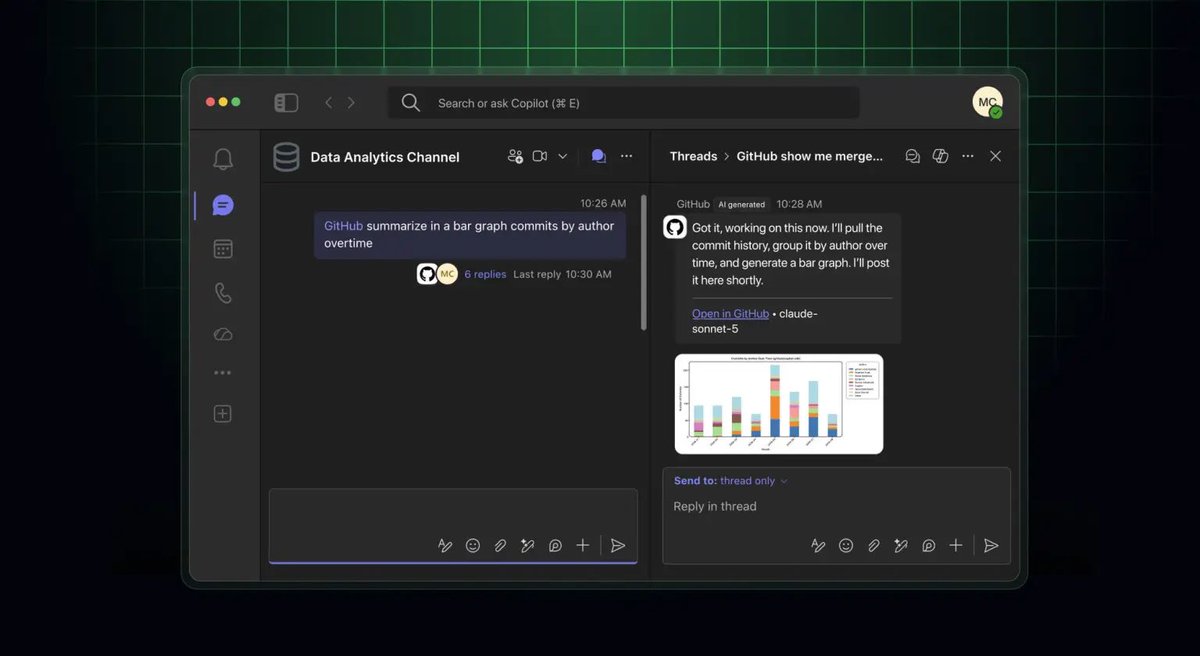
@FlowAltDelete said (18 likes, 916 views, 12 bookmarks) that GitHub Copilot in Microsoft Teams had made agentic coding "multiplayer." The linked GitHub changelog confirmed the mechanics: anyone in a thread can steer the cloud agent, participants with repo write access can trigger code changes, work continues asynchronously in a secure sandbox, and administrators can require an extra approval before a Copilot-authored pull request merges.
@tom_doerr shared (69 likes, 6 replies, 5,509 views, 90 bookmarks) cc-thinking-skills, whose README describes 28 portable reasoning skills plus a router for Claude Code, GitHub Copilot, Codex, and Cursor. @7h3h4ckv157 highlighted (9 likes, 1,077 views, 6 bookmarks) book-to-skill, which turns a technical book or document folder into an Agent Skills-compatible package and claims 24x-51x fewer tokens than repeatedly dumping source material into context.
@DanKornas shared (279 views) Snip, a visual review loop that renders diagrams or HTML from a coding agent, blocks for human approval or annotation, and returns structured JSON to the agent. The same account also highlighted (467 views, 2 bookmarks) mem9 for shared persistent memory, posted (3 likes, 510 views) mgrep for natural-language code search across code, PDFs, and images, and shared (6 likes, 1,380 views, 10 bookmarks) OpenGoat for hierarchical OpenClaw-based multi-agent teams that coordinate Claude Code, Codex, Cursor, GitHub Copilot CLI, and Lovable.
Discussion insight: The ecosystem is converging on external state and external procedure. People are packaging how an agent should think, what it should remember, how it should search, and how humans should review it instead of relying on the chat window to hold everything.
Comparison to prior day: On 2026-08-21, the sticky layer was shared sessions, approvals, and protocol alignment. On 2026-08-22, builders pushed deeper into reusable skills, memory servers, search tooling, and visual review loops that can move across clients.
1.4 The local and research stack for coding agents got sharper (🡕)
The fourth theme was that lower-level execution and evaluation infrastructure for coding agents kept improving. At least three items supported it strongly: FreeToken's open-sourced local MoE serving engine, the ClawGym II paper on black-box RL over agent harnesses, and a ParseBench chart showing where generalized coding-agent harnesses actually become cost-competitive on long documents. Compared with 2026-08-21, when the infrastructure talk centered more on collaboration surfaces and replay, 2026-08-22 pushed further down the stack into serving, training, and benchmark position.
@akshay_pachaar explained (65 likes, 9 replies, 7,422 views, 76 bookmarks) why FreeToken mattered for local agent workflows. The linked repo and paper describe an Apache-2.0 MoE serving engine that exposes OpenAI- and Anthropic-compatible APIs, supports Claude Code and Codex directly, and uses semantic-aware checkpoints so tool-calling agents do not have to recompute huge prefills after every context edit.
@rohanpaul_ai summarized (2 likes, 828 views, 4 bookmarks) the ClawGym II paper, which treats OpenClaw and Claude Code as black-box harnesses inside an RL loop. The specific claim that stood out was not just the method but the gain: +9.98 Pass@1 on ClawGym-Bench through OpenClaw and +14.81 through Claude Code using Qwen3-30A3B, with the same setup also reporting gains on JobBench and OfficeQA.
@jerryjliu0 showed (4 likes, 367 views, 1 bookmark) a ParseBench chart where specialized document extractors stayed far cheaper on short documents, but Claude Code and Codex moved much closer to the cost/accuracy Pareto frontier on longer ones. That was a useful correction to simple "agents everywhere" hype: generalized harnesses are not always the best tool, but they are getting more competitive when the task is long enough to reward search, tool use, and caching.

Discussion insight: The most interesting infrastructure posts were not claiming one model had won. They were showing how to run larger open models locally, how to train through existing harnesses, and where coding agents do or do not earn their overhead outside pure code generation.
Comparison to prior day: On 2026-08-21, open infrastructure centered on replay, protocols, and skill portability. On 2026-08-22, the conversation moved toward agent-serving economics, harness-aware training, and narrower benchmark evidence.
2. What Frustrates People
Quotas, resets, and routing still feel untrustworthy
This was a High-severity frustration because the strongest evidence came from official announcements failing to settle the problem. @thsottiaux promised (4,659 likes, 515 replies, 430,949 views, 195 bookmarks) a banked reset for paid users and later said (3,693 likes, 599 replies, 170,618 views, 78 bookmarks) it had landed, but the replies still reported missing resets and policy blocks. @TokenGremlin reported (115 likes, 18 replies, 3,793 views) that about an hour of GPT-5.6 Sol work could still drain a ChatGPT Plus quota.
GitHub's side showed the same trust problem in milder form. @github offered (117 likes, 20 replies, 38,222 views, 12 bookmarks) a 30% Copilot Auto discount, but the replies asked for routing explanations, custom-provider support, and protection against mid-refactor model switching. People are coping by keeping alternate harnesses and providers ready, not by believing the UI at face value. This looks worth building for directly.
Agents still need explicit memory and clearer work traces
This was also High severity because the pain shows up while people are trying to do ordinary work. @xdadevelopers shared (3 likes, 2,021 views, 2 bookmarks) a guide based on Google's own docs that fixed Antigravity forgetfulness by adding Rules and Skills. The fact that an official customization surface was needed to stop repeated re-explanation is useful evidence on its own: session quality still depends heavily on scaffolding around the model.
The same transparency gap appeared in model comparisons. @HCSolakoglu said (66 likes, 4,204 views, 5 bookmarks) Gemini 3.7 Flash was good enough inside Antigravity when Codex limits ran out, but Gemini web still hid which files it inspected, which tools it called, and how its different modes mapped to work. People are already patching around this with mem9 for shared memory, mgrep for search, and book-to-skill for document packaging. This looks worth building for directly.
Mobile and remote control help with approvals more than deep review
This was a Medium-severity frustration: users liked the direction, but the workflow still looks lopsided. @googledevs launched (191 likes, 12 replies, 17,385 views, 58 bookmarks) Antigravity Remote Control for browser and phone, and @LuminaBench showed (59 likes, 3,583 views, 5 bookmarks) that the rollout initially prioritized Google AI Ultra plans. In the replies, @somi_ai said the real win was tapping approve from a phone when an agent was stuck on a permission prompt, not doing the full review there.
Google's own framing pointed the same way: the Remote Control blog focused on untethered productivity, local-context retention, and push notifications when human input is required, not on replacing a desktop IDE from a phone. The opportunity is not just “mobile agents.” It is reviewable, low-friction control of already-running work. This looks worth building for directly.
3. What People Wish Existed
A quota and routing layer that tells the truth before work starts
This was the clearest practical need. @thsottiaux announced (4,659 likes, 515 replies, 430,949 views, 195 bookmarks) a banked reset, but the follow-up post (3,693 likes, 599 replies, 170,618 views, 78 bookmarks) still drew complaints from users who did not receive it. @github advertised (117 likes, 20 replies, 38,222 views, 12 bookmarks) discounted Auto routing, but the replies asked for routing explanations and stable model selection. The need is direct: people want truthful counters, clear eligibility, backend identity, and cost visibility before starting a long run. Current tools only partially address it. Opportunity: Direct.
A portable memory and skills layer that survives sessions, devices, and clients
People were not asking for more raw context window as much as for reusable context structure. @xdadevelopers showed (3 likes, 2,021 views, 2 bookmarks) that Antigravity improved once Rules and Skills were added. @DanKornas highlighted (467 views, 2 bookmarks) mem9 for cross-session shared memory, while @7h3h4ckv157 shared (9 likes, 1,077 views, 6 bookmarks) book-to-skill for turning source material into on-demand skills. The need is practical and already partially served, but the market is getting crowded fast. Opportunity: Competitive.
A visual and mobile review loop for long-running agents
Several posts implied that the next bottleneck is review, not generation. @googledevs launched (191 likes, 12 replies, 17,385 views, 58 bookmarks) Remote Control so users can monitor and steer long runs away from the desk, and @DanKornas shared (279 views) Snip for rendering diagrams or UI previews, capturing annotations, and sending structured feedback back to the agent. Users want to approve, annotate, and redirect work without reading everything as raw text or dropping back to a desktop terminal. Partial solutions exist, but the workflow is still fragmented. Opportunity: Direct.
4. Tools and Methods in Use
| Tool | Category | Sentiment | Strengths | Limitations |
|---|---|---|---|---|
| Codex / ChatGPT Work | Agent harness | (+/-) | Strong perceived output quality; banked reset temporarily eased pressure; good enough to anchor many workflows | Quota volatility, missing resets, policy blocks, and backend-trust issues dominated discussion |
| GitHub Copilot Auto | Model router | (+/-) | Cross-model routing across Claude, GPT, and Microsoft AI; discounted entry for Max users | Users want routing explanations, custom providers, and stable model choice during refactors |
| Antigravity Remote Control | Remote workflow surface | (+) | Browser/mobile control of live sessions, same workstation context, push notifications | Ultra-first rollout, phone review is weaker than phone approval, still benefits from extra setup |
| Gemini 3.7 Flash | Model | (+/-) | Good enough inside Antigravity to absorb overflow from Codex-heavy workflows; improved perceived coding quality | Gemini web/mobile product surface still hides tool use, file inspection, and mode behavior |
| Claude Code | Coding agent runtime | (+) | Large surrounding ecosystem of skills, visual review, long-document work, and benchmark experimentation | Users keep adding external memory, review, and packaging layers because the base chat is not enough |
| mem9 | Memory infrastructure | (+) | Shared persistent memory across sessions, machines, and runtimes; hosted or self-hosted | Extra server layer and setup overhead compared with simple local prompt files |
| Snip | Visual review tool | (+) | Turns diagrams, HTML, and screenshots into approve/annotate loops with structured JSON back to the agent | Extra local tooling; strongest fit is visual work rather than generic code review |
| mgrep | Search / retrieval | (+) | Natural-language search across code, text, PDFs, and images; agent install flows; optional web search | Requires background indexing and a cloud-backed store for the main experience |
| FreeToken | Local inference engine | (+) | OpenAI/Anthropic-compatible APIs, local MoE serving, agent-aware caching, supports Claude Code and Codex | Performance claims are early and hardware-dependent; some replies questioned the headline numbers |
The satisfaction spectrum is splitting by layer. Model capability discussion is getting somewhat calmer than routing, memory, and control-plane discussion. Users are increasingly willing to switch models when quotas or limits force it, as seen in the move from Codex-heavy workflows toward Gemini 3.7 Flash inside Antigravity, but they are also building persistent add-ons such as mem9, mgrep, Snip, and book-to-skill so their process can survive client or provider changes. The competitive dynamic is shifting upward from “which model is best?” to “which surface exposes the truth, keeps context, and lets humans review efficiently?”
5. What People Are Building
| Project | Who built it | What it does | Problem it solves | Stack | Stage | Links |
|---|---|---|---|---|---|---|
| FreeToken | FlashML-org | Runs frontier-scale open-weight MoE models locally with OpenAI/Anthropic-compatible APIs | Makes large local coding-agent backends usable on consumer hardware and reduces repeated context recomputation | Python, local MoE runtime, Anthropic/OpenAI-compatible APIs, semantic-aware caching | Beta | repo · paper |
| Claude Code thinking skills | tjboudreaux | Packages 28 portable reasoning skills plus a router for agent clients | Gives coding agents reusable decision and diagnosis procedures instead of ad hoc prompting | JavaScript, Agent Skills, Skills CLI, Claude Code plugin | Shipped | repo |
| book-to-skill | virgiliojr94 | Converts books or document folders into on-demand agent skills | Stops users from repeatedly reloading large source material into context windows | Python extractor, Agent Skills, GitHub Copilot CLI, Amp, Claude Code | Shipped | repo |
| Snip | rixinhahaha | Renders diagrams, previews, and screenshots for annotated review by humans | Fixes the “wall of text” problem in visual or UI-heavy agent work | CLI, MCP server, Electron, Mermaid, Ollama, Claude Code/Cursor/Windsurf/Cline support | Shipped | repo |
| mem9 | mem9-ai | Provides persistent shared memory across sessions, machines, and agent runtimes | Preserves context and recall across clients instead of keeping separate prompt files everywhere | Go server, hosted/self-hosted API, semantic + keyword search, dashboard | Beta | repo |
| mgrep | mixedbread-ai | Offers semantic search across code, text, PDFs, images, and optional web results | Helps humans and agents find intent-level context without guessing identifiers | TypeScript CLI, background indexing, Mixedbread search backend, agent install flows | Shipped | repo |
| OpenGoat | marian2js | Builds hierarchical multi-agent organizations with tasks, sessions, and workspaces | Structures multi-agent coding work across different coding tools and roles | Node.js, OpenClaw, web UI, Docker/npm installs, persistent sessions | Beta | repo |
FreeToken was the clearest "hard infrastructure" build. @akshay_pachaar used (65 likes, 9 replies, 7,422 views, 76 bookmarks) the paper and repo to argue that local coding agents can get much faster when the serving engine checkpoints at the same boundaries where agent frameworks edit context. That is notably different from a generic local-LLM launch because the repo explicitly targets Claude Code, Codex, OpenCode, OpenClaw, and DeepSeek Harness.
The reusable-skills cluster was also strong. @tom_doerr shared (69 likes, 6 replies, 5,509 views, 90 bookmarks) cc-thinking-skills, while @7h3h4ckv157 shared (9 likes, 1,077 views, 6 bookmarks) book-to-skill. The pattern is the same in both: move knowledge and procedure out of the transient chat and into installable, reusable artifacts that can travel between compatible agent clients.
The third cluster was human-control infrastructure. @DanKornas shared (279 views) Snip for annotation-based visual review, highlighted (467 views, 2 bookmarks) mem9 for persistent shared memory, posted (3 likes, 510 views) mgrep for semantic retrieval, and shared (6 likes, 1,380 views, 10 bookmarks) OpenGoat for role-based multi-agent organizations. Across independent builders, the repeated build pattern was clear: externalize memory, search, review, and delegation so the workflow can survive a change of model or client.
6. New and Notable
ClawGym II brought RL-for-agents back into the coding conversation
@rohanpaul_ai shared (2 likes, 828 views, 4 bookmarks) ClawGym II, a paper on training coding agents through unchanged black-box harnesses instead of rewriting the environment for RL. The post highlighted concrete gains on ClawGym-Bench and said the same setup also improved JobBench and OfficeQA, which made it notable because the community has lately spent more time on orchestration and memory than on training methods. It matters as a signal that people are still trying to improve agent behavior at the policy level, not only with better prompts and tooling. (paper)
Shared cloud-agent sessions reached Microsoft Teams
@FlowAltDelete highlighted (18 likes, 916 views, 12 bookmarks) that Copilot coding agent sessions can now be viewed and continued from Microsoft Teams. GitHub's changelog says teammates can see the agent's sandboxed work, hand over the thread across interfaces, and optionally require extra approval before Copilot-authored pull requests are merged. That matters because it moves the discussion from solo prompting toward team-visible agent operations. (changelog)
ParseBench showed where coding-agent harnesses do and do not pay off
@jerryjliu0 showed (4 likes, 367 views, 1 bookmark) a ParseBench chart where specialized extractors stayed much cheaper on short document-extraction tasks, while Claude Code and Codex moved closer to the cost/accuracy frontier on longer ones. This did not dominate the day, but it was notable because it added practical nuance to broad claims about coding agents: generalized harnesses can earn their overhead on longer reasoning-heavy tasks, but they are still wasteful baselines for short, specialized work.
7. Where the Opportunities Are
[+++] Agent truth layer for quotas, routing, and state — Evidence came from both consumer and developer surfaces. The Codex banked-reset posts still triggered unresolved complaints about access and policy blocks, while the Copilot Auto launch drew requests for routing explanations and provider control. A product that exposes entitlement, backend identity, cost burn, and interruption risk before a run starts would answer the strongest frustration in Sections 1, 2, and 4.
[+++] Portable context infrastructure across agent clients — Multiple independent builders converged on the same workaround: package knowledge as skills, preserve memory outside the chat, and improve retrieval outside the model UI. cc-thinking-skills, book-to-skill, mem9, and mgrep all exist because users do not trust any single client to remember enough or structure context well enough. This is strong because the need is already validated by repeated shipping behavior, not just requests.
[++] Human review and approval tooling for long-running agents — Remote Control, Microsoft Teams session continuation, and Snip all point to the same gap: people want to intervene in running work without dropping back into a dense terminal transcript. The evidence suggests a review surface that combines mobile approvals, visual diffs, lightweight annotations, and team handoff would be useful now, especially for permission prompts and UI-heavy work.
[+] Better evaluation for real coding work — ClawGym II and ParseBench both pushed on whether current coding-agent progress is being measured in the right way. This is an emerging opportunity rather than a direct product need, but stronger public evaluation harnesses could shape the next wave of infrastructure and model decisions.
8. Takeaways
- The biggest conversation was not model quality but whether coding-agent surfaces tell the truth about access and limits. The Codex banked-reset announcement still left many users saying they did not receive the reset, and Copilot Auto replies immediately asked for clearer routing and provider control. (source)
- Remote control is becoming a real workflow, but mainly as supervision rather than desktop replacement. The Antigravity launch and follow-on materials emphasized monitoring progress, retaining local context, and responding when a live run needs input more than replacing an IDE from a phone. (source)
- The most active builders are moving context out of the chat and into reusable infrastructure. cc-thinking-skills, book-to-skill, mem9, mgrep, Snip, and OpenGoat all attack different parts of the same problem: memory, retrieval, review, and coordination should not disappear when a session ends or a client changes. (source)
- Local and benchmark infrastructure remains an important secondary frontier. FreeToken argued for agent-aware local serving gains, while ClawGym II and ParseBench challenged the field to improve either the agent policy or the way performance gets measured. (source)