Twitter AI Coding - 2026-09-08
1. What People Are Talking About
1.1 AI coding spread beyond the repo into phones, apps, and visual surfaces (🡕)
The clearest shift was that "AI coding" no longer meant only editing source files in a terminal. It increasingly meant running the software, steering it from a phone, or editing it through higher-level visual controls. @vicky_grok reported (462 likes, 30 replies, 27,799 views, 537 bookmarks) that Google's ARTEMIS turns plain-English instructions into Android actions, and the public ARTEMIS repo adds the details that made the claim feel more production-oriented than demo-like: MCP integration for coding agents, Logcat diagnostics, and a published 99%+ AndroidWorld completion claim. The replies immediately pushed on the real bar: layout drift, permission prompts, and whether the system can recover instead of simply replaying a clean path.
@jullerino shipped (262 likes, 41 replies, 28,290 views) T3 Code Mobile 1.1.0 with voice input, file and media attachments, linked pull-request visibility, Codex and Claude allowance checks across connected computers, and Antigravity support inside the phone client itself. @burkeholland showed (47 likes, 7 replies, 1,569 views) the smaller but vivid version of the same pattern: when two iPhone-to-Windows mirroring tools failed before a demo, he asked GitHub Copilot to build one and had a working utility about 20 minutes later.

@connie_surf said (8 likes, 1 reply, 91 views) the interface question more directly: her linked essay argues that chat-only vibe coding breaks down on iterative visual work, and her demo reframed the problem as moving between layers of abstraction rather than typing ever longer prompts. That mattered because it echoed the same demand behind ARTEMIS and T3 Mobile: once AI-assisted work leaves the happy path, people want stronger surfaces for steering, not just stronger models.
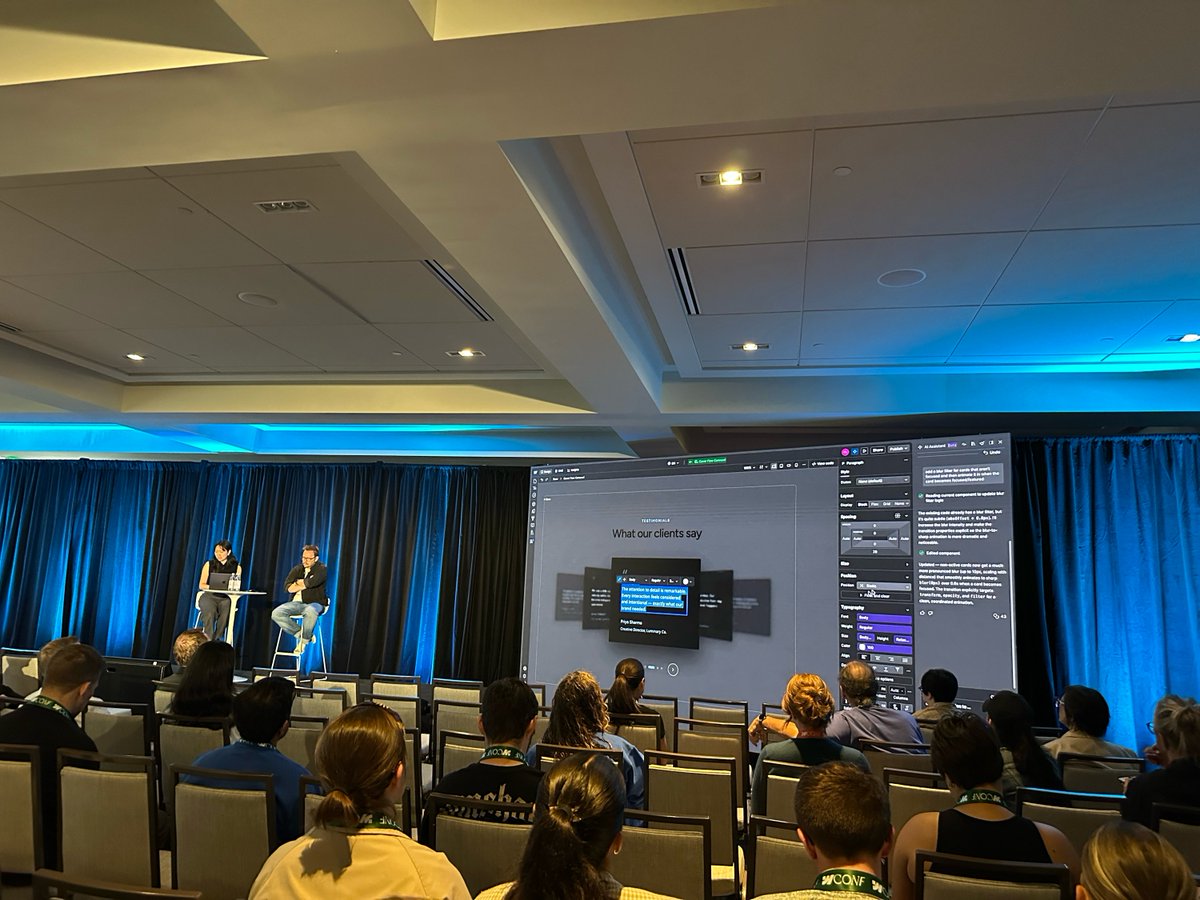
Discussion insight: Replies on ARTEMIS and T3 Mobile were not asking whether the underlying models were impressive enough. They were asking whether these new surfaces recover from broken flows, keep the operator informed, and let work continue away from the desktop.
Comparison to prior day: On September 7, real-software operators were emerging through ARTEMIS and desktop-control experiments. On September 8, that theme widened into mobile supervision, one-off utility creation, and visual editing demos.
1.2 The hot build category was the control plane between models, tasks, and worktrees (🡕)
Yesterday's runtime-orchestration conversation thickened into a real product layer. @Kisalay_ argued (4 likes, 2 replies, 253 views) that HydraFusion is "not another model in the picker" but a task-aware runtime, and GitHub's public HydraFusion research post backs that with Single, Cascade, and Critique patterns. @unixterminal followed (21 likes, 1 reply, 1,968 views) with Lerna, whose public repo and screenshots show those routes and review phases becoming visible inside Copilot CLI, with optional Azure Foundry remapping for supported models.

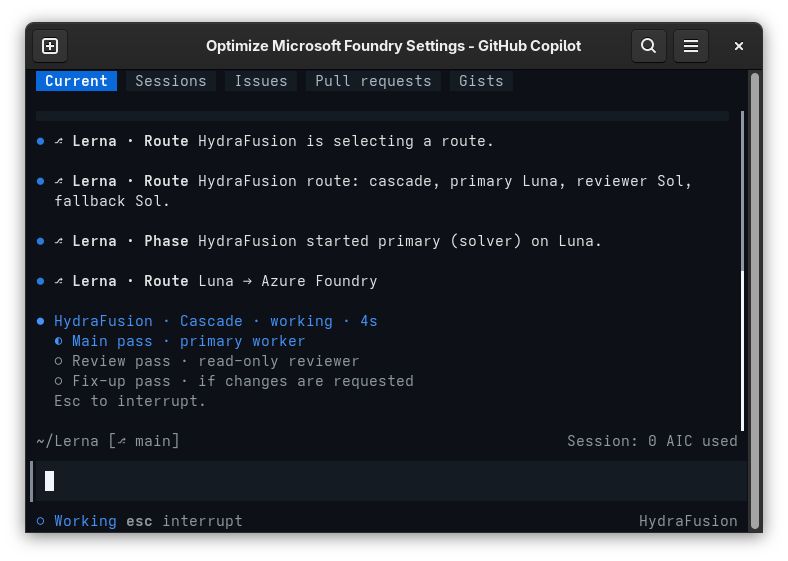
The same instinct showed up in open-source control planes. @andrebrov described (8 likes, 8 replies, 503 views) a herdr setup running 25 coding agents across five harnesses with work as files, not chat; the public herdr repo adds background-server, detach/reconnect, and multi-machine control details, while the screenshots add the important operating rules: no self-review, lead-only landings, and artifact-based routing on a 60-second loop. @DanKornas positioned (1 like, 2 replies, 437 views) Wallfacer as one place to move from planning chat to specs to tasks to code, @Peramanathan highlighted (3 likes, 2 replies, 53 views) Orca as an agent IDE that combines provider routing, worktrees, browser surfaces, and mobile steering, @DanKornas also showcased (3 likes, 3 replies, 773 views) rsc as a selective skill meta-harness, @Urooj978 pitched (1 like, 3 replies, 84 views) ECC as an operating system for agent harnesses, and @bryann2k_dev showed (2 likes, 226 views) Stipulate turning specs, checks, apply, archive, and bootstrap into slash commands.


Discussion insight: The common move was to encode rules as software. herdr's "mechanical, not prose" guardrails and Stipulate's slash-command palette both suggested that builders no longer trust informal prompting to preserve process over long-running work.
Comparison to prior day: September 7 made runtime orchestration central. September 8 turned that idea into route visualizers, worktree boards, skill installers, and command surfaces that operators can actually inspect.
1.3 Cost talk got concrete: per-turn tool tax, quota UIs, and local escape hatches (🡕)
The cost conversation moved from generic price anxiety to operator math. @github said (131 likes, 11 replies, 25,969 views, 77 bookmarks) that using more tokens does not automatically improve AI coding, and the linked GitHub post, Getting more from each token, makes the product thesis explicit: repeat less, route better, and load only the context that advances the task. @AzamIntikhab measured (1 like, 2 replies, 36 views) the other side of the same issue by counting 9,310 serialized tokens for six MCP servers with 63 tools versus 582 tokens when only tool names load up front, explicitly contrasting Claude Code's deferred schema loading with Codex CLI's eager behavior.

The community response was a mix of monitors, workarounds, and local exits. @RijnHartman showed (11 likes, 9 replies, 500 views) Headroom as a usage cockpit for Codex, Claude Code, OpenCode, Antigravity, Cursor, GitHub Copilot, and more. @Dgamax posted (1 like, 1 reply, 206 views) a Codex weekly allowance with only 1% remaining and nearly a week left to reset, while @MrTacticalX surfaced (2 likes, 19 views) a /limit-reset experiment in Claude Code that would only reset the five-hour limit once per week and would not change weekly caps. @ihteshamali highlighted (19 likes, 6 replies, 921 views) Magnitude, whose public README says it profiles an Apple-silicon Mac, recommends local models, and plugs them into existing coding agents so some work can move off recurring token spend entirely.


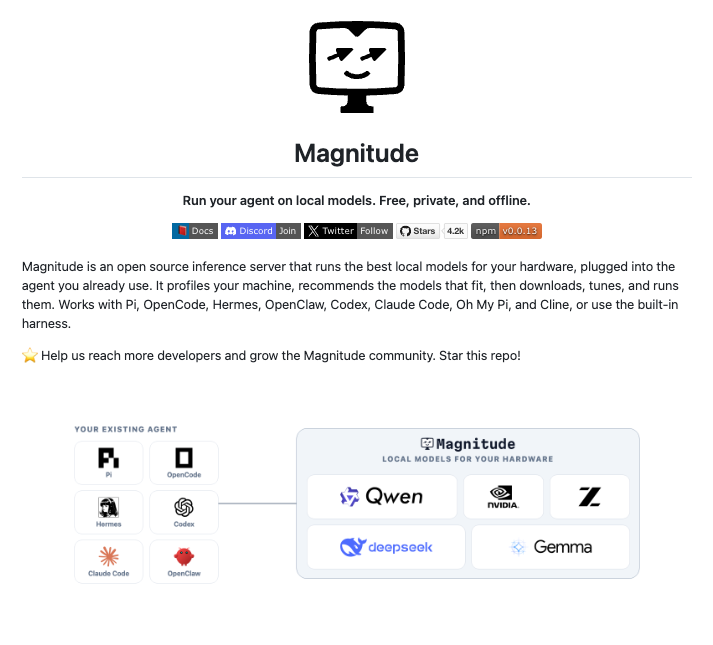
Discussion insight: People were no longer asking only for cheaper frontier models. They wanted to know which tool, which session, and which task burned the budget, and whether that spend shipped anything valuable.
Comparison to prior day: September 7 focused on quota math and offload tricks. September 8 added measured schema costs, dedicated usage-cockpit concepts, and explicit reset/allowance signals.
1.4 Trust expanded into security, governance, and claim provenance (🡕)
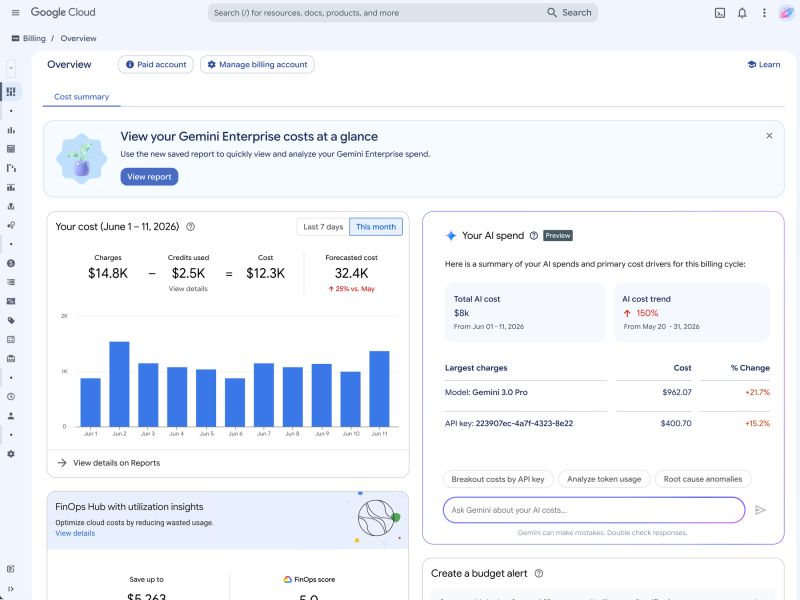
Trust concerns widened in two directions at once. @GoogleCloudTech said (174 likes, 13 replies, 22,316 views, 51 bookmarks) that Antigravity usage can now be governed through Gemini Enterprise controls spanning spend, security, observability, and usage metrics, while @GoogleCloud_ME showed (3 likes, 1 reply, 222 views) the finance side of that story with a billing surface that separates classic cloud charges from AI spend. That is trust as governance and cost accountability.
At the other extreme, @stanislavfort shared (46 likes, 3 replies, 2,824 views) AISLE's one-click RCE disclosure across Cursor, VS Code, and Antigravity. The public screenshot made the blast radius legible: secrets exfiltrated and live keystrokes captured from a malicious-link path inside tools used by millions of developers.

The other trust fight was provenance. @notjazii summarized (28 likes, 12 replies, 622 views) Buckmaster's claim that OpenAI said an internal model had produced a proof of finite-time blowup for forced Navier-Stokes, but that he had not seen the proof. @siddsax highlighted (4 likes, 1 reply, 493 views) Buckmaster's allegation that Levent Alpöge had been asked to disappear from authorship because he worked at Anthropic, while @Crypto_Jargon amplified (1 like, 1,114 views) the unresolved question of whether training or private Codex-session exposure played any role. @BlackHC pushed back (20 likes, 4 replies, 582 views) that access to user chats or training on them had not been shown and would be reputationally catastrophic if true.


Discussion insight: The burden of proof has risen on both sides: what an agent can do to your machine, and what a lab can claim an internal model did without public artifacts.
Comparison to prior day: September 7 centered governance consoles and access politics. September 8 added a concrete exploit story and a high-stakes provenance dispute that pushed trust far beyond pricing or benchmarks.
2. What Frustrates People
Quota visibility still fails before the work is finished
The sharpest frustration was not simply that strong coding models cost money. It was that people still cannot see spend, reset state, and prompt overhead clearly enough while the task is running. @Dgamax showed (1 like, 1 reply, 206 views) a Codex week essentially gone, @MrTacticalX showed (2 likes, 19 views) that even the rumored fix is only a narrow five-hour reset, @RijnHartman built (11 likes, 9 replies, 500 views) a separate usage cockpit, and @AzamIntikhab quantified (1 like, 2 replies, 36 views) a hidden prompt tax that many users would never see from the product UI alone. @github explicitly said (131 likes, 11 replies, 25,969 views, 77 bookmarks) better results come from the right context, not more context, which made the missing cost question even sharper: where exactly is the waste?
@AntonMartyniuk argued (8 likes, 4 replies, 367 views) that usage dashboards still stop at spend and rarely connect cost to work shipped. His infographic made the business-side pain explicit: 89% of enterprises have adopted AI tools, only 23% can measure ROI, and 61% of senior leaders feel more pressure to prove value than they did a year ago. Severity: High. This looks worth building for because public workaround behavior already includes dedicated meters, manual reset hunting, lazy-loading debates, and separate ROI overlays.

Planning, execution, and review are still too fragmented across surfaces
A second frustration was structural: people keep inventing control planes because the default agent workflow still scatters intent, task state, worktree state, and evidence across too many places. @DanKornas pitched (1 like, 2 replies, 437 views) Wallfacer explicitly as a fix for plans, tasks, and code living apart. @andrebrov showed (8 likes, 8 replies, 503 views) that herdr needed lead-only landing rules, retry lanes, and artifact-based judgment just to keep 25 agents from drifting into chaos. @Peramanathan showed (3 likes, 2 replies, 53 views) Orca consolidating agents, browser, orchestration, and mobile into one surface, while @bryann2k_dev showed (2 likes, 226 views) Stipulate encoding specs and evidence into explicit slash commands instead of asking teams to remember the process.
The same pain explains why @DanKornas promoted (3 likes, 3 replies, 773 views) rsc as selective skill installation and why @Urooj978 framed (1 like, 3 replies, 84 views) ECC as an operating system for harnesses. Severity: High. This is build-worthy anywhere a team wants to run more than one serious agent task without rebuilding the process from scratch each session.
Trust breaks at both the workstation layer and the evidence layer
People also showed how easy it still is to lose trust. @stanislavfort demonstrated (46 likes, 3 replies, 2,824 views) that a malicious link path could become workstation compromise inside mainstream coding tools. On the institutional side, @GoogleCloudTech sold (174 likes, 13 replies, 22,316 views, 51 bookmarks) governance and observability because buyers clearly do not want to trust black-box agent behavior.
The Buckmaster/OpenAI fight pushed the same instinct into research provenance. @notjazii raised (28 likes, 12 replies, 622 views) the missing-proof issue, @siddsax raised (4 likes, 1 reply, 493 views) the authorship allegation, and @BlackHC insisted (20 likes, 4 replies, 582 views) that unproven accusations should not be treated as established fact. Severity: High. This is worth building for because the community is now demanding auditability both for what the agent executed and for what an AI research result supposedly means.
3. What People Wish Existed
One operator surface that spans repo work, phone follow-up, and real-software validation
The emerging request was not another text box. It was one place to watch, steer, resume, and validate work whether the task lives in a repo, on a device, or inside a UI. @jullerino put (262 likes, 41 replies, 28,290 views) Codex and Claude allowance views on a phone, @burkeholland showed (47 likes, 7 replies, 1,569 views) Copilot building a missing desktop utility on demand, @vicky_grok pointed (462 likes, 30 replies, 27,799 views, 537 bookmarks) to Android automation through ARTEMIS, and @Peramanathan surfaced (3 likes, 2 replies, 53 views) Orca's mix of agent IDE, browser, and mobile companion. This is a practical need with repeated evidence. Opportunity: direct.
A spend cockpit that explains cost by tool, task, and business outcome
People were effectively asking for one view that says which tools are bloating the prompt, how much quota is left, when it resets, and whether the spend produced useful work. @RijnHartman built (11 likes, 9 replies, 500 views) Headroom, @AzamIntikhab measured (1 like, 2 replies, 36 views) the MCP tax, @GoogleCloud_ME showed (3 likes, 1 reply, 222 views) AI spend landing in a finance console, and @AntonMartyniuk argued (8 likes, 4 replies, 367 views) that cost should resolve to Jira work and commit history. This is both urgent and clearly unsolved. Opportunity: direct.
Orchestration that is visible, routeable, and policy-aware
HydraFusion, Lerna, herdr, Wallfacer, and Stipulate all point to the same missing product layer: users do not just want compound runtimes, they want to see the route, inspect the rules, intervene when necessary, and preserve the state for later. @Kisalay_ framed (4 likes, 2 replies, 253 views) the runtime problem, @unixterminal shared (21 likes, 1 reply, 1,968 views) a route-visibility plugin, @andrebrov showed (8 likes, 8 replies, 503 views) the fleet-operations version, and @DanKornas positioned (1 like, 2 replies, 437 views) Wallfacer around the workflow-control version. This is a practical need with clear builder demand. Opportunity: direct.
Public proof layers for major AI-generated claims
The Buckmaster dispute showed a smaller but important request: if a lab says an internal model solved or nearly solved a high-stakes research problem, people want inspectable artifacts, clear authorship, and a way to separate evidence from rumor. @notjazii raised (28 likes, 12 replies, 622 views) the unseen-proof issue, @Crypto_Jargon amplified (1 like, 1,114 views) the training and session-exposure question, @BlackHC pushed back (20 likes, 4 replies, 582 views) on unproven accusations, and @SciTechera collected (6 likes, 3 replies, 269 views) the emerging outside coverage. The need is narrower than quota or orchestration, but it is growing more visible. Opportunity: competitive.
4. Tools and Methods in Use
| Tool | Category | Sentiment | Strengths | Limitations |
|---|---|---|---|---|
| GitHub Copilot + HydraFusion | Orchestration runtime | (+) | Task-aware Single/Cascade/Critique routing; strong public quality-cost framing; pushes context efficiency into the product story | Still a research preview, and public guidance says first-turn tasks are the best fit today |
| herdr | Multi-agent control plane | (+) | Cross-harness roles, watcher rules, artifact-based dispatch, and isolated worktrees make large fleets legible | Requires disciplined operator conventions and a lead role to keep the system healthy |
| Wallfacer | Autonomous engineering platform | (+) | Unifies chat, specs, tasks, code, oversight, and usage tracking in one workflow | Pre-1.0 and relatively heavy compared with ad-hoc single-session prompting |
| Orca | Agent IDE / ADE | (+) | Parallel worktrees, browser/design mode, mobile steering, PR/task review, and usage tracking in one app | Broad surface area may feel heavyweight for simple single-agent tasks |
| T3 Code Mobile | Mobile coding-agent client | (+) | Voice input, attachments, PR visibility, skills access, and allowance checks from a phone | Best for steering and follow-up, not for replacing full desktop execution |
| ARTEMIS | Android operator | (+) | Real-device automation, diagnostics, MCP integration, and a strong benchmark claim | Public evidence still leaves recovery from UI drift and permission prompts as the key open question |
| Magnitude | Local inference server | (+) | Hardware-aware local model selection, offline/privacy benefits, and agent compatibility across existing harnesses | Apple-silicon focus narrows the addressable audience today |
| Headroom | Usage cockpit | (+) | Cross-tool quota and reset visibility, history playback, export, and shareable screenshots | Early product and the amount of data available depends on the underlying tool |
| Gemini Enterprise controls | Governance / FinOps | (+/-) | Consolidates spend, security, observability, and AI-cost reporting in one admin surface | Enterprise-oriented and does not solve individual-user portability or consumer quota pain |
| Full-schema MCP loading | Tool integration pattern | (-/+) | Makes every tool callable immediately and keeps capability discovery simple | Imposes a measurable prompt-tax penalty unless schemas are loaded lazily |
Satisfaction skewed positive when a tool reduced ambiguity instead of merely adding another powerful model. @github framed (131 likes, 11 replies, 25,969 views, 77 bookmarks) context quality as the real efficiency lever, @AzamIntikhab framed (1 like, 2 replies, 36 views) lazy schema loading as a concrete cost win, and @GoogleCloudTech framed (174 likes, 13 replies, 22,316 views, 51 bookmarks) governance itself as product value.
The repeated workaround pattern was layered execution. Route model work instead of paying frontier rates on every leg, keep worktree and evidence state outside pure chat history, move some workloads local through Magnitude, and expose quota or reset status through parallel tools like Headroom. The meta-harness posts from @DanKornas showcasing (3 likes, 3 replies, 773 views) rsc and @Urooj978 positioning (1 like, 3 replies, 84 views) ECC show the competitive result: builders are now shipping portable skill layers and harness distributions, not just model opinions.
5. What People Are Building
| Project | Who built it | What it does | Problem it solves | Stack | Stage | Links |
|---|---|---|---|---|---|---|
| ARTEMIS | Turns natural-language instructions into Android workflows with logs and agent hooks | Repo-only agents cannot validate or operate software on devices | Python 3.12, ADB, scrcpy, FFmpeg, MCP, multimodal models | Beta | tweet · repo | |
| T3 Code Mobile 1.1.0 | @jullerino | Puts Claude/Codex threads, voice input, attachments, PR visibility, and allowance checks on phone | Supervising coding agents still depends too much on the desktop | Native mobile app, connected agent sessions, voice input, file/media sharing | Shipped | tweet |
| Headroom | @RijnHartman | Multi-account usage and plan monitor across coding tools | Quota and reset visibility are fragmented and late | macOS app, usage history, replay/export, account masking | Alpha | tweet |
| herdr | herdrdev / @andrebrov | Runs cross-harness coding-agent fleets with watcher rules, worktrees, and artifact-based landings | Multi-agent work becomes chaotic without routing, review, and state discipline | Rust binary, git worktrees, background server, agent-native APIs | Beta | tweet · repo |
| Lerna | sirredbeard | Exposes HydraFusion routing and optionally remaps supported models through Azure Foundry | Compound runtimes are hard to inspect or reroute once the orchestration starts | .NET 11 binary, Copilot CLI plugin, HydraFusion, Azure Foundry | Beta | tweet · repo |
| Wallfacer | changkun | Unifies chat, specs, tasks, code, and oversight in one autonomous engineering workflow | Plans, tasks, and code drift apart across tools | Go, web app, git worktrees, pluggable harnesses, usage/cost tracking | Beta | tweet · repo |
| Orca | stablyai | Agent development environment for parallel worktrees, browser-assisted review, and mobile steering | Teams want one place to run, steer, and review many coding agents | Desktop app, parallel worktrees, embedded browser, mobile companion, CLI | Beta | tweet · repo |
| Magnitude | magnitudedev | Profiles Apple-silicon Macs and plugs local models into existing coding agents | Subscription cost and privacy concerns push some work local | CLI, local inference server, hardware profiling, model routing | Beta | tweet · repo |
| rsc | ericrisco / @DanKornas | Self-recommending skill catalog and meta-harness that installs only what fits the repo | Giant skill dumps and cold-start prompts create context noise | npm CLI, repo reading, selective skill install, portable skill files | Beta | tweet · repo |
| ECC | affaan-m / @Urooj978 | Packages agents, skills, security scanning, and hooks as a cross-harness operating system | Users keep rebuilding the same agent process and guardrails from scratch | Rust plane, npm packages, skills, agent roles, security scanners | Beta | tweet · repo |
| Stipulate + OpenCode v2 | @bryann2k_dev | Encodes specs, checks, apply, archive, and bootstrap into a slash-command workflow | Repo memory stays brittle when process is only written in prose | OpenCode backend, repo-resident specs, slash commands | Alpha | tweet |
The dominant build pattern was not "another frontier wrapper." It was operator surfaces around agent work. herdr, Wallfacer, Orca, Lerna, and Stipulate all attacked the same pain from different angles: make the route visible, keep the evidence durable, and give humans explicit points to steer or land the work.
A second pattern was cost and portability infrastructure. Headroom turned usage into a product surface, Magnitude moved some work onto local hardware, and rsc plus ECC packaged reusable skills and guardrails so users do not have to restitch the stack every time the preferred harness changes.
The third pattern was widening the surface agents can touch. ARTEMIS pushed into Android automation, T3 Mobile pulled supervision onto phones, @burkeholland showed (47 likes, 7 replies, 1,569 views) that a missing desktop utility can now be built on demand before a live demo, and @antigravity showed (823 likes, 44 replies, 39,243 views, 147 bookmarks) that domain-specific workbenches can package scientific skills like AlphaGenome into callable agent workflows.
6. New and Notable
The Buckmaster/OpenAI story pulled AI-coding discourse into public scientific peer review
The most unusual side story was that a debate partly involving Claude and Codex-assisted mathematical work escaped ordinary model-hype framing and moved straight into public evidentiary standards. @notjazii focused (28 likes, 12 replies, 622 views) on the unseen-proof claim, @siddsax focused (4 likes, 1 reply, 493 views) on authorship pressure, and @Crypto_Jargon focused (1 like, 1,114 views) on the unresolved training and private-session question. @SciTechera added (6 likes, 3 replies, 269 views) secondary coverage saying the alleged OpenAI proof remained private and unverified while also surfacing OfficeChai screenshots that said Terence Tao called Buckmaster and Alpöge's related work "a remarkable achievement." What made that notable was not just the claim; it was how quickly the conversation demanded provenance, authorship clarity, and independent validation.
Visual and mobile supervision kept getting more credible
@connie_surf said (8 likes, 1 reply, 91 views) and @burkeholland showed (47 likes, 7 replies, 1,569 views) the same directional change from different angles. Connie's demo said some AI-assisted work should happen through visual editing rather than ever-denser chat, while Burke's mirroring example showed how quickly a coding agent can now produce a missing utility when the real constraint is the surrounding workflow, not the repo itself. Combined with T3 Mobile, these posts made supervision surfaces feel less like sidecars and more like part of the product.
Domain-specific workbenches kept expanding beyond generic coding chats
@antigravity showed (823 likes, 44 replies, 39,243 views, 147 bookmarks) AlphaGenome Atlas integrated as a callable skill inside a scientific workbench, and the public science-skills repo says that bundle spans genomics, structural biology, literature search, and 30+ tools or databases. That mattered because it framed the future less as "bigger general coding chat" and more as "agent surfaces that already know the domain's tools and evidence sources."
7. Where the Opportunities Are
[+++] Quota, spend, and ROI operations - Evidence from @RijnHartman showing (11 likes, 9 replies, 500 views) Headroom, @AzamIntikhab measuring (1 like, 2 replies, 36 views) prompt tax, @Dgamax posting (1 like, 1 reply, 206 views) a nearly exhausted week, @GoogleCloud_ME showing (3 likes, 1 reply, 222 views) AI spend in finance tooling, and @AntonMartyniuk arguing (8 likes, 4 replies, 367 views) for ROI linkage all point to the same gap: people need to see prompt tax, allowance burn, reset timing, and shipped ROI in one place. This is strong because the pain is repeated, operational, and already producing manual workarounds.
[+++] Unified agent control planes - herdr, Wallfacer, Orca, Lerna, and Stipulate each show demand for surfaces that keep specs, routes, worktrees, approvals, and follow-ups in one visible workflow. This is strong because multiple independent builders converged on nearly the same missing layer. Representative sources: @andrebrov showing (8 likes, 8 replies, 503 views), @DanKornas positioning (1 like, 2 replies, 437 views), and @unixterminal sharing (21 likes, 1 reply, 1,968 views).
[++] Real-software operators and mobile supervision - ARTEMIS, T3 Code Mobile, Burke's mirroring demo, and Connie's visual editing session suggest that AI coding is moving into operating and validating interfaces after code generation. This is moderate-to-strong because the product surfaces are real now, but recovery and validation still look like the main unsolved pieces. Representative sources: @vicky_grok reporting (462 likes, 30 replies, 27,799 views, 537 bookmarks) and @jullerino shipping (262 likes, 41 replies, 28,290 views).
[++] Trust and verification layers - AISLE, Google Cloud governance, and the Buckmaster/OpenAI dispute all point to the same need: prove what ran, what it touched, what it cost, and what evidence supports the resulting claim. This is moderate-to-strong because the signals span both security operations and research credibility. Representative sources: @stanislavfort sharing (46 likes, 3 replies, 2,824 views), @GoogleCloudTech showing (174 likes, 13 replies, 22,316 views, 51 bookmarks), and @notjazii raising (28 likes, 12 replies, 622 views).
[+] Portable domain skills and local execution substrates - Antigravity's science workbench, Magnitude's local-model server, and harness layers like rsc and ECC suggest growing demand for packaged skills and cheaper execution backends that survive a client or model switch. The signal is smaller than control-plane or quota pain, but it is getting more coherent. Representative sources: @antigravity showing (823 likes, 44 replies, 39,243 views, 147 bookmarks), @ihteshamali highlighting (19 likes, 6 replies, 921 views), and @DanKornas showcasing (3 likes, 3 replies, 773 views).
8. Takeaways
- AI coding is escaping the terminal. The strongest new energy was around phones, device automation, utility creation, and visual editing rather than longer prompts alone. (source)
- The product battle is shifting toward control planes. Builders kept shipping boards, worktrees, route visualizers, watcher loops, and command palettes that sit between humans and models. (source)
- Cost conversations are finally becoming measurable. MCP prompt tax, usage meters, reset experiments, and AI-to-Jira ROI reporting all made spend feel like an operations problem instead of a vague pricing complaint. (source)
- Enterprise trust now means both governance and finance. Google Cloud's Antigravity controls and AI-spend dashboard show where larger buyers want these systems to land. (source)
- The community is applying the same scrutiny to research claims that it applies to agent actions. The Buckmaster/OpenAI dispute and the AISLE exploit story both showed that public AI claims now need inspectable evidence. (source)