Twitter AI Coding - 2026-09-09
1. What People Are Talking About
1.1 Reliability, limits, and account risk became the main story (🡕)
The strongest conversation was no longer about whether coding agents were powerful enough. It was about whether people could trust access, quotas, and remote sessions to stay alive while work was underway. At least six high-signal items fed this theme, spanning Codex reset failures, remote-connection instability, and renewed reports that Antigravity usage could end in a full Google-account lockout.
@thsottiaux said (2,355 likes, 702 replies, 78,694 views, 71 bookmarks) that a bug had caused some banked resets not to apply correctly in ChatGPT Work and Codex, and that affected users would get another reset plus an apology email. The replies showed why this landed so hard: users reported usage staying at 0%, reset dates moving later, and active plans being interrupted even after the public apology.
@Tyfoods4Thought posted (3 replies, 105 views) a concrete example, saying a reset briefly took Codex from 0% to 100% and then down to 24% while the reset date reverted. The attached screenshot matters because it shows three extracted payload.rate_limits rows at 74%, 1%, and 76% only minutes apart, turning a vague complaint into inspectable evidence.

@debdoot_x reported (13 likes, 5 replies, 447 views) a second reliability failure around Codex remote control: lost access to past sessions and a Connections page that said "Couldn't update remote control availability." That showed the pain was broader than quota math alone; for some users, the session-control layer itself looked shaky.
@theo warned (921 likes, 82 replies, 52,377 views, 100 bookmarks) that Antigravity users were still getting their Google accounts banned despite prior reassurance, and @xethorn added (3 likes, 8 replies, 636 views) a first-person report that signing up for Antigravity appeared to precede a lockout from an account holding "decades" of life data. Theo's cited screenshot, sourced from a user report, made the downside legible: not a product-specific suspension, but a fully disabled Google account.

@codex_resets tracked (15 likes, 5 replies, 1,645 views) the banked-reset announcement on a dedicated reset-tracking account and linked codex-resets.com, while @Polymarket opened (56 likes, 16 replies, 17,075 views) a market on when OpenAI would reset Codex's weekly limit. By the end of the day, usage resets had become something people were debugging, monitoring, and speculating on as a public event.
Discussion insight: The replies were more specific than generic outrage. Codex users asked for reset-date rollback, not just replacement credits, and Antigravity replies explicitly argued that any abuse controls should separate product bans from whole-account bans.
Comparison to prior day: On September 8, cost talk centered on visibility, prompt tax, and quota dashboards. On September 9, the conversation escalated from measurement to outages, accounting glitches, and account-level risk.
1.2 Mobile and ambient supervision tools kept moving closer to the operator (🡕)
A second theme was the rapid spread of supervision surfaces that sit beside the main coding session rather than replacing it. At least five items supported this: a mobile client release, an ad hoc utility built for a live demo, and several local-first dashboards that watch session status, quotas, and approvals away from the terminal.
@jullerino shipped (348 likes, 48 replies, 37,076 views) T3 Code Mobile 1.1.0 with voice input, document and video attachments, queued messages while uploads finish, linked pull-request visibility, and allowance checks for Codex and Claude across connected computers. The replies added the strongest product read: people praised draft recovery, explicit upload state, and cross-computer limit visibility as the small details that make mobile agent workflows usable.
@burkeholland showed (76 likes, 9 replies, 2,825 views, 12 bookmarks) the same shift in miniature. When two existing iPhone-to-Windows mirroring options failed before a demo, he asked GitHub Copilot to build one and got a working receiver in about 20 minutes. The screenshot makes the claim concrete by showing the phone-side Copilot session on the left and the generated Windows mirroring app on the right.

@FReza1984 highlighted (1 like, 3 replies, 112 views) Codenotch, a macOS edge overlay for Claude Code, Cursor, Codex, Antigravity, GLM, Grok, OpenCode, and GitHub Copilot. The README says it prefers official quota endpoints where available, reuses the sessions and credentials those tools already hold, and exposes failure states such as stale, needsAuth, or error instead of pretending every reading is authoritative.

@DanKornas presented (1 like, 4 replies, 640 views) vibebuddy, a Mac menu-bar and iPhone companion that groups agent sessions into Needs response, Working, and Done, then sends supported approval diffs and commands to the phone. In a separate post, he described (1 like, 1 reply, 552 views) Harness Remote as a local-first control plane for running, observing, resuming, and handing off native sessions across machines without copying half-finished work into a blank chat.


Discussion insight: The best replies did not ask for smarter generations; they asked for more inspectable state. T3 Mobile replies wanted clearer text selection and thinking-trace boundaries, while vibebuddy replies questioned how honestly a monitor can detect when a session truly needs input instead of merely going quiet.
Comparison to prior day: September 8 broadened AI coding into phones and visual surfaces. September 9 turned that direction into concrete operator products for quotas, approvals, and cross-device handoff.
1.3 Harness engineering became a product surface of its own (🡕)
The third major theme was that the harness around the model kept gaining attention as the real differentiator. At least six items supported this, covering reviewed autonomy, search acceleration, prompt-cost reductions, and enterprise code-review automation.
@vicky_grok summarized (47 likes, 16 replies, 423 views) Microsoft's ArgusAgent as a long-horizon runtime built around Manager, Planner, Engineer, and Reviewer roles. The project README backs the role split, supports backends including GitHub Copilot CLI, Codex CLI, Claude Code, Cursor CLI, and OpenCode, and claims 27 campaigns, 1,548 hours of operation, and a 95-99% duty cycle with a human research decision needed only about once every 310 hours.
@undefinedKi explained (23 likes, 12 replies, 974 views, 15 bookmarks) four ways GitHub cut coding-agent token costs without making the agent worse: removing view prefixes from file reads, selectively compressing predictable output, compacting the task-tool prompt, and batching result delivery for finished background work. The attached infographic is especially useful because it also shows a regression: letting Copilot halve its own prompt quietly broke parallel work until a missing sentence restored it.

@simplifyinAI highlighted (18 likes, 3 replies, 1,303 views, 16 bookmarks) tgrep, and the repo adds the missing specifics: Rust implementation, a client/server trigram index, built-in file watching, and benchmark tables claiming up to about 52x faster search than ripgrep on large repositories. The tgrep README also states that it already powers fast grep searches inside GitHub Copilot CLI.

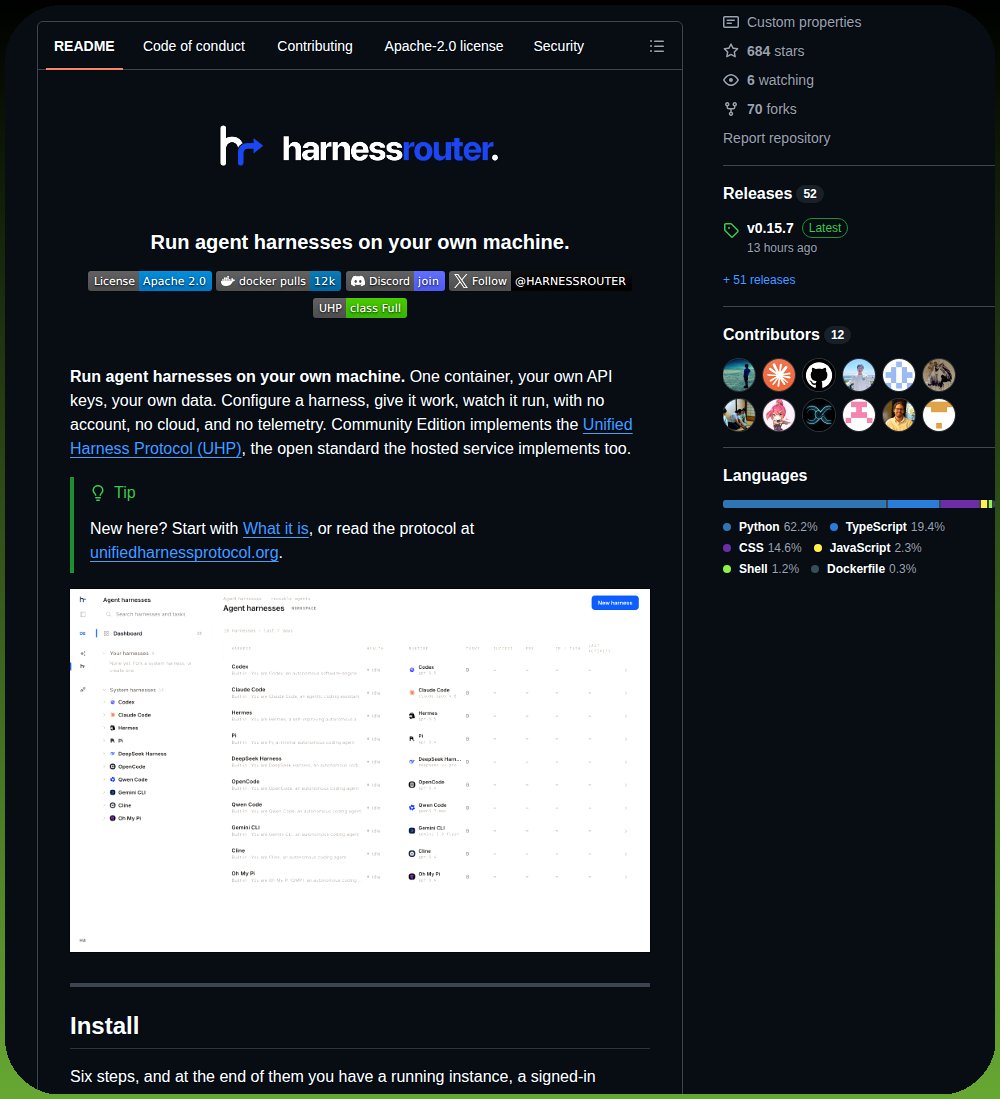
@AzureDevOps announced (16 likes, 1 quote, 1,663 views, 8 bookmarks) that GitHub Copilot Code Review had reached public preview for Azure Repos, and the linked Azure DevOps blog post adds organization-, project-, and repository-level enablement, Managed DevOps Pool support, custom instructions, automatic reviews via branch policies, and project-tagged cost visibility in Azure Cost Management. In parallel, @tom_doerr shared (2 likes, 708 views) HarnessRouter, whose README positions it as a self-hosted Docker container for running multiple agent harnesses locally with no account, no cloud, and no telemetry.
Discussion insight: The replies around ArgusAgent and GitHub's token-cut write-up pushed on governance, not only speed. People wanted reviewed loops that cannot self-grade, and they worried that a prompt shortened for efficiency can silently change scheduling or safety behavior unless it is tested.
Comparison to prior day: September 8 emphasized control planes and orchestration boards. September 9 shifted the spotlight toward measurable harness behavior: reviewed autonomy, faster search, slimmer prompts, and review automation wired into enterprise pipelines.
1.4 Approval gates and security loops spread into higher-stakes workflows (🡕)
A final theme was the spread of explicit review and approval layers where mistakes matter more. The signal was smaller than the reliability discussion, but it was unusually concrete across trading, security, and pull-request review.
@nrlartt built (16 likes, 4 replies, 700 views) BOSS, a permission-first Binance Spot copilot whose README describes a 19-rule policy gate, a hard distinction between BLOCK, UNKNOWN, and CLEAR outcomes, and order execution that still requires the user to type EXECUTE. That is a stronger claim than "AI helps with trading": it is an agent wrapped in deterministic checks.
@rohanpaul_ai pointed (9 likes, 6 replies, 1,927 views) to OpenAI's quoted "Defense Factory" story, where agents were used in a continuous loop to find, validate, and verify fixes across hundreds of systems. And @github argued (73 likes, 14 replies, 15,023 views, 19 bookmarks) that pull requests spend 84% of their open-to-merge time waiting for approval, using that as the case for faster AI review passes before humans merge.
Discussion insight: The common requirement was not full autonomy. It was explicit separation between doing the work and authorizing the irreversible step, whether that means a trade send, a vulnerability fix, or a production merge.
Comparison to prior day: September 8 framed trust largely as governance and exploit risk. September 9 added more examples of people trying to encode approval checkpoints directly into the workflow.
2. What Frustrates People
Quota and session reliability fail in the middle of live work
The most severe frustration was not pricing by itself. It was the feeling that a working session could become unreliable without warning. @thsottiaux acknowledged (2,355 likes, 702 replies, 78,694 views, 71 bookmarks) a broken banked-reset window in ChatGPT Work and Codex, while @Tyfoods4Thought showed (3 replies, 105 views) usage percentages whipsawing after a reset and @debdoot_x reported (13 likes, 5 replies, 447 views) broken remote connections and disappearing past sessions. @codex_resets existing (15 likes, 5 replies, 1,645 views) as a dedicated tracker is part of the evidence too: people now expect resets to be monitored like incidents.
Severity: High. The coping behavior was to watch resets manually, inspect logs, and lean on third-party monitors. This looks worth building for because the pain is operational, repeated, and directly blocks work already in progress.
Antigravity trust breaks when product usage can threaten the whole account
A second high-severity frustration was that some users felt Google-account risk was still entangled with Antigravity usage. @theo said (921 likes, 82 replies, 52,377 views, 100 bookmarks) a new wave of bans was still happening, and @xethorn said (3 likes, 8 replies, 636 views) the account at risk contained decades of personal data. @Cheeks2184 argued (20 likes, 2 replies, 1,363 views) that Google needed to separate Antigravity or Gemini enforcement from full Google-account bans.
Severity: High. The immediate coping advice in replies was simply to avoid Antigravity until the boundary became clearer. This is worth building for anywhere account-risk isolation, appeals visibility, or safer subscription routing can be made explicit.
Operator state is still too easy to lose when you leave the desk
The success of T3 Mobile, Codenotch, vibebuddy, and Harness Remote all pointed at the same frustration: important state is still stranded inside a laptop session. @jullerino shipped (348 likes, 48 replies, 37,076 views) queueing, drafts, and allowance visibility because those details were missing. @DanKornas described (1 like, 4 replies, 640 views) vibebuddy as a fix for approval prompts away from the desk, and @FReza1984 highlighted (1 like, 3 replies, 112 views) Codenotch as a way to see quota and session state before a workflow breaks.
Severity: Medium-High. The workaround today is to bolt on phone companions, menu-bar apps, and edge overlays. This is build-worthy because multiple independent builders converged on the same missing surface within one day of conversation.
External API integrations are still a maintenance burden even when code generation is easier
The frustration was not limited to the coding harness itself. @davidm_ml wrote (6 likes, 4 replies, 463 views) that AI coding assistants make it easier to write integrations, but not to maintain them once auth flows, token refreshes, rate limits, retries, and provider breakages show up. His proposed coping strategy was to use an integration layer that can be exposed as an MCP tool instead of rebuilding each connector ad hoc.
Severity: Medium. This looks worth building for because it connects directly to agent usefulness: without dependable Gmail, CRM, docs, and calendar access, several people argued that the agent cannot reach full value.
3. What People Wish Existed
Transparent quota operations tied to real work
People did not just want more credits. They wanted a dependable explanation of what happened to those credits, when they reset, and whether the burn produced useful work. @thsottiaux said affected users would get another reset, but the replies kept asking for reset-date repair, persistent usage visibility, and better continuity across sessions. @FReza1984 highlighted Codenotch precisely because it shows limit windows and session states before the workflow breaks. Opportunity: direct.
Remote oversight that preserves native sessions and approvals
The practical ask was one supervision layer that works across phone, desktop, and multiple agent backends without forcing people to restart work in a fresh chat. @jullerino shipped more of that for T3 Code Mobile, @DanKornas positioned vibebuddy around phone approvals and three-state monitoring, and his Harness Remote post framed handoff and resume as first-class features. The need is practical and urgent because several builders are already shipping partial answers. Opportunity: competitive.
Agent-native access to external systems instead of browser babysitting
@davidm_ml made the pain explicit: agents need real Gmail, CRM, document, and calendar access, but auth, retries, and token refreshes still eat hours. @2mrpc made the same point from another angle, arguing that a marketplace should become a skill the agent can load instead of a browser flow the human narrates step by step. The strongest version of the request was "let the agent browse or prepare, but keep final authorization in the human's hands." Opportunity: direct.
Safer policy boundaries for high-stakes actions
Several projects implied the same missing product: a reusable approval layer that can sit between an agent and an irreversible action. @nrlartt built BOSS around a gated EXECUTE step for trading, @rohanpaul_ai pointed to a defense loop where fixes are found, validated, and verified continuously, and Antigravity users wanted a hard boundary between product misuse detection and full-account punishment. The need is practical, but the market will be sensitive because it overlaps security, compliance, and trust. Opportunity: aspirational.
4. Tools and Methods in Use
| Tool | Category | Sentiment | Strengths | Limitations |
|---|---|---|---|---|
| Codex | Coding agent | (+/-) | Strong enough that users built utilities on demand, ran remote/mobile workflows, and followed reset events closely | Reset glitches, remote-connection failures, and weekly-limit anxiety dominated discussion |
| Google Antigravity | Coding agent platform | (-) | Still attractive enough that users keep testing it and builders keep wiring support into companion tools | Ban reports and account-risk fear overshadowed capability talk on this date |
| T3 Code Mobile | Mobile client | (+) | Voice input, attachments, drafts, PR visibility, queued uploads, and allowance checks make phone supervision practical | Users still asked for better text selection and clearer thinking-trace boundaries |
| Codenotch | Quota/status monitor | (+) | Multi-provider usage overlay, official endpoints where possible, explicit fidelity labels, and no extra sign-ins | Value depends on providers exposing usable local sessions or quota endpoints |
| vibebuddy | Remote approval companion | (+) | Three-state dashboard, phone approvals, inline diffs, and local-network pairing keep sessions actionable away from the desk | Replies questioned how reliably it can detect real "needs response" states |
| Harness Remote | Session continuity layer | (+) | Native-session handoff across devices and agents without copying chat state into a new tool | Early-stage project with limited public discussion depth so far |
| ArgusAgent | Reviewed autonomy runtime | (+/-) | Separates Manager, Planner, Engineer, and Reviewer; persists work across long campaigns; supports several agent CLIs | Replies immediately focused on the need for steering and guardrails if long loops wander |
| tgrep | Code search engine | (+) | Rust implementation, trigram index, built-in watcher, and claimed up-to-52x speedups on large repos; already integrated into Copilot CLI | Benefit depends on indexing and is aimed at larger repositories more than small repos |
| GitHub Copilot Code Review | AI review workflow | (+/-) | Pulls AI review earlier into PR flow; Azure Repos preview adds custom instructions, managed pools, and cost visibility | Discussion still questioned where AI approval should stop and human review must remain |
| HarnessRouter | Self-hosted harness platform | (+) | One local Docker container, no telemetry, own API keys, own data, and support for multiple coding-agent backends | Heavier operational footprint than using one hosted agent directly |
| BOSS | Approval-gated agent workflow | (+) | Deterministic 19-rule gate, EXECUTE-only send, and clear audit path for a sensitive workflow | Narrow domain focus and still early-stage compared with mainstream coding tools |
| Nango Dev as MCP integration layer | Integration method | (+) | Lets builders expose maintained, code-controlled integrations to agents instead of hand-maintaining auth and retries everywhere | Adds another dependency layer and does not remove upstream API breakage entirely |
Overall satisfaction skewed positive when a tool reduced ambiguity rather than merely producing more tokens. T3 Code Mobile, Codenotch, vibebuddy, Harness Remote, and HarnessRouter all tried to answer the same operator questions: What is running, what is blocked, what needs approval, and how much allowance is left.
The common workaround pattern was to preserve native sessions while adding sidecar visibility. People paired Codex or Claude with phone clients, screen-edge quota monitors, or local-first control planes instead of waiting for one vendor to solve everything inside the main chat surface. Competitive pressure also showed up at the infrastructure layer: GitHub stressed token efficiency, Microsoft pushed tgrep and Azure Repos review automation, and self-hosted builders pushed HarnessRouter- or BOSS-style control boundaries around sensitive work.
5. What People Are Building
| Project | Who built it | What it does | Problem it solves | Stack | Stage | Links |
|---|---|---|---|---|---|---|
| T3 Code Mobile 1.1.0 | @jullerino | Mobile client for Claude/Codex-style agent sessions with voice, attachments, PR visibility, and allowance checks | Agent supervision and follow-up still depend too heavily on staying at the desktop | Native iOS/Android app, on-device voice transcription, file/media sharing, connected agent sessions | Shipped | tweet |
| Codenotch | vinzdg, surfaced by @FReza1984 | macOS usage and session-state overlay for multiple coding assistants | Quota surprises and blocked sessions are too easy to miss during work | Swift app, official quota endpoints where available, GitHub CLI auth reuse, optional Windows port via Rust/Tauri | Shipped | tweet · repo |
| vibebuddy | semantic-craft, surfaced by @DanKornas | Mac, iPhone, and Apple Watch companion for session monitoring and remote approvals | Developers lose visibility and approval control as soon as they leave the desk | Swift 6, macOS/iPhone/watchOS apps, QR pairing, local-network communication, phone-side diff review | Beta | tweet · repo |
| Harness Remote | giuliastro, surfaced by @DanKornas | Local-first control plane for running, observing, resuming, and handing off native coding-agent sessions across devices | Native sessions are hard to continue on another machine without losing context | React + TypeScript client, desktop/web/Android surfaces, native-session handoffs, remote controls | Beta | tweet · repo |
| HarnessRouter | HarnessRouter, surfaced by @tom_doerr | Self-hosted container for running multiple coding-agent harnesses with one protocol and local data ownership | Teams want one place to run several agent backends without giving up local control | Docker, Unified Harness Protocol, local volumes, provider API keys, multiple installed agent CLIs | Beta | tweet · repo |
| BOSS | @nrlartt | Permission-first Binance Spot copilot that observes, plans, gates, and approves before send | High-stakes agent actions need deterministic approval and audit boundaries | Node.js 22+, MCP tools, WebSocket + REST market data, 19-rule policy engine | Alpha | tweet · repo |
| ArgusAgent | Microsoft, surfaced by @vicky_grok | Persistent reviewed-autonomy runtime with Manager/Planner/Engineer/Reviewer roles | Long-horizon research and engineering work needs durable review loops beyond one model turn | Python runtime, multi-agent role split, persistent skills/memory, Copilot/Codex/Claude/OpenCode backends | Alpha | tweet · repo |
The repeated build pattern was supervision around native work rather than replacement of native work. T3 Code Mobile, Codenotch, vibebuddy, and Harness Remote all keep the main session where it started, then add visibility, approvals, or handoff on top.
A second pattern was local-first or self-hosted control. HarnessRouter keeps provider keys and session data on the user's own hardware, while BOSS constrains a sensitive workflow with deterministic gates and an explicit EXECUTE step instead of trusting a free-form agent to do the final action.
ArgusAgent pushed the third pattern: separate the worker from the reviewer. That same logic appeared in lighter form across the rest of the day's builders, whether the split was a phone approval layer, a quota monitor, or a policy gate before a trade or merge.
6. New and Notable
Reset tracking escaped product support and became a public signal market
One of the strangest shifts was that Codex usage resets no longer looked like a private support issue. @codex_resets tracked the announcement on a dedicated feed, while @Polymarket opened a market on when OpenAI would reset Codex's weekly limit. That matters because it turns quota policy into something users monitor externally rather than simply trust inside the product.
AI review moved further into mainstream enterprise pipelines
@AzureDevOps made GitHub Copilot Code Review publicly available for Azure Repos customers, and the linked Azure DevOps write-up added features that matter to buyers rather than hobbyists: org/project/repo-level controls, Managed DevOps Pool support, custom instructions, automatic reviews, and tagged billing visibility. That is a meaningful step toward AI review becoming ordinary pipeline plumbing instead of a special preview.
The security consequences of agentic coding tools were shown very directly
@stanislavfort showed (49 likes, 3 replies, 3,008 views, 7 bookmarks) an AISLE demo of a malicious-link path that led to exfiltrated test keys and live keystroke capture inside mainstream coding tools. The screenshot is notable because it does not rely on abstract warning language; it makes the exploit outcome immediately visible.

7. Where the Opportunities Are
[+++] Reliability and quota operations for coding agents - Evidence from @thsottiaux, @Tyfoods4Thought, @debdoot_x, @codex_resets, and @FReza1984 all point to the same gap: people need trustworthy usage accounting, incident visibility, reset repair, and state monitoring before work breaks. This is strong because the pain is repeated, operational, and already generating third-party products.
[+++] Local-first supervision and handoff surfaces - T3 Code Mobile, vibebuddy, Harness Remote, and Codenotch each solve a different part of the same workflow: see what is running, know what needs you, and act without restarting the session elsewhere. This is strong because multiple independent builders converged on phone approvals, dashboard views, and native-session continuity in one day's dataset.
[++] Reviewed autonomy and harness optimization - ArgusAgent, GitHub's token-cut write-up, tgrep, and Copilot Code Review for Azure Repos all show that the harness around the model is becoming its own product category. This is moderate-to-strong because the evidence spans research-style runtimes, search infrastructure, prompt design, and enterprise review flow rather than one isolated demo.
[++] Agent-native integration and skill loading - @davidm_ml described the pain of maintaining real-data integrations, while @2mrpc argued marketplaces should become skills instead of browser chores. This is moderate because the need is clear, but competitive solutions are already forming around MCP layers and skill packaging.
[+] Approval gates for sensitive actions - BOSS, Defense Factory, and the broader demand for AI review all suggest a reusable category around "agent can prepare, human or policy must authorize." This is emerging because the pattern is compelling, but most public examples are still domain-specific rather than standardized.
8. Takeaways
- Reliability overtook raw capability as the day's biggest concern. Reset bugs, remote-control outages, and account-ban reports drew far more urgency than benchmark-style product claims. (source)
- The market keeps building supervision layers next to native sessions, not instead of them. T3 Code Mobile, vibebuddy, Harness Remote, and Codenotch all preserve the original session while adding visibility or control. (source)
- Harness design is becoming the real competitive surface. ArgusAgent's reviewed role split, GitHub's token-cut changes, and tgrep's search acceleration all focused on the system around the model. (source)
- Enterprise AI review is moving from preview curiosity toward pipeline infrastructure. Azure Repos public preview, custom instructions, managed pools, and project-tagged billing pushed Copilot Code Review closer to standard delivery plumbing. (source)
- People want agents to touch real systems, but only behind clearer boundaries. BOSS, Defense Factory, marketplace-as-skill ideas, and Antigravity ban complaints all pointed toward the same rule: stronger automation needs stronger approval and account-isolation layers. (source)